

 Buy with Prime
How to Firm Up Crepey Skin and Erase Saggy Areas
Crepey skin, a tell-tale sign of aging, need not be an inevitable part of growing older. With the right knowledge and tools, reversing or preventing this condition is entirely within reach. Our in-depth guide, "Reviving Youthful Skin: How to Firm Up Crepey Skin and Erase Saggy Areas with Peptides," offers a treasure trove of insights and solutions. We focus on the remarkable capabilities of peptides, particularly Pepha-Tight, to not only treat but also transform crepey skin. This guide isn't just about treatments; it's a journey into understanding crepey skin and mastering the art of youthful skin through effective prevention, including vital sun safety tips.
-

Péptido amplificado de argirelina
Fine Lines & Wrinkles
-
Best Seller

Serum Reafirmante Booster con Progelina
Tightening & Firming
-

Pepha Tight Sérum potenciador
Instant Tightening & Firming
-

Péptido reafirmante de relistasa
Tightening & Firming
-

Syn-Tachuelas
Tightening & Firming
-
Sale

Diez arriba
Tightening & Firming
-

Uplevity
Lifting & Firming


What Crepey Skin Is and Why It Shows Up
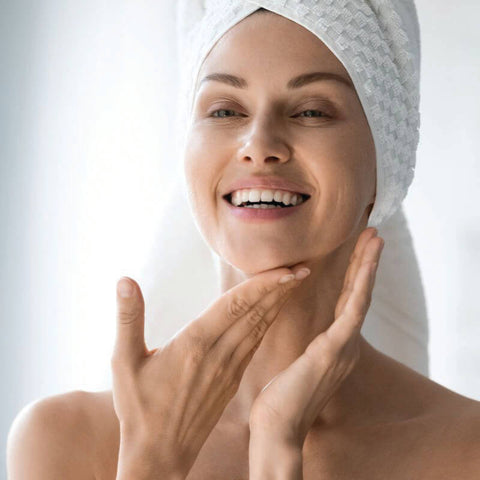
Crepey skin is skin that looks thin and finely crinkled, like crepe paper, and folds into tiny lines when you pinch or move it. A wrinkle is a single crease; crepiness is a whole surface of small ones. It shows up most on the neck, upper arms, inner thighs, knees, chest and backs of the hands, and it often comes with a looser, saggy look in the same spots. The good news: because so much of crepiness is about thin, dry skin, a steady routine can make a visible difference in how smooth and firm these areas look.
The main causes
- Less collagen with age. In a lab study, skin cells from people over 80 made less type I procollagen than cells from people aged 18 to 29 (Varani and colleagues, 2006). Thinner support makes the surface wrinkle more easily.
- Sun. Arms, chest and hands get years of daily sun. In a 4.5-year trial of 903 adults, daily sunscreen users showed no detectable increase in skin aging on the backs of the hands over the study period (Hughes and colleagues, 2013).
- Dry skin. Dry skin looks more crinkled. Body skin has fewer oil glands than the face, so the arms and legs dry out first.
- Weight loss and genetics. Skin that was stretched and then lost volume underneath can look loose and crepey.
Quick check: crepey or just dry?
Apply a rich moisturizer to one forearm and leave the other bare. If the crinkling on the moisturized arm softens within 20 minutes, much of what you see is dryness. If it barely changes, thin, sun-aged skin is the bigger factor, and you need the firming steps below as well as moisture.
The At-Home Routine for Crepey Skin
Morning
- Moisturize on damp skin straight after the shower, on the body and the neck.
- Firming serum or booster blend on the neck, chest and arms (recipes below).
- Broad-spectrum sunscreen on every crepey area that will see daylight, including the hands.
Evening
- Exfoliating lotion with glycolic or lactic acid on the body two to four nights a week.
- Retinol on the neck and chest on the other nights, starting twice a week.
- Peptide blend and moisturizer over the top.
Ingredients That Help the Look of Crepey Skin
- Alpha hydroxy acids. In a 22-week double-blind study, 74 women aged 40 to 70 applied 8% glycolic acid, 8% lactic acid or a plain cream twice a day to the face and outer forearms. On the forearms, lactic acid did better than the plain cream for overall sun damage, sallowness, roughness and mottled pigment, and glycolic acid did better for overall sun damage and sallowness (Stiller and colleagues, 1996).
- Retinol. In a 24-week study, 36 adults with a mean age of 87 applied 0.4% retinol to one arm and a plain lotion to the other; fine wrinkling improved significantly more on the retinol arm (Kafi and colleagues, 2007).
- Hyaluronic acid. In a 60-day study of 76 women, 0.1% hyaluronic acid creams improved skin hydration and elasticity compared with placebo, and the lower molecular weights (50 and 130 kDa) also reduced wrinkle depth (Pavicic and colleagues, 2011).
- Vitamin C. In a 6-month double-blind study on sun-aged skin of the low neck and arms, a 5% vitamin C cream improved skin surface texture more than the plain cream (Humbert and colleagues, 2003).
- Film-forming tighteners. Pepha-Tight (algae and pullulan) forms a light film. In DSM's supplier testing, 30 volunteers using a 3% gel reported tightening lasting at least 4 hours after one application (supplier data).
- Firming peptides. In DSM's supplier testing, 15 volunteers using 1% Syn-Tacks for 56 days showed 35% more suppleness and 17% more firmness than at day 0 (supplier data).
DIY Booster Blends for Crepey Areas
Each blend goes into 1 fl oz (30 ml) of a preserved, water-based lotion or hyaluronic acid serum. House rate: 9 drops = 1% per fluid ounce. Every booster is at the manufacturer's highest recommended rate.
| Blend | Booster | Rate | Drops per 1 oz | Grams per 1 oz (approx.) |
|---|---|---|---|---|
| Neck and chest | Pepha-Tight | 5% | 45 | 1.5 g |
| Progeline | 2% | 18 | 0.6 g | |
| Relistase | 4% | 36 | 1.2 g | |
| Arms, knees and hands | Ten's Up | 10% | 90 | 3.0 g |
| Syn-Tacks | 3% | 27 | 0.9 g | |
| Uplevity | 2% | 18 | 0.6 g |
Method: wash and sanitize a 1 oz airless bottle and a small glass beaker. Measure the base, count in the drops, stir for 2 minutes, then fill the bottle. Use within 3 months and keep it cool and out of light. Apply twice a day with upward strokes. Sensitive skin: patch test on the inner arm for 24 hours and start each booster at the lowest rate of its range, then work up.
Realistic Timelines
- Minutes: moisturizer and film formers soften the crinkled look right away.
- 4 to 8 weeks: peptide testing was measured at 56 days.
- 3 to 6 months: the AHA, retinol and vitamin C studies ran 22 weeks to 6 months.
How to Choose Products for Crepey Skin
- Body skin needs volume: choose a lotion you can afford to use on both arms twice a day.
- Look for stated percentages of actives.
- Separate the jobs: exfoliating acids and retinol for texture, peptides and film formers for firmness, sunscreen to protect the results.
- Do not use acids and retinol on the same patch of skin on the same night when you are starting out.
Products in This Collection
- Pepha Tight Serum Booster: marine algae and pullulan film former for the look of instant tightening; 1 to 5%.
- Firming Serum Booster with Progeline: tripeptide for slack skin on the jaw, neck and chest; 0.5 to 2%.
- Relistase Firming Serum Booster: tetrapeptide for the look of firmer contours; 4%.
- Ten's Up Skin-Tight Booster: chicory root and tara gum for an immediate tighter feel; 5 to 10%.
- Syn-Tacks Peptide Serum Booster: peptide complex for the look of firmer, more supple skin; 3%.
- Uplevity: acetyl tetrapeptide-2 for the look of firmness; 2%.
- Argireline Amplified Peptide Serum Booster: for expression lines on the face rather than crepiness; 5%.
For the lower face, see Sagging Neck and Jowls. For gentle acids, see the lactic acid glossary entry, and for more on arms, read what causes crepey skin on arms.
Frequently Asked Questions
What causes crepey skin?
Mostly thinner skin from less collagen with age, years of sun on the arms, chest and neck, and dryness. Weight loss and genetics add to it. Because dryness is part of the picture, moisture alone often makes a visible difference.
Can crepey skin be improved?
Yes, the look of it can. Daily moisturizer, alpha hydroxy acids, retinol and peptides make crepey areas look smoother and firmer over weeks to months, and daily sunscreen keeps the results. Skin that has lost a lot of volume may also need in-office options from a dermatologist.
What causes crepey skin on the arms?
The arms get decades of sun, and body skin has fewer oil glands, so it dries and thins sooner. Weight loss can leave the upper arms looking loose as well.
What vitamin helps crepey skin?
Vitamin A (retinol) and vitamin C have the most study support on the body. Retinol at 0.4% improved fine wrinkling on aged arms over 24 weeks, and 5% vitamin C improved texture on the low neck and arms over 6 months.
Is crepey skin the same as wrinkles?
Not quite. A wrinkle is a single line or fold, while crepey skin is a thin, crinkled texture across a whole area. They often appear together, and the same routine helps the look of both.
Does moisturizer help crepey skin?
Yes. Hydrated skin looks smoother within minutes, and in a 60-day study hyaluronic acid creams improved hydration and elasticity compared with placebo. Apply it to damp skin right after bathing for the best feel.
Sources
- Stiller MJ, et al. Topical 8% glycolic acid and 8% L-lactic acid creams for the treatment of photodamaged skin: a double-blind vehicle-controlled clinical trial. Archives of Dermatology. 1996;132(6):631. doi:10.1001/archderm.132.6.631
- Kafi R, Kwak HSR, Schumacher WE, et al. Improvement of naturally aged skin with vitamin A (retinol). Archives of Dermatology. 2007;143(5):606-612. PMID 17515510.
- Pavicic T, Gauglitz GG, Lersch P, et al. Efficacy of cream-based novel formulations of hyaluronic acid of different molecular weights in anti-wrinkle treatment. Journal of Drugs in Dermatology. 2011;10(9):990-1000.
- Humbert PG, Haftek M, Creidi P, et al. Topical ascorbic acid on photoaged skin: double-blind study vs. placebo. Experimental Dermatology. 2003;12(3):237-244. PMID 12823436.
- Varani J, Dame MK, Rittie L, et al. Decreased collagen production in chronologically aged skin. American Journal of Pathology. 2006;168(6). PMID 16723701.
- Hughes MCB, Williams GM, Baker P, Green AC. Sunscreen and prevention of skin aging: a randomized trial. Annals of Internal Medicine. 2013;158(11):781-790. PMID 23732711.
- DSM, Pepha-Tight brochure, 2020 (supplier data).
- DSM-firmenich, Syn-Tacks CB master presentation, 2026 (supplier data).
These statements have not been evaluated by the Food and Drug Administration. These products are not intended to diagnose, treat, cure, or prevent any disease.
About the Author
Written by Kari Thomas, cosmetic formulator and founder of Skin Perfection.