

 Buy with Prime
Jojoba Oil
-
Best Seller

Uplift Eye Cream
Anti-Aging Eye Cream
-
Best Seller

Ageless Advanced Peptide Moisturizer
Anti-Aging Moisturizer
-
Best Seller

Ageless Advanced Age-Defying Serum
Anti-Aging Serum & Botanicals
-
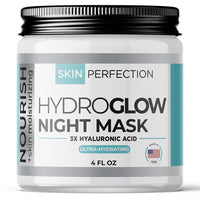
HydroGlow Anti-Aging Night Mask
Firming Mask
-

Multi-Peptide Skin Firming Moisturizer with Hyaluronic Acid and Shea Butter


What Is Jojoba Oil in Skincare?
Jojoba oil is the liquid pressed from the seeds of Simmondsia chinensis, a desert shrub native to the southwestern United States and northern Mexico. Technically it is not an oil but a liquid wax: about 98% of it is wax esters, long-chain molecules that resemble the wax esters in human sebum. That is why jojoba feels light, absorbs without a greasy film, and suits nearly every skin type.
 EWG Skin Deep rating for Jojoba Oil
In skincare, jojoba is used as a face oil on its own, as a carrier oil for essential oils and oil-soluble actives, and as an emollient in creams, balms, cleansing oils, and hair care.
Quick Facts
| INCI name | Simmondsia Chinensis (Jojoba) Seed Oil |
|---|---|
| Common names | Jojoba, jojoba oil, jojoba wax, golden jojoba (unrefined), clear jojoba (refined) |
| Source | Cold-pressed seeds of the jojoba shrub, Sonoran Desert region |
| Form | Golden (unrefined) or clear (refined) liquid; turns cloudy or solid when cold |
| Solubility | Oil soluble; insoluble in water |
| Composition | About 98% wax esters of long-chain monounsaturated fatty acids and alcohols; natural tocopherols (mostly gamma-tocopherol) |
| Typical usage rate | 1% to 50% of a formula (supplier range); can also be used neat as a face or body oil |
| Skin types | All, including oily, combination, dry, mature, and sensitive-feeling skin |
How Jojoba Oil Works on the Skin
A sebum-like emollient
Human sebum contains wax esters, a lipid type found in very few plant oils. Jojoba is almost pure wax ester, so it blends with the skin's own surface lipids and spreads into a thin, smooth, non-greasy layer. It softens dry patches, helps reduce the tight feel after cleansing, and leaves skin looking smoother and more supple.
Stable and gentle
Because it contains no triglycerides and carries natural tocopherols, unrefined jojoba resists oxidation much better than most plant oils. A 2021 review in Polymers (Gad and colleagues) noted its high oxidative stability in crude form and reported that human patch and prick tests showed no allergic reactions except in highly allergic individuals.
What the research says
A 2013 review by Pazyar and colleagues (Giornale Italiano di Dermatologia e Venereologia) summarized jojoba's long use in dermatology and cosmetics and its role as an emollient and carrier. Much of the older clinical literature on jojoba is small and dated, so the strongest evidence is for what formulators rely on every day: it is a stable, well-tolerated, sebum-like emollient.
How to Use Jojoba Oil in DIY Formulas
- As a face oil. Use 3 to 4 drops on damp skin after serum, alone or blended with other oils.
- In emulsions and balms. Add it to the oil phase at up to 50%, the top of the supplier range. It tolerates the 70°C to 75°C (158°F to 167°F) heating used for most lotions.
- As a carrier. Its stability makes it a good base for oil-soluble actives such as CoQ10 and for essential oils at safe dilutions.
- As a cleansing oil. Massage onto dry skin to lift makeup and sunscreen, then remove with a warm, damp cloth.
- Cold weather. Jojoba clouds or solidifies when cold and returns to liquid at room temperature with no loss of quality.
- Golden or clear. Golden, cold-pressed jojoba keeps more of its natural tocopherols and a faint nutty scent. Refined clear jojoba is odorless and colorless but less oxidation resistant.
- Storage. Keep it capped, away from heat and sunlight. Properly stored jojoba lasts longer than most carrier oils.
Who Jojoba Oil Suits
Jojoba suits nearly every skin type. Its light, sebum-like feel makes it one of the few oils that people with oily and combination skin tend to enjoy, and it is comforting on dry and mature skin. If you have sensitive skin, patch test first on the inner arm for 24 hours and start at the lowest rate (1% to 5% in a formula, or one drop mixed into your moisturizer), then work up.
Frequently Asked Questions
Does jojoba oil clog pores?
Jojoba is generally considered low risk for clogging pores. It is a liquid wax that resembles skin's own wax esters and absorbs without a heavy film. As with any oil, use a few drops rather than a thick layer, and patch test if you are prone to congestion.
Is jojoba oil good for oily skin?
Yes, for many people. It is light and non-greasy, and it moisturizes without the heavy feel of richer oils. Two or three drops at night are usually enough for oily or combination skin.
Can I use jojoba oil on my face every day?
Yes. Jojoba is gentle and stable enough for daily use, morning or night. In the morning, apply it before sunscreen and let it absorb for a minute or two.
Can I leave jojoba oil on overnight?
Yes. It works well as the last step of a night routine, sealing in your serum and moisturizer. Use a thin layer so it absorbs fully.
What is the difference between golden and clear jojoba oil?
Golden jojoba is unrefined and cold pressed, so it keeps its natural color, faint scent, and tocopherols. Clear jojoba has been refined to remove color and odor, which also lowers its natural antioxidant content. Golden is the better choice for most skincare.
Who should not use jojoba oil?
Jojoba is well tolerated, but anyone who has reacted to it before should avoid it. If you are highly allergy prone, patch test first on the inner arm for 24 hours before using it on your face.
Shop This Collection
This collection includes the HydroGlow Anti-Aging Night Mask, which pairs jojoba and squalane with hyaluronic acid, and the Multi-Peptide Skin Firming Moisturizer for mature, dry skin. For more uses, see our jojoba oil guide.
Sources
- Gad HA, Roberts A, Hamzi SH, et al. Jojoba Oil: An Updated Comprehensive Review on Chemistry, Pharmaceutical Uses, and Toxicity. Polymers. 2021;13(11):1711. doi:10.3390/polym13111711. MDPI
- Pazyar N, et al. Jojoba in dermatology: a succinct review. G Ital Dermatol Venereol. 2013;148(6):687-691. PubMed
These statements have not been evaluated by the Food and Drug Administration. These products are not intended to diagnose, treat, cure, or prevent any disease.
About the Author
Written by Kari Thomas, cosmetic formulator and founder of Skin Perfection.