

 Buy with Prime

Retinol Creams
-
Sale

2.5% Retinol Moisturizer
Reveal a Fresh Comlpexion
-
Sale

2.5% Retinol Serum for Face, Neck & Décolleté | Age-Defying Formula
Redefines Complexions
-
Sold out
Sale
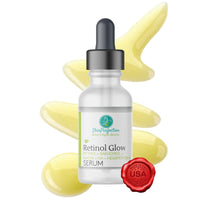
Retinol Glow Radiant Renewal Serum
Redefines Complexions


How to Choose a Retinol Cream or Serum
Retinol is a form of vitamin A used at night for the look of fine lines, rough texture, and uneven tone. The same active comes in different textures: a cream adds moisture and suits dry or normal skin, while a lighter serum or gel layers easily under a moisturizer and suits combination or oily skin. This collection has three retinol formulas, so choose by texture first and by extra actives second.
Compare the Retinol Products
| Product | Key actives | Texture and best for | Directions | Price |
|---|---|---|---|---|
| 2.5% Retinol Moisturizer | 2.5% retinol concentration, shea butter, botanical hyaluronic acid, propolis, green tea, vitamin B5 | Cream; dry, normal, combination, or oily skin that wants retinol and moisture in one step | Every other night or once a week, in place of moisturizer | $29.95 |
| 2.5% Retinol Serum | 2.5% retinol concentration, botanical hyaluronic acid, witch hazel, green tea, propolis | Light serum for face, neck, and décolleté; layers under a moisturizer | Pea-size amount, then moisturizer | $32.95 (1 oz) |
| Retinol Glow Radiant Renewal Serum | Retinol, retinyl palmitate, bakuchiol, niacinamide, sodium ascorbate (vitamin C), Acetyl Hexapeptide-8 (Argireline) | Serum for retinol plus brightening and peptide support | Pea-size amount, then moisturizer | $38.95 (1 oz) |
Which one should you pick?
- Want one simple step at night: the 2.5% Retinol Moisturizer.
- Already love your moisturizer: the 2.5% Retinol Serum underneath it.
- Dullness and uneven tone as well as lines: the Retinol Glow Radiant Renewal Serum, which adds niacinamide, vitamin C, and bakuchiol.
What the Research Shows
- In a 24-week study of 36 older adults, 0.4% retinol lotion applied up to three times a week improved fine wrinkle scores compared with a plain lotion, and skin samples showed more glycosaminoglycans and procollagen (Kafi, 2007).
- In a 12-week study of 44 adults, 0.5% retinol and 0.5% bakuchiol both reduced wrinkle surface area and the look of hyperpigmentation, and the retinol group reported more scaling and stinging (Dhaliwal, 2019).
- In a 12-week split-face study of 50 women, 5% niacinamide improved the look of fine lines, spots, and sallowness (Bissett, 2005).
How to Start Retinol
- Weeks 1 to 2: use once or twice a week at night on clean, dry skin.
- Weeks 3 to 4: move to every other night if your skin stays comfortable.
- Use one retinol product at a time. Do not layer two retinol formulas the same night.
- Apply moisturizer after a retinol serum, and use sunscreen every morning.
- Give it at least 12 weeks; the studies above measured changes at 12 and 24 weeks.
Sensitive skin: patch test on the inner arm for 24 hours and start once a week. These products are not listed for sensitive skin; a retinol-free option is bakuchiol, covered in the retinol and vitamin A guide. Skip retinol while pregnant or breastfeeding unless your doctor approves it. For pairing tips, see how to combine retinol and peptides and the retinol ingredient guide.
Frequently Asked Questions
Is a retinol cream or serum better?
Neither is stronger by format alone. A cream suits drier skin and replaces a moisturizer step, while a serum is lighter and layers under your own moisturizer.
How often should I use a retinol cream?
Start once or twice a week at night and build to every other night as your skin allows. The 2.5% Retinol Moisturizer is directed for every other night or once a week.
Can I use retinol every night?
Some people build up to nightly use after several weeks. If you see dryness, flaking, or stinging, go back to every other night.
Can I use retinol with vitamin C or peptides?
Yes, with care. Peptides layer well with retinol, and the Retinol Glow Radiant Renewal Serum already combines retinol with vitamin C and niacinamide. If you use a separate vitamin C serum, apply it in the morning and retinol at night.
How long does retinol take to work?
Expect to wait at least 12 weeks. The human studies above measured improvements at 12 and 24 weeks.
Do I need sunscreen with retinol?
Yes. Use retinol at night and sunscreen every morning. In a 4.5-year trial of 903 adults, daily sunscreen users showed 24% less skin aging than discretionary users (Hughes, 2013).
Sources
- Kafi R, et al. Improvement of naturally aged skin with vitamin A (retinol). Archives of Dermatology. 2007;143(5):606-612. PubMed 17515510
- Dhaliwal S, Rybak I, Ellis SR, et al. Prospective, randomized, double-blind assessment of topical bakuchiol and retinol for facial photoageing. British Journal of Dermatology. 2019;180(2):289-296. doi:10.1111/bjd.16918
- Bissett DL, Oblong JE, Berge CA. Niacinamide: a B vitamin that improves aging facial skin appearance. Dermatologic Surgery. 2005;31(7 Pt 2):860-865. doi:10.1111/j.1524-4725.2005.31732
- Hughes MCB, et al. Sunscreen and prevention of skin aging: a randomized trial. Annals of Internal Medicine. 2013;158(11):781-790. doi:10.7326/0003-4819-158-11-201306040-00002
These statements have not been evaluated by the Food and Drug Administration. These products are not intended to diagnose, treat, cure, or prevent any disease.
About the Author
Written by Kari Thomas, cosmetic formulator and founder of Skin Perfection.