

 Buy with Prime
Blue Clay Mask Recipe
Blue Clay Mask Recipe with Firming Peptide Boosters
A blue clay mask is made by mixing one part cosmetic clay powder with about two parts liquid by weight into a smooth paste, applying it to clean skin for 10 to 15 minutes, and rinsing before it dries hard. Clay soaks up excess surface oil and leaves skin looking fresher and feeling smoother. Adding a film-forming booster such as Pepha-Tight turns a basic clay mask into a tightening mask you can feel within minutes.
This page gives a fresh single-use recipe in grams, a tightening version at the boosters' highest recommended rates, the sanitation steps that keep a water-based mask clean, and honest notes on what a rinse-off mask can and cannot do.
What Clay Does on the Skin
Cosmetic clays are fine mineral powders that hold water and oil. A 2002 review by Carretero in Applied Clay Science describes clay minerals used in cosmetics and aesthetic care to clean and moisturize the skin. In a mask, that shows up as a fresher, less shiny look and pores that look clearer for the evening. Blue clays get their color from their mineral makeup; some blends also add blue-green algae powder for color and nutrients. Learn more in our facial clays glossary entry.
Clay does not pull "toxins" out of the body, and claims like that have no support. What it does well is lift surface oil and grime and leave skin feeling smooth.
Equipment and Sanitation
- Digital scale reading to 0.01 g, or a 0.1 g scale and the drop counts below
- Small glass or ceramic bowl and a plastic, wooden, or stainless spatula
- Clean mask brush (optional)
- Distilled water or Aloe Vera Gel Serum Base
Wash your bowl and tools in hot soapy water, dry them, then wipe with 70% isopropyl alcohol and let them air dry. Use distilled water, not tap water. Keep the clay powder bag or jar sealed and dry, and never put a wet spoon into it.
Recipe 1: Basic Blue Clay Mask (one use, 15 g)
| Ingredient | Grams | % |
|---|---|---|
| Blue cosmetic clay powder | 5.0 | 33.3% |
| Distilled water or Aloe Vera Gel Serum Base | 10.0 | 66.7% |
- Weigh the clay into the bowl.
- Add the liquid a little at a time, stirring until you have a smooth paste like thick yogurt. Some clays need a bit more liquid; add 1 g at a time.
- Apply an even layer to clean skin on the face and neck, avoiding the eyes and lips.
- Leave on for 10 to 15 minutes. Rinse while it is still slightly damp; letting clay crack and dry fully can leave skin feeling tight and dry.
- Pat dry and follow with a moisturizer.
Recipe 2: Tightening Peptide Clay Mask (one use, 15 g)
| Ingredient | Grams | % | Drops (house rate) |
|---|---|---|---|
| Blue cosmetic clay powder | 5.0 | 33.3% | |
| Aloe Vera Gel Serum Base | 8.8 | 58.7% | |
| Pepha-Tight Serum Booster | 0.75 | 5% | about 23 |
| Syn-Coll Peptide Serum Booster | 0.45 | 3% | about 14 |
Pepha-Tight is used at 5%, the top of DSM's suggested 1 to 5% range, and Syn-Coll at 3%, the top of its 1 to 3% range. The house rate is 9 drops = 1% per fl oz, and a 15 g mask is about half an ounce, so 5% is about 23 drops and 3% is about 14 drops. Stir both boosters into the aloe gel first, then mix in the clay.
What the supplier data shows for Pepha-Tight
Pepha-Tight is an extract of the microalga Nannochloropsis oculata combined with pullulan, a polysaccharide that forms a thin film on skin. In DSM's supplier testing, a gel with 3% Pepha-Tight gave a tightening effect lasting at least 4 hours after one application, and almost 70% of 30 volunteers rated the tightening effect good to very good after 2 weeks. In a second test, 12 volunteers applied a cream with 3% Pepha-Tight for 56 days, with an average 26% reduction in measured wrinkle surface and 21% in wrinkle length. These are supplier results for leave-on products, not for a rinse-off mask.
An honest note on rinse-off masks
A mask stays on for 15 minutes, so you get the instant film-forming tightening, but not the weeks of daily contact that the long-term results came from. For those cumulative benefits, add the same boosters to a leave-on serum and use the mask as a weekly ritual. See our Pepha-Tight glossary entry for serum rates.
Variations
- Extra lift for the jawline: add Progeline Firming Serum Booster at 2% (0.3 g, about 9 drops in a 15 g mask), the top of its 0.5 to 2% range, and reduce the aloe gel by 0.3 g.
- Dry skin: add 0.5 g of jojoba or squalane and reduce the aloe gel by the same amount.
- Oily areas only: apply the mask to the forehead, nose, and chin, and a leave-on hydrating mask elsewhere.
Storage, Shelf Life, and Preservation
Dry clay powder contains no water and keeps for a long time if it stays sealed and dry. Once you add water or aloe, the mask can grow microbes, so mix it fresh each time and throw away any leftovers the same day. We do not recommend storing premixed wet clay. If you want a ready-to-use jar, the formula needs a broad-spectrum preservative such as Leucidal SF Complete at 4% (the top of its 2 to 4% range), clean airtight packaging, and refrigeration, and anything you sell should be challenge tested. Keep the peptide boosters refrigerated in their blue glass bottles.
How Often to Use a Clay Mask
Once a week suits most skin; oily skin may enjoy twice. Dry or sensitive skin can use it every week or two, on the T-zone only. For a full routine, see how often to use facial masks. If your skin feels sensitive, patch test the mask on your inner arm for 24 hours and start the boosters at the lowest rate of their ranges (Pepha-Tight 1%, Syn-Coll 1%), then work up.
Troubleshooting
- Lumpy paste: add the clay to the liquid, not the liquid to the clay, and let it sit 1 minute before stirring again.
- Skin feels tight and dry after: rinse sooner, before the mask turns pale and cracks, and moisturize right away.
- Mask is crumbly: add liquid 1 g at a time.
- Stinging: rinse off right away. Skip the mask on sunburned, freshly shaved, or broken skin.
Frequently Asked Questions
How long should I leave a clay mask on?
Leave it on for 10 to 15 minutes. Rinse while it is still slightly damp, because letting clay dry and crack completely can leave skin feeling tight and dry.
What do I mix clay powder with?
Use about two parts distilled water or aloe vera gel to one part clay by weight. Aloe gel gives a smoother, more cushioned mask than water.
How often should I use a clay mask?
Once a week is a good starting point. Oily skin may enjoy twice a week, while dry or sensitive skin does better with every week or two.
Can I store a mixed clay mask?
Mix it fresh each time and discard leftovers. Wet clay can grow microbes, so a premixed mask needs a broad-spectrum preservative, airtight packaging, and refrigeration.
Can I add peptides to a clay mask?
Yes. Stir them into the liquid first. Film-forming boosters like Pepha-Tight give a tightening feel within minutes, but leave-on serums give peptides much more contact time for long-term results.
Does a clay mask draw out toxins?
No. Clay absorbs surface oil and grime, which helps skin look fresher and pores look clearer for a while, but it does not remove toxins from the body.
Shop This Collection
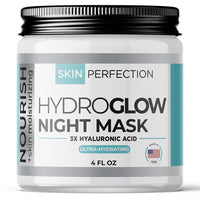
After your clay mask, finish with the HydroGlow Anti-Aging Night Mask, a no-rinse overnight mask with three types of hyaluronic acid that puts moisture back into freshly masked skin. Add the Pepha-Tight Serum Booster and Syn-Coll to your mask for the tightening version.
Sources
- Carretero MI. Clay minerals and their beneficial effects upon human health. A review. Applied Clay Science. 2002;21(3-4):155-163. doi:10.1016/S0169-1317(01)00085-0.
- DSM, Pepha-Tight brochure, 2020 (supplier data: INCI Nannochloropsis Oculata Extract, Pullulan; 1 to 5% suggested use; in vivo results at 3%).
- DSM, Syn-Coll formulation guidelines, 2013 (supplier data: 1 to 3% use level, add below 40°C, pH 3.0 to 7.0).
- Lipotec, Progeline (supplier data as listed on the Skin Perfection product page: 0.5 to 2% use level).
These statements have not been evaluated by the Food and Drug Administration. These products are not intended to diagnose, treat, cure, or prevent any disease.
About the Author
Written by Kari Thomas, cosmetic formulator and founder of Skin Perfection.