

 Buy with Prime

Vitamin E
-
Best Seller

Uplift Eye Cream
Anti-Aging Eye Cream
-
Best Seller

Ageless Advanced Peptide Moisturizer
Anti-Aging Moisturizer
-

20% Matrixyl 3000 Collagen Serum
20% Matrixyl 3000
-
Best Seller

Liquid Facelift Collagen Serum
Anti-Aging Serum with Retinol
-

Eye Bright Argireline Cream
Anti-Aging Eye Cream
-
Sale

2.5% Retinol Moisturizer
Reveal a Fresh Comlpexion
-
Sale

2.5% Retinol Serum for Face, Neck & Décolleté | Age-Defying Formula
Redefines Complexions
-
Sold out
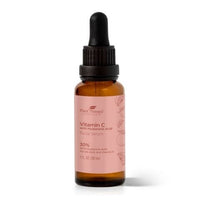
Vitamin C Serum with Hyaluronic Acid
Brightening antioxidant serum
-

Clear Skin Oil-Free Moisturizer
Non Greasy Gel Hydration
-
Sold out
Sale
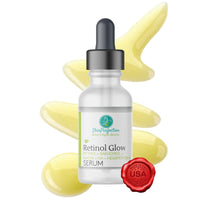
Retinol Glow Radiant Renewal Serum
Redefines Complexions
-

Organic Skin Care Kits - Lip Balm
Organic Lip Nourishment


What Is Vitamin E in Skincare?
Vitamin E is a family of oil-soluble antioxidants, the tocopherols and tocotrienols, that protect fats from oxidation. In skincare it does two jobs: it helps defend the skin's own lipids against free radical damage from sun and pollution, and it keeps the plant oils in a formula from going rancid. It is also a skin-softening conditioner and a classic partner for vitamin C.
 EWG Skin Deep rating for vitamin E
Vitamin E Quick Facts
| Property | Details |
|---|---|
| INCI names | Tocopherol; Tocopheryl Acetate (the more stable ester form) |
| Common names | Vitamin E, alpha-tocopherol, mixed tocopherols, d-alpha tocopherol (natural), dl-alpha tocopherol (synthetic) |
| Source | Natural forms come from vegetable oils such as soybean, sunflower, and wheat germ; synthetic forms are made in the lab |
| Form | Thick, amber, oily liquid |
| Solubility | Oil soluble; not water soluble |
| Typical usage rate | About 0.5-1% to protect oils and support the skin; the antioxidant serum formula in Formula Botanica's Antioxidant Workbook uses 1%, and the vitamin C study below used 1% alpha-tocopherol |
| pH range | Not pH dependent (it lives in the oil phase) |
| Skin types | All skin types, especially dry and mature skin |
How Vitamin E Works on the Skin
Skin's outer layer contains lipids that hold in water and keep the surface smooth. UV light and pollution set off chain reactions that oxidize those lipids, which leaves skin looking dull, dry, and older over time. Vitamin E sits in those lipid layers and stops the chain reaction by donating an electron to the free radical. In doing so it is used up, which is why it works best alongside vitamin C, which can help regenerate it.
That partnership has been measured. In a lab skin study, Lin and colleagues (2005) tested a topical solution of 15% L-ascorbic acid and 1% alpha-tocopherol, with and without ferulic acid. Adding ferulic acid made the vitamins more chemically stable and roughly doubled the solution's protection against solar-simulated UV, from about 4-fold to about 8-fold, measured by redness and sunburn cell formation. This is why vitamin C, vitamin E, and ferulic acid are so often combined. It is not a substitute for sunscreen.
A 2007 review by Thiele and Ekanayake-Mudiyanselage notes that vitamin E has been used in skin care for more than 50 years and that lab research supports its photoprotective and barrier-stabilizing properties, while also noting a lack of controlled clinical studies for specific doses. In plain terms: it is a proven antioxidant and formula protector, and its benefits are strongest as part of a complete routine.
Formulators should know a few practical details. Vitamin E is a family of eight compounds; alpha-tocopherol is the most active for the skin, while gamma-tocopherol is especially good at protecting formulas. The natural d-form is the more biologically active form compared with synthetic dl-tocopherol. More is not always better; at high concentrations alpha-tocopherol can act as a pro-oxidant (Formula Botanica, Antioxidant Workbook).
How to Use Vitamin E
- Use vitamin E serums, creams, and balms daily, morning or night. In the morning, pair it with vitamin C and follow with sunscreen.
- Pure vitamin E oil is very thick and sticky. It is better blended into a carrier oil or a finished product than applied straight to the face.
Formulating Notes
- Add tocopherol to the oil phase at 0.5-1%. To protect delicate oils, add it to the oils as soon as you open them.
- It tolerates moderate heat, but adding it during cool-down (below 40°C / 104°F) protects the most activity.
- Vitamin E is an antioxidant, not a preservative. Any formula with water still needs a broad-spectrum preservative.
- Tocopheryl acetate is more stable in the bottle but must be converted by the skin to be active; tocopherol is active as applied.
Who Vitamin E Suits
Vitamin E suits nearly every skin type and is especially comforting for dry and mature skin. A small number of people react to topical vitamin E, so if you have sensitive skin, patch test first (inner arm, 24 hours) and start at the lowest rate in the range, then work up.
Frequently Asked Questions
Can I put pure vitamin E oil on my face?
You can, but it is heavy and sticky. Most people do better with a few drops mixed into a moisturizer or facial oil. See our guide to 100% pure vitamin E oil for details.
Can I leave vitamin E oil on my face overnight?
Yes, if your skin tolerates it. Dry skin often enjoys it overnight; oily skin usually prefers a light product with vitamin E built in.
Does vitamin E clog pores?
Pure vitamin E oil is thick and can feel heavy on oily skin. Oily or blemish-prone skin generally does better with lightweight serums that contain about 0.5-1% vitamin E.
Is natural or synthetic vitamin E better?
Natural d-alpha tocopherol is the more biologically active form; synthetic dl-tocopherol is a mix of forms. Both protect formulas from oxidation.
Why are vitamins C and E used together?
Vitamin C works in water and vitamin E works in oil, and C helps regenerate E. With ferulic acid added, a lab study measured about twice the UV protection of the vitamins alone.
Does vitamin E extend shelf life?
It slows oils from going rancid, which extends the life of oil-based products. It does not stop bacteria or mold, so water-based formulas still need a preservative.
Can I use vitamin E capsules on my skin?
You can pierce a capsule and mix the oil into your moisturizer. Check the label, since many capsules contain carrier oils and synthetic vitamin E.
Shop Vitamin E Products
Vitamin E is in many of our formulas, including the Vitamin C Serum with Hyaluronic Acid, the Uplift Eye Cream, and our Ageless Advanced Peptide Moisturizer. Learn about its partner antioxidant on our vitamin C page.
Sources
- Lin FH, Lin JY, Gupta RD, et al. Ferulic acid stabilizes a solution of vitamins C and E and doubles its photoprotection of skin. J Invest Dermatol. 2005;125(4):826-832. doi:10.1111/j.0022-202X.2005.23768.x
- Thiele JJ, Ekanayake-Mudiyanselage S. Vitamin E in human skin: organ-specific physiology and considerations for its use in dermatology. Mol Aspects Med. 2007;28(5-6):646-667. doi:10.1016/j.mam.2007.06.001
- Formula Botanica, The Antioxidant Workbook (2024), vitamin E forms and the 1% tocopherol serum formula (formulator training document).
These statements have not been evaluated by the Food and Drug Administration. These products are not intended to diagnose, treat, cure, or prevent any disease.
About the Author
Written by Kari Thomas, cosmetic formulator and founder of Skin Perfection.