

 Buy with Prime


If you’ve been exploring the world of skincare, you’ve probably seen the buzz around an ingredient with a stunning blue color: copper peptide. At its heart, this ingredient, also known as GHK-Cu, is a naturally occurring complex that acts as a gentle but powerful messenger for your skin.
Decoding the Hype Around Copper Peptides

Think of a copper peptide as your skin’s personal project manager. It’s a tiny protein fragment made up of the element copper combined with three amino acids. These peptides are naturally present in our bodies, playing a key role in keeping things looking smooth, but their levels unfortunately drop as we get older.
This natural decline is one of the reasons we start to see changes in our skin's appearance over time. By reintroducing copper peptides through serums and creams, you're essentially giving your skin the support it needs to maintain a youthful, vibrant look.
Why It's a Staple in Modern Skincare
The popularity of GHK-Cu isn't just another fleeting trend—it's grounded in its unique, multi-talented role in skincare. Unlike some ingredients that have just one job, copper peptides are true multitaskers, celebrated for how they cosmetically support the skin's underlying structure.
Here's why both skincare lovers and professional formulators are so excited about it:
- Supports Skin Structure: It helps maintain the look of skin firmness and elasticity by supporting the foundational proteins that keep skin looking plump.
- Promotes a Smooth Look: It works to refine the appearance of skin texture, leading to a smoother, more supple feel.
- Encourages Radiance: Copper peptides can help promote a more even and balanced skin tone, giving you a radiant complexion.
This incredible blend of functions makes it a go-to for anyone looking to be proactive in their skincare routine. If you want to dive deeper into the basics of peptides, you might find our guide on what is a peptide serum helpful.
The Growing Demand for Copper Peptide
The global fascination with GHK-Cu has absolutely skyrocketed, fitting perfectly with the growing demand for science-backed, clean beauty ingredients. You can see this enthusiasm reflected in its market growth. In 2024, the global copper peptide GHK-Cu market was valued at around USD 170 million and is expected to hit USD 500 million by the end of the decade. This surge is driven by a desire for ingredients that deliver real, visible results while working in harmony with the skin. Learn more about the copper peptide market trends on datahorizzonresearch.com.
GHK-Cu has become an indispensable tool for anyone serious about achieving and maintaining radiant-looking skin, prized for its ability to support the skin’s vitality without harshness.
As we continue, we’ll get into the nitty-gritty of how this elegant ingredient works and the beautiful cosmetic benefits you can expect to see.
How Copper Peptides Support Youthful Looking Skin
To really get why copper peptides are so special in cosmetics, we need to peek behind the curtain at how they actually work. Picture your skin as a busy construction site, constantly building and maintaining the structures that keep it looking firm and smooth. In this scenario, a copper peptide like GHK-Cu is the project foreman, expertly directing the cellular crew to handle all the crucial upkeep.
This smart little ingredient doesn't barge in and force changes. Instead, it sends gentle signals that support your skin's own natural jobs. It’s a beautifully cooperative way to approach skincare, working right alongside your body's own rhythms to encourage a visibly refreshed, vibrant look.
The Foundation of Firmness and Elasticity
At the core of youthful-looking skin are two superstar proteins: collagen and elastin. Think of collagen as the sturdy framework or scaffolding that gives your skin structure and strength. Elastin, on the other hand, is like the stretchy elastic that lets your skin snap right back into place. As we age, our production of these proteins can slow down, which is when we start noticing changes in skin texture and firmness.
This is exactly where a copper peptide steps in to lend a hand. It supports the skin's natural ability to synthesize these foundational proteins. By encouraging this process, it helps maintain the skin’s density and structural integrity, which translates to a plumper, firmer look and feel.
But it’s not just about adding new materials; it's also about smart maintenance. Research suggests GHK-Cu also supports the removal of old, worn-out collagen from the skin. This “out with the old, in with the new” process is a huge part of maintaining a smooth, resilient complexion.
Copper peptides work by signaling your skin to maintain its own youthful architecture. They support the very proteins responsible for the skin's supple texture and firm appearance, making them a cornerstone of proactive skincare.
Bolstering the Skin's Appearance Against Stressors
Every single day, your skin is up against a barrage of environmental stressors, from UV exposure to pollution. These things generate unstable molecules called free radicals, which can lead to oxidative stress. You can think of oxidative stress as microscopic chaos that can leave skin looking dull, tired, and prematurely aged.
Copper peptides are fantastic allies in this daily battle. They act as potent antioxidants, helping to neutralize these damaging free radicals before they can mess with your skin's appearance. By supporting your skin's appearance against these stressors, GHK-Cu helps shield your complexion from the visible effects of these environmental bullies.
This quality is vital for keeping a bright and even skin tone. By helping to manage the impact of daily stressors, copper peptides contribute to a more radiant, healthy-looking complexion over time.
Supporting a Balanced Complexion
Beyond its structural and protective roles, a copper peptide is also known for creating a calm, balanced environment for the skin. It has properties that help soothe the skin, which is especially helpful for maintaining a clear and comfortable complexion.
This calming influence helps keep the skin in a state of happy equilibrium, allowing it to look and feel its best. It's one of the big reasons why copper peptides are so well-loved—they offer support on multiple levels without ever being harsh or disruptive.
By focusing on these core jobs—supporting foundational proteins, providing antioxidant benefits, and maintaining a balanced environment—copper peptides help improve the overall appearance of skin texture and tone. If you're interested in supporting your skin's structure from every angle, check out our guide on natural ways to increase collagen for some complementary ideas. This kind of comprehensive approach is what makes GHK-Cu such a prized ingredient for anyone seeking that visibly refreshed, vibrant look.
What You'll Actually See: The Cosmetic Benefits of Copper Peptides
So, what can you really expect when you bring copper peptides into your daily routine? The science is fascinating, but let's be honest—the real excitement comes from the changes you can see and feel in your own skin and hair. This elegant ingredient is all about beautifying your complexion in a few key ways, leaving you with a refreshed, vibrant look.
By supporting the skin’s foundational proteins, GHK-Cu delivers the kind of cosmetic results that many of us are searching for. Let’s get into the specific aesthetic perks you can look forward to.
Promoting a Firmer, More Lifted Appearance
One of the most celebrated benefits of using copper peptides is the way they promote a firmer, more supple look. As we've touched on, this ingredient supports the skin’s natural processes tied to foundational proteins like collagen and elastin.
Think of these proteins as the "cushioning" and "spring" in your skin's mattress. When that support system is well-maintained, your skin appears plumper and more lifted. A consistent routine with copper peptides helps maintain this structure, contributing to a visibly smoother, more youthful-looking contour over time.
This focus on structural appearance is exactly why skincare completely dominates the copper peptide market. The GHK-Cu market alone was valued at USD 450 million in 2024 and is projected to hit over USD 1 billion by 2033, all driven by its well-known ability to enhance the look of skin elasticity and glow. In 2023, the serum segment grabbed a huge share of this market, with e-commerce sales flying past 37 million units globally. You can discover more insights about the GHK-Cu market on marketreportanalytics.com for more details on this trend.
Refining Skin Texture for a Smoother Canvas
Beyond just firmness, copper peptides are fantastic for refining the appearance of your skin’s texture. They work to diminish the look of fine lines, creating a softer, more uniform surface. The result? A complexion that not only feels smoother but also reflects light more evenly, giving it that natural, healthy glow.
Imagine your skin’s surface is like a piece of silk. When it’s perfectly smooth, it has a beautiful, radiant sheen. Copper peptides help you get that effect by supporting the skin's natural renewal processes, encouraging a consistently refreshed and polished appearance.
By promoting a smooth and even texture, copper peptides create an ideal canvas. This makes them a valuable addition for anyone looking to achieve a flawless look, both with and without makeup.
For those who love creating their own custom formulas, adding a Copper Peptide Regenerating Serum Booster can elevate a simple hydrating serum into a powerhouse for textural refinement.
Encouraging a More Even and Radiant Skin Tone
A balanced, even skin tone is a true hallmark of a healthy-looking complexion. Copper peptides contribute here by helping minimize the appearance of unevenness and promoting a bright, clear look. Their antioxidant properties play a key role, helping shield the skin from daily environmental stressors that can lead to a dull or blotchy appearance.
When your skin is better equipped to handle these external factors, it can hold onto its natural luminosity. This leads to a complexion that looks consistently radiant and full of life. It’s not about changing your skin—it's about supporting its ability to look its absolute best.
Enhancing the Appearance of Hair, Lashes, and Brows
The benefits of copper peptides don't stop at your face. This versatile ingredient is also a star player in hair care, creating an optimal environment on the scalp for healthier-looking hair.
- For the Scalp: When applied in tonics or serums, copper peptides can help give hair a thicker, fuller appearance by supporting the follicles.
- For Lashes and Brows: The same idea applies to lash and brow serums. GHK-Cu can be used to enhance their natural look, encouraging the appearance of denser, more luscious-looking lashes and brows.
This multi-functional ability makes copper peptide a truly valuable ingredient for a holistic beauty routine, addressing key cosmetic concerns from your hairline all the way down to your lash line.
Your Guide to Formulating With Copper Peptides
Stepping into the world of DIY skincare or professional formulation is an exciting journey, a perfect blend of creativity and science. When you’re ready to work with a powerhouse ingredient like a copper peptide, following a few key guidelines is the secret to crafting a stable, beautiful, and truly effective product.
Think of it like baking a delicate cake. You need the right ingredients in the right amounts, at the right temperature, and added in the correct order. The same precision applies to copper peptides if you want your final creation to deliver on all its promises.
Finding the Sweet Spot for Concentration
The first thing you’ll decide in any formula is how much of your active ingredient to use. For GHK-Cu, a little goes a long way, and more is definitely not better. Hitting the recommended usage rate is a huge factor for success.
- Ideal Range: For most products like serums, creams, and hair tonics, the sweet spot is between 1% and 3%.
- Why it Matters: This range is where you’ll see visible cosmetic benefits without overwhelming the skin. Sticking to this guideline ensures you get the best performance from your copper peptide.
If you're new to this ingredient or creating a formula for daily, long-term use, starting at the lower end—say, 1%—is a fantastic approach.
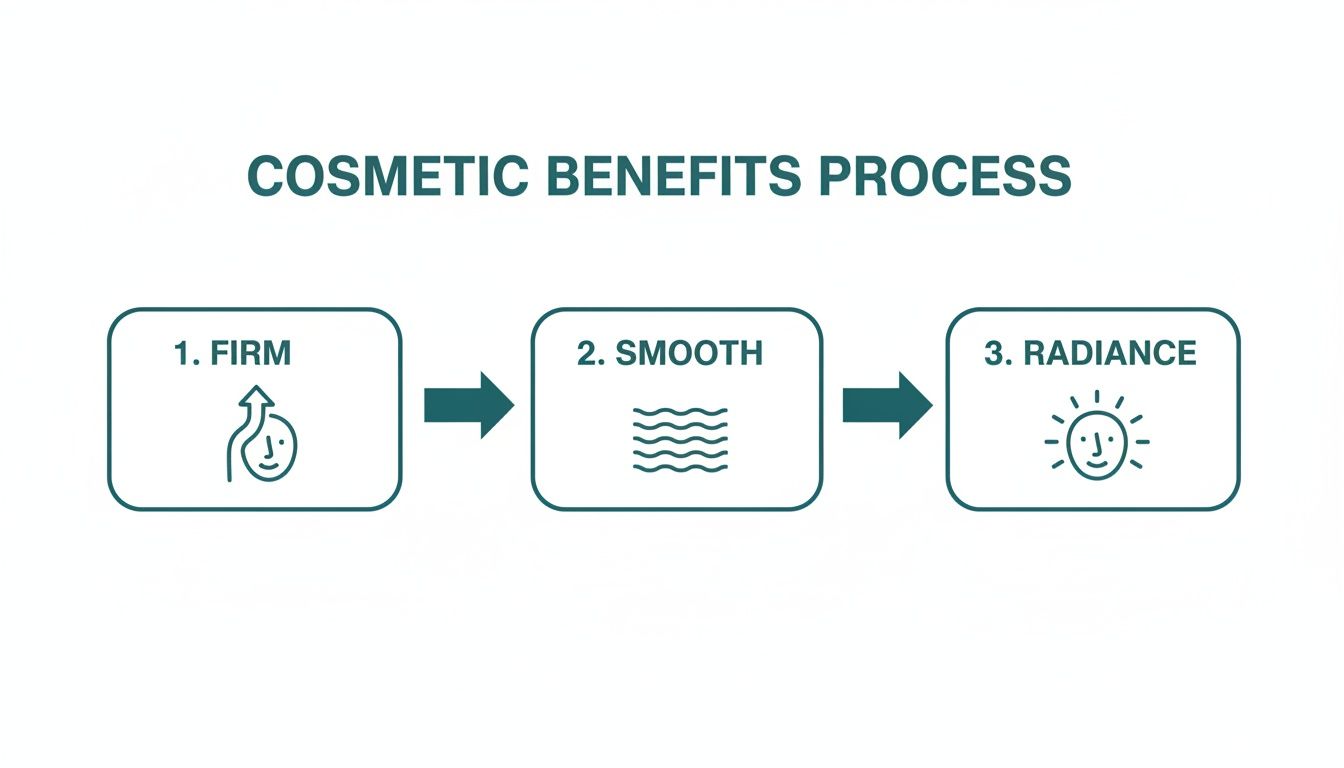
This simple visual shows how the benefits build on each other, leading to skin that looks refreshed and vibrant from every angle.
The Non-Negotiable Rule of pH
If concentration is what you add, pH is the environment you create for it. With an ingredient like GHK-Cu, pH is probably the single most critical factor for stability. Get it wrong, and you could render the peptide ineffective before it even touches your skin.
The optimal pH for a GHK-Cu formula is between 5.0 and 7.0. Outside this window, the complex can break down, causing the copper to separate from the peptide. This not only makes the ingredient useless but can also mess with the color and texture of your product.
Think of pH as the protective bubble for your copper peptide. Keeping it within the 5.0 to 7.0 range ensures that bubble stays intact, preserving the integrity and function of this valuable ingredient all the way from the jar to your skin.
Always, always use pH testing strips or a digital meter to check and adjust your formula’s final pH. This ensures your creation stays stable and effective.
Copper Peptide Formulation Guide
To make things even easier, here's a quick reference table with the key parameters for formulating with GHK-Cu.
| Parameter | Recommended Guideline | Why It Matters |
|---|---|---|
| Concentration | 1% - 3% | Balances efficacy with skin tolerance. Higher levels don't necessarily improve results and can be less stable. |
| pH Range | 5.0 - 7.0 | Critical for stability. An incorrect pH causes the GHK-Cu complex to break apart, deactivating the peptide. |
| Incorporation | Add during the cool-down phase (below 40°C / 104°F). | Protects the delicate peptide structure from being destroyed by heat, ensuring it remains active in the final product. |
| Solubility | Water-soluble. | Easily incorporates into the water phase of emulsions (creams, lotions) or water-based serums. |
| Storage | Store the raw ingredient in a cool, dark place. | Preserves the integrity of the peptide before it's even added to your formulation. |
Following these guidelines will help you create a high-quality, stable product that showcases the best of what GHK-Cu has to offer.
Best Practices for Incorporation
How and when you add the copper peptide to your formula is just as important as how much you use. Peptides are delicate structures that are notoriously sensitive to high temperatures.
To protect its integrity, always add your GHK-Cu solution during the cool-down phase of your formulation. This means waiting until after your mixture has been heated (if you’re making an emulsion) and has cooled to below 40°C (104°F). Then, just stir it in gently until it’s fully incorporated. This one simple step prevents heat from degrading the peptide, making sure it stays active in your finished product.
For more expert tips on working with different actives, you can find a ton of valuable information in our extensive peptide solution guides.
By mastering these three pillars—concentration, pH, and incorporation—you can confidently create personalized skincare that brings out the incredible cosmetic properties of copper peptides.
How to Pair Copper Peptides in Your Skincare Routine
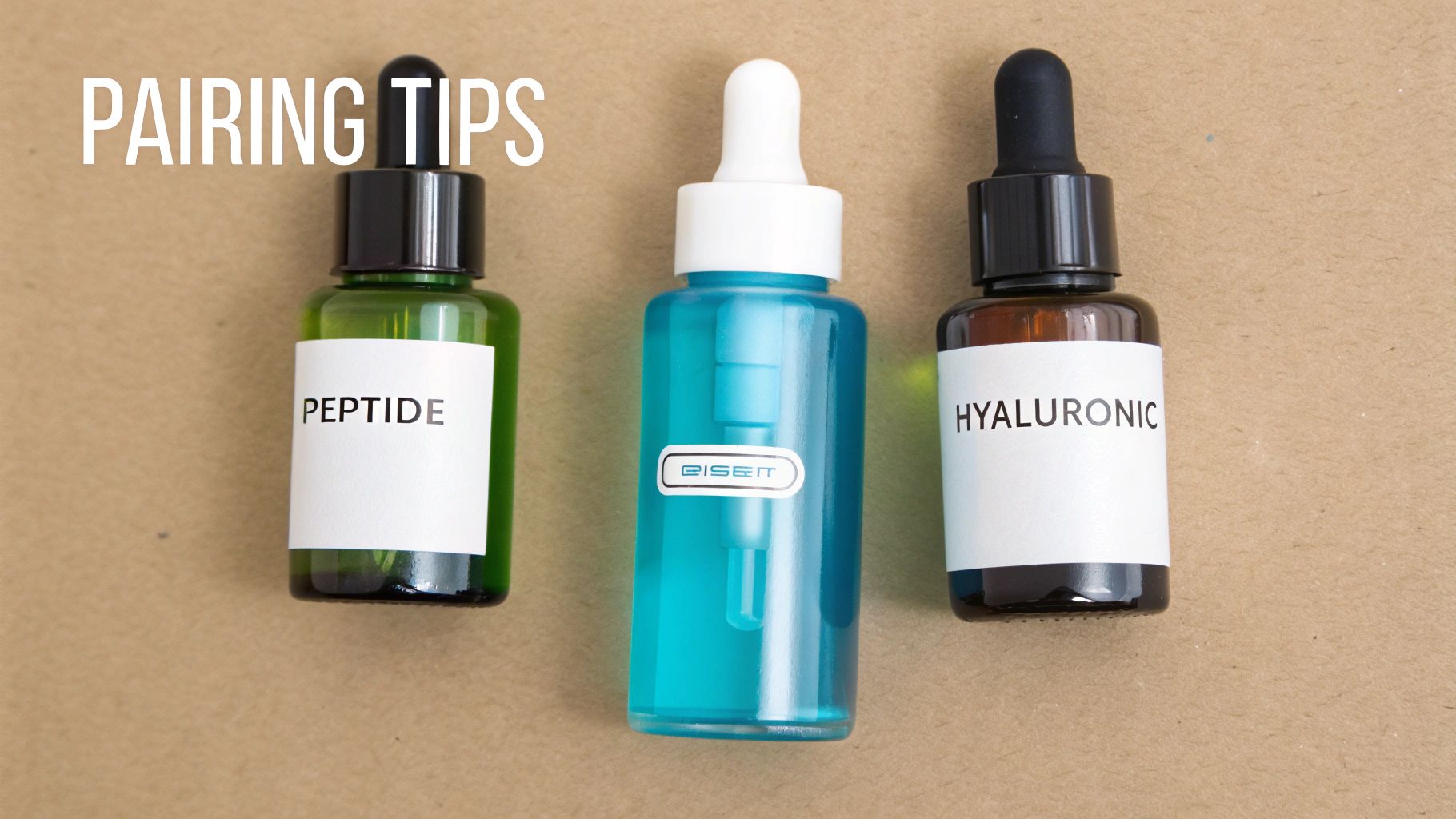
Building an effective skincare routine is a lot like putting together a high-performance team. Each ingredient needs to work well with the others, creating a synergy that helps your skin look its absolute best. When you introduce a star player like a copper peptide, it's crucial to know its best partners and which ingredients might cause a little friction.
Think of it this way: your skincare actives all have different personalities. Some are supportive team players, content to help others shine. Others are powerful leaders that need their own space to get the job done. Pairing them correctly is the secret to unlocking their full cosmetic potential and designing a smarter, more harmonious routine.
The All-Star Partners for Copper Peptides
Certain ingredients work in beautiful harmony with GHK-Cu, amplifying each other's effects to support hydrated, vibrant-looking skin. These are your go-to pairings for creating a gentle yet powerful formula or layering system.
-
Hyaluronic Acid: This is the ultimate dream team. Hyaluronic acid is a moisture magnet, pulling hydration into the skin for that plump, dewy look we all love. When paired with a copper peptide, you get a powerful hydration boost right alongside the peptide’s texturizing benefits.
-
Niacinamide (Vitamin B3): Another fantastic partner, niacinamide is known for supporting the skin's moisture barrier and promoting a balanced, even skin tone. It works happily at a similar pH to copper peptides, making them easy and effective companions in the same formula.
-
Amino Acids: As the literal building blocks of peptides and proteins, other amino acids are natural allies. They help support the skin's overall resilience and hydration, perfectly complementing the work of GHK-Cu.
Think of hyaluronic acid as the hydration specialist that preps the skin, allowing the copper peptide to perform its job on a beautifully moisturized canvas. This synergistic relationship is why they are so often found together in high-end formulations.
This powerful partnership isn't just a skincare secret; it's a major driver of market growth. The global copper peptide market shot up from $939.49 million in 2021 to a projected $1,302 million by 2025. This growth is fueled by consumer trust in these well-formulated products, with over 160 new peptide creams launched in 2023 alone, often priced 22-28% higher than standard anti-aging options.
Ingredients to Use With Caution
Some potent actives are incredibly effective on their own but can clash with copper peptides if you use them at the exact same time. This doesn't mean you can't use them at all—it just requires a bit of strategic scheduling. The main issue is usually a conflict in pH levels.
A copper peptide is happiest in a pH environment between 5.0 and 7.0. Many potent acids, on the other hand, require a much lower (more acidic) pH to be effective. This acidic environment can destabilize the GHK-Cu complex, basically rendering both ingredients useless.
Here’s a simple guide to navigating these power players:
-
Direct Acids (Vitamin C, AHAs, BHAs): Potent forms of Vitamin C, like L-Ascorbic Acid, and exfoliants like glycolic or salicylic acid, thrive at a low pH. Applying them at the same time as your copper peptide can cause both ingredients to become less effective. It's a lose-lose situation.
-
Retinoids: While not always a pH issue, strong retinoids can sometimes be too much for the skin when layered directly with other actives. Giving each ingredient its own space allows them both to work their magic without overwhelming your skin barrier.
To really optimize your routine, it’s helpful to know not only what to include but also which skincare ingredients to avoid to make sure all your products can work together seamlessly.
The Simple Solution: Time-Based Layering
The best way to incorporate these clashing ingredients is to simply separate them. This easy strategy allows you to get the benefits of all your favorite actives without any in-fighting.
- Use them at different times of the day. A popular and effective method is to use your Vitamin C in the morning to leverage its antioxidant properties and apply your copper peptide at night.
- Alternate nights. If you use retinoids, you could apply them one evening and your copper peptide the next. This gives each active a full 24 hours to work uninterrupted.
This approach gives each product the ideal environment to perform at its peak. For a deeper dive, our guide on how to combine retinol and peptides safely at home offers even more tips. By being mindful of these simple pairings, you can create a routine where every single ingredient contributes to a radiant, healthy-looking complexion.
Your Copper Peptide Questions, Answered
Jumping into a new ingredient always sparks a few questions. We get it. To make sure you feel totally confident as you start working with copper peptides, we've put together answers to the queries we hear most often. Think of this as your personal cheat sheet for getting to know this incredible ingredient.
How Long Until I See a Visible Difference?
This is the big one, right? While everyone's skin is a little different, the secret to seeing those beautiful cosmetic benefits from a copper peptide is simple: consistency.
You can generally expect to see an initial boost in hydration and a nice glow within the first 2 to 4 weeks of daily use. For the more significant changes, like improvements in skin texture and firmness, you’ll want to give it about 2 to 3 months of steady application. Just remember, copper peptides work with your skin's own renewal process, so a little patience goes a long way.
Can I Use Copper Peptides With Sensitive Skin?
Yes, you absolutely can. Copper peptides are known for being gentle and supportive, which makes them a great option for many people with sensitive skin. That said, it’s always smart to be cautious when adding any new active to your routine.
We always suggest doing a patch test first. Just apply a small dab of the product somewhere out of the way, like behind your ear or on your inner arm, and give it 24 hours to see how your skin feels. When you're ready to go for it, start by using it every other day and slowly work your way up to daily use as your skin gets used to it.
Why Are Some Copper Peptide Serums Blue?
Seeing that beautiful blue color is actually a great sign! The striking sapphire or azure hue is a natural characteristic of the GHK-Cu complex itself. The intensity of that blue is directly tied to how much copper peptide is in the formula.
A richer, deeper blue usually means a higher concentration of GHK-Cu is present, which is your visual confirmation that you’re holding a potent, active product. This color isn't a dye—it's the real deal.
This is one of the most unique things about working with this ingredient. It's a built-in quality check that's both beautiful and reassuring.
At Skin Perfection, we're all about providing the highest quality ingredients, like our pure Copper Peptide, to empower your skincare creations. Explore our collection and start formulating your perfect product today.