

 Buy with Prime
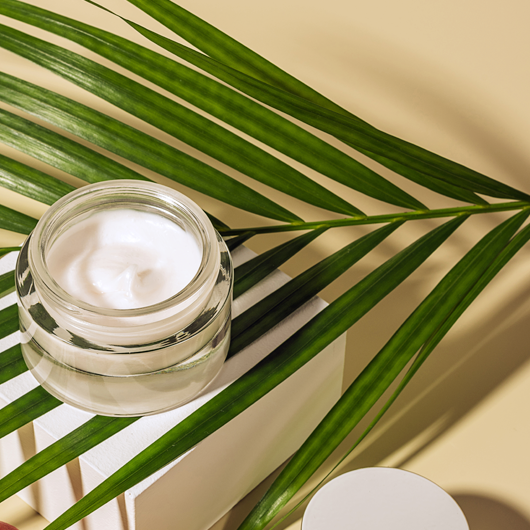


You’re probably looking at a bottle with a dropper and a jar or pump cream and wondering whether they’re doing the same job. That confusion is normal. A serum and a moisturizer can both support a healthy-looking complexion, but they aren’t interchangeable.
The difference between serum and moisturizer comes down to formulation, function, and finish on the skin. One is usually built to deliver concentrated ingredients in a lighter vehicle. The other is usually built to hold water in the skin’s surface and support a comfortable, soft feel.
For clients, that distinction helps with routine building. For DIY makers, it helps with formulation decisions. If you know why a product is thin, rich, fast-absorbing, or cushiony, you can choose more intelligently and avoid layering products that fight each other.
Your Guide to Serums and Moisturizers
You don’t need ten products to understand skincare. You need to know what each product is supposed to do.

The texture difference is often noticed first. Serums tend to feel lighter, thinner, and quicker to sink in. Moisturizers tend to feel creamier, richer, or more cushiony on the skin. That texture clue is helpful, but it’s only the surface of the story.
Here’s the quick comparison early, so the rest of the article makes sense:
| Product | Main job | Usual texture | Common ingredient focus | Where it works most visibly |
|---|---|---|---|---|
| Serum | Deliver targeted actives | Lightweight, fluid, gel-like, or thin | Peptides, vitamin C, hyaluronic acid, retinol, niacinamide | More targeted cosmetic concerns |
| Moisturizer | Hydrate and help hold moisture at the surface | Lotion, cream, balm, gel-cream | Humectants, emollients, occlusives, ceramides, oils | Surface comfort, softness, and barrier support |
Why people mix them up
A hydrating serum exists. A moisturizer can also contain active ingredients. That overlap is where the confusion starts.
But overlap doesn’t mean sameness. A serum is usually the delivery step. A moisturizer is usually the support and sealing step.
A simple way to think about it
Use this mental model:
- Serum is the specialist. It’s designed around a focused ingredient story.
- Moisturizer is the comfort layer. It helps skin feel less exposed, less dry, and more balanced.
- Together, they often make more sense than either one alone.
If you want more context on peptide-focused formulas, this guide on what is peptide serum is a useful companion read.
Serums and moisturizers can both belong in the same routine without doing the same job.
Serums Explained The Power of Potent Actives
A serum is usually the product you reach for when you want a formula built around a specific active ingredient goal. That might be brighter-looking skin, smoother-looking texture, a more hydrated feel, or a firmer appearance.
What makes a serum a serum
Serums distinguish themselves from moisturizers through their higher concentration of active ingredients and deeper penetration. No7 Beauty notes that serums can penetrate up to 10 layers deep into the skin’s surface because of their lightweight, water-based formulas and smaller molecules, which helps with absorption (No7 Beauty on serum vs moisturizer).
That doesn’t mean every serum looks the same. Some are watery. Some are silky gels. Some feel almost like a very light emulsion. What they share is a formulation strategy: they usually carry actives in a way that feels less heavy on the skin than a cream.
Why texture matters
A serum’s light feel isn’t just about preference. It often reflects what the formulator is trying to do.
A lightweight base can help actives spread quickly and sit closer to the skin without the richer coating effect you’d expect from a cream. That’s why clients often describe serums as “sinking in fast” or “not leaving much residue.”
Common serum categories include:
- Hydration serums with humectants such as hyaluronic acid.
- Brightening serums with ingredients like vitamin C or niacinamide.
- Smoothing serums with peptides or retinol-focused blends.
- Texture-support serums that are designed for a refined, polished look.
The ingredient mindset behind serum formulas
As a formulator, I think of serums as precision vehicles. The goal is usually not to make the skin feel coated. The goal is to get a chosen set of ingredients onto the skin in an elegant, usable format.
That’s why serum formulas often avoid excess heaviness. If the product becomes too waxy, buttery, or occlusive, it starts behaving more like a cream.
A few ingredients people commonly associate with serums are:
- Peptides, often chosen for routines focused on the look of firmness and smoothness
- Vitamin C, often used in brightening routines
- Hyaluronic acid, often included for a plumper, more hydrated look
- Retinol, often selected for evening routines centered on skin renewal appearance
- Niacinamide, often used in balancing and tone-focused products
If you’re comparing ingredient-first options, this article on peptide serums vs hyaluronic acid comparison helps clarify how different serum categories serve different goals.
Practical rule: If a product is built around one starring active or a tight group of actives, there’s a good chance it belongs in the serum category.
What serums do best
Serums usually make the most sense when your routine needs direction. Instead of saying, “I want any face product,” you’re saying, “I want a formula centered on hydration,” or “I want one focused on the appearance of fine lines.”
That’s where serums shine. They’re less about blanket comfort and more about targeted cosmetic support.
Moisturizers Explained The Art of Hydration and Protection
A moisturizer has a different assignment. It’s usually designed to help the skin feel comfortable, soft, and protected from moisture loss at the surface.
What a moisturizer is built to do
Moisturizers focus on surface-level hydration and barrier protection, using thicker textures with emollients and occlusives. Dermatologist Hal Weitzbuch explains that moisturizers are heavier and contain more emollients than serums, which helps maintain the skin’s barrier function (Neutrogena on serum and moisturizer differences).
This is why a moisturizer often gives that immediate “ah, that feels better” response. It’s less about concentrated active delivery and more about creating a comfortable finish on the outer layer of the skin.
The three ingredient groups to know
Most moisturizers rely on a blend of three classic ingredient types:
- Humectants draw water toward the skin’s surface. Glycerin is a common example.
- Emollients soften and smooth. Think oils, esters, and butters.
- Occlusives help slow water loss by forming a more protective layer on top.
When these are balanced well, the skin tends to feel less tight and more supple.
If you like ingredient-focused skincare education, this piece on natural humectants for skin is helpful for understanding the water-binding side of moisturizers.
Why richer doesn’t always mean better
People often assume the thickest cream is the most effective one. Not always.
A rich cream can feel lovely on dry skin, especially in cold weather. But someone with oilier skin may prefer a lotion or gel-cream that still supports hydration without leaving a heavy finish.
That’s why moisturizer texture ranges matter:
| Texture | Typical feel | Often suited for |
|---|---|---|
| Gel-cream | Light, fresh, quick-spreading | Oily or combination skin |
| Lotion | Balanced, fluid, everyday | Many skin types |
| Cream | Richer, more cushioned | Normal to dry skin |
| Balm | Dense, protective | Very dry-feeling areas |
For readers exploring pantry-inspired moisturizing ideas, this guide on olive oil as moisturizer for face gives useful context on where a simple oil may fit, and where a full moisturizer formula offers more balance.
A moisturizer doesn’t have to be thick to be useful. It has to match your skin feel, climate, and routine.
What moisturizers do best
A moisturizer is often the product that makes a routine feel complete. It helps reduce that exposed, dry, freshly-cleansed feeling and gives the skin a more polished, comfortable surface.
If a serum is ingredient-forward, a moisturizer is structure-forward. It supports softness, helps reduce surface dehydration, and gives your routine a finished layer.
The Core Differences A Side-by-Side Comparison
The easiest way to understand the difference between serum and moisturizer is to compare them by role, not by marketing language.
A direct comparison
Serums and moisturizers differ in active ingredient concentration and penetration depth. Serums can deliver 10 to 20 times higher concentrations of actives due to smaller molecular sizes, listed as less than 500 Da, while moisturizers often feature lower active concentrations, listed as less than 5%, with larger molecules, listed as greater than 1000 Da, that stay closer to the surface to form a protective barrier (Colorescience serum vs moisturizer guide).
That single distinction explains most of the differences people notice in real use.
| Comparison point | Serum | Moisturizer |
|---|---|---|
| Primary purpose | Deliver targeted actives | Hydrate and support the surface barrier |
| Feel on skin | Thin, fast-absorbing, lighter | Creamier, richer, more cushioning |
| Formula emphasis | Actives first | Water retention and comfort first |
| Molecule profile | Smaller, designed for deeper delivery | Larger, designed to stay near the surface |
| Best routine role | Apply before heavier products | Apply after lighter products |
Function matters more than category names
Brands sometimes blur the line. You’ll see “serum creams,” “hydrating serums,” and “treatment moisturizers.” That’s why I tell clients to ask two questions:
- Is this formula mainly built to deliver a specific active?
- Or is it mainly built to cushion the skin and reduce moisture loss?
The answer usually tells you where the product belongs in your routine.
Texture gives useful clues
You can often identify the category by the way the product behaves in your palm.
A serum usually spreads quickly, disappears faster, and leaves less film. A moisturizer usually leaves more slip, more comfort, and more of a sealed-in feel.
That doesn’t make one better. It makes them different tools.
Concentration changes expectations
Because serums tend to be more concentrated in their active story, people usually use less of them. A few drops may be enough.
Moisturizers are usually applied more generously because they are covering and supporting the skin’s surface. You’re not only placing ingredients. You’re also creating a finish.
If your serum feels like a message and your moisturizer feels like a blanket, you’re reading the products correctly.
Routine role is where confusion clears up
This is the point that generally settles the debate.
A serum is usually the treatment-style step. A moisturizer is usually the seal-and-support step.
That’s also why many people find that using both creates a more complete routine than relying on one category alone. If you want a related comparison between lighter hydration products and active-focused formulas, this article on what is the difference between hydrators and serums goes deeper into where water-binding products fit.
The short version
- Choose serum when your routine needs focus.
- Choose moisturizer when your skin needs comfort and surface hydration.
- Use both when you want targeted ingredients plus a supportive finish.
How to Layer Serums and Moisturizers for Best Results
Application order changes how a routine feels. It also changes how well each layer can do its job.

Follow the thin-to-thick rule
The simplest layering rule is thinnest consistency first, thickest last.
A lightweight serum goes on before moisturizer because a richer cream can create a barrier-like film that makes it harder for a fluid product to sit where you want it. When clients reverse the order, they often say the serum pills, slips, or just feels like it sits on top.
A practical morning routine
A basic morning order often looks like this:
- Cleanse if needed, or rinse if that suits your skin.
- Apply toner or essence if you use one.
- Use serum based on your main goal, such as hydration or brightening.
- Apply moisturizer to add comfort and help hold hydration.
- Finish with sunscreen for daytime.
You don’t need every possible step. You need sensible layering.
A practical evening routine
Evening can be slightly richer or more treatment-focused.
- Start with clean skin.
- Apply your serum while skin is fresh and free of heavier products.
- Pause briefly so the layer settles.
- Follow with moisturizer to complete the routine.
That pause doesn’t need to be complicated. Just give the serum enough time that it doesn’t feel overly wet when you add the next step.
Let each layer settle before the next one. You’re not trying to create a slurry in your hands.
How much product to use
The most common mistake isn’t using too little. It’s using too much of both.
Try this guideline:
- Serum: a few drops or a small pump
- Moisturizer: enough to lightly cover face and, if desired, neck
If the skin feels sticky, greasy, or rolls into flakes, the routine may be overloaded.
When layering needs adjustment
You may need to tweak your order or amount if:
- Your serum pills. Use less product and allow more settling time.
- Your moisturizer feels too heavy. Switch to a lotion or gel-cream texture.
- Your skin still feels tight. Choose a more hydrating serum, a richer moisturizer, or both.
- Your routine feels crowded. Reduce steps rather than forcing too many actives at once.
For a broader routine map, this guide on the correct order to apply skin care products is a helpful reference.
Choosing Your Perfect Pair Tailoring to Your Skin Needs
You wash your face, apply a serum that feels elegant and light, then finish with a cream that somehow feels like too much. Or the opposite happens. Your moisturizer disappears fast, but your skin still feels tight an hour later. That usually means the pair is mismatched at the formulation level, not that your skin is difficult.
Choosing well starts with one question. What is your skin missing most: water-binding support, surface softness, or a more protective finish? Serums and moisturizers solve different parts of that puzzle because they are built differently. A serum usually concentrates a few key functional ingredients in a lighter base. A moisturizer is structured to create comfort, reduce water loss, and leave a more lasting film on the skin.
If your skin feels oily or easily congested
Oily skin often prefers low-residue textures, but it still benefits from hydration and barrier support.
Look for:
- Water-light or gel serums with humectants such as glycerin or hyaluronic acid
- Lotions or gel-creams with a lower oil load
- Fast-absorbing emollients rather than waxy, heavy finishes
The goal is not to remove richness from the routine entirely. The goal is to choose a moisturizer with a lighter internal structure, so it softens and supports the skin without feeling occlusive too early in the day.
If your skin feels dry or mature
Dry or mature-feeling skin usually does best with a true pair rather than a single hero product. At the molecular level, this makes sense. Water-loving ingredients such as glycerin, sodium PCA, and hyaluronic acid help draw and hold hydration in the upper layers of the skin, but they do not create much protection on their own. Richer cream ingredients such as squalane, fatty alcohols, ceramides, and occlusive agents help slow moisture loss and improve skin feel.
A simple way to choose is to match the serum to the skin goal, then match the moisturizer to the finish your skin needs:
| Skin need | Serum direction | Moisturizer direction |
|---|---|---|
| Dry-feeling skin | Humectant-rich serum | Cream with emollients and occlusive support |
| Mature-looking skin | Peptide or retinoid-style night serum | Cushioning cream with barrier-supportive ingredients |
| Dull-looking skin | Brightening serum | Moisturizer with a comfortable, non-greasy finish |
This pairing gives you both activity and stay power.
If your skin is combination
Combination skin often needs distribution, not complexity. One well-chosen serum can usually go across the whole face, because lightweight active formulas tend to spread evenly without creating heavy pockets. Moisturizer is where you can customize. Use a lighter layer broadly, then add a richer cream only on areas that lose water faster, such as the cheeks or around the mouth.
That approach works like spot tailoring for fabric. You do not line the whole jacket with winter wool just because the sleeves feel cold.
If sensitivity is your main concern
Sensitive skin usually responds best to fewer variables. A short ingredient list makes it easier to identify what your skin enjoys and what it does not.
Choose:
- A serum with one clear purpose, such as hydration or soothing support
- A moisturizer with a simple emulsion base, without an overloaded active blend
- Consistent use, so your skin gets a stable routine instead of frequent changes
If you are formulating your own products, this is an especially useful rule. Start with a plain hydrating serum base or a straightforward cream base, then adjust one ingredient category at a time.
If you’re interested in advanced routines
Some people also explore professional treatments alongside topical skincare. If you want context for how in-office procedures fit with a cosmetic routine focused on texture and renewal, Microneedling for Total Skin Renewal gives a helpful overview.
The right pair is the combination your skin will tolerate and enjoy using consistently.
From Lab to Shelf DIY Tips and Product Selection
The formulation difference between serum and moisturizer becomes very clear when you make them yourself or read labels with a formulator’s eye.

If you make your own serums
A basic serum usually starts with a water-based framework. That might include water, humectants, and a chosen active. The goal is usually clarity, slip, and elegant spread.
When DIY makers formulate serums, they often focus on:
- One main active story, such as peptides or hydration
- A lighter skin feel, rather than a rich finish
- Compatibility, so the formula layers well under cream
If your serum feels sticky, cloudy in an unintended way, or overly heavy, the formula may need simplification.
If you make your own moisturizers
A moisturizer usually asks for more structure.
You’re often balancing:
- water phase ingredients
- oils or butters
- an emulsifier
- ingredients that influence skin feel and stability
That’s why a moisturizer can feel more complete on its own. It’s designed to create body, cushion, and a lasting finish.
How to read labels when shopping
A strong label-reading habit helps more than packaging claims.
Look for these clues:
- For serums: actives appear as part of the product’s central identity, and the texture is usually described as light, fast-absorbing, or fluid.
- For moisturizers: ingredients that support softness and barrier feel often shape the formula, such as oils, butters, ceramides, or classic humectants.
- For both: avoid buying based only on buzzwords. Match the formula type to your skin goal.
Questions worth asking before you buy
Ask yourself:
- Do I want a targeted active step or a comfort step?
- Do I prefer a dewy finish or a lighter finish?
- Will this layer well with the rest of my routine?
- Am I choosing this because of the ingredient list, or only because of the marketing story?
The better you get at answering those questions, the easier it becomes to choose products with intention.
Frequently Asked Questions About Serums and Moisturizers
Can I use a serum without a moisturizer
Sometimes, yes. Some people with very oily skin or those living in humid weather prefer a serum alone, especially if the serum already gives enough comfort.
Still, many people find that a moisturizer completes the routine by adding a more finished surface feel. If your skin feels tight later in the day, that’s a sign the serum-only approach may not be enough.
Can I skip serum and just use moisturizer
Yes. A moisturizer-only routine is completely reasonable if your main goal is simple hydration and comfort.
Serum becomes more useful when you want a focused ingredient step. If you’re trying to keep things minimal, a good moisturizer can absolutely stand on its own.
Which is more important
Neither is universally “more important.” The answer depends on your goal.
If your priority is a targeted active, serum matters more. If your priority is comfort and reducing that dry, exposed feeling, moisturizer matters more.
Do men need both
They can. Men’s skin routines benefit from the same logic as anyone else’s. A lightweight serum can add a targeted step without the heavier feel of a thick cream.
For men focused on anti-aging appearance around the face or a thinning hairline, No7 Beauty notes that serums’ peptides penetrate deeper than moisturizers’ surface barriers, and lightweight serums with plant stem cells can be appealing because they deliver actives without the heavier occlusive feel of some rich creams. That source is noted earlier in this article, and it’s a useful reminder that texture preference matters just as much as category.
What if I have facial hair or a beard
In that case, lighter textures often feel easier to use. A fluid serum can reach the skin more comfortably than a dense cream. If you use a moisturizer, choosing a lighter lotion can help reduce that coated feeling in bearded areas.
Do I apply them at the same time
Not exactly. Apply serum first, then moisturizer. Give each layer a brief moment to settle so the products don’t bunch up.
If you’re building a routine or formulating your own products, Skin Perfection offers both finished skincare and lotion-making supplies, which makes it a practical place to explore ingredients, textures, and product types with a more informed eye.