

 Buy with Prime



So, you're wondering how to encourage your hair to grow faster, naturally? I get it. The secret isn’t some magic potion, but a holistic game plan: fueling your body from the inside, creating a happy home for your hair on your scalp, and handling your strands with care. This triple-threat approach supports your hair’s natural growth cycle, leading to stronger, more vibrant hair over time.
Your Practical Guide to Natural Hair Growth

Welcome to your no-nonsense guide to achieving fuller, more beautiful-looking hair. This isn't about overnight miracles. It's about building a sustainable routine that works with your body, not against it. By understanding the fundamentals, you can set realistic goals and make simple changes that genuinely add up.
First things first, let's get real about the hair growth process. It's a natural rhythm that we can’t supercharge, but we can absolutely support and optimize it.
Understanding Your Hair's Natural Pace
On average, hair grows at a pretty steady rate of about 0.5 inches (1.25 cm) per month. That adds up to roughly 6 inches a year. This pace is mostly dictated by your genetics, but your diet and overall lifestyle play a huge role in whether you reach that potential.
The hair growth cycle has a few distinct phases, and our goal with any natural approach is to support the active growth phase, known as anagen. Some fascinating research suggests certain plant-based ingredients can help create the ideal conditions for this phase. You can dig deeper into the science of hair growth on Bosley.com.
Your hair’s journey is a marathon, not a sprint. The real goal is to create the perfect environment for your body to do its best work, resulting in hair that looks and feels incredible.
This guide will break down the core principles into simple, actionable steps you can start using today. To give you a quick overview, here are the main areas we'll be focusing on.
Quick Guide to Supporting Natural Hair Growth
This table summarizes the core principles we’ll explore for promoting the look of faster, healthier hair growth. Think of it as your cheat sheet for the journey ahead.
| Focus Area | Key Action | Why It's Important |
|---|---|---|
| Internal Nourishment | Eat a balanced, nutrient-rich diet. | Hair strands are built from the vitamins, minerals, and proteins you consume. |
| Scalp Environment | Keep your scalp clean, stimulated, and balanced. | A healthy scalp is the foundation for healthy follicles and robust-looking hair. |
| Gentle Handling | Minimize breakage with gentle styling and care. | Retaining length is just as crucial as new growth for achieving longer hair. |
| Topical Support | Use targeted botanical extracts, oils, and serums. | Natural ingredients can provide external support to nourish the scalp and hair. |
Each of these pillars is essential, and when you combine them, you create a powerful system that supports your hair from every angle.
Core Pillars of Natural Hair Support
Creating a routine that encourages the look of faster hair growth means focusing on four key areas. Each one is a non-negotiable piece of the puzzle.
- Internal Nourishment: Your hair is literally built from the food you eat. A diet packed with specific vitamins, minerals, and proteins is the absolute foundation for strong, resilient strands.
- Scalp Environment: Think of your scalp as the garden where your hair grows. A clean, balanced, and well-stimulated scalp is non-negotiable for healthy-looking follicles.
- Gentle Handling: How you treat your hair day-to-day matters. A lot. Preventing breakage is just as important as encouraging new growth because it helps you actually keep the length you gain.
- Topical Support: This is where we bring in the botanical cavalry. Using targeted natural ingredients, like plant-derived extracts and powerful oils, can give your scalp and strands an extra supportive boost.
As we dive into each of these pillars, you'll get the know-how to build a routine that feels right for you. Drawing from our own experience with high-performance plant actives here at Skin Perfection, we’ll show you how a smart, science-backed approach can help you finally reach your hair goals.
Nourish Your Hair from the Inside Out

Before you even think about topical treatments and scalp serums, let’s talk about what’s on your plate. You can have the best hair care routine in the world, but if you aren’t feeding your body the right nutrients, it’s like trying to build a house without proper materials. Strong, healthy hair truly starts from within.
The nutrients you eat provide the essential building blocks your hair follicles need to thrive. When your diet is on point, your follicles get the fuel they need to do their job, and you’ll see the results in your hair's strength and vibrancy.
The Building Blocks of Beautiful Hair
Your hair is made of a tough protein called keratin. This means getting enough protein in your diet is absolutely non-negotiable for supporting the actual structure of your hair. Think lean meats, fish, eggs, and plant-based sources like lentils and beans.
Beyond protein, a few key micronutrients are the real superstars when it comes to hair health. Here's a quick look at what you need and how to get it without overhauling your entire life.
- Biotin (Vitamin B7): Everyone calls this the "hair growth vitamin" for a reason. Biotin is a powerhouse for supporting keratin production. You can find it easily in foods like eggs, almonds, and sweet potatoes.
- Iron: This mineral is critical for helping red blood cells deliver oxygen straight to your follicles. If you’re low on iron, it can show up in your hair. Load up on spinach, lentils, and a little red meat to keep your levels up.
- Zinc: Zinc is a crucial player in supporting hair tissue. It also helps keep the oil glands around the follicles working just right. Pumpkin seeds, chickpeas, and beef are great sources.
- Vitamin C: This classic antioxidant does more than just boost your immune system. It helps your body absorb all that important iron and is essential for creating collagen, another protein that strengthens your hair. Berries, citrus fruits, and bell peppers are packed with it.
Making these changes doesn't have to be a chore. A simple breakfast of scrambled eggs with a side of avocado and fresh berries covers your protein, biotin, and healthy fats. For an afternoon snack, a handful of almonds gives you a solid dose of biotin and vitamin E.
Hydration: The Overlooked Hero
It's so easy to get caught up in tracking vitamins and macros that we forget the simplest thing of all: water. Proper hydration is everything for your overall health, and your hair is no exception. When you're dehydrated, nutrient delivery to your scalp can slow down, leaving hair looking dull and feeling brittle.
Aim to drink plenty of water all day long. It supports every single one of your body’s functions and contributes directly to the elasticity and appearance of your hair strands.
Key Takeaway: Think of a balanced diet as a direct investment in your hair's future. When you consistently eat nutrient-rich foods, you’re giving your body the raw materials it needs to build strong, gorgeous hair from the inside out.
A Smart Approach to Supplements
While nothing beats getting your nutrients from whole foods, sometimes supplements can be a great way to fill in any gaps in your diet. The supplement aisle can be a confusing place, though, so you need to know what you’re looking for instead of just grabbing the first bottle that promises "hair growth."
When you read the labels, keep an eye out for those key players we just talked about: biotin, zinc, iron, and vitamin D. To really get a comprehensive approach, understanding the right combination of vitamins to support hair health can make all the difference for your hair's vitality.
It’s always a good idea to chat with your doctor before starting any new supplement. They can help you figure out exactly what you need based on your personal health. For a deeper dive, we’ve covered this in more detail in our article on the best vitamins for encouraging hair regrowth. Just remember, consistency is everything—it takes time for these internal changes to show up on the outside.
Create the Ideal Scalp Environment

While eating right sets the stage from the inside, your next move is to focus directly on your scalp. Think of your scalp as the garden soil for your hair. If the soil isn't healthy, you can't expect the plants to thrive. It’s that simple.
So many of us have a detailed skincare routine for our face but completely forget about the skin on our heads. Treating your scalp with the same care is an absolute game-changer for how your hair looks and feels. A healthy scalp is clean, clear of buildup, and has great circulation.
Get Back to Basics With Gentle Cleansing
First things first, let’s talk about washing your hair. Over time, everything from dry shampoo and styling products to your own natural oils and sweat can create a layer of buildup on your scalp. This gunk can interfere with the hair follicle, so keeping it clean is non-negotiable.
But gentle is the keyword here. If you use harsh, stripping shampoos or wash your hair too often, you can strip away the natural oils that protect your scalp. This sends your scalp into panic mode, causing it to produce even more oil to compensate, and you get stuck in a frustrating cycle of greasy roots and dry ends.
The goal is to wash your hair only when it needs it—for most people, that's a few times a week. Stick to a mild, sulfate-free cleanser that gets the job done without being aggressive.
Master the Five-Minute Scalp Massage
Here’s one of the easiest and most powerful habits you can build: a daily scalp massage. This isn't just about feeling relaxed; it's a direct-delivery system for nutrients. Massaging your scalp boosts blood flow, which helps transport all those vitamins and minerals you're eating straight to your hair follicles.
A daily five-minute massage is all it takes to make a real difference. You can do it in the shower with your shampoo or at night with a nourishing oil. Here's a simple way to do it:
- Use your fingertips—the pads, not your nails—and place them on your scalp.
- Apply firm but gentle pressure, moving your fingers in small, circular motions.
- Work your way across your entire scalp, from your hairline all the way back to the nape of your neck.
To level up the experience, try a soft silicone scalp massager to really stimulate the area without any risk of scratching or irritation. If you want to dive deeper, our guide on scalp massage for hair growth has even more tips.
Pro Tip: Consistency is everything. Make this massage a non-negotiable part of your daily routine, just like brushing your teeth. That consistent stimulation is what creates a healthy environment for your follicles to do their best work.
Why You Should Exfoliate Your Scalp
Just like the skin on your face, your scalp needs a good exfoliation every now and then. This step helps lift away stubborn product residue and dead skin cells that a regular shampoo might miss. Think of it as clearing the way for new, healthy hair to come through.
Don't go overboard, though. For most people, exfoliating your scalp once a week is more than enough. You can find dedicated scalp scrubs or even chemical exfoliants with ingredients like salicylic acid that are made specifically for this.
When you exfoliate, let the product do the heavy lifting. If you’re using a scrub, be gentle and avoid aggressive rubbing, which can cause tiny scratches. This simple weekly ritual keeps your scalp clean and balanced—the perfect foundation for gorgeous hair.
DIY Topical Treatments for Your Hair
Now for the really fun part. We’ve talked about feeding your hair from the inside out, but what you put on your hair and scalp is just as crucial. This is where you get to play alchemist, creating your own personalized topical treatments.
There’s something incredibly satisfying about crafting your own blends. You control every single ingredient, tailoring it perfectly to what your hair is craving at that moment—be it a thirst-quenching moisture boost or an invigorating scalp refresh. It’s a beautiful way to connect with your self-care routine.
Choosing Your Base Carrier Oils
Every great DIY hair recipe starts with a carrier oil. Think of these as the foundation—gentle, plant-derived oils that do the heavy lifting of delivering nutrients and diluting more concentrated ingredients like essential oils.
Here are a few of my go-to choices that I’ve seen work wonders:
-
Coconut Oil: A true classic for a reason. Coconut oil is famous for its ability to penetrate deep into the hair shaft, which is why it’s so amazing for improving the look of moisture and shine. If your hair is feeling particularly parched or looking dull, this is your oil. You can learn more about its incredible versatility in our guide to organic virgin coconut oil for healthy bodies, skin, and hair.
-
Jojoba Oil: This one is a personal favorite because it's so unique. Its molecular makeup is remarkably similar to our scalp's own sebum. This makes it the ultimate balancer—it can hydrate a dry, flaky scalp without weighing down an oily one. It’s incredibly versatile.
-
Pumpkin Seed Oil: This oil has become a real star in the natural hair care world. A 2021 clinical study observed that it significantly improved the appearance of hair in women after just three months of topical use. Researchers documented visible increases in both hair count and density. Its unique properties make it a powerhouse addition to any custom hair growth serum. Healthline.com has more great insights on hair growth research if you want to dive deeper into the science.
To help you choose the right base for your creations, here's a quick look at some popular oils.
Popular Natural Oils for Hair Care
| Natural Oil | Primary Characteristic | Best For (Hair Type/Concern) | How to Use |
|---|---|---|---|
| Coconut Oil | Deeply penetrating; high in lauric acid | Dry, dull, or damaged hair | As a pre-shampoo treatment or in deep conditioning masks. |
| Jojoba Oil | Mimics natural scalp sebum | All hair types, especially oily or combination scalps | As a scalp treatment, lightweight leave-in, or in oil blends. |
| Pumpkin Seed Oil | Nutrient-dense; rich in antioxidants | Thinning hair or for supporting scalp health | In scalp serums, hot oil treatments, or blended with other carriers. |
| Olive Oil | Emollient and rich in fatty acids | Thick, dry, or coarse hair | In hair masks and for adding shine and softness. |
This table is just a starting point. The best way to find your perfect match is to experiment and see how your hair responds.
Invigorating With Essential Oils
Once your carrier oil is sorted, you can amplify its effects with a few drops of essential oils. These are potent plant extracts that bring their own set of benefits, particularly for creating an energizing, stimulating sensation on the scalp.
Just remember, these are highly concentrated. Always dilute them properly in a carrier oil and do a patch test first.
Two absolute must-haves for any hair care toolkit are:
-
Rosemary Oil: This is probably the most celebrated essential oil for hair, and for good reason. It’s traditionally used to create a stimulating feeling that leaves the scalp feeling refreshed and awake.
-
Peppermint Oil: The menthol in peppermint oil delivers that signature cooling tingle. That sensation is linked with increased microcirculation at the skin's surface, which feels wonderfully invigorating.
Recipe 1: Scalp-Stimulating Oil Blend
This is my go-to blend for a scalp massage. It's designed to leave your scalp feeling refreshed and revitalized—the perfect ritual to kickstart your week.
Ingredients:
- 2 tablespoons of Jojoba Oil
- 2 tablespoons of Pumpkin Seed Oil
- 3-4 drops of Rosemary Essential Oil
- 2 drops of Peppermint Essential Oil
Instructions:
- Combine the jojoba and pumpkin seed oils in a small glass dropper bottle.
- Carefully add the rosemary and peppermint essential oils.
- Screw the cap on tightly and give it a gentle shake to mix.
- To use, part your hair and apply a few drops directly onto your scalp. Spend 5-10 minutes massaging it in with your fingertips—this is key! Let it sit for at least 30 minutes (or even overnight) before shampooing and conditioning as you normally would.
Recipe 2: Moisture-Rich Hair Mask
When my hair feels like straw and is desperate for some TLC, this is the mask I whip up. It’s a super simple, ultra-hydrating treat for dry, thirsty strands.
Ingredients:
- 2 tablespoons of melted, unrefined Coconut Oil
- 1 tablespoon of Olive Oil
- 1 tablespoon of pure honey (a fantastic natural humectant)
Instructions:
- Gently warm the coconut oil until it's a clear liquid.
- In a small bowl, whisk the melted coconut oil, olive oil, and honey until you have a smooth, consistent blend.
- Apply the mask to clean, damp hair, really working it into the mid-lengths and ends where hair tends to be driest.
- Clip your hair up, pop on a shower cap to trap heat (and prevent drips!), and let it work its magic for 20-30 minutes. Then, rinse thoroughly and follow with your shampoo.
Safety First: Always, always perform a patch test before slathering a new creation all over your head. Apply a tiny amount to your inner arm and wait 24 hours to make sure your skin is happy.
Elevate Your Creations With High-Performance Actives
Ready to level up your DIY game? For those of you who really want to create something that rivals a high-end product, you can start incorporating high-performance actives.
Here at Skin Perfection, we provide the specialized ingredients that can take your homemade recipes from simple to sophisticated. Think about adding things like peptides or targeted plant-derived extracts into your oils and serums. These are the ingredients that allow you to truly customize your routine and create a potent natural serum for hair growth tailored specifically for you. This is how you move from simply making products to formulating for beautiful results.
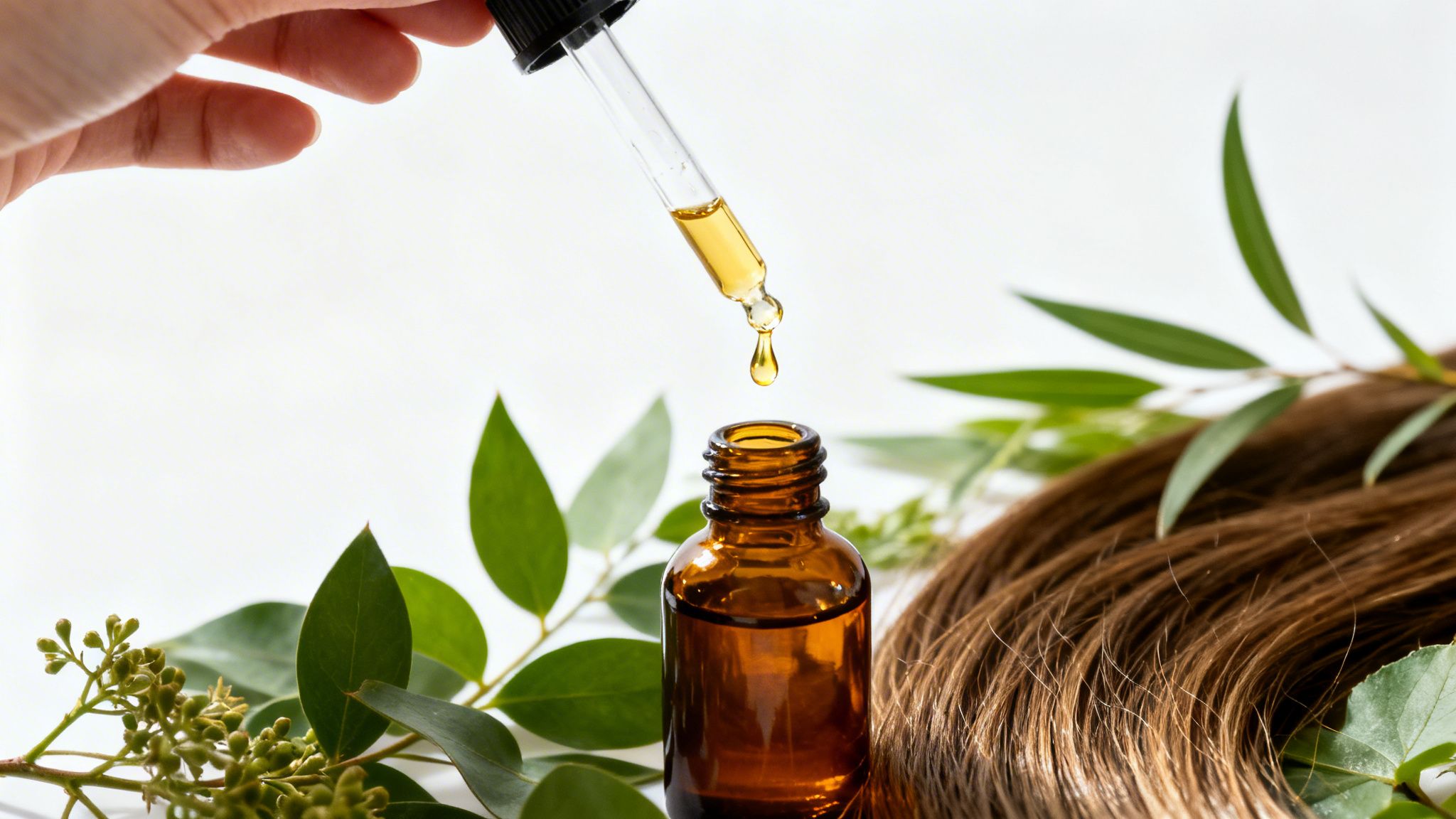
Prevent Breakage to Retain Length
Growing your hair is one thing; keeping that new length is a whole different challenge. You can do everything right with your diet and scalp care, but if your hair is snapping off at the ends, you’ll feel like you’re stuck at the same length forever. The secret to seeing real, tangible results is learning how to prevent breakage.
It all boils down to one simple concept: gentle handling. Your hair, especially when it's long, is more fragile than you think. Those small, everyday habits can either protect your strands or lead to constant damage, splits, and snaps. It's time to build a "hair-safe" routine that preserves every precious inch you've worked so hard to grow.
Rethink Your Wash Day Routine
The way you wash and detangle your hair can be a major source of breakage. When hair is wet, it’s at its most vulnerable. It stretches more easily, making it incredibly prone to snapping. The key here is to be deliberate and gentle from start to finish.
Before you even turn on the water, take a moment to gently detangle your dry hair with your fingers or a wide-tooth comb. This simple step minimizes the major knots you’ll have to wrestle with later. In the shower, focus the shampoo on your scalp—that’s where the oil and buildup are. Let the suds just run down the lengths of your hair as you rinse.
When it's time to detangle your wet hair, always use a wide-tooth comb and plenty of leave-in conditioner or a detangling spray to create slip.
- Start from the bottom: Never, ever rake a comb from your roots straight down. Begin combing at the very ends of your hair, and then gradually work your way up in small sections.
- Hold your hair: When you hit a tangle, hold the section of hair above the knot. This prevents you from yanking directly from the root and causing stress on the follicle.
- Be patient: Rushing this process is a guaranteed recipe for snapped strands. Take your time. It’s worth it.
This small shift in your technique is one of the most powerful things you can do to reduce mechanical damage and keep your ends looking thick and healthy.
Upgrade Your Hair Drying Habits
The post-shower routine is another critical moment. That standard, rough cotton bath towel you’ve been using? It could be your hair's worst enemy. The coarse fibers create friction that ruffles the hair cuticle, leading to frizz and, you guessed it, breakage.
A simple switch from a cotton towel to a microfiber towel or even a soft, old t-shirt can dramatically reduce friction and prevent the tiny snaps that thin out your ends over time.
Instead of vigorously rubbing your hair to dry it, gently squeeze and blot the excess water out. Let the smoother, more absorbent fabric do the work. This tiny change is a non-negotiable step for anyone serious about gaining and maintaining length.
The right ingredients can also make a world of difference. As this simple diagram shows, you don't need complicated formulas to create nourishing DIY hair treatments.

A powerful hair mask can be as simple as combining a nourishing carrier oil with a few drops of a potent essential oil.
Protect Your Hair While You Sleep
You spend about a third of your life in bed, which means your nightly routine has a massive impact on your hair's health. Tossing and turning on a standard cotton pillowcase creates constant friction, leading to a morning mess of tangles, frizz, and broken strands.
The fix is surprisingly easy: switch to a silk or satin pillowcase. The smooth surface allows your hair to glide across the fabric instead of getting snagged and pulled all night. This is one of the simplest changes you can make, and you’ll notice the difference immediately with smoother, less tangled hair in the morning.
If you have longer hair, consider a protective hairstyle for sleep. A loose braid or a high, loose bun (sometimes called a "pineapple") secured with a gentle hair tie like a silk scrunchie can prevent your hair from getting tangled or trapped underneath you. Steer clear of tight elastics with metal parts—they are notorious for snagging and breaking strands.
If you’ve made these gentle adjustments and are still seeing more breakage than you think is normal, you might find valuable insights in our guide on how to stop hair thinning. Ultimately, protecting your length is the final, essential piece of the puzzle for achieving longer, healthier hair.
Knowing When to Consult a Professional
While it's fantastic to have a solid, natural routine to support your hair, it’s just as important to know when a home-based approach isn't enough. The tips and recipes we've covered are brilliant for cosmetic support—they help your hair look and feel its absolute best. But they aren't a replacement for medical advice when an issue pops up.
Sometimes, a change in your hair is your body’s way of telling you something bigger is going on. Knowing how to spot those signals is crucial for getting the right help at the right time.
Signs It’s Time to See an Expert
If you're noticing changes that feel more dramatic than your usual hair quirks, it's probably time to book an appointment with a dermatologist or a trichologist (a specialist in all things hair and scalp).
Here are a few red flags that mean it's time to call in the pros:
- Sudden or Excessive Shedding: Losing 50-100 hairs a day is totally normal. But if you’re suddenly pulling out alarming clumps in your brush or seeing a lot more hair in the shower drain, something needs a closer look. If this sounds familiar, our article on the reasons why your hair might be falling out can offer some initial insights.
- Distinct Bald Patches: Finding smooth, round bald spots on your scalp is a definite sign to see a doctor.
- A Rapidly Widening Part: If your part line suddenly seems much wider than it used to be, this can signal a type of thinning that needs a professional diagnosis.
- Scalp Discomfort: A scalp that is constantly itchy, burning, sore, or covered in flakes that just won't go away needs to be checked out by a professional.
The thing is, these symptoms can be tied to underlying health factors. A professional can help pinpoint that root cause, which is something no cosmetic routine can do.
Our goal is to give you the tools to care for your hair naturally and effectively. A huge part of that is knowing when to hand the reins over to an expert to make sure you’re getting the exact care you need.
Your Top Hair Growth Questions, Answered
When you're starting a new hair routine, it's natural to have a million questions. Getting clear, practical answers is the best way to manage your expectations and stay excited about the journey ahead. Let's tackle some of the most common questions we hear about natural hair growth.
How Long Until I Actually See Results?
This is where patience really becomes your superpower. Your hair grows about half an inch a month on average, so you won't see dramatic new length overnight. It's just not biologically possible.
However, you can absolutely feel a difference much sooner. Within just 4-6 weeks of a consistent routine, you'll likely notice your hair feels softer, looks shinier, and your scalp feels healthier and less irritated.
For noticeable changes in length, you'll want to stick with your new habits for at least 3-6 months. A great tip is to take progress photos in the same lighting once a month. It helps you see those subtle but super encouraging changes that you might otherwise miss day-to-day.
Can I Mix Different Oils for My Scalp?
Absolutely! In fact, blending oils is one of the smartest ways to get the best of all worlds. You can create a custom blend that's perfect for your specific scalp needs.
A great way to start is by picking a good carrier oil—like jojoba or sweet almond oil—to form the base of your mixture. Then, you can add just a few drops of a more potent essential oil, like rosemary or peppermint, to boost its benefits.
Just be sure to do a quick patch test first. Apply a small amount of your new blend to your inner arm and wait 24 hours to make sure your skin doesn't have a reaction. It's a simple step that can save you a lot of trouble later.
You can't force your hair to grow faster, but you can create the perfect environment for it to flourish. Consistency is what delivers real, visible results over time—not some one-off miracle product.
Is It Possible to Grow Hair Faster Overnight?
Let's cut right to it: no. There's no magic potion or technique that can make your hair grow significantly in a single night. Hair growth is a biological cycle that happens deep within the follicle, and it follows its own timeline.
The goal of a natural hair growth plan isn't to speed up that cycle unnaturally, but to support it so it can function at its absolute best. Think of it as nurturing a garden over weeks and months, not trying to force a flower to bloom by morning.
A better "overnight" goal is to protect your hair while you sleep. Swapping your cotton pillowcase for a silk or satin one can make a huge difference, helping you wake up with smoother, less frizzy, and less tangled hair the very next day.
How Often Should I Be Using Scalp Oils?
This really comes down to your hair and scalp type. For most people, a nourishing scalp oil treatment 2-3 times per week is the sweet spot. It provides all the benefits without making your hair feel greasy or weighed down.
- If you have an oily scalp: You might want to start with just once a week and see how your hair responds.
- If you have a very dry scalp: You may find that an every-other-day application works wonders for you.
Listen to your body. Pay attention to how your hair and scalp feel, and don't be afraid to tweak your frequency. At the end of the day, consistency is far more important than frequency.
At Skin Perfection, we believe in giving you the power to create your own amazing beauty products. If you're ready to take your DIY hair treatments to the next level with high-performance ingredients like peptides and powerful plant extracts, check out our lotion-making supplies.