

 Buy with Prime


If you're looking to get a more even, radiant complexion, the secret often lies in a solid, consistent skincare routine packed with the right ingredients and, of course, daily sun protection. It's all about working with your skin's natural processes. We want to give it the tools it needs to look bright and balanced while fiercely protecting it from the environmental triggers that lead to discoloration.
Understanding Uneven Skin Tone
Before you can start addressing uneven skin tone, you have to know what's causing it. It’s a pretty broad term that can mean a few different things—maybe some general blotchiness, patches of redness, or those distinct dark spots that just won't seem to fade.
The culprit behind most of these issues is melanin. This is the natural pigment that gives your skin, hair, and eyes their unique color. Melanin is actually a good thing; it’s your body's built-in sunshield. But sometimes, certain triggers can send its production into overdrive in specific spots. That's when you start seeing those visible variations on your skin's surface.
The Primary Causes of an Uneven Complexion
Several things can affect melanin production and lead to an uneven look. Getting a handle on these triggers is your first step toward picking a skincare strategy that actually gets you the results you want.
-
Sun Exposure: This is the big one. When your skin feels the sun's UV rays, it ramps up melanin production to protect itself. Over the years, this constant defense can leave behind sun spots and a generally mottled appearance.
-
Environmental Factors: Just living your life and heading outdoors exposes your skin to pollutants. These create free radicals that put your skin under stress—what we call oxidative stress. This can really impact your skin's clarity, making it look dull and uneven.
-
The Natural Aging Process: As the years go by, our skin's cell turnover rate naturally slows way down. This means dead skin cells can pile up on the surface, which scatters light and makes your complexion look less vibrant and radiant.
-
Post-Inflammatory Hyperpigmentation (PIH): Ever notice a dark mark that lingers long after a breakout or a small cut? That's PIH. It's your skin's natural response sometimes leaving a little too much pigment behind. If you want to dive deeper, you can check out our guide on what causes skin inflammation.
Hormonal Influences on Skin Appearance
Hormones can throw a real wrench in things, too. Fluctuations, especially those from pregnancy or contraceptives, can trigger a specific type of discoloration called melasma. These hormonal shifts can stimulate excess melanin, leading to those frustrating patchy, dark areas on the face.
Sometimes, stubborn hyperpigmentation like melasma is a sign that something is going on internally. Getting a clearer picture of your own hormonal landscape can be a game-changer. It's now easier than ever to explore this with hormone level testing at home.
To make it easier to see how these factors play out, here’s a quick summary:
Common Causes of an Uneven Complexion
| Factor | How It Affects Skin Appearance | Common Visible Signs |
|---|---|---|
| Sun Exposure | Triggers excess melanin production as a protective response. | Sun spots, freckles, mottled skin. |
| Aging | Slower cell turnover leads to a buildup of dead skin cells. | Dullness, lack of radiance. |
| Inflammation | Skin's response can leave behind excess pigment. | Dark spots after acne or injury (PIH). |
| Hormones | Fluctuations stimulate melanin-producing cells. | Symmetrical, patchy brown spots (Melasma). |
| Pollution | Oxidative stress from free radicals impacts skin cells. | General dullness, uneven texture. |
By recognizing these root causes, you can stop guessing and start building a routine that truly supports a bright, balanced complexion.
A Note on Skin Types: Did you know that hyperpigmentation, a primary cause of uneven skin tone, affects certain skin types more than others? Skin types III and IV (medium to olive tones) account for 40.0% of the global market revenue for complexion-evening products. These skin tones are more prone to developing melasma and post-inflammatory marks, especially in sunny climates. Discover more insights about this topic at Market.us.
Remember, the goal isn't to change your skin but to nourish and protect it. When you give your skin what it needs, you allow its natural radiance to shine right through.
Building Your Daily Routine for a Brighter Appearance
When it comes to getting a visibly brighter, more even-toned complexion, consistency is everything. Having a solid daily routine, split into morning (AM) and evening (PM) rituals, gives your skin the structure it needs to look its absolute best.
Think of it as a one-two punch: your morning routine is all about defense, while your evening routine handles renewal. This isn't about piling on dozens of complicated steps. Instead, it’s about strategically using a few key products in the right order to support your skin’s natural rhythm, helping it look more balanced and luminous over time.
Your Morning Mission: Protection and Defense
The main job of your morning skincare routine is to act as a shield, protecting your skin from the daily environmental onslaught that contributes to an uneven look. Sun exposure and pollution are two of the biggest culprits, so a solid defensive strategy is non-negotiable.
Your AM routine should be simple but powerful, built around two non-negotiables: antioxidants and sun protection.
- Antioxidant Power: Kick things off with an antioxidant serum, especially one with Vitamin C. These ingredients are absolute champions at defending your skin from environmental stressors like pollution, which you face the second you walk out the door. A good antioxidant serum is your first line of defense for maintaining clarity and radiance.
- Sunscreen Supremacy: This is, without a doubt, the single most crucial step in any routine aimed at addressing uneven skin tone. Unprotected sun exposure is a primary driver behind the appearance of dark spots and blotchiness. Applying a broad-spectrum sunscreen with an SPF of at least 30 every single day is your best bet for preventing new areas of discoloration from forming.
This image really breaks down the main environmental factors that can impact your skin's appearance.
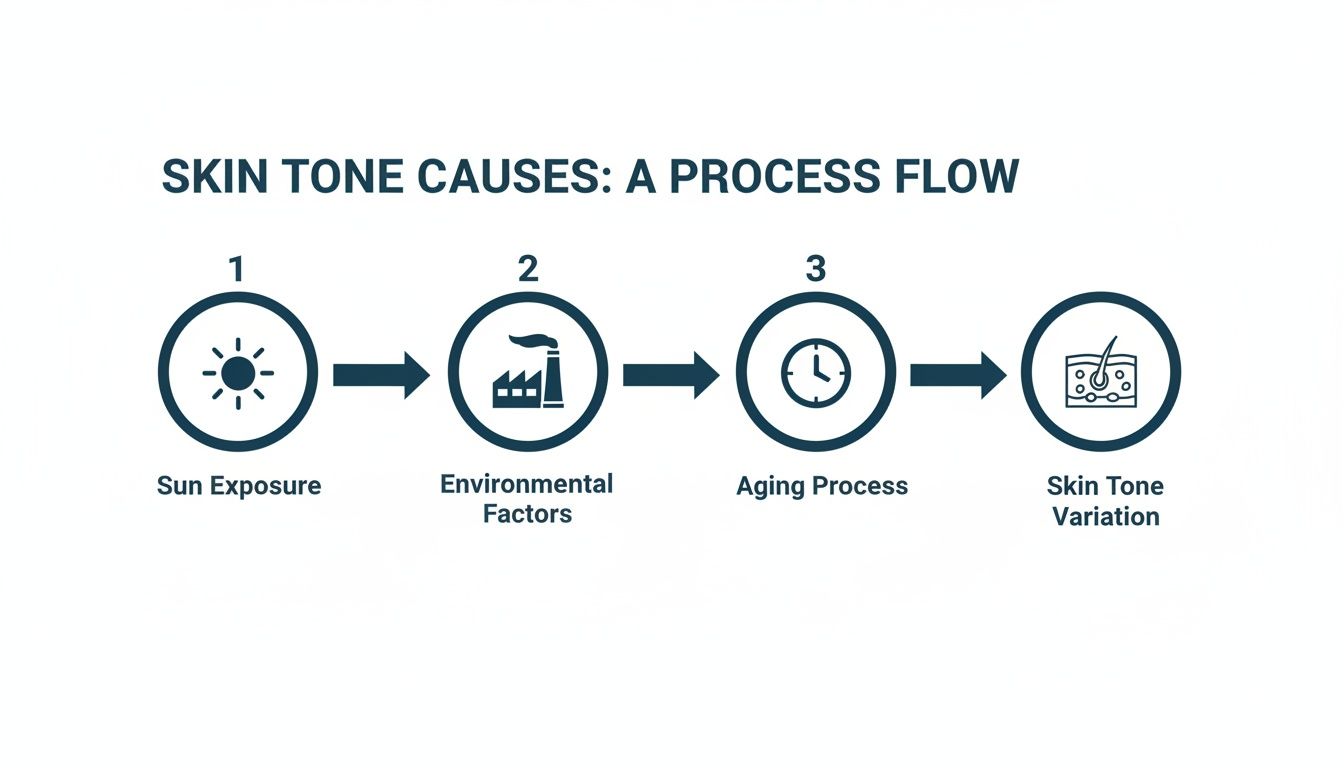
As you can see, daily sun exposure, pollutants in the air, and just the natural process of getting older all play a part in how uniform your skin tone looks.
A simple, effective morning routine might look something like this: a gentle cleanse, your antioxidant serum, a moisturizer, and then a generous layer of sunscreen. Getting the sequence right is critical for making sure everything works as it should. If you're not sure about the layering, we have a detailed guide on the correct order to apply skin care products.
Keep in mind, sun exposure isn't an overnight thing. It's cumulative. Studies show a huge percentage of sun-related skin changes happen before we even turn 18, with more adding up each decade. Consistent sunscreen use is truly your best long-term investment for radiant skin.
Your Evening Ritual: Cleanse and Renew
After a long day, your evening routine is your chance to wash away all the grime and give your skin targeted ingredients that get to work while you sleep. The focus here shifts from protection to deep cleansing and nourishment, setting the stage for overnight renewal.
A thorough cleanse is the first and most important step. You have to remove all the makeup, sunscreen, oil, and pollutants that have collected on your skin. I'm a big fan of the double-cleansing method—starting with an oil-based cleanser and following up with a water-based one. It’s incredibly effective for making sure your skin is perfectly prepped for the products that come next.
Layering for Luminosity
Once your skin is squeaky clean, it's time to layer on your targeted nighttime products. This is where ingredients designed to promote a brighter, more even appearance can really get to work.
- Nourishing Serums: Look for serums formulated with powerhouse ingredients like Niacinamide (Vitamin B3). Niacinamide has a fantastic reputation for its ability to improve the look of skin discoloration while also supporting a healthy skin barrier.
- Hydrating Moisturizers: Always follow your serum with a moisturizer that’s right for your skin type. A good moisturizer does more than just hydrate; it locks in all the benefits of your serum and keeps your skin supple. Well-moisturized skin reflects light more evenly, which instantly gives your complexion a brighter appearance.
Making these AM and PM routines a non-negotiable part of your day creates a consistent framework for supporting your skin. It’s not about finding a quick fix, but about committing to a process that nurtures your skin day in and day out, helping you achieve that beautifully balanced and radiant look.
Powerful Ingredients for a Visibly Even Complexion
Walking down the skincare aisle can feel like a pop quiz on cosmetic chemistry. But when you're aiming for a more even, vibrant complexion, a few powerhouse ingredients consistently deliver the goods. Choosing products with the right actives is the single most important step in bringing clarity and radiance back to your skin.
Keep in mind, these aren't overnight miracles. Think of them as dedicated allies in your daily routine. When you consistently use them in serums and moisturizers, you'll start to see a real, visible difference in dark spots, blotchiness, and overall tone. Let's break down the heavy hitters you should be looking for on the label.
Vitamin C: The Antioxidant Defender
For anyone serious about achieving a brighter, more even-looking complexion, Vitamin C is non-negotiable. It’s a potent antioxidant that acts as a shield, helping to defend your skin against daily environmental stressors like pollution that can leave it looking dull and uneven.
But it does more than just play defense. Vitamin C is famous for its ability to improve the appearance of existing dark spots and promote an all-over luminous look. When scanning an ingredient list, keep an eye out for stable forms like Ascorbyl Glucoside or Magnesium Ascorbyl Phosphate (MAP). They're effective and tend to be much gentler on the skin.
You'll get the most bang for your buck by using a Vitamin C serum in the morning. Applying it right before your sunscreen gives your skin an extra layer of protection to face the day.
Niacinamide: The Versatile Balancer
Niacinamide, or Vitamin B3, is a true skincare superstar. It's incredibly well-tolerated by just about every skin type and brings a ton of benefits to the table for creating a balanced, happy complexion.
Its main job when it comes to uneven tone is helping to reduce the appearance of discoloration. It accomplishes this by supporting the skin's natural barrier—a crucial component for maintaining a healthy, clear look.
A strong, healthy skin barrier is your first line of defense against the environmental triggers that lead to blotchiness and unevenness. By reinforcing this natural shield, Niacinamide helps your skin maintain its own balance and clarity.
As a bonus, it also helps balance oil production and can visibly improve skin texture, making it a fantastic all-around ingredient. You'll usually find it in serums and moisturizers at concentrations between 2% and 10%.
Gentle Brighteners: Alpha Arbutin and Tranexamic Acid
While Vitamin C and Niacinamide get a lot of attention, a couple of other ingredients offer more targeted support for an even complexion, without being harsh. Two of the most promising ones making waves are Alpha Arbutin and Tranexamic Acid.
- Alpha Arbutin: Think of this as a gentler approach to skin brightening. It works by specifically targeting the look of hyperpigmentation, helping to diminish the appearance of sun spots and those annoying post-blemish marks for a much more uniform appearance.
- Tranexamic Acid: This ingredient is quickly gaining rockstar status for its ability to address stubborn blotchiness and promote an overall clearer look. It's especially effective if you're trying to diminish the visible effects of sun exposure.
These two are becoming staples in the skincare world for a reason. Their gentle yet effective nature makes them perfect for targeted serums and treatments, which fit beautifully into an evening routine.
The desire for powerful, at-home solutions is surging. In fact, the market for topical hyperpigmentation treatments is projected to grow at a CAGR of 7.31% between 2026 and 2034. This boom is driven by people like you seeking non-invasive products with proven ingredients like tranexamic acid, niacinamide, and vitamin C. You can get the full scoop on these trends in the detailed hyperpigmentation treatment market report.
To help you keep these key players straight, here’s a quick-glance table comparing our top recommendations.
Key Ingredients for a Brighter Looking Complexion
| Ingredient | Primary Benefit for Skin Appearance | Best Found In |
|---|---|---|
| Vitamin C | Potent antioxidant that brightens and defends against environmental damage. | Serums, moisturizers |
| Niacinamide | Reduces the look of discoloration and supports a healthy skin barrier. | Serums, moisturizers |
| Alpha Arbutin | Gently diminishes the appearance of dark spots and post-blemish marks. | Targeted serums, spot treatments |
| Tranexamic Acid | Addresses stubborn blotchiness and visible effects of sun damage. | Targeted serums |
| Licorice Root | Soothes skin and diminishes the look of discoloration. | Serums, cleansers, creams |
| Green Tea | Antioxidant-rich, helps protect skin from environmental stressors. | Serums, toners, moisturizers |
Choosing products with these ingredients puts you in the driver's seat of your skincare journey, giving you the tools to actively work toward a more balanced complexion.
Botanical Extracts with Brightening Properties
It's not all about lab-derived actives; nature provides some incredible ingredients that support a bright and even appearance, too. Many plant extracts have been used for centuries to promote skin clarity.
One of the best is Licorice Root extract. This botanical powerhouse contains compounds that help soothe the skin while also diminishing the look of discoloration. It’s a wonderfully gentle option that you can find in many serums and creams designed to address uneven tone. If you're curious to learn more, check out our guide on the benefits of Licorice Root for skin.
Other helpful botanicals to look for include:
- Green Tea Extract: Jam-packed with antioxidants to help your skin fend off environmental stressors.
- Mulberry Extract: Well-known for its ability to promote a brighter, more even-looking skin tone.
Once you understand what these key ingredients do, you can read labels with confidence and build a routine that truly aligns with your goals. Combining these powerful actives is a fantastic, proactive step toward achieving the visibly balanced, radiant complexion you're looking for.
Ready to Kick Things Up a Notch?
Once your daily routine is down to a science, you can start bringing in some heavy hitters to speed up your journey to a brighter, more even complexion. Think of these as powerful boosters that supercharge the work your daily serums and sunscreens are already doing. The key is to introduce them slowly and really pay attention to how your skin responds.
Exfoliation is one of the fastest ways to see a real difference. By gently clearing away that top layer of dull, dead skin cells, you’re basically unveiling the fresher, more radiant skin that’s been hiding underneath. This not only makes your skin feel smoother but also clears the path for your brightening serums to penetrate deeper and work more effectively.
Finding Your Exfoliation Sweet Spot
There are two main ways to exfoliate: physically and chemically. Both get the job done, but they work very differently. What’s right for you really depends on your skin type and what you’re trying to achieve.
- Physical Exfoliation: This is the old-school manual method. Think gentle scrubs with a slightly grainy texture that you use to physically buff away dead skin. It gives you that instant smooth feeling, but you have to be gentle! Overdo it, and you risk irritation.
- Chemical Exfoliation: This approach uses acids—like Alpha Hydroxy Acids (AHAs) or Beta Hydroxy Acids (BHAs)—to dissolve the "glue" that holds dead skin cells together. They work on a much deeper level than a scrub can and tend to offer more thorough benefits for both tone and texture.
AHAs, like glycolic and lactic acid, are water-soluble, making them fantastic for addressing surface-level issues like dullness and the look of sun damage. On the other hand, BHAs like salicylic acid are oil-soluble, which means they can get down into your pores to clear things out and improve overall clarity.
When you start using any kind of exfoliant, remember the golden rule: less is more. Start with just once or twice a week, always in the evening. This gives your skin time to get used to it and helps you sidestep the dreaded over-exfoliation, which can leave your skin sensitive and blotchy.
When to Call in the Pros
While a solid at-home routine can work wonders, sometimes you hit a plateau. If you’ve got stubborn spots that just won’t budge or you simply want to see more dramatic results, it might be time to chat with a licensed esthetician or dermatologist.
Think of professional services as a powerful complement to your daily efforts, not a replacement. They can offer a more intensive level of treatment to really accelerate your progress.
A Look at In-Office Options
For addressing an uneven complexion, the two most common professional routes are chemical peels and laser treatments.
- Professional Chemical Peels: These are a major step up from your at-home AHA serum. An esthetician will use a much higher concentration of acids to remove the outer layers of skin, revealing a significantly smoother and more even-toned appearance.
- Laser Treatments: There's a whole world of laser and light-based technologies that can target pigment with incredible precision. These treatments work by breaking up the clusters of excess pigment, which your body then naturally clears away over time.
Deciding to go the professional route is a big step, and it really depends on your specific skin concerns and how quickly you want to see results. If you're curious to learn more about how these technologies work, check out our ultimate guide to lasers and resurfacing facial treatments.
The desire for an even, radiant complexion is a global phenomenon. In fact, concerns about age spots, a common form of uneven skin tone, made up 37.11% of the hyperpigmentation market revenue. It's a clear sign of a worldwide focus on achieving luminous skin. North America is leading the charge with a 34.9% market share, driven by a large number of dermatologists and an aging population looking to keep their skin vibrant. You can dive deeper into this growing market on Precedence Research.
Whether you decide to stick with at-home exfoliation or explore professional treatments, these advanced strategies are powerful tools in your arsenal. They build on the solid foundation of your daily routine, helping you get that much closer to the beautifully balanced, glowing skin you’re aiming for.
Craft Your Own Radiance-Boosting Serum
For anyone who loves a hands-on approach to skincare, making your own products can be an incredibly rewarding experience. You get complete control over the ingredients, which means you can whip up fresh, potent formulas perfectly suited to your skin's unique needs. Think of this as your guide to creating a personalized, radiance-boosting serum, right from your own kitchen.
When you make your own serum, you know you're using high-quality actives at concentrations that actually work for you. We'll walk through a simple recipe that combines some seriously powerful ingredients to help you get a visibly brighter, more even-toned complexion.
Gathering Your Essential Ingredients
The secret to an effective DIY serum is choosing the right blend of active ingredients and a stable base. This recipe is all about creating a hydrating, brightening powerhouse that’s still gentle enough for regular use.
Here’s what you’ll need to put together a 1-ounce (30ml) batch:
- Hyaluronic Acid Solution (1%): This will be your serum's hydrating base. It's fantastic for drawing moisture into the skin, giving you that plump, smooth look.
- Niacinamide (Vitamin B3) Powder: A true skincare MVP, Niacinamide is known for supporting a healthy skin barrier and diminishing the appearance of discoloration.
- Magnesium Ascorbyl Phosphate (MAP): This is a stable, water-soluble form of Vitamin C. It offers great antioxidant benefits and helps brighten the skin without the irritation that some stronger forms of Vitamin C can cause.
- Leucidal SF Complete: A natural, plant-based preservative to keep your homemade creation fresh and, most importantly, safe to use.
- Distilled Water: You'll need this to dissolve your powdered actives before mixing them into the base.
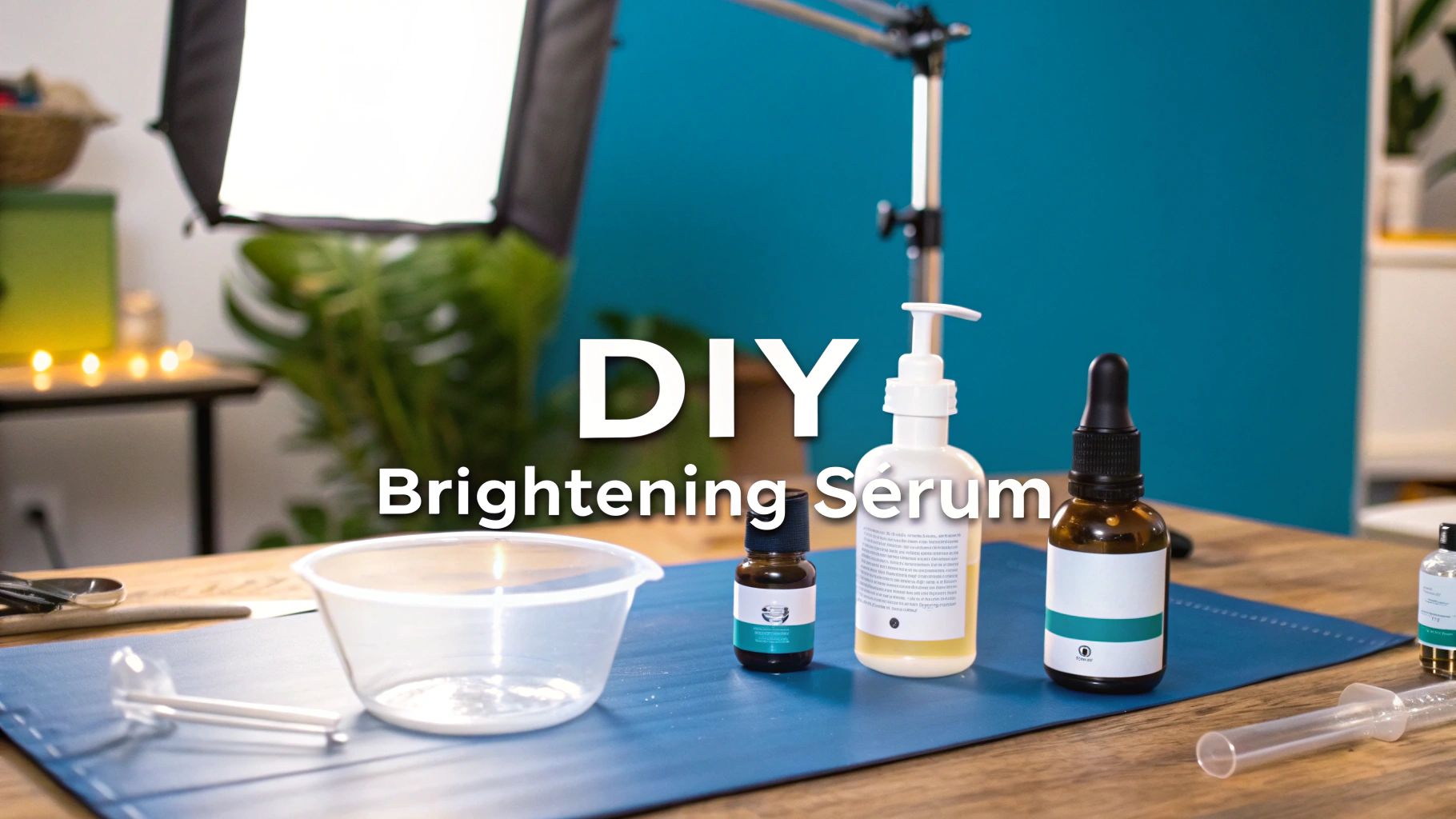
You will also need a few basic tools: a small digital scale for precise measurements, a sanitized glass beaker or small bowl for mixing, and a dark glass dropper bottle to store your finished product.
Precision is absolutely key in DIY skincare. I can't stress this enough. Using a digital scale that measures to 0.01 grams is crucial for getting the concentrations right. This isn't just about making your serum effective; it's about making it safe for your skin.
Step-by-Step Serum Formulation
Making your serum is really just a simple process of dissolving, mixing, and bottling. Just make sure you’re working on a clean, sanitized surface and with clean hands to avoid any contamination.
-
Prepare Your Actives: In a small, clean dish, measure out your Niacinamide and MAP powders. Add just a little bit of distilled water and stir gently until both powders are completely dissolved. This step is critical if you want a smooth, non-gritty final product.
-
Combine the Ingredients: Pour your Hyaluronic Acid solution into your sanitized glass beaker. Now, slowly add the dissolved Niacinamide and Vitamin C mixture to the base, stirring gently until everything is thoroughly combined.
-
Add Your Preservative: Once the base and actives are mixed, it's time to add the Leucidal SF Complete. Give it another stir to make sure it's evenly distributed. A preservative is a non-negotiable step—it prevents nasty bacteria and mold from growing in your serum.
-
Bottle and Store: Carefully pour your finished serum into a dark glass dropper bottle. That dark glass is important because it helps protect the light-sensitive Vitamin C from degrading, which keeps your serum potent for longer.
Store your brand-new serum in a cool, dark place, like a cabinet or drawer. If it's properly preserved, your homemade serum should be used within 3-6 months.
Customizing Your Creation
The real beauty of DIY is being able to tweak a formula to your specific needs. Once you get the hang of this basic recipe, you can start experimenting.
- For Added Soothing: Try adding a few drops of a botanical extract like Licorice Root or Green Tea. Both are well-known for their calming properties and antioxidant benefits, which can give your even-skin-tone goals an extra boost.
- Adjusting Concentrations: If your skin is on the sensitive side, you can start with a lower concentration of Niacinamide or Vitamin C. As your skin adapts, you can gradually increase it.
Creating your own skincare really empowers you to take a more active role in your journey toward radiant skin. For more ideas and detailed instructions, you can check out another great option in our article on a homemade Vitamin C serum recipe.
Common Questions About Getting Even-Toned Skin
When you start a journey to get a more balanced, glowing complexion, a few questions always pop up. Being consistent with the right routine is everything, but it's just as important to have realistic expectations and understand how all the pieces fit together. Let's tackle some of the most common things people wonder about when addressing uneven skin tone.
How Long Until I See a Difference?
This is the big one, isn't it? We all want results, and we want them yesterday. But in skincare, patience is a non-negotiable. While your skin might feel softer or look more hydrated in a week or two, seeing a real change in skin tone takes time.
Typically, you can expect to see initial changes after 4 to 8 weeks of consistently using targeted products. For more significant, "wow" results, it can take several months. This timeline gives your skin enough time to go through multiple cell turnover cycles, gradually sloughing off the discolored cells to reveal a brighter, more uniform complexion underneath.
Remember, there's no magic wand for an uneven skin tone. It often takes at least 30 days of dedicated skincare before you start noticing real progress. For a significant brightening effect, you might be looking at up to four months, so sticking with it is absolutely essential.
Think of it like tending a garden. You wouldn't expect a seed to sprout into a full-grown plant overnight. Daily watering (your moisturizer), feeding (your serums), and protection (sunscreen!) are what create beautiful results over the long haul.
Can I Mix and Match Brightening Ingredients?
Yes, you can—and layering different active ingredients can be a fantastic way to address discoloration from multiple angles. But you have to be smart about it. Some ingredients are powerhouse duos, working together to enhance each other's benefits.
A classic example is Vitamin C and Niacinamide. Vitamin C is an antioxidant champ, perfect for your morning routine to help fend off environmental damage. Niacinamide is an all-around superstar that supports your skin barrier and can be used morning or night.
-
Good Combinations:
- Vitamin C (AM) + Niacinamide (PM): This is a safe and highly effective way to get the benefits of both without risking irritation.
- Niacinamide + Hyaluronic Acid: A wonderfully hydrating and skin-supporting pair that can be used in the same routine.
- AHAs/BHAs (PM) + Hydrating Ingredients (PM): After exfoliating, always follow up with soothing and moisturizing ingredients to keep your skin happy and balanced.
On the flip side, some combos are a recipe for irritation. Using multiple strong exfoliants at once—like a glycolic acid toner followed by a retinol cream—is asking for trouble. When in doubt, introduce new actives one at a time and consider alternating their use on different nights.
Is Sunscreen Really That Important?
In a word: absolutely. If you take only one piece of advice from this entire guide, let it be this: wear a broad-spectrum sunscreen with an SPF of 30 or higher every single day. No excuses, no exceptions. Rain or shine.
Sun exposure is the number one cause of uneven skin tone. UV rays trigger your skin to produce excess melanin, which leads to new dark spots and makes existing ones even darker. Skipping sunscreen is like trying to fill a bucket that has a hole in it—you'll put in all this effort with your serums and treatments, but you'll never actually make progress.
Applying sunscreen every single morning is the most effective thing you can do to protect the results you're working so hard for. It’s not just about prevention; it’s an essential part of maintaining a clear, luminous complexion for life.
At Skin Perfection, we believe in giving you the knowledge and high-quality ingredients you need to reach your skincare goals. Check out our range of clinically inspired actives and DIY supplies to build a routine that reveals your most radiant skin. Discover your perfect formulation at https://www.naturalorganicskincare.com.