

 Buy with Prime


Could a moisturizer made with leaves, seeds, and botanical extracts still irritate sensitive skin? Yes. That question exposes the gap in conventional clean beauty advice: plant-based doesn't automatically mean gentle, effective, or well formulated. A good facial moisturizer earns trust through ingredient function, tolerability, testing, and honest cosmetic language, not through the word “natural” alone.
For Skin Perfection, that distinction matters. We sell skincare products and lotion-making supplies designed to beautify the skin, and we follow FDA rules and Etsy standards when describing them. The practical question is not just whether an ingredient comes from a plant. It's whether the finished formula delivers comfortable hydration and a pleasing appearance without making claims it can't substantiate.
Table of Contents
- What Makes Plant-Based Moisturizers Different
- Evidence-Backed Benefits for Skin Hydration and Appearance
- Key Plant-Derived Ingredients and How They Work
- Sensitive Skin and the Plant-Based Misconception
- DIY Moisturizer Basics and Starter Formulations
- Combining Peptides and Stem Cell Actives with Botanical Moisturizers
- Safety, Labeling Standards, and Common Questions
What Makes Plant-Based Moisturizers Different
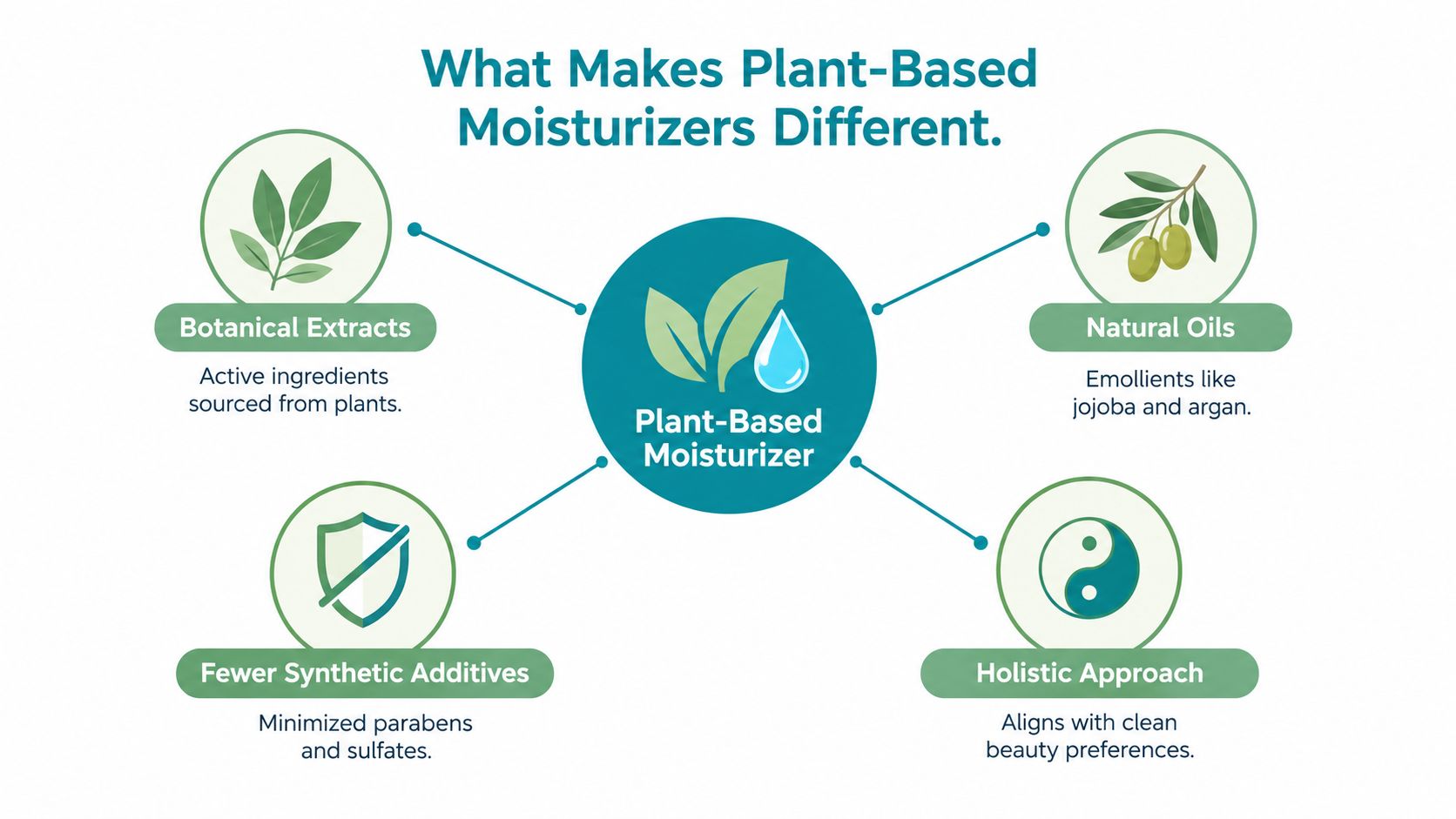
Can a moisturizer built around botanical ingredients offer more than a marketing story? Yes, when each material has a defined cosmetic role and the finished formula is assessed as a whole.
A plant-based facial moisturizer commonly contains plant-derived oils, butters, waxes, extracts, or other botanical materials. Jojoba, shea butter, grapeseed oil, aloe, green tea, and botanical antioxidants can contribute in different ways. Oils and butters can soften the skin's surface and help limit water loss. Extracts may support the product's cosmetic positioning at a carefully selected concentration, while some ingredients contribute scent, color, or a specific sensory quality.
Origin alone does not determine performance. An oil can provide slip and a protective surface film, while an extract may offer a supporting cosmetic benefit. The relevant questions are how the ingredient functions, how much the formula contains, and whether the finished product remains comfortable during use. Readers seeking broader context can review what clean beauty means, then examine the product's INCI list with the same care given to its front-label claims.
What the market signals
Commercial demand has moved plant-based skincare beyond a small niche. The global plant-based skincare market was estimated at $7.29 billion in 2025 and projected to reach $15.41 billion by 2034. Creams represented 28.5% of the market in 2025 and were forecast to grow at an estimated 8.9% annually, according to the cited plant-based skincare market analysis. These are directional industry estimates, rather than audited financial statements, but they indicate sustained interest in leave-on moisturization.
Consumer interest in natural cosmetics has also been documented over time. Industry and academic surveys have repeatedly found that many women consider natural content important in skincare and cosmetic purchasing. That preference does not establish that a product should contain only natural materials, or that botanical ingredients will suit every person. Clear labeling gives shoppers a more useful basis for comparison.
Formulation rule: Choose a plant-derived ingredient for its function in the formula, and let the botanical origin be a secondary consideration.
Product descriptions should stay within cosmetic language, such as improving the appearance of dryness, softness, radiance, or visible smoothness. Claims that a moisturizer treats a condition or changes how the body functions cross into drug territory and require a different level of substantiation. A well-made formula earns confidence through defined ingredient roles, suitable testing, and accurate labeling.
Evidence-Backed Benefits for Skin Hydration and Appearance
Botanical skincare can provide measurable hydration, but the evidence belongs to selected products and ingredients, not to every formula carrying a leaf on its label. A 2025 systematic review and meta-analysis involving 238 participants across three countries found that topical botanical products significantly increased skin hydration versus control, with a standardized mean difference of 0.57 and a p-value of 0.03. The findings are reported in the published review of topical botanical products.
That result supports a useful conclusion: some botanical preparations can improve skin water content. It doesn't prove that every botanical oil, flower extract, or homemade blend will perform the same way. The review included only a small number of hydration studies, so professional formulators should treat the result as encouraging but ingredient-specific.
Hydration is not one measurement
A moisturizer can make skin feel smoother immediately because it adds water to the outer layers, attracts moisture, or leaves behind emollient materials that improve surface feel. That short-term change is valuable for appearance, but it doesn't automatically demonstrate durable water retention.
I look for two kinds of information during formulation work:
- Hydration readings: These indicate changes in outer-skin water content under controlled conditions.
- Transepidermal water loss measurements: TEWL helps show whether the surface is retaining water more effectively over repeated use.
A formula that raises hydration readings but leaves the skin losing water quickly may feel good at first without providing lasting comfort. Testing should therefore compare baseline readings with results after repeated use, while keeping environmental conditions consistent. Readers interested in the role of water-binding ingredients can also review natural humectants for skin.
What anti-aging language can honestly mean
Hydrated skin often looks more supple, luminous, and temporarily plumped. That makes hydration relevant to the appearance of fine lines and texture, but cosmetic wording should stay precise. “Helps skin look smoother” describes appearance. “Treats wrinkles” or “changes the structure of skin” moves toward a different kind of claim.
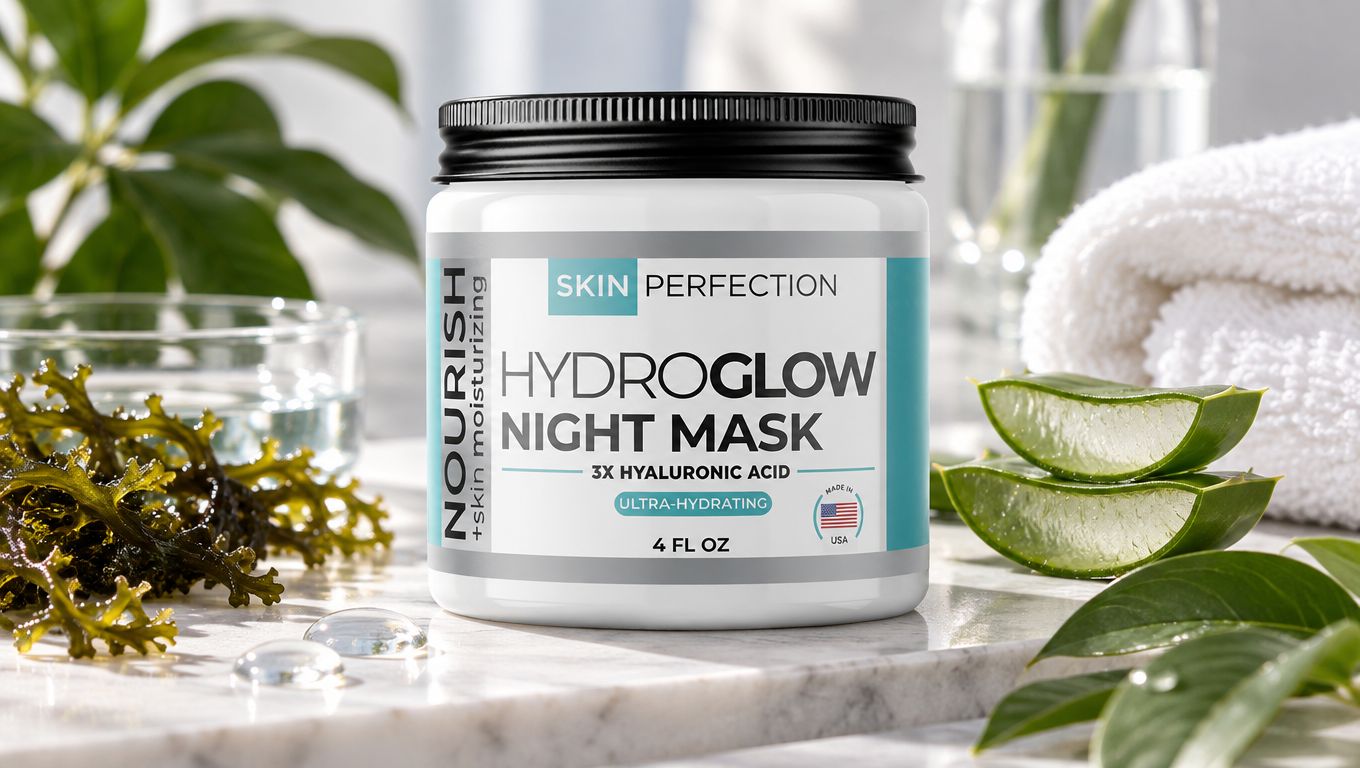
The HydroGlow Anti-Aging Night Mask illustrates how a product can combine three types of hyaluronic acid, polyglutamic acid, jojoba, squalane, aloe, glycerin, triglycerides, sea silt ferment, and algae extract within an appearance-focused hydration routine. Its ingredient story can be discussed in terms of moisture, softness, luminosity, and visible texture, without presenting the product as a medical treatment.
Key Plant-Derived Ingredients and How They Work
Ingredient lists become easier to assess when you group materials by mechanism rather than labeling them "good" or "bad." Moisturization usually combines three actions: humectants attract water, emollients smooth the gaps between surface cells, and occlusives slow evaporation. A well-built formula balances these functions instead of relying on one appealing botanical ingredient.
Plant oils are often misunderstood. Evidence indicates that almond, jojoba, soybean, and avocado oils mostly remain on the skin surface or within the upper stratum corneum, where they can reduce water loss by forming a protective lipid layer, according to the review of plant oils and skin barrier function. That surface action can be exactly what dry skin needs; deep delivery is a separate question altogether.
Match the material to the job
| Ingredient group | Main cosmetic role | Often useful for | Main trade-off |
|---|---|---|---|
| Plant oils | Surface softness and reduced water loss | Dry or comfortable normal skin | Can feel heavy or glossy |
| Plant butters | Rich emollience and cushion | Very dry-feeling skin | May be too occlusive for some users |
| Humectants | Attract and hold water near the surface | Dehydrated-feeling skin | Need a balanced formula and suitable environment |
| Botanical extracts | Supporting sensory or appearance benefits | Formulas seeking targeted botanical character | Evidence varies by extract and concentration |
| Physiological lipids | Barrier-oriented lipid balance | Formulas designed for repeated comfort | Require careful ratio, stability, and testing |
Fatty-acid profile usually matters more than the marketing story attached to an oil. Oils rich in oleic acid may provide excellent slip, while other profiles can feel more comfortable for users who dislike a rich finish. Oxidation stability, packaging, comedogenicity considerations, and compatibility with the rest of the formula also affect the final result.
Formulators often reference a mixture of ceramide, cholesterol, and free fatty acids in an approximate 3:1:1 molar ratio when designing a barrier-oriented lipid system. That ratio is a formulation reference point, not a requirement for every moisturizer. The finished product still depends on ingredient quality, processing, stability, and how the formula feels during repeated use.
Build around skin experience
For dry-feeling skin, a richer oil or butter can improve softness and reduce tightness. Oily or combination skin may prefer a lighter emollient system with less surface residue. Acne-prone users should assess the complete formula rather than judging one oil in isolation, since texture, concentration, fragrance components, and the surrounding ingredient system all influence tolerability.
Plant-derived does not automatically mean gentle, superior, or suitable for every face. Source describes where an ingredient comes from; it does not establish its concentration, stability, or skin response. The best natural ingredients for skin can provide a useful starting point, while cosmetic labeling should stay focused on appearance, softness, and moisture rather than drug-style treatment claims. Final judgment belongs to the finished formula, not its botanical story.
Sensitive Skin and the Plant-Based Misconception
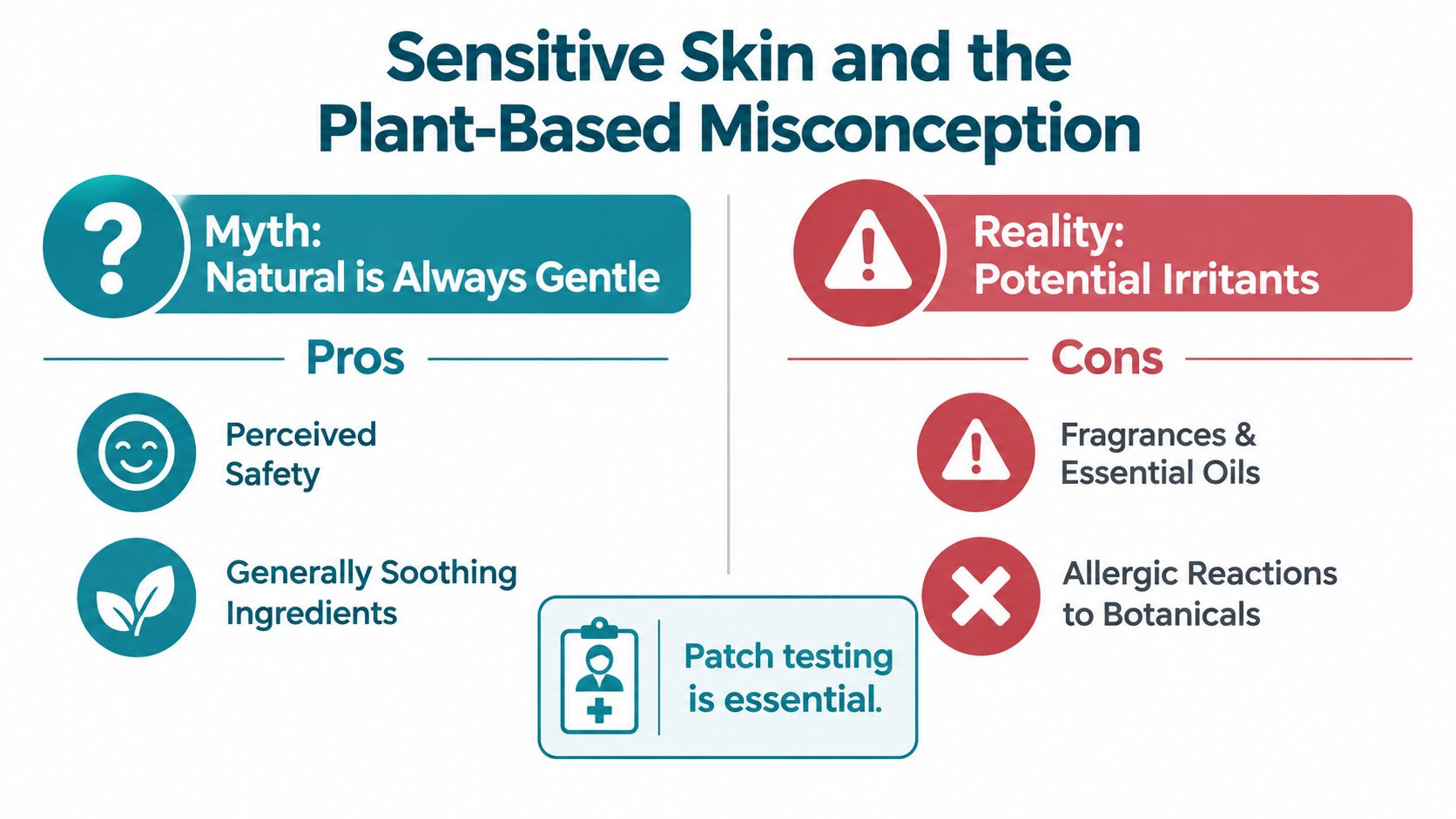
Does natural mean gentle enough for sensitive skin? No. Fragrance materials, essential oils, and aromatic plant extracts can sensitize users just as synthetic fragrance compositions can. A leave-on moisturizer needs careful evaluation because it stays on the skin instead of being rinsed away.
A small but meaningful share of the population experiences fragrance allergy, and daily moisturizers can be relevant exposure sources among leave-on cosmetic products. A formula may be plant-based while still containing recognized fragrance allergens. Cosmetic labeling should describe appearance, softness, and moisturization. It should not imply drug-style treatment or promise to prevent a medical condition.
Read beyond the front label
Check fragrance-related INCI names such as limonene, linalool, citronellol, and geraniol. Tea tree oil and other volatile botanical extracts may also cause problems for people with known sensitivities. Terms such as “natural,” “clean,” and “hypoallergenic” do not establish zero allergy risk.
A fragrance-free formula should say so clearly and should not replace synthetic perfume with aromatic botanicals. For eczema-prone or reactive skin, a short ingredient list without added fragrance is often easier to assess than a complex blend containing multiple essential oils.
Patch testing deserves a place in the routine
Apply a small amount of a new product to a discreet area and observe the skin over time before applying it broadly. Delayed reactions may not appear immediately, so moving from one comfortable application to full-face use can make the trigger difficult to identify.
Practical safety point: Patch testing reduces uncertainty, but it doesn't guarantee that a product will suit everyone.
Persistent itching, swelling, burning, or recurring irritation calls for professional evaluation rather than repeated experimentation. A dermatologist or qualified clinician can help identify contact allergens through appropriate testing. Tolerability data is what makes a formula trustworthy for reactive skin.
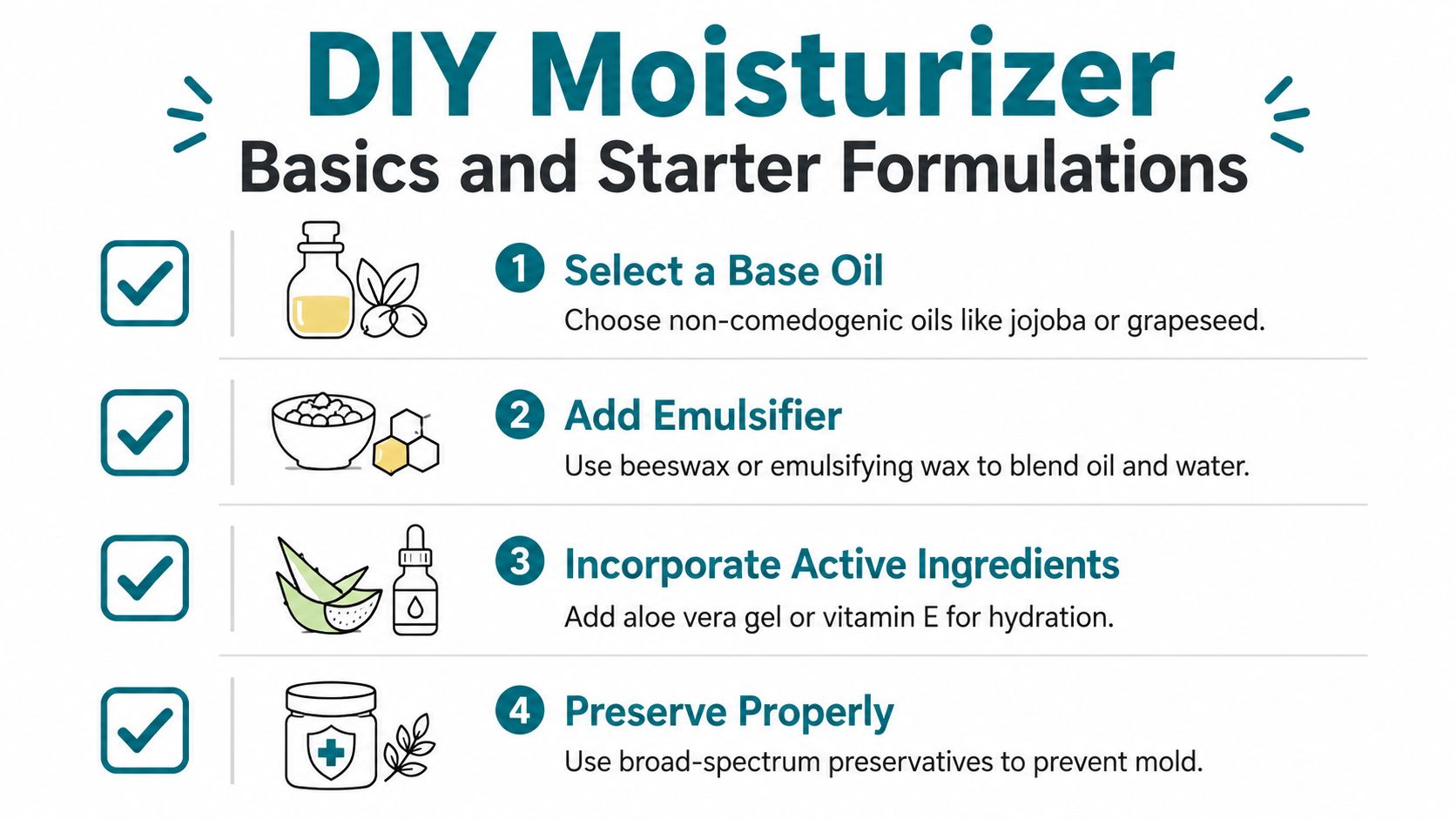
DIY Moisturizer Basics and Starter Formulations
DIY skincare can be rewarding, but a facial moisturizer is a preservation and stability project, not just a bowl of oils mixed with water. Water-based formulas can support microbial growth, while emulsions can separate if the oil phase, water phase, emulsifier, pH, and preservation system aren't compatible.
Start with the formula architecture:
- Choose the product type. A water-free facial oil is simpler because it contains no water phase, but it won't provide the same humectant experience as an emulsion. A lotion combines water and oil and therefore demands stronger control.
- Select compatible raw materials. Use cosmetic-grade oils, a suitable emulsifier for the intended system, and ingredients with clear supplier documentation. Don't assume beeswax alone will create a stable lotion.
- Control the process. Sanitize tools and containers, weigh materials accurately, heat compatible phases as directed by the emulsifier supplier, and combine them under controlled mixing.
- Preserve water-containing products. A broad-spectrum preservative must match the formula's pH, packaging, and usage conditions. Vitamin E can help protect oils from oxidation, but it isn't a complete preservative for a water-based product.
A practical starter path
Beginners often get better results by making a small, water-free facial oil before attempting an emulsion. Choose one or two stable, familiar oils, avoid adding fragrance at the start, and record the batch date, raw material lots, texture, scent, and any changes during storage. Use an opaque or low-light container when the oils are sensitive to oxidation.
For a water-based gel or lotion, use a verified formula rather than improvising ingredient quantities. How to make moisturizer can help DIY makers understand the phases, equipment, and preservation decisions involved.
A single active can also make testing easier. Skin Perfection's Sodium Hyaluronate Powder is presented as a cosmetic-grade ingredient for creating water-based serums, creams, and lotions. When working with a powder, disperse it according to the supplier's instructions and evaluate the finished texture, hydration feel, pH, preservation, and stability rather than assuming that more active creates a better product.
Batch discipline: Make one meaningful change at a time. Otherwise, you won't know which ingredient changed the texture or caused discomfort.
Keep records and avoid sharing untested water-based batches with others. Stability, preservative efficacy, packaging compatibility, and microbial testing are professional responsibilities when a product will be stored or distributed.
Combining Peptides and Stem Cell Actives with Botanical Moisturizers
A botanical base doesn't need to compete with modern cosmetic actives. The strongest formulas often assign each ingredient a specific role. Plant oils and humectants can shape hydration and finish, while peptides and botanical stem cell extracts contribute to a routine focused on the appearance of texture, smoothness, and visible signs of aging.
Peptides such as Argireline Amplified, SNAP-8, and SYN-AKE are used in cosmetic formulations aimed at the appearance of expression lines. Plant stem cell extracts are commonly selected for their botanical identity and their role in antioxidant-oriented appearance formulas. The correct question is whether the active is compatible with the base, stable at the intended pH, and present at a supplier-supported use level.
Layer for comfort and consistency
A simple routine might place a lightweight water-based serum before a moisturizer, followed by a richer oil-based product only where the skin feels dry. A peptide serum can sit beneath a botanical moisturizer if the two products are compatible and neither creates pilling. Introduce one new active at a time so you can evaluate appearance and tolerability without confusing the results.
The what is peptide serum guide can help readers distinguish a serum's role from that of a moisturizer. Peptides don't replace good formulation fundamentals. If the base feels irritating, unstable, excessively fragranced, or uncomfortable, adding another active won't solve the underlying problem.
Under Section 201(i) of the U.S. Federal Food, Drug, and Cosmetic Act, a cosmetic includes an article applied to the body for cleansing, beautifying, promoting attractiveness, or altering appearance, as explained in the FDA's cosmetic law guidance. That supports wording about visible smoothness, hydration, radiance, or the look of expression lines.
Product language must remain separate from medical promises. A moisturizer can be refined without claiming to treat a condition, prevent disease, or alter bodily structure or function. Good cosmetic formulation and responsible labeling reinforce each other.
Safety, Labeling Standards, and Common Questions
The FDA doesn't require cosmetic products or their ingredients, except for color additives, to receive FDA approval before entering the market. It also doesn't maintain a list of approved or accepted cosmetic claims. Cosmetic claims still must be truthful and not misleading, as explained in the FDA's consumer guidance on cosmetic approval.
Common questions
Does plant-based mean safer?
No. Plant-derived materials can provide useful cosmetic functions, but essential oils, fragrances, and botanical extracts may irritate or sensitize some users. Evaluate the full INCI list and choose fragrance-free options when sensitivity is a concern.
Can a listing say that a moisturizer treats a condition?
A compliant cosmetic listing should focus on appearance and cosmetic use. Skin Perfection doesn't describe its products as fixing, repairing, or healing skin, and it avoids prohibited Etsy claims that an item can treat, mitigate, diagnose, or cure serious disease or medical conditions, sexual dysfunction, or impotence. It also avoids claims that a product is or is as effective as an analgesic, antibiotic, antiseptic, antiviral, anti-inflammatory, steroid, vaccine, decongestant, or prescription drug, and it doesn't claim FDA approval.
How should I store a botanical moisturizer?
Protect sensitive oils from heat, light, and air. Keep the container closed, use clean hands or a spatula, and follow the maker's stated storage and use guidance. Discard a product if its odor, color, texture, or separation changes unexpectedly.
How do I verify EWG Verified status?
Look for the specific product in EWG's official database or on the brand's documentation. Don't treat a general “clean” statement as proof of certification, and don't confuse an ingredient rating with verification of the finished product.
Skin Perfection offers plant-based skincare, facial moisturizers, serums, and lotion-making supplies for skincare enthusiasts, DIY makers, and professionals who want clearer ingredient choices. Explore the Skin Perfection collection to compare ready-made products and cosmetic formulation supplies with hydration, appearance, tolerability, and responsible labeling in mind.