

 Buy with Prime
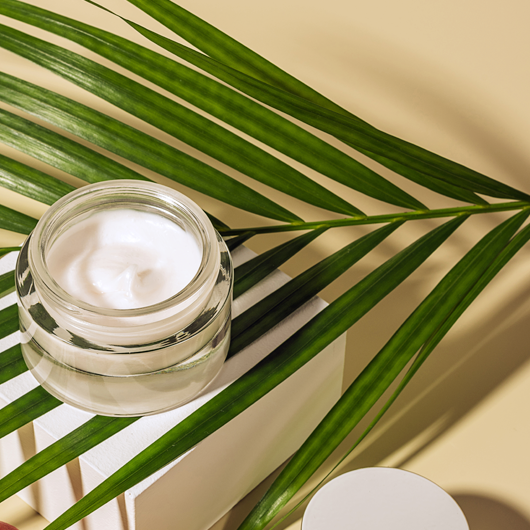


The most popular advice about peptide serum is also the least useful: “Apply it and wait for overnight results.” A peptide serum isn't a quick transformation. It's a consistent leave-on step that works best when you apply enough product, layer it sensibly, and give your routine time to show whether it suits your skin.
Peptides are short chains of amino acids used in cosmetic formulas to support the appearance of smoothness, hydration, firmness, and refined texture. Clinical research evaluates them as part of repeated routines, not as a single dramatic application. The practical question isn't only when to apply peptide serum. It's how to build a routine you can repeat without piling on unnecessary products or irritating actives.
Table of Contents
- Why Peptide Serums Are Not Instant Fixes
- How to Apply Peptide Serum the Right Way
- Finding the Right Frequency and Timing for Your Routine
- Layering Peptide Serum with Hyaluronic Acid and Other Actives
- Patch Testing and Managing Sensitivity with Peptides
- Troubleshooting Peptide Serum Problems and Off-Face Uses
- Key Takeaways for Building a Lasting Peptide Routine
Why Peptide Serums Are Not Instant Fixes
If your skin looks temporarily smoother after applying a serum, that doesn't automatically mean the peptide complex has produced a lasting cosmetic change. Hydration, film-forming ingredients, and the way light reflects from a freshly moisturized surface can affect the immediate look. Peptides belong to a longer routine conversation.
A 12-week randomized, double-blind, placebo-controlled clinical study of a line-targeting peptide serum reported measurable benefits at 15 minutes, then again at weeks 4, 8, and 12 versus placebo. Dermatologist assessment was supported by VISIA and PRIMOS CR wrinkle analysis in the clinical study of the line-targeting peptide serum. The early checkpoint is relevant to short-term expression lines, but the repeated later assessments are more useful for routine design.

What the evidence supports
The broader evidence points in the same direction. A 2024 meta-analysis of 16 randomized controlled trials reported significant improvements in hydration and wrinkle depth, with hydration reaching Z = 5.34, p < 0.00001, and wrinkle depth reaching Z = 5.20, p < 0.00001 (2024 peptide meta-analysis). Those findings support peptides as a useful cosmetic serum category, but they don't turn every product into an instant solution.
Practical rule: Judge a peptide serum by how consistently you can use it and how your skin looks over several weeks, not by the first application.
That's why preparation, thin application, moisturizer, patch testing, and manageable layering matter. A routine that causes pilling or irritation won't be repeated reliably. If you're comparing a peptide serum with other facial texture smoothing options, keep the same standard: look for a routine that matches your goal and that you can maintain.
For a concise ingredient overview, you can also review what peptide serum means in skincare. The key point is simple. Peptides are generally evaluated as regular leave-on care, so consistency should shape your expectations from the start.
How to Apply Peptide Serum the Right Way
Application doesn't need to become a complicated ritual. The most practical sequence is cleanse, leave skin slightly damp, apply a thin serum layer, moisturize, and use SPF in the morning. This order helps the product spread evenly and leaves the skin comfortable enough for the next step.

A repeatable application sequence
- Cleanse gently. Remove sunscreen, makeup, oil, and surface residue with a cleanser your skin already tolerates. Aggressive cleansing can leave the face tight before the serum even goes on.
- Pat until just damp. Don't apply the serum to waterlogged skin, but don't wait until the surface feels dry and tight either. Slightly damp skin allows a thin water-based formula to spread with less rubbing.
- Use a thin layer. Dispense a small amount and distribute it across the face with light patting. Hard rubbing adds friction and can make a fluid serum migrate into areas where you don't want it.
- Let it absorb. Give the serum a minute or two before applying the next layer. This isn't about waiting for a precise chemical reaction. It gives the film time to settle and reduces the chance of rolling or pilling.
- Seal with moisturizer. Apply a moisturizer over the serum, especially if your skin feels dry or tight. A serum isn't automatically a complete routine.
- Finish with morning SPF. In the morning, sunscreen is the final skincare step. At night, use your regular moisturizer or a richer overnight product instead.
If you formulate your own hydrating layer, Sodium Hyaluronate Powder Pure Hyaluronic Acid is a cosmetic-grade powder that can be used to create water-based serums and creams. The product snapshot specifies a High-Molecular-Weight NASHA grade with a stated molecular weight of 800–1500 Daltons and typical DIY serum concentrations of 0.1–2%. Any homemade water-based formula still needs appropriate preservation, testing, and careful batch handling.
Clinical usage guidance supports applying peptide serum to clean, slightly damp skin, followed by moisturizer and morning SPF (clinical usage guidance for peptide serum). For more routine examples, see peptide solution application guidance.
Finding the Right Frequency and Timing for Your Routine
Twice-daily use, morning and evening, is the regimen most commonly tested in clinical studies. That doesn't mean your skin must begin there on the first day. It means twice daily gives you a clear reference schedule if the product is comfortable and the label supports that frequency.
The evidence includes a clinical trial in which a peptide mixture was used twice daily for 28 days while researchers assessed wrinkles, hydration, elasticity, and firmness. The broader 2024 meta-analysis covered 16 randomized controlled trials conducted between 1995 and 2023, with significant improvements reported for hydration and wrinkle depth (2024 peptide trial and meta-analysis data). A separate line-targeting study followed participants through 12 weeks, which is a sensible point for evaluating a consistent routine rather than changing products every few days (12-week peptide serum study).
A schedule that fits real life
Use the serum after cleansing in the morning and evening if your skin tolerates it. If twice daily feels excessive, begin with one application a day for a couple of weeks, then add the second application. That approach doesn't reproduce every clinical protocol, but it can make adherence easier.
Toner and hydrating mist belong before the peptide serum when they're lightweight and water-based. Apply the mist, allow excess water to settle, then use the peptide serum while the skin remains slightly damp. If your toner contains a strong exfoliating active, treat it as an active treatment rather than an automatic preparation step.
Don't assess the serum after one weekend. Track whether your skin feels comfortable, whether texture looks more even, and whether the product fits under moisturizer and sunscreen. At the 12-week point, decide whether the routine deserves a permanent place in your cabinet.
For additional routine planning, learn how to use peptides for skin alongside the product label and your own tolerance.
Layering Peptide Serum with Hyaluronic Acid and Other Actives
A layered routine works when each step adds a distinct function. Combining a peptide serum with a hyaluronic acid serum can be redundant when both mainly address hydration, so assess the formulas before adding another bottle.
Independent clinical data provide a useful benchmark for peptide-serum delivery and hydration. A 2024 congress abstract reported better hydration outcomes for serums than creams, lotions, and gels, with a serum subgroup result of SMD = -0.90, 95% CI: -1.06 to -0.74 (serum delivery and hydration data). The finding supports choosing a serum when you want a lightweight, concentrated leave-on step, but it does not prove that every serum will outperform every cream.
A two-product routine can still be reasonable when the formulas have different jobs. One clinical study used an HA-based serum plus a peptide-rich cream twice daily for 12 weeks, reporting improvements in skin texture, tone, and wrinkles with no related adverse events (HA serum and peptide-rich cream study).
Peptide serum layering order
| Product Type | When to Apply | Notes |
|---|---|---|
| Hydrating mist or toner | After cleansing | Use first if it's lightweight and well tolerated. |
| Hyaluronic acid serum | Before peptide serum | Adds a separate hydration-focused layer when your skin needs it. |
| Peptide serum | After lighter water-based products | Apply a thin layer and pat rather than rubbing. |
| Moisturizer or peptide cream | After serum absorption | Choose one cream layer unless your skin clearly benefits from more. |
| SPF | Morning, last | Finish daytime care with sunscreen. |
For combination or oily skin, the peptide serum may be sufficient if your moisturizer already leaves the skin comfortable. A peptide cream earns its place when you need richer emollience or want the cream to function as your main moisturizing step. Using both serum and cream does not guarantee a stronger result, and extra layers can increase pilling.
Dry, tight skin may benefit from a humectant-focused product beneath a cream. XO's moisturiser for tight skin offers a relevant reference for considering that combination. Review how to use hyaluronic acid before deciding whether a separate HA serum adds enough hydration to justify another step.
Keep harsh exfoliants and several potentially irritating actives out of the same routine when possible. Separate them by routine or alternate days if the combination causes stinging or makes consistent application difficult. The goal is a routine you can maintain, not the longest possible ingredient list.
Patch Testing and Managing Sensitivity with Peptides
Peptides are often well tolerated, but a new serum contains more than its peptide complex. Preservatives, fragrance, solvents, botanical extracts, and the overall formula can all affect comfort. A 2026 safety review reported minimal skin penetration, no systemic toxicity or genotoxicity, and none-to-slight irritation in clinical studies lasting from 30 days to 7 months (peptide safety review). That supports a generally reassuring profile, not a guarantee that every formula suits every person.
A practical patch test
- Choose a discreet area. Apply a small amount behind the ear or along the inner jawline. If you prefer the inner forearm, use the same product there and keep the area free from other new skincare.
- Leave it alone. Wait 24–48 hours before deciding whether to proceed. Don't scrub the test area or cover it with several other products.
- Check the response. A brief wet feeling or mild temporary tackiness is different from persistent burning, swelling, itching, hives, or spreading redness.
- Stop when the skin objects. Wash the area gently and pause the product if you see a concerning reaction. Seek medical advice for severe or persistent symptoms.

Don't introduce a peptide serum on the same night as several other new actives. If irritation appears, simplify to a gentle cleanser and moisturizer while you reassess. After the skin feels normal again, reintroduce the serum alone, using a thin layer and less frequent application before considering twice-daily use.
A focused guide to product selection and introduction is available in the peptide guide for sensitive skin. If the reaction returns, stop experimenting with that formula and consult a qualified professional.
Troubleshooting Peptide Serum Problems and Off-Face Uses
Pilling usually has a mechanical cause. Too much serum, vigorous rubbing, incompatible product textures, or skipping the absorption pause can leave small rolls on the surface. Reduce the amount, pat instead of massage, wait a minute or two, and test the serum over fewer layers.
Redness and stinging require a different response. A mildly tacky finish isn't the same as burning or persistent irritation. If your face feels hot, itchy, swollen, or increasingly uncomfortable, stop the serum and simplify the routine rather than trying to push through.
Formulator's observation: The routine that survives your busiest week usually outperforms the elaborate routine you abandon after irritation or pilling.
Scalp, brows, and lashes
Interest in off-face use is growing. One market report noted Google search interest for “peptide serum” reached a peak score of 100 in November 2025, while another reported an increase from 59 in July 2024 to 100 in July 2025 (market coverage of peptide serum search interest). Those figures describe search interest, not proof that peptide serum works equally well on every body area.
Evidence for facial wrinkle improvement is stronger than evidence for routine consumer use on the scalp, brows, or lashes. For the scalp or hairline, only use a product whose label permits that area, apply a small amount to clean skin, and avoid applying it to broken or irritated skin. Keep the product away from the eyes unless it is specifically formulated and labeled for periocular use.
For brows, use a clean disposable applicator and apply sparingly to the brow hair and surrounding skin. Lash use deserves the most caution. A facial serum can migrate into the eye, and cosmetic peptide evidence shouldn't be treated as evidence for eyelash growth or a medical outcome.
If dryness develops, reduce frequency and follow with moisturizer where appropriate. If buildup appears along the hairline, use less product and cleanse the area gently rather than adding another product to counter it.

Key Takeaways for Building a Lasting Peptide Routine
A lasting peptide routine depends more on consistency and tolerability than on a crowded shelf. Start with clean, slightly damp skin, apply a thin layer of peptide serum, allow it to settle, then use moisturizer. Finish a morning routine with SPF.
Clinical studies have used a 12-week evaluation window, so assess visible changes over that span rather than judging the serum after a few applications. Twice-daily use can suit skin that tolerates the product and a label that supports it. New users should begin less often and increase frequency only if comfort remains stable.
Your working checklist
- Keep the base simple: Cleanser, peptide serum, moisturizer, and morning SPF provide a useful baseline.
- Add hydration deliberately: Apply hyaluronic acid before the peptide serum when a separate water-binding layer improves comfort or reduces tightness.
- Decide whether you need one peptide step or two: Choose one main peptide product first. Add a peptide cream only if it supplies meaningful moisturization or replaces your usual cream, rather than duplicating the serum without a clear benefit.
- Protect tolerability: Patch test before full use, and avoid pairing the serum with a crowded lineup of harsh exfoliating actives.
- Extend the routine carefully: Products for the scalp, brows, or lashes need area-specific labeling. Keep facial serum away from the eyes unless it is formulated and labeled for periocular use.
- Use appearance-focused language: Cosmetic descriptions should address visible appearance and general cosmetic support, not disease treatment, prevention, or structural or functional drug claims. FDA explains that cosmetics do not require pre-market approval, while disease or body-structure claims can place a product under drug regulation (FDA compliance guidance). Etsy also prohibits disease claims and claims that a product is FDA approved (Etsy Medical Claims policy).
Make one change at a time, such as adding hyaluronic acid before the serum or removing a redundant peptide layer. Track comfort, frequency, and the overall appearance of your skin. For professional context while comparing options, browse skincare offerings and bring the same evidence-based questions to any routine review.
Skin Perfection offers cosmetic peptide skincare and lotion-making supplies for enthusiasts, DIY formulators, and skincare professionals building appearance-focused routines. Visit Skin Perfection to explore peptide serums, moisturizers, and formulation ingredients for a consistent skincare routine.