

 Buy with Prime


You're at the workbench with a small jar of white powder, a digital scale, and several vitamin C options open on your screen. L-ascorbic acid looks familiar, but you've seen how quickly an acidic serum can darken. A gentler derivative sounds appealing, yet “stable vitamin C” doesn't tell you whether the finished formula will stay in its useful pH range or whether the skin will convert enough of it to matter.
Sodium ascorbyl phosphate, usually shortened to SAP, is best understood as a formulation and use-case choice, not a universal upgrade. Its strongest human evidence is concentrated around blemish-prone skin and sebum-related applications, while its stability and near-neutral pH make it easier to work with than pure ascorbic acid. The important questions are practical: what is in the jar, how does it become active, what concentration makes sense, and how do you protect it during manufacturing?
Table of Contents
- What Sodium Ascorbyl Phosphate Actually Is
- How SAP Turns Into Active Vitamin C on Skin
- What the Research Actually Shows About SAP Benefits
- Concentrations, pH Range, and Cosmetic Use Levels
- Formulating With SAP for Stability and Performance
- Comparing SAP to Other Vitamin C Derivatives
- Compatibility, Safety, and Common Misconceptions
- Building a SAP Routine That Makes Sense
What Sodium Ascorbyl Phosphate Actually Is
A DIY formulator often meets SAP after rejecting two extremes. Pure L-ascorbic acid can offer direct vitamin C activity, but it demands an acidic, carefully controlled formula. Other derivatives appear easier to handle, but their names can blur together. SAP is sodium L-ascorbyl-2-phosphate, a phosphorylated salt of ascorbic acid designed to be water-soluble and more resistant to common formulation stresses.
The phosphate group is attached at the C2 position of the ascorbic acid structure. That modification changes how the ingredient behaves in the bottle. Instead of exposing free ascorbic acid immediately to water, oxygen, and an acidic environment, the molecule carries a protective chemical group that helps it remain intact until it reaches the skin.
Most suppliers provide SAP as a white to off-white powder. On an ingredient label, you'll generally see the INCI name Sodium Ascorbyl Phosphate. That's different from magnesium ascorbyl phosphate, often called MAP. Both are phosphorylated vitamin C salts, but they aren't interchangeable raw materials, and their evidence bases shouldn't be treated as identical. A broader comparison of vitamin C salts can help when you're deciding whether SAP or MAP belongs in a water-based product, such as this guide to vitamin C and magnesium.
Why the phosphate group matters
Think of L-ascorbic acid as a delicate ingredient that arrives ready to react. SAP is more like the same ingredient packed inside protective wrapping. The wrapping improves handling, but the skin must remove it before the ascorbic acid can perform its familiar biological role.
That trade-off explains SAP's appeal. You get a water-soluble powder that fits serums, lotions, and emulsions without forcing the entire product into the very acidic conditions associated with L-ascorbic acid. You also get a derivative whose best-supported positioning is more specific than broad “anti-aging vitamin C.”
Formulator's view: SAP is stable vitamin C chemistry with a conversion step. Stability makes a formula easier to preserve, but it doesn't automatically make the ingredient equivalent to free ascorbic acid.
The powder itself doesn't tell you whether a finished product will work well. Supplier purity, the final pH, water quality, metal contamination, heat exposure, packaging, and preservation all shape performance. Treat the raw material as one part of a system rather than the whole formula.
How SAP Turns Into Active Vitamin C on Skin
SAP doesn't arrive on the skin in exactly the same chemical form as free L-ascorbic acid. It first needs an enzymatic conversion step, which is why a stable powder in a bottle isn't automatically active vitamin C at the moment you dissolve it.
A useful analogy is a key with a protective plastic cap. The key is still inside, but the cap prevents it from fitting the lock immediately. SAP carries a phosphate group that acts like that cap. Enzymes known as phosphatases can remove the phosphate group at the skin surface and in the upper epidermis, releasing free ascorbic acid.
The conversion in simple steps
- SAP reaches the skin in its protected form. The molecule remains associated with its phosphate group, which supports stability in a near-neutral cosmetic formula.
- Skin enzymes remove the phosphate group. Alkaline phosphatase activity can cleave the phosphate portion. The exact speed and extent of conversion can vary with the formula, skin condition, and individual biology.
- Free ascorbic acid becomes available. Once released, it is the same ascorbic acid associated with vitamin C activity, rather than a different “vitamin C-like” molecule.
- The effect develops through delivery, not a sudden burst. Conversion is gradual, so SAP generally supports a less aggressive sensory experience than a strongly acidic L-ascorbic acid product. That doesn't mean there's no potential for sensitivity, especially when the full formula contains other active ingredients.
The conversion model also clarifies a common misunderstanding. SAP can be more stable in the bottle than L-ascorbic acid, but it still needs a carefully designed formula to deliver a meaningful amount to the skin. A product may be chemically stable and cosmetically pleasant while offering limited conversion in use. Stability and biological availability are related, but they aren't the same measurement.
What the released vitamin C can do
Free ascorbic acid participates in processes associated with oxidative stress, melanogenesis, and collagen biology. SAP's route is indirect, though, because the skin must first remove the phosphate group. That makes it more useful to discuss SAP as a controlled, conversion-dependent vitamin C derivative than as a drop-in substitute for every L-ascorbic acid application.
For a more direct look at free ascorbic acid as a raw material, compare the chemistry with this ascorbic acid powder guide. The distinction matters when you're choosing between a low-pH formula intended for direct delivery and a near-neutral formula built around stability and tolerability.
What the Research Actually Shows About SAP Benefits
If you are choosing SAP for blemish-prone skin, the research points to a more specific role than the label “gentle vitamin C” suggests. Human evidence is strongest around acne-related outcomes and sebum, while claims about collagen, wrinkles, and overall brightening require more cautious interpretation.
A published 2005 study reported that a 1% SAP formulation produced a log reduction of 5 against Cutibacterium acnes after 8 hours in a time-kill test. The same research assessed a 5% SAP lotion used by 60 subjects over 12 weeks, and 76.9% of participants rated it excellent or good. These results support interest in SAP for antimicrobial activity and cosmetic tolerability. They do not make every SAP product a treatment for acne. The PubMed record for the study gives the study details.
Another comparison study reported inflammatory-lesion reductions of 20.14% at 4 weeks and 48.82% at 8 weeks. A separate randomized, double-blind trial followed 50 subjects over 12 weeks and found that a 5% SAP lotion improved investigator and subject global assessments, lesion counts, tolerability, and adverse-event rates compared with vehicle. This evidence explains SAP's association with blemish-prone skin. It also shows why a finished lotion matters more than the ingredient name alone. The clinical comparison record contains the trial information.
Evidence by benefit
Separate laboratory activity from outcomes measured on people:
| Benefit | Concentration | Study type | Measured outcome |
|---|---|---|---|
| Antimicrobial activity | 1% | Time-kill test | Log reduction of 5 against C. acnes after 8 hours |
| Blemish-focused performance | 5% | Human lotion study | Global ratings, tolerability, and use over 12 weeks |
| Inflammatory lesions | 5% | Comparative human study | 20.14% reduction at 4 weeks and 48.82% at 8 weeks |
| Sebum-related support | Not specified in the verified summary | Split-face study | Reduced facial sebum secretion in 11 women |
| UVA-related sebum oxidation | Not specified in the verified summary | Human study | Up to 40% prevention in 20 subjects |
Brightening, oxidative-stress, and wrinkle findings are less uniform. SAP has appeared in research on uneven tone, photoaging, elasticity, and wrinkles, but results from one concentration or product format cannot automatically be applied to every serum. A 2020 study found that refrigerated 5% SAP emulgels containing added antioxidants had better physicochemical stability. A placebo-controlled blind study also reported improvements in wrinkle depth and elasticity, with no statistically significant difference versus 5% ascorbic acid in that trial. The formulation and clinical study documents those findings.
For an oil-soluble contrast to SAP, compare it with this guide to tetrahexyldecyl ascorbate serum. The derivatives differ in solubility, formulation design, and delivery conditions, so “vitamin C” alone does not predict equivalent performance.
Read the outcome, not just the ingredient claim: “Vitamin C derivative” describes chemistry. It does not tell you whether researchers measured lesions, sebum, wrinkle depth, elasticity, or only laboratory activity.
SAP may support collagen-related pathways after conversion, but human evidence for broad, long-term wrinkle reduction remains narrower than the marketing category suggests. Match SAP to a defined cosmetic goal, and avoid assuming that every result from a 5% study lotion transfers to every leave-on serum.
Concentrations, pH Range, and Cosmetic Use Levels
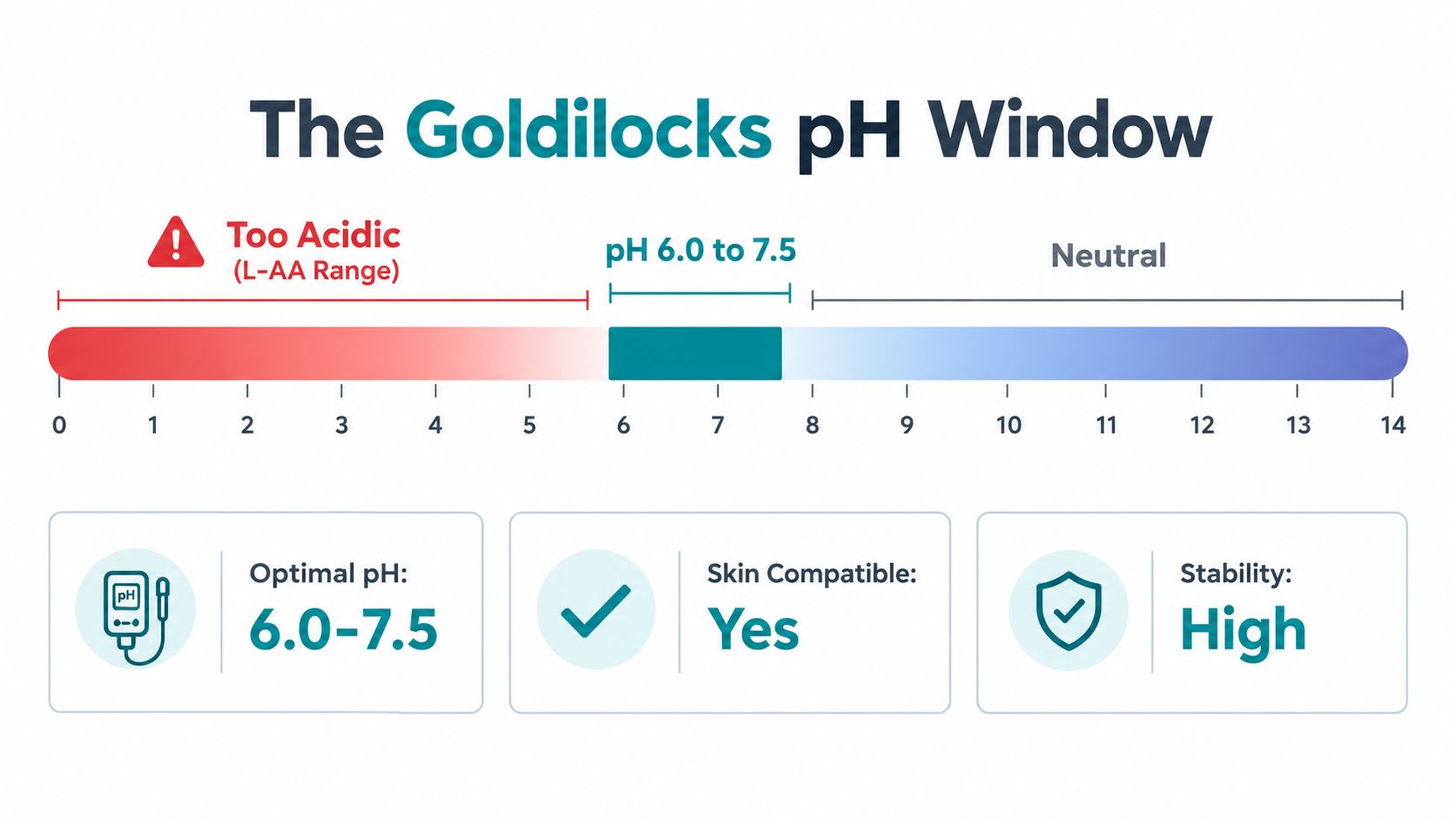
A SAP serum can contain the right percentage and still underperform if its finished pH is wrong. SAP generally suits a near-neutral finished formula, rather than the strongly acidic environment used for pure L-ascorbic acid. Supplier guidance places the preferred final pH at around 6.5 or higher, with better stability above pH 6.5. It also advises avoiding prolonged exposure to pH 2 to 4, heat, and heavy metals. The technical formulation guidance provides a practical target for formulation work.
Measure the completed product instead of estimating from an ingredient label. Adjust pH gradually, then check it again after the formula has equilibrated. For a useful explanation of buffer behavior, read about sodium acetate pH determination. Your full SAP formula still needs its own measurement. For preservation systems near neutral pH, see these notes on sodium benzoate and citric acid.
The Cosmetic Ingredient Review assessment reports SAP as safe when used in cosmetic products and lists cosmetic use levels from 0.01% to 3%. The CIR assessment supplies safety context, but a permitted use range does not prove that every level delivers the same cosmetic effect.
Choose the percentage by purpose
A lower percentage may fit a general antioxidant lotion. A higher study concentration may be more relevant when the formula targets blemish-prone skin. The human studies described earlier used 5% SAP, while the CIR report lists a cosmetic-use range reaching 3%. Those figures answer different questions, so do not copy a research formula into a retail product or assume that extra powder automatically produces a stronger result.
Calculate from the supplier's assay and material specification. A 10% SAP stock solution contains ten percent SAP, not ten percent pure powder in the finished batch. Its water or solvent base also occupies part of the formula, so calculate the stock quantity needed to reach the intended final SAP concentration.
A separate water-phase active can support the formula without changing SAP's identity. Sodium Hyaluronate Powder Pure Hyaluronic Acid is listed for water-based serums, creams, and lotions, with a stated NASHA high-molecular-weight range of 800 to 1500 Daltons and typical DIY serum use at 0.1% to 2%. Treat it as a hydration ingredient with its own dispersion and preservation requirements, not as a way to increase SAP conversion.
Formulating With SAP for Stability and Performance
SAP is forgiving compared with L-ascorbic acid, but “stable” doesn't mean “ignore the process.” The powder remains sensitive to low pH, heat, moisture, and heavy metals, and technical guidance describes a sealed, light-protected product stored at 25°C as stable for 24 months under those conditions. BASF's technical leaflet gives the handling detail that consumer summaries often leave out.
A straightforward starting system is a water-based serum or light lotion with a controlled buffer. Sodium citrate or a suitable phosphate buffer pair can help hold the formula near pH 6.5 to 7.0. A chelator such as disodium EDTA can bind trace metals that accelerate oxidation, but the exact level must fit the complete formula and supplier guidance.
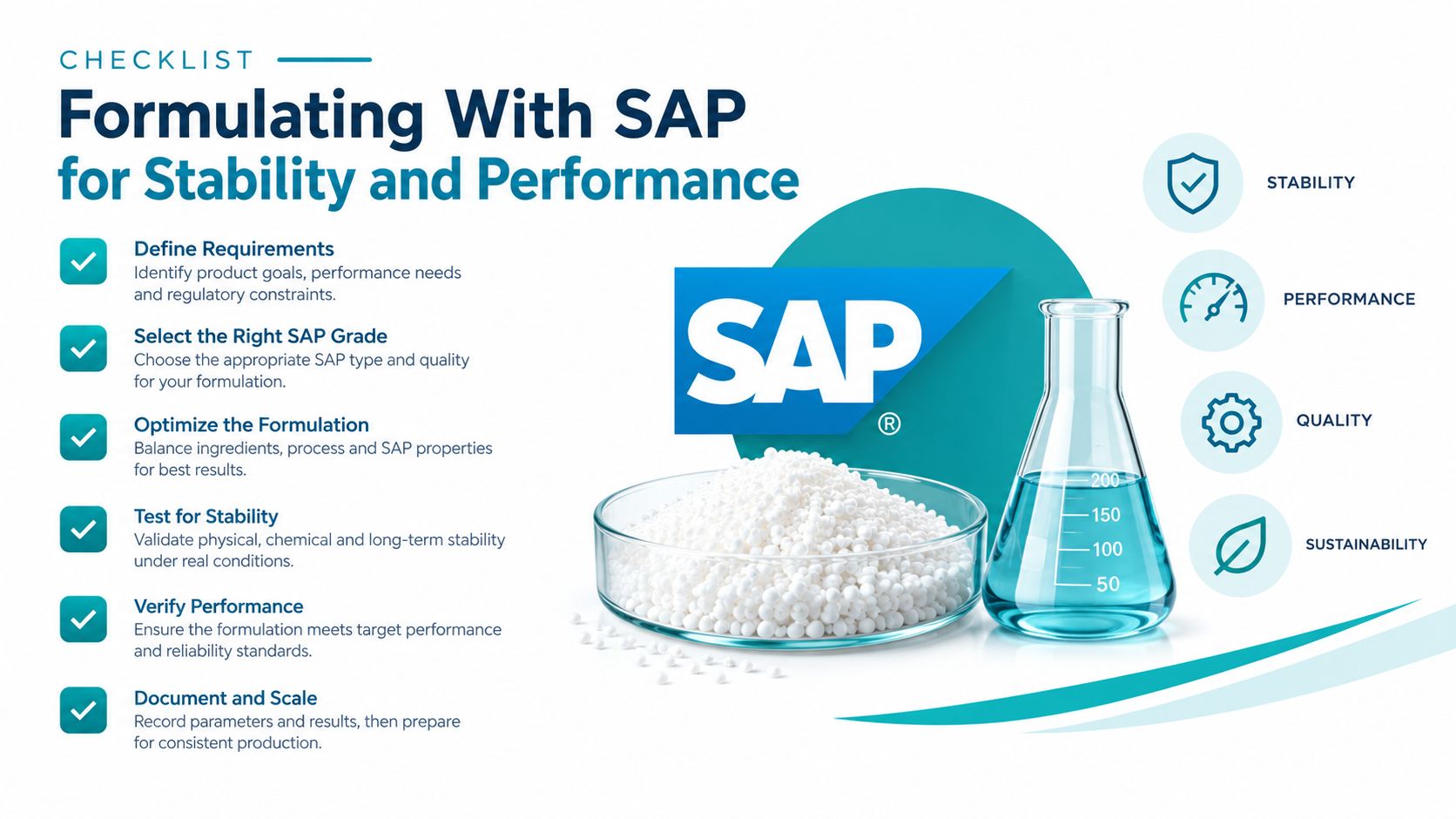
A practical production sequence
- Use clean, suitable water. Deionized water reduces unwanted mineral contributions. Sanitize equipment and record the batch details.
- Build the water phase first. Dissolve the buffer and other water-soluble ingredients before adding SAP. Check that the mixture is clear or uniformly dispersed according to the raw-material specification.
- Add SAP during cool-down. Avoid exposing it to unnecessary heat. The supplied guidance recommends low-temperature addition, so add it below 40°C rather than treating it like a heat-stable powder.
- Limit metal contact. Trace iron and copper can accelerate oxidation. Use compatible equipment, avoid unnecessary contact with reactive surfaces, and include a suitable chelator where appropriate.
- Preserve the finished product. A near-neutral, water-containing formula can support microbial growth. SAP is not a preservative, so choose a broad-spectrum preservative system validated for the final pH and packaging.
- Package for protection. Airless pumps and opaque bottles reduce repeated air and light exposure. Keep the container sealed and store it away from heat and moisture.
The phrase “water-soluble” often leads beginners to assume SAP belongs in any water formula without further testing. In reality, a water-heavy product needs preservation, pH checks, compatibility testing, and stability observation. Color, odor, viscosity, separation, and pH drift can all signal a problem, but appearance alone can't prove potency.
For packaging options and light exposure considerations, an amber glass bottle guide can help you compare container choices. The best package still won't rescue a formula that entered the bottle with the wrong pH or poor preservation.
Comparing SAP to Other Vitamin C Derivatives
A formulator choosing vitamin C is balancing two competing needs. Free L-ascorbic acid avoids the conversion step, but it demands a more difficult acidic formula. SAP and other derivatives improve handling, yet the skin must process them before free ascorbic acid becomes available.
SAP has a particularly clear niche. Its water solubility, near-neutral pH preference, and acne-focused evidence make it attractive for blemish-oriented serums and lotions. L-ascorbic acid remains the more direct option when the formula's priority is immediate delivery of free vitamin C, while MAP is a separate phosphate salt often selected for water-based brightening products. Ascorbyl glucoside also depends on conversion, and ethyl ascorbic acid is another derivative whose practical behavior depends heavily on the complete formula.
A decision table for the main options
| Derivative | Typical use pH | Stability | Strongest evidence | Best for | Relative cost |
|---|---|---|---|---|---|
| L-ascorbic acid | Acidic systems | More demanding | Direct vitamin C activity and broader human history | Experienced formulators prioritizing direct delivery | Often higher formulation complexity |
| SAP | Near-neutral systems | High when pH, heat, moisture, and metals are controlled | Blemish-focused and sebum-related studies | Water-based formulas for blemish-prone or sensitive-feeling routines | Moderate |
| MAP | Near-neutral systems | High in suitable systems | Brightening and general derivative research | Water-soluble brightening concepts | Moderate |
| Ascorbyl glucoside | Mild to near-neutral systems | Generally convenient | Gentle derivative positioning and tone-focused research | Stable, user-friendly water formulas | Moderate |
| Ethyl ascorbic acid | Formula-dependent | Varies with the system | Derivative-based brightening and antioxidant positioning | Formulas seeking a different balance of solubility and penetration | Often higher raw-material cost |
This table is a formulation map, not a universal ranking. “High stability” only describes the raw material under suitable conditions. It doesn't guarantee that a finished serum will remain unchanged after repeated opening, temperature swings, or contact with light.
SAP's strongest distinction is its evidence concentration, not a claim that it outperforms every derivative in every category. If your product concept centers on a simple, near-neutral lotion for blemish-prone skin, SAP may offer a more coherent story than a derivative selected only because its name is familiar. If your priority is direct free ascorbic acid delivery, you'll need to accept greater formulation complexity.
Compatibility, Safety, and Common Misconceptions
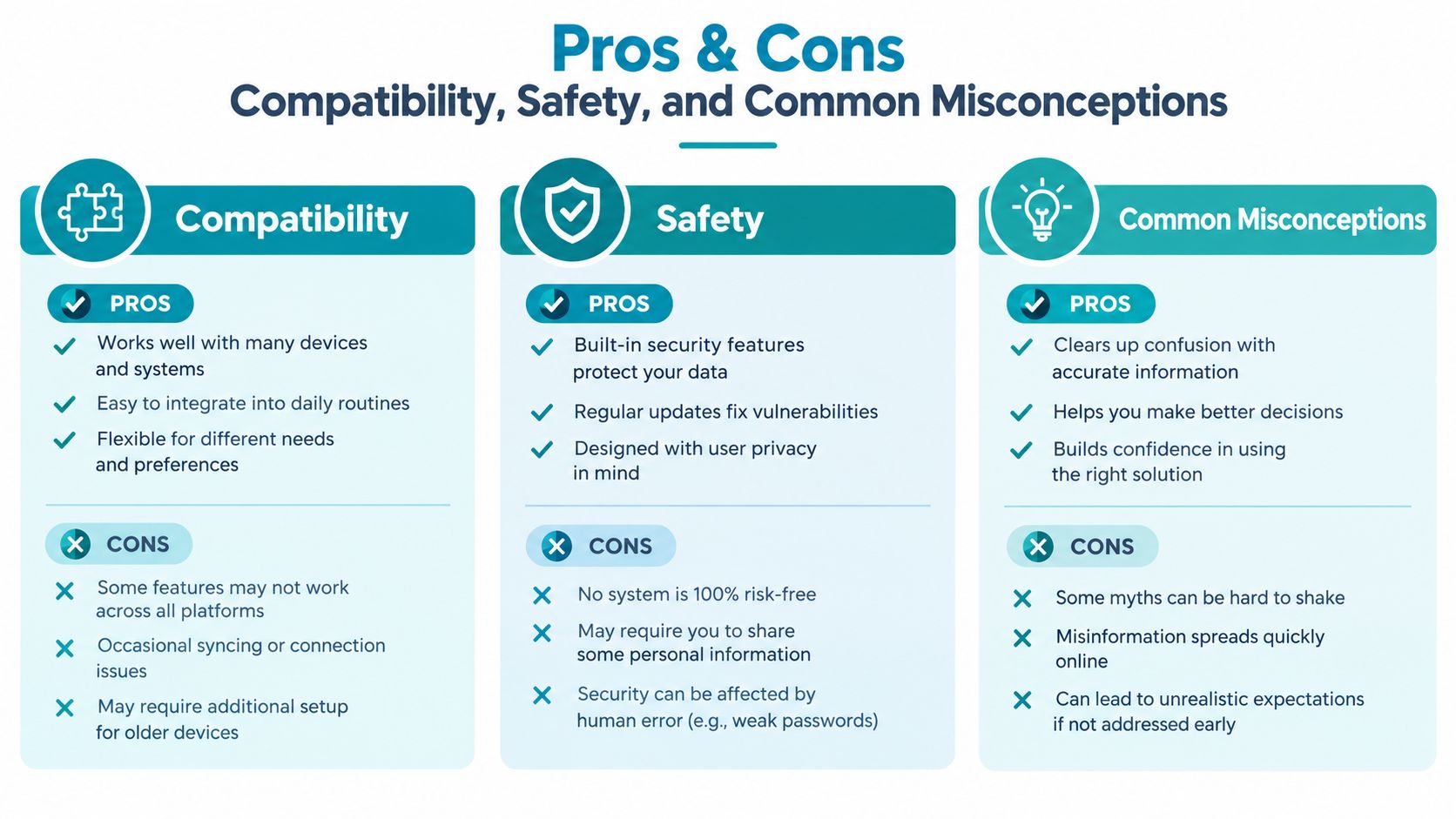
SAP can fit beside many familiar cosmetic ingredients because its preferred pH is close to neutral. That doesn't mean every combination is automatically ideal. Niacinamide is usually a straightforward pairing, while retinol, exfoliating acids, and benzoyl peroxide each bring their own irritation and stability considerations.
Keep the distinction between cosmetic compatibility and medical equivalence clear. Etsy's medical-claims policy says a medical claim can be a statement suggesting that a product affects health, the body, or a medical condition, including wording in a title, description, or image. The policy prohibits claims that an item prevents, heals, treats, diagnoses, mitigates, or cures a disease or medical condition, and it also prohibits claims that a cosmetic item is a substitute for or as effective as a prescription or over-the-counter drug, antibiotic, antiseptic, anti-inflammatory, vaccine, or medical procedure. Etsy's medical-claims policy should guide product listings and image text.
What SAP is, and what it isn't
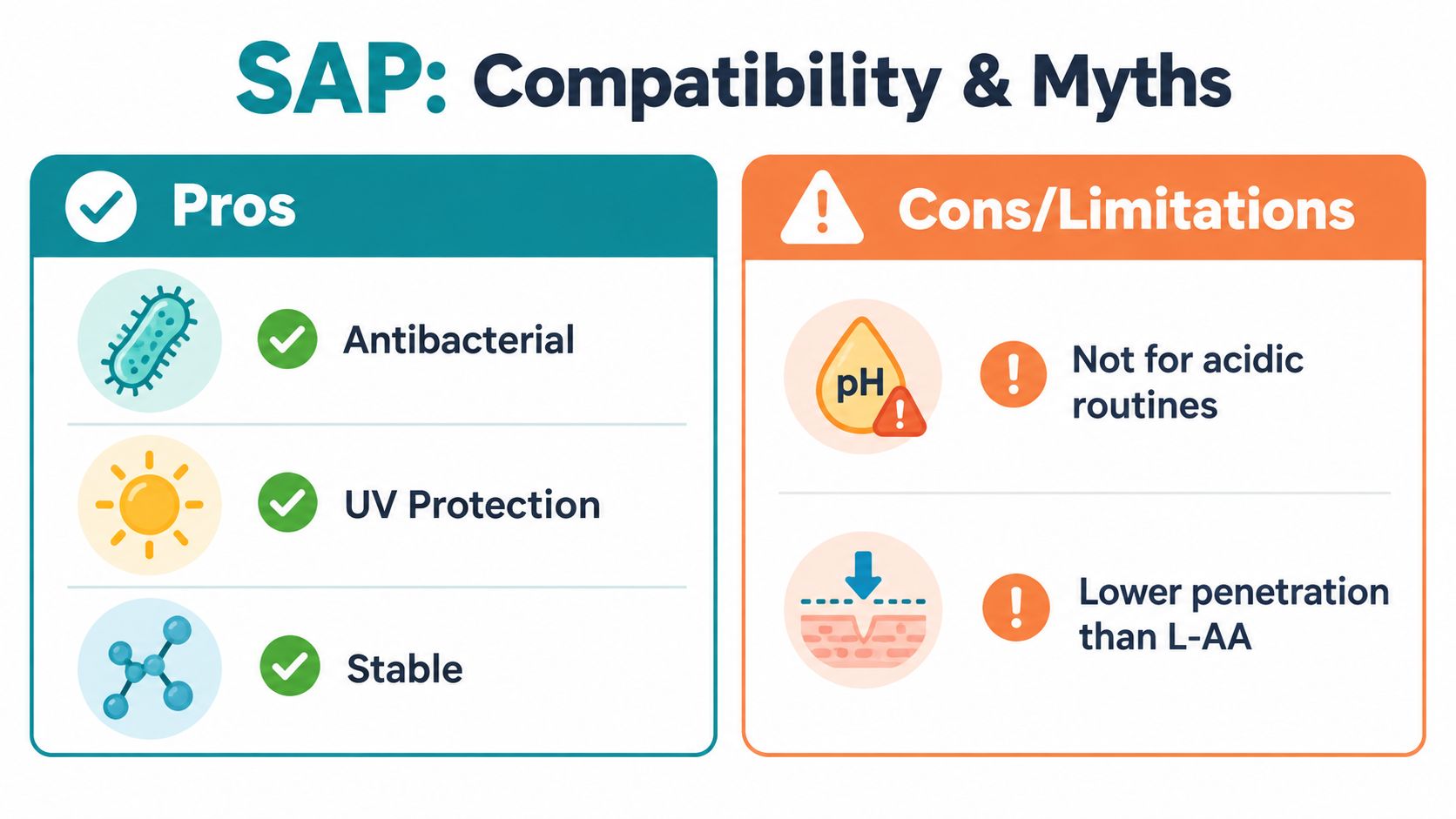
- It is a stable vitamin C derivative. Its stability still depends on pH, temperature, moisture, metals, packaging, and preservation.
- It isn't identical to L-ascorbic acid in use. SAP must convert through phosphatase activity, so a labeled percentage doesn't describe the same delivery route as free ascorbic acid.
- It can discolor when a formula degrades. Yellow or brown color in a finished product may indicate oxidation or another stability problem. It isn't evidence that the product has become more powerful.
- A higher percentage isn't automatically better. More raw material can raise cost and formulation burden without producing a proportional cosmetic benefit.
- It isn't a treatment claim. Even when research explores acne-related endpoints, cosmetic product copy should describe the formula's cosmetic purpose without claiming to treat, cure, diagnose, or mitigate a medical condition.
The CIR assessment supports SAP's safety as used in cosmetics and reports cosmetic use levels from 0.01% to 3%. That conclusion supports responsible cosmetic formulation, but it doesn't remove the need for patch testing, preservation work, stability testing, or compliant labeling.
Building a SAP Routine That Makes Sense
Start with the formula you can control, not the strongest number you can print on a label. A near-neutral SAP serum can sit in a morning or evening routine, but the complete system still needs appropriate preservation, packaging, and a measured final pH.
For a first project, choose a modest concentration within the cosmetic-use context described by the CIR assessment and observe the finished product rather than assuming that a larger dose will produce a faster visible change. If your goal is a blemish-oriented cosmetic formula, the human studies described earlier used 5% SAP, but that research concentration doesn't override the need to follow applicable cosmetic safety and marketplace rules.
A simple decision checklist
- General antioxidant positioning: Use a carefully tested, lower-strength water-based formula and pair it with a daily sunscreen routine. Don't describe it as sunscreen or as protection equivalent to an SPF product.
- Uneven-looking tone: Prioritize pH control, consistent packaging, and a stable formula. Avoid stacking several potentially irritating actives at once.
- Blemish-prone skin: SAP's most distinctive human evidence concerns blemish-focused outcomes, but keep product language cosmetic. A simple formula can be easier to evaluate than a crowded one.
- Sensitive-feeling skin: Introduce one new product at a time. SAP's near-neutral pH may feel gentler than an acidic L-ascorbic acid serum, but individual reactions still vary.
- Layering: Niacinamide is generally compatible in the same routine. If you also use retinol or exfoliating acids, alternate products when irritation becomes difficult to interpret.
Use opaque or air-restricting packaging where practical, store the product in a cool, dark place, and monitor changes in color, odor, texture, and pH. If you're selling the finished item, retain batch records and keep cosmetic language focused on appearance, hydration, texture, tone, and other permitted cosmetic attributes. Skin Perfection follows FDA-oriented cosmetic listing practices and Etsy's restrictions, so its skincare products and lotion-making supplies are positioned around beautifying the skin rather than disease claims.
Skin Perfection offers skincare products and lotion-making supplies for DIY formulators who want to build controlled, appearance-focused formulas around ingredients such as sodium ascorbyl phosphate. Visit Skin Perfection to explore cosmetic ingredients, ready-made skincare, and formulation supplies for your next carefully measured batch.