

 Buy with Prime


If you're wondering what causes hair loss in women, you're not alone. The answer isn't a simple one—it's usually a mix of genetics, hormonal changes, and various lifestyle factors all playing a part. Seeing a change in your hair's fullness is an incredibly common experience, and getting to the root of the potential triggers is the very first step toward finding a path forward.
For many women, noticing more hair in the brush or a less voluminous ponytail is often tied to things like stress, a gap in nutrition, or a major life event.
The Common Reality of Female Hair Loss

It can be unsettling to see those first signs of thinning, but it's a reality for millions of women. Far from being a rare problem, hair thinning is a major concern for a huge portion of the female population—much more common than most people think. It's a shared experience that connects women of all ages and backgrounds.
The numbers really put it into perspective. Research shows that around 40% of women will experience some form of female pattern hair loss by the time they're 50. What's even more surprising is a UK survey that found 75% of women reported dealing with hair loss or thinning at some point, which was even higher than the 73% of men who said the same.
A Snapshot of Common Causes
To make sense of what might be going on, it helps to group the triggers into a few main categories. Each one disrupts the hair's natural growth cycle in a unique way, leading to visible changes in density and volume. Knowing these distinctions gives you a much clearer picture. If you're looking for more general information, you can also explore this dedicated hair loss page.
The journey to understanding changes in your hair begins with recognizing the diverse factors that can influence its health. From internal hormonal shifts to external daily stressors, each element plays a part in the complex story of your hair's appearance.
To help you get started, we've put together a simple guide to the primary types of hair loss, their common triggers, and what they typically look like. Think of this table as a quick reference to help you spot potential patterns and understand the underlying causes we'll explore in this guide.
Quick Guide to Common Causes of Female Hair Loss
| Cause Category | Primary Triggers | Typical Appearance |
|---|---|---|
| Genetic | Hereditary factors passed down through family. | Diffuse thinning over the entire scalp, often most visible as a widening part. |
| Hormonal | Pregnancy, postpartum period, menopause, and thyroid imbalances. | General shedding and a noticeable decrease in overall hair volume. |
| Nutritional | Deficiencies in key nutrients like iron, zinc, and certain vitamins. | Brittle, dull-looking hair and increased shedding all over the head. |
| Stress-Related | Significant emotional or physical stress (e.g., surgery, illness). | Abrupt and significant shedding that occurs a few months after the stressful event. |
This overview is just the starting point. In the sections that follow, we’ll dive deeper into each of these categories to give you a comprehensive understanding of what might be affecting your hair's appearance.
Understanding Your Hair's Natural Growth Cycle
Before we can really get into what causes hair loss, we need to talk about how hair grows in the first place. A simple way to think about it is to picture your scalp as a garden. Each strand of hair is like a plant, going through its own cycle of growing, resting, and eventually, renewing itself. This cycle is happening all the time, all over your head.
When this delicate process is running smoothly, you don’t even notice the individual hairs that you shed. Why? Because new ones are always pushing up to take their place. But when something throws that rhythm out of whack, you might start to see noticeable changes, like thinning hair or a lot more shedding than usual.
The Three Seasons of Your Hair
Your hair’s life is broken down into three main phases, kind of like the seasons in a garden. Each one has a specific job to do, and how long each phase lasts is what determines your hair's overall length and thickness. Getting to know these stages is the first step in spotting when something is off.
-
Anagen (The Growing Phase): This is the active "spring and summer" season for your hair. During this phase, the cells in your hair follicles are dividing like crazy, creating new hair. Hair in this anagen phase grows about half an inch per month, and this stage can last anywhere from two to seven years! At any given moment, about 85-90% of the hair on your head is in this busy growth phase.
-
Catagen (The Transition Phase): Think of this as the "autumn" of the hair cycle. It's a very short transitional stage, lasting only about two to three weeks. In this phase, the hair follicle starts to shrink and detaches from its blood supply, which stops the hair from growing any further. Only about 1% of your hairs are in the catagen phase at one time.
-
Telogen (The Resting and Shedding Phase): This is the "winter" or resting season. The hair strand isn't growing anymore, but it stays attached to the follicle for about three months. At the end of this phase, the hair naturally sheds, making way for a new hair to begin its anagen phase and push the old one out. This is exactly why it's completely normal to lose between 50 to 100 hairs every day. Around 10-15% of your scalp's hairs are in this stage at any time.
Natural hair shedding is a sign that your follicles are healthy and clearing the way for new growth. It's an essential part of the renewal process, not a problem in itself.
When the Cycle Is Disrupted
The trouble starts when this beautifully balanced cycle gets thrown off. For example, if a much larger number of hairs than normal get pushed into the telogen (shedding) phase all at once, you'll definitely notice significant thinning. This can be triggered by a whole host of things we'll get into later, like major stress or hormonal shifts.
On the other hand, if the anagen (growing) phase becomes shorter, your hair simply won't have the time to grow as long as it used to, and it may start to look thinner over time.
Having a good handle on these phases is foundational. For a deeper dive, you can explore more about how to support your hair during thinning. Understanding this natural rhythm is the key to figuring out why changes happen and what you can do to support a healthy, full head of hair.
The Major Causes of Hair Thinning in Women
Now that we have a feel for the natural rhythm of our hair's life, we can dive into what actually causes hair loss in women by looking at what throws that cycle off balance. Think of your hair cycle as a finely tuned orchestra—when every instrument plays in harmony, the result is beautiful hair. But if just one section falls out of sync, the whole performance suffers.
Several key factors can act as disruptors, either pushing way too many hairs into the shedding phase at once or cutting the growth phase short. Getting to the bottom of these underlying causes is the absolute first step toward bringing back the appearance of healthier, fuller hair.
Your Genetic Blueprint: Androgenetic Alopecia
One of the most common reasons for thinning hair is simply written into your DNA. Androgenetic alopecia, more commonly known as female pattern hair loss, is a hereditary condition. If your mother, grandmother, or other close female relatives dealt with thinning hair, there's a good chance you have a genetic predisposition for it, too.
Unlike in men, where it often shows up as a receding hairline or a distinct bald spot, female pattern hair loss usually looks like diffuse thinning all over the scalp. You might first notice that your part is gradually getting wider or that your ponytail feels much less substantial than it used to. This happens because an inherited sensitivity to certain hormones causes hair follicles to shrink over time. They start producing finer, shorter strands until, eventually, some follicles just stop producing hair altogether.
This diagram illustrates the three main phases of the hair growth cycle we discussed: the active Anagen phase, the transitional Catagen phase, and the resting Telogen phase.
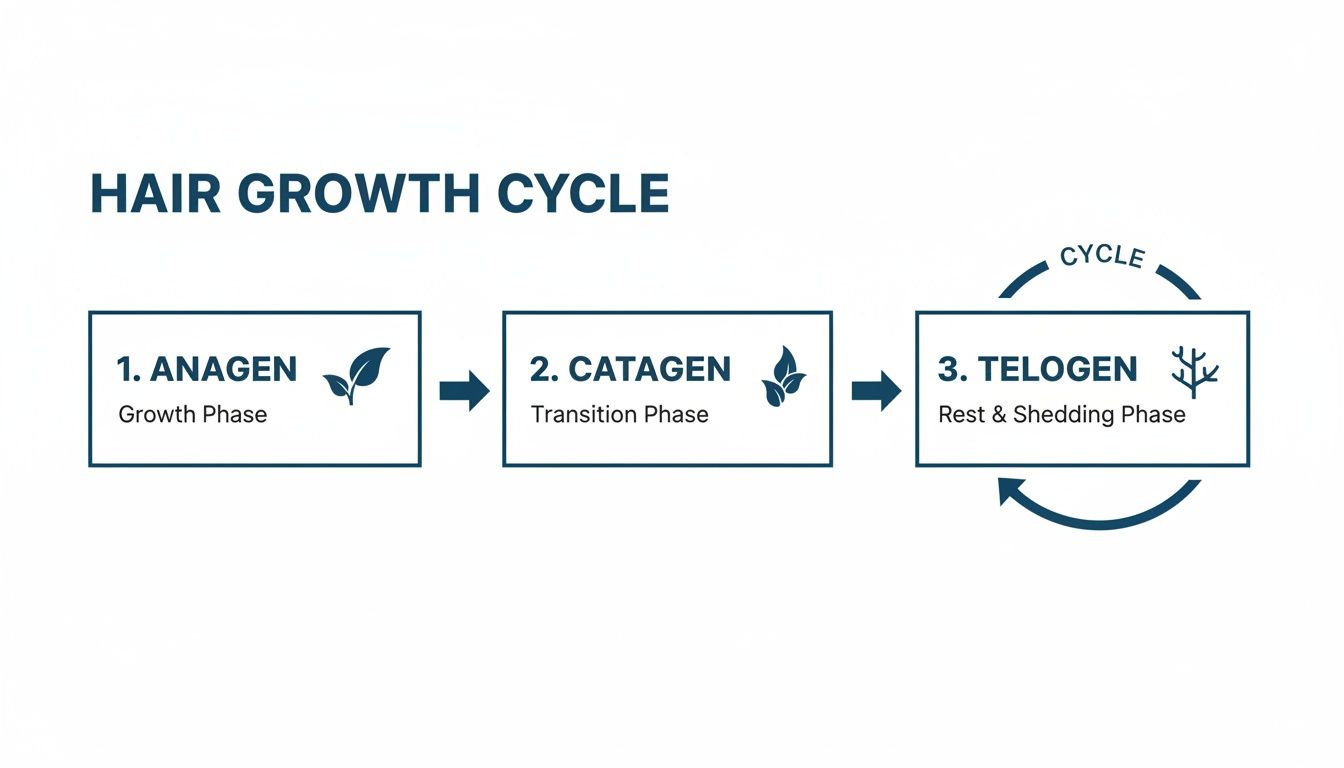 Seeing this natural progression helps clarify how internal factors, like genetics and hormones, can really disrupt the cycle and lead to those noticeable changes in hair density.
Hormonal Fluctuations and Hair Health
Hormones are powerful messengers that direct countless functions in your body, and that absolutely includes your hair’s growth cycle. When their levels shift, your hair is often one of the first places you'll see the impact. In fact, hormonal imbalances are a primary driver of female hair loss, with conditions like low progesterone levels having a significant effect on hair health.
Major life stages for women often come with hormonal tides that can trigger hair thinning:
-
Pregnancy and Postpartum: During pregnancy, high estrogen levels keep your hair in the anagen (growth) phase longer, which is why many women enjoy thicker, more luscious hair. After childbirth, however, estrogen levels take a nosedive. This sudden drop pushes a huge number of hairs into the telogen (shedding) phase all at once, leading to that dramatic postpartum shedding so many new moms experience.
-
Menopause: As women enter menopause, levels of estrogen and progesterone decline. This shift can unmask the effects of androgens (male hormones), which then cause hair follicles to shrink and hair to thin out.
-
Thyroid Conditions: Your thyroid is a master regulator. Both an underactive thyroid (hypothyroidism) and an overactive one (hyperthyroidism) can throw the hair growth cycle into chaos, causing diffuse hair loss across the entire scalp.
Hormonal shifts don't directly "attack" your hair. What they do is alter the delicate timing of the growth and shedding phases. This is why you often notice the shedding a few months after the hormonal event that set it off.
Nutritional Gaps and Their Impact
Your hair follicles are tiny but incredibly busy factories, and they need a constant supply of energy and nutrients to build strong, healthy hair. When your diet is missing key vitamins and minerals, your body has to prioritize. It sends those limited resources to your vital organs first, leaving your hair follicles undernourished.
This can weaken the hair shaft, slow down growth, and lead to more shedding. It's a perfect example of how what you put into your body shows up on the outside. For those wanting to dig deeper into this connection, you can learn more about why your hair might be falling out in our related guides.
Think of it like trying to build a house without enough materials—the final structure is bound to be weaker. Some of the most critical nutrients for hair health include:
-
Iron: An iron deficiency is a very well-known cause of hair loss in women, especially for those with heavy menstrual periods. Iron is essential for making hemoglobin, which is responsible for carrying oxygen for the growth and repair of all cells—including the ones that stimulate your hair follicles.
-
Zinc: This mineral plays a vital role in hair tissue growth and repair. It also helps keep the oil glands around the follicles working just right.
-
Biotin: As one of the B-complex vitamins, biotin is absolutely crucial for producing keratin, which is the main protein that makes up your hair.
A balanced diet, rich in these and other essential nutrients, provides the fundamental building blocks your follicles need to do their job and support the appearance of beautiful, resilient hair.
How Stress and Lifestyle Can Impact Your Hair
Genetics and hormones get a lot of attention, but the rhythm of our daily lives is a huge, often overlooked, piece of the puzzle. The link between stress and hair health isn’t just a feeling—it’s a very real biological reaction that can seriously disrupt your hair’s growth cycle.
If you’ve ever navigated a particularly tough time—a demanding job, a personal loss, or a big life change—only to notice more hair in your brush a few months later, you’ve seen this connection firsthand. That delayed shedding is the classic signature of stress-induced hair loss.
Telogen Effluvium: The Stress Shedding Effect
The most common culprit behind stress-related shedding is a condition called Telogen Effluvium. Think of it as your body's emergency brake. When you’re hit with a major physical or emotional shock, your body wisely diverts energy away from non-essential tasks, like growing hair, to focus on pure survival.
This shock can jolt a huge number of hair follicles—sometimes up to 30-50% instead of the usual 10-15%—straight from their active growing (anagen) phase into the resting and shedding (telogen) phase. Because the telogen phase lasts about three months, the shedding doesn't happen right away. It shows up long after the stressful event is over, making it tricky to connect the dots.
Common triggers for Telogen Effluvium include:
- Intense Emotional Stress: Things like grief, a high-pressure career, or major life changes.
- Major Physical Trauma: This could be surgery, a serious illness, or even rapid weight loss.
- Significant Life Changes: A big move or a new job can be enough to disrupt your system.
Unfortunately, the anxiety of seeing more shedding can create a vicious cycle, adding even more stress to the situation.
How Lifestyle Habits Can Magnify Stress
Your daily habits are critical in determining how well your body copes with stress. They can either build up your resilience or leave you more vulnerable to its physical fallout, including what happens on your scalp.
Lack of sleep is a perfect example. When you're not getting enough quality rest, your body pumps out more of the stress hormone cortisol. Over time, elevated cortisol levels can interfere with the hair growth cycle and lead to more shedding.
Likewise, a diet missing key nutrients puts your body under physical strain. Your follicles simply can't function at their best without the right building blocks, making them more susceptible to other stressors. You can learn more about which nutrients are most important by exploring the best vitamins to support hair appearance.
Research highlights a strong correlation between psychological stress and shedding. Studies show that women under high stress are approximately 11 times more likely to experience hair loss.
The Path to Balance
Here's the good news: in most cases, stress-related hair loss is temporary. Once the stressor is managed or removed, your body can recalibrate, and your hair growth cycle will eventually get back on track.
Managing your stress is a key part of supporting your body's balance. While you can't always eliminate the sources of stress, you can absolutely build better coping mechanisms. Simple practices can make a world of difference:
- Mindfulness and Relaxation: Techniques like meditation, deep breathing exercises, or yoga are proven to help lower cortisol levels.
- Consistent Sleep Schedule: Aiming for 7-9 hours of quality sleep per night is fundamental for hormonal balance.
- Balanced Nutrition: A diet rich in protein, vitamins, and minerals gives your follicles the support they need to recover.
- Gentle Movement: Regular, moderate exercise is a fantastic way to reduce stress and boost circulation to your scalp.
By focusing on these supportive lifestyle habits, you're giving your body the tools it needs to navigate tough times and helping your hair find its way back to balance.
How to Support a Healthy Scalp and Hair
While learning what causes hair loss in women is an important first step, shifting your focus to proactive, supportive care can be incredibly empowering. It's helpful to think of your scalp as the soil in a garden. If you want lush, healthy plants, you have to start with a healthy, balanced environment for them to grow in.
This means looking beyond just the hair strands themselves and giving your scalp the attention it truly deserves. A well-cared-for scalp is the foundation for hair that looks full, strong, and vibrant. It all starts with gentle daily habits and the right nourishing ingredients.
Adopt a Gentle Scalp Care Routine
Your everyday routine plays a surprisingly big part in the health of your scalp and how your hair looks. Harsh practices can easily throw your scalp's environment out of balance, while a gentle touch helps maintain its natural equilibrium, supporting the appearance of healthier hair.
Regular, gentle cleansing is key, as excess oil and product residue can clog things up. Look for shampoos made without harsh sulfates, which can strip the scalp of its protective natural oils and lead to dryness and irritation. When you wash, focus the product on your roots and use just your fingertips to massage it in gently.
A common myth is that washing your hair more often causes it to fall out faster. The truth is, any hairs that come out in the shower were already in the telogen (shedding) phase of the hair cycle. Keeping your scalp clean is actually a good thing—it prevents buildup that can get in the way of new growth.
Creating a supportive scalp environment also means being picky about the ingredients in your products. Choose formulas that nourish and balance the scalp to create the best possible conditions for your hair follicles. For more on this, you can learn how a scalp massage can support your hair's appearance.
Embrace Mindful Styling Habits
The way you style your hair has a direct impact on its strength and resilience. Years of high heat, chemical treatments, and tight hairstyles can really take a toll, causing breakage that makes hair seem thinner and less full. By adopting more mindful styling habits, you can protect your hair from a lot of unnecessary damage.
Constant pulling and tension are huge culprits behind breakage. Hairstyles like tight ponytails, buns, or braids can strain the hair follicles day after day, leading to a condition known as traction alopecia. Try to switch up your styles and go for looser updos when you can, using gentle hair ties made from silk or other soft fabrics.
Here are a few simple swaps you can make to protect your strands:
- Turn Down the Heat: Cut back on using flat irons, curling wands, and high-heat blow dryers. When you do use them, always apply a heat protectant spray first and stick to the lowest temperature that gets the job done.
- Handle Wet Hair with Care: Hair is at its most fragile when it's wet. Instead of rubbing it with a rough towel, gently squeeze out excess water with a soft microfiber towel. Use a wide-tooth comb to detangle, starting from the ends and carefully working your way up to the roots to prevent snapping.
- Choose Nourishing Products: Pick styling products that do more than just hold a style. Look for formulas with ingredients that add moisture and support the hair shaft, helping it stay flexible and less prone to breaking.
Nourish from Within for Visible Results
True hair wellness is an inside-out job. While gentle care and styling are essential for protecting the hair you already have, giving your body the right nutrients provides the building blocks it needs to support strong, beautiful hair right from the follicle.
A balanced diet rich in vitamins, minerals, and protein is non-negotiable for scalp health. Nutrients like iron, zinc, biotin, and protein are all critical players in building resilient hair strands. Think of them as the raw materials your body's "hair factories" need to run at peak performance.
A few simple dietary additions can make a real difference:
- Protein-Rich Foods: Add in lean meats, fish, eggs, beans, and nuts to supply your body with keratin, the primary protein that makes up hair.
- Iron and Zinc Sources: Leafy greens, lentils, and seeds are fantastic sources of these essential minerals.
- Healthy Fats: Foods rich in omega-3 fatty acids, like avocados and salmon, help support a moisturized scalp from the inside.
When you combine a gentle scalp care routine with mindful styling and a nutrient-rich diet, you create a powerful, 360-degree approach to supporting your hair’s health and appearance.
When It’s Time to See a Professional
Taking care of your scalp and making gentle lifestyle tweaks are fantastic first steps for keeping your hair looking healthy and full. But sometimes, you need to call in an expert. Knowing when to book that appointment is a crucial part of taking control of your hair health.
If you’re noticing a sudden increase in shedding or if the shedding feels unusually rapid, that’s your cue to get a professional opinion. The same goes for any thinning concentrated in specific patches, or if your scalp just won’t stop itching or feeling sore. These are signs that something more is going on under the surface.
What to Expect During a Consultation
Deciding to see a dermatologist can feel like a big step, but it’s a really positive one. The whole point of the visit is to get a clear picture of what’s happening with your hair and scalp, so don't be nervous. Think of it as an information-gathering mission.
You’ll likely chat about your overall health, any family history of hair loss, your diet, and recent life stressors. The doctor will also do a gentle physical examination of your scalp and hair. It’s all pretty straightforward.
Seeing a professional isn’t about finding a magic bullet; it’s about good old-fashioned detective work. The goal is to uncover the root cause of your hair changes, giving you peace of mind and a solid plan to move forward.
Understanding Diagnostic Steps
To figure out exactly what’s causing your hair loss, your doctor might suggest a few simple diagnostic tests. These are standard procedures meant to rule out common internal triggers and give everyone a complete picture.
Common tools in their toolkit include:
- Blood Tests: This is often the first step. A simple blood draw can check for common culprits like low iron, vitamin deficiencies, and hormonal imbalances, especially with your thyroid.
- Pull Test: It sounds scarier than it is! A doctor gently tugs on a small section of about 50-60 hairs to see how many come loose. This helps them gauge how active the shedding phase is.
- Scalp Biopsy: In some situations, a tiny sample of scalp tissue might be taken for a closer look under a microscope. This gives a much more detailed view of what's happening right at the follicle level.
Taking this step is an act of self-care. It replaces worrying and guessing with solid information, letting you move forward with a plan that’s actually tailored to you.
Your Hair Loss Questions, Answered
When you're dealing with something as personal as hair loss, it's natural to have a lot of questions. Let's walk through some of the most common ones we hear to help clear things up.
Can Coloring My Hair Cause Permanent Hair Loss?
This is a big one. While harsh chemical treatments like bleaching and dyeing can definitely damage the hair shaft itself, leading to breakage that makes your hair look thinner, they don't typically destroy the follicle. The damage is to the visible hair strand, not the root.
The key is to protect your scalp and always opt for gentle, high-quality products to minimize damage and keep your scalp healthy.
How Much Hair Shedding Is Normal?
It’s completely normal to lose between 50 to 100 hairs per day. This is just part of your hair's natural cycle of renewal. You should only really start paying attention if you notice a sudden, significant increase in shedding—like finding large clumps in your brush or in the shower drain. Other signs to watch for are visible changes, like your part widening or your ponytail feeling noticeably thinner.
The big takeaway here is that daily shedding isn't just normal—it's a sign of a healthy, active hair cycle. It's a change from your personal baseline that signals it's time to investigate.
Will My Hair Grow Back After Stress-Induced Shedding?
In most cases of telogen effluvium (the clinical term for stress-related shedding), the answer is yes. The hair loss is temporary. Once the stressor—whether it's physical or emotional—is managed and your body gets a chance to recalibrate, your follicles can re-enter their growth phase.
Patience is key, though. Regrowth is a gradual process and can take several months to become noticeable. Supporting your body with great nutrition and solid stress-management techniques can really help the process. Many people find that exploring natural hair loss remedies provides an extra layer of support during this time.
Does My Diet Really Affect My Hair?
Absolutely. What you eat plays a huge role in your hair's health and appearance. Think of it this way: your hair follicles are tiny factories that need a steady supply of raw materials—like protein, iron, zinc, and vitamins—to build strong, healthy hair strands.
A balanced, nutrient-rich diet ensures those little factories have all the building blocks they need to function at their best.
At Skin Perfection, we believe that nurturing your body from the inside out is the true foundation of beauty. While our products help you care for your skin, a holistic approach to wellness is what helps you feel your absolute best. Explore our collection of premium skincare and lotion-making supplies to support your self-care journey. Discover more at https://www.naturalorganicskincare.com.