

 Buy with Prime


Choosing the best natural face cream for mature skin isn't about chasing a fountain of youth. It’s about finding formulas packed with powerful ingredients like peptides, antioxidants, and ceramides to support your skin’s hydration and firmness. It’s about making your skincare routine an empowering act of self-care with beautiful botanical ingredients, not harsh chemicals.
Your Guide to Nourishing Mature Skin Naturally
As our skin matures, its needs evolve. This isn't just about a birthday; it's about real, visible shifts in texture and resilience. You might notice your skin feels thirstier than it used to, or perhaps it’s lost some of its natural bounce and brightness. These are completely normal experiences, and the right skincare can make a world of difference in how your skin looks and feels.
Opting for a natural approach means you’re choosing ingredients that come from nature to support your skin’s beauty. This philosophy steps away from harsh, synthetic chemicals and instead focuses on providing nourishment that works with your skin, not against it. For many, it's a conscious choice to embrace a routine that feels both gentle and incredibly effective.
Why Natural Ingredients Matter
It's clear that the demand for natural skincare is more than just a trend. The global face cream market is set to grow by over USD 13.3 billion between 2025 and 2029, with a huge focus on natural formulas. This shift is powered by savvy consumers who understand that ingredients sourced from nature can offer truly remarkable benefits for the skin's appearance. You can dive deeper into these market dynamics in Technavio's industry analysis.
At Skin Perfection, this principle is the heart of everything we do. We are firm believers in the power of high-quality, effective ingredients—from innovative plant stem cells to clinically studied peptides. We offer both expertly crafted products and the individual ingredients for those who love creating their own custom solutions. Understanding what to look for in great ingredients is the first step toward reaching your skincare goals.
Think of your skin like a garden. To truly flourish, it needs the right nutrients—water, sunlight, and rich soil. In the same way, mature skin thrives on a thoughtful blend of hydrating, protective, and supportive ingredients to maintain its beautiful appearance.
To help simplify your search, we've put together a quick guide to the key ingredient categories that are absolutely essential in a high-quality natural face cream for mature skin.
Quick Guide to Key Ingredients for Mature Skin
This table breaks down the powerhouse ingredient categories you should be looking for.
| Ingredient Category | Primary Function | Natural Examples |
|---|---|---|
| Peptides | Support skin's firmness and smooth appearance. | Plant-derived peptides from peas or rice. |
| Antioxidants | Help skin's appearance when exposed to environmental stressors. | Vitamin C (from citrus) and Vitamin E (from sunflower seeds). |
| Ceramides | Help maintain the skin's natural moisture barrier. | Derived from sweet potatoes, rice, or wheat. |
| Humectants | Attract and retain moisture for a hydrated look. | Hyaluronic Acid and Glycerin (from vegetable sources). |
Think of these ingredients as your skin's support system. Peptides are like personal trainers for firmness, antioxidants act as bodyguards against environmental damage, ceramides are the mortar that holds your skin barrier strong, and humectants are hydration magnets. Together, they create a comprehensive approach to keeping mature skin looking its absolute best.
The Essential Ingredients in Natural Face Creams
Stepping into the world of skincare ingredients can feel a little like learning a new language. It’s easy to get overwhelmed! But here’s the good news: you only need to know a handful of key players to really change how you choose the best natural face cream for mature skin. It's not about finding one "miracle" ingredient, but rather a beautiful symphony of components that work together to bring out the best in your skin.
Think of these ingredients like the specialized tools in an artist's studio. Each one has a specific job, and when they're combined with expertise, the result is stunning. Let's pull back the curtain on the powerhouse ingredients that truly make a difference for your skin's hydration, texture, and overall glow.
Peptides: The Supportive Messengers
Peptides are short chains of amino acids—the very building blocks of essential proteins like collagen. The simplest way to think of them is as tiny messengers. When you apply them in a face cream, they send signals that encourage your skin to look firm, feel smooth, and stay resilient.
This isn't about forcing a change; it's a gentle encouragement that works with your skin's natural processes. It’s a harmonious approach. Many of the best formulas use plant-derived peptides from sources like peas and rice, offering a botanical way to support your skin's bounce and elasticity.

Hyaluronic Acid: The Hydration Magnet
If there’s one ingredient that gets skincare experts excited, it’s Hyaluronic Acid. Its superpower? Hydration. Think of it as a tiny sponge that can hold up to 1,000 times its weight in water, literally pulling moisture from the air and locking it into your skin.
As we age, our skin's ability to hold onto moisture naturally declines, which can make fine lines look more obvious. Hyaluronic Acid steps in to replenish that lost hydration, giving skin a visibly plumper, smoother, and more supple appearance.
A well-hydrated skin cell is like a plump, juicy grape—smooth and full. A dehydrated one is more like a raisin—less firm and more wrinkled. Hyaluronic Acid helps keep your skin in the grape category.
You'll find that many of the best natural face creams use Hyaluronic Acid sourced from the fermentation of plants like soy or wheat, giving you a plant-based dose of this incredible humectant. To learn more about how these moisture-magnets work, you can explore our guide on natural humectants for skin.
Antioxidants: The Environmental Guardians
Every single day, your skin faces an onslaught from environmental stressors like pollution and UV rays. These create free radicals—unstable molecules that can leave your skin looking dull, tired, and uneven. Antioxidants are your skin's personal bodyguards.
They work by neutralizing these free radicals, helping to maintain your skin's appearance for a bright, healthy-looking complexion. Some of the top antioxidants to look for include:
- Vitamin C: Famous for its brightening abilities, Vitamin C helps even out skin tone and brings back a radiant glow. It’s often sourced from citrus fruits, acerola cherries, or rosehips.
- Vitamin E: This moisturizing antioxidant is a hero for supporting the skin’s lipid barrier. You'll commonly find it derived from sunflower seeds, almonds, and avocados.
- Green Tea Extract: Loaded with powerful compounds called polyphenols, green tea is fantastic for beautifying the skin while helping its appearance when exposed to environmental damage.
Understanding how botanicals work extends beyond just skincare; learning about various Ayurvedic herbs and natural boosters can give you a deeper appreciation for the power of plants.
Ceramides: The Barrier Builders
Imagine your skin cells are tiny bricks. What holds them all together? That would be the ceramides—they are the mortar. These lipid molecules are absolutely essential for your skin's natural moisture barrier, which is responsible for keeping the good stuff (moisture) in and the bad stuff (irritants) out.
As we get older, our natural ceramide levels can drop, which weakens the barrier and can lead to dryness and sensitivity. By using a cream with ceramides—often derived from natural sources like rice bran or sweet potatoes—you're essentially re-mortaring the bricks. This helps support a strong, resilient, and beautifully hydrated skin surface.
How to Read and Understand Your Face Cream Label
Choosing the right natural face cream often means turning the bottle around and playing detective. That back label, with its tiny print and long, science-y names, can feel a little intimidating. But here's the secret: it tells the real story of what you're about to put on your skin. Learning to decode it is the single most powerful tool you have to make sure what's inside is actually what your skin needs.
Think of an ingredient list like a recipe. The ingredients are always listed in descending order of quantity, from the largest to the smallest. The first five or six ingredients make up the bulk of the formula, so it's normal to see things like water (Aqua), glycerin, or a carrier oil at the top.
But if you're buying a cream because it promises powerful peptides or antioxidants, you want to see them pretty high up on that list. If they're buried at the very end, after all the preservatives and fragrances, they're probably not in there in a meaningful amount. It's a quick check that tells you if the product is all talk or if it actually has the goods.
Unpacking Common Label Terms
The front of the bottle is all about marketing. It uses appealing words to catch your eye, but many of these terms aren't regulated. Understanding what they really mean is key.
- Natural: This suggests the ingredients come from nature. But since it's not a regulated term, one brand's definition of "natural" can be wildly different from another's.
- Organic: This usually means ingredients were grown without synthetic pesticides. To be sure, look for official certifications like USDA Organic. That seal means they're being held accountable.
- Clean: This generally means a product is made without certain controversial ingredients like parabens, sulfates, or phthalates. Every brand has its own "no-no" list, so "clean" can mean different things.
Navigating skincare labels is like becoming a food label detective. Just as you'd check for sugar content in a snack, you learn to scan for the good stuff (like peptides and antioxidants) and avoid the fillers in your skincare.
Getting familiar with the specific language of ingredient lists, known as INCI (International Nomenclature of Cosmetic Ingredients), puts even more power in your hands. For a deeper dive, our guide on how to read a skincare label INCI will help you feel even more confident in what you're buying.
Ingredients to Approach with Caution
When you're searching for the best natural face cream, knowing what to avoid is just as critical as knowing what to look for. Mature skin can be more sensitive, so steering clear of potential irritants is always a smart move.
Here are a few ingredients you might want to see less of:
- Synthetic Fragrances: Often just listed as "fragrance" or "parfum," this one word can hide dozens of unlisted chemicals. For many people, these are a fast track to irritation and sensitivity.
- Certain Parabens: Used as preservatives, some types of parabens (like propylparaben and butylparaben) have raised concerns for consumers who prefer a more natural approach to their skincare.
- Sulfates (SLS/SLES): You'll see these more in cleansers, but they can pop up in creams too. These detergents can be incredibly stripping and harsh, which is the last thing you want for skin that's already prone to dryness.
By becoming a skilled label reader, you take back control. You get to move past the flashy marketing and focus on what truly matters—the formulation itself. This is how you ensure the product you choose is made with ingredients that will help your skin look its absolute best.
Finding the Perfect Texture and Formulation
When you're searching for the best natural face cream, it's easy to get hyper-focused on the ingredient list. But let's be honest—the daily experience of using it is just as important. How it feels, how it absorbs, and how it layers with your other products can make or break your routine.
Think about it: a formula you genuinely love is a formula you’ll actually use every single day. The most effective cream in the world won't do a thing if it just sits on your shelf. That’s why finding the right texture for your skin type is a huge piece of the puzzle.
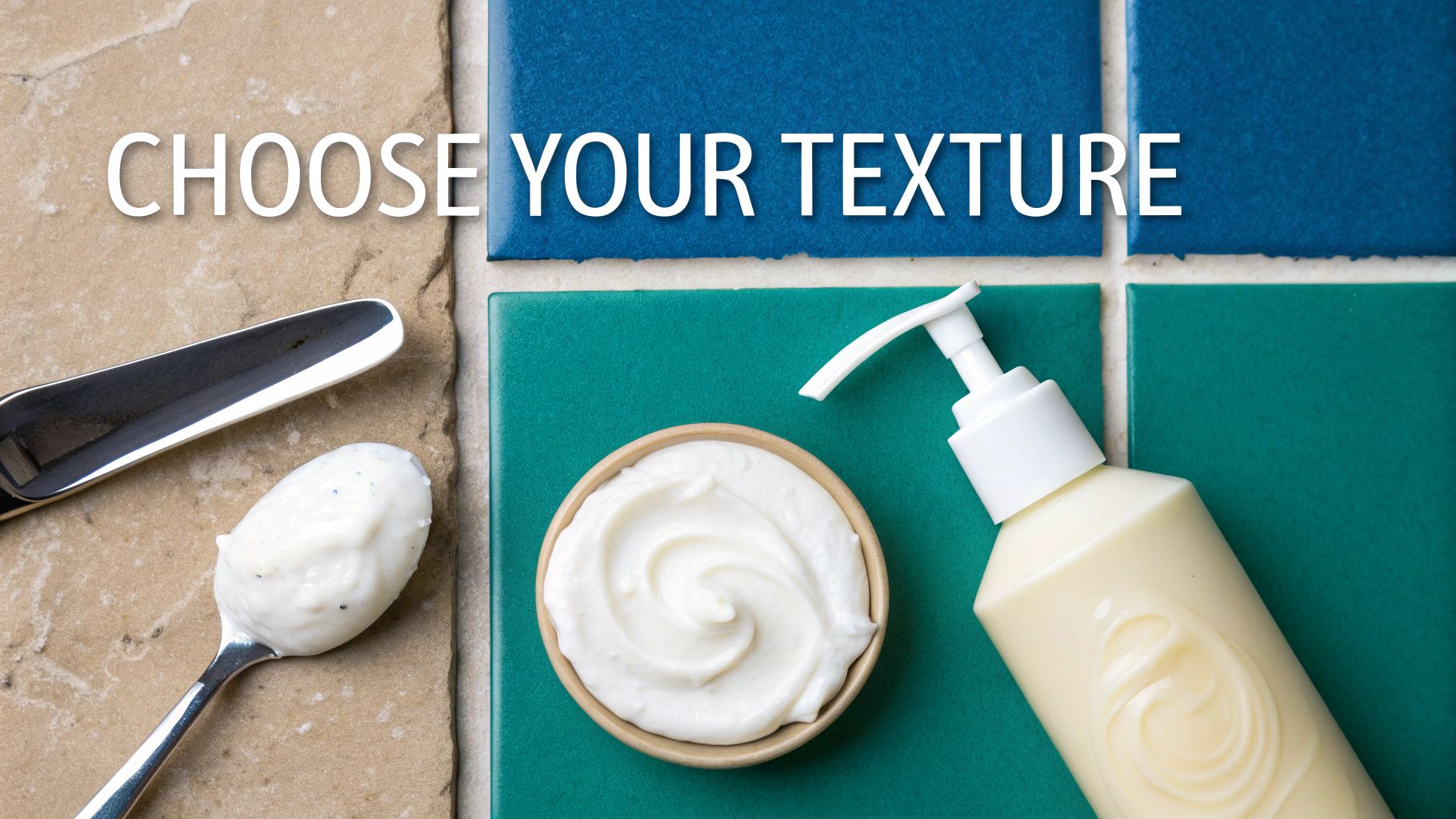
Matching Texture to Your Skin Type
Mature skin isn't just one thing—it comes in all types, from parched and dry to combination or even a bit oily. Each one craves a different kind of formulation.
-
For Very Dry or Dehydrated Skin: A rich, thick cream is your absolute best friend. Picture it as a cozy, protective blanket for your skin. These formulas are usually packed with nourishing butters (like shea or mango) and oils that deeply moisturize and create a soft, supple feel.
-
For Combination Skin: A lightweight lotion strikes that perfect balance. It gives plenty of hydration to drier areas like your cheeks without feeling heavy or greasy on the T-zone. These formulas sink in quickly, leaving you with a comfortable, barely-there finish.
-
For Oily Mature Skin: A gel-cream brings a wonderfully refreshing feel. These water-based formulas deliver all the essential hydration and active ingredients you need without adding extra oil. They feel almost weightless as they absorb into the skin.
Remember, your skin's needs often shift with the seasons. You might find yourself reaching for a rich cream in the dry winter months, then switching to a lighter lotion or gel-cream when summer humidity rolls in.
How Formulation Affects Your Routine
The texture of your face cream also determines how well it plays with others—namely, your serums and sunscreen. A beautifully formulated cream should melt right in, creating a smooth canvas for whatever you apply next.
We’ve all been there: a heavy cream that just sits on top of your skin, causing makeup to pill or slide right off. Ugh. On the flip side, a lightweight, fast-absorbing formula lets you easily layer a serum underneath and a sunscreen on top without feeling weighed down. This kind of seamless integration is what makes a routine feel effortless and truly effective.
For those who love getting hands-on, understanding these textures opens up a world of possibilities. At Skin Perfection, we offer a whole range of lotion-making supplies and cream bases. This lets you become your own formulator, creating a product with the perfect feel for your unique preferences. Imagine blending our advanced actives into a base that feels like it was custom-made just for you. It’s the ultimate way to make sure your cream not only performs like a dream but feels incredible every single time you use it.
Crafting Your Own Natural Face Cream
For anyone who loves knowing exactly what goes on their skin, making your own face cream is the ultimate form of personalization. When you create the best natural face cream for mature skin yourself, you're in the driver's seat. You get to select every single ingredient to meet your unique needs, guaranteeing freshness and potency.
Think of yourself as your own personal skincare chef. Instead of picking a pre-made meal off the shelf, you're hand-selecting the freshest, highest-quality ingredients. This way, you can whip up a formula that’s perfectly suited to your skin's specific tastes—something a one-size-fits-all product can never quite match.
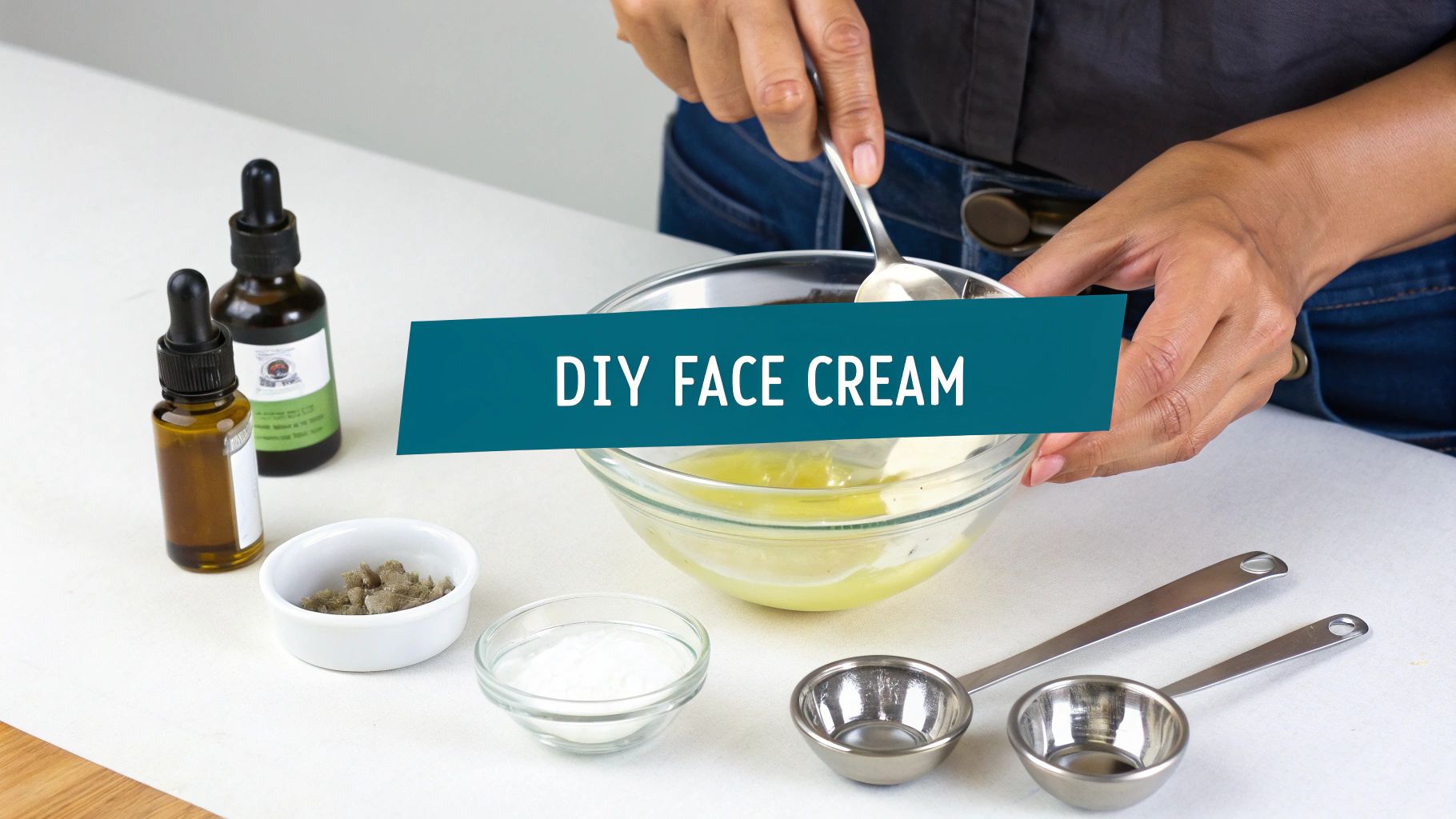
Why DIY Is a Great Option
Making your own cream isn't just a fun hobby; it's a smart, strategic way to approach your skincare. You can ensure every component is beneficial for your skin, leaving out the unnecessary fillers, synthetic fragrances, or harsh preservatives that might cause irritation. This level of customization is especially powerful for mature skin, which often has very specific, changing concerns.
This hands-on approach is a huge part of the clean beauty movement, which is all about transparency and real results. It's a big deal, too. The anti-aging market is projected to hit a staggering USD 85.13 billion by 2025, and skincare makes up a massive 55% of that. Natural formulations are leading the charge, with ingredients like antioxidant-rich Vitamin C showing significant support for the skin's appearance.
A Simple Foundational Recipe
Getting started is way easier than you might think. A basic, beautiful face cream really just has three main parts: an oil phase, a water phase, and a cool-down phase where you add all the delicate, powerhouse ingredients.
Here’s a simple recipe to get you on your way.
1. The Oil Phase: This is where the deep moisturization happens.
- Premium Carrier Oils: Start with a nourishing base like Argan or Rosehip Seed Oil. They're packed with essential fatty acids that leave skin feeling incredibly soft and supple.
- Natural Emulsifier: You'll need an emulsifying wax (Olivem 1000 is a great choice) to bind the oil and water together into a stable, creamy lotion. Without it, they'll just separate.
2. The Water Phase: This part delivers pure hydration.
- Distilled Water or Hydrosol: Use pure distilled water or a botanical hydrosol, like rosewater, for its gentle, beautifying properties.
- Humectants: A little touch of vegetable glycerin is perfect for attracting moisture from the air right into your skin.
3. The Cool-Down Phase: These are your active superstars.
- Active Peptides: Once the cream has cooled down, stir in a few drops of a peptide complex to support a firm, smooth appearance.
- Preservative: This is a non-negotiable step. A broad-spectrum preservative is essential to keep your beautiful creation fresh and safe from bacteria and mold.
For a more detailed walkthrough and other recipe ideas, you'll love our guide on creating a DIY anti-aging cream.
Creating your own cream is like building a custom nutrient smoothie for your skin. You start with a base (oils and water), then add your 'superfoods' (peptides and antioxidants) for a personalized boost.
Customizing Your Cream for Your Skin
The real magic of DIY is in the customization. Once you've got the basic process down, you can start swapping ingredients to zero in on your specific skin concerns.
Here's a quick guide to simple swaps you can make using high-quality Skin Perfection ingredients to tailor your cream.
DIY Cream Ingredient Swaps for Your Skin's Needs
| Skin Concern | Recommended Carrier Oil | Suggested Active Ingredient |
|---|---|---|
| Increased Dryness | Avocado Oil | Ceramides |
| Dull Appearance | Sea Buckthorn Oil | Vitamin C (Ascorbic Acid) |
| Loss of Firmness | Rosehip Seed Oil | Matrixyl 3000 (Peptide Complex) |
| Uneven Skin Tone | Tamanu Oil | Niacinamide (Vitamin B3) |
By tailoring your formula this way, you create a truly bespoke product. It’s an empowering way to engage with your skincare, ensuring every single drop is formulated with intention and care for your skin's beautiful journey.
How to Build a Routine to Get the Most From Your Cream
So you’ve found the perfect natural face cream for your mature skin—that’s a huge win! But how you use it can make all the difference between good results and great results. Think of your cream as the star player on a team; it needs the right support from the rest of the players to truly shine.
Putting together a simple, daily regimen is the best way to prep your skin to soak up all the incredible benefits your cream has to offer. This isn't about adding a dozen complicated steps. It's about creating a consistent, supportive environment for your skin to thrive. That consistency is the real secret sauce that turns a simple action into a powerful, results-driven ritual.
The All-Important Order of Application
Layering your products correctly is non-negotiable because it determines how well each one gets absorbed. If you apply them out of order, you can accidentally create a barrier that stops the good stuff from ever reaching your skin. The golden rule is simple: go from the thinnest texture to the thickest.
Here’s the most effective sequence for both your morning and evening routines:
- Cleanse: Always start with a gentle cleanser. This removes impurities, makeup, and daily grime, creating a perfectly clean canvas so there’s nothing blocking the absorption of the products to follow.
- Tone: A quick swipe of toner helps to balance your skin's pH and adds that first light layer of hydration, getting it ready for what's next.
- Apply Serums: Now’s the time for your targeted treatments. Serums are lightweight powerhouses packed with concentrated active ingredients that need to get as close to your clean skin as possible to work their magic.
- Moisturize: Finally, it’s time for your natural face cream. This final step locks in the benefits of your serum while delivering its own dose of moisture and nourishment, sealing everything in.
Want to dive a bit deeper? Our detailed guide explains the correct order to apply skin care products so you can get the most out of every single step.
Essential Tips for Your Daily Routine
Beyond just the order, a few simple tweaks can take your routine’s effectiveness to the next level. These small adjustments help you get every bit of value from the best natural face cream for mature skin.
A consistent skincare routine is a form of self-respect. It is a daily promise to yourself to care for your skin’s long-term appearance and well-being.
When you apply your cream, use gentle, upward strokes. This simple technique works against gravity and is a mindful way to apply your product without tugging or pulling at your delicate skin.
And please don't forget the single most important step you can add to your morning routine: sunscreen. After your cream has had a minute to fully absorb, always apply a broad-spectrum sunscreen with an SPF of 30 or higher. It's your best defense against the environmental stressors that can affect the appearance of skin.
Your Questions Answered: Natural Face Creams
Diving into the world of natural skincare can bring up a lot of questions. It's totally normal! To help you feel completely confident as you choose the best natural face cream for your skin, I’ve put together some of the most common queries I hear.
How Long Until I See Results?
This is probably the number one question people ask, and the answer is all about patience and consistency. Think of it as a long-term wellness journey for your skin, not a quick fix.
You'll likely notice an immediate improvement in hydration and softness within just a few days—that's the instant gratification part! But for the deeper, more visible changes in skin texture and firmness, you'll want to give it at least 4 to 8 weeks of consistent use. This window allows your skin to go through its natural renewal cycles and really soak up all the benefits from those amazing ingredients.
Is a Natural Cream Safe for My Sensitive Skin?
For many people with sensitive skin, natural face creams are a game-changer. These formulas usually skip the stuff that can make reactive skin angry, like synthetic fragrances or harsh detergents. It can be a huge relief.
But here's something important to remember: "natural" doesn't automatically mean "allergy-proof." Just like some people are sensitive to natural things like strawberries or pollen, it’s possible to have a reaction to a botanical ingredient.
Pro Tip: Always, always do a patch test before slathering a new product all over your face. Just apply a small amount to a discreet spot, like your inner arm, and wait 24 hours. This little step can save you a lot of grief and ensures your skin is happy with its new friend.
Do I Still Need to Use Sunscreen?
Yes! Absolutely. A thousand times, yes. If you take away only one piece of advice, let it be this: sunscreen is a non-negotiable part of your daily routine.
Think of your face cream and your sunscreen as having two different but equally critical jobs:
- Your face cream is all about moisturizing, nourishing, and delivering those powerful active ingredients deep into your skin.
- Your sunscreen is your shield. It's specifically designed to protect your skin from UV exposure, which is the single biggest contributor to the visible signs of aging.
For best results, apply your natural face cream, give it a minute to sink in, and then layer a broad-spectrum sunscreen with an SPF of 30 or higher on top. Every single morning. Rain or shine. No exceptions!
Ready to find the perfect natural ingredients to take your skincare to the next level? Explore the amazing selection of high-performance actives and DIY supplies at Skin Perfection and start creating solutions that truly celebrate your skin's unique beauty. You can find your ideal ingredients at https://www.naturalorganicskincare.com.