

 Buy with Prime



If you've ever skimmed the ingredient list on your skincare products, chances are you've seen citric acid pop up. So, what is it? At its heart, citric acid is a type of alpha hydroxy acid (AHA) that's naturally found in citrus fruits like lemons, limes, and oranges. It's a real workhorse in cosmetic formulas, playing a few crucial roles—from gentle exfoliation to making sure a product actually works the way it's supposed to.
Unlocking the Role of Citric Acid in Skincare
Citric acid might sound simple, but its job in skincare is surprisingly sophisticated. It primarily functions in two distinct ways, which is why you'll find it in everything from cleansers and serums to lotions and masks. Getting a handle on these dual roles is the first step to understanding why formulators love it so much.
Think of it first as a behind-the-scenes technician. Every water-based skincare product has a pH level, which is just a measure of how acidic or alkaline it is. For a product to feel good on your skin and deliver results without causing irritation, its pH needs to be in a very specific range—usually somewhere between 4.5 and 5.5.
This is where citric acid shines as a pH adjuster. Formulators use it in tiny amounts to bring a product's pH down into that perfect "sweet spot." This simple adjustment is critical for keeping the other active ingredients in the formula stable and effective.
More Than Just a pH Adjuster
Beyond its technical role, citric acid is also a respected skincare ingredient in its own right, thanks to its exfoliating abilities. As a member of the alpha hydroxy acid (AHA) family, it gets to work on the outermost layer of your skin.
It gently helps dissolve the "glue" that holds dead, dull skin cells together, encouraging them to shed naturally. This process helps to reveal the fresher, more radiant-looking skin underneath. It’s no wonder it’s a popular pick for products aiming to smooth out skin texture and bring back a healthy glow. If you're looking to explore this category, you can check out our collection of alpha hydroxy acid products.
To give you a better idea of its different functions, here’s a quick breakdown of how citric acid is used in product formulations.
Citric Acid in Skincare at a Glance
| Key Function | How It Works in a Formula | Commonly Found In |
|---|---|---|
| pH Adjuster | Lowers the formula's pH to an optimal, skin-friendly level, ensuring stability and efficacy of other active ingredients. | Cleansers, toners, serums, moisturizers, masks |
| Exfoliant (AHA) | Loosens the bonds between dead skin cells on the surface, promoting gentle exfoliation for a brighter, smoother appearance. | Exfoliating peels, brightening serums, resurfacing masks |
| Antioxidant | Helps neutralize free radicals from environmental stressors, such as pollution and UV rays, which can contribute to signs of premature aging. | Anti-aging serums, daily moisturizers, and sunscreens |
| Preservative Booster | It can help enhance the effectiveness of other preservatives in a formula, preventing the growth of bacteria and mold. | Water-based lotions and creams |
As you can see, citric acid is a true multi-tasker, contributing to a product's performance from multiple angles.
A Natural Choice for Modern Formulations
The demand for ingredients from natural sources has never been higher in the beauty world. Citric acid's origins in citrus fruits make it an appealing choice for both brands and consumers who prefer plant-derived ingredients in their routines.
Its popularity is also reflected in the market. The global citric acid market was valued at approximately USD 3.18 billion in 2025 and is projected to grow to USD 4.57 billion by 2035. This growth is a clear indicator of its reliability and effectiveness in today's skincare formulas.
How Citric Acid Works to Refine Your Skin's Appearance

To really get how citric acid works its magic, you first need to understand the very top layer of your skin, the stratum corneum. Think of this surface layer as a beautiful brick wall. The "bricks" are your skin cells that have reached the end of their life cycle.
Holding this wall together is a "mortar" made of lipids and proteins. This mortar is crucial, but sometimes it can hold onto those old, dead skin cells a little too tightly. When this happens, you get a buildup that leads to a dull, rough-feeling complexion.
This is where citric acid, a type of alpha hydroxy acid (AHA), comes into play. It works right on the skin's surface to gently dissolve that intercellular "glue." This process helps your skin's natural renewal cycle along, allowing those dull, outer cells to shed more easily. The result? The brighter, more luminous skin that was hiding underneath is finally revealed.
A Two-Fold Approach to Radiance
Citric acid's main job is this gentle exfoliation, but its benefits don't stop there. It also pulls double duty as a potent antioxidant, which is an absolute must-have quality in modern skincare.
Think of antioxidants as your skin’s personal bodyguards. Every single day, your skin faces off against environmental aggressors like pollution. These stressors generate unstable molecules called free radicals, which can lead to visible signs of premature aging.
Citric acid helps to neutralize these free radicals on the skin's surface, providing a defensive shield that helps maintain a youthful and vibrant appearance. This antioxidant support is a key part of a well-rounded skincare approach.
By delivering both surface refinement and antioxidant defense, citric acid offers a multifaceted approach to achieving smoother, more radiant-looking skin. It’s not just about what it takes away, but also what it helps protect.
Promoting a Smoother Canvas
One of the most loved benefits of using citric acid is the noticeable improvement in skin texture. When the surface is clogged with an uneven layer of old cells, it can feel rough and make makeup application a nightmare, causing it to look cakey or patchy.
By encouraging these cells to shed, citric acid helps create a much smoother-looking surface. This doesn't just make your skin feel incredibly soft; it also creates a better canvas for your other skincare products and cosmetics, helping them glide on for a flawless finish.
This smoothing effect also helps diminish the appearance of fine lines and pores. When your skin's surface is refined, light bounces off it more evenly, which can soften the look of any textural imperfections and give you a more polished, healthy glow.
From Ingredient to Industry Staple
This dual functionality hasn't gone unnoticed by the cosmetics industry. Citric acid’s ability to act as an exfoliant, antioxidant, and even a pH adjuster makes it an incredibly versatile and valuable tool for product formulators. In fact, market trends show a clear and growing preference for these kinds of multifunctional, naturally-derived ingredients.
That’s why the personal care segment makes up a huge part of citric acid's use. Its reliability and well-understood profile make it a go-to choice for creating the kind of sophisticated, effective products that consumers really love. If you want to dive deeper, you can learn more about its growing role in cosmetics on databridgemarketresearch.com. This increasing demand really highlights its trusted place in formulations designed to beautify the skin.
Discovering the Cosmetic Benefits of Citric Acid
Alright, so we've covered the science behind how citric acid works on a tiny, microscopic level. Now for the fun part: let's talk about the beautiful, visible results it can bring to your skin. When we talk about the cosmetic benefits of citric acid for skincare, we're really talking about enhancing your skin's natural beauty and helping you get a complexion that looks and feels its absolute best.
When it's used correctly in a well-made product, this gentle AHA can help you address several common cosmetic skin concerns. It's not about totally changing your skin, but more about refining its appearance and letting its natural radiance come through.
Unveiling a More Luminous Complexion
One of the very first things people notice when they start using citric acid is a brighter, more luminous look. Over time, dead skin cells pile up on the surface, and this buildup scatters light unevenly, making your complexion look tired and dull.
Citric acid gently sweeps away this dulling layer, revealing the fresher, newer skin just beneath. Think of it like polishing a gemstone—by buffing off that outer film, you let its natural sparkle shine. This gentle exfoliation is the secret to getting that healthy, sought-after glow.
By promoting the shedding of old, dull cells, citric acid helps to foster a complexion that appears more radiant and full of vitality. This simple step can make a significant visual difference in your skin's overall tone and luminosity.
This renewed brightness is the perfect starting point for all the other cosmetic improvements citric acid offers. It sets the stage for smoother, more even-looking skin.
Refining Skin Texture for a Smoother Feel
Beyond just boosting radiance, citric acid is fantastic for refining your skin's texture. When your skin's surface is uneven, it can feel rough to the touch and even make your makeup look patchy or uneven.
By helping to slough off that buildup of dead cells, citric acid contributes to a surface that feels noticeably smoother. This refined texture not only feels softer but also creates a much better canvas for your other skincare products and makeup. Serums absorb more evenly, and foundation glides on for a more seamless, flawless-looking finish.
The main textural improvements you might notice include:
- A Softer Feel: Your skin's surface may feel silkier and less coarse over time.
- Reduced Pore Appearance: By keeping the surface clear, pores can appear less prominent.
- More Flawless Makeup Application: A smoother canvas helps cosmetics look more natural and last longer throughout the day.
This is one of the most tangible benefits you'll experience, giving you both a sensory improvement and a real practical advantage for your daily routine.
Promoting a More Even-Looking Skin Tone
An inconsistent skin tone and the appearance of dark spots are really common cosmetic frustrations. They can be caused by a lot of different things, but the end result is a complexion that looks less uniform than you'd like.
Citric acid can play a key role in promoting a more even-toned appearance. As its exfoliating action lifts away the discolored surface cells, it can help diminish the look of existing dark spots. This process helps create a more balanced and harmonious look across your entire face. It's a gradual change, for sure, but with consistent use, you can see a visibly more uniform complexion, which really beautifies your skin's overall appearance.
Safely Adding Citric Acid to Your Skincare Routine

Bringing any new active ingredient into your routine calls for a little patience, and citric acid for skincare is no different. The trick is to introduce it gradually so your skin has time to adapt, letting you enjoy all the benefits without any drama. A slow-and-steady approach always wins the race.
Instead of jumping in headfirst with daily use, start by using your new citric acid product just 2-3 times a week. This gives your skin a chance to get used to the exfoliating action. Make sure to check in with your skin the morning after you use it—how does it look and feel? This simple observation is the best way to figure out the right frequency for you.
And before you even think about putting a new product all over your face, a patch test is non-negotiable. Dab a tiny amount on a discreet spot, like behind your ear or on your inner wrist, and let it sit for 24-48 hours. It's a small step that can save you from a full-face reaction later.
Understanding Sun Sensitivity
Here's one of the most important things to know about using any AHA, including citric acid: it can make your skin more sensitive to the sun. By sloughing off that top layer of dead cells, AHAs leave the fresh, new skin underneath a bit more vulnerable to UV rays.
This doesn't mean you should ditch them! It just means sunscreen becomes your best friend. A broad-spectrum sunscreen with SPF 30 or higher used every single day is a must. Think of your AHA and sunscreen as a power couple—they work best when they're always together.
The beautiful, glowy results you get from exfoliation are easiest to maintain when you're shielding your skin from the sun. Consistent sun protection is the foundation of any good skincare routine, especially when AHAs are involved.
Understanding how to choose gentle products is key, especially if your skin is on the sensitive side. The same principles that apply to picking out hypoallergenic makeup for sensitive skin can guide you here.
Smart Ingredient Pairings
Building a great skincare routine is a bit like casting for a team; you want players who support each other's strengths. Citric acid plays beautifully with ingredients that balance out its exfoliating power.
-
Hydrating Heroes: Ingredients like hyaluronic acid and glycerin are fantastic partners. They pull moisture into the skin, keeping it plump and hydrated, which is the perfect complement to citric acid's smoothing effects.
-
Soothing Botanicals: Think aloe vera, chamomile, and cucumber extracts. These can have a wonderfully calming effect, making them a great addition to a routine that features active exfoliants.
On the flip side, you want to be careful not to throw too many heavy-hitters into the mix at once. Using citric acid in the same routine as another strong exfoliant (like a high-strength glycolic acid) or a retinoid might be too much for your skin to handle. A better strategy is to alternate them on different nights. This kind of thoughtful scheduling helps make citric acid a successful and beautifying part of your regimen. For more on this, check out our guide on properly exfoliating the face.
Using Citric Acid in Your DIY Skincare Projects
For all the DIY skincare creators out there, this section is your guide to using citric acid safely and adequately. In homemade formulations, its most critical role is as a pH adjuster. Think of it as a powerful tool that, when handled with respect and knowledge, can elevate your creations from simple mixtures to well-balanced, beautiful products.
Getting the pH right is absolutely essential. The pH level of a product determines its stability, its feel on the skin, and how well its active ingredients can perform. Most skincare formulations are happiest in a slightly acidic range, typically between 4.5 and 5.5, which closely mimics the skin's natural pH.
Using citric acid allows you to carefully nudge the pH of your homemade lotions, serums, and toners into this ideal range. This single step can make the difference between a product that feels great and one that is harsh or separates over time.
This infographic breaks down the basic thought process when you're choosing an acid and figuring out how to use it in your skincare project.
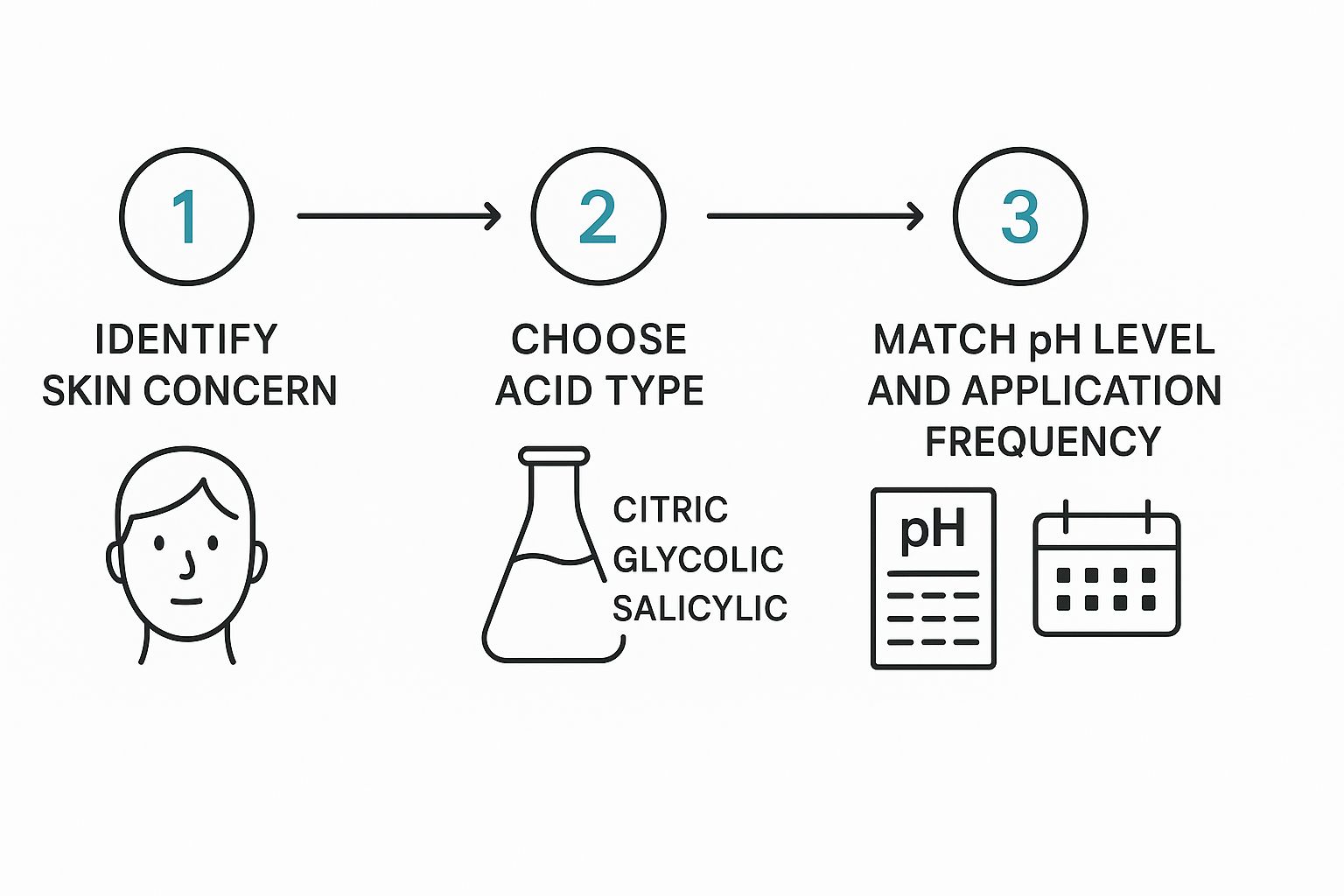
As the visual guide shows, matching the right acid and pH level to a specific skin concern isn't guesswork—it's a deliberate and vital process.
A Step-by-Step Guide to Adjusting pH
Ready to try it? The key here is precision and a "less is more" approach. You'll need citric acid powder, distilled water, and pH testing strips or a digital meter.
- Create Your Solution: First, prepare a diluted citric acid solution. A common ratio is a 10% solution (1 part citric acid to 9 parts distilled water by weight). Never use the pure powder directly in your final product.
- Test Your Product: Once your lotion or serum is thoroughly mixed, take a small sample and test its initial pH using a pH strip.
- Adjust Carefully: Add your citric acid solution one drop at a time, mixing thoroughly after each addition. Retest the pH after each drop until you reach your target range.
Patience is crucial here. Adding too much at once can cause the pH to plummet, potentially ruining your entire batch. If you're just starting out, our blog has some great resources on how to make your own skin care products.
Getting the pH just right is a fundamental step in DIY formulating. It affects everything from how well your preservatives work to how the final product feels on your skin. Below is a quick guide to the ideal pH ranges for some common homemade products.
Recommended pH Levels for DIY Cosmetic Formulations
| Product Type | Ideal pH Range | Why This Range Is Important |
|---|---|---|
| Face Creams & Lotions | 4.5 - 6.0 | Matches the skin's natural acid mantle, supporting the skin's appearance and preventing a harsh feel. |
| Toners & Mists | 4.0 - 5.0 | Helps to rebalance the skin's pH after cleansing and enhances the absorption of other products. |
| Serums (Vitamin C) | 2.5 - 3.5 | This low pH is crucial for the stability and penetration of L-ascorbic acid, but requires careful formulation. |
| Shampoos & Conditioners | 4.5 - 5.5 | A slightly acidic pH helps to close the hair cuticle, which reduces the look of frizz and increases shine. |
| Cleansers | 5.0 - 6.5 | Ensures effective cleansing without stripping the skin of its natural, protective oils. |
Remember, these are general guidelines. The optimal pH can also depend on the specific active ingredients and preservatives you are using in your formula. Always aim for precision.
Safety First Always
Working with citric acid, even in its powdered form, demands caution. While it is a natural ingredient, it remains a potent acid that must be handled properly to ensure safety.
Crucially, never apply pure citric acid powder or a concentrated solution directly to your skin. This can cause significant irritation.
Always remember these safety protocols:
- Wear Protective Gear: Use gloves and safety goggles to protect your hands and eyes from accidental splashes.
- Use Precise Measurements: Always use a digital scale for accurate measurements. Guessing is not an option when working with potent ingredients.
- Work in a Ventilated Area: Ensure good airflow to avoid inhaling any fine powder.
The demand for high-quality ingredients for these projects is growing. The market for high-purity citric acid in cosmetics was valued at approximately USD 1.08 billion in 2024 and is expected to grow significantly. This focus on purity is vital, as effective skincare formulations depend on precise pH control and ingredient safety. If you're interested in hands-on application for other fun projects, you can check out some simple bath bomb recipes using citric acid.
Answering Your Questions About Citric Acid
When you start digging into skincare ingredients, it's totally normal for questions to pop up. Citric acid is one of those multitaskers—it can do everything from balancing a product's pH to gently exfoliating your skin—so it’s no wonder you want to get the full story. Let's tackle some of the most common questions we hear to clear things up.
We've pulled together the top queries from both skincare lovers and DIY formulators. Our goal is to give you straightforward answers so you can feel totally confident about how this notable ingredient works.
Is Citric Acid Okay for Every Skin Type?
This is a great question, and it shows you're being smart about what you put on your skin. While citric acid is generally well-tolerated, especially in the tiny amounts used to adjust pH, it's not a universal fit for absolutely everyone. Its suitability really comes down to your skin's unique personality.
For those with normal, combination, or oily skin, products with citric acid usually slide into a routine without any trouble. But if your skin is super sensitive or tends to react to new things, it pays to be a little more careful. The trick is to start slow, especially with leave-on products where it's acting as an exfoliant.
Here’s a simple way to think about it:
- For resilient skin types: You can usually introduce products containing citric acid without a second thought.
- For sensitive or reactive skin: Always do a patch test on a small, hidden spot first. Start with products that have lower concentrations, like rinse-off cleansers, before you even think about trying a more active serum.
Ultimately, the best advice is to listen to your skin. It will always tell you what it needs to build the perfect routine.
Can I Use Citric Acid Products Every Day?
The short answer? It completely depends on the product and what it's designed to do. The role citric acid plays in the formula is the real decider on how often you should use it.
Think of it like this: a daily face wash might have a tiny pinch of citric acid—maybe 0.1% or less—to keep its pH balanced. In that case, using it every day is perfectly fine because its exfoliating effect is practically zero. It’s there to improve the cleanser better, not to act as a resurfacer.
On the other hand, an exfoliating serum or a weekly peel designed to brighten your appearance will have a much higher concentration. Using that kind of product every day is way too much for your skin to handle.
The golden rule is to always read the label and follow the manufacturer's directions. A rinse-off cleanser with citric acid at the bottom of the ingredient list is a world away from a leave-on AHA serum where it's a main character.
Always pay close attention to how your skin feels. If you see any redness or feel any sensitivity, that's your skin's way of telling you to back off a bit.
How Is Citric Acid Different from Vitamin C?
This is one of the most significant points of confusion, and it makes sense! Both are antioxidants, and both are famous for being in citrus fruits. But in the skincare world, they have very different day jobs and you can't swap one for the other.
Let's break it down:
-
Citric Acid: Its main gigs are acting as an alpha hydroxy acid (AHA) and adjusting pH. As an AHA, it works on the skin's surface to slough off dead cells, helping to smooth out texture and give you a nice glow. As a pH adjuster, it makes sure the whole formula is stable and effective.
-
Vitamin C (L-Ascorbic Acid): This one is a celebrated antioxidant superstar. Its main job is to help defend the skin against environmental stressors and visibly brighten your overall complexion, leading to a more even and luminous look.
So while both help you get gorgeous skin, they take different paths to get there. Citric acid is the refiner, smoothing the canvas. Vitamin C is the protector and brightener, boosting clarity and defending your skin's appearance.
Should I Expect My Skin to Peel?
Setting the right expectations is everything in skincare. When people hear "acid," it's easy to picture visible, flaky peeling, but that's definitely not what we're going for with cosmetic-grade citric acid for skincare. The exfoliation it offers is meant to be super gentle and happen on a microscopic level.
Cosmetic products are formulated to encourage desquamation—the natural, invisible shedding of dead skin cells. You shouldn't be seeing flakes or sheets of skin coming off. If you do, it's a huge red flag that the product is too aggressive for your skin or you're using it way too often.
Instead of peeling, you should be on the lookout for these positive changes:
- Skin that feels smoother and softer to the touch.
- A complexion that looks brighter and more radiant.
- Makeup that glides on more evenly.
The goal is a fresh, healthy-looking glow that comes from consistent, gentle renewal—not from harsh peeling. That's the secret to maintaining beautiful-looking skin for the long haul.
At Skin Perfection, we believe understanding your ingredients is the first step to reaching your skincare goals. We provide top-notch lotion-making supplies and expertly formulated products to help you build a routine that truly beautifies and nurtures your skin.
Explore our collection and start your journey to radiant-looking skin today!
2026 Update: What to Recheck Before Acting on citric acid for skin
This refresh adds a current decision framework for readers comparing options around citric acid for skin. Recheck the offer, implementation requirements, pricing model, support expectations, and proof points before choosing a provider or product.
For the best result, compare practical fit instead of relying on feature lists alone: how quickly the solution can be implemented, what data or integrations it needs, where it creates measurable value, and whether it fits the workflow your team will actually use.