

 Buy with Prime


At its core, double cleansing is a simple two-step process. You start with an oil-based cleanser and follow it up with a water-based cleanser. The whole point is to give your skin an incredibly thorough cleanse by tackling different kinds of grime, leaving it feeling fresh and balanced—never stripped.
The Foundation of a Beautiful Complexion
You’ve probably seen double cleansing all over social media, but trust me, it’s far more than just a fleeting trend. This technique has become a non-negotiable cornerstone in countless skincare routines for one simple reason—it just works.
Its massive popularity is largely thanks to the global influence of K-beauty, which champions cleansing rituals that are both deep and gentle. This philosophy has completely changed the game for daily skincare.
The logic behind it is rooted in basic chemistry. Different cleansers are formulated to grab onto different types of impurities. Think of it like doing laundry; you wouldn't toss your delicate silks in with heavy-duty towels. The same idea applies to your face.
How Double Cleansing Works
The magic of double cleansing lies in its two distinct phases, each with a very specific job to do.
-
First Cleanse (Oil-Based): This initial step uses an oil-based formula, like a cleansing oil or balm. It’s all about the principle that ‘like dissolves like.’ The oil in your cleanser latches onto and breaks down all the oil-based gunk on your skin.
-
Second Cleanse (Water-Based): Once you rinse away the oil, you'll go in with a water-based cleanser—think gel, foam, or cream. This step is for whisking away any leftover residue, along with water-based impurities like sweat and dirt.
This one-two punch ensures you get everything off from the day without having to use a single, harsh cleanser that might compromise your skin's natural moisture barrier.
To make it even clearer, here’s a quick breakdown of how each step works.
Double Cleansing At a Glance
| Step | Cleanser Type | Primary Purpose | Targets Impurities Like... |
|---|---|---|---|
| Step 1 | Oil-Based (Balm, Oil) | To dissolve and lift oil-based debris | Makeup, Sunscreen, Sebum (your skin's natural oil), Pollutants |
| Step 2 | Water-Based (Gel, Foam, Cream) | To wash away water-based debris and cleanser residue | Sweat, Dirt, Grime, Remaining residue from the first cleanse |
This table really highlights how the two steps work together to deliver a comprehensive clean that a single wash just can't match.
Why It Makes a Real Difference
Honestly, a single cleanse often just isn't enough, especially if you're wearing stubborn, oil-based products like long-wear foundation or a heavy-duty mineral sunscreen.
If you’ve ever washed your face only to feel like it’s still not quite clean, you're likely dealing with leftover residue. We all know how congested skin can look and feel after sleeping with makeup on.
By properly melting away all that buildup first, you’re creating a perfectly prepped canvas. This allows your serums, moisturizers, and other products to sink in and work so much more effectively, ultimately giving you that radiant, healthy-looking complexion we’re all after.
How To Choose The Right Cleansers For Your Skin
Picking the right cleansing duo is a seriously personal step in your skincare journey. What works wonders for one person might be a total dud for another. The whole point of double cleansing is to get a really thorough clean that leaves your skin feeling balanced and happy—never tight or stripped. And that all comes down to choosing formulas that vibe with your skin's unique personality.
First things first, you have to know your skin's baseline. Is it naturally oily? Prone to dryness? A bit of both? Or maybe showing a few more signs of maturity? Nailing this down is the first real step to building your perfect cleansing pair. If you're not quite sure, our guide can help you understand the five primary skin types and figure out where you land.
Your Perfect Double Cleansing Pair
Ready to find your match? This table breaks down the ideal oil-based and water-based cleanser ingredients for your specific skin type and concerns. Think of it as your cheat sheet for building the perfect routine.
| Skin Type | Recommended Oil Cleanser Ingredients | Recommended Water-Based Cleanser Ingredients |
|---|---|---|
| Oily / Combination | Jojoba, Grapeseed, Safflower Oil | Salicylic Acid, Tea Tree, Niacinamide, Clay |
| Dry / Dehydrated | Avocado, Sweet Almond, Squalane, Shea Butter | Hyaluronic Acid, Glycerin, Ceramides, Lactic Acid |
| Mature / Age-Related Concerns | Rosehip, Marula, Argan Oil, Bakuchiol | Peptides, Antioxidants (like Vitamin C), Glycolic Acid |
| Sensitive / Reactive | Sunflower, Hemp Seed, Oat Kernel Oil | Centella Asiatica (Cica), Chamomile, Aloe Vera |
Remember, this is a starting point. Your skin can change with the seasons or even your cycle, so don't be afraid to listen to it and switch things up when needed. The goal is a happy, balanced complexion, not rigid rules.
Cleansers for Oily and Combination Skin
If your skin leans oily or combination, the game is all about managing that extra sebum without sending your skin into a panic. You'll want to start with a lightweight, non-comedogenic oil cleanser. Ingredients like grapeseed oil or jojoba oil are fantastic because they cut through grime and makeup without feeling heavy or greasy.
For your second cleanse, a gel or light foaming cleanser is your best friend. When you're looking for your second step, exploring different cleanser gel options can help you find that perfect match that leaves your skin feeling fresh, not stripped. Formulas with ingredients that help clarify the appearance of skin are great for keeping everything in balance.
Key Takeaway: The "like dissolves like" principle is everything here. A lightweight oil is genuinely the most effective way to break down your skin's natural oils and any oil-based products, perfectly prepping it for a truly deep clean.
Cleansers for Dry or Dehydrated Skin
For my dry-skinned friends, the focus shifts entirely to nourishment and hydration. Double cleansing can be a game-changer for you, helping you avoid that stripping feeling you might get from a single, heavy-duty cleanser. Your first cleanse should feel like a treat—think richer, more conditioning oils.
Look for ingredients like:
- Sweet Almond Oil: Famous for its emollient properties that help skin feel soft and smooth.
- Avocado Oil: A powerhouse oil packed with nutrients for deep nourishment.
- Squalane: A brilliant, lightweight hydrator that cleverly mimics the skin's natural oils.
Follow this up with a creamy, lotion-based, or milky water-based cleanser. These gentle formulas clean the skin while reinforcing its moisture barrier, leaving your complexion feeling supple and comfortable. Steer clear of foaming cleansers that might make your skin feel tight.
Cleansers for Mature Skin
As our skin matures, its needs evolve. It often craves more support from antioxidant-rich ingredients. Your oil cleanser should be more than just a cleaner; it should deliver beneficial compounds. I always recommend looking for oils like rosehip or marula, which are celebrated for their antioxidant power and ability to give skin a radiant, healthy look.
Your second cleanser should be gentle and hydrating above all else. A cream-based or pH-balanced gel cleanser is perfect for maintaining the skin's delicate balance. This approach isn't just a niche trend; it's becoming mainstream. The global facial cleansing balm market was valued at an impressive USD 507.84 million in 2023 and is only expected to grow, all thanks to people like us demanding effective and gentle cleansing. It just goes to show how many of us are embracing the double cleansing philosophy for beautiful skin.
Mastering Your Double Cleansing Technique
Having the right products is a great starting point, but the real magic behind double cleansing lies in the technique. It’s not about aggressive scrubbing; it’s about working smarter with gentle, deliberate motions that can turn a daily chore into a mindful ritual.
Getting your cleanser lineup right is the first, most crucial step, as it sets the foundation for your entire routine.
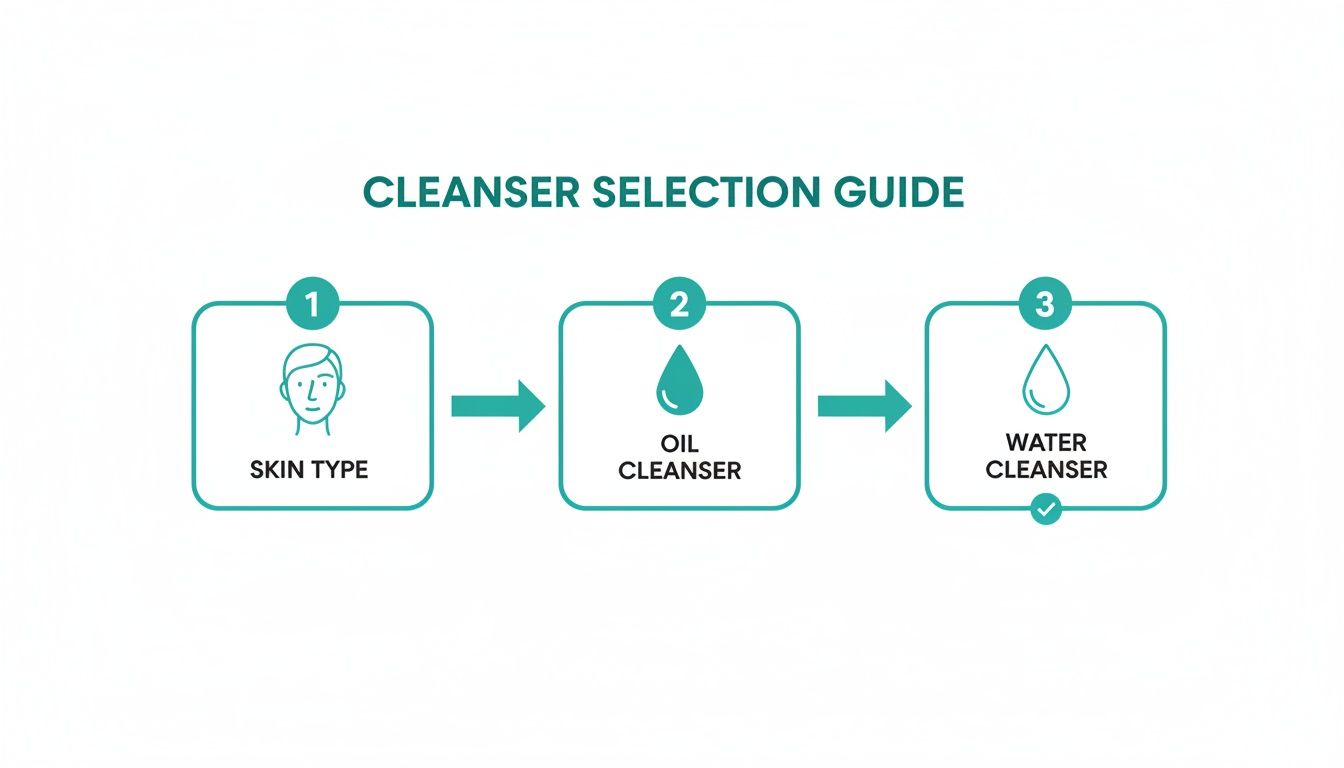
This chart breaks it down perfectly, walking you from identifying your skin type to picking the right oil and water-based cleansers to match.
The First Cleanse With Oil
Your first cleanse is all about melting away the day. One non-negotiable rule here: this step must be done on dry skin. If you apply an oil cleanser to a wet face, the water will just repel the oil, and it won't be able to grab onto all that makeup, sunscreen, and sebum.
Start with a quarter-sized amount of your cleansing oil or balm in your dry hands. Warm it between your palms for a second, then begin massaging it onto your face using slow, circular motions.
Treat this like a mini-facial. Give it at least a full minute to really work the product in. Pay a little extra attention to areas that tend to get congested, like the creases around your nose, or where makeup is heaviest, like your eyes and lips. This gentle friction is what lifts impurities without any harsh pulling.
The most overlooked yet crucial part of the oil cleanse? Emulsification. After you've massaged the oil in, wet your fingertips with a bit of lukewarm water and go back over your face. You'll see the oil transform into a milky, thin liquid. This is the key step that ensures everything rinses away cleanly, leaving zero greasy residue behind.
The Second Cleanse With Water
Once you've thoroughly rinsed off the emulsified oil, it's time for round two. Your face should still be damp for this part.
Apply your water-based cleanser and, again, use those gentle, circular motions to massage it into your skin for about a minute. This second wash whisks away any leftover residue from the first cleanse, plus all the water-based impurities like sweat and daily grime. Your skin is now truly, deeply clean.
Rinse completely with lukewarm water and gently pat your face dry with a soft towel. The goal is for your skin to feel clean, soft, and comfortable—never tight or "squeaky clean." That perfectly prepped feeling is exactly what you want, as it means your skin is ready to soak up all the goodness from your serums and moisturizers. If you want to dive deeper into what comes next, check out our guide on the correct order to apply skin care products.
Adjusting Your Technique For Real Life
Let’s be real—not every day is the same, and your cleansing technique shouldn't be either.
- Heavy Makeup Day: You’ll want to spend extra time on the oil cleansing step. I’d suggest up to two minutes to make sure every last trace of foundation and stubborn mascara has dissolved.
- Post-Gym Session: Here, you might focus more on the second cleanse. This is where you’ll thoroughly wash away all that sweat.
- Bare-Faced Day: Even with no makeup, you’ve still got sunscreen and environmental pollutants. A quicker, 60-second oil cleanse followed by a gentle water-based wash is more than enough to get the job done.
Common Double Cleansing Mistakes to Avoid
Even with the best of intentions, a few common slip-ups can stand between you and the amazing results of a perfect double cleansing routine. Think of this as your troubleshooting guide to help you refine your technique and get the soft, balanced skin you're aiming for.
Applying Your Oil Cleanser to a Wet Face
This is probably the most frequent error I see. You absolutely must apply your oil cleanser to a dry face. Remember, oil and water don’t mix. Applying it this way is non-negotiable because it allows the oil to properly grab onto and dissolve the makeup, sunscreen, and excess sebum on your skin. If your face is wet, the oil just slips around and can't do its job.
Using Straight-Up Kitchen Oils
Another big pitfall is reaching for pure kitchen oils, like coconut or olive oil. While they're great for cooking, these oils lack emulsifiers. Emulsifiers are the key ingredients that allow a cleansing oil to mix with water and rinse away completely clean. Without them, you're just leaving behind a greasy film that can trap debris.
Rushing the Process and Rinsing Poorly
It’s so easy to rush through your routine on a busy evening, but both steps of a double cleanse need a little time to work their magic.
Scrubbing too aggressively is another misstep. The goal here is a gentle massage, not a vigorous scrub that will only irritate your skin. Let the products do the heavy lifting for you. Use firm but gentle circular motions for at least 60 seconds for each step. This gives the cleansers enough time to effectively break down impurities without causing unnecessary friction or redness.
A thorough cleanse is only as good as its rinse. Failing to rinse completely, especially after the oil step, can leave behind residue that negates all your hard work. Make sure you emulsify the oil with water until it turns milky, then rinse until your skin feels clean and soft—not greasy.
Choosing the Wrong Products for Your Skin
Finally, not all cleansers are created equal. Using a duo that isn't a good match for your skin type can throw your skin's balance completely out of whack. It’s why understanding your skin is so important before you start shopping. Sometimes, just paying a little extra attention to gentle cleansing can make a huge difference, especially since improper cleaning can really aggravate the skin. For more tips on doing this right, explore our insights on why you should exfoliate your skin carefully.
There's a reason oil-based products hold such a significant market share—they excel at dissolving sebum and SPF while keeping skin beautifully moisturized. This is vital, as a proper cleanse prepares the skin to receive the full benefits of the serums and moisturizers you apply afterward, a top concern for many people focused on hydration and age-related skincare. You can find out more about facial care product trends on TechSci Research.
How Double Cleansing Elevates Your Skincare Routine

Double cleansing is so much more than just an extra step before bed. It's the secret to making every single product you own work harder and more effectively. Think of it like preparing a perfect canvas before painting.
When you thoroughly remove every last trace of the day, you're giving the active ingredients in your serums, treatments, and moisturizers a clear path to do their job. This simple switch can act as a force multiplier for your entire skincare investment.
After all, if leftover makeup, sunscreen, and oil are creating a barrier, even the most amazing ingredients will struggle to penetrate. A truly clean slate lets them get to work without anything standing in their way.
Finding Its Place in Your Daily Regimen
The real power of double cleansing shines in your evening routine. This is when your skin is carrying the most baggage from the day—makeup, layers of sunscreen, city grime, and natural oils. Kicking off your PM regimen this way quite literally sets the stage for everything that follows.
Here’s a look at where it fits into a typical evening lineup:
- Double Cleanse: First, your oil-based cleanser, then your water-based one. Simple.
- Tone or Essence: Time to rebalance and hydrate your freshly cleansed skin.
- Serums or Treatments: This is the prime time to apply your most concentrated, potent ingredients.
- Moisturizer: Lock it all in with a final, nourishing layer.
By putting double cleansing right at the beginning, you create the best possible environment for each subsequent step to perform at its peak.
This method is all about creating the ideal foundation. Thoroughly cleansed skin is more receptive, meaning the valuable ingredients in your favorite products aren’t just sitting on the surface—they’re being put to good use.
The Morning Cleanse: A Simpler Approach
So, if it’s so great, should you double cleanse in the morning, too? Honestly, for most of us, the answer is no. A single, gentle cleanse with your water-based formula is usually all you need.
Overnight, your skin isn't dealing with the same heavy-duty, oil-based gunk. Your main goal in the AM is just to freshen up, rinsing away any sweat or excess oil that accumulated while you slept.
A gentle wash is perfect for this, as it respects your skin's natural balance. If you're looking to learn more about protecting that balance, our guide on how to strengthen the skin barrier offers some fantastic insights.
Ultimately, making the double cleansing method a non-negotiable part of your evening routine is a strategic move. It's a small change that can dramatically amplify how your skin looks and feels by ensuring your entire skincare team can work together, without obstruction.
Your Questions on Double Cleansing Answered
Jumping into a new skincare routine always brings up a few questions. If you're wondering if double cleansing is really for you, or how to get it just right, you're definitely not alone. Let's tackle some of the most common questions I hear so you can get started with total confidence.
Think of this as your go-to guide for fine-tuning the technique.
Do I Really Need to Double Cleanse Every Single Night?
Not always, but it's a game-changer on days you're wearing makeup or sunscreen. For those days, double cleansing is non-negotiable if you want to get every last trace off your skin. If you've gone makeup-free, it's still a fantastic habit for anyone with oily or congested-looking skin who craves that truly deep clean feeling.
The best advice is always to listen to your skin.
- If your skin feels balanced and clear, sticking with a nightly double cleanse is a great move.
- If your skin is feeling a little sensitive or dry, maybe save it for the days you really need that heavy-duty removal.
In the morning, a quick wash with just your water-based cleanser is almost always enough to refresh your skin and prep it for the day.
Will Double Cleansing Make My Oily Skin Worse?
This is probably the biggest fear I hear about, but the answer is a definite no—as long as you’re using the right products. It all comes down to a simple principle: "like dissolves like." An oil-based cleanser is brilliant at grabbing onto and breaking down the excess sebum your skin produces.
When you follow it up with a gentle water-based cleanser, you're clearing out your pores without stripping your skin. That means your skin won't get the signal to panic and produce even more oil. The key is picking a non-comedogenic cleansing oil that rinses away easily, leaving nothing but soft, balanced skin behind.
It can feel totally backward to put oil on oily skin, I get it. But it's genuinely one of the most effective ways to find balance. You're working with your skin's natural state, not fighting against it.
Can I Just Use the Coconut Oil From My Kitchen?
Please don't! It’s tempting, but it's best to keep kitchen oils in the kitchen. Cleansing oils and balms made for skincare have a crucial ingredient that food-grade oils are missing: emulsifiers.
Emulsifiers are what allow the oil to mix with water and transform into a milky liquid that rinses off completely. Without them, oils like coconut oil just sit on the skin, leaving a greasy film that can trap dirt. Plus, many common kitchen oils are known to be comedogenic, meaning they're likely to contribute to clogged pores.
Isn't This Method Too Harsh for Dry or Sensitive Skin?
Actually, it's often the opposite. Double cleansing can be a much gentler way to clean your face. Instead of asking one potentially harsh, stripping cleanser to do everything, you're splitting the job into two gentle steps.
Your first step with the oil cleanser removes makeup and grime while also nourishing your skin. By choosing a hydrating oil and following it with a mild, pH-balanced second cleanser, you get a deep clean that respects and protects your skin’s delicate moisture barrier. For anyone with dry or sensitive skin, this is the secret to getting clean without that tight, uncomfortable feeling.
At Skin Perfection, we believe that a beautiful complexion starts with a perfect cleansing routine. Explore our collections to find gentle, effective products and high-quality ingredients to build a skincare ritual you'll love. Discover your ideal skincare solution at https://www.naturalorganicskincare.com.