

 Buy with Prime
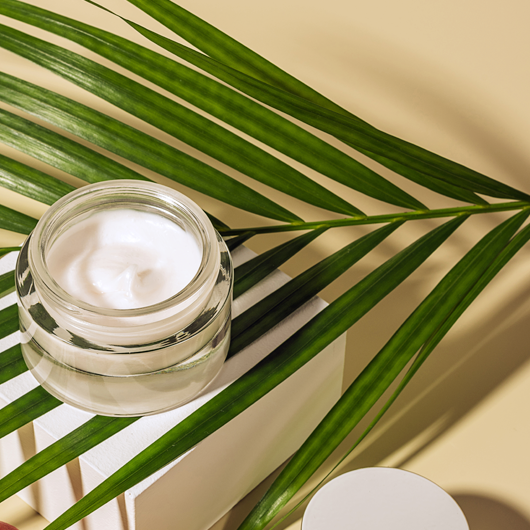


Your hands tell on your formula fast. If a cream feels waxy after one minute, pills under sunscreen, or leaves fingerprints on every jar lid, the problem usually isn't lavender. It's structure.
A good lavender hand cream should feel comforting, absorb cleanly, and leave the skin looking smoother and more cared for. That result comes from formulation choices, not wishful ingredient lists. If you're a DIY maker or working esthetician, learning those choices will save you batches, money, and frustration.
Lavender is also more than a nostalgic scent in this category. The global Natural & Organic Hand Creams market was projected to reach $2,500 million by 2025 with a 7.5% CAGR, and North America held 34.18% of the broader hand cream market share in 2025, according to Data Insights Market research on natural and organic hand creams. This shows how strongly consumers are leaning toward plant-based hand care, especially formats that feel polished rather than homemade.
The Science Behind a Superior Hand Cream
A superior hand cream is an emulsion. That means water and oil are held together in a stable system with the help of an emulsifier. If you skip that principle, you don't get a cream. You get a balm, a separated mess, or a product that changes texture every week.

Why hand creams need more than oil
Many beginners start with oils and butters because they feel intuitive. Oil softens. Butter feels rich. Lavender smells lovely. Then they wonder why the finished product sits on top of the skin.
Hands usually need two things at once. They need water at the surface for a fresh, hydrated look, and they need emollients that reduce rough feel and improve slip. A professional formula uses both.
The water phase does the visual plumping work. The oil phase shapes feel, cushion, and aftertouch. If you want a deeper read on one of the most useful water-phase tools, Skin Perfection's article on natural humectants for skin is a solid companion.
The four building blocks
A polished lavender hand cream usually relies on four ingredient groups.
| Ingredient group | What it does | Typical examples |
|---|---|---|
| Water phase | Brings freshness and spreadability | Distilled water |
| Humectants | Help the skin hold surface moisture | Glycerin |
| Oil phase | Adds softness, glide, and cushion | Shea butter, grape seed oil, caprylic/capric triglyceride |
| Structure system | Keeps the emulsion stable and elegant | Emulsifying wax, fatty thickeners, carbomer |
Each group changes the final experience.
A formula with too much butter can feel heavy. A formula with too little oil can feel thin and unsatisfying. Too much thickener can create drag. Too little emulsifier can leave you with separation.
Practical rule: If your cream feels greasy, don't assume you need less oil overall. You may need a lighter oil profile, a better emulsifier system, or a lower waxy component.
What specific ingredients contribute
Glycerin is one of the simplest ways to improve the look and feel of hand hydration. It draws water toward the outer layer of the skin, which helps the skin look less flat and dull.
Shea butter adds body and richness. It can make a hand cream feel more protective and plush, especially in rinse-heavy routines.
Grape seed oil usually lightens the sensory profile compared with heavier butters. It helps a cream spread quickly.
Caprylic/capric triglyceride is a formulator favorite because it cuts heaviness without making a cream feel cheap or watery.
Lavender oil belongs in the cool-down mindset, not the hero fantasy. It contributes scent and sensorial identity, but it works best when the base is already excellent.
Texture is engineered
Users often describe creams with simple words like silky, greasy, fluffy, dense, or draggy. Formulators hear those words and translate them into structure questions.
Ask these instead:
- Does it absorb too slowly? Look at your butter level, wax level, and choice of liquid oils.
- Does it feel tacky? Check humectant balance and thickener level.
- Does it flatten in the jar? Review your emulsion stability and viscosity system.
- Does the scent overpower the feel? Lower the lavender and improve the base.
A strong hand cream isn't one that feels richest in the beaker. It's one that still feels good after repeated use.
Why professionals care about balance
Professionals don't chase a single trait. They balance slip, cushion, absorbency, scent, and stability.
That balance is what separates a giftable craft project from a product that feels shelf-ready. It also explains why some lavender hand creams seem instantly more refined even when the ingredient list looks familiar. The difference is often process, proportion, and restraint.
Your Professional Lavender Hand Cream Recipe
A workable formula needs percentages first. Once the percentages make sense, scaling becomes easy. For teaching purposes, the formula below follows the process shown in Skin Perfection's guide on how to make moisturizer, but with a professional hand-cream focus.

A high-performance lavender hand cream formulation often includes Butyrospermum Parkii (Shea) Butter at 15-20%, Glycerin at 5-10%, and Lavandula Angustifolia (Lavender) Oil at 0.5-2%. When properly homogenized, similar emulsions have shown 25-35% higher hydration after one hour in studies referenced by L'Occitane's lavender hand cream material.
A professional teaching formula
Use this as a training formula, not as a one-size-fits-all commercial standard.
| Phase | Ingredient | % | 100 g batch |
|---|---|---|---|
| A | Distilled Water | 62% | 62 g |
| A | Glycerin | 5% | 5 g |
| B | Lavender Infused Oil | 20% | 20 g |
| B | Emulsifying Wax NF | 7% | 7 g |
| B | Stearic Acid | 3% | 3 g |
| C | Phenoxyethanol | 1% | 1 g |
| C | Vitamin E | 1% | 1 g |
| C | Lavender Essential Oil | 1% | 1 g |
This gives you a simple, teachable structure. It isn't the only valid formula, but it clearly shows how phase design works.
Equipment that makes the process smoother
For a small lab-style setup, gather:
- A precision scale for accurate weighing
- Two heat-safe beakers
- A water bath or hot plate
- A thermometer
- A mini mixer or homogenizer
- Sanitized spatulas
- A pH testing method
- Clean jars or airless containers
If you try to "eyeball" this process, the cream will remind you why that's a bad idea.
The water phase
Place the distilled water and glycerin into one beaker. Heat them to about 70°C.
Glycerin dissolves readily in the water phase, so this part is straightforward. Stir gently until uniform.
The oil phase
In a separate beaker, combine lavender infused oil, emulsifying wax NF, and stearic acid. Heat this phase to about 70°C as well, or until everything is fully melted and clear.
The goal is not just melting. The goal is to have both phases at similar temperature when you combine them. If one phase is much cooler, your emulsion can form poorly.
Warm phases meet more gracefully. Cold surprises create graininess, weak emulsions, and inconsistent viscosity.
Emulsification
Pour the oil phase into the water phase slowly while mixing. Keep the mixer moving, and try not to whip excess air into the batch.
At first, the emulsion may look thin. That's normal. Many new formulators stop too early because they expect instant cream. Give the structure time to organize.
Mix until the batch looks uniform and glossy. Then continue intermittent mixing as it cools.
The cool-down phase
When the batch drops below 45°C, add phenoxyethanol, vitamin E, and lavender essential oil.
This temperature matters. Heat can affect delicate ingredients, especially fragrance materials and many cosmetic actives. Stir thoroughly after each addition or pre-blend the cool-down ingredients before adding them together.
What you should see at each stage
A good batch gives visual clues.
- Heated phases should look fully melted and consistent.
- Fresh emulsion often looks looser than the finished cream.
- Mid-cool texture becomes more opaque and creamy.
- Final batch should look smooth, uniform, and free of visible oil beads.
If the cream suddenly becomes lumpy or watery, pause and check temperature, mixing, and ingredient weights before changing the formula.
Batch notes worth keeping
Keep a notebook or spreadsheet with these details:
- Date and batch code
- Exact weights
- Heating temperature
- Mixing method
- Cool-down temperature
- Final pH
- Texture notes after 24 hours
This habit feels fussy at first. Then one batch fails and those notes become your best tool.
A few formula judgment calls
Not every user wants the same finish.
If you want a richer result, move some of the infused oil toward shea butter while keeping the whole oil phase balanced.
If you want quicker absorption, reduce heavy components and choose lighter emollients. Keep in mind that changing one ingredient changes more than feel. It can change viscosity, drag, and even how strongly the lavender reads.
Application guidance for testing
When you test your own formula, use a realistic amount. A tiny swipe won't tell you much, and a giant scoop will make any cream feel greasy.
Pay attention to:
- Initial slip
- Absorbency after a short massage
- Finish after several minutes
- How the hands look after washing later in the day
A hand cream should earn repeat use. If you dread reapplying it, the formula still needs work.
Ensuring Safety and Stability in Your Formulation
A hand cream can look beautiful and still be unsafe. Once you add water, you're no longer making a simple anhydrous balm. You're making a product that requires preservation, clean process, and disciplined handling.
That point separates casual crafting from responsible formulation.
Clean technique is part of the formula
Good Manufacturing Practice sounds formal, but the principles are plain.
Use clean tools. Sanitize work surfaces. Wear gloves when appropriate. Use dedicated equipment that isn't moving between food prep and cosmetic making.
The preservative can't rescue sloppy process. It helps protect a well-made product. It doesn't excuse contamination.
The minimum mindset for a home studio
Think like a small manufacturer, even if your batch fits in one beaker.
- Control raw materials by labeling when you opened them and how they were stored.
- Control containers by cleaning and drying them before filling.
- Control workflow by keeping heated phase tools separate from finished-product tools.
- Control records by noting batch code, date, and any unusual observations.
Skin Perfection's collection on natural skin care preservative is useful if you're comparing preservation approaches and trying to understand compatibility.
Why preservation matters
A water-containing cream gives microbes opportunity. The richer and more comfortable the product feels on your hands, the more careful you need to be about keeping that jar safe over time.
Preservatives are not a marketing flaw. In hand cream, they're a professional necessity.
Choose a broad-spectrum preservative that fits your formula type, pH range, and process temperature. Then follow supplier guidance on use level and phase placement. If a preservative belongs in cool-down, respect that.
A preservative is part of product safety, not an optional extra for people who plan to sell.
Stability isn't just about separation
New formulators usually watch for one dramatic failure. The cream splits, so they know something went wrong.
Less obvious failures matter too:
| Problem | What it may mean |
|---|---|
| Texture changes after a few days | Weak emulsion or poor cooling process |
| Scent fades unusually fast | Volatile aromatic loss or poor packaging choice |
| Product thickens too much over time | Thickener imbalance or temperature stress |
| Surface looks glossy or oily | Incomplete emulsification |
A stable cream should remain consistent in look, smell, and feel under normal storage.
pH and handling deserve respect
If you're using ingredients that are pH-sensitive, test the finished cream after it settles. A formula can shift after emulsification and cool-down.
Use clean fingers as little as possible during testing. For jar packaging, a sanitized spatula is a better habit. For retail or professional use, airless formats usually reduce repeated product exposure.
What professionalism looks like
Professionalism isn't expensive packaging. It's predictable quality.
It shows up when your second batch matches your first. It shows up when your jars are clean, labels are traceable, and your lavender hand cream still feels right after storage testing. Those habits build trust long before design or branding enters the picture.
Advanced Customization with Peptides and Actives
Most lavender hand cream formulas stop at comfort. They give you emollients, humectants, and a pleasant scent. That's useful, but it leaves a real gap for formulators who aim for a more refined finish.
Research cited in the background brief notes a market gap here. Consumer interest in combining lavender with anti-aging style actives keeps showing up, and approximately 70% of current hand creams fall short by relying mostly on basic emollients, as referenced in Archipelago's lavender hand cream page.

What actives can add to a hand cream
Hands often need more than softness. They can benefit from ingredients that improve the appearance of texture, dryness, and visible age-related changes.
In cosmetic formulation, peptides are often chosen to support a smoother, firmer-looking appearance. Plant-derived stem cell extracts are typically used for their high-end positioning and their role in formulas aimed at a more refined skin look. Neither should be treated as magic, but both can enhance a hand cream when the base formula is already stable.
For formulating ideas and compatible ingredients, Skin Perfection's resources on peptide solution are useful.
A key rule for adding advanced actives
Add delicate actives in the cool-down phase, and only if you know their compatibility.
That means checking:
- Recommended pH range
- Recommended temperature exposure
- Whether the active is water-soluble or oil-soluble
- Whether the preservative system is compatible
- Whether the active changes viscosity or color
A peptide that performs well in a serum may behave differently in a rich emulsion. The cream's structure, pH, and oil load all matter.
Practical customization paths
There isn't one "best" advanced lavender hand cream. There are several useful directions.
For a lighter finish
Reduce the heaviest components in the oil phase and lean on lighter esters or elegant liquid oils. This helps when the user wants frequent reapplication during the day.
A lighter texture also tends to make lavender read cleaner and less old-fashioned.
For a richer overnight cream
Keep a more cushioned oil phase and add a compatible cosmetic active in cool-down. This version suits users who want a hand mask feel under cotton gloves.
Be careful not to overbuild richness. Once a formula becomes too occlusive, users apply less of it.
For mature-looking hands
Here, peptides make the most sense aesthetically. Build a smooth, stable base first. Then add the peptide solution at the supplier's recommended cool-down conditions.
You want the hands to look conditioned, polished, and less rough in appearance. A peptide is there to support that visual goal, not to compensate for a poor emulsion.
The best active can't save a clumsy base. If the cream pills, drags, or splits, the luxury story collapses.
How to decide whether an active belongs
Ask four questions before you add anything expensive.
| Question | Why it matters |
|---|---|
| Does it fit the formula pH? | Some actives lose usefulness outside their preferred range |
| Can it handle the processing temperature? | Many can't |
| Is the supplier clear about use level? | Vague guidance creates messy batches |
| Does it support the product concept? | Not every active belongs in hand care |
This simple filter prevents the classic beginner mistake of building a "kitchen sink" formula.
Stem cells and premium positioning
Plant stem cell extracts often appeal to formulators who want a more prestige-style product story. In practice, they should be treated like any other cosmetic active. Check the supplier file, respect the recommended phase, and test the finished batch for texture and scent changes.
Lavender can pair well with these ingredients because it softens the lab-like feeling of advanced formulas. But keep the aromatic profile controlled. If the scent is too strong, the formula starts to feel old-school rather than modern.
The apprentice mindset that helps most
Use one advanced active at a time.
That sounds conservative, but it teaches you what each change does. If you add peptides, stem cells, extra humectants, and a new thickener all at once, you won't know which variable improved the cream or damaged it.
A professional formula grows by iteration. You make a sound base. You add one meaningful upgrade. You observe. Then you refine.
Packaging and Pro Tips for Small Scale Production
Packaging changes more than appearance. It affects oxidation, contamination risk, user experience, and whether your product feels amateur or trustworthy.
That matters even if you're making small runs for clients, treatment rooms, or market tables.

The right pack for the right cream
Airless pumps are often the cleanest choice for a formula with delicate aromatic components and repeated daily use. They reduce direct contact and usually make the cream feel more premium.
Jars are familiar and easy to fill, but they expose the product every time the lid opens. If you choose jars, use a stable preservative system and encourage hygienic use.
PET containers are practical for shipping. Glass feels upscale, but it's heavier and more fragile. Your pack choice should match your sales channel, not just your aesthetic taste.
Labeling is part of professionalism
A professional small-batch product should have:
- An INCI ingredient list
- A batch number
- A net weight
- A practical use direction
- A storage note if needed
If you're selling, this level of order protects you and helps the customer. It also makes reformulation easier later because you can trace what changed from batch to batch.
How to talk about benefits safely
The strongest product copy usually sounds calmer than beginners expect.
Focus on cosmetic language such as:
- Softens the feel of dry hands
- Leaves a smooth, conditioned finish
- Absorbs with a non-greasy touch
- Supports a more polished appearance
Avoid disease claims, drug-like language, or anything that implies your hand cream can diagnose, treat, mitigate, heal, or cure a condition. Good packaging and good wording belong together.
Small scale production habits that save time
If you're moving beyond hobby volume, buy with consistency in mind. Skin Perfection's information on bulk skin care ingredients can help when you're planning repeat batches and need ingredient continuity.
You should also standardize your filling day.
One practical workflow is:
- Make and cool the batch
- Check texture and pH
- Fill all containers in one session
- Wipe, cap, label, and log batch numbers
- Hold back a retained sample
That retained sample becomes your reference if a customer asks a question later.
Use instructions matter too
Benchmark data from a similar product context showed that a 0.5-1g application, massaged for 30 seconds, can give strong cosmetic payoff, and 92% of participants in user trials reported a reduction in the appearance of fine lines after four weeks of twice-daily use of formulas with specific natural adjuncts, according to Escentual's L'Occitane lavender hand cream review.
That kind of benchmark is helpful because it reminds you to teach the customer how to use the product. Good formulas still need good instructions.
When orders start growing
Once your production volume moves past what you can comfortably pack and ship yourself, operations become the bottleneck. At that point, reading about beauty products fulfillment can help you understand how brands handle storage, pick-and-pack, and order flow without compromising presentation.
A hand cream that feels refined should arrive looking refined too.
Troubleshooting Common Formulation Challenges
A failed batch isn't wasted if you can diagnose it. Most lavender hand cream problems come from a short list of causes, and each one teaches you something useful.
When the cream separates
Separation usually points to weak emulsification, mismatched phase temperatures, or an unstable ratio between water, oils, and structure ingredients.
Check your notes first. Did both phases reach the intended heat? Did you mix long enough? Did you weigh accurately?
When it feels too greasy
Greasy doesn't always mean "too much oil." It can mean the wrong kind of oil, too much waxy structure, or a finish that doesn't suit the user.
It is significant that search behavior is shifting. There's a 40% rise in Google queries for "lavender hand cream for men" and "hand lotion for frequent hand washers", which points to an underserved need for lighter textures and stronger cosmetic barrier support, as noted on Panier des Sens lavender hand creams.
For those users, a lighter emollient profile often works better than cutting everything rich.
When the scent disappears
Lavender is volatile. If the scent fades quickly, look at packaging, storage, and when you added the essential oil.
Adding it while the batch is too warm can dull the final aromatic profile. So can repeated opening in a wide-mouth jar.
Most formula problems are process problems wearing an ingredient mask.
When the texture is wrong
If the cream is too thin, review your structure system before reaching for random thickener additions.
If it's too stiff, check whether stearic acid, wax, or butter level pushed the formula past a comfortable hand-feel. A hand cream should spread with control, not drag like paste.
Two useful market-minded variations
- For men or anyone who dislikes residue choose lighter oils, reduce heavy butter feel, and keep the lavender profile clean and restrained.
- For frequent washers increase cushion carefully and test reapplication feel after repeated hand cleansing.
Treat troubleshooting like training, not failure. Every corrected batch sharpens your eye.
Skin Perfection offers ready-made skincare and DIY supplies for formulators who want cleaner, more polished results. If you're building your own lavender hand cream or exploring advanced actives for custom lotions, browse Skin Perfection for ingredients, formulation support, and high-performance skincare tools.