

 Buy with Prime


Natural humectants are your skin's best friends for hydration. Think of them as tiny moisture magnets, constantly working to pull water from the air and from the deeper layers of your skin right up to the surface. Their main job is to help your skin grab onto moisture and not let go, leaving you with that plump, dewy look we're all after.
What Are Natural Humectants and How Do They Work?

Ever wondered what makes your favorite hydrating serum so effective? The secret weapon is often a natural humectant. Picture a humectant as a microscopic sponge for your skin. When you apply it, this "sponge" gets to work, actively seeking out and soaking up water molecules.
It pulls this moisture into the very top layer of your skin, the stratum corneum. This is key to keeping your skin's moisture levels topped up. By drawing water from the air (especially when it's humid) or from the deeper dermis, humectants hydrate the surface, giving your skin that supple, smooth feel.
The Science of Moisture Attraction
On a molecular level, humectants are hydrophilic, a fancy term that just means "water-loving." Their unique structure is packed with polar groups that form hydrogen bonds with water molecules. This is the scientific engine that powers their incredible moisture-grabbing talent.
But they don't just grab moisture—they hold onto it. By binding with water, they temporarily plump up the skin cells on the surface. This simple action is why your skin can look so much more radiant and fine lines seem to soften right after using a humectant-rich product.
The main thing to remember is that humectants are not passive ingredients. They don't just sit there; they actively pull hydration to the surface where you need it most.
Why Hydration Is So Important
A well-hydrated skin barrier is the cornerstone of any great skincare routine. When your skin has enough moisture, it functions better, feels smoother, and looks more beautiful. This is exactly why adding natural humectants to your daily skin regimen can make such a big difference.
The demand for these ingredients is skyrocketing. The global market for humectants hit about USD 20.3 billion in 2023, with natural alternatives leading the charge in cosmetics as more of us look for cleaner, plant-derived ingredients.
This trend shows a growing appreciation for ingredients that work with our skin, not against it. For example, Hyaluronic Acid is a superstar humectant known for its amazing ability to hold onto water. You can learn more about why Hyaluronic Acid is a must-have in your beauty routine in our guide. Understanding how these ingredients work is the first step toward picking products that will truly leave your skin feeling its best.
Getting to Know the Best Plant-Based Humectants
Alright, now that we’ve covered the basics of how natural humectants work, let’s get to the fun part: meeting the hydration heroes of the plant world. Knowing what these ingredients do will help you read labels like a pro and pick products that your skin will absolutely love. The skincare world is packed with incredible natural options, each with its own unique feel and personality.
It’s no secret that people are looking for cleaner, more effective ingredients. The global market for plant-based skincare was valued at a whopping USD 1,109.7 million in 2024 and is expected to hit USD 2,394.1 million by 2034. That’s some serious growth, and it shows a huge shift toward ingredients that are both gentle on the skin and seriously powerful.
The Unsung Hero: Vegetable Glycerin
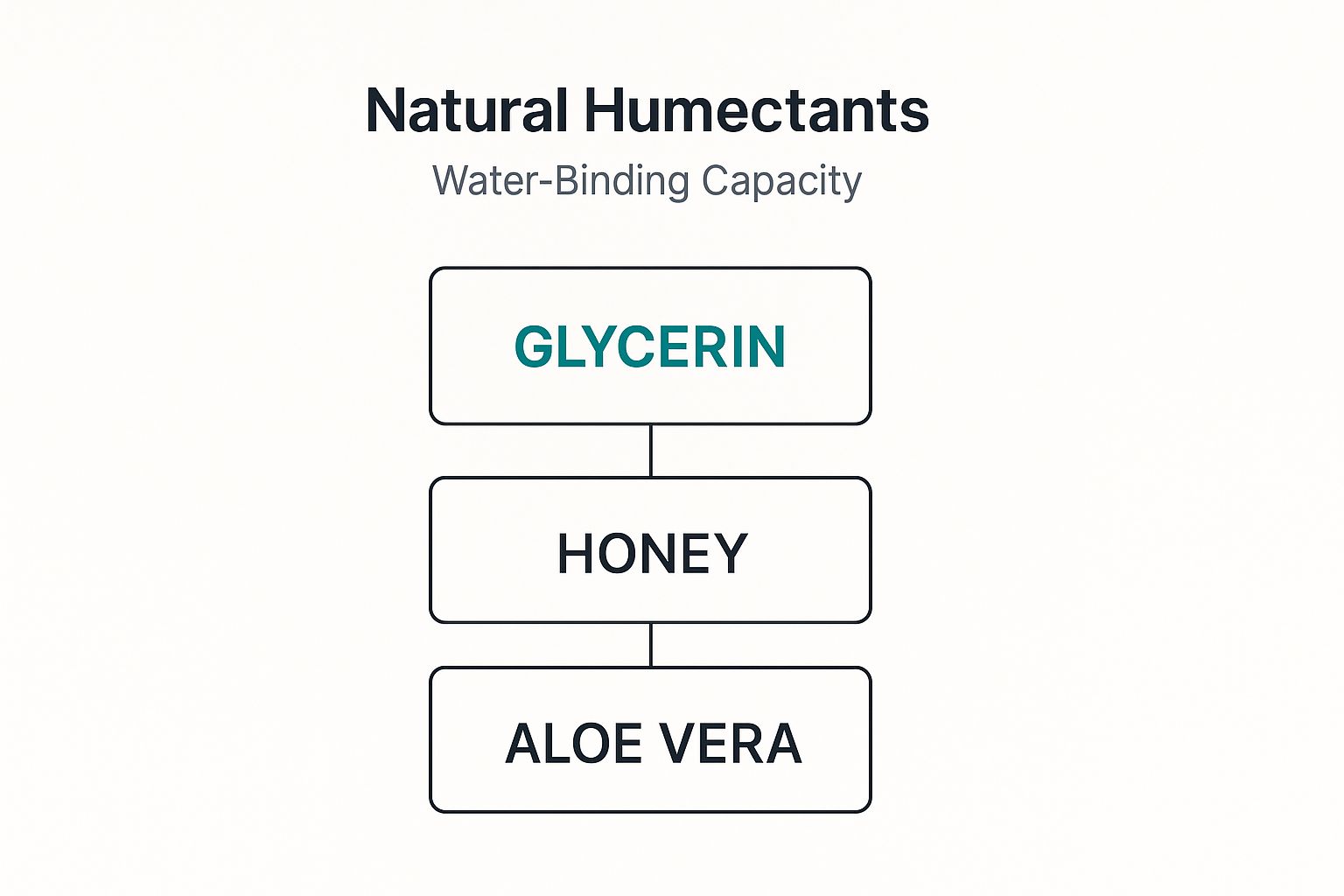
Vegetable Glycerin, often just listed as "glycerin," is easily one of the most dependable and common natural humectants out there. It’s a clear, odorless liquid derived from plant oils such as coconut, soy, or palm. Think of it as the ultimate team player in almost any skincare formula.
What makes glycerin so great is its consistency and reliability. It has a slightly thick, syrupy texture that feels smooth and comforting, delivering an immediate dose of hydration to your skin. It works by creating a light barrier to reduce moisture from escaping while pulling more water into the skin.
Because it's so gentle, glycerin is a go-to ingredient in everything from cleansers and toners to heavy-duty creams. It helps maintain the skin’s natural moisture balance without feeling greasy, making it a true workhorse for all skin types.
The Powerhouse: Hyaluronic Acid
The name might sound a bit intimidating and scientific, but Hyaluronic Acid (HA) is actually something our bodies produce naturally. It's found in our skin, eyes, and connective tissues. For skincare, it's usually made through plant fermentation, so it’s a fantastic plant-based choice.
Hyaluronic Acid is famous for one mind-blowing fact: it can hold up to 1,000 times its weight in water. This makes it an unbelievably effective hydrator.
Imagine a tiny, super-absorbent sponge that soaks up moisture and delivers it straight to your skin cells. That's pretty much what Hyaluronic Acid does.
One of its most-loved qualities is its texture. Unlike richer ingredients, HA has a silky, lightweight, gel-like feel that sinks into the skin almost instantly. It leaves zero residue behind—just plump, refreshed, hydrated skin. This makes it a huge favorite for anyone who can't stand heavy or sticky products.
The Soothing Touch of Aloe Vera
For centuries, people have turned to the gel inside the aloe vera plant for its incredible skin-soothing abilities. But beyond calming the look of irritated skin, aloe vera is also a top-notch natural humectant. The gel itself is over 99% water and is loaded with vitamins, enzymes, and amino acids.
Aloe vera offers hydration in its purest form. It feels cool and refreshing the moment you put it on and absorbs quickly, which is perfect for skin that feels warm or looks flushed.
But it does more than just moisturize:
- Lightweight Hydration: It delivers water to the skin without adding any oil.
- Skin Comfort: Aloe has compounds that help calm and soothe the skin's appearance.
- Nutrient-Rich: It's like a beneficial cocktail for your skin.
This makes aloe a fantastic pick for oily or combination skin types that need hydration without feeling weighed down. It’s also the perfect post-sun treat for its cooling sensation.
The Golden Nectar: Honey
Honey is so much more than a sweet treat; it’s a skincare staple that has been used for generations. As a humectant, it naturally pulls in water, which helps keep skin feeling soft and hydrated. When it comes to skincare, raw or minimally processed honey is usually the best choice to make sure all its beneficial properties are intact.
Unlike the other humectants we've talked about, honey has a richer, stickier texture. But when it's mixed into a product like a face mask or a cleanser, it adds a uniquely comforting feel. If you're looking into the benefits of using organic honey for skincare, you'll find it's a wonderfully versatile ingredient.
Honey's natural sugars help it bind with water, and it's full of other components that make it a true multitasker. Its ability to draw moisture into the skin makes it a great addition to products meant to leave your skin looking radiant and feeling deeply nourished.
A Quick Look at Popular Natural Humectants
To make things even easier, here’s a simple table that breaks down the key players we just discussed. It's a handy cheat sheet to help you compare them at a glance and figure out which one might feel best for your skin's unique needs.
| Humectant | Common Source | Texture Profile | Best For Skin That Feels... |
|---|---|---|---|
| Glycerin | Plant Oils (Coconut, Soy) | Smooth, slightly viscous, syrupy | Dry, tight, or in need of comfort |
| Hyaluronic Acid | Plant Fermentation | Lightweight, silky, gel-like | Dehydrated, dull, or oily |
| Aloe Vera | Aloe Plant Gel | Water-light, cool, refreshing | Sensitive, warm, or oily |
| Honey | Bees/Flowers | Rich, viscous, slightly sticky | Dry, lackluster, or mature |
Each of these humectants brings something special to the table. Whether you're drawn to the immediate plumping effect of Hyaluronic Acid or the comforting moisture of honey, there's a natural option out there that's perfect for you.
How to Choose the Right Humectant for Your Skin Type

Skincare is deeply personal, and the world of natural humectants for skin is no different. Picking the right ingredient isn't about jumping on the latest trend; it's about learning your skin's unique language and giving it exactly what it’s asking for. What feels like a miracle hydrator for one person might be too heavy or too light for another.
This guide will help you play matchmaker between your skin's needs and its ideal natural hydrator. By zeroing in on your skin type, you can make a smart choice that helps your complexion feel incredible. If you're not sure where you land, our guide can help you understand what the five skin types are and figure out yours.
For Dry or Dehydrated Skin
Does your skin often feel tight, flaky, or just plain thirsty? If so, it's crying out for a humectant that delivers deep, lasting moisture. Your best friends here are the richer, more substantial ingredients. They don't just pull in water—they also provide a comforting, nourishing feel.
Look for these powerful hydrators:
- Vegetable Glycerin: A true classic for a reason. Glycerin is a powerhouse moisture magnet that also helps support the skin’s appearance, keeping that precious hydration locked in longer.
- Honey: With its naturally rich texture, honey is a fantastic choice for skin that needs an extra dose of nourishment to go along with its hydration.
- Hyaluronic Acid (Higher Molecular Weight): While great for everyone, versions with a higher molecular weight sit closer to the skin’s surface. This provides an immediate plumping and smoothing effect that visibly softens dry patches.
These ingredients are designed to quench thirsty skin, leaving it feeling soft, supple, and comfortable all day.
For Oily or Combination Skin
Oily and combination skin can be tricky. They absolutely need hydration, but without the heavy, greasy feeling that can lead to clogged pores. The goal is to strike that perfect balance, giving your skin a drink of water that won’t weigh it down. Lightweight, water-based humectants are the answer.
These options give you moisture without the shine:
- Hyaluronic Acid (Lower Molecular Weight): This form of HA is incredibly light and sinks in almost instantly. It delivers a rush of hydration deep into the skin without leaving a trace of residue, making it a perfect match for oily complexions.
- Aloe Vera: Famous for its cooling and soothing abilities, aloe vera is over 99% water. It hydrates in a completely refreshing way and absorbs in a flash, leaving skin feeling calm and balanced.
These humectants ensure your skin gets the moisture it craves to stay beautiful, without adding to excess oiliness.
For Sensitive or Reactive Skin
When you have sensitive skin, the top priority is finding ingredients that are gentle, calming, and highly unlikely to cause a fuss. The best humectants for this skin type are those with a solid track record for being well-tolerated and even offering soothing benefits.
For sensitive complexions, a humectant needs to do more than just hydrate. It should also help calm and comfort the skin, reducing the look of redness.
Your safest bets for happy, hydrated skin are:
- Aloe Vera: A true hero for sensitive skin. Aloe’s cooling gel offers gentle hydration while actively soothing the skin's appearance.
- Glycerin: Highly effective yet exceptionally mild, glycerin is non-irritating and a go-to for even the most delicate skin types. It helps maintain a great moisture balance without causing any distress.
Choosing one of these humectants helps ensure your skin gets the hydration it needs to look its best, all while being treated with the gentle care it deserves.
Weaving Natural Humectants Into Your Routine
Knowing which natural humectants are right for your skin is the first big step, but how you use them is what truly makes the magic happen. Applying these moisture magnets correctly is the key to unlocking their full potential and turning a good skincare routine into a great one.
One of the most powerful strategies is surprisingly simple: always apply humectant-rich products to damp skin. Think about a kitchen sponge. A bone-dry sponge almost repels water at first, but a slightly damp one soaks it right up. Your skin isn't all that different.
When you apply a hyaluronic acid serum or a glycerin-based toner to a damp face, you give the humectant an immediate pool of water to grab onto. This simple tweak supercharges its effectiveness, helping it pull that surface moisture deep into your skin's top layer.
The Art of Strategic Layering
Once a humectant has gathered all that lovely moisture, your next job is to make sure it sticks around. This is where layering comes in. Humectants are team players; they do their best work when paired with ingredients that lock in the hydration they’ve drawn in.
The golden rule here is to always follow your humectant with an occlusive product. Occlusives are ingredients that create a light, breathable barrier on the skin's surface. It's like putting a lid on a pot of water to keep it from evaporating.
- Step 1: Apply Your Humectant: After cleansing, while your skin is still a little damp, pat on your serum or toner that features natural humectants for skin.
- Step 2: Seal It In: Immediately follow up with a moisturizer containing occlusive ingredients like shea butter, jojoba oil, or squalane. This final step ensures the moisture doesn't just escape back into the air, especially if you're in a dry environment.
This one-two punch of "attract and seal" is the real secret to hydration that actually lasts.
Practical Tips for Maximum Hydration
You don't need to overhaul your entire life to get these benefits. Just a few smart adjustments can lead to huge improvements in how your skin looks and feels.
A fantastic and easy habit to pick up is keeping a facial mist on hand. A quick spritz of a rosewater or aloe-based mist right before your humectant serum ensures your skin is perfectly prepped.
Think of it as creating a hydration sandwich. By applying a humectant to damp skin and then sealing it with an occlusive, you layer moisture and lock it in for a plump, dewy look that lasts all day.
Understanding how to use these ingredients is especially important in specific situations, such as finding essential after-waxing care products that lock in moisture to soothe skin and minimize the appearance of irritation. It's clear people are catching on to the power of these plant-derived ingredients. The global natural humectants market was valued at about USD 1.5 billion in 2023 and is expected to more than double to around USD 3.2 billion by 2032. This boom shows just how much we're all leaning into effective, natural ingredients for our daily skincare.
Simple DIY Projects with Natural Humectants

For all the lotion-making hobbyists and skincare lovers out there, this part is for you. It's one thing to read about natural humectants for skin, but it's a whole other experience when you can get hands-on and feel how they work.
Creating your own simple formulas is a fantastic way to really connect with your ingredients. These projects are designed to be fun and put the spotlight on power players like glycerin and aloe. Plus, you get to craft something that's perfect for you. Just remember to always start with clean tools to keep your creations fresh!
Project 1: Refreshing Aloe and Glycerin Facial Mist
A facial mist is probably one of the easiest and most gratifying DIY projects to start with. It's your secret weapon for a quick burst of hydration during the day, a perfect prep step before serums, or a final spritz to give your makeup a dewy, settled-in look.
This recipe is super simple and brings together two humectant powerhouses for an instant moisture boost.
What You'll Need:
- 3 ounces (approx. 90 ml) Distilled Water: This gives you a pure, clean base.
- 1 ounce (approx. 30 ml) Aloe Vera Juice or Gel: A wonderfully soothing and lightweight hydrator.
- 1 teaspoon Vegetable Glycerin: The key humectant that will pull moisture to your skin.
- Optional: 2-3 drops of a skin-friendly essential oil. Lavender or chamomile are great for a calming scent.
How to Make It:
- Prep Your Bottle: Grab a clean, empty 4-ounce spray bottle. A quick way to sanitize it is to rinse it with rubbing alcohol and let it air dry completely.
- Combine Everything: Using a small funnel makes this part much easier. Carefully pour the distilled water, aloe, and glycerin into your bottle. If you're using essential oils, add them now.
- Shake it Up: Screw the spray top on tight and give it a good shake for about 30 seconds. You want to make sure everything is mixed well.
- Label and Store: Slap a label on it with the date and ingredients. Pop it in the fridge for an extra-cool, refreshing feel. Since this mist is preservative-free, it's best to make small batches and use it up within a week or two.
Project 2 Simple Hydrating Honey and Rosewater Serum
This next project creates a lovely, simple serum that feels incredibly hydrating on the skin. Rosewater acts as a gentle, fragrant base, while honey brings its unique humectant magic to the table. It's a fantastic way to experience the moisture-attracting benefits of honey without any stickiness.
Creating your own skincare is a personal journey. Think of these recipes as a starting point—feel free to adjust the ratios a little to find a texture that your skin absolutely loves. This is where the art comes in.
What You'll Need:
- 2 tablespoons Rosewater: A classic botanical water loved for its beautiful scent and skin-soothing properties.
- 1/2 teaspoon Raw Honey: This golden nectar is what draws moisture into the skin, leaving it feeling incredibly soft.
- 1/2 teaspoon Vegetable Glycerin: Adds another layer of humectant power for lasting hydration.
How to Make It:
- Measure It Out: In a small, clean bowl, measure your rosewater, raw honey, and vegetable glycerin.
- Gently Warm (Optional but helpful!): To help the honey dissolve easily, you can warm the rosewater slightly. Just place it in a heat-safe glass container and set that container in a bowl of warm water for a few minutes.
- Stir It Together: Add the honey and glycerin to the rosewater. Stir slowly but consistently until the honey is completely gone and the mixture looks uniform and smooth.
- Bottle and Store: Carefully pour your new serum into a clean dropper bottle. Store it in a cool, dark place. Just like the facial mist, this formula is preservative-free, so plan to use it within a couple of weeks for the best results.
If you love working with aloe and want to take your DIY skills a step further, you can even make your own base ingredient. Check out our guide on creating a homemade organic aloe vera gel recipe for another fun project. Enjoy the process
Common Questions About Natural Humectants
As you start exploring the world of natural humectants for skin, some questions are bound to come up. It's totally normal to get curious about the little details when you're adding these amazing ingredients to your routine. Let's clear up some of the most common queries we hear so you can use them like a pro.
Think of this as your quick-reference guide to feeling confident and knowledgeable about your skincare choices.
Can I Use Natural Humectants Every Day?
Yes, you absolutely can—and you probably should! Most natural humectants are incredibly gentle and really are the foundation of daily skin hydration.
When you work them into your morning and evening routines, you’re helping your skin maintain a great moisture balance all day long. This is what gives you that consistently fresh, dewy look. A cleanser with glycerin followed by a hyaluronic acid serum is a perfect example of a great daily habit. These ingredients will work around the clock to pull moisture to your skin. As always, pay attention to how your own skin responds, but for most people, daily use is the way to go.
Are There Any Downsides to Using Humectants?
While they are fantastic little moisture magnets, a humectant's performance is tied to the environment. In really dry climates with low humidity, a humectant on its own could actually pull moisture from the deeper layers of your skin if there isn't enough in the air. This can, ironically, leave your skin feeling drier than when you started.
But don't worry, there's an easy fix! This is precisely why it's so important to always layer an occlusive product—like a face cream or oil—over your humectant. The occlusive creates a barrier that stops this moisture from escaping and locks in all that hydration your humectant just worked so hard to attract.
This simple "attract and seal" method ensures you get all the glowing benefits without any potential drawbacks, no matter the weather.
What Is the Difference Between a Humectant and a Moisturizer?
This is a great question, and it's easy to see why it's confusing since the terms are often thrown around together. The simplest way to think about it is that a "moisturizer" is the final product you buy, while a "humectant" is one of the star ingredients inside it.
A well-formulated moisturizer is really a team of ingredients working together. It almost always contains:
- Humectants: These are your moisture magnets, like glycerin or aloe, that draw water in.
- Emollients: Ingredients like shea butter or jojoba oil that soften and smooth the skin's surface.
- Occlusives: These form that protective layer we talked about to seal it all in and prevent moisture loss.
So, a humectant is a crucial player on the moisturizing team, but it's not the whole team itself. It’s the ingredient that does the heavy lifting of pulling hydration into your skin, making the moisturizer work effectively.
At Skin Perfection, we believe that really understanding your ingredients is the key to getting beautiful, beautiful-looking skin. Whether you're choosing one of our ready-to-go formulas or gathering supplies for your own creations, we're here to help you on your skincare journey. Check out our collection of high-performance actives and DIY essentials at https://www.naturalorganicskincare.com.