

 Buy with Prime


Collagen is the most abundant protein in your body, acting as the primary structural component of your skin, hair, and nails. It provides the essential framework that gives skin its firmness, elasticity, and youthful bounce. As we age, the body's natural collagen production begins to slow down, which can lead to visible changes in skin texture and appearance. While this is a natural process, there are effective strategies to support your body's own production mechanisms. This guide is dedicated to exploring a curated collection of natural ways to increase collagen, moving beyond surface-level tips to provide actionable insights.
We will explore how specific dietary choices, targeted topical applications, and foundational lifestyle habits can work in harmony to promote skin vitality. You'll learn how to integrate ingredients like Vitamin C-rich foods and protein sources into your diet, understand the benefits of topical aloe vera and ginseng, and see how crucial sun protection and quality sleep are to the equation. This article provides a comprehensive roadmap for those seeking a holistic approach to maintaining a visibly smooth and radiant complexion. The information presented here is for educational purposes and is not intended to suggest that any method can address skin conditions, in accordance with established guidelines.
1. Vitamin C-Rich Foods
Vitamin C, also known as ascorbic acid, is a foundational nutrient for anyone looking to support their body's collagen framework. It's not just a general health booster; it plays a direct and critical role as a cofactor in the collagen synthesis process. Specifically, vitamin C is necessary for stabilizing the collagen molecule, allowing it to form its strong, resilient triple-helix structure.
Without sufficient vitamin C, the body's ability to produce high-quality, functional collagen is significantly hampered. This vitamin also serves as a potent antioxidant, helping to protect existing collagen from environmental stressors that can lead to visible signs of aging. By supporting fibroblasts, the skin cells that create collagen, a diet rich in vitamin C is a key strategy for maintaining skin's youthful appearance and elasticity.
Practical Application and Key Insights
Scientific observations highlight the connection between vitamin C consumption and skin health. For instance, studies on the Japanese diet, often rich in citrus fruits, have correlated this eating pattern with better skin elasticity. Similarly, populations following a Mediterranean diet, which includes high amounts of vitamin C from bell peppers and tomatoes, often exhibit fewer signs of skin aging. Clinical research further supports this, with studies indicating that consistent supplementation with vitamin C can improve skin hydration and appearance.
To help you prioritize the most effective food sources, the following infographic summarizes top vitamin C-rich foods and optimal daily intake levels.
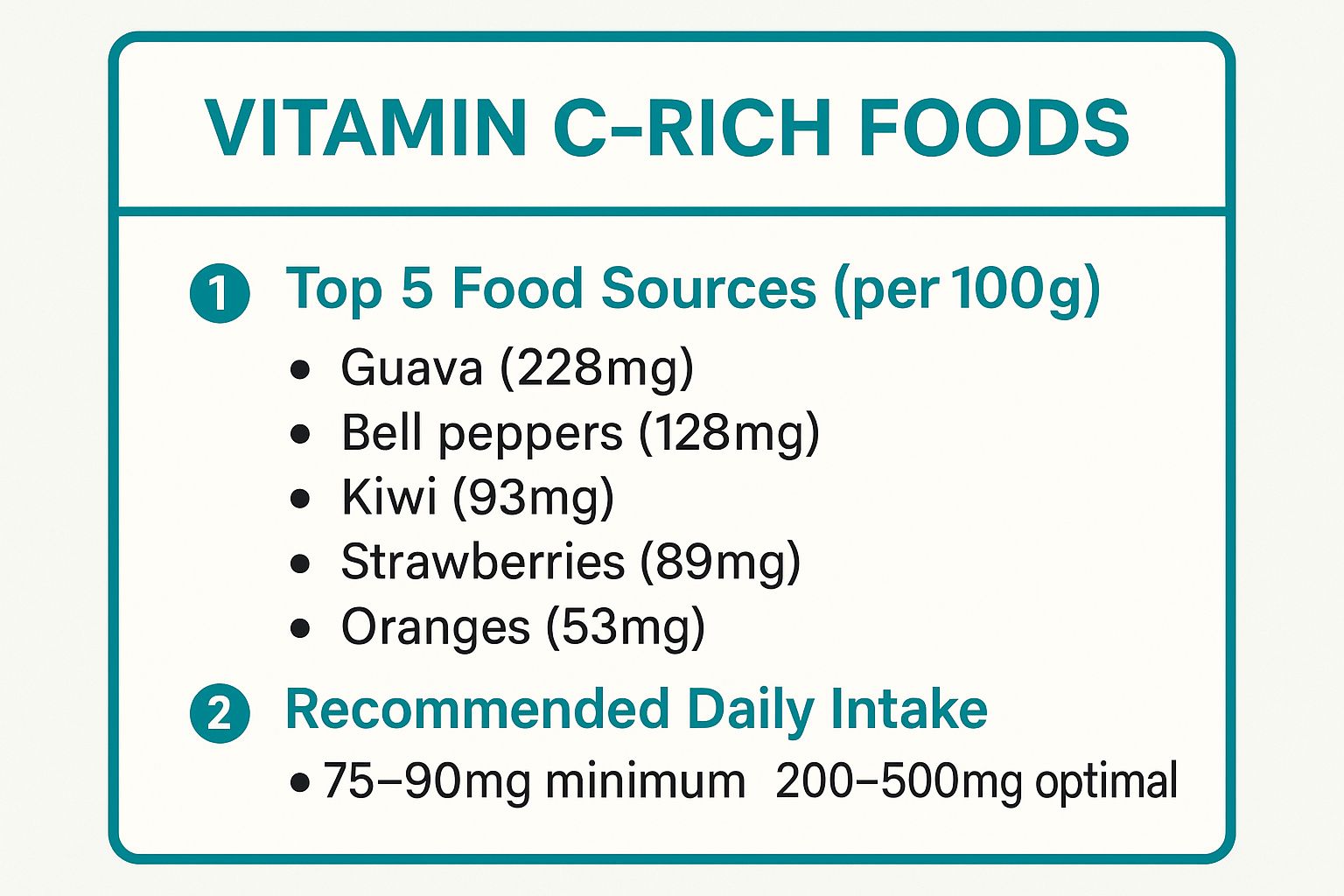
As the infographic shows, many common fruits and vegetables offer a powerful dose of vitamin C, making it easy to meet the optimal range for supporting your skin.
How to Maximize Your Vitamin C Intake
To effectively incorporate this essential nutrient into your routine and get one of the most natural ways to increase collagen support, follow these actionable tips:
- Eat It Fresh: Consume vitamin C sources raw or lightly cooked, as heat can degrade the nutrient. A fresh bell pepper salad offers more vitamin C than stir-fried peppers.
- Aim for Consistency: Incorporate foods like citrus fruits, strawberries, kiwi, broccoli, and kale into your daily meals.
- Spread It Out: Your body absorbs vitamin C more efficiently in smaller doses. Instead of one large dose, include a vitamin C-rich food with each meal.
- Store Smartly: Keep produce in a cool, dark place and consume it while fresh to ensure maximum vitamin C potency.
- Synergistic Pairing: For enhanced collagen synthesis, pair your vitamin C-rich foods with sources of zinc (like nuts and seeds) and copper (like dark chocolate and lentils).
Beyond diet, topical application is another popular method for delivering this nutrient directly to the skin. To discover more about the role of Vitamin C in skincare, you can explore targeted skincare collections that feature this powerful ingredient. For more details, learn about the benefits of Vitamin C in skincare products.
2. Bone Broth Consumption
Bone broth is a nutrient-dense liquid made by simmering animal bones and connective tissues for an extended period. This traditional practice extracts collagen, gelatin, amino acids, and minerals, providing the body with the direct building blocks needed for its own collagen framework. The long, slow cooking process breaks down tough connective tissues into more easily absorbed compounds like gelatin and peptides, including key amino acids like glycine, proline, and hydroxyproline, which are essential for collagen synthesis.

This method provides a whole-food approach to supplying your body with the raw materials it uses to build and support collagen structures. By consuming these bioavailable nutrients, you are directly supporting the body's natural processes that maintain the skin's firm, smooth appearance. Its historical use and modern resurgence, championed by figures like Dr. Kellyann Petrucci and advocates of traditional foods, underscore its value as one of the most effective natural ways to increase collagen support from within.
Practical Application and Key Insights
The consumption of bone broth for skin and joint support is a practice with deep historical roots. In Traditional Chinese Medicine, broths have been used for over 2,500 years to support vitality. Cultural staples like Korean seolleongtang (ox bone soup) and Vietnamese pho broth are regularly consumed, contributing to the daily intake of collagen-supportive nutrients. Modern clinical observations align with this wisdom; one study found that daily consumption of gelatin, a key component of bone broth, was associated with improved skin elasticity after 8 weeks. This demonstrates how a consistent intake can support the skin's foundational structure.
How to Maximize Your Bone Broth Intake
To effectively incorporate this collagen-supportive food into your diet and tap into one of the most natural ways to increase collagen, follow these actionable tips:
- Simmer for Success: Cook bones for a minimum of 12 hours for poultry and 24-48 hours for beef or pork to ensure maximum nutrient extraction.
- Boost with Vinegar: Add 1-2 tablespoons of apple cider vinegar to the pot at the beginning. The acidity helps draw out minerals from the bones.
- Prioritize Quality: Whenever possible, use bones from grass-fed, organic animals to create a cleaner, more nutrient-dense broth.
- Include High-Collagen Parts: Use a mix of bones that include joints, knuckles, and feet, as these parts are exceptionally rich in collagen.
- Aim for Consistency: Drink one to two cups daily for optimal support. You can sip it on its own or use it as a base for soups and sauces.
- Prep for Convenience: Freeze your broth in single-serving portions, such as in ice cube trays or silicone molds, for easy daily use.
- Look for the Gel: A key indicator of a high-collagen broth is its consistency. When properly chilled, it should be thick and gel-like, not watery.
3. Adequate Protein Intake from Collagen-Rich Sources
Collagen is a protein, so ensuring you consume enough high-quality protein is fundamental for providing the building blocks your body needs for its own collagen synthesis. The process relies on a ready supply of key amino acids, particularly glycine, proline, lysine, and hydroxyproline. By consuming foods rich in these specific amino acids, you supply the raw materials required to construct strong, healthy collagen fibers.
Animal-based proteins that include connective tissues are especially effective because they contain these essential amino acids in ratios optimized for collagen production. A diet lacking in adequate protein can limit your body's ability to maintain and produce new collagen, impacting skin elasticity and overall structural integrity. Therefore, focusing on protein intake is a core strategy for supporting your body's collagen framework from the inside out.
Practical Application and Key Insights
Cultural dietary patterns offer compelling evidence of this connection. For example, the traditional Okinawan diet in Japan, which includes dishes made with pork skin, is often associated with longevity and skin health. In Scandinavian cultures, the regular consumption of fish skin and cartilage has been linked to better joint support. Modern research supports these observations, with studies indicating that an optimal protein intake of around 1.2–1.6 grams per kilogram of body weight is beneficial for maintaining collagen in aging adults. This makes a protein-focused diet one of the most effective natural ways to increase collagen support.
To ensure adequate protein intake, consider incorporating balanced and healthy recipes like a grilled healthy chicken recipe with quinoa salad.
How to Maximize Your Protein Intake
To strategically use protein to support your body's collagen production, integrate these actionable tips into your daily routine:
- Aim for an Optimal Range: Consume between 0.8–1.2 grams of protein per kilogram of body weight daily. Active individuals may benefit from a higher intake.
- Embrace Nose-to-Tail Eating: Don't discard the skin from poultry and fish when cooking, as it is a rich source of the necessary amino acids.
- Incorporate Gelatin: Include foods rich in gelatin, such as bone broth, aspic, or desserts made with real gelatin powder.
- Don't Forget Eggs: Eggs are an excellent source of proline and lysine, two of the primary amino acids that make up collagen.
- Spread It Out: Distribute your protein intake evenly throughout the day rather than all at once to support continuous protein synthesis.
- Plant-Based Planning: For those on a vegetarian diet, combine various plant proteins like legumes, quinoa, and hemp seeds with collagen cofactors like vitamin C to ensure a full amino acid profile.
4. Aloe Vera (Topical and Internal)
Aloe vera is a succulent plant widely recognized for its skin-soothing properties, but its benefits extend deep into supporting the body's collagen matrix. This versatile plant contains active compounds, such as aloe sterols, that stimulate fibroblasts, the cells responsible for creating collagen and hyaluronic acid. When applied topically or consumed, aloe vera provides a natural way to increase collagen support, helping to maintain skin’s firm and smooth appearance.
The plant's polysaccharides and glycoproteins not only encourage collagen synthesis but also offer antioxidant effects. These compounds help protect existing collagen from environmental stressors that can degrade its structure. By promoting a healthy environment for collagen production, aloe vera works both on the surface and from within to support a youthful, resilient complexion.
Practical Application and Key Insights
The use of aloe vera for skin rejuvenation is not new; it has been a cornerstone of traditional Middle Eastern and Asian medicine for millennia. Modern science is now validating these ancient practices. For example, clinical trials have demonstrated that oral aloe vera supplements can significantly improve skin elasticity and the appearance of facial wrinkles in women over 40.
The Korean beauty industry, known for its focus on anti-aging and hydration, extensively incorporates aloe into its product formulations. This widespread use highlights its reputation as a key ingredient for maintaining skin suppleness. Research has also shown that topical application can support collagen production, reinforcing its dual-action benefits for skin health.
How to Maximize Your Aloe Vera Intake
To effectively incorporate this powerful plant into your routine and get one of the most natural ways to increase collagen support, follow these actionable tips:
- Apply It Pure: For topical benefits, apply pure, high-quality aloe vera gel directly to the skin daily.
- Check the Content: When purchasing products, choose those with a high concentration, ideally at least 70% aloe vera.
- Start Small Internally: For internal use, begin with one to two tablespoons of aloe juice daily mixed into water or a smoothie.
- Use It Fresh: If you have an aloe plant, you can cut a leaf and extract the inner gel for the freshest application.
- Be Mindful of Aloin: When consuming aloe, ensure the product is purified and free of aloin (the plant's latex), which can have a strong laxative effect.
- Patch Test First: Before applying aloe vera widely on your skin, perform a patch test to ensure you don't have a sensitivity.
- Pair for Synergy: Combine aloe vera with vitamin C sources, either in your diet or skincare, to enhance its collagen-supporting effects.
- Store Properly: Keep fresh or store-bought aloe gel refrigerated to maintain its potency and use fresh gel within a week.
5. Ginseng (Panax Ginseng)
Ginseng, particularly Korean red ginseng (Panax ginseng), is a revered herb with a long history in traditional wellness practices for promoting vitality. Its benefits for skin are rooted in its active compounds called ginsenosides, which offer a dual-action approach to supporting the body’s collagen matrix. Ginseng works by both protecting existing collagen from degradation and promoting the creation of new collagen.
This powerful adaptogen helps shield the skin from environmental stressors, such as UV exposure, that can accelerate collagen breakdown. Simultaneously, it supports fibroblast activity, the specialized cells responsible for producing new collagen fibers. This makes ginseng one of the most effective natural ways to increase collagen for a firm, youthful-looking complexion.
Practical Application and Key Insights
Both tradition and modern research support ginseng's role in skin health. For over 2,000 years, traditional Korean medicine has utilized ginseng for skin rejuvenation. Today, this is echoed in the skincare world, where luxury Korean brands like Sulwhasoo frequently feature ginseng as a primary anti-aging ingredient.
Scientific studies provide further validation. One Korean study found that participants taking 3 grams of Panax ginseng daily saw a 19% improvement in skin elasticity after 24 weeks. Other research has demonstrated that ginseng extract can inhibit UV-induced collagen degradation by up to 34%, showcasing its protective capabilities and its value in maintaining a healthy skin structure.
How to Maximize Your Ginseng Intake
To effectively harness the benefits of this potent herb for collagen support, consider integrating it into your daily wellness and skincare routines with these targeted tips:
- Choose Wisely: Opt for Korean red ginseng (Panax ginseng) as it is considered the most potent for skin-related benefits. Look for supplements standardized to contain 4-7% ginsenosides.
- Internal Support: For internal use, consider a daily intake of 1-3 grams, preferably in divided doses. It's best consumed in the morning or early afternoon to avoid any potential sleep disruption.
- Cycle Your Usage: When taking ginseng long-term, many practitioners recommend cycling its use, for example, taking it for 2-3 weeks followed by a 1-week break.
- Synergistic Pairing: Combine ginseng with vitamin C-rich foods. The antioxidant properties of vitamin C can complement ginseng’s collagen-supporting actions.
- Topical Application: For direct skin benefits, look for skincare products formulated with at least 2% ginseng extract to ensure an effective concentration.
As with any supplement, it is wise to consult with a healthcare provider before adding ginseng to your regimen, especially if you are taking other medications. To discover skincare formulations that feature this powerful ingredient, you can explore targeted collections. For more information, you can learn about the benefits of Ginseng in skincare products.
6. Sun Protection and UV Avoidance
Protecting your skin from ultraviolet (UV) radiation is not just a defensive measure; it is one of the most proactive and essential strategies for preserving your body's collagen framework. UV exposure is a primary external factor contributing to visible signs of aging. It prompts the body to produce enzymes that actively break down collagen and elastin, while also generating free radicals that can damage skin cells and hinder their ability to synthesize new, healthy collagen.
By consistently shielding your skin from the sun, you are safeguarding your existing collagen from this degradation. This creates a more favorable environment for your body's natural production processes to function optimally, making sun protection a fundamental component of any regimen focused on maintaining a firm, youthful-looking complexion. It is one of the most effective natural ways to increase collagen retention.

Practical Application and Key Insights
Scientific evidence overwhelmingly supports the link between sun protection and youthful skin appearance. A landmark Australian study demonstrated that participants who used sunscreen daily experienced 24% less visible skin aging over a 4.5-year period compared to those who used it intermittently. Further research comparing UV-protected versus unprotected skin has shown significantly higher collagen preservation with consistent protection.
These findings are popularized by public health campaigns like Australia's "Slip-Slop-Slap" and advocated by dermatologists such as Dr. Patricia Farris, who research the effects of photoaging. The consensus is clear: preventing UV damage is a critical step in supporting your skin's structural integrity.
How to Maximize Your Sun Protection
To effectively integrate sun protection into your daily routine and support your skin’s collagen, follow these actionable tips:
- Apply Daily: Use a broad-spectrum sunscreen with an SPF of 30 or higher every single day, even when it's cloudy, or you're indoors near windows.
- Use Enough: Apply about a quarter-teaspoon of sunscreen to your face and neck to ensure you achieve the labeled SPF protection.
- Reapply Consistently: If you are outdoors, reapply sunscreen at least every two hours, or more often if you are swimming or sweating.
- Seek Shade: Limit direct sun exposure during peak UV hours, typically between 10 a.m. and 4 p.m.
- Cover Up: Wear wide-brimmed hats and UV-protective sunglasses, and choose clothing with a UPF (Ultraviolet Protection Factor) rating for extended time outdoors.
- Don't Miss Spots: Remember to protect often-overlooked areas like your ears, the back of your neck, your chest, and the tops of your hands.
Integrating a reliable sunscreen is a non-negotiable step in a collagen-conscious skincare approach. To explore options that suit different skin types, learn more about our sunscreen collection.
7. Retinoids from Natural Sources (Vitamin A)
Vitamin A and its derivatives, collectively known as retinoids, are foundational for skin health and play a pivotal role in supporting the body's collagen matrix. This essential nutrient stimulates fibroblast activity, the specialized cells responsible for producing new collagen. It also supports gene expression involved in collagen synthesis while helping protect existing collagen from breakdown.
While many potent retinoids are available in topical skincare, obtaining vitamin A through diet provides the building blocks from within. Your body can utilize preformed vitamin A (retinol) from animal sources or convert provitamin A carotenoids from plants. These compounds also have antioxidant properties, which help protect existing collagen from environmental stressors that contribute to the appearance of aging.
Practical Application and Key Insights
The link between vitamin A consumption and skin appearance is well-documented. For instance, studies have shown that adequate dietary intake of vitamin A correlates with less noticeable skin wrinkling. Similarly, populations following a Mediterranean diet, which is naturally rich in beta-carotene from colorful vegetables, often exhibit fewer visible signs of photoaging. Research has further demonstrated that retinol can significantly support collagen production, underscoring the value of this nutrient for maintaining a youthful-looking complexion.
How to Maximize Your Vitamin A Intake
To effectively incorporate this powerful nutrient as one of the most effective natural ways to increase collagen support, follow these actionable tips:
- Balance Your Sources: Consume preformed vitamin A (retinol) from sources like egg yolks, dairy, and fish. For provitamin A, eat a rainbow of colorful fruits and vegetables like carrots, sweet potatoes, spinach, and kale.
- Pair with Healthy Fats: Vitamin A is fat-soluble, meaning it requires fat for proper absorption. Drizzle olive oil on your spinach salad or enjoy sweet potato with a side of avocado.
- Cook for Bioavailability: Lightly cooking vegetables like carrots and tomatoes can make their carotenoids more accessible for your body to use.
- Mind Your Intake: The recommended daily allowance for adults is typically 700-900 micrograms (mcg) of Retinol Activity Equivalents (RAE). It's important not to exceed the tolerable upper intake level of 3,000 mcg daily from retinol-based sources or supplements.
- Consider Synergistic Effects: For a comprehensive approach, combine a diet rich in vitamin A with topical skincare products that contain retinoid derivatives.
By prioritizing vitamin A-rich foods, you provide your body with the fundamental components it needs to maintain a firm, resilient, and healthy-looking skin structure. To explore this ingredient's role in topical formulations, you can learn more about the benefits of Retinoids in skincare products.
8. Sleep Optimization and Stress Reduction
Quality sleep and stress management are foundational pillars for supporting your body's collagen matrix. Often overlooked in favor of diet and skincare, these lifestyle factors directly influence collagen production and preservation. During the deep stages of sleep, the body releases crucial growth hormones that stimulate collagen synthesis and support the body's natural cycle of tissue renewal.
Conversely, chronic stress elevates cortisol, a hormone that can hinder collagen health. Elevated cortisol levels can inhibit the function of fibroblasts, the very cells that produce collagen, and accelerate its breakdown through specific pathways. By prioritizing restorative sleep and actively managing stress, you create an internal environment that is conducive to maintaining skin's firmness and youthful appearance, making it one of the most effective natural ways to increase collagen resilience.
Practical Application and Key Insights
The connection between sleep, stress, and skin vitality is well-documented. For instance, research has shown that consistent sleep deprivation can increase markers of skin aging, while other studies have demonstrated that chronic stress can significantly reduce collagen synthesis. Clinical observations also suggest that implementing a stress-reduction program can lead to noticeable improvements in skin elasticity over several weeks.
These findings, popularized by sleep experts like Dr. Matthew Walker and integrative medicine practitioners, highlight that what happens overnight is just as important as what you do during the day for maintaining a healthy collagen framework.
How to Maximize Your Sleep and Reduce Stress
To effectively harness the power of rest and relaxation for collagen support, integrate these actionable tips into your daily and nightly routines:
- Prioritize Sleep Quantity and Quality: Aim for 7-9 hours of uninterrupted sleep per night. To truly optimize your sleep, it's beneficial to explore strategies to fall asleep faster and improve sleep quality.
- Establish a Consistent Routine: Go to bed and wake up around the same time each day, even on weekends, to regulate your body's internal clock.
- Create a Sleep-Friendly Environment: Keep your bedroom dark, cool (between 65-68°F), and quiet to promote deeper, more restorative sleep stages.
- Implement a Digital Curfew: Avoid blue light from screens for at least 2-3 hours before bedtime, as it can interfere with melatonin production.
- Practice Mindful Relaxation: Incorporate stress-reduction techniques such as meditation, deep breathing, or gentle yoga into your daily routine.
- Use Supportive Accessories: Consider a silk pillowcase to minimize mechanical friction on your skin, which can place stress on facial collagen fibers overnight.
8 Methods to Boost Natural Collagen Comparison
| Item | Implementation Complexity 🔄 | Resource Requirements ⚡ | Expected Outcomes 📊 | Ideal Use Cases 💡 | Key Advantages ⭐ |
|---|---|---|---|---|---|
| Vitamin C-Rich Foods | Low - easy daily inclusion | Low - widely available, cost-effective | Improves collagen synthesis and antioxidant defense | Daily dietary support for skin and overall health | Synergistic with other nutrients, multiple health benefits |
| Bone Broth Consumption | High - long simmering time (12-48h) | Moderate - requires quality bones, time | Provides bioavailable collagen peptides, supports joints, skin, gut | Traditional diets, joint and skin health support | Multi-nutrient source, versatile culinary use |
| Adequate Protein Intake | Moderate - dietary planning needed | Moderate to high - quality animal proteins | Supplies essential amino acids for collagen building, supports tissue structure | Muscle maintenance, collagen synthesis, whole-food approach | Supports general health, sustainable when nose-to-tail |
| Aloe Vera (Topical and Internal) | Low to moderate - topical ease, internal dosing variable | Low - plant grown or purchased easily | Stimulates fibroblast activity and collagen gene expression | Skin hydration, mild collagen support | Multi-method use, soothing, antioxidant-rich |
| Ginseng (Panax Ginseng) | Moderate - supplement or extract usage | Moderate to high - quality products costly | Protects and promotes collagen, improves skin elasticity | Photoaging prevention, anti-aging focused routines | Dual collagen protector/promoter, research-backed |
| Sun Protection and UV Avoidance | Moderate - daily consistent practice | Low - sunscreen and protective gear needed | Prevents collagen degradation, reduces skin aging | All skin types, preventative anti-aging strategy | Most effective collagen preservation, reduces cancer risk |
| Retinoids from Natural Sources | Moderate - dietary and topical combination | Moderate - requires diverse food intake | Increases collagen synthesis, inhibits degrading enzymes | Skin rejuvenation with dietary vitamin A focus | Sustained support, safer than synthetic retinoids |
| Sleep Optimization & Stress Reduction | Moderate to high - lifestyle changes needed | Low - behavioral, may need supplements | Enhances collagen synthesis via hormonal balance | Holistic anti-aging, overall health improvement | Root cause addressing, free with wide health benefits |
Crafting Your Pro-Collagen Lifestyle
Embracing a pro-collagen lifestyle is not about a single magic ingredient but about creating a consistent, holistic system that supports your skin from the inside out and the outside in. We've explored a variety of powerful, natural ways to increase collagen, each playing a crucial role in maintaining your skin's youthful appearance and structure. By weaving these strategies together, you create a synergistic effect that goes far beyond what any single method can achieve on its own.
Think of your body's collagen as a complex architectural structure. Your diet provides the essential building blocks. Foods rich in Vitamin C, like citrus fruits and bell peppers, are the skilled workers, facilitating the assembly process. High-quality protein sources and bone broth deliver the raw materials, the very amino acids needed for construction. Simultaneously, your lifestyle habits act as the maintenance crew, protecting the integrity of this structure for the long term.
Key Takeaways for Lasting Results
Mastering these concepts means moving from passive hope to active participation in your skin's vitality. The most significant takeaways from our guide are:
- Nourish from Within: Your plate is your primary tool. Prioritizing Vitamin C, adequate protein, and amino acid-rich foods like bone broth creates the internal environment necessary for optimal collagen synthesis.
- Protect Your Investment: All your nutritional efforts can be undermined by environmental aggressors. Diligent sun protection is non-negotiable, acting as a shield against the primary cause of collagen degradation, UV radiation.
- Support Topically and Holistically: Natural topicals like aloe vera, vitamin A-rich ingredients, and extracts like ginseng can provide supportive care directly to the skin. This external support is amplified by internal wellness practices, such as optimizing sleep and managing stress, which are fundamental to your body's natural restorative cycles.
Your Actionable Path Forward
The journey to supporting your skin’s collagen framework is a marathon, not a sprint. The key is to build sustainable habits that become a seamless part of your daily routine. Start by choosing one or two new practices that feel most achievable for you. Perhaps you begin by adding a daily serving of berries to your breakfast or committing to wearing a wide-brimmed hat during peak sun hours.
Once these actions feel second nature, introduce another. This gradual, layered approach prevents overwhelm and fosters genuine, lasting change. Remember, these natural ways to increase collagen are not just about aesthetics; they foster overall wellness that radiates through your skin, hair, and nails, contributing to a vibrant, healthy appearance. By adopting this comprehensive lifestyle, you are proactively investing in your skin's resilience and long-term beauty.
Ready to elevate your topical skincare routine with expertly formulated ingredients? Explore the collection at Skin Perfection, where we provide high-quality peptides, antioxidants, and plant stem cells designed to complement your pro-collagen lifestyle. Discover the perfect additions to your custom formulations or ready-to-use products at Skin Perfection and take the next step in your journey to beautiful skin.