

 Buy with Prime


Using oil based cleansers for double cleansing is a brilliant two-step method that purifies your skin deeply, yet gently. The whole idea is to first use an oil cleanser to melt away makeup, sunscreen, and excess sebum, then follow up with a water-based cleanser to wash away any leftover impurities. The result? Skin that feels perfectly balanced and refreshed.
Why Double Cleansing with Oil Is a Skincare Game Changer
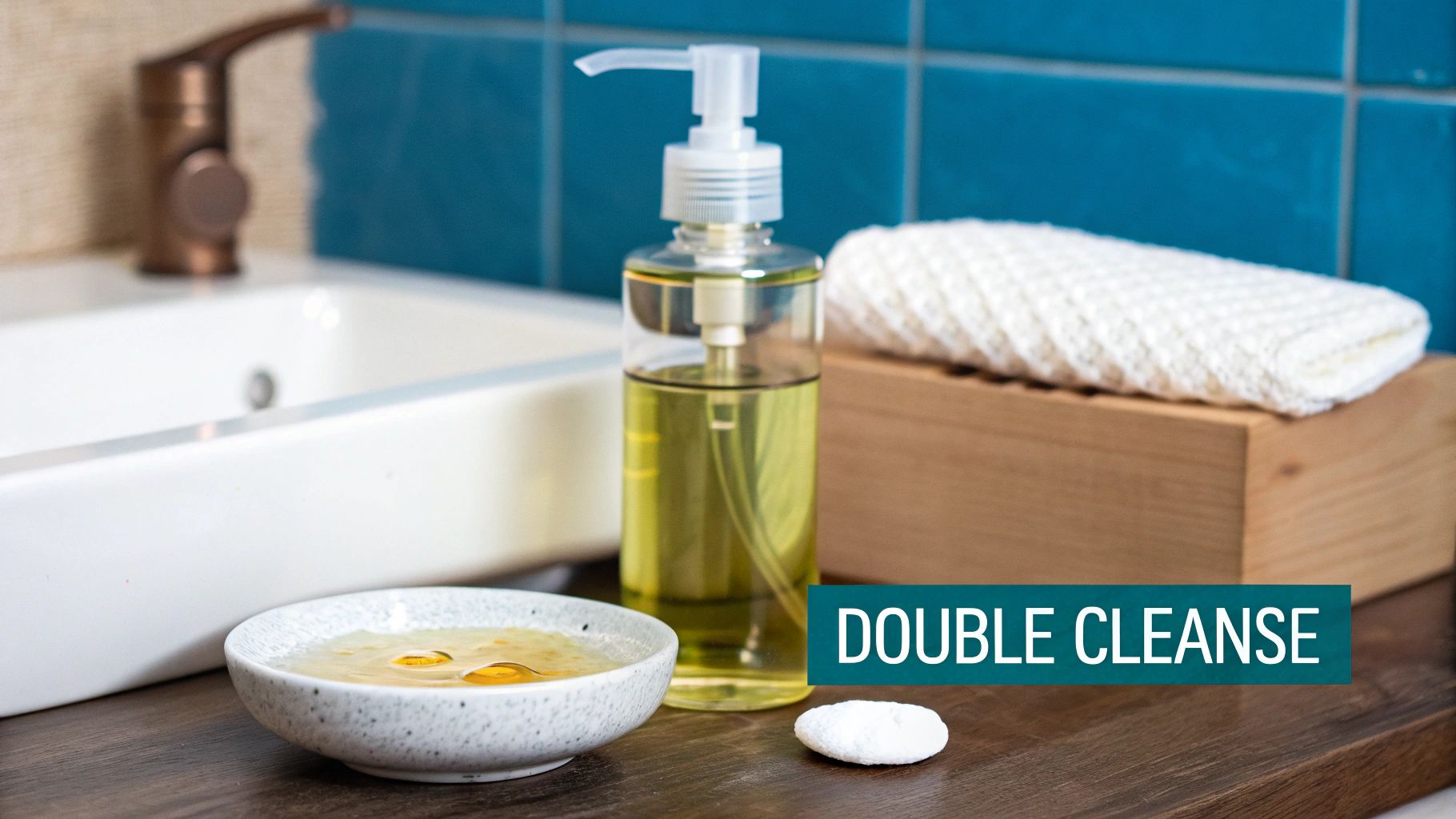
If you’ve ever found yourself scrubbing at stubborn mascara or feeling like your regular face wash just isn’t getting the job done, you’re definitely not alone. So many of our daily go-to's—like foundation, concealer, and especially sunscreen—are designed to be long-lasting. That usually means they're oil-based and water-resistant, so a quick wash with a standard cleanser often won't lift them completely.
This is where the magic of double cleansing really comes into play. The principle behind it is simple chemistry: like dissolves like. Think of an oil-based cleanser as a magnet for all the oily grime on your face.
The Power of an Oil-Based First Step
When you massage an oil cleanser onto dry skin, it immediately gets to work breaking down everything from a full face of makeup to the day’s buildup of sebum and pollutants. This first step does all the heavy lifting, loosening those stubborn substances so they can be easily rinsed away.
It's a simple switch that brings some major advantages to your routine:
- A Truly Deep Clean: It effectively grabs all the oil-soluble debris that a water-based cleanser just can't touch on its own, giving you a much more thorough cleanse.
- Incredibly Gentle: Unlike harsh makeup removers that can leave your skin feeling tight and stripped, oil cleansers work without messing with your skin's natural moisture barrier.
- Primes Your Skin: When your face is a truly clean canvas, your serums and moisturizers can sink in and get to work much more effectively.
Oil Cleansing vs Single Cleansing At a Glance
To see the difference clearly, let's compare the two approaches side-by-side.
| Feature | Oil-Based Double Cleansing | Single-Step Water-Based Cleansing |
|---|---|---|
| Primary Target | Oil-based impurities (makeup, sunscreen, sebum) first, then water-based impurities. | Primarily water-based impurities (sweat, dirt). |
| Effectiveness on Makeup | Excellent; melts away even waterproof and long-wear products. | Struggles with oil-based and water-resistant formulas. |
| Impact on Skin Barrier | Gentle and supportive; helps maintain natural oils. | Can be stripping if the formula is too harsh or foaming. |
| Pore Cleansing | Deeply cleanses pores by dissolving hardened sebum and grime. | Surface-level cleansing; may not effectively clear clogged pores. |
| Best For | All skin types, especially for makeup/sunscreen wearers and oily skin. | Minimal makeup wearers or as the second step in a double cleanse. |
This table shows why adding that initial oil-based step is so crucial for getting your skin completely clean without causing irritation.
A Growing Global Trend
This isn't just a niche trick; it's a huge trend in the beauty world for a reason. The global cleansing oil market was valued at a whopping USD 1.91 billion in 2026, and it's projected to keep growing as more people discover how well it removes makeup without stripping the skin.
This method is the perfect first step in any truly effective skincare regimen. If you're ready to dive deeper, you might be interested in unlocking the power of double cleansing with our detailed guide.
The Science Behind How Oil Cleansers Work
Ever wonder how slathering oil on your face can somehow leave it feeling spotlessly clean, not greasy? The secret isn't magic, but it's close. It all comes down to a fundamental chemistry principle: like dissolves like.
Think about it. Most of the stubborn stuff you want to wash away at the end of the day—sunscreen, makeup, excess sebum, and daily grime—is oil-based. A regular water-based face wash just can't grab onto it effectively. It's like trying to mix oil and water in a salad dressing; they repel each other. But an oil cleanser is different. It acts like a magnet for all that oily gunk, latching onto it and lifting it right out of your pores.
The Magic of Emulsification
Okay, so the oil cleanser has dissolved all the makeup and grime. But how do you get it all off your face without leaving a slick residue? This is where a brilliant bit of formulation called emulsification comes in.
Good oil cleansers contain ingredients called emulsifiers. These are clever little molecules with two distinct ends: one that loves oil (lipophilic) and one that loves water (hydrophilic). When you're massaging the oil into your dry skin, the oil-loving ends are busy dissolving impurities.
Then, when you add a splash of lukewarm water, the water-loving ends kick into gear. They grab onto the water molecules, instantly transforming the oil into a light, milky liquid. This milky mixture rinses away cleanly and completely, taking all the dissolved dirt and makeup with it. No oily film left behind—just soft, clean skin.
An effective oil cleanser doesn't just move oil around; it dissolves oil-soluble debris and then uses emulsifiers to ensure every last trace rinses off, leaving your skin feeling soft and thoroughly cleansed.
Balancing Your Skin, Not Stripping It
One of the best things about using oil based cleansers for double cleansing is how gentle they are. Many harsh, sudsy cleansers can be too aggressive, stripping away your skin's natural protective oils. When this happens, your skin may react by producing even more oil to compensate, leading to a frustrating cycle of oiliness.
An oil cleanser works with your skin. It gently melts away the excess sebum and impurities you don't want, while leaving your skin's natural moisture barrier intact. This helps support a healthy, balanced-looking complexion that feels comfortable, not tight or dry. You can learn more about how to strengthen your skin's protective barrier in our detailed guide.
This gentle-yet-effective approach is why oil cleansers have become such a powerhouse in the skincare world. In fact, the global market for oil-based cleansers was valued at a massive USD 3.5 billion in 2024. This huge number shows just how many people are embracing these formulas for a deep clean that respects their skin. You can get more insights on this growing market on verifiedmarketreports.com.
How to Read an Oil Cleanser Ingredient Label
Flipping over a bottle and trying to decipher the ingredient list can feel like you’re reading another language. But once you know what to look for, choosing the right oil based cleanser for double cleansing becomes second nature. Think of the ingredient list—often called the INCI (International Nomenclature of Cosmetic Ingredients)—as your roadmap to the perfect product for your skin.
A little background knowledge goes a long way. Understanding what active ingredients in skincare are and how they work makes it much easier to size up any label, especially for an oil cleanser.
At its core, the science behind an oil cleanser is beautifully simple. The oil acts like a magnet, grabbing onto makeup, sunscreen, and excess sebum on your skin. When you add water, it all rinses away clean.
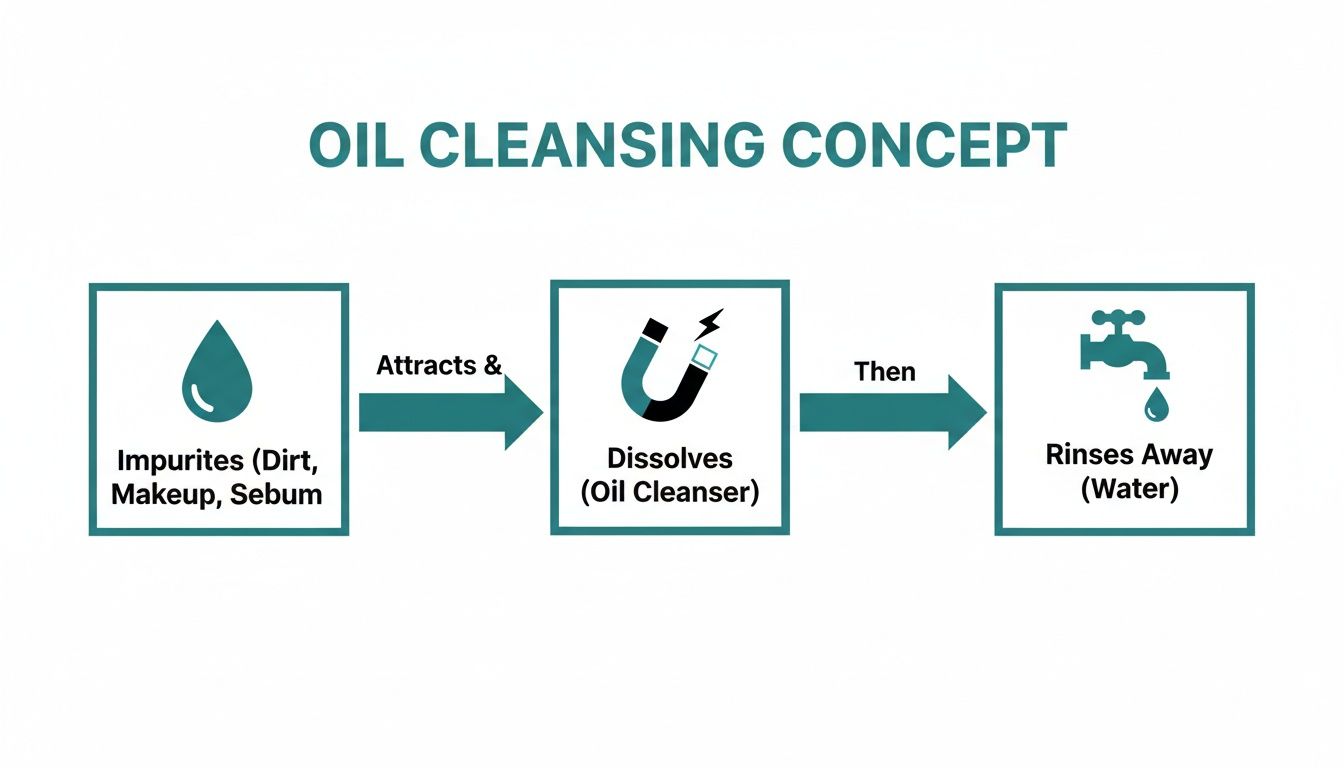
This process effortlessly breaks down all the oil-based gunk from the day, leaving your skin perfectly prepped for your second cleanse.
Spotting Beneficial Carrier Oils
Every great oil cleanser is built on a foundation of carrier oils. These are the plant-based oils that do the heavy lifting, dissolving impurities while nourishing your skin. Different oils bring their own unique benefits to the table, so the blend really matters.
Here are a few power players you’ll often find at the top of an ingredient list:
- Jojoba Oil (Simmondsia Chinensis Seed Oil): This one is a fan favorite for a reason. Its structure is incredibly similar to our skin’s natural sebum, which means it’s well-tolerated by almost everyone and helps keep things looking balanced.
- Sweet Almond Oil (Prunus Amygdalus Dulcis Oil): Packed with fatty acids, this oil feels incredibly smooth and nourishing, making it a fantastic choice for skin that looks and feels dry or dehydrated.
- Grapeseed Oil (Vitis Vinifera Seed Oil): If you’re worried about a greasy feeling, this is your oil. It’s super lightweight, making it perfect for combination or oily-looking skin.
Consumers are catching on, too. The global market for botanical cleansing oils is expected to skyrocket to USD 3.5 billion by 2031, a clear sign that plant-based skincare is here to stay.
The Role of Emulsifiers
Ever wonder how an oil cleanser can rinse away so cleanly with just water, leaving zero greasy residue behind? The secret ingredient is an emulsifier. This is what allows the oil to mix with water, turning it into a light, milky liquid that washes away in a flash.
Without an emulsifier, you’d essentially just be smearing oil around your face. When you’re scanning a label, keep an eye out for ingredients like Polysorbate 80, Sorbeth-30 Tetraoleate, or PEG-20 Glyceryl Triisostearate. They’re the magic that makes your cleanser work.
For a more in-depth guide on decoding labels, be sure to check out our article on how to read a skincare label (INCI).
Key Botanical Oils for Your Cleanser
The heart of a natural oil cleanser lies in its botanical oils. Each one offers unique properties that can help achieve a specific skin appearance. Here's a quick look at some popular oils and what they're best for.
| Botanical Oil | Primary Benefit | Ideal For Skin Appearance |
|---|---|---|
| Jojoba Oil | Balances Sebum | Oily, Combination, Blemish-Prone |
| Sweet Almond Oil | Nourishing & Soothing | Dry, Sensitive, Mature |
| Grapeseed Oil | Lightweight | Oily, Congested |
| Sunflower Oil | Rich in Vitamin E | All Skin Types, especially Dry |
| Avocado Oil | Deeply Moisturizing | Very Dry, Dehydrated, Mature |
| Rosehip Oil | Brightening | Dull, Uneven Tone, Mature |
Choosing a cleanser formulated with oils that match your skin's needs is the first step toward a happy, healthy-looking complexion.
Ingredients You May Wish to Avoid
Finally, being a savvy shopper also means knowing what you’d rather not put on your skin. Some people with sensitive skin, for example, steer clear of synthetic fragrances, which often appear as "Fragrance" or "Parfum."
Being aware of these ingredients allows you to make a choice that feels right for you and your skin. After all, you’re in control of your routine.
Choosing the Right Oil Cleanser for Your Skin
Picking the perfect oil cleanser isn't a one-size-fits-all deal. It’s all about playing matchmaker between the formula and your skin's unique personality. The magic of oil based cleansers for double cleansing is their incredible versatility, with a perfect option for everyone, from the driest complexions to the oiliest.
First, let's bust a huge myth: that oil is a no-go for oily skin. It's just not true. In fact, the right lightweight oil can be a game-changer for bringing your skin's appearance back into balance. It works by gently lifting away that excess sebum without stripping your skin, which can actually prevent it from going into oil-production overdrive.
For Oily and Combination Skin Appearances
If your skin often looks shiny or feels congested, you'll want an oil cleanser that feels light and disappears without a trace. The secret is finding oils with a smaller molecular structure and a high concentration of linoleic acid, which is known for its light, non-clogging feel.
- Grapeseed Oil: This one is a real star. It’s incredibly lightweight, soaks in fast, and leaves your skin feeling clean, almost toned.
- Safflower Oil: Another powerhouse rich in linoleic acid. It cleanses beautifully without ever feeling heavy.
- Jojoba Oil: Jojoba is in a class of its own—it's technically a wax ester that’s shockingly similar to our skin's own sebum. This likeness lets it dissolve excess oil and bring a wonderful sense of balance back to your complexion. You can explore the many benefits of Jojoba in our complete guide.
For Dry or Mature Skin Appearances
When your skin feels tight, looks flaky, or just seems thirsty, it’s crying out for richer, more nourishing oils. These are usually higher in oleic acid, a fatty acid celebrated for its incredible conditioning and moisturizing abilities. They gently cleanse while wrapping your skin in a blanket of softness.
Think of it like this: just as a dry sponge needs more water to become pliable, dry-looking skin benefits from richer oils to maintain its soft, comfortable feel during cleansing.
Keep an eye out for these ingredients to help your skin feel replenished:
- Avocado Oil: A deeply nourishing oil that's packed with fatty acids. It provides a cushiony, luxurious feel as you cleanse.
- Sweet Almond Oil: Famous for its soothing touch, this oil is extremely gentle and helps leave skin feeling smooth and hydrated.
- Olive Oil: A classic for a reason! Its rich texture is fantastic for melting away makeup while deeply conditioning very dry skin.
For Sensitive Skin Appearances
If your complexion gets upset easily, simplicity is your best friend. The goal here is to find a formula with a short, sweet ingredient list, focusing on calming oils that won't overwhelm your skin. You’ll want to look for products that are free from common troublemakers like synthetic fragrances or a long list of essential oils.
Simple, pure oils are often the safest bet. Sunflower or Jojoba oils are typically very well-tolerated and give you a great cleanse without any unnecessary extras. If you want to dive deeper and explore the best double cleansing products available, including options that go beyond oils, checking out a comprehensive guide is a great next step.
Mastering the Double Cleanse Method Step by Step
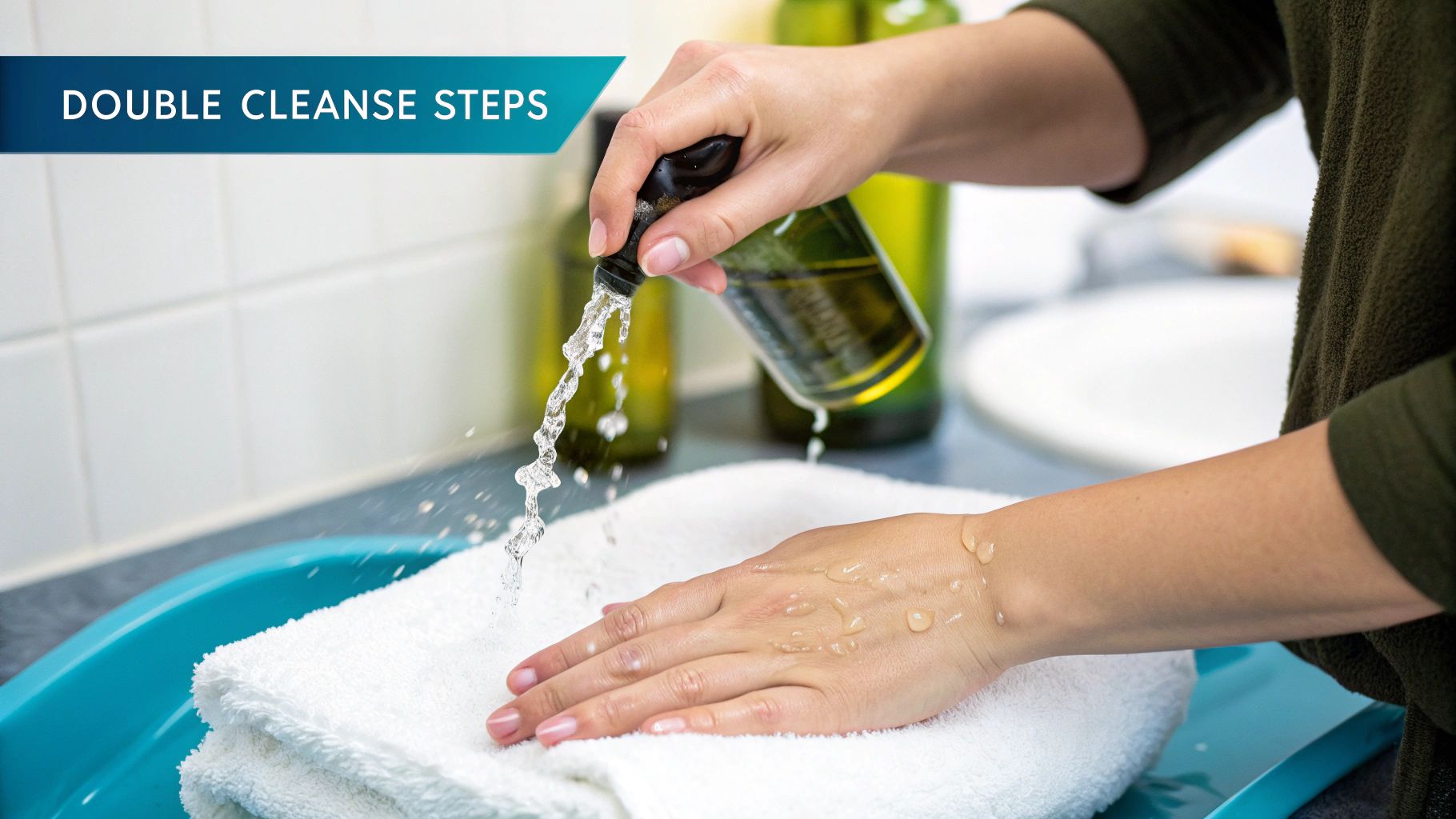
So, you’ve found your perfect cleanser, and now it’s time for the fun part. Putting it to work! Getting the double cleanse right is less about a complicated technique and more about creating a mindful ritual that sets your skin up for success. Following the process correctly ensures you reap all the rewards from your oil based cleansers for double cleansing without making any rookie mistakes.
The golden rule, and I can't stress this enough, is to start with a completely dry face and dry hands. If you apply an oil cleanser to wet skin, it’s going to emulsify way too early. That means it won’t be able to grab onto and dissolve the day's grime, makeup, and sebum. It's like trying to clean a greasy pan by immediately adding soapy water—you just end up pushing the grease around instead of lifting it off.
Your Step-by-Step Guide
Ready to get glowing? This simple, four-step process will get you to a perfect cleanse every single time.
- Apply to Dry Skin: Start with one or two pumps of your oil cleanser into your dry palms. Rub your hands together to gently warm the oil, then apply it directly to your dry face.
- Massage Thoroughly: Using just your fingertips, gently massage the oil into your skin with circular motions for about 30 to 60 seconds. Give a little extra attention to areas with heavy makeup, like around your eyes or nose. Think of this as a mini-massage for your face—it even helps boost circulation for a healthy glow.
- Emulsify with Water: This is where the magic happens. Wet your fingertips with a bit of lukewarm water and keep massaging your face. You'll watch the oil transform into a thin, milky liquid. That process is called emulsification, and it's what actually lifts all those dissolved impurities off your skin.
- Rinse and Pat Dry: Now, just rinse your face thoroughly with lukewarm water until every trace of the cleanser is gone. Gently pat your skin dry with a soft towel, and you're perfectly prepped for your second, water-based cleanse.
Common Mistakes to Avoid
Even the simplest routines have a few common pitfalls that can trip you up. Knowing what they are from the get-go will help you perfect your technique.
The whole point of the first cleanse is to dissolve and lift, not to scrub. All you need is a gentle massage to let the oil do its thing, prepping your skin for the next step without causing any irritation.
- Using Too Little Product: Don't be stingy with your oil cleanser! You need enough product to create a nice “slip” that allows your fingers to glide easily across your face without pulling or tugging at your skin.
- Applying to a Wet Face: We mentioned it before, but it bears repeating: this is the most common mistake. Always, always start dry. This allows the oil to properly bind with the oil-based gunk on your skin.
- Rushing the Massage: Give the oil time to break everything down. A quick 10-second rub isn’t going to cut it against stubborn sunscreen and long-wear makeup.
- Skipping the Emulsification Step: Just splashing water on your face won't work. You have to actively massage with wet fingers to properly emulsify the oil so it can rinse away cleanly.
- Using Hot Water: Stick to lukewarm water. Hot water can be really harsh, stripping your skin of its natural oils and leaving it feeling dry and tight.
How to Create Your Own DIY Oil Cleanser
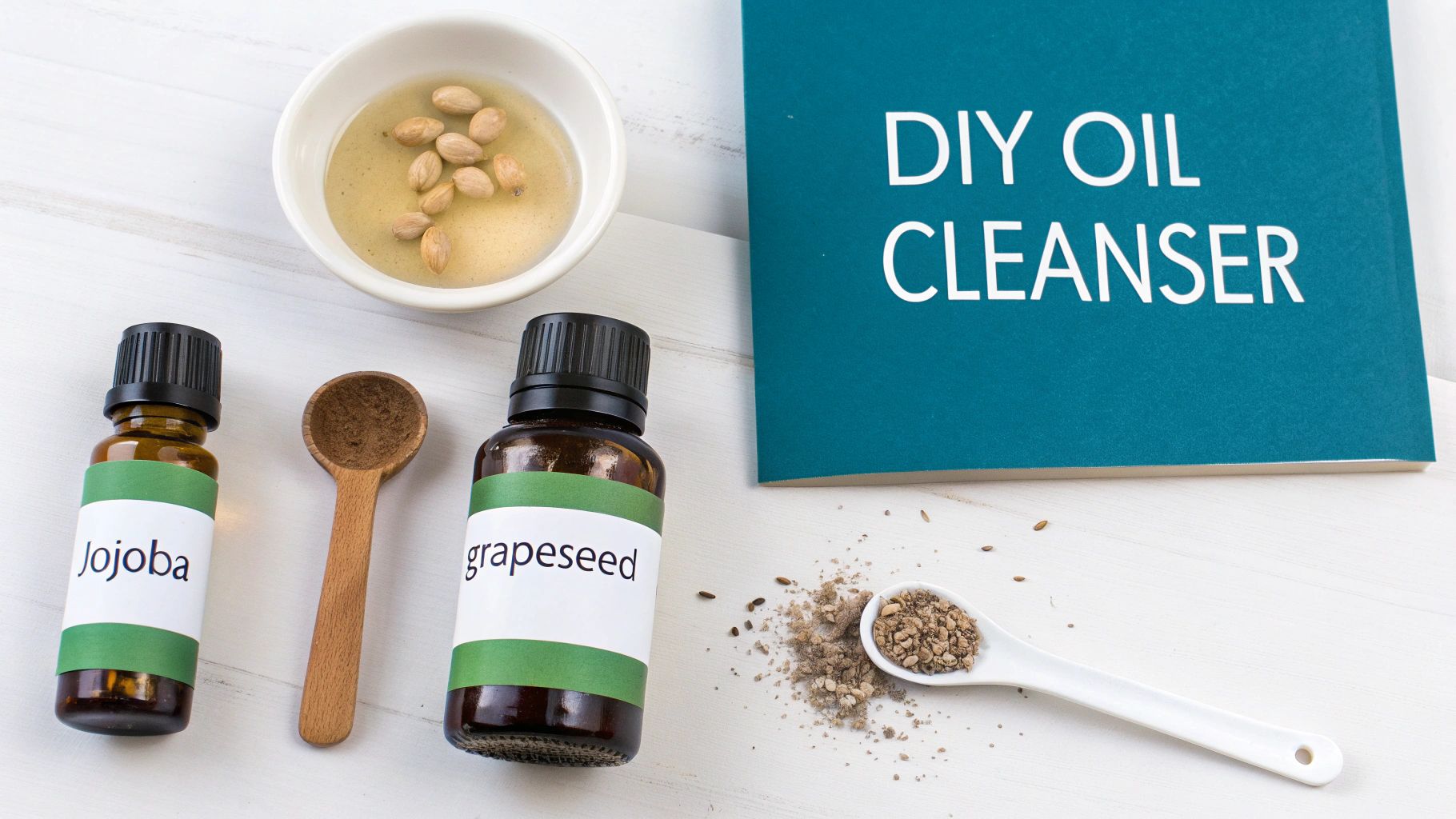
For the skincare lover who enjoys a personal touch, making your own oil based cleanser for double cleansing can be an incredibly rewarding experience. When you create your own custom blend, you get to pick ingredients that are perfectly suited for your skin, giving you a truly personalized routine.
The whole process is much simpler than you'd think. It really just comes down to two key parts: carrier oils and an emulsifier. The carrier oil is the foundation, doing the heavy lifting of dissolving makeup and sebum. After that, an emulsifier is absolutely essential to get that clean, residue-free rinse we all want. Without it, the oil would just cling to your skin, making it nearly impossible to wash off with water.
A Simple Formulation Framework
A fantastic starting point for your DIY oil cleanser is a straightforward ratio that you can tweak and perfect over time. This basic recipe gives you an effective, rinsable cleanser that you can customize with your favorite oils.
A popular and effective ratio to start with is:
- 90% Carrier Oil(s): This is the heart of your cleanser. You can stick with a single oil or get creative with a blend of two or three.
- 10% Emulsifier: This is the magic ingredient that ensures the oil mixes with water and rinses away cleanly. A great choice for beginners is Polysorbate 80.
This blend creates a product that feels luxurious and performs beautifully, leaving your face feeling soft, clean, and happy. If you're curious about this key ingredient, you can learn more about what emulsifying wax is and how it works its magic in skincare.
Safety First: Always make your DIY products in a clean, sanitized space with sterile tools. A quick wipe-down of your surfaces and equipment with rubbing alcohol is a simple but vital step to keep your creations fresh and safe.
Best Practices for Safe Crafting
Before you start mixing, it's smart to keep a few best practices in mind. These simple steps will help you create a high-quality product that your skin will absolutely love.
Always, always perform a patch test with your new creation before slathering it all over your face. Just dab a small amount on your inner arm or behind your ear and wait 24 hours to see how your skin reacts. It’s a tiny bit of patience that lets you enjoy your personalized skincare with total confidence.
Still Have Questions About Oil Cleansing?
Even after you get the hang of it, a few questions always seem to pop up when you first start oil cleansing. It's totally normal. Let's walk through some of the most common ones so you can feel completely confident adding this step to your routine.
Won't an Oil Cleanser Just Make My Oily Skin... Oiler?
I get this question all the time, and it's a fair one! But the answer is almost always no. In fact, using the right oil cleanser can actually help balance your skin's own oil production.
Think about it: when you use those harsh, stripping cleansers that leave your skin feeling "squeaky clean," you're actually sending your skin into panic mode. It thinks it's been stripped of all its natural protection, so it overcompensates by pumping out even more oil. An oil cleanser gently dissolves the excess sebum, makeup, and sunscreen without that harsh stripping effect, helping your skin find its happy medium.
Do I Really Need to Double Cleanse Every Single Day?
For most people, double cleansing is a nighttime ritual. It’s the best way to melt away a full face of makeup, layers of sunscreen, and all the grime that’s built up over the day. In the morning, a quick, gentle cleanse with just your water-based product is usually all you need.
That said, you know your skin best. If your skin is on the very oily side, you might find that double cleansing every evening is what keeps it feeling fresh and balanced.
The most important thing here is consistency over frequency. A proper, thorough double cleanse a few times a week will do more for your skin than a rushed, sloppy one every single night.
Can I Just Use the Coconut Oil From My Kitchen?
You technically can, but I really wouldn't recommend it. For one, common kitchen oils like coconut oil can be comedogenic for some people, meaning they might clog pores and lead to the appearance of blemishes.
But the biggest issue is what’s missing: emulsifiers. Those professionally formulated oil based cleansers for double cleansing have crucial ingredients that allow the oil to mix with water. This is what lets it rinse away cleanly, taking all the dirt and makeup with it. A straight oil from your pantry can't do that, and you'll likely be left with a heavy, greasy film on your skin.
At Skin Perfection, we're all about giving you the knowledge—and the high-quality ingredients—to create a skincare routine you love. Check out our premium lotion-making supplies and skincare products to perfect your cleansing ritual. Visit us at https://www.naturalorganicskincare.com to get started.