

 Buy with Prime


Prickly pear oil is a stunningly luxurious, fast-absorbing oil that comes from the tiny seeds of the Opuntia ficus-indica cactus. You’ll often hear it called ‘liquid gold’, and for good reason—its precious nature and uncanny ability to bring about a youthful, radiant complexion have made it a legend in the skincare world. It's also celebrated for being exceptionally lightweight and a fantastic match for most skin types.
Unveiling Prickly Pear Oil
When you start exploring the world of beauty oils, you quickly learn they aren't all created equal. Think of the difference between cozy wool and buttery-soft cashmere. Both are natural fibers, but cashmere delivers a uniquely refined, impossibly soft, and altogether superior experience. Prickly pear oil is the cashmere of the skincare world.
Its incredible value comes from two things: an impressive nutrient profile and the ridiculously meticulous, labor-intensive process needed to produce it. This isn't an oil that can be mass-produced on the cheap. The journey from a resilient desert cactus to a beautifying facial oil is what sets it apart and makes every drop so prized.
What Makes This Oil So Special?
What truly distinguishes prickly pear oil is its texture and composition. It feels unbelievably light on the skin and sinks in almost instantly, leaving behind a velvety, non-greasy finish. This makes it an absolute dream for a wide range of skin types, from parched and dry to oily and combination.
Its unique magic comes from the powerful compounds packed inside the tiny seeds of the cactus fruit. These components work in harmony to support the skin, helping it maintain a smooth, hydrated, and vibrant appearance.
Before we dive deep into the science, here is a quick overview of what makes this oil a standout ingredient.
Prickly Pear Oil At A Glance
This table provides a snapshot of the key characteristics of prickly pear oil, highlighting why it has earned such a stellar reputation in skincare circles.
| Attribute | Description |
|---|---|
| Texture | Incredibly lightweight and silky; absorbs almost instantly. |
| Feel on Skin | Leaves a velvety, non-greasy finish without clogging pores. |
| Aroma | Subtle, earthy, and slightly nutty scent. |
| Origin | Extracted from the seeds of the Opuntia ficus-indica cactus fruit. |
| Key Benefit | Exceptional moisturizing properties that promote a youthful appearance. |
| Sustainability | Sourced from a drought-tolerant, resilient, and eco-friendly plant. |
As you can see, this oil isn't just another pretty face in the crowded world of botanicals. Its combination of a feather-light feel and potent beautifying compounds is what makes it so special.
Let's look closer at some of its most notable attributes:
- A Lightweight Feel: It sinks into the skin in seconds without a hint of pore-clogging residue, making it perfect for daily use, even under makeup.
- A Rich Nutrient Profile: It is absolutely brimming with beneficial compounds that help nourish and beautify the skin.
- A Sustainable Origin: The Opuntia ficus-indica cactus is a champion of resilience. It’s incredibly drought-tolerant, making it a truly sustainable and eco-friendly resource in arid climates.
This oil's unique combination of a feather-light feel and a potent concentration of beautifying compounds is why it has become a staple in high-performance, natural skincare routines.
This prized ingredient has earned a fiercely loyal following among skincare enthusiasts and professional estheticians alike. Its ability to promote a refreshed, luminous look makes it a must-have for anyone serious about their skincare ritual. The painstaking extraction process ensures that every single drop retains its full potential, delivering a truly premium experience. This positions prickly pear oil not just as another trendy ingredient, but as a cornerstone for achieving a truly radiant complexion.
The Remarkable Journey from Seed to Serum
Every single drop of prickly pear oil starts its life inside the vibrant, jewel-toned fruit of the Opuntia ficus-indica cactus, baking under the desert sun. Getting from that hardy, resilient plant to the luxurious oil in your serum bottle is a true labor of love. It’s a process that demands patience, precision, and an incredible amount of hands-on work, which is exactly why this oil holds such a revered spot in the skincare world.
It all begins with the harvest. The cactus fruits, sometimes called "tunas," are picked by hand—a tricky job that requires navigating the plant's sharp spines. Once they're gathered, the real challenge starts. Each fruit is packed with hundreds of tiny, rock-hard seeds that have to be separated from the juicy pulp, a task still done manually to make sure not a single precious seed is lost.
From Countless Seeds to Potent Oil
The sheer amount of raw material needed is pretty mind-boggling. To produce just a tiny bit of oil, a massive number of seeds have to be collected, cleaned, and perfectly dried. You can't rush this part. The quality of the final oil is entirely dependent on the integrity of these little seeds.
This painstaking preparation is the secret behind the oil’s premium value. It’s not just an ingredient; it’s the result of a craft that honors tradition and prioritizes quality over quantity, ensuring every bottle contains the purest essence of the cactus seed.
This simple diagram shows the journey from cactus to the final, precious oil.
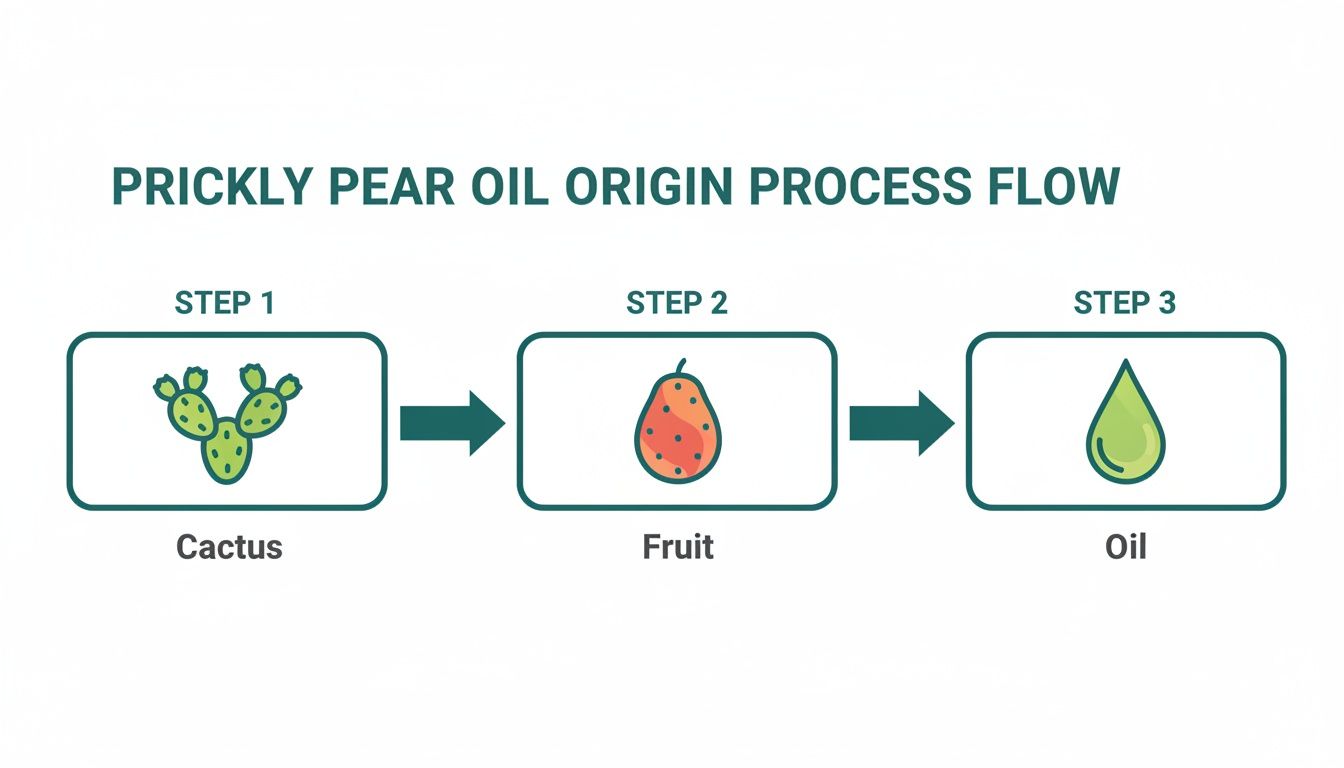
As you can see, it's a straightforward path, but one that is incredibly resource-heavy. The value gets more and more concentrated at each step, resulting in a powerhouse final product.
To put it in perspective, it takes approximately 300 kilograms of seeds to produce just 1 liter of finished oil. That’s a massive input for a small output. Some research even documents yields as low as 5.4%, depending on the region and extraction method. It’s this incredible input-to-output ratio that really shapes its value on the market.
The Art of Cold Pressing
Once the seeds are prepped and ready, they go through a cold-pressing extraction. This is a mechanical process that uses immense pressure to literally squeeze the oil out of the seeds—no heat or chemical solvents allowed. If you've ever had high-quality, cold-pressed olive oil, it's the same idea. The goal is to keep the natural goodness of the ingredient completely intact.
Why is this so important?
- It Preserves Nutrients: Heat is the enemy of delicate fatty acids, vitamins, and antioxidants. Cold-pressing ensures all those compounds that make prickly pear oil so amazing for skin stay potent and active.
- It Maintains Purity: By skipping chemical solvents, the final product is nothing but pure, unadulterated oil. This is a non-negotiable for anyone formulating clean, natural skincare.
- It Guarantees Quality: The oil keeps its natural, subtle scent and beautiful color, which can range from a pale yellow to a soft, inviting green.
This careful method is what locks in all the beautifying properties of the oil. For DIY skincare makers and professionals alike, understanding this process helps you appreciate the true quality of the raw materials you’re working with.
The final oil is a perfect example of the idea that the best things often take the most effort. From the sun-drenched cactus fields to the careful hands that guide its journey, every single step contributes to creating a truly exceptional cosmetic ingredient. When you formulate with an oil this special, you're not just adding an ingredient; you're weaving a story of dedication and natural purity into your products. You can discover more about high-quality cosmetic raw ingredients and see how they can elevate your own creations.
Unlocking the Nutrient Powerhouse for Your Skin
So, what makes prickly pear oil such a secret weapon for beautiful skin? It's not magic; it's all about what's inside. Think of it as a perfect recipe where every ingredient has a crucial job. In this case, the star ingredients are essential fatty acids and some seriously powerful antioxidants.
These components work together beautifully to help skin look and feel its absolute best. Let's skip the complicated science jargon and break down exactly how these nutrients give you that radiant, healthy-looking glow.
The Dynamic Duo: Linoleic Acid and Vitamin E
At the heart of prickly pear oil's power are two key players: Linoleic Acid and Vitamin E. These aren't just trendy buzzwords; they are the fundamental building blocks for skin that looks visibly smooth and feels deeply hydrated.
Linoleic acid is what’s known as an omega-6 essential fatty acid. "Essential" is the important word here—it means our bodies can't make it, so we have to get it from outside sources. For our skin, linoleic acid is a critical part of its natural moisture barrier, the very thing that keeps skin looking plump and hydrated. When that barrier is happy and supported, skin just looks smoother and more luminous. Simple as that.
Then you have Vitamin E, a rockstar antioxidant. In skincare, antioxidants are your skin's personal bodyguards against daily environmental stressors like pollution. This support is key to maintaining a youthful appearance and promoting that vibrant, healthy glow. We see this quality across the board with plant-based ingredients; for instance, you can see similar antioxidant benefits in other well-researched polyphenol-rich oils.
Prickly pear oil boasts one of the highest known concentrations of Vitamin E found in any plant oil—reportedly 150% more than Argan oil. This exceptional antioxidant content is a primary reason it is so highly regarded for promoting a youthful look.
This one-two punch of a barrier-supporting fatty acid and a protective antioxidant is what makes prickly pear oil so incredibly effective. It's not just tackling one skin concern; it offers a multi-faceted approach to nurturing a beautiful complexion.
How Prickly Pear Oil Compares to Other Oils
To really grasp what makes prickly pear oil so special, it helps to see how it stacks up against other popular skincare oils. While oils like Argan and Jojoba are fantastic in their own right, prickly pear oil’s nutrient profile is just exceptionally concentrated, especially in those two key areas we just talked about.
Let's put them side-by-side.
Nutrient Comparison: Prickly Pear Oil vs. Other Popular Oils
This table gives a clear snapshot of why prickly pear oil stands out in a crowded field of amazing botanicals.
| Nutrient | Prickly Pear Oil | Argan Oil | Jojoba Oil |
|---|---|---|---|
| Linoleic Acid | Up to 70% | Approx. 36% | Approx. 5% |
| Vitamin E | Very High | High | Low |
| Texture | Very Lightweight | Lightweight | Medium-Weight |
| Absorption | Fast | Moderate | Moderate |
The numbers don't lie. That extraordinarily high percentage of linoleic acid—up to 70%!—is what truly defines prickly pear oil. This concentration is precisely why it feels so light and absorbs in a flash, and why it's a master at supporting the skin’s moisture barrier without ever feeling heavy or greasy.
Many oils offer incredible properties, but very few can match the specific, high-impact nutrient profile found in this desert treasure. If you're interested in learning about another oil with a unique fatty acid composition, you might find our guide on pomegranate seed oil benefits insightful.
Ultimately, by choosing this oil, you're selecting an ingredient packed with the exact components that support a radiant, smooth, and hydrated appearance, making it an elite choice for any skincare routine.
How to Weave Prickly Pear Oil into Your Daily Rituals
Bringing prickly pear oil into your routine is one of the easiest, most rewarding upgrades you can make. It’s not about adding complicated steps. Because it's so incredibly light and absorbs in a flash, it plays well with everything you’re already using—or works beautifully all on its own.
Whether you're a devoted minimalist or love mixing up your own creations, this oil is a true chameleon. Just a couple of drops can make a world of difference, from a dewy facial serum to a perfect hair smoother. The real magic is just knowing how to use it. Let’s get into the simple, practical ways to let this amazing oil shine for your face, hair, and lashes.
For a Radiant Complexion
Using prickly pear oil on your face is its claim to fame, and for good reason. The texture is just sublime—it sinks right in, leaving a velvety, almost-matte finish that most skin types absolutely love. No greasy feeling, just pure nourishment.
Here are three simple ways to work it into your facial routine:
-
As a Standalone Serum: This is my favorite way to use it at night. After cleansing and toning, warm 2-3 drops between your palms and gently press it into your still-damp skin. Applying it to damp skin is a game-changer; it helps trap that hydration, leaving your face feeling plump, soft, and looking incredibly dewy by morning.
-
As a Moisturizer Booster: Give your favorite cream a little extra oomph. Dispense your moisturizer into your palm, add a single drop of prickly pear oil, and mix them together right before applying. You get an instant infusion of rich fatty acids without making your go-to product feel heavy or greasy.
-
As a Targeted Application: The delicate skin around your eyes and mouth often needs a little extra attention. Use your ring finger to gently tap a tiny bit of oil onto those areas. Its concentrated goodness is perfect for giving these specific zones some extra TLC.
Weaving prickly pear oil into your regimen is about embracing a simple, potent gift from nature. It’s the perfect partner for keeping your skin hydrated and vibrant, no matter how simple or complex your skincare ritual is.
For Lustrous Hair and a Balanced Scalp
The goodness of prickly pear oil doesn’t stop at your skin. Its lightweight nature makes it a fantastic pick for hair care, adding shine and taming flyaways without ever weighing your hair down.
When it comes to hair, remember that less is more. The goal is glossy and smooth, not slick and oily. Always start with the smallest amount, especially if you have fine hair.
Here’s how to get beautiful results:
-
Tame Frizz and Add Shine: Put 1-2 drops of oil in your palm and rub your hands together to warm it up. Lightly skim your hands over the ends of your dry hair. It instantly tames frizz and gives a healthy, polished sheen.
-
Nourish Your Scalp: For a quick pre-shampoo application, massage a few drops directly onto your scalp. Let it sit for about 15-20 minutes to moisturize the skin before you wash your hair like normal. It’s a simple trick for maintaining a comfortable, happy scalp.
For Fuller-Looking Lashes and Brows
Lately, prickly pear oil has become a go-to for conditioning eyelashes and eyebrows. Its dense nutrient profile helps lashes and brows look naturally fuller and more defined over time.
For this, precision and consistency are your best friends.
- Application Method: Grab a clean mascara wand (a spoolie) or a Q-tip and carefully apply a tiny amount of oil to your lashes and brows before bed. Just be careful not to get the oil directly in your eyes.
- Routine: Make it a non-negotiable part of your nightly wind-down. With consistent use, this conditioning treatment helps support healthier, lusher-looking lashes and brows.
Whether you're a professional esthetician seeking a versatile backbar product or a DIY skincare lover, these methods give you a solid playbook for using prickly pear oil to its full, beautiful potential.
A Practical Guide for DIY Skincare Formulators
Alright, for our incredible community of creators, DIY enthusiasts, and skincare pros—this is where the real fun with prickly pear oil begins. Getting to know the technical side of this oil means you can formulate with confidence, creating products that are not just beautiful, but stable and incredibly effective. Let's move past the benefits and get into the nitty-gritty of putting it to work in your own custom skincare.
To really get the most out of prickly pear oil, you first need to know its sweet spot in a formula. The right usage rate ensures the oil can work its magic without messing with your final product's texture or stability. Think of it like adding a powerful, expensive spice to a dish—you only need a little to make a huge impact.
Recommended Usage Rates
Here are some tried-and-true guidelines to get you started on a few common product types. These are fantastic starting points, but don't be afraid to tweak them based on the texture and performance you're aiming for.
- Facial Serums: 2% to 10%. At the higher end, you're creating a truly rich, nourishing oil serum. On the lower end, it acts as a potent booster in a lighter, perhaps water-based, formula.
- Lotions and Creams: 1% to 5%. In this range, it lends a gorgeous, silky feel to emulsions without making them greasy or compromising their stability.
- Hair Conditioners and Masks: 0.5% to 3%. You only need a tiny amount to add shine and smoothness to hair. This makes it a perfect addition to both rinse-off treatments and leave-in conditioners.
Quick formulating tip: Always add delicate oils like prickly pear during the cool-down phase of your emulsion (usually below 40°C or 104°F). This simple step protects its precious fatty acids and antioxidants, making sure your finished product is as powerful as it can be.
Stability and Smart Storage
Prickly pear oil is moderately stable and typically has a shelf life of about 1-2 years if you store it correctly. Protecting your investment is non-negotiable, and its biggest enemies are oxygen, light, and heat.
To get the most out of its lifespan, always keep your oil in a cool, dark place, far away from direct sunlight. An amber or fully opaque glass bottle is your best bet for blocking out light. You can even pop it in the fridge to extend its freshness, though it might get a little cloudy—don't worry, this usually clears up once it returns to room temperature. For a deeper dive into creating stable products, you might find our guides on cosmetic formulation helpful.
The demand for high-quality prickly pear oil is exploding worldwide, and countries like Egypt are becoming major producers. In fact, investment analysis shows the Egyptian market for this oil saw a 17% growth from 2021 to 2022. This boom speaks volumes about its popularity and the painstaking process of cold-pressing and filtering it requires. Read more about the expansion of the prickly pear oil market.
Perfect Pairings for Enhanced Performance
One of the best things about working with prickly pear oil is how beautifully it plays with other high-performance ingredients. Creating smart, synergistic blends is what can take your product from simply "good" to truly exceptional.
Think about pairing it with ingredients like:
- Hyaluronic Acid: This is the ultimate hydration duo. The oil works to lock in all that lovely moisture that hyaluronic acid draws into the skin.
- Squalane: Blending these two creates an exceptionally lightweight, fast-absorbing facial oil that beautifully mimics the skin’s own natural sebum.
- Vitamin C (Ascorbyl Palmitate): For a serious antioxidant cocktail. This oil-soluble form of Vitamin C mixes in perfectly, offering fantastic support against environmental stressors.
Armed with these practical details, you're more than ready to start creating custom skincare that has a truly professional, beautiful touch.
How to Choose High-Quality Prickly Pear Oil
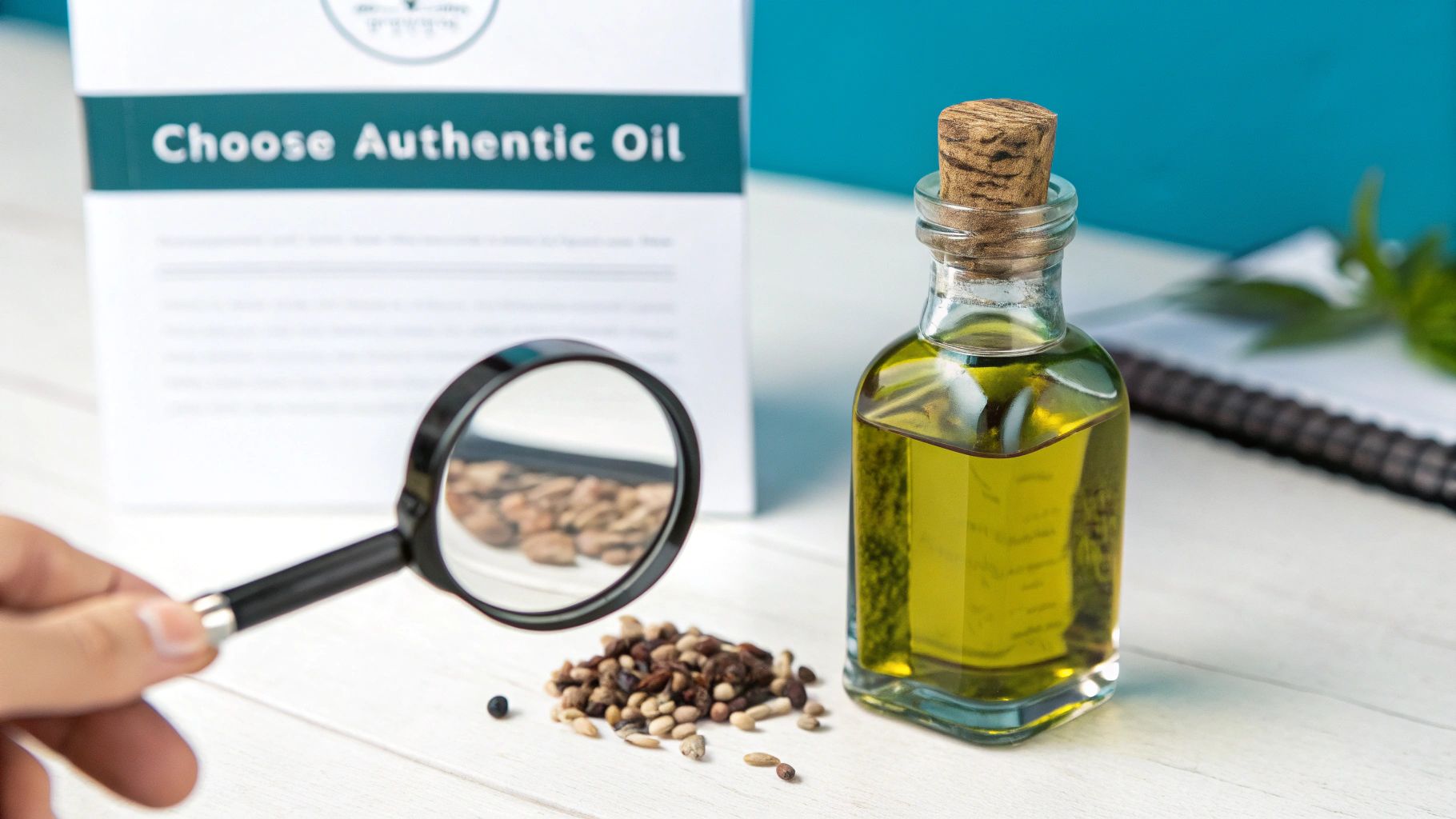 As the secret gets out about prickly pear oil, the market has exploded with choices. Knowing how to tell a genuinely premium product from a pretender is the key to getting the beautiful results you’re after. This guide will help you become a savvy shopper, whether you're buying a finished serum or sourcing the raw ingredient for your own creations.
Don't worry, it's simpler than it sounds once you know the key indicators of quality. With just a few simple checks, you can be confident you’re investing in an authentic, potent oil that will deliver on its promises.
The Cold-Pressed Standard
This is non-negotiable. The single most important factor in a high-quality oil is how it was extracted. You should always look for 100% pure, cold-pressed prickly pear seed oil.
This is a mechanical, heat-free process, and it’s critical because it ensures the oil’s delicate fatty acids and antioxidants stay intact and powerful. Any oil extracted using heat or chemical solvents will be far less effective and might even contain unwanted residues. The term "cold-pressed" is your first and best signal of purity.
Visual and Scent Cues
Your own senses are fantastic tools for vetting an oil. Authentic, unrefined prickly pear oil has a few tell-tale characteristics you can spot once you know what to look for.
- Color: Genuine oil typically has a lovely pale yellow to light greenish hue. If it’s unnaturally dark, that could be a sign of heat damage or oxidation. If it’s completely clear, it may have been overly refined or, worse, diluted.
- Scent: The aroma should be subtle, earthy, and a little nutty—almost like fresh hay. A strong, rancid, or chemical smell is a huge red flag. So is a total lack of scent, which could mean it has been deodorized and stripped of its goodness.
A premium price tag is often a good sign. The immense labor and raw materials required to produce authentic prickly pear seed oil mean it will never be cheap. If a deal seems too good to be true, it likely involves a diluted or inferior product.
Sourcing and Purity
The global demand for prickly pear seed oil has skyrocketed, with the market projected to hit a value of $32.7 million in 2025. North Africa, particularly Morocco and Tunisia, is renowned for producing some of the world's best oil. This is largely driven by discerning consumers in North America and Europe who want high-end, natural ingredients.
Want to geek out on the data? You can explore more on the market's expansion and why sourcing matters.
Finally, just read the label. The only thing on the ingredient list should be Opuntia Ficus-Indica (Prickly Pear) Seed Oil. Steer clear of products with fillers, synthetic fragrances, or other carrier oils listed, as these just dilute the magic. For more tips on choosing safe and effective ingredients, check out our guide on EWG VERIFIED™ skincare brands.
Common Questions Answered
When you're exploring a new ingredient, a few questions are bound to pop up. Here are some straightforward answers to the most common things people ask about prickly pear oil, so you can start using it like a pro.
What Does Prickly Pear Oil Feel Like on the Skin?
Unlike some of the heavier plant oils that can feel like they're just sitting on top of your skin, prickly pear oil is incredibly lightweight and almost silky. It sinks in almost immediately.
You're left with a velvety, non-greasy finish that feels amazing. This quick absorption is what makes it a winner for all skin types—even people who usually run from face oils tend to love it. It's perfect for layering under makeup or your daily moisturizer without that heavy, slick feeling.
Is Prickly Pear Oil Suitable for All Skin Types?
Yes, and that’s one of the best things about it. The versatility of prickly pear oil is a huge part of its appeal, and its balanced profile makes it a fantastic choice for just about everyone.
- For Dry Skin: It delivers serious moisture, helping skin look and feel plump and hydrated.
- For Oily or Combination Skin: Because it's so light and non-comedogenic, it moisturizes without adding to any greasiness.
- For Sensitive Skin: It’s known for being very gentle, offering soothing nourishment that helps keep skin happy.
How Does It Compare to Argan Oil?
This is a great question. While they're both amazing oils from Morocco, they have pretty different personalities. Prickly pear oil is often seen as more of a high-performance cosmetic oil, mainly because it's so nutrient-dense and takes an incredible amount of work to produce.
The biggest difference is in their fatty acid and antioxidant profiles. Prickly pear oil has significantly more linoleic acid and one of the highest concentrations of Vitamin E found in any plant oil—a reported 150% more than Argan oil. This gives it that lighter, faster-absorbing texture and makes it an absolute powerhouse for promoting a youthful look.
Think of it this way: Argan oil is a fantastic daily moisturizer, a true workhorse. Prickly pear oil is more like a potent, concentrated cosmetic oil you bring in for targeted, high-impact results. It’s the special forces of your skincare routine.
Ready to see what premium botanical ingredients can do for your skin? At Skin Perfection, we offer a curated selection of high-performance actives and skincare essentials to elevate your routine. Explore our collections and discover your path to radiant skin today.
Find your perfect skincare solution at naturalorganicskincare.com