

 Buy with Prime



The most popular advice about organic stem cell skin care starts with the wrong image: living cells in a jar, ready to rebuild human skin. That isn't what these products contain. The commercial category is built on plant-derived extracts, and the useful question isn't whether a serum can “renew” your cells like a medical treatment. It's whether the formula contains stable, well-characterized botanical compounds that support the skin's existing cosmetic appearance.
That distinction explains both the appeal and the confusion. Plant stem cell products have become a large global skincare segment, while their name still invites science-fiction expectations. A careful buyer can appreciate the biology, evaluate the formula, and avoid claims that go beyond what a cosmetic product can reasonably promise.
Table of Contents
- What Organic Stem Cell Skin Care Actually Is
- How Plant Stem Cell Extracts Work on Skin
- Plant Versus Human Stem Cells in Skincare
- Real-World Examples of Plant Stem Cell Ingredients
- Navigating Regulatory Requirements and Platform Rules
- Evaluating Claims and Choosing Quality Products
What Organic Stem Cell Skin Care Actually Is
A customer sees “stem cell serum” on a shelf and imagines a biological transplant. A formulator sees something much more practical: an extract from plant meristem tissue, processed into a cosmetic ingredient. Meristems are areas of young, undifferentiated plant cells found in growth regions. Apples, grapevines, orchids, and edelweiss are examples associated with this type of ingredient.
The extract isn't alive by the time it reaches a finished serum or lotion. It contains compounds produced by the plant, including antioxidants, polyphenols, and stress-response metabolites. Those compounds may help the skin manage oxidative stress and maintain a smoother, more hydrated appearance. They don't turn into human skin cells, and they don't replace epidermal stem cells.
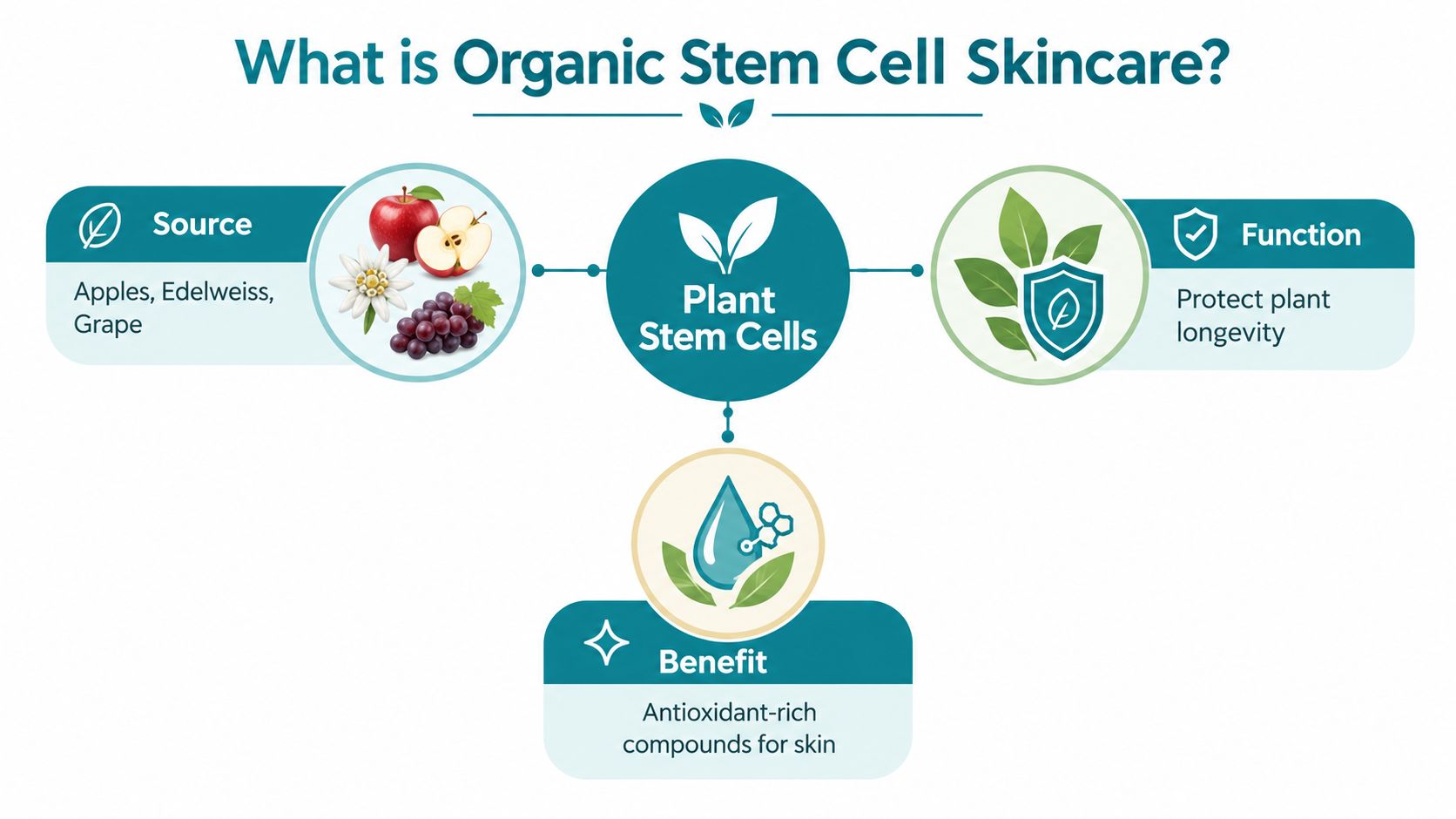
The useful analogy: You're applying the plant's survival chemistry, not planting living cells in your skin.
The category's commercial scale reflects consumer interest in botanical actives, not proof of literal cellular regeneration. One industry report estimates the stem cell beauty product market at USD 1.91 billion in 2025, with a projection of USD 5.81 billion by 2034 at a 13.2% CAGR. The same source identifies plant-derived products as the dominant source in 2025, at 58.7%, or roughly USD 2.23 billion. Another estimate places plant-derived products at 70.9% of the worldwide market and USD 2.26 billion in 2025. These figures are market estimates, not clinical proof, but they show that plant-based stem cell language has moved well beyond a niche label. (Industry market estimate)
For a closer look at botanical sources and their cosmetic role, explore plant stem cells for skin. The central idea is simple: a product can be plant-powered and cosmetic without containing living human cells.
How Plant Stem Cell Extracts Work on Skin
Plant stem cell extracts work indirectly. Their metabolites can help scavenge free radicals, bind certain transition metals, and reduce oxidative reactions associated with environmental exposure. UV radiation can create oxidative stress in skin cells and surrounding structures, so antioxidant-rich ingredients are often used to support a healthier-looking surface.
The skin's biology gives this mechanism a useful context. Keratinocytes make up much of the epidermis, while fibroblasts in the dermis contribute to the matrix that gives skin structure. Laboratory and limited clinical work has examined whether plant-derived extracts protect keratinocytes, support fibroblast activity, and improve visible signs such as wrinkle appearance and skin density. The evidence is promising in places, but it isn't uniform across every extract or finished product.
A review of the field describes the early cosmetic wave as plant stem cell extracts rather than living human stem cells. It also records earlier research involving fibroblasts, keratinocytes, and isolated hair follicles. Apple stem cell technology entered mainstream skincare in 2008, after extracts from the Uttwiler Spätlauber apple were associated with stimulating and protective effects on human skin cells. The same review reports 8% to 15% reductions in wrinkle depth after 2 to 4 weeks for certain apple stem cell formulations. Those results belong to the formulations studied, so they shouldn't be transferred automatically to every product carrying “apple stem cell” language. (Scientific review of plant stem cell cosmetics)
Why the formula matters more than the label
A botanical extract can lose activity through oxygen exposure, light, unsuitable pH, or poor packaging. That's why efficacy is formulation-dependent, not ingredient-name-dependent. A label listing Malus Domestica Fruit Cell Culture Extract tells you the source, but it doesn't reveal whether the formula has a reproducible marker profile, sufficient concentration, or adequate stability.
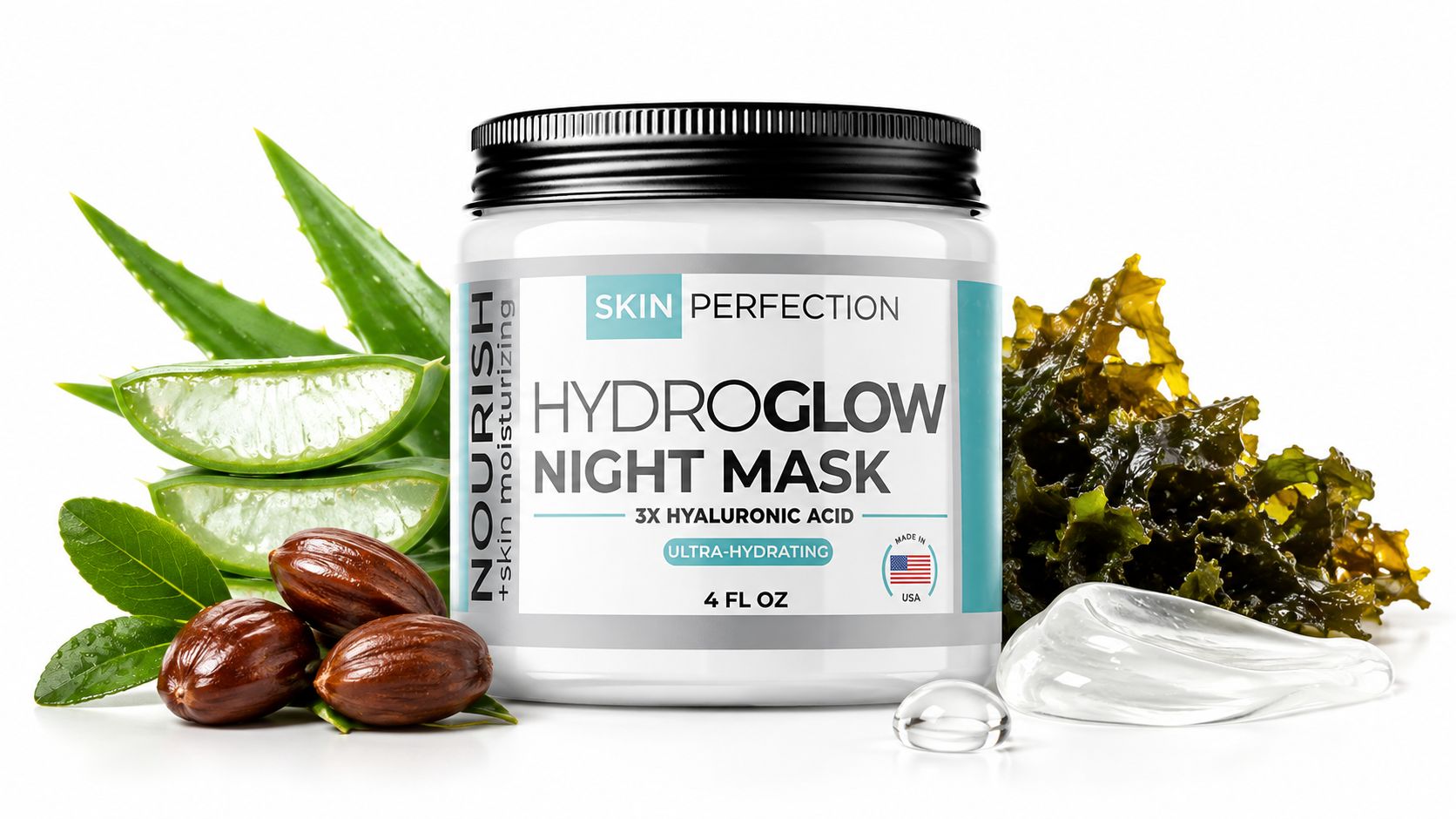
A product such as HydroGlow Anti-Aging Night Mask illustrates a broader formulation principle. Its listed ingredients include three types of hyaluronic acid, polyglutamic acid, sea silt ferment, algae extract, jojoba, squalane, aloe, glycerin, and triglycerides. Those ingredients are positioned around hydration, conditioning, and visible texture, rather than being treated as interchangeable proof of stem cell activity.
The distinction between topical plant extracts and clinical cell-based approaches also matters. Readers comparing cosmetic ingredients with medical procedures may find a plain-language overview of how growth factor therapy works useful, because growth factor therapies and botanical extracts belong to different categories with different biological and regulatory contexts. For additional ingredient education, see natural ingredients for skin.
Plant Versus Human Stem Cells in Skincare
Plant and human stem cells aren't two interchangeable versions of the same cosmetic ingredient. Plant extracts are used because they provide stable, topical compounds. Human stem cells aren't added to ordinary skincare products as living regenerative agents.
The first problem is viability. Processing, preservation, storage, and exposure to the outside environment would prevent a cosmetic jar from functioning like a controlled biological tissue culture. Peer-reviewed reviews note that the plant cells associated with these formulations are already dead, so the activity comes from metabolites such as antioxidants, polyphenols, and stress-response compounds. The skin receives chemistry derived from the plant, not living plant or human cells. (Peer-reviewed review of plant stem cell extracts)
The second problem is biological integration. Even if living human cells could be kept viable in a topical product, cells don't automatically attach to the correct tissue, communicate with neighboring cells, or behave properly on the skin surface. They require a specific environment, signaling network, and controlled conditions. A moisturizer can't recreate those requirements.
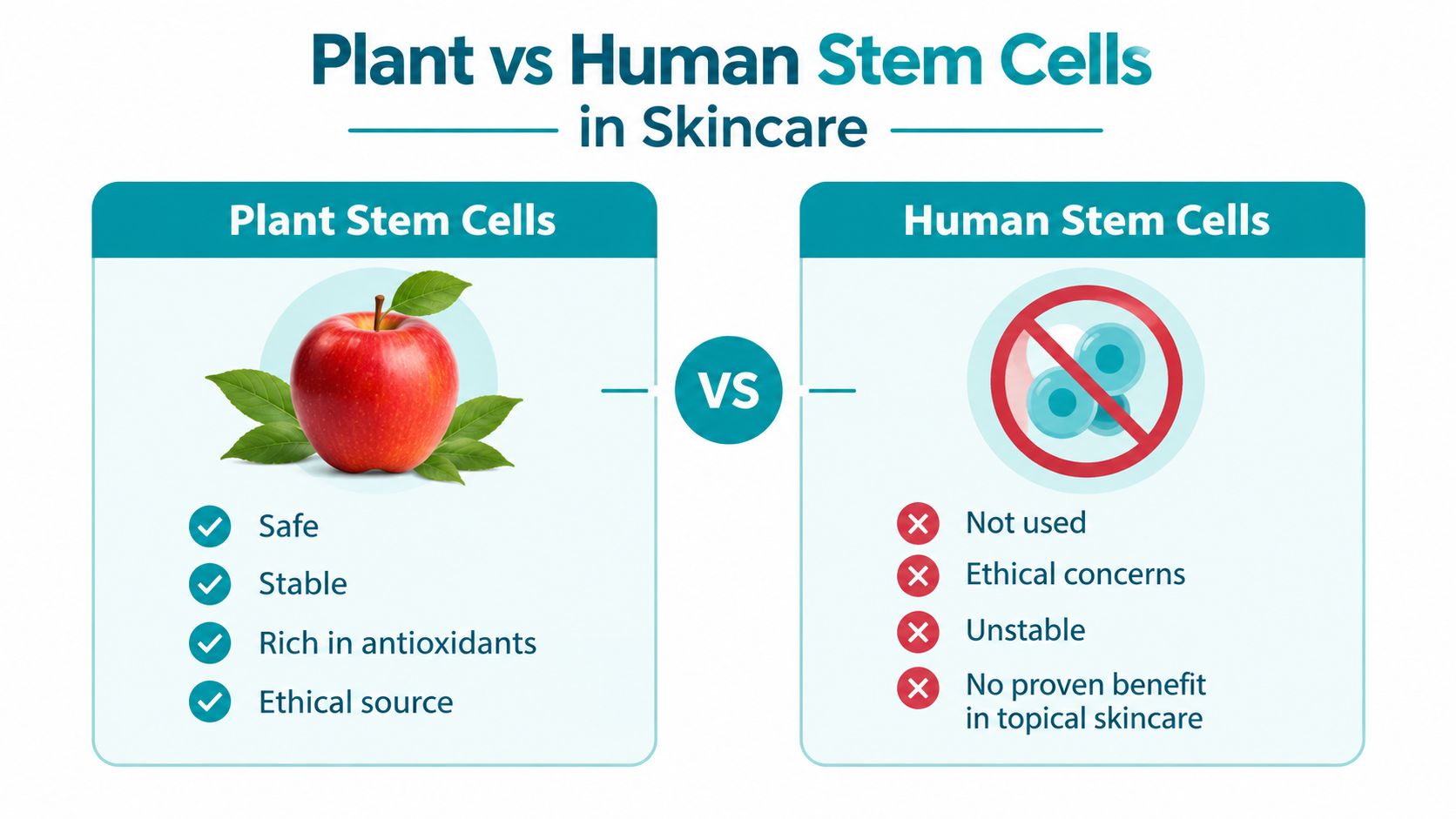
| Plant-derived extracts | Human stem cells |
|---|---|
| Provide botanical metabolites for topical cosmetic use | Aren't used as living regenerative cells in ordinary cosmetics |
| Can contribute antioxidant and conditioning properties | Would raise substantial safety, ethical, and regulatory concerns |
| Fit cosmetic formulation and preservation systems | Would require biological conditions unavailable in a standard jar |
| May support the appearance of texture and visible aging | Have no established role as a live topical cosmetic ingredient |
The comparison explains why the category developed around apples, grapes, and alpine plants. Plants produce protective compounds to survive environmental stress, and formulators can isolate or concentrate some of those compounds. The extract doesn't become part of your skin's cellular identity. It interacts with the skin's surface and existing biochemical environment.
Readers interested in adjacent ingredient categories can browse growth factors for skin, while keeping the distinction clear. A topical botanical extract, a cosmetic peptide, and a medical cell-based procedure may all rely on advanced biology in their explanations, but they aren't equivalent products.
Real-World Examples of Plant Stem Cell Ingredients
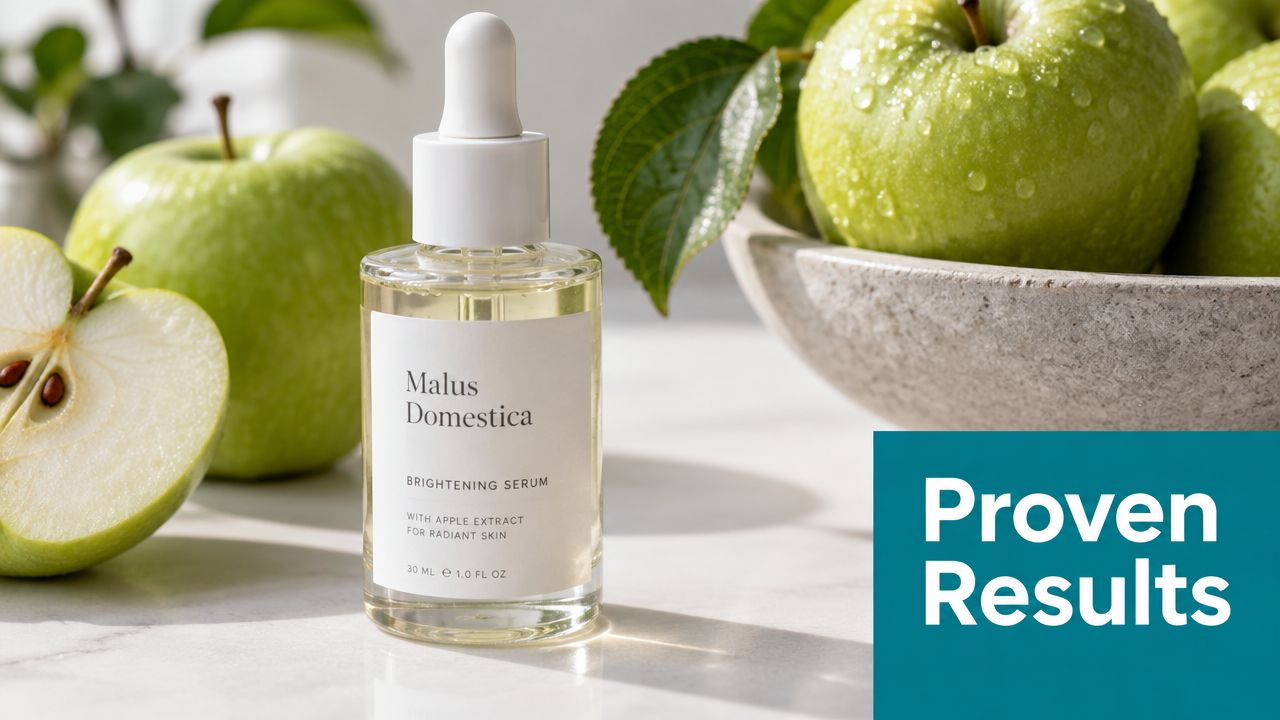
Ingredient labels become easier to understand when you connect the botanical name with the formulation job. The best-known example is Malus Domestica Fruit Cell Culture Extract, commonly associated with the Uttwiler Spätlauber apple. Its story involves a hardy apple variety and compounds studied for protective and stimulating effects on human skin cells, but the finished cosmetic still contains an extract rather than living apple cells.
Edelweiss is another familiar source. Leontopodium alpinum grows in demanding alpine conditions and produces flavonoids and phenolic compounds that help protect the plant. In a cosmetic formula, those compounds are relevant because antioxidant and UV-related activity can support the appearance of skin exposed to environmental stress.
What to look for on a label
You may also see grape stem cell extract or sea buckthorn stem cell extract. The source plant matters, but it's only the beginning of evaluation. Two products can use similar botanical language and perform differently because their extraction methods, marker compounds, concentrations, packaging, and supporting ingredients differ.
Use this short label-reading sequence:
- Identify the INCI name. Look for the actual botanical ingredient rather than relying only on front-label phrases such as “plant stem cell complex.”
- Check standardization details. A serious technical dossier should identify marker compounds or a reproducible extract profile.
- Look for stability information. Antioxidant-rich ingredients need protection from light, air, heat, and unsuitable pH.
- Separate evidence types. Cell-culture protection doesn't equal a measured result on human skin, and a supplier summary isn't the same as independent clinical research.
- Assess the whole formula. Humectants, emollients, peptides, preservatives, and packaging can influence the final cosmetic experience.
A recent review reports potential links between plant stem cell extracts and skin renewal, collagen production, UV protection, and anti-inflammatory effects, while older literature describes protection of human keratinocytes in culture and human skin in vivo from solar UV exposure. The same evidence base remains uneven across products, so it's more accurate to say that these actives may support visible texture, density, and wrinkle appearance than to promise a universal result. (Review of plant stem cell cosmetic actives)
For ingredient background, edelweiss flower extract offers a useful example of how a plant's survival chemistry can become part of a cosmetic formulation. The plant story helps explain the ingredient, but standardization and finished-product testing determine how much confidence you should place in the formula.
Navigating Regulatory Requirements and Platform Rules
A compliant product description starts with a basic classification question: is the wording describing appearance, or is it claiming a medical effect? In the United States, the FDA says cosmetic labels and advertising must be truthful and not misleading. It also explains that products marketed to treat or prevent disease, or to affect the structure or function of the body, including the skin, are treated as drugs under U.S. law and must meet drug requirements. (FDA guidance on cosmetic claims)
That rule applies to the whole presentation, not just one sentence. Product names, descriptions, images, testimonials, and promotional context can work together to create an implied claim. A cosmetic listing should stay with language about cleansing, moisturizing, conditioning, softening, smoothing the look of texture, or improving the appearance of visible signs of aging.
Skin Perfection follows this approach for its skincare products and lotion-making supplies. The company's products beautify the skin, while listings avoid statements that a product fixes, repairs, or heals skin. This isn't merely cautious wording. It keeps the product's cosmetic purpose aligned with the claims being made.
The practical label checklist
FDA labeling guidance requires consumer cosmetics to identify the product name, describe its nature or use, and show an accurate net quantity. Retail cosmetics also require an ingredient declaration. Some required statements may apply to inner as well as outer packaging, while ingredient labeling and net quantity generally appear on the outer principal display panel. (FDA cosmetic labeling requirements)
The FDA also says that terms such as “organic” can appear as descriptive cosmetic labeling, but they must not create a false or misleading impression. A cosmetic must not suggest that it's FDA approved. Registration or participation in a voluntary program doesn't turn a cosmetic into an FDA-approved product. (FDA cosmetic labeling guidance)
Etsy adds its own platform restrictions. Regardless of whether a seller believes a statement is accurate or legal, Etsy prohibits explicit or implied claims that an item can:
- Treat, mitigate, diagnose, or cure serious disease: This includes conditions such as cancer or heart disease.
- Address sexual dysfunction: Listings can't claim to treat, mitigate, diagnose, or cure sexual dysfunction or impotence.
- Act like restricted medicines: Products can't be presented as, or as effective as, an analgesic, antibiotic, antiseptic, antiviral, anti-inflammatory, steroid, vaccine, or decongestant.
- Replace prescription drugs: A listing can't imply that an item is, or works like, a prescription drug.
- Carry FDA approval: Etsy prohibits claims that an item is FDA-approved. (Etsy Medical Claims policy)
Evaluating Claims and Choosing Quality Products
The phrase “plant stem cell” is a starting point, not a quality certificate. A careful buyer should ask what the extract contains, how the manufacturer protects it, and what kind of evidence supports the finished formula. Standardization, stability, and realistic claim language are more informative than futuristic imagery.
Look for a reproducible marker profile, quantified antioxidant capacity, and evidence tied to a defined concentration and exposure period. Third-party testing can add confidence when it confirms identity, purity, or batch consistency. Transparent ingredient lists also help you judge whether the product's main benefit is likely to come from the plant extract, hydration ingredients, emollients, peptides, or a combination.
A practical review can follow this pattern:
- Start with the promise. “Improves the appearance of fine lines” is a cosmetic statement. “Reverses damage” or “heals wounds” moves toward a therapeutic implication and deserves caution.
- Check the evidence level. Cell studies can explain a mechanism, but they don't establish the same outcome on every person's skin.
- Inspect the packaging. Light- and oxygen-sensitive compounds need suitable protection to remain useful through the product's life.
- Consider the use case. Facial anti-aging has received more attention than hairline thinning, lashes, brows, or post-procedure cosmetic care.
- Compare the full formula. A botanical extract may sit alongside peptides, barrier-support ingredients, or plant-derived exosome technologies, and the combination changes the product's behavior.
Public coverage shows that plant stem cell ingredients are moving into broader repair-oriented and longevity-focused cosmetic concepts, including scalp, lash, brow, and post-procedure discussions. Yet consumer explanations and direct evidence for those uses remain less developed than facial wrinkle literature. Treat those applications as areas where education and careful claim substantiation matter, not as automatic extensions of facial skincare findings. (Coverage of emerging skincare trends)
For general moisturizer selection, REVETIX anti aging moisturizer tips can provide another perspective on evaluating hydration-focused products without treating every anti-aging phrase as proof of a medical outcome. You can also compare ingredient transparency and certification information through EWG Verified skincare brands.
Skin Perfection offers natural and organic skincare products, facial care, moisturizers, serums, and lotion-making supplies for skincare enthusiasts, DIY formulators, and professionals. Visit Skin Perfection to review plant-derived ingredients and cosmetic formulation supplies, then choose products whose evidence, ingredients, and claims match your actual skincare goals.