

 Buy with Prime



Ever wondered about the secret to truly supple, hydrated skin? The answer might be hiding in plain sight. We're talking about beta-glucan for skin, a remarkable, naturally-derived polysaccharide that's an absolute powerhouse hydrator, helping to give your complexion that plump, dewy look we all crave. It's one of skincare's unsung heroes, and it's finally getting the attention it deserves.
Unveiling the Power of Beta-Glucan
Think of beta-glucan as a super-sponge for your skin. This unique ingredient, found in natural sources like oats, yeast, and mushrooms, is essentially a long chain of glucose molecules. Its specific structure is what allows it to grab onto water and hold it tight, delivering deep hydration right where your skin needs it most.
But it doesn't just stop at moisturizing. Beta-glucan also creates a fine, invisible film on the skin's surface. This delicate layer acts like a breathable shield, locking in all that lovely hydration while supporting your skin's natural defenses against daily environmental stressors.
A Closer Look at its Benefits
This dual-action approach is precisely what makes beta-glucan such a fantastic ingredient for both skincare lovers and DIY formulators. It tackles hydration from two different angles:
- As a Humectant: It actively draws moisture from the air to the skin, helping to keep it looking and feeling hydrated.
- As a Barrier Supporter: It forms that protective layer to minimize transepidermal water loss (TEWL), which is just a fancy way of saying it stops moisture from escaping your skin.
To get a clearer picture of how ingredients like beta-glucan go from a lab concept to a finished product, it's interesting to look at the controlled cosmetic laboratory environments where they are carefully processed and perfected.
For a quick rundown of what beta-glucan brings to the table, here's a simple breakdown:
Beta-Glucan at a Glance
| Attribute | Description |
|---|---|
| Ingredient Type | Polysaccharide (complex sugar) |
| Primary Function | Humectant, Soothing Agent, Film-Former |
| Key Benefits | Deep hydration, barrier support, reduces the appearance of redness, plumps skin |
| Natural Sources | Oats, barley, yeast, fungi (mushrooms), seaweed |
| Best For | Dry, dehydrated, sensitive, compromised, and mature skin types |
| Pairs Well With | Hyaluronic Acid, Niacinamide, Vitamin C, Retinoids |
This table shows just how versatile this ingredient is, fitting seamlessly into almost any skincare routine to boost hydration and resilience.
And the science backs up what we see in the mirror. One study showed that after just four weeks of using a beta-glucan product, epidermal hydration shot up by 40%, while water loss (TEWL) dropped by an impressive 25%.
This makes it an absolute must-have for anyone aiming for that radiant, healthy-looking glow. If you're keen on learning about other high-performance ingredients, you’ll love our guide to the best natural ingredients for skin. Beta-glucan's gentle yet powerful nature really sets the stage for beautifully happy skin.
How Beta-Glucan Nurtures a Healthy-Looking Complexion
The science behind how beta-glucan works for your skin is fascinating, but also beautifully simple. It all boils down to its unique molecular structure, which is quite large. Because of its size, it doesn't just sink into your skin and disappear; instead, it settles right on the surface to get some of its most important work done.
Think of it as creating a delicate, breathable film over your complexion. This isn't some heavy, pore-clogging layer, but more like an ultra-fine mesh that acts as a ‘second skin.’ Its main job? To lock in moisture and stop the natural evaporation of water from your skin throughout the day.
This film-forming power is key for keeping your skin hydrated. By creating this protective layer, beta-glucan helps your skin feel soft, plump, and dewy for much longer. It's a truly elegant way to support your skin's own ability to hold onto moisture.
Fortifying Your Skin's Surface
But beta-glucan does more than just seal in moisture. It also plays a supportive role for the cells on the skin’s outermost layer, the epidermis. It interacts with the key cells known as keratinocytes—the primary building blocks of your skin’s surface—helping to create an environment where they can function at their best.
By supporting these essential surface cells, beta-glucan helps fortify the skin’s appearance from the outside in. This reinforcement makes your complexion look smoother and feel more resilient against all the environmental stressors you face daily. A well-supported surface is fundamental to achieving that healthy-looking glow. If you want to dive deeper into this topic, check out our guide on how to strengthen your skin barrier.
You can think of beta-glucan as a personal trainer for your skin's surface. It doesn’t do the work for your skin, but rather supports its natural processes, encouraging it to be its best, most resilient self.
For estheticians and DIY skincare makers, this foundational knowledge is invaluable. Understanding why beta-glucan is so effective lets you incorporate it into your formulations with real purpose, whether you're mixing up a soothing serum or a deeply hydrating moisturizer.
What This Means for Your Skin
When you combine that surface hydration with cellular support, you get visible and tangible results. Here’s a quick rundown of what beta-glucan helps promote:
- Lasting Hydration: Forms a surface film to lock in water, keeping skin looking plump and fresh.
- Enhanced Resilience: Supports epidermal cells, making the skin appear more robust and less reactive.
- Smoother Texture: By keeping skin hydrated and supporting its surface, it contributes to a smoother look and feel.
Ultimately, beta-glucan works in total harmony with your skin’s own biology. It helps maintain a balanced, hydrated environment—the cornerstone of any effective skincare philosophy. This makes it a dependable ingredient for anyone looking to achieve a calm, comfortable, and radiant complexion.
Comparing Beta-Glucan with Other Hydrating Ingredients
In the world of skincare, a few key players always get the spotlight for hydration. But how does beta-glucan for skin really stack up against industry darlings like hyaluronic acid and glycerin? While all three are fantastic humectants, beta-glucan brings some unique and powerful properties to the table, making it a standout choice for formulators and skincare lovers looking for something more.
The biggest difference comes down to their molecular structure and size. This isn't just boring science—it directly impacts how they feel on the skin and the way they deliver that much-needed moisture. Beta-glucan, being a larger molecule, is a master at forming a delicate, breathable film right on the skin's surface. Think of it as a super-fine, invisible mesh that locks in hydration.
This visual guide breaks down how beta-glucan works its magic on the skin's surface and barrier.
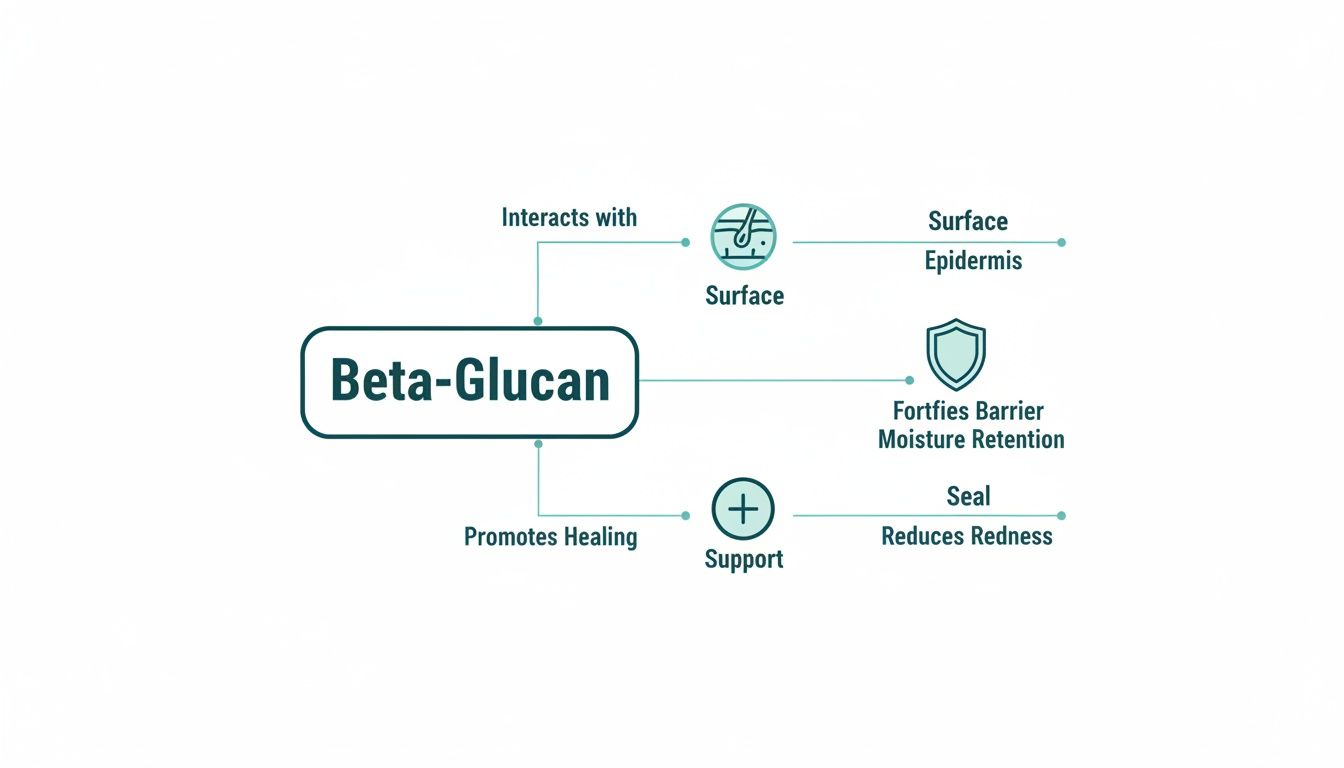
As you can see, beta-glucan creates a seal that helps support the skin’s natural moisture barrier, keeping the good stuff in and the bad stuff out.
A Head-to-Head Comparison
To really get a feel for what sets these hydrators apart, it helps to put them side-by-side. Each one brings something different to your formulation, and knowing these nuances is the secret to creating products that truly deliver.
Hyaluronic acid is famous for its incredible ability to bind water, but some studies suggest beta-glucan might actually be even more effective at hydrating the skin. Research shows it can provide deep, lasting moisture that leaves skin looking plump and feeling comfortable all day. If you want to dive deeper into this popular hydrator, check out our guide on low molecular weight hyaluronic acid.
The magic of beta-glucan is its double-duty performance. It doesn't just pull moisture into the skin like other humectants; it also forms a protective layer to stop that moisture from escaping. It's a complete hydration system in one ingredient.
Let's break it down even further to see how these ingredients compare across the most important features. This will make it crystal clear why beta-glucan is such a prized ingredient in modern skincare.
Hydration Showdown Beta-Glucan vs Hyaluronic Acid vs Glycerin
When you're crafting a formula, choosing the right hydrator is everything. It determines the product's feel, performance, and ultimate benefit for the skin. Here’s a quick look at how our top three contenders measure up against each other.
| Feature | Beta-Glucan | Hyaluronic Acid | Glycerin |
|---|---|---|---|
| Source | Oats, Yeast, Mushrooms | Bio-fermentation | Plant or Synthetic |
| Molecular Size | Very Large | Varies (High & Low Weight) | Very Small |
| Primary Benefit | Deep hydration, soothing, and barrier support. | Plumps skin by drawing in water. | Effective, simple surface hydration. |
| Skin Feel | Silky, smooth, and non-sticky. | Can feel slightly tacky depending on concentration. | Can feel sticky at higher concentrations. |
| Ideal For | Soothing sensitive skin and providing long-lasting moisture. | Immediate plumping and surface hydration. | Basic, cost-effective hydration for many formulas. |
As the table shows, each ingredient has its own lane. For DIY formulators, the choice really boils down to your end goal. Are you looking for the deep, soothing, long-term hydration that beta-glucan offers? Or is the quick, surface-plumping effect of hyaluronic acid what your formula needs? Understanding these strengths is your key to creating something truly special.
How to Incorporate Beta-Glucan into Your Skincare Routine
So, you're ready to bring beta-glucan into your daily life? Good news: it's incredibly easy. Whether you prefer grabbing a finished product off the shelf or enjoy the creativity of making your own, beta-glucan plays nicely with almost any routine.
If you’re going the ready-made route, you’ll find this powerhouse ingredient in serums, moisturizers, and face masks. These formulas are designed to give your skin a concentrated dose of hydration and soothing goodness without any extra effort on your part.
To get the most out of it, try applying your beta-glucan product after cleansing and toning but before any heavier creams or oils. This lets it get right to work, forming that protective, hydrating film on the skin's surface and locking in moisture from everything you apply afterward. If you're just starting to build a solid regimen, our guide to a skincare routine for beginners is a great place to start.
Formulating with Beta-Glucan
For all the DIY skincare creators out there, working with beta-glucan is a dream. It’s stable, cooperative, and gives your creations a silky, luxurious feel while packing a serious performance punch.
When you're mixing up your own formulas, a usage rate between 1% and 5% is the sweet spot. You’ll want to dissolve it in the water phase of your creation. A little gentle heat can help it dissolve more easily, transforming it into a beautiful, smooth gel.
Here's a pro tip: think of it like making a gravy or sauce. Sprinkle the beta-glucan powder into your water while stirring constantly. This simple trick prevents clumping and ensures you get that perfectly uniform, silky texture.
Beta-glucan is wonderfully cooperative and pairs beautifully with other high-performance actives. In fact, it can even boost their effects, letting you create a truly personalized product.
- Peptides: Beta-glucan’s soothing nature is the perfect partner for the firming action of peptides, creating a fantastic combination for mature skin concerns.
- Antioxidants: When you mix it with antioxidants like Vitamin C, you help fortify the skin’s defenses against daily environmental stressors.
- Plant Stem Cells: This duo offers a potent approach to maintaining a youthful complexion, blending deep hydration with powerful botanical actives.
Learning how to blend ingredients is a core skill for any formulator. The process is a lot like creating your own homemade body butter, where a little precision and thoughtful pairings result in a truly beautiful final product.
Why Beta-Glucan Is Your Sensitive Skin's Best Friend
If you're dealing with sensitive or reactive skin, you know the struggle. You need ingredients that are incredibly gentle but also seriously effective. This is exactly where beta-glucan for skin makes its grand entrance. It brings a uniquely comforting quality, making it a perfect match for skin that's crying out for a little extra TLC.
Think of beta-glucan as a soft, soothing blanket for your stressed-out skin. Its main job is to support your skin's natural moisture barrier, and a happy, healthy barrier is the key to keeping your skin looking calm and feeling comfortable.
When your skin’s defenses are properly reinforced, it’s much less vulnerable to the visible effects of environmental bullies like pollution or sudden weather changes. This barrier support is what helps dial down the appearance of redness, leaving you with a more even and balanced skin tone.
How It Calms and Balances Your Complexion
Finding the right ingredients when your skin is easily upset can feel like a full-time job. Beta-glucan is such a fantastic choice because it works with your skin, not against it, delivering its calming benefits without causing any drama. That gentle touch makes it a go-to ingredient for daily use in any routine focused on keeping skin looking serene.
It's no surprise that both estheticians and DIY skincare lovers often reach for beta-glucan when mixing up formulas for delicate complexions. Adding it to a serum or cream can instantly elevate the product, providing that soothing touch that sensitive skin types will absolutely love.
By focusing on barrier support, beta-glucan helps the skin maintain its own equilibrium. This proactive approach is key to achieving a complexion that not only looks serene but feels resilient and comfortable day after day.
This supportive power isn't just talk. For instance, studies on topical fungal beta-glucan have shown just how well it can support the skin's natural appearance. In one model, a specific type of beta-glucan led to 22% better closure and 80% vascular regeneration compared to oat beta-glucan. That’s some serious support! You can read more about these biomimetic skin support findings.
Key Soothing Attributes of Beta-Glucan
The calming magic of beta-glucan comes down to a few key functions that work together to promote a happy, balanced complexion. Once you understand these, you'll see why it's such a superstar for sensitive skin.
- Barrier Reinforcement: It forms a super lightweight, breathable film on the skin's surface. This helps lock in precious moisture while supporting your skin's natural defenses.
- Deep Hydration: As a humectant, it's a moisture magnet, pulling hydration into the skin. This keeps it looking plump and feeling comfortable, which is crucial for getting rid of that tight, dry feeling.
- Reduces Visible Redness: By shoring up the skin barrier, it helps minimize the look of redness, leading to a much calmer and more uniform skin tone.
Bringing beta-glucan into your daily routine is a simple way to get that visibly soothed complexion you've been dreaming of. And if you’re looking for more ways to care for delicate skin, don’t miss our 5 essential skincare tips for sensitive skin. It's a truly versatile ingredient that provides the gentle but effective support that sensitive skin needs to thrive.
Got questions about adding beta-glucan to your skincare lineup? You're not alone. It's a fantastic ingredient, but figuring out exactly how to fit it into your routine is what really unlocks its magic.
We've rounded up some of the most common questions we hear. Whether you're a DIY pro or just looking to give your skin a boost, these answers will help you use this amazing hydrator like an expert.
Is Beta-Glucan Good for Oily and Acne-Prone Skin Types?
Absolutely. One of the best things about beta-glucan is its versatility. It plays well with every skin type, including oily and acne-prone complexions.
It’s a top-tier choice because it’s a non-comedogenic humectant. That’s just a fancy way of saying it pulls moisture into the skin without clogging pores or feeling heavy. For oily skin, proper hydration is a game-changer, as it can help signal your skin to chill out on oil production. A lightweight beta-glucan serum can leave your skin feeling refreshed and balanced—never greasy.
Can I Use Beta-Glucan with Active Ingredients Like Retinoids?
Yes, and you absolutely should! Beta-glucan is the ultimate team player in any skincare routine, especially when you're using more intense active ingredients.
When you're using potentially irritating actives like retinoids or exfoliating acids (think AHAs and BHAs), beta-glucan acts as a soothing buffer. It helps keep your skin barrier happy and calm, letting you get all the benefits of your potent ingredients with less of the drama.
As a DIY formulator, you can confidently add beta-glucan to pretty much any creation. It works beautifully in serums with peptides, antioxidants like Vitamin C, and niacinamide to boost hydration and add that soothing touch.
This makes beta-glucan a strategic pick for creating elegant, well-rounded formulas that feel incredible on the skin.
What Is the Difference Between Beta-Glucan from Oats and Mushrooms?
While all beta-glucans are amazing hydrators, their source can give them slightly different molecular structures and, in turn, some unique secondary benefits. Think of them as cousins—related, but with their own distinct personalities.
Here’s a quick rundown of the most common sources:
- Oat Beta-Glucan: This is the one you’ve probably heard of most. It’s famous for its incredible soothing and skin-softening properties, making it a go-to for calming the appearance of irritated skin.
- Mushroom-Derived Beta-Glucans: Often sourced from fungi like Reishi or Shiitake, these are celebrated for their antioxidant muscle, helping skin stand up to environmental stress.
- Yeast-Derived Beta-Glucans: This type is also a powerhouse for supporting the skin's natural resilience and promoting a healthy, strong complexion.
For most people, the core benefits of deep hydration and barrier support are solid across the board. The specific source you choose often just comes down to the extra little perks you want in your final product.
How Soon Can I Expect to See Results When Using Beta-Glucan?
This is the fun part. Beta-glucan offers some pretty instant gratification. You can often feel its hydrating and smoothing effects almost immediately after you put it on. Your skin will likely feel softer, plumper, and calmer right away.
For more noticeable improvements in hydration and overall texture, most people see a real difference within the first one to two weeks of daily use. Some studies have even clocked significant hydration boosts in as little as seven days. For those lasting benefits—like better skin resilience and a smoother look—give it several weeks of consistent use to really see it shine.
At Skin Perfection, we are dedicated to providing you with the highest quality ingredients to create skincare that delivers beautiful results. Explore our premium selection of lotion-making supplies and ready-made products to start your journey toward a more radiant complexion today. Discover more at https://www.naturalorganicskincare.com.