

 Buy with Prime
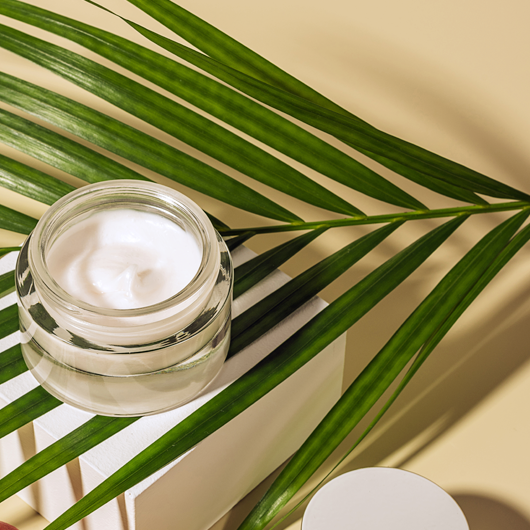


The most repeated advice about copper peptides with vitamin C is also the least useful version: “Never use them together.” That rule treats every vitamin C formula as if it were the same molecule and every routine as if it involved mixing two liquids in one bottle. The practical question is narrower: Which form of vitamin C are you using, at what pH, and are the two products touching in the same application step?
For most routines, the conservative approach is simple. Use an acidic L-ascorbic acid product in the morning and copper peptides in the evening. That schedule respects the chemistry without forcing you to choose between two cosmetic actives. More stable vitamin C derivatives may behave differently, but “different” doesn't automatically mean proven compatible in every formula. Product design, pH, solvents, packaging, and ingredient lists still matter.
Table of Contents
- Why the Blanket Ban on Mixing Is Misleading
- The Redox Chemistry Behind the Conflict
- pH Windows and Stability Mismatches
- How to Layer and Time These Actives Safely
- What the Clinical Evidence Actually Shows
- Formulation Scenarios for DIYers and Professionals
- Common Mistakes and a Quick Decision Checklist
Why the Blanket Ban on Mixing Is Misleading
A blanket ban confuses same-step contact with same-day use. Copper peptides and vitamin C can belong in one carefully planned routine, but directly layering a copper peptide serum with a low-pH L-ascorbic acid serum creates a formulation concern that deserves attention. Separating them by routine, rather than abandoning one ingredient, is usually the more sensible starting point.
The distinction matters because “vitamin C” is a category name used for multiple cosmetic ingredients. L-ascorbic acid, often listed as ascorbic acid or pure vitamin C, is acidic and chemically reactive. Vitamin C derivatives can have different solubility, pH requirements, and stability profiles, so advice written for L-ascorbic acid shouldn't automatically be applied to every derivative.
Practical rule: Treat the ingredient list and formula pH as more important than the product's front-label claim.
Copper peptides, especially GHK-Cu systems, are commonly discussed as peptide complexes in which copper is bound to a short peptide. L-ascorbic acid can interact with copper ions through electron transfer, while the acidic environment used for direct vitamin C creates a second compatibility pressure. That makes the issue primarily one of stability and potency, not a universal prohibition against using both ingredients on the same day. The chemistry concern is described in formulation guidance from FormBlends' comparison of copper peptides and vitamin C.
For readers building an ingredient-focused routine, the benefits of copper peptides for skin are best considered alongside the formula's actual use conditions. A thoughtful routine separates ingredients when their working environments conflict. It doesn't rely on an oversimplified “never” when the answer depends on molecular form and timing.
The Redox Chemistry Behind the Conflict
The central problem is a redox reaction, meaning one substance transfers electrons to another. L-ascorbic acid is a reducing agent. In practical terms, it readily donates electrons. Copper can exist in different oxidation states, and ascorbic acid can reduce Cu(II) to Cu(I). That change can destabilize the copper-peptide complex and create conditions that accelerate oxidation.
A useful analogy is a carefully assembled keyring. The peptide holds the copper in a coordinated arrangement. L-ascorbic acid doesn't sit beside that arrangement as an inactive neighbor. It can alter the copper's electron state, making the original complex less dependable. Once copper is no longer held in the same way, both the peptide system and the vitamin C environment can become less stable.
The concern isn't merely that the products might sting when used together. Formulation references describe a pathway in which reduced copper can promote hydroxyl-radical formation through Fenton-like chemistry, while the resulting interaction also contributes to degradation of the actives. The explanation is outlined in Peptide Journal's discussion of combining peptides with vitamin C.

Why direct contact matters
There are three different scenarios, and they shouldn't be treated as identical:
- Mixing in one bottle: The ingredients share a solvent and remain in contact during storage. This is the most demanding situation for a formulator because pH, water activity, chelation, preservatives, packaging, and oxygen exposure all affect stability.
- Layering in the same step: The products meet on the skin, where their combined residues can create a local pH and redox environment that may reduce stability.
- Using them in separate routines: Morning vitamin C and evening copper peptides have no direct application-step contact. This is the simplest way to preserve separation.
The antioxidants used in face creams can be valuable in a broader cosmetic routine, but antioxidant status alone doesn't make an ingredient compatible with every peptide system. The product's chemical form determines what happens.
A hydrating product can sit after copper peptides without entering this redox question. For example, HydroGlow Anti-Aging Night Mask is described as a leave-on night mask with hyaluronic acid, polyglutamic acid, sea silt ferment, algae extract, jojoba, squalane, aloe, glycerin, and triglycerides. Those ingredients support a moisturizing evening step, but they shouldn't be treated as evidence that the mask stabilizes a copper peptide and L-ascorbic acid combination.
pH Windows and Stability Mismatches
pH is where the abstract compatibility concern becomes practical. Direct L-ascorbic acid is generally formulated in a strongly acidic environment. One formulation source places its preferred range below pH 3.5, while peptide systems including GHK-Cu are described as stable in the broader pH 5.0 to 7.0 range. A separate guide places direct L-ascorbic acid around pH 2.5 to 3.5 and copper peptides around pH 6.5 to 7.5. These ranges come from formulation guidance, not a universal guarantee for every commercial product.
| Active | Typical pH Range | Stability Notes |
|---|---|---|
| L-ascorbic acid | Below 3.5 | Requires a low-pH environment for the absorption profile described by the formulation source, but that acidity can destabilize copper-peptide systems. |
| GHK-Cu and related peptide systems | 5.0 to 7.0 | More comfortable in a near-neutral window, with the cited guide describing peptide systems as stable across this range. |
| Copper peptide systems in a separate formulation guide | 6.5 to 7.5 | A pH mismatch may accelerate vitamin C oxidation and contribute to copper leaving its peptide carrier when combined. |
| Vitamin C derivatives | Formula-dependent | Stability depends on the derivative, solvent system, pH, concentration, and supporting ingredients. Don't assume all derivatives behave like L-ascorbic acid. |
The comparison is the important part. A single mixed formula must satisfy both actives at once, but their preferred environments can be far apart. Forcing an acidic L-ascorbic acid system and a near-neutral copper peptide system into one phase can create a stability conflict rather than a synergistic formula. The pH mismatch and its possible effect on oxidation and copper binding are described in Plu Laboratories' copper peptide and vitamin C formulation discussion.
What derivatives change, and what they don't
A vitamin C derivative may be less acidic or may use a different delivery system, which can make the routine more forgiving. That doesn't prove that every derivative can be layered immediately before or after copper peptides. Some practical guidance recommends separating even stable derivatives around copper peptide products, so the safest professional advice remains product-specific rather than categorical.
DIY formulators should measure the finished formula's pH instead of guessing from an ingredient's reputation. A derivative's name doesn't tell you the pH of the complete serum, and a copper peptide's presence doesn't guarantee that the final product remains within its preferred stability window. For readers working with vitamin C ingredients, the vitamin C powder guide for the face is a useful starting point for thinking about form, dilution, and formulation control.
How to Layer and Time These Actives Safely
For a personal routine, the most repeatable strategy is vitamin C in the morning and copper peptides at night. This doesn't claim that every derivative is incompatible with copper peptides. It removes direct contact between the low-pH L-ascorbic acid product and the peptide system, which is the concern supported by the chemistry.
A practical morning routine
- Cleanse gently. Start with clean skin and avoid adding exfoliating acids to the same application sequence while you're assessing tolerance.
- Apply vitamin C. If the product contains L-ascorbic acid, apply it according to the product directions. The infographic specifies a 10 to 15 minute wait before moisturizing, but waiting guidance is product-dependent and isn't a substitute for a stability test.
- Add hydration. Use a compatible moisturizer after the vitamin C layer has settled. Hydrating products can make the routine more comfortable without introducing another low-pH active.
- Finish with sun protection. A daytime routine should include a broad-spectrum sunscreen selected for your own needs. This is cosmetic routine advice, not a claim that either serum functions as sun protection.
A separate evening routine
Cleanse, apply the copper peptide product to clean, dry skin, then follow with a moisturizer or night cream. If you use both actives in one extended routine despite the conservative split, keep them in separate applications and leave a substantial interval between them. The supplied routine visual uses at least 30 minutes between actives for that alternative, but separating them into morning and evening is more straightforward.

Professionals helping clients with DIY ingredients should keep mixing instructions separate from topical layering advice. A resource covering safe peptide dilution steps may be useful for understanding handling and dilution concepts, but it doesn't replace a cosmetic formulator's preservative, pH, compatibility, and stability assessment.
The guide to using copper peptides can help anchor the evening placement. Introduce one active at a time, observe how the skin looks and feels, and simplify the routine if discomfort appears. No waiting interval can make an untested mixed formula stable in a bottle.
What the Clinical Evidence Actually Shows
The early human evidence is more nuanced than online routine rules suggest. A landmark clinical comparison published in the late 1990s followed 67 women with moderate to severe facial aging over 12 weeks and compared four topical treatments, including a copper-binding peptide cream, a vitamin C cream, melatonin, and tretinoin. The study used skin biopsies and clinical photography at weeks 4, 8, and 12, giving it a more objective design than a purely subjective before-and-after report. The trial is discussed in this clinical review hosted by PubMed Central.
In the biopsy-based analysis, collagen production increased in 70% of women using the copper peptide cream, compared with 50% using the vitamin C cream and 40% using tretinoin. Those figures describe that study's specific conditions and outcome measure. They don't establish that one ingredient will produce the same result for every person or that a topical product can make medical changes to skin.

Why the historical record matters
A 2018 review traces GHK-Cu-related work back to its discovery in 1973 and notes that researchers tested GHK-copper with ascorbic acid in 1983 in a mouse sarcoma-180 model. The later review of human skin studies reported a 12-week facial trial in 71 women, with improved skin density and thickness and collagen production improved in 70% of treated women, compared with 50% for vitamin C cream and 40% for retinoic acid. These historical details are summarized in Green Matters' overview of copper peptides versus vitamin C.
The evidence supports two separate conclusions. First, both copper peptides and vitamin C have been evaluated as cosmetic anti-aging actives, with copper peptides producing the stronger collagen-related result in the cited comparison. Second, clinical performance doesn't erase formulation behavior. An ingredient can perform well in a study while still requiring separation from another active in a particular low-pH application system.
The broader evidence base remains limited by the small size and design of many copper-peptide studies, including in vitro and animal research. That limitation is one reason I prefer a conservative AM/PM schedule over confident claims that every copper peptide and every vitamin C derivative can be mixed freely.
Formulation Scenarios for DIYers and Professionals
A DIY maker usually gets better control by separating functional phases instead of trying to force every desirable active into one serum. A water-based hydrating serum can carry a peptide system, while a separate vitamin C product can be selected according to its own pH and stability requirements. The formulator's responsibility is to evaluate the finished product, not combine ingredients because they appear complementary on a marketing chart.
For a basic personal schedule, the morning can include a vitamin C product, a hydrating layer, moisturizer, and sun protection. The evening can include cleansing, copper peptides, a humectant-rich serum, and a moisturizer or night mask. Hyaluronic acid is a sensible support ingredient for routine design because it adds hydration without requiring the low-pH environment associated with direct L-ascorbic acid.

A DIY perspective
If you're making a water-based copper peptide serum, control the pH of the complete batch and use appropriate preservation and packaging. Don't add powdered L-ascorbic acid directly to the finished copper peptide serum without a documented formulation rationale, compatibility testing, and stability work. The formula may look clear and attractive while the active system is changing chemically.
An esthetician can offer clients a simpler decision: retain both products, but place them in different routines. If the client is already using several exfoliants or retinoids, adding two more actives at once makes it difficult to identify the source of dryness or sensitivity. Cosmetic care should prioritize a stable, repeatable routine over an impressive ingredient list.
For professionals who want to develop products or evaluate raw materials, cosmetic formulation guidance should include pH measurement, ingredient compatibility, packaging, preservation, and accelerated stability assessment. Skin Perfection sells skincare products and lotion-making supplies, so its catalog can serve both ready-made routine building and ingredient-focused DIY work. Keep product descriptions within cosmetic language, such as appearance, hydration, and conditioning, rather than suggesting that a product treats, repairs, heals, diagnoses, or cures a condition.
Common Mistakes and a Quick Decision Checklist
The most common mistake is treating L-ascorbic acid and all vitamin C derivatives as interchangeable. The second is layering a low-pH vitamin C serum directly with copper peptides, then assuming that any resulting change is only an irritation issue. A third is combining them in a DIY bottle without checking the finished pH, preservation system, packaging, or stability.
Use this quick audit before changing your routine:
- Identify the vitamin C form: If the label lists L-ascorbic acid or ascorbic acid, use the conservative separation approach.
- Check the pH: Compare the finished product's pH with the active's working range instead of relying on a product category.
- Separate application steps: Morning vitamin C and evening copper peptides is the clearest default.
- Treat derivatives individually: A derivative may be more forgiving, but compatibility still depends on the full formula.
- Avoid same-bottle improvisation: Don't mix products in your hand or storage container unless the manufacturer has designed and tested that combination.
- Simplify when needed: If your skin becomes uncomfortable, remove the newest active and return to cleanser, moisturizer, and daytime sun protection before rebuilding.
This approach keeps the useful part of the warning while discarding the unnecessary fear. Copper peptides with vitamin C can coexist in a routine, but direct contact between copper peptides and acidic L-ascorbic acid is the situation to avoid.
Skin Perfection offers ready-made skincare and lotion-making supplies for enthusiasts, DIY formulators, and skincare professionals who want to build routines around cosmetic appearance, hydration, and carefully selected ingredients. Visit Skin Perfection to explore skincare products and formulation supplies for a more deliberate copper peptide and vitamin C routine.