

 Buy with Prime
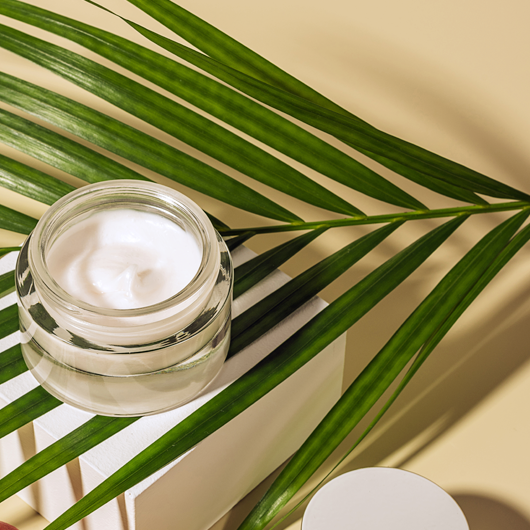


The most popular advice about a natural face moisturizer for sensitive skin is also the least reliable: choose a product covered in botanical imagery because “natural” must mean gentler. It doesn't. A plant extract can be useful, neutral, fragrant, or sensitizing, depending on its chemistry, concentration, processing, and the rest of the formula.
A better approach starts at the ingredient list. Look for a short, fragrance-free formula organized around humectants, emollients, occlusives, and barrier-supportive lipids, then introduce it slowly. “Natural” can describe sourcing, but it can't predict how reactive skin will respond.
Table of Contents
- Why Sensitive Skin Deserves a Different Kind of Moisturizer
- The Natural Label Is Not a Safety Label
- How to Read a Sensitive Skin Ingredient List
- Ingredients That Help Sensitive Skin
- Common Irritants Hiding in Natural Moisturizers
- Patch Testing and a Calm Application Routine
- A Simple DIY Moisturizer With Skin Perfection Supplies
- Smart Questions About Natural Moisturizers for Sensitive Skin
Why Sensitive Skin Deserves a Different Kind of Moisturizer
You wash your face with a familiar cleanser, apply a moisturizer you've used before, and feel a sudden sting across your cheeks. Minutes later, the skin looks flushed. The jar goes into the bathroom-shelf graveyard beside other nearly full products that seemed promising until your skin objected.
That experience isn't unusual or limited to a small group. A 2020 systematic review estimated that 71% of adults worldwide self-declare some degree of sensitive skin, while 40% report very or moderately sensitive skin. For the face specifically, the review found sensitive skin in 64% of adults to some degree, with 34% describing it as very or moderately sensitive. Earlier research also recorded regional differences, including 44.6% in the United States and 59% in France. These figures come from self-reported experiences, but they still show why a practical guide to organic skincare for sensitive skin matters to a broad audience. (Johns Hopkins systematic review)
The pattern has been recognized for decades. A U.K. epidemiological study published in 2001 found that 51.4% of women and 38.2% of men reported sensitive skin, and its conclusion identified a need for personal products designed for this skin phenotype. (British Journal of Dermatology study)
Why ordinary formulas can feel extraordinary
Sensitive skin may react to ordinary sensory cues, including fragrance, preservatives, cleansing residue, or a formula that leaves too much drag. The important point isn't that every person with sensitive skin has the same biological profile. It's that tolerability depends on the complete formula, not whether the cream feels luxurious or carries a plant-based story.
A moisturizer should reduce the uncomfortable tightness associated with dryness while leaving the surface comfortable. It shouldn't need a strong scent, a long list of decorative extracts, or an aggressive “active” promise to feel effective.
Formulator's rule: Choose the architecture first, then judge the texture. A pleasant finish can't compensate for ingredients your skin repeatedly rejects.
The Natural Label Is Not a Safety Label
A leaf on a package describes marketing position, not skin tolerance. For reactive skin, natural should mean a short, fragrance-free formula built around barrier-supporting ingredients, not a longer list of plant extracts.
In a database study of 276 moisturizers, 68% contained fragrance and 44.6% contained essential oils or biologic additives. (Journal of Clinical and Aesthetic Dermatology review) Clean-beauty shoppers can therefore encounter the same concern under a botanical story. Herbs, flowers, and aromatic oils may add appeal while also introducing fragrance allergens.

HydroGlow Anti-Aging Night Mask is described as a vegan, cruelty-free, paraben-free, sulfate-free night mask containing hyaluronic acid, polyglutamic acid, jojoba, squalane, aloe, glycerin, triglycerides, sea silt ferment, and algae extract. Several ingredients support hydration or conditioning, yet the complete label still matters. A sensitive-skin shopper should patch-test instead of treating the product's natural positioning as proof of tolerability.
Why essential oils deserve special attention
Essential oils are mixtures of volatile compounds, not single soothing ingredients. Limonene and linalool, for example, can oxidize during storage and form compounds more likely to trigger contact sensitization. The concern can therefore come from essential oils, masking botanicals, or aromatic plant extracts, even when the label contains no synthetic “parfum.”
The same review found positive patch-test reactions to several essential oils, including lemongrass oil at 18.6% in one dataset and ylang ylang oil at 3.9%. Those figures do not predict an individual reaction, but they challenge the assumption that natural scent is automatically gentle.
Use four filters instead: fragrance-free, essential-oil-free, barrier-focused, and simple enough to troubleshoot. To find clean skin care ingredients, compare their function and fragrance potential rather than relying on the word “natural.”
You can also review labeling approaches through EWG Verified skincare brands. Verification may guide research, while the full INCI list and your own tolerance determine the better choice.
How to Read a Sensitive Skin Ingredient List
Turn the jar around. The front panel sells a mood, while the INCI list reveals the formula's working structure. To understand a natural face moisturizer for sensitive skin, sort ingredients by the job they perform.
Four jobs in one moisturizer
| Formula role | What it does | Familiar example |
|---|---|---|
| Humectant | Attracts and holds water in the outer skin layers | Glycerin |
| Emollient | Smooths rough-feeling areas and improves slip | Squalane |
| Occlusive | Slows water evaporation from the surface | Shea butter |
| Barrier lipid | Supplies lipid components that support the spaces between skin cells | Ceramides |
A humectant-rich gel often feels light and fresh because it contains water-binding ingredients without much oil. An emollient-heavy cream feels silkier or richer because oils and lipid-like materials soften the surface. An occlusive formula may leave a protective film, which can be helpful for dryness but too heavy for someone who dislikes residue.
Barrier lipids deserve separate attention. Ceramides, cholesterol, and fatty acids aren't included merely to make a cream feel rich. They're chosen because the outer barrier contains lipid structures that help limit water loss and maintain surface comfort.
Use the order as a clue
Ingredients near the beginning of an ingredient list generally make up the main body of the formula. Ingredients after the preservative system may be present at lower levels, although the exact concentration can't be determined from order alone. Don't assume that the final botanical is the star just because the front label highlights it.
A short list can make troubleshooting easier, but short doesn't automatically mean better. A well-designed longer formula may combine humectants, emollients, preservatives, stabilizers, and barrier lipids in a balanced way.
For more practice, use this guide to reading a skincare label and INCI list and ask one question of every ingredient: What job is it doing, and is that job worth the possible trigger exposure?
Ingredients That Help Sensitive Skin
“Natural” does not tell you whether a moisturizer will suit reactive skin. A more useful question is what each ingredient contributes, and whether the formula supports the barrier without adding unnecessary scent or botanical exposure.
Humectants draw water toward the outer skin. Glycerin is a dependable example, while hyaluronic acid and panthenol can create a hydrated, cushioned feel. A barrier-repair moisturizer built around natural moisturizing factor components and lipids produced measurable effects in preclinical and clinical testing. Compared with untreated controls, filaggrin increased 77%, hyaluronic acid increased 157%, and lipids increased 30%. Clinical use improved surface hydration and reduced transepidermal water loss over 4 weeks, with benefits persisting after a 3-day regression period. In clinically sensitive skin, daily use improved the look and feel of skin without significantly increasing irritation. (PubMed clinical study)
A humectant needs support from the rest of the formula. Without enough emollient or occlusive material, water-binding ingredients may not provide lasting comfort.
Emollients improve softness and spreadability. Squalane is lightweight and often leaves a dry, silky finish. Shea butter fractions can add richness without requiring a heavily botanical formula, while jojoba esters can improve glide and reduce a waxy feel. These ingredients communicate comfort through texture, not fragrance.
Barrier lipids include ceramides, cholesterol, and fatty acids. Ceramide-containing creams have been reported to lower transepidermal water loss over 24 hours and to be non-sensitizing and non-irritating in the cited testing. In a 4-week study involving sensitive-skin conditions, the investigator global assessment improved by 100%, subject skin assessment improved by 67%, and water content and smoothness improved without adverse events. (Ceramide study)
A practical reference
| Ingredient | Function | Typical % | Benefit |
|---|---|---|---|
| Glycerin | Humectant | Varies by formula | Water-binding hydration and slip |
| Hyaluronic acid | Humectant | 0.1% to 1% | Cushioned, hydrated feel |
| Panthenol | Humectant and conditioning ingredient | 1% to 5% | Helps create a comfortable, softened finish |
| Squalane | Emollient | Varies by formula | Lightweight surface smoothing |
| Ceramide NP | Barrier lipid | Varies by formula | Supports a lipid-focused moisturizer structure |
| Niacinamide | Skin-conditioning active | 2% to 4% | Can support a balanced, non-heavy formula |
| Allantoin | Skin-conditioning ingredient | 0.1% to 0.5% | Adds a soothing-oriented formulation option |
The ranges are label-checking guidance, not a promise that a product contains a particular level. Texture also affects usability. A humectant gel may suit daytime layering, while a ceramide cream may feel more comfortable at night or in dry conditions.
If aloe interests you, learn how to identify and care for aloe, then review the complete ingredient list. Plant origin does not remove the need for preservation, fragrance screening, or patch testing. You can also explore natural humectants for skin by function rather than marketing language.
Common Irritants Hiding in Natural Moisturizers
“Natural” does not make a scented moisturizer suitable for reactive skin. Fragrance, parfum, natural fragrance, essential oils, and aromatic extracts can all create scent-related exposure, even though their ingredients are not identical. For sensitive skin, a short, fragrance-free formula is often a clearer starting point than a long list of botanical additions.
Higher-priority label checks
The same moisturizer allergy review cited earlier identifies fragrance and essential oils as frequent sources of sensitization. Its patch-test findings included reactions to lemongrass and ylang ylang in one dataset. Treat those results as a reason to screen labels carefully, not as a prediction that your skin will react.

A practical label scan can follow this order:
- High priority: Essential oils and aromatic blends, including lemongrass, citrus peel, lavender, tea tree, peppermint, and ylang ylang. For reactive skin, choose a formula without essential oils.
- High priority: Fragrance, parfum, and natural fragrance. If scent appears on the label, compare it with a fragrance-free option.
- High priority: Methylisothiazolinone and methylchloroisothiazolinone. People with recurring reactions should discuss possible preservative sensitivity with a dermatologist.
- Moderate priority: Denatured alcohol and isopropyl alcohol, especially near the top of the ingredient list. Lower exposure to strong volatile alcohols may feel more comfortable.
- Context-dependent: Exfoliating acids and cleansing surfactants. A moisturizer promoted for glow may contain active acids, while a cleansing moisturizer may contain surfactants that some reactive users do not tolerate.
A label rarely provides enough information to calculate a personal safe concentration. The available evidence also does not establish one universal safe range for every irritant.
Safer swap: Replace scent-led complexity with glycerin, squalane, ceramides, panthenol, or colloidal oatmeal. The finished formula still needs to be judged by how your skin responds.
Patch Testing and a Calm Application Routine
Patch testing can reduce surprises, but it isn't a guarantee. A product can pass a small-area test and still feel uncomfortable when applied across the face, especially if the skin is already stressed.
A reproducible seven-day test
Apply a rice-grain amount behind the ear or on the inner forearm twice daily for 7 days. Keep every other new product away from that test site. Each evening, score itching, burning, redness, or papules from 0 to 3, where 0 means none and 3 means strong or obvious symptoms.
Read the area at 24 hours, 72 hours, and day 7. Delayed reactions can appear after the first application, which is why a single quick check isn't enough for fragrance-containing products or essential-oil blends. Stop if you develop persistent burning, visible redness, swelling, or a spreading rash.

Keep the routine quiet
Use a pH-balanced cleanser, then a hydrating toner or essence only if you already know you tolerate it. Apply moisturizer to slightly damp skin, using gentle pressing motions rather than rubbing. In the morning, finish with sunscreen.
For face and neck, two finger-lengths is a commonly used amount for sunscreen, not a universal moisturizer measurement. For moisturizer, start with a small amount and add only if the skin still feels tight. Too much product can cause pilling and make it harder to identify what your skin dislikes.
A brief tingle that fades within about 60 seconds can occur with some humectant-rich formulas, but persistent warmth or visible redness is a stop signal. Don't “push through” a reaction to prove a product is natural.
A Simple DIY Moisturizer With Skin Perfection Supplies
DIY skincare is a formulation experiment, not a treatment. Water-based products are especially vulnerable to contamination, so small batches, clean equipment, and conservative storage matter more than a complicated ingredient list.
Use a small mixing vessel, an accurate scale, a sanitized jar, a mixing spoon, and distilled water. For a basic water-based experiment, divide the formula into three phases:
- Water phase: Use distilled water as the base. Add Skin Perfection sodium hyaluronate powder at approximately 0.1% to 1%. Sprinkle it gradually into the water and allow it to hydrate fully rather than dumping it in at once. The result should develop a smoother, more viscous slip.
- Oil phase: Add 8% to 12% of a light carrier such as squalane or fractionated coconut oil. This phase contributes emollience, but it won't automatically create a stable lotion when mixed with water.
- Cool-down phase: Add one barrier-oriented active, such as panthenol at 2% to 5%, once the mixture has cooled. Keeping the active list short makes it easier to identify a problem if your skin doesn't tolerate the finished product.
A true water-and-oil lotion also needs a suitable emulsifier and a broad-spectrum preservative system. Without those, the phases may separate and microorganisms can grow invisibly. Don't rely on refrigeration to make an unpreserved water-based product safe.

Patch-test the finished batch on the inner forearm for 48 hours before facial use. Refrigerate it immediately, label the date, and discard it after one week because this unpreserved water-based experiment doesn't have a validated shelf life. Don't add essential oils to this test. Their scent isn't necessary, and their sensitization potential makes the result harder to interpret.
For more formulation ideas, use this resource on how to make moisturizer. Skin Perfection sells skincare products and lotion-making supplies, but any home formula should remain a cosmetic exploration. It doesn't fix, repair, or heal skin, and it shouldn't be presented as medical treatment.
Smart Questions About Natural Moisturizers for Sensitive Skin
Can fragrance-free products still contain essential oils?
Yes. A formula can omit the word “fragrance” while still containing lavender, citrus, tea tree, peppermint, or another aromatic oil. Read the full INCI list. Check for essential-oil names, strongly aromatic plant oils, and terms such as natural fragrance or parfum.
Natural origin does not decide allergy risk. The patch-test data discussed earlier includes reactions to essential oils, including lemongrass and ylang ylang. For reactive skin, fragrance-free and essential-oil-free is a clearer screening rule than “naturally scented.”
Is a short ingredient list always safer?
A short list reduces the number of variables, which makes troubleshooting easier. Ingredient count alone does not establish safety, though. A longer formula may contain a sound preservation system and useful barrier ingredients, while a brief botanical oil blend may still include several aromatic sensitizers.
Ask what job each ingredient performs. Glycerin attracts water, squalane softens the skin, and ceramides support a lipid-focused barrier structure. If much of the list exists to create scent or support a marketing story, choose a formula with clearer functional logic.
When should you see a dermatologist?
Stop using a product if burning continues, redness spreads, swelling develops, or repeated itching and bumps appear. A dermatologist can help separate simple irritation from allergic contact dermatitis and may suggest formal evaluation when reactions recur.
A label cannot diagnose the cause. If several unrelated formulas trigger your skin, professional guidance may help identify a shared exposure that appears under different brand names.
Does pH explain every sting?
No. pH can affect comfort, particularly on compromised or freshly cleansed skin. Burning may also come from fragrance, preservatives, acids, alcohol, or the combined effect of several ingredients. A “balanced” pH claim does not make a formula suitable for every reactive face.
How long should you wait for visible results?
Hydration may feel different soon after application, while a calmer routine depends on consistent use and fewer variables. Give one carefully chosen moisturizer enough time to assess comfort, and avoid introducing several products together. Use the 4-week clinical period from the barrier-repair study cited earlier as a useful framework for judging ongoing performance, rather than treating one application as proof.
Choose ingredient logic over green imagery. Read the label by function, remove unnecessary fragrance exposure, and patch-test patiently. A natural face moisturizer for sensitive skin may look plain, have almost no scent, and use a short list of humectants, emollients, and barrier lipids. That approach defines “natural” by restraint and skin compatibility, not by a botanical marketing claim.
Skin Perfection offers ready-made skincare products and lotion-making supplies for readers who want to assess finished formulas or make small cosmetic batches. Visit Skin Perfection to explore ingredient-focused options, including supplies for a simpler, fragrance-conscious moisturizing routine.