

 Buy with Prime
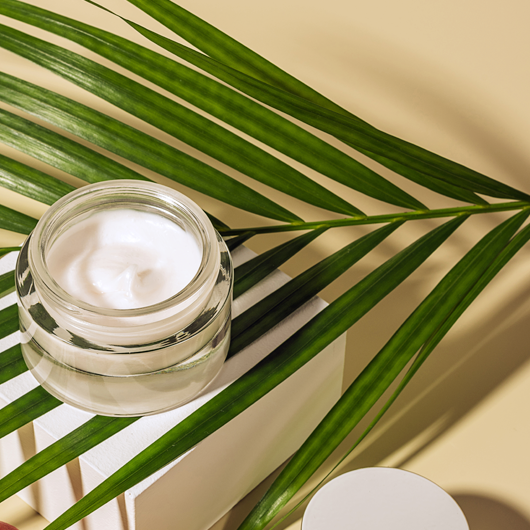


Why do so many stretch mark products feel good for a week, then do very little after that?
The usual mistake is relying on oils alone and expecting structural change. Stretch marks respond better to formulas built for long-term use, with ingredients chosen for skin feel, consistency, and support for a smoother-looking surface over time. Peptides deserve attention here because they function as signaling ingredients in water-based serums, gel-creams, and lotions that people will consistently keep using.
From a formulator's perspective, the goal is practical, not dramatic. A peptide will not erase established marks, and no compliant skincare ingredient should be framed that way. What peptides can do is help you build a body formula that targets the look of texture, firmness, and uneven tone more intelligently than a basic oil blend.
That trade-off matters. Simpler ingredients can give quick softness. Peptides are usually more expensive, more concentration-dependent, and often need the right pH and base to perform well. The benefit is that they give DIY makers more control over what a stretch mark formula is trying to do.
If you need a grounding in how these ingredients are typically used in skincare, this guide to using peptides in skincare is a useful starting point. For readers planning to make their own body serums, I'll also point out where each peptide fits best, what concentration range is practical, and which combinations are worth trying first. If Matrixyl is new to you, start with this explanation of what Matrixyl collagen serum is designed to do.
1. Matrixyl (Palmitoyl Pentapeptide-4)
Matrixyl earns its place near the top because it's one of the peptides formulators reach for when the goal is better-looking skin structure, not just short-term softness. In body care, that matters. Stretch-marked skin usually needs more than occlusion. It needs ingredients that support a smoother, firmer-looking finish over time.
Palmitoyl pentapeptide-4 belongs in a formula when you want a dependable “backbone peptide.” It plays well with humectants, barrier-supporting oils, and light emulsions. For DIY makers, that makes it easier to build around than more temperamental actives.
Where Matrixyl fits best
I like Matrixyl most in lightweight body serums and gel-creams for newer marks or areas where people hate sticky residue, such as hips, thighs, and the lower abdomen. It's also a good choice when you want one peptide that can anchor a formula without making the ingredient list feel crowded.
A practical starter approach looks like this:
- Use a water-based base: Matrixyl is usually easiest to work with in hydrating serums or emulsions rather than anhydrous body oils.
- Pair with hydration: Hyaluronic acid, glycerin, or aloe can help the skin look more supple while the peptide does the long-game work.
- Keep the routine simple: A peptide product used twice a day usually beats an elaborate routine people quit after a week.
Matrixyl is rarely the flashy ingredient in a formula. It's the one that quietly makes a body serum feel worth repurchasing.
For readers comparing peptide families, this Matrixyl collagen serum overview gives useful background on where it fits in a collagen-supporting routine. The trade-off is that Matrixyl often works best with patience. If someone expects overnight visual change, they'll be disappointed. If they want a peptide that integrates cleanly into a realistic body-care routine, it's a strong pick.
2. Matrixyl 3000 (Palmitoyl Tripeptide-1 + Palmitoyl Tetrapeptide-7)

If basic Matrixyl is the reliable workhorse, Matrixyl 3000 is the more strategic blend. It combines palmitoyl tripeptide-1 with palmitoyl tetrapeptide-7, giving formulators a broader signaling profile than a single peptide alone. That's why it shows up so often in premium serums aimed at texture, firmness, and tone.
Palmitoyl tetrapeptide-7 is especially relevant here because it's one of the peptides highlighted in Skin Perfection's stretch mark guidance. It's often chosen when skin looks stressed, uneven, or less resilient.
Why formulators like this combo
Matrixyl 3000 works well in body serums for post-pregnancy care, weight-change routines, and general firming support. It suits customers who want a concentrated texture without a heavy cream finish. That lines up with market direction too. The stretch mark removal products market is projected to grow from USD 2.02 billion in 2026 to USD 3.94 billion by 2033, and peptide-containing serums are the fastest-growing segment at a 5.5% CAGR, according to Data Bridge's stretch mark products market analysis.
That growth makes sense from a formulator's perspective. Serums spread fast, absorb fast, and let you deliver peptides without wax-heavy drag.
Practical rule: If a customer says, “I'll use it only if it dries down fast,” start with a serum texture and build your peptide system there.
For DIY makers, Matrixyl 3000 is often easier to justify than loading a formula with several separate peptides. You get a well-known pairing, cleaner positioning, and fewer compatibility headaches. This Matrixyl 3000 and Argireline article is useful if you want to compare it with expression-line peptides that can also contribute to smoother-looking skin.
The main trade-off is cost. Multi-peptide systems can raise ingredient spend quickly, so this is better used where formula performance and user experience matter more than rock-bottom pricing.
3. Argireline (Acetyl Hexapeptide-8)
Argireline is better known for facial care, but it can still earn a place in body formulas when your target is visible skin smoothness. I don't rank it as a first-choice stretch mark peptide on its own. I see it as a support peptide. It can help a formula feel more refined when the main goals are smoother-looking texture and a less creased surface appearance.
That distinction matters. If someone is choosing between Argireline and Matrixyl for stretch marks, Matrixyl usually makes more sense as the lead. If someone is building a layered body serum and wants a peptide that complements a structure-focused blend, Argireline becomes more interesting.
Best use case for Argireline
Argireline fits best in elegant leave-on serums for areas where skin crinkles with movement, such as the sides of the hips, upper thighs, or bust area. It also suits users who already enjoy peptide facial serums and want similar formula aesthetics in body care.
A realistic DIY scenario:
- Lead with another peptide: Use Argireline as a secondary active, not the only peptide in the formula.
- Choose low-residue textures: It works best in silky serums, not thick body butters.
- Avoid overpromising: It can improve the overall look and feel of the skin surface, but it isn't the peptide I'd choose for a minimalist one-active formula.
Many peptide body products fail because they include a recognizable name and then expect that name to carry the formula. Stretch mark care responds better to blends that combine signaling peptides with hydration, barrier support, and user-friendly texture.
“A famous peptide isn't automatically the right peptide for the job.”
Argireline is worth considering when you want a formula to feel cosmetically polished. It's less compelling when you need a body-care formula to do the heavy lifting by itself.
4. Copper Peptides (GHK-Cu)

What if the stretch marks you want to target need more than a standard collagen-supporting peptide?
GHK-Cu sits in a different category. Formulators usually reach for it when the goal is to support skin that looks thin, slow to bounce back, or marked by older, stubborn lines. In the stretch mark setting, Skin Perfection's source material highlights copper peptides for their connection to skin renewal processes, protein rebuilding, and better-looking skin density. That makes them especially relevant for mature or long-standing marks where a basic hydrating lotion often falls short.
I usually place copper peptides high on the shortlist for pale, established marks that need a more treatment-led formula.
Where GHK-Cu earns its place
Copper peptides perform best in leave-on products with a light, water-based structure. Serums, hydro-gels, and fluid emulsions are usually better vehicles than heavy butters. That is partly about skin feel and partly about formula stability and ingredient compatibility.
The trade-off is real. GHK-Cu is rarely the budget-friendly choice, and it asks for more care from the formulator. pH needs attention. Packaging matters. I also avoid throwing it into every active-heavy formula just because the ingredient name sounds impressive. If the rest of the system is poorly designed, an expensive peptide does not rescue the product.
For DIY use, I like copper peptides in simple body serums where the peptide can stay the focal point. A practical route is a watery serum or gel-cream paired with humectants and barrier-supportive ingredients, then sealed in with a separate moisturizer if needed. That gives you more control than forcing GHK-Cu into a rich, crowded emulsion.
A sensible starting point is to use the supplier's recommended rate for your specific GHK-Cu raw material, then build around it with restrained support ingredients rather than stacking multiple aggressive actives. If you want to compare that focused peptide strategy with another collagen-oriented option, Skin Perfection's article on Tripeptide-5 vs retinol for wrinkles is a useful reference point.
Copper peptides can justify their cost when the formula is simple, the texture encourages daily use, and the user is willing to stay consistent.
For ingredient-focused reading, Skin Perfection's guide to copper peptides for skin is a practical starting place, and readers who want external technical context can review Australian GHK-Cu peptide research data.
5. Syn-Coll (Palmitoyl Tripeptide-5)
Syn-Coll is a peptide I like for people who want a collagen-supporting angle without a crowded formula. It's tidy. It's focused. And in body care, that can be a real advantage. You don't always need a long ingredient deck to make a stretch mark serum feel refined.
Palmitoyl tripeptide-5 is often a smart choice for smoother-looking skin on the abdomen, thighs, and upper arms, especially when a customer wants a peptide cream rather than a pure serum. It tends to fit naturally into emulsions that already include humectants and cushiony emollients.
How I'd use it in a DIY body formula
A practical route is a peptide body lotion with Syn-Coll, glycerin, aloe, and a restrained oil phase. That gives enough richness for comfort without smothering the active system. For users who dislike layering, this “all-in-one” style often gets better compliance than a serum-plus-cream routine.
Useful positioning ideas include:
- For simple formulas: Syn-Coll works well when you want one collagen-oriented peptide instead of a multi-peptide label.
- For cream lovers: It fits comfortably into lotion and cream textures.
- For steady routines: It's a good option for users who prefer one dependable body product morning and night.
One reason I like Syn-Coll in practitioner-style recommendations is that it doesn't invite as much confusion as trendier peptides. The formula story stays clear. Support the look of firmness. Improve the feel of texture. Keep the base elegant enough that the product gets used.
If you want a broader comparison between peptide support and retinoid-style positioning, this Tripeptide-5 vs. retinol discussion is worth reading.
The drawback is that Syn-Coll can feel underwhelming to shoppers who chase novelty. In actual body-care routines, boring and consistent often beats exciting and abandoned.
6. EGF (Epidermal Growth Factor) and Mimicking Peptides

Want a peptide that sounds cutting-edge enough to fix stretch marks faster? EGF and EGF-mimicking peptides are usually the first category people reach for. I'm more selective with them.
For most DIY stretch mark formulas, these actives sit in the premium, narrow-use tier. They can support a smoother, fresher-looking skin surface, but they also ask more from the formula. Cost is higher. Packaging matters more. A large body lotion in a basic pump bottle usually isn't the best home for them.
That trade-off matters because stretch mark care is a long game. A technically impressive peptide does very little if the product is unstable, unpleasant to use, or too expensive to apply twice daily over a broad area.
Where EGF-style peptides fit best
I get the best logic from these actives in targeted products. A small serum for the lower abdomen, hips, bust, or thighs makes more sense than trying to build an economical full-body cream around them. If someone is already comfortable making small-batch water-based serums, this category becomes much easier to use well.
A practical DIY approach is a minimalist gel serum with an EGF-mimicking peptide at the supplier's recommended rate, plus glycerin, panthenol, and a light polymer or aloe-based gel structure. Keep oils low or leave them out entirely. Then apply a plain moisturizer on top. That two-step method protects the active better and gives you more flexibility than forcing everything into one rich emulsion.
For readers who want a clearer primer on the category, Skin Perfection's guide to growth factors for skin is a useful starting point.
Here is the caution I give formulators. Advanced actives do not compensate for a weak base formula. Stretch mark products often perform better when the whole system is built for repeat use, low irritation potential, and good skin comfort over several months, as noted earlier in the article.
Advanced peptides reward careful formulation. They do not rescue a weak base.
If budget is limited, I would usually put that spend into Matrixyl 3000 or copper peptides first. If budget is flexible and the user wants a high-end spot treatment, EGF-mimicking peptides can be a worthwhile addition. The right use case is specific, controlled, and consistent.
7. Acetyl Glutamine (and Glutamine-based Peptides)
Could a support ingredient make a stretch mark formula work better in real use, even if it is not the ingredient driving the headline claim? In many body formulas, yes. Acetyl glutamine usually earns its place by improving skin feel, reducing that tight post-application finish, and helping a peptide serum or lotion stay pleasant enough to use every day.
That matters in stretch mark care because the application area is large and the routine has to be repeatable. Abdomen, hips, thighs, and bust all put more stress on a formula than the face does. If a product feels sticky, drying, or flimsy, people use less of it or stop using it altogether.
Acetyl glutamine and related glutamine-based materials are support actives. I use them to make a formula more comfortable and better balanced, especially when the primary goal is long-term use with stronger headline ingredients such as Matrixyl, Matrixyl 3000, or copper peptides. They do not replace a signaling peptide, but they can improve the formula enough to make that primary peptide more practical to use.
Where it fits in a DIY formula
This category makes the most sense in body serums and light lotions for dry, stretched, or easily irritated-feeling skin. It is especially useful if the rest of the formula is very lean and water-based, because those systems can feel clinical and under-moisturizing without some added skin conditioning support.
A simple starting point is a body gel with acetyl glutamine at the supplier's recommended use level, plus glycerin, panthenol, and one lead peptide. Another good option is a light emulsion with acetyl glutamine, a humectant system, and a modest oil phase so the product has enough cushion for twice-daily use on larger areas.
The practical trade-off is straightforward. Acetyl glutamine can improve comfort and compliance, but it is rarely the ingredient that gives the most visible change on its own. If the budget is tight, put more of it into the primary peptide first. If the formula already has a strong lead active, acetyl glutamine is a sensible addition that can make the whole product feel more complete.
- Use it to improve wearability: Better slip and less tightness make repeat application easier.
- Pair it with a lead peptide: This category supports the formula. It does not carry the treatment plan by itself.
- Keep the formula realistic: For body care, elegant texture and low irritation matter almost as much as the active list.
Skin Perfection's DIY philosophy is useful here. Build around one primary peptide, then add support ingredients that improve hydration, comfort, and consistency of use. That is often the difference between a formula that looks good on paper and one that gets finished.
Top 7 Peptides for Stretch Mark Reduction, Quick Comparison
| Ingredient | Implementation complexity | Resource requirements | Expected outcomes | Ideal use cases | Key advantages |
|---|---|---|---|---|---|
| Matrixyl (Palmitoyl Pentapeptide-4) | Low, stable and compatible in most formulas | Moderate concentration (3–5%), cost-effective | Improves texture, firmness and hydration in ~4–8 weeks; better on newer marks | Everyday maintenance, early/new stretch marks, peptide blends | Well-researched, stable, broadly compatible and affordable |
| Matrixyl 3000 (Palmitoyl Tripeptide-1 + Palmitoyl Tetrapeptide-7) | Moderate, dual-peptide synergy; pH-sensitive (4.5–7) | 2–5% typical; higher cost than single peptides | Faster, more noticeable texture and elasticity improvement in ~3–6 weeks; effective on deeper marks | Targeted firming for mature/stretch-prone areas and professional formulations | Enhanced, synergistic dual-peptide action with stronger/faster effects |
| Argireline (Acetyl Hexapeptide-8) | Low, surface-acting neuropeptide, straightforward to formulate | Requires minimum ~3% for effect; affordable and well-tolerated | Rapid surface smoothing and reduced skin tension in ~2–4 weeks; effects are temporary | Spot treatment to prevent deepening, smoothing texture, sensitive skin | Quick visible smoothing, good synergy with other peptides |
| Copper Peptides (GHK-Cu) | Moderate–High, pH management (≈6–7) and ingredient compatibility needed | 1–2% typical; more expensive; avoid simultaneous acidic Vitamin C | Improves texture, density and soothes redness in ~6–8 weeks; broad skin quality benefits | Long-term repair, redness-prone or stressed skin, comprehensive rejuvenation | Multi-faceted regeneration, soothing, improves elastin and overall skin quality |
| Syn‑Coll (Palmitoyl Tripeptide‑5) | Low–Moderate, concentration-dependent performance | 2–3% common; moderate cost; pairs well with hydrators | Gradual collagen-supporting firming and texture refinement over 8–12 weeks | Long-term collagen support, newer stretch marks, maintenance blends | Targets collagen signaling to improve firmness and dermal matrix appearance |
| EGF and mimicking peptides | High, stability, shelf-life and cold storage considerations | 1–2% potent complexes; highest cost; careful handling/storage | Rapid improvement in radiance and surface renewal in ~2–3 weeks; strong regenerative effect | Clinical/advanced serums, rapid renewal protocols, combination therapies | Powerful stimulation of renewal and fibroblast activity for visible rejuvenation |
| Acetyl Glutamine (and glutamine-based peptides) | Low, easy to formulate and very gentle | 2–5% supportive use; low cost and widely available | Enhances barrier, hydration and supports other actives; subtle results over time | Foundational ingredient in peptide blends, sensitive or compromised skin | Improves performance of actives, gentle, supports moisture retention and barrier function |
Create Your Custom Blend for Smoother-Looking Skin
Peptides are one of the most useful tools available for improving the appearance of stretch marks, but the best results usually come from choosing the right peptide for the job instead of chasing every trending ingredient at once. If you want the shortest shortlist, start with Matrixyl peptides, palmitoyl tetrapeptide-7 blends such as Matrixyl 3000, and copper peptides like GHK-Cu. Those are the names that come up repeatedly for good reason.
The next step is deciding what kind of formula you'll use. If you hate heavy body creams, build a serum. If your skin feels dry and tight, a lotion or gel-cream may be the better home for your peptides. A smart formula doesn't just look advanced on paper. It needs to spread easily, absorb well, and fit into a routine that someone can repeat morning and night.
That's also where trade-offs become practical. Matrixyl and Syn-Coll are often easier to formulate into everyday body products. Matrixyl 3000 gives you a broader signaling story. Copper peptides can be especially appealing when you want a more treatment-oriented serum. EGF-style peptides can be interesting, but they usually make more sense after you've already mastered the basics.
If you make your own products, start simple. Pick one lead peptide, one supporting hydrator, and one texture direction. Track the skin the way a practitioner would. Use consistent lighting, monthly photos, and enough time to evaluate the routine objectively. Body care fails more often from inconsistency than from imperfect ingredient theory.
There's also room to combine topical care with professional services when appropriate. For readers exploring device-based options, advanced microneedling technology shows how some professionals think about broader skin-texture strategies. Topical peptide care and professional treatments are different tools, and they don't need to compete.
If you want ready-made options or ingredients for custom body formulas, Skin Perfection is one relevant source because it offers peptide-focused skincare and DIY lotion-making supplies aligned with clean beauty preferences. A primary advantage is flexibility. You can choose a finished product, buy actives for your own formula, or refine a blend until it matches your skin goals and texture preferences.
If you're ready to build a peptide-centered routine, explore Skin Perfection for skincare products and DIY lotion-making supplies that support custom formulations for smoother, firmer-looking skin.