

 Buy with Prime



Ascorbic acid powder is skin's purest, most direct form of Vitamin C. It’s a powerhouse antioxidant famous for helping create a brighter, more radiant complexion. When you know how to work with it, this powder can help diminish the look of dullness and promote a skin tone that looks incredibly even. This makes it a go-to for skincare lovers who want the freshest, most potent applications possible.
Unlocking a Brighter Appearance with Ascorbic Acid Powder
When you see "Vitamin C" on a skincare label, you're almost always looking at its most studied form: L-Ascorbic Acid. The best way to think about ascorbic acid powder is as the concentrated, raw essence of this incredible ingredient. Sure, pre-mixed serums are convenient, but the powder version gives you something they can't: ultimate freshness and potency. It puts you in complete control.
There’s a good reason this ingredient is a cornerstone of the beauty world. Its main job is to act as a powerful antioxidant. Every single day, your skin is up against environmental stressors like pollution that can leave it looking tired and dull. Ascorbic acid helps shield your skin’s surface from these aggressors, supporting its natural vibrancy.
Why Skincare Enthusiasts Choose the Powder Form
For DIY skincare creators and hardcore enthusiasts, the powder format is where the magic really happens. Its dry state keeps it perfectly stable right up until the moment you mix it. This means you get the maximum cosmetic effect from every single drop you apply. That freshness is everything when it comes to performance.
When you mix L-Ascorbic Acid powder into a serum yourself, you are activating its full potential right then and there. This eliminates concerns about the degradation that can happen to pre-formulated liquid serums sitting on a shelf.
Mixing your own serum also opens the door to total customization. You can tweak the concentration to match what your skin can handle, starting with a gentle formula and working your way up to something more robust once your skin is ready. This is a level of control you just can’t get from an off-the-shelf product. You can learn more about how to create a custom serum that is a great example of the cosmetic benefits of vitamin c on the skin by exploring our Vitamin C Serum with Hyaluronic Acid & Ferulic.
The Growing Demand for Vitamin C Skincare
The buzz around ascorbic acid isn't just hype—it's backed by a massive and expanding market. As a true foundational ingredient in cosmetics, Vitamin C is the heart of a global industry. The vitamin C ingredients market was valued at USD 2.4 billion in 2024 and is expected to hit about USD 3.9 billion by 2034. North America is currently leading the charge with a 42.7% market share, all driven by a huge consumer demand for products that support radiant-looking skin.
This incredible growth points to a collective desire for skincare that actually delivers visible results. Beyond just making your own, you can find a ton of amazing commercial products. Exploring curated beauty subscription boxes can be a fantastic way to discover new brands that know how to get the most out of what ascorbic acid powder does for your skin. At the end of the day, bringing this ingredient into your routine is about giving your skin the support it needs to look bright, feel firm, and have that even-toned glow we're all chasing.
The Science of Stability: Why pH Matters Most

While ascorbic acid powder is incredibly potent, it's also famously delicate. Think of it like a beautiful, crisp apple slice left out on the counter. Exposed to air, it quickly turns brown, losing its freshness and appeal.
This browning process is called oxidation, and it’s the biggest challenge when you're working with pure ascorbic acid powder. The moment you mix it with water, a countdown begins. Exposure to water, light, and air causes it to break down and rapidly lose its benefits.
If your serum turns yellow, orange, or brown, that's a dead giveaway that oxidation has won. The formula is no longer as effective, and it’s time to toss it. This inherent instability is why understanding the science behind your DIY serum isn't just helpful—it's essential for creating a product that actually works.
The Critical Role of pH in Your Formula
The single most important factor for keeping your ascorbic acid serum stable and effective is its pH level. The term pH tells you how acidic or alkaline a water-based solution is, measured on a scale from 0 to 14. A pH of 7 is neutral, anything below 7 is acidic, and anything above 7 is alkaline.
For an ascorbic acid serum to be both stable and easily absorbed by the skin, it needs to be formulated at a very low, acidic pH. The "sweet spot" is a pH of 3.5 or lower.
Maintaining this acidic environment is non-negotiable. If the pH of your serum creeps above 3.5, the ascorbic acid will start to degrade almost immediately. All your efforts and ingredients will have gone to waste.
This low pH is what keeps the ascorbic acid in its most potent, active state. It’s the key to unlocking the skin benefits you’re looking for and the foundational rule of any successful DIY Vitamin C formula.
Finding Friends: Ferulic Acid and Vitamin E
While managing pH is your top priority, ascorbic acid doesn't have to go it alone. Smart formulators pair it with other ingredients that act as its support system, boosting both its stability and performance. Two of the most well-known partners-in-crime are ferulic acid and Vitamin E.
Think of them as bodyguards for your ascorbic acid.
- Ferulic Acid: This plant-based antioxidant helps stabilize ascorbic acid, significantly slowing down that pesky oxidation process.
- Vitamin E (Tocopherol): Another powerhouse antioxidant, Vitamin E works in tandem with ascorbic acid, creating a synergistic effect that supercharges the formula's overall aesthetic benefits.
When combined, this trio offers more robust cosmetic advantages than any single ingredient ever could on its own. It's a classic combination found in many high-end commercial serums for a reason—it simply works better together. This strategy of using specific ingredient combinations is a core principle in advanced skincare formulation.
For those interested in exploring stable alternatives to L-Ascorbic Acid, checking out options like Magnesium Ascorbyl Phosphate (MAP) can provide more insight into the different forms of Vitamin C.
By mastering pH and bringing in stabilizing partners, you can transform a simple mixture into a sophisticated, effective serum. This knowledge is the bridge between just mixing ingredients and truly formulating for results.
How to Source and Store Your Ascorbic Acid Powder
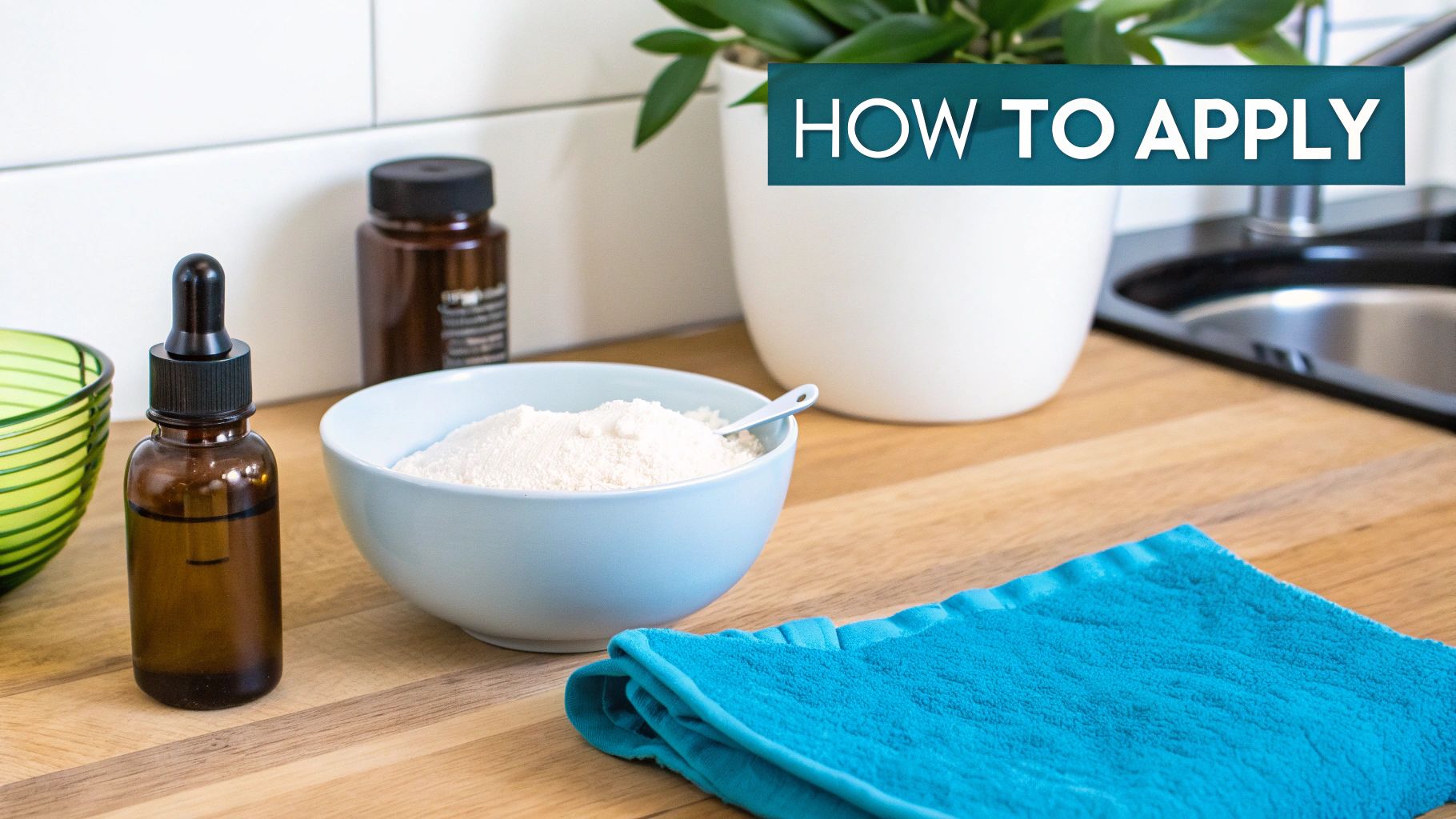
Before you even think about mixing up your first batch of serum, let's talk about your star ingredient. The final product is only as good as the ascorbic acid powder you start with, so getting this first step right is crucial for creating something your skin will love.
The quality of your powder makes all the difference. Not all ascorbic acid is the same, and picking the right kind is key to getting a serum that dissolves properly and packs a potent punch. This is how you ensure your DIY creations are smooth, effective, and ready to deliver those glowing results.
The demand for high-quality ascorbic acid is huge, both in supplements and skincare. The market was valued at around USD 1.25 billion in 2020 and is expected to hit USD 1.61 billion by 2025. This boom is driven by the cosmetic industry's love for its antioxidant powers, making it a must-have for anyone serious about vibrant-looking skin. You can dig deeper into the global ascorbic acid market from futuremarketinsights.com.
What to Look for When Buying
When you’re shopping for ascorbic acid powder for your skin, your number one priority is finding a product labeled L-Ascorbic Acid. This is the pure, biologically active form of Vitamin C, with all the science-backed cosmetic benefits.
Keep an eye out for these key signs of quality:
- Purity: Go for a cosmetic-grade or USP-grade powder. This certification means it’s free from strange additives or contaminants you don't want on your face.
- Texture: The ideal powder is fine and crystalline. This texture dissolves much more easily in water, which is essential for avoiding that gritty, unpleasant feel in your finished serum.
- Source: Always buy from a reputable supplier who specializes in cosmetic ingredients or lotion-making supplies. These vendors understand the high standards required for skincare formulations.
A top-quality L-Ascorbic Acid powder should be a brilliant, pure white and have absolutely no smell. If you see any yellowing or catch a whiff of a strange odor, that's a red flag. It means the powder has already started to oxidize and you should steer clear.
The Golden Rules of Storage
Once you’ve got your hands on some good powder, your next mission is to protect it. Ascorbic acid has four main enemies: light, air, heat, and moisture. Storing it properly keeps it potent, guaranteeing that every drop of serum you make is fresh and powerful.
Follow these simple, non-negotiable rules:
- Use an Airtight Container: This is a must. Keep the powder in a container that seals completely to minimize its exposure to oxygen, the main culprit behind oxidation.
- Choose an Opaque Container: Light is another major problem, as it accelerates degradation. An opaque or dark-colored container is your best bet to block it out completely.
- Find a Cool, Dark, Dry Place: Think of a pantry or a cabinet, far away from any heat or steam. Never keep your ascorbic acid powder in the bathroom—the humidity will make it clump up and go bad in no time.
By sourcing your powder carefully and storing it like a pro, you're setting yourself up for success. These simple habits ensure your DIY serum starts with the freshest, most effective ingredient possible, giving you the best shot at achieving a beautiful, radiant complexion.
Your Step-by-Step DIY Ascorbic Acid Serum Guide
Alright, let's get to the fun part—mixing up your own fresh, potent serum. Making a DIY ascorbic acid serum right in your own kitchen is a lot easier than you might think, especially once you have the right gear and a clear process to follow.
This guide will walk you through every little detail, from gathering your ingredients to bottling up your finished creation. When you follow these steps, you get to be in complete control. You can create a personalized skincare product that's perfectly fresh every single time, without any of the unnecessary fillers you might find in store-bought options.
Gathering Your Essential Supplies
First things first, you'll need to assemble a small toolkit. When it comes to DIY skincare, precision and cleanliness are everything. Having these items ready to go will make the whole process a breeze.
- L-Ascorbic Acid Powder: This is the star of the show. Make sure you get a fine, cosmetic-grade powder for the best results.
- Distilled Water: Always, always use distilled or deionized water. Tap water is full of minerals and chlorine that can throw off your serum's stability.
- A Precise Digital Scale: This is where accuracy really counts. A scale that measures down to 0.01 grams is what you want for nailing those concentrations.
- pH Strips or a Digital pH Meter: This is non-negotiable. You need this to make sure your serum is in that sweet spot where it's both suitable and effective (below 3.5).
- An Opaque Dropper Bottle: An amber or other dark-colored glass bottle is a must-have to protect your serum from light, which can accelerate degradation.
- Optional - Glycerin: Adding a little bit of vegetable glycerin can give your serum a nicer feel and a boost of hydration.
If you're looking for an all-in-one solution to get started, you can check out our Make Your Own Custom Super Serum Kit. It comes with pre-measured ingredients and all the tools you need to simplify the process.
The Formulation Process: A Step-by-Step Method
With your supplies laid out, you're ready to start mixing. Just remember to work in a clean space and sanitize your beakers, stirring rods, and your final bottle before you begin. This recipe will make a 30 ml (1 oz) batch.
- Measure Your Water: Using your digital scale, carefully measure out the distilled water into a small, clean glass beaker. This will be the base of your formula.
- Measure the Ascorbic Acid Powder: Time to decide on your concentration. For a beginner-friendly 10% serum in a 30g batch, you'll want to measure out exactly 3 grams of ascorbic acid powder.
- Dissolve the Powder: Slowly sprinkle the ascorbic acid powder into the water. Stir gently with a clean glass rod until it's completely dissolved. This might take a minute or two, so be patient. The solution should be crystal clear when you're done.
- Add Optional Ingredients: If you're using glycerin for that extra slip and hydration, now's the time to add it. For a 30g batch, about 1-2 grams is a great starting point. Stir it in until it's fully mixed.
- Test the pH: This is the most critical step, so don't skip it! Dip a pH strip into your serum or use a digital meter. You're aiming for a pH between 2.8 and 3.4. If it's too high, it won't work well; too low, and it could be irritating.
- Bottle and Label: Once you've got the pH just right, carefully pour your serum into your dark glass dropper bottle. Make sure to label it with the date you made it so you can keep track of how fresh it is.
To help you choose the right concentration, here's a simple guide based on your skin's experience level with Vitamin C.
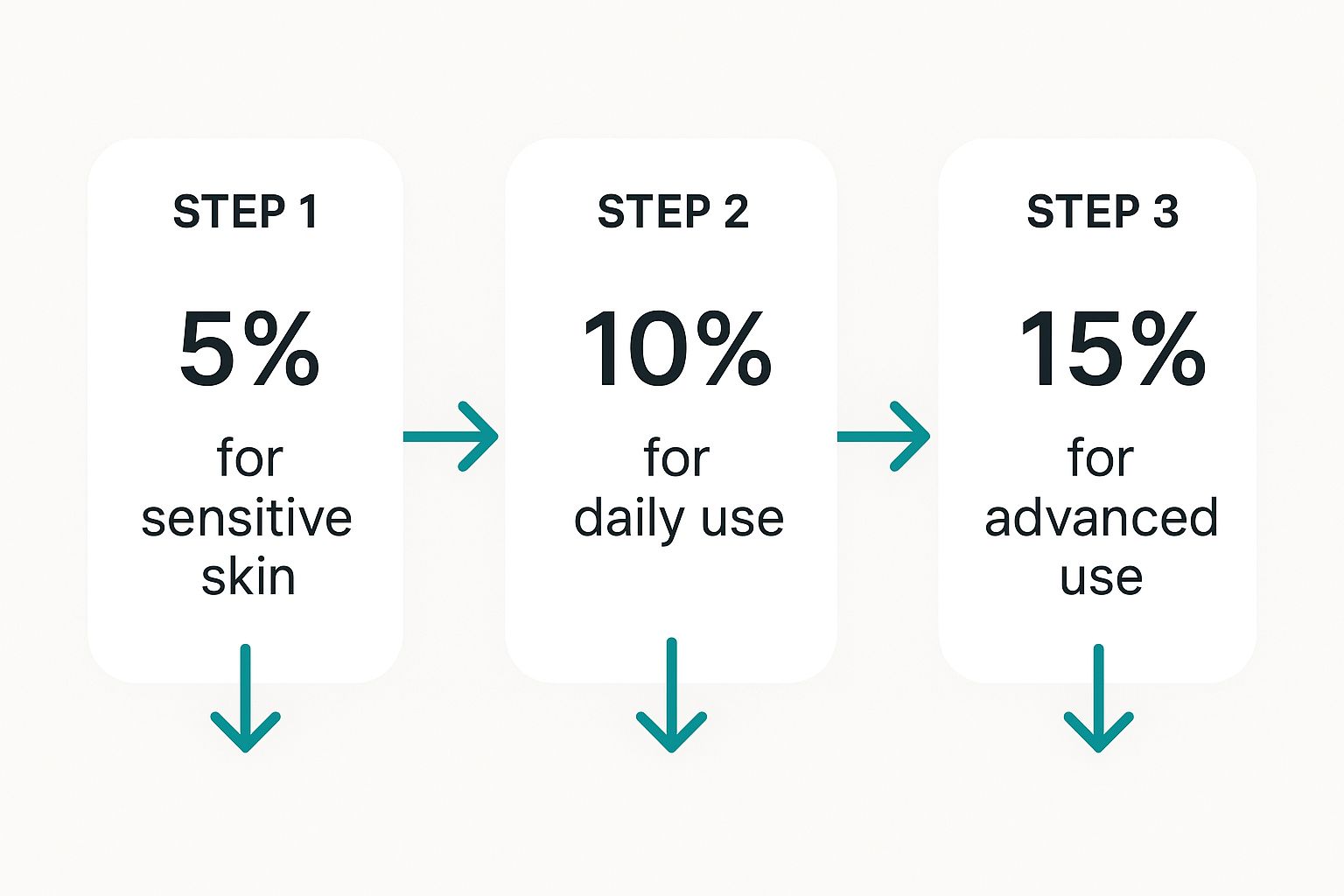
Starting with a lower percentage lets your skin get used to it before you decide to move up to higher strengths for even more noticeable results.
For this recipe, we'll create a simple 30ml (1 oz) batch of a 10% serum. It's a fantastic starting point for anyone new to DIY Vitamin C.
DIY Ascorbic Acid Serum Recipe (10% Concentration)
| Ingredient | Amount (grams) | Purpose |
|---|---|---|
| Distilled Water | 24 | The base of your serum |
| L-Ascorbic Acid Powder | 3 | The active antioxidant ingredient |
| Vegetable Glycerin (Optional) | 3 | Adds hydration and improves texture |
This simple three-ingredient recipe gives you a powerful, fresh serum that you can customize as you get more comfortable with the process.
Critical Safety and Freshness Tips
Embarking on your DIY journey means putting safety first. Because this homemade serum doesn't have any preservatives, its shelf life is very short.
Make Small Batches Weekly: To ensure your serum is always fresh and potent, only make enough to last you for one week. Keep it in the refrigerator to slow down oxidation. If you ever see the serum change color to yellow or brown, it's time to toss it out.
Most importantly, always do a patch test. Before slathering a new batch all over your face, test a small amount on a hidden spot like your inner arm or behind your ear. Give it 24 hours to make sure your skin is happy with it.
Finally, to get the best results, always apply your serum to clean skin. Understanding the importance of clean skin for accurate skincare results can truly make a difference in how well any product, including your new DIY serum, works.
Taking Your Serum to the Next Level with Advanced Formulations
So, you've mastered the basic DIY serum. Fantastic! Once you're comfortable with a simple two or three-ingredient formula, you might start getting curious about what else is possible. This is where the real fun begins—personalizing your creation with other powerhouse ingredients that work beautifully with your ascorbic acid powder for skin for even better results.
Think of your basic serum as a solid, reliable foundation. Now it's time to build on it. By adding a few well-chosen supporting ingredients, you can make your serum more stable, add a serious dose of hydration, and give it a more elegant, professional feel.
Creating a Powerful Antioxidant Trio
As we mentioned earlier, one of the best moves you can make is to pair L-Ascorbic Acid with its two famous partners: ferulic acid and vitamin E. There's a reason this combination is a legend in the skincare world. Together, they create a synergistic antioxidant cocktail that surpasses what ascorbic acid can do on its own.
- Ferulic Acid: This plant-based antioxidant is an absolute pro at stabilization. Adding it to your serum helps shield L-Ascorbic Acid from breaking down so quickly, so your batch stays potent for longer. A good target is around 0.5%.
- Vitamin E (Tocopherol): An oil-soluble antioxidant, Vitamin E is the perfect counterpart to water-soluble Vitamin C. When they join forces, they offer a much more complete approach to addressing daily environmental aggressors. A common usage rate for Vitamin E is 1%.
Getting these into your formula is a little more advanced since they need a solvent to dissolve properly, but the payoff in performance is huge.
Boosting Hydration for a Plumper Look
While ascorbic acid is the star of the show, your serum can easily do more than just deliver antioxidants. Adding humectants—ingredients that are like magnets for water—can give your skin that beautiful, plump, and hydrated bounce. It turns your serum into a multi-tasker that brightens and moisturizes.
Two fantastic and easy-to-use options are:
- Glycerin: A simple, super-effective, and affordable humectant that pulls moisture right into the skin. Adding it at 2-5% can also give your serum a smoother, more pleasant glide.
- Hyaluronic Acid: Famous for its ability to hold a wild amount of water, hyaluronic acid is perfect for achieving a dewy, quenched look. A little goes a long, long way; incorporating it via a 1% stock solution is a popular method.
These additions not only make your serum feel more luxurious but also give you an instant visual boost by making your skin look more supple and full.
Troubleshooting Common Formulation Issues
As you get more adventurous with your ascorbic acid powder skin creations, you're bound to hit a few snags. Don't sweat it—most of these common hurdles have a straightforward fix.
Key Takeaway: Perfecting a DIY serum is a process. Every batch you make is a chance to learn something new, and troubleshooting is just part of becoming a skilled home formulator.
Here’s how to handle the most frequent problems:
- Problem: The Powder Won’t Dissolve: Seeing gritty bits floating around? You might have added the powder too fast or used too much for the amount of water. Try gently warming the distilled water (not hot!) and adding the ascorbic acid very slowly while stirring constantly.
- Problem: The pH is Too High or Too Low: Nailing the pH is non-negotiable. If it’s over 3.5, the serum won't work well. If it's below 2.5, it can be really irritating. While you can use pH adjusters, the simplest fix is to carefully re-measure everything and start a fresh batch, double-checking that your scale is accurate.
- Problem: The Serum Feels Sticky: Stickiness often indicates too much glycerin or hyaluronic acid. It's an easy fix: just dial back the percentage in your next batch until you land on a texture you absolutely love.
The global interest in skincare ingredients like ascorbic acid is shaped by different consumer needs worldwide. For instance, market analyses reveal that in the Asia-Pacific region, a rising middle class is boosting demand for high-end skincare. In Europe, a strong focus on regulation is driving companies to create more sustainable formulas and packaging for products like powdered ascorbic acid. To dive deeper, you can discover additional market insights on ascorbic acid from 360iresearch.com.
Common Mistakes and Safety Precautions to Follow
Working with pure L-Ascorbic Acid powder is incredibly rewarding, but you have to respect its power. Think of it like a professional tool in your skincare workshop—using it correctly is the key to getting a beautiful result. A few simple rules will keep your DIY journey on track and your skin happy.
These guidelines aren't just casual suggestions. They are absolutely essential for anyone formulating with an active ingredient as strong as ascorbic acid. Smart, responsible handling is what separates a great DIY skincare routine from a potential disaster.
Always Start with a Patch Test
This is the golden rule of DIY skincare, bar none. Before you even think about putting a new creation on your face, you must perform a patch test. Every single time you mix a new batch, this step is non-negotiable.
Just apply a small dab of the serum to a discreet spot, like the inside of your wrist or behind your ear. Give it at least 24 hours to see how your skin reacts. It’s a simple step that can save you from a world of irritation if the formula isn't right for you.
A patch test is your personal safety check. It’s the most reliable way to ensure a new formula agrees with your unique skin, preventing widespread irritation from a concentration or ingredient that isn't the right fit for you.
Smart Formulation Practices
Beyond the patch test, a few other key habits will set you up for success. These practices minimize the risk of irritation and ensure your serum is both effective and gentle on your skin.
- Start Low and Go Slow: If you're new to using ascorbic acid powder skin serums, always begin with a lower strength, around 5-10%. This lets your skin get used to the ingredient before you even consider moving up to higher concentrations.
- Mind the pH: As we've covered, a pH that’s too acidic (below 2.5) can be seriously irritating. Always test your final product with pH strips to make sure it falls within that sweet spot of 2.8 to 3.4.
- Wear Sunscreen Daily: Using potent ingredients like L-Ascorbic Acid can make your skin more sensitive to the sun. Slathering on a broad-spectrum sunscreen every single morning is a must to get the most out of your hard work.
Common Mistakes to Avoid
Navigating the world of DIY skincare usually involves some trial and error. But you can sidestep the most common headaches by avoiding these frequent mistakes that can tank your serum's effectiveness.
- Using Tap Water: Never, ever use tap water in your formulas. It’s full of minerals and chlorine that can destabilize the ascorbic acid and introduce nasty contaminants. Stick to distilled or deionized water only.
- Making Batches That Are Too Large: I get it, it’s tempting to mix a big batch to save time. This is a critical error. Without preservatives, your serum will oxidize and go bad quickly. Only make enough for one week at a time to guarantee you're always using a fresh, potent product.
- Improper Storage: Leaving your finished serum on a bright or warm bathroom counter is a recipe for rapid degradation. Your serum's best friend is a dark, opaque bottle stored safely inside the refrigerator.
Your Questions on Ascorbic Acid Powder Answered
Stepping into the world of DIY skincare can feel a little intimidating, and it's totally normal to have questions. Let's tackle some of the most common ones about using ascorbic acid powder so you can create your serums with total confidence.
How Do I Know If My DIY Serum Has Gone Bad?
This one's pretty straightforward, and your eyes are the best tool you have. A freshly made L-Ascorbic Acid serum should be perfectly clear or have a very faint, pale yellow tint to it.
Once it starts turning a more noticeable yellow, orange, or even brown, that’s your signal it has oxidized. When this happens, it's lost its antioxidant power and won't do your skin any good. It's time to toss it out. This is exactly why we always recommend making small batches weekly—it ensures you're always using a fresh, potent product.
Can I Mix Ascorbic Acid Powder Into My Moisturizer?
We get this question a lot, but it’s something we strongly advise against. Most moisturizers are formulated at a pH that's simply too high to keep the ascorbic acid stable and effective.
Plus, dropping the powder directly into your cream can throw the entire formula out of whack, potentially messing with the texture and even the preservative system. For the best, most reliable results, you’ll want to create a separate, water-based serum where you can control the pH perfectly.
Is a Tingling Sensation Normal After Application?
Yes, a mild tingling feeling can be completely normal for some people. This is especially true when you first introduce a powerful active ingredient like L-Ascorbic Acid to your skin.
However, you need to listen to your skin. If that slight tingle crosses the line into stinging, burning, or if you see any redness, rinse the serum off immediately. It’s a clear sign that the concentration is likely too high for your skin to handle right now.
Ready to start your DIY journey with ingredients you can trust? At Skin Perfection, we provide premium lotion-making supplies, including cosmetic-grade L-Ascorbic Acid powder, to help you create skincare that achieves a beautiful, radiant appearance. Explore our full range of supplies and take control of your routine by visiting us at https://www.naturalorganicskincare.com.