

 Buy with Prime


When you're on the hunt for the best peptides for skin tightening, you're really looking for ingredients that help your skin look firm, taut, and smooth. A simple way to think about peptides is as little messengers for your skin's most important proteins, like collagen and elastin, reminding them to keep up their work in maintaining the skin's structure and youthful appearance.
Your Guide to Peptides for Firmer Skin
You’ve probably seen peptides popping up everywhere, and for good reason. These powerhouse ingredients have become a non-negotiable in modern skincare, especially for anyone wanting to maintain a visibly firm and supple complexion. But what are they, really?
Peptides are just short chains of amino acids, which are the fundamental building blocks of proteins in your skin. Think of them as tiny communicators. In skincare, their main job is to send signals to your skin cells, encouraging the natural processes that help keep skin looking resilient and smooth.
This unique communication role is precisely why peptides are so highly regarded. By supporting the skin's existing proteins, they help preserve the look of elasticity and firmness that can fade over time. This makes them a go-to for anyone looking to address the appearance of fine lines and a less defined facial contour.
Understanding the Different Peptide Categories
Not all peptides do the same thing; different types have completely different jobs. To make your search for the best peptides for skin tightening a little easier, it helps to understand their main functions. This isn't about getting bogged down in complex science, but rather knowing what to look for on an ingredient label to hit your specific goals.
Think of it this way: If your skin is a construction project, collagen and elastin are the steel beams giving it structure. Peptides are the project managers, making sure the "workers" (your skin cells) get the right instructions to keep the whole building strong and organized.
The demand for effective skincare is only getting stronger. The global market for skin tightening products was valued at USD 651.3 million in 2022 and is expected to grow significantly. This boom reflects a real desire to maintain a youthful appearance, with ingredients like peptides leading the charge. You can discover more insights about the skin tightening market on Grandview Research.
To help you get started, here's a quick cheat sheet on the main types of peptides and what they do.
Overview of Key Peptide Categories for Skin Appearance
This table gives you a quick summary of the main types of peptides we'll cover in this guide and their role in supporting the skin's appearance.
| Peptide Category | Primary Role in Skincare | Example Peptide |
|---|---|---|
| Signal Peptides | Encourage the appearance of the skin's natural proteins for a firmer look. | Palmitoyl Tripeptide-5 |
| Carrier Peptides | Deliver essential minerals to support overall skin appearance. | Copper Tripeptide-1 |
| Neurotransmitter Peptides | Soften the look of expression lines for a smoother texture. | Acetyl Hexapeptide-8 |
| Enzyme Inhibitor Peptides | Help maintain the look of existing collagen for a plump appearance. | Trifluoroacetyl Tripeptide-2 |
This quick overview should help you start identifying which peptides align best with your goals for a firmer, more radiant look.
How Peptides Support Your Skin's Structure
To really get why certain ingredients are considered the best peptides for skin tightening, it helps to understand what they're actually doing in your skin. Let's skip the dense science for a minute and try a simple analogy.
Picture your skin as a big, intricate building.
The key proteins in your skin, like collagen and elastin, are the steel beams and foundation holding it all together. They provide the strength and structure that keep the building standing tall and firm. But over time, the construction crew that builds and maintains this structure can start to slow down.
This is where peptides step in. Think of them as the project managers on the job site. They aren't the building materials themselves, but they’re the messengers telling the workers—your skin cells—to get back to work maintaining that crucial framework.
The Role of Amino Acids
At their core, peptides are just short chains of amino acids, which are the literal building blocks of proteins. Their job in skincare is to act as tiny communicators, signaling your skin to kickstart the natural processes that keep it looking firm and smooth.
Once you understand this role, it's easy to see why peptides are so popular. They aren't forcing a foreign substance to do the work. Instead, they’re gently nudging your skin's own built-in functions to get the job done. This effective yet supportive approach is why you see them in so many advanced skincare formulas.
In essence, peptides help your skin help itself. By sending the right signals, they support the maintenance of collagen and elastin, which are crucial for preserving the look of youthful firmness and bounce.
It's not just us saying it; the market reflects a huge consumer shift toward smarter ingredients. The peptide cosmetics industry was valued at a whopping USD 2.5 billion in 2023 and is expected to more than double in the next few years. This growth shows that people are actively looking for ingredients that work with their skin's biology, not against it.
Why Peptides Are So Effective
The secret to a peptide's success is all about its size. Because they are much smaller than whole proteins like collagen, they can actually penetrate the skin's surface layers. Once they're in, they can start sending their specific messages.
Different peptides send different signals, which is why you’ll see such a variety in skincare products. For example:
- Signal Peptides: These are the ones that can encourage the skin to maintain its existing collagen, supporting a plump, firm look.
- Carrier Peptides: Their job is to deliver essential trace elements that support the skin's overall appearance.
- Other specialized peptides focus on softening the look of expression lines, helping to create a smoother texture.
Knowing how different peptides work is key to choosing the right products for your goals. For example, understanding the benefits of multi collagen peptides can highlight their role in supporting the skin's structure from the inside out.
The targeted nature of these amino acid chains lets you take a focused approach to your skincare. If you're curious about the best way to get these ingredients into your skin, you might want to read our guide on what is a peptide serum. By choosing products with specific peptides, you can address concerns like sagging or fine lines, promoting a tighter and more youthful appearance over time.
Getting to Know the Top Peptides for Skin Firmness
Okay, so we know why peptides are a big deal. Now for the fun part: figuring out which ones to look for. Think of it like a construction crew—you have plumbers, electricians, and framers, each with a specific job. The peptide world is no different. Certain types are rockstars when it comes to encouraging a firm, lifted look.
When you're on the hunt for the best peptides for skin tightening, a few key players will pop up on ingredient lists over and over. They aren't just popular for no reason; they have very specific, well-researched jobs. Getting to know them helps you become a smarter shopper, so you can pick products that actually line up with what you want for your skin.
Let’s break down the most popular and effective peptides known for promoting that taut, smooth appearance. No boring science lecture here—just what each one does in simple, practical terms.
Palmitoyl Tripeptide-5: The Collagen Cheerleader
First up is one of the most well-known signal peptides: Palmitoyl Tripeptide-5. You can think of this one as a master motivator for your skin's collagen. Its main gig is sending messages that encourage your skin's natural collagen, which is absolutely essential for keeping everything looking plump and firm.
This clever peptide is made of three amino acids attached to palmitic acid (a fatty acid), which helps it sink into the skin more effectively. Once it's in, it starts "talking" to your skin cells, supporting the processes that keep your skin looking resilient and youthful.
Because it’s so laser-focused on collagen, Palmitoyl Tripeptide-5 is a fantastic ingredient for anyone hoping to improve the look of their skin’s texture and firmness. It’s what helps give skin that dense, bouncy feeling that makes it look more sculpted over time.
Acetyl Hexapeptide-8: The Expression Line Smoother
Next, we have Acetyl Hexapeptide-8, which you might recognize by its trade name, Argireline. This one works a little differently. It's what's known as a neurotransmitter-inhibiting peptide, which sounds complicated, but its job is surprisingly simple.
Picture the tiny muscles in your face that create lines when you smile, frown, or raise your eyebrows. Acetyl Hexapeptide-8 works to subtly soften the appearance of these dynamic wrinkles. It doesn't freeze your face, but it does help relax the look of the skin on the surface.
This makes it especially great for tackling the fine lines that show up from repeated facial movements, like:
- Crow's feet around the eyes
- Forehead lines
- The "eleven" lines between the brows
By helping to smooth the look of these specific trouble spots, Acetyl Hexapeptide-8 gives you a softer, more refreshed-looking complexion. It’s a targeted approach for anyone bothered by expression-related aging.
Copper Tripeptide-1: The Skin Beautifier
Finally, let's chat about Copper Tripeptide-1 (GHK-Cu). This is a carrier peptide, and its whole purpose is to deliver the essential trace mineral copper right where your skin cells need it. Copper is a vital player in many of your skin's natural functions, including those that support a firm and smooth appearance.
Think of copper peptides as a VIP delivery service for a crucial package. They make sure copper gets exactly where it needs to go to support the skin's foundation, promoting a healthy, vibrant look.
Copper peptides are famous for their wide range of benefits. On top of supporting a firmer look, they also have antioxidant properties. This means they help shield your skin's surface from environmental stressors that can make signs of aging show up sooner than you'd like.
Their do-it-all role makes them a super valuable addition to any routine focused on keeping skin resilient and glowing. If you want to go deeper, you can learn more about the benefits of copper peptides on your skin in our dedicated guide.
Other Peptides to Keep on Your Radar
While those three are some of the biggest names in the game, the world of peptides is huge and always growing. You'll often find that the best products mix several different peptides together to create a powerful cocktail, tackling skin appearance from multiple angles at once.
Here are a few other names you might spot on a label that are also fantastic for supporting a firm look:
- Matrixyl (Palmitoyl Pentapeptide-4): Another powerful signal peptide that works to visibly soften the appearance of wrinkles and improve skin texture.
- Trifluoroacetyl Tripeptide-2: An enzyme-inhibitor peptide that helps maintain the look of your skin's existing collagen, keeping it looking plump.
- Dipeptide Diaminobutyroyl Benzylamide Diacetate (SYN-AKE): Similar to Argireline, this peptide is designed to soften the look of expression lines for a smoother finish.
By getting familiar with these key players, you can scan an ingredient list with confidence and know exactly what a product is designed to do. This is the kind of knowledge that empowers you to choose the very best peptides for skin tightening based on what your unique skin really needs.
How to Choose the Right Peptide Products
Stepping into the world of peptide skincare can feel a bit like walking into a massive library—so many options, but where on earth do you begin? Just seeing a popular peptide featured on a label isn't enough to guarantee you've found a winner. The real magic is in the entire formulation, where every single ingredient works together in perfect harmony.
To become a savvy shopper, you have to learn to look beyond the star ingredient and read the full cast list. A truly well-made product will pair its powerful peptides with other beneficial ingredients, creating the ideal environment for them to do their best work. Think of it as a team effort—the peptide might be the star player, but it needs a solid team to win the game.
Look Beyond the Star Peptide
A product's effectiveness hinges on more than just one peptide. You'll find that the most effective formulas are actually cocktails of several different peptides combined with other skin-loving ingredients. This multi-pronged approach helps tackle the appearance of sagging skin from a few different angles.
For example, a product might combine a signal peptide to encourage collagen's appearance with a neurotransmitter peptide to soften the look of expression lines. This kind of synergy is far more powerful than relying on a single ingredient to do all the heavy lifting.
The key takeaway is to view the ingredient list as a recipe. A single great ingredient is a good start, but the final result depends on how well all the components are balanced and work together to create a beautiful final dish.
The Importance of Supporting Ingredients
Peptides don't operate in a vacuum. To give them the best chance to work their magic, they need a supportive environment. That’s where other ingredients come in, playing crucial roles that complement what the peptides are trying to do.
Keep an eye out for these supportive players on the ingredient list:
- Antioxidants: Ingredients like Vitamin C and Niacinamide help protect the skin's surface from environmental stressors, which is key to preserving a youthful appearance.
- Hydrators: Hyaluronic Acid and Glycerin are fantastic for drawing moisture into the skin, creating a plump, hydrated canvas. This plumping effect can visibly improve the look of fine lines and firmness.
- Ceramides: These lipids are absolutely essential for maintaining the skin's natural barrier, keeping it looking healthy and resilient.
When you see these ingredients alongside peptides, it’s a great sign you're looking at a well-rounded and thoughtfully created product. For more insights on building a powerful regimen, check out our guide on 5 Must-Have Anti-Aging Peptides for Mature Skin.
Choosing Your Peptide Formulation
The format of your peptide product—whether it’s a lightweight serum or a rich cream—also plays a huge role in how well it will work for you. This choice often comes down to your skin type and what feels best on your skin. The global cosmetic active peptides market is projected to reach $416.7 million in 2025, which just goes to show how many different product types are now available. You can read the full research about cosmetic active peptides here.
To help you decide which format is right for you, here’s a quick comparison.
| Product Type | Best For | Key Considerations |
|---|---|---|
| Serums | Oily, combination, or normal skin types seeking targeted, potent formulas. | Serums are typically water-based and lightweight, allowing for better application of active ingredients. They are perfect for layering under a moisturizer. |
| Lotions | Normal to combination skin types who need balanced hydration. | Lotions offer more moisture than a serum but are lighter than a cream, making them a great daily option for many. |
| Creams | Dry or mature skin types that require richer moisture and barrier support. | Creams have a thicker consistency, providing intense hydration and locking in the benefits of any serums applied beforehand. |
Ultimately, choosing the right product is about understanding that the best peptides are those delivered in a formula that your skin loves. By examining the full ingredient list and selecting a format that suits your needs, you can make an informed choice that helps you achieve a visibly firmer, smoother, and more radiant complexion.
Integrating Peptides Into Your Skincare Routine
So, you're ready to add peptides to your regimen? Awesome. It’s way simpler than it sounds. Getting the most out of these powerful ingredients really just boils down to consistency and applying them correctly. Think of it like choreographing a dance—each step has to happen in the right order for a beautiful performance.
Properly layering your products is key. It ensures the peptides can actually get to your skin and do their job, instead of getting blocked by heavier stuff. A well-structured routine creates the perfect environment for every ingredient to work towards your goals of firmer, smoother-looking skin.
The Correct Order of Application
The golden rule of skincare layering is to go from the thinnest consistency to the thickest. This lets lightweight, water-based formulas sink in properly before you seal them with heavier creams or oils. Peptides are usually found in serums, so they should go on pretty early in your routine.
Here’s a simple, effective sequence to follow:
- Cleanse: Always start with a clean canvas. A gentle cleanser washes away dirt, oil, and gunk, prepping your skin for all the good stuff to come.
- Tone (Optional): If you use a toner, now's the time. It helps balance your skin's pH and adds a first layer of hydration.
- Apply Your Peptide Serum: Put a pea-sized amount onto your fingertips. Gently pat it onto your face and neck. Pro-tip: apply it while your skin is still a little damp to help it absorb even better.
- Add Other Serums: If you're using other serums (like hyaluronic acid), you can layer them on now.
- Moisturize: Lock it all in with your favorite moisturizer to keep your skin hydrated and seal in all those beneficial ingredients. And in the morning, always, always follow up with a broad-spectrum sunscreen.
The infographic below provides a quick visual guide to choosing the right peptide products for your specific needs.
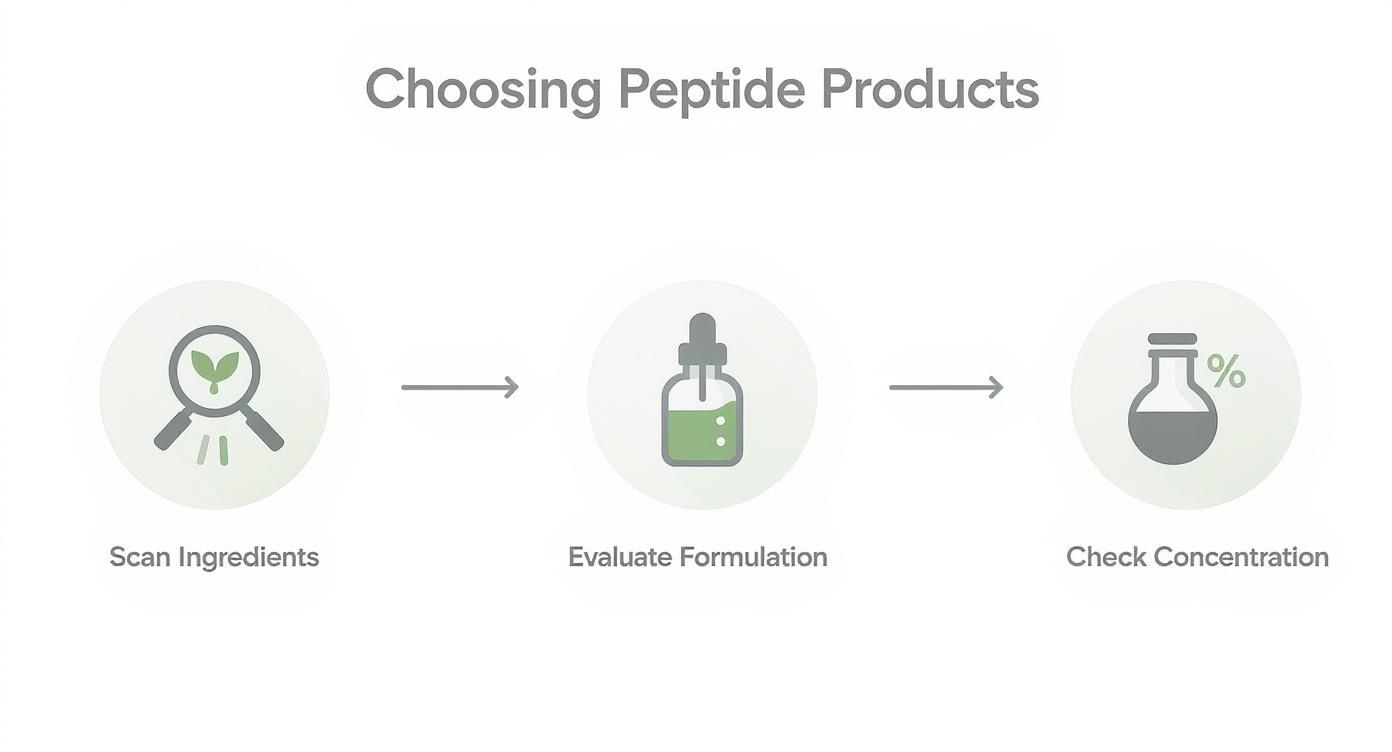
As the guide shows, choosing the right product means looking at the ingredients, formulation, and concentration to make sure it’s a good match for what your skin really needs.
How Often Should You Use Peptides?
For the best results, consistency is your best friend. Most peptide products are gentle enough for daily use, both in the morning and at night. Using them twice a day helps maintain a steady supply of these helpful messengers for your skin.
Think of it like watering a plant. A little bit of water every day is far more effective than a huge downpour once a week. Consistent application keeps your skin supported around the clock.
This steady approach ensures your skin is continuously getting the signals it needs to encourage a firm, youthful appearance.
Layering Peptides with Other Active Ingredients
Good news: peptides are total team players and get along well with most other skincare ingredients. In fact, combining them with certain actives can create a powerhouse routine that tackles multiple concerns at once.
Here are some excellent pairings:
- Hyaluronic Acid: This stuff is a moisture magnet. It draws water into the skin, creating a plump, hydrated look that perfectly complements the firming appearance peptides support.
- Vitamin C: An antioxidant powerhouse, Vitamin C helps protect your skin's surface from daily environmental stressors. Using it in your morning routine alongside peptides helps support a bright, resilient complexion.
- Retinoids: Peptides and retinoids can absolutely be in the same routine. A lot of people like to use their peptide product in the morning and their retinoid at night, just to give each active its own space to shine.
One little caveat: it’s often suggested you avoid using peptides in the same breath as direct acids like AHAs (glycolic acid) and BHAs (salicylic acid). Highly acidic environments can sometimes interfere with how they function. The easy fix? Use your acid-based products at night and your peptide serum in the morning. This simple separation lets you get the benefits of both without any drama.
Your Top Questions About Peptides Answered
Diving into the world of peptides can definitely spark a few questions. To help you feel completely comfortable adding them to your routine, we've put together answers for the most common things people wonder about. Let's clear up any confusion so you can get started with confidence.
How Long Until I See a Difference in My Skin's Appearance?
Patience is everything in skincare, and peptides are no different. While you might feel some initial smoothness right away thanks to their hydrating effects, the real magic—the visible firming and textural changes—takes a little more time.
Most people start to see a noticeable difference after 4 to 12 weeks of using a peptide product consistently, meaning twice a day. This window gives the peptides enough time to get to work supporting your skin’s natural cycles. Remember, the goal here is a gradual, steady improvement in your skin's resilience and smoothness, which simply can't happen overnight.
Are There Side Effects When Using Peptide Products?
For the most part, peptides are incredibly well-tolerated, even by sensitive skin. Because they're made of amino acids—the building blocks of proteins already found in your body—they're considered a much gentler option compared to some other powerhouse ingredients.
That said, with any new product, there's always a small chance of a reaction. A good rule of thumb is to always patch-test a new peptide product on a small, hidden area of skin before slathering it all over your face. Many people ask about this. For a more detailed look, you can learn more about whether Are Peptides Safe?.
Can I Use Multiple Products with Different Peptides?
Absolutely! In fact, layering products with different kinds of peptides can be a fantastic strategy. This technique is sometimes called "peptide stacking," and it lets you tackle the signs of aging from multiple angles at once.
Think of it like assembling a team of specialists. One peptide might be a rockstar at encouraging a firm look, while another is a pro at smoothing out expression lines. Using them together gives you a much more powerful, well-rounded approach.
For example, you could layer a serum with a signal peptide like Palmitoyl Tripeptide-5 to support a plumper appearance, then follow it with a cream containing Acetyl Hexapeptide-8 to soften the look of crow's feet. This kind of combination is often what makes professional-grade formulas so effective.
Are Peptides Better Than Retinol for Skin Appearance?
This is a really common question, but it's not about one being "better" than the other. Peptides and retinol are more like fantastic partners that work in totally different ways to benefit your skin.
- Peptides are like little messengers that support your skin's structure, helping it maintain a firm, smooth appearance. They are also famously gentle.
- Retinol, which is a form of vitamin A, works by encouraging skin cell turnover to refine texture and the look of lines.
Many people find that using both delivers the best of both worlds. A great way to do this is to use your peptide serum in the morning and save your retinol product for nighttime. This routine lets you get the unique benefits of each ingredient without overwhelming your skin. For those with super sensitive skin, peptides are often a perfect starting point for targeting signs of aging.
Do Peptides Work for All Skin Types?
Yes, and that's one of the best things about them! Because peptides are so gentle and support the skin's own natural functions, they are suitable for just about everyone.
- Dry Skin: Gets a major boost from the way peptides support a healthy skin barrier, which is crucial for locking in moisture.
- Oily and Combination Skin: Can easily find lightweight peptide serums that firm and smooth without feeling heavy or clogging pores.
- Sensitive Skin: Often thrives with peptides, as they're far less likely to cause the irritation that can come with stronger actives.
No matter your skin type, adding the right peptides into your routine can be a huge step toward achieving a more resilient, smooth, and youthful-looking complexion.
At Skin Perfection, we are dedicated to providing high-performance actives, including a wide array of peptides, to help you create skincare that meets your unique needs. Explore our collection of ingredients and ready-made products to support your journey toward beautiful, radiant-looking skin.
Discover our full range of peptide products and DIY supplies at Skin Perfection today!