

 Buy with Prime



You've bought a hydrating serum, something for fine lines, and another bottle promising a brighter-looking complexion. Now you're standing at the sink, wondering which goes first and whether using everything together is a good idea. Learning how to use face serum starts with a simpler question: what does your routine need?
Table of Contents
- Build a Simple Serum Routine
- Choose the Right Face Serum
- Apply Face Serum in the Right Order
- Adapt Serum Use to Skin Type and Concern
- Avoid Irritation and Common Mistakes
- Make a Basic DIY Serum Blend
- Finalize Your Daily Serum Approach
Build a Simple Serum Routine
A serum is a targeted cosmetic layer, not a replacement for washing your face, moisturizing, or wearing sunscreen. Give it a specific job, such as adding hydration or improving the appearance of uneven tone, rather than treating every bottle as an essential step.
Start by separating your existing products into cleansing, targeted care, moisturizing, and daytime protection. If you're unsure where an item belongs, check its directions before adding it. Our skincare routine for beginners offers a useful starting framework.
Give Each Product a Reason to Be There
Before choosing a serum, make these decisions:
- Name your priority. Choose the cosmetic concern you most want to address, such as a dry-looking surface or visible fine lines.
- Review what you already use. A moisturizer and serum may contain overlapping ingredients, so another product isn't automatically necessary.
- Choose a manageable routine. Start with a serum you can use according to its label without rearranging your entire shelf.
- Keep the baseline steady. Changing your cleanser, serum, and cream together makes it harder to identify which change you like or dislike.
Practical rule: A useful serum has a clear purpose and a clear place in your routine.
Cosmetic expectations matter, too. Think in terms of skin that looks smoother, more hydrated, or more even, not guaranteed changes beneath the surface. The FDA's guidance on anti-aging products distinguishes moisturizing that makes lines appear less noticeable from claims about changing skin structure or increasing collagen production.
A smaller routine isn't a compromise when each product earns its place. It's a more controlled way to judge comfort, appearance, and whether you'll keep using it.
Choose the Right Face Serum
Choose the result you want before choosing the ingredient headline. Then check whether the product's texture, directions, scent, and complete ingredient list suit your preferences and existing routine.
| Your cosmetic priority | What to look for | The practical trade-off |
|---|---|---|
| More hydrated-looking skin | A hydrating finished serum with clear application directions | You may still need moisturizer afterward |
| Less noticeable fine lines | An appearance-focused formula with disclosed ingredients | A more complex formula requires closer attention to tolerance |
| A brighter, more even-looking complexion | Clearly stated cosmetic benefits and a complete ingredient list | Adding several overlapping products makes evaluation harder |
| A comfortable, simple routine | A formula whose ingredients and scent suit your preferences | Natural positioning alone doesn't establish suitability |
Texture deserves its own decision. Compare oil-based and water-based serums against the moisturizer and sunscreen you already enjoy using, rather than assuming every serum feels alike.
Read Beyond the Front Label
When comparing a hyaluronic acid serum from Loyaltie with other options, review the whole formula and directions rather than selecting by the ingredient name alone. A headline ingredient doesn't describe the entire product.
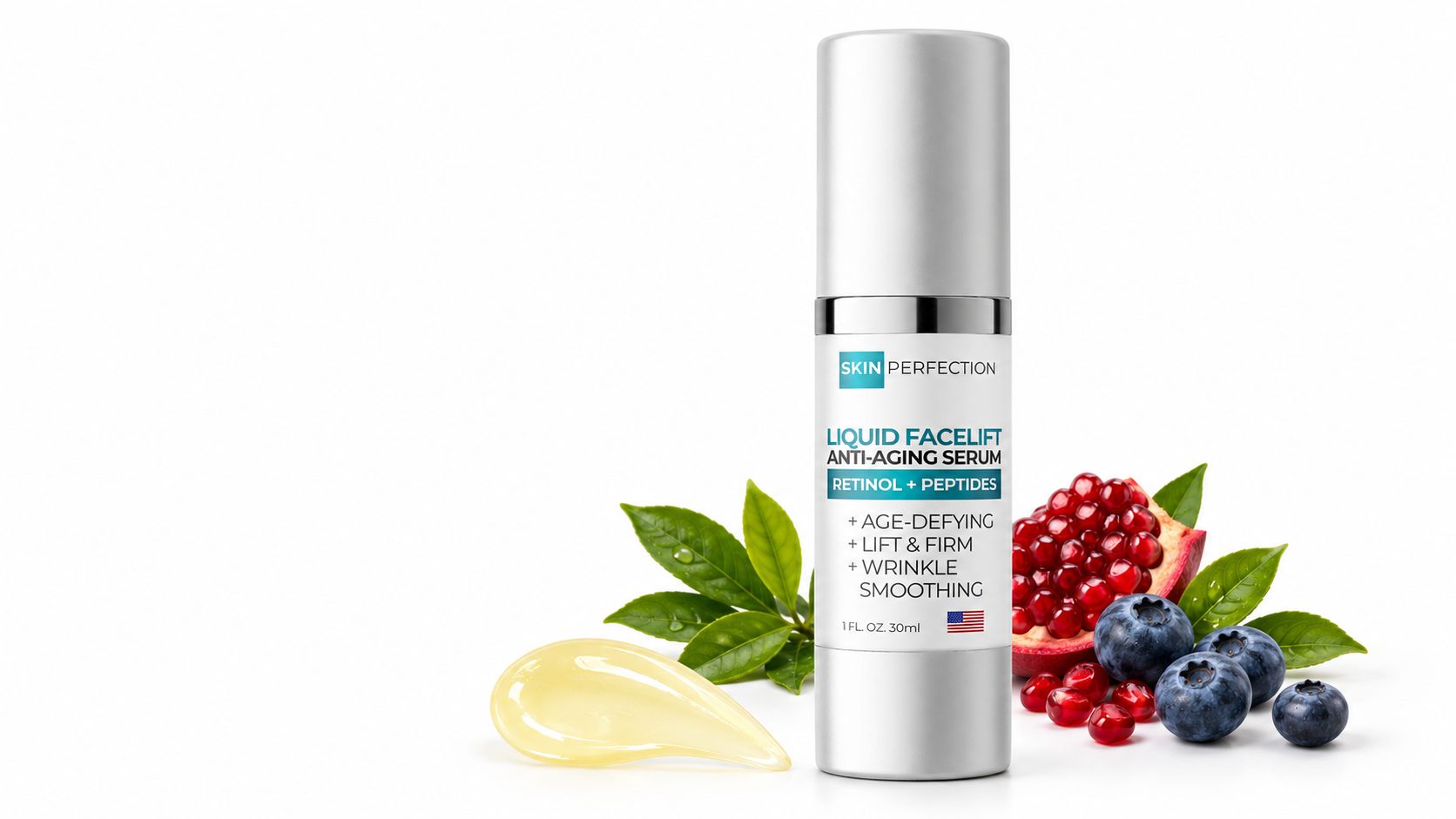
For a peptide-and-retinol example, Liquid Facelift Collagen Serum combines those ingredient categories in a finished cosmetic serum. Retinol sensitivity should influence whether that type of formula belongs in your routine.
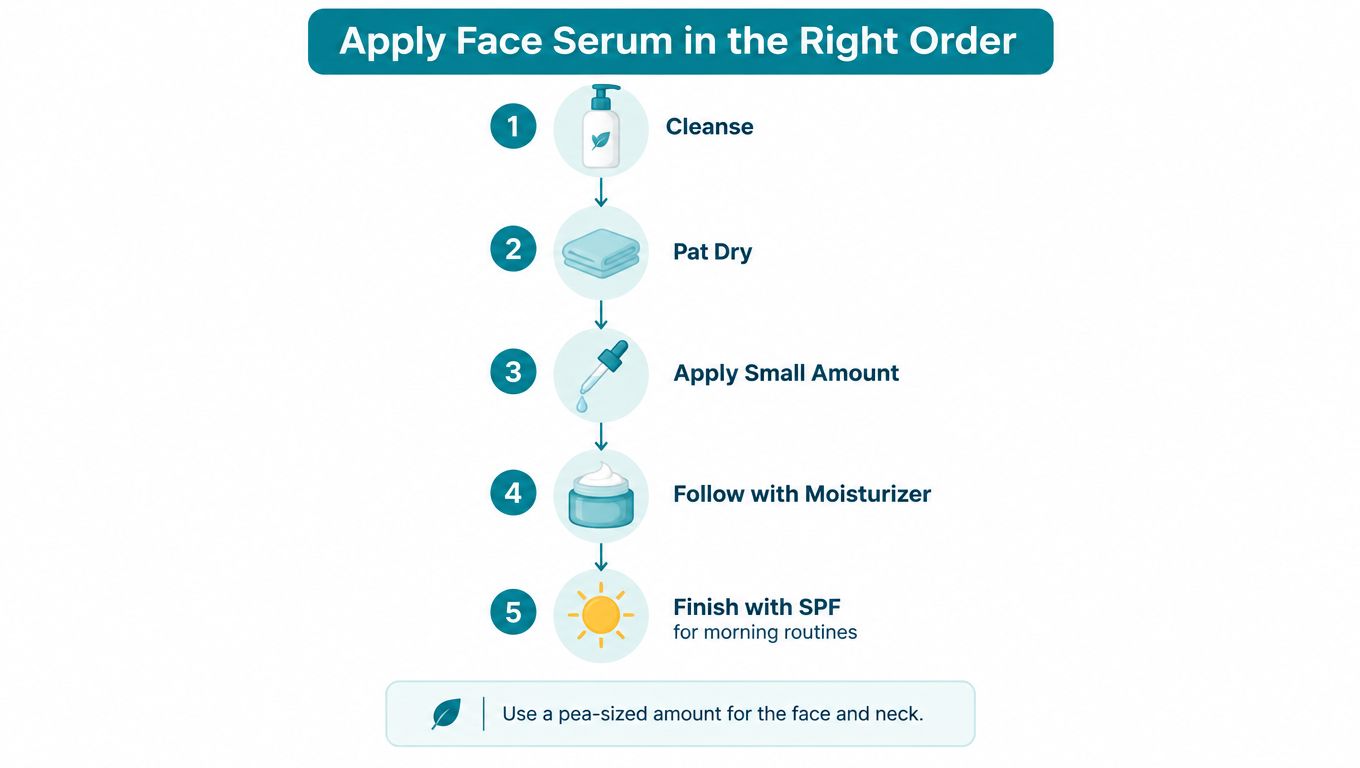
The application sequence below provides a starting framework, but the product label determines the amount, not a universal size recommendation.
Results also belong to the tested formula, not every product sharing its key ingredient. In a clinical study of a topical hyaluronic-acid serum, instrument-measured hydration increased 134% immediately and remained 55% above baseline after six weeks; participants applied that serum twice daily while also using sunscreen. That supports consistency with a compatible formula, not a promise that every serum will perform identically.
Apply Face Serum in the Right Order
Begin with a gentle cleanser and pat your skin dry. The American Academy of Dermatology's application guidance places medication or other treatment immediately after cleansing, followed by moisturizer and/or sunscreen, with makeup last.
For a conventional finished serum, that means applying it to clean skin before your cream. Specific product directions take priority, especially when they specify a particular application method.
Spread a Thin, Even Layer
Dispense the labeled amount onto clean fingertips. Distribute it gently across the intended areas instead of leaving a concentrated patch in one spot. Include the neck only if the product's directions permit it, and avoid the eye area unless the formula is intended for that use.
Use light strokes rather than prolonged rubbing. For products approved for use around the eyes, the Academy recommends the ring finger because it applies less pulling pressure.
More product isn't a better technique. Aim for an even application at the labeled dose, not a visibly wet coating. If that amount is difficult to spread, check whether you're applying it to the intended area and using the method specified.
This sequence keeps the application process easy to repeat.
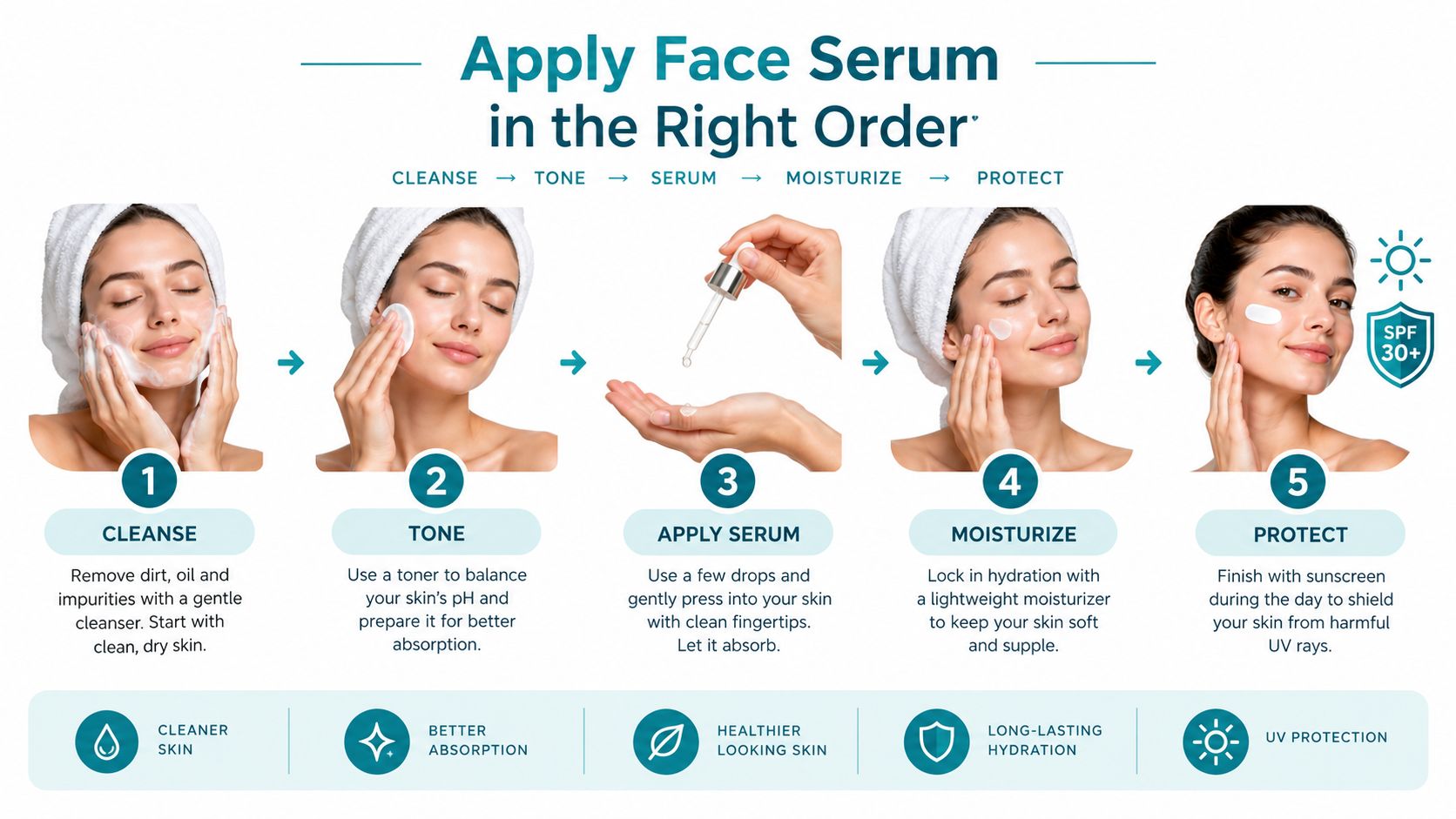
Finish According to the Time of Day
When compatible products are layered, thinner, more fluid textures generally precede thicker creams. However, texture alone doesn't override directions for an active product. Use our guide to the correct order to apply skincare products to organize the rest of your shelf.
For daytime protection, choose broad-spectrum SPF 30 or higher, and reapply approximately every two hours and after swimming or sweating, following the Academy's practical skincare guidance. Sunscreen belongs after the serum and moisturizer, not underneath the targeted layer.
Morning and evening serum order
| Routine stage | Morning | Evening |
|---|---|---|
| Cleanse | Gentle cleanser, then pat dry | Gentle cleanser, then pat dry |
| Serum | Apply according to its label | Apply if scheduled and appropriate |
| Moisturize | Follow with a compatible moisturizer | Finish with moisturizer |
| Protection | Sunscreen, then makeup if desired | No daytime protection step |
If you've bought a peptide booster for DIY blending, pause before following this template. A formulation ingredient doesn't belong directly in the serum step. First incorporate it into a suitable, documented formula; only the finished blend enters the application routine.
Adapt Serum Use to Skin Type and Concern
Dry skin and oily skin don't necessarily need different numbers of products. They often need different textures, amounts within the label directions, and moisturizer choices. Use your skin's comfort and the finished feel of the routine as decision criteria.
Match Texture to the Routine
- Dry skin: Consider a hydrating serum beneath a richer moisturizer. Evaluate the combination, rather than asking the serum alone to provide the entire moisturizing step.
- Oily or combination skin: Start with a lightweight formula and avoid exceeding the labeled amount. Assess the feel across different areas rather than applying extra product everywhere.
- Sensitive skin: Favor a simpler introduction process and review the ingredient list carefully. A formula that suits someone else may not suit your current skin condition.
For hydration-focused care, a water-based serum can occupy the targeted layer beneath moisturizer. For appearance-focused anti-aging care, decide whether your priority is the look of fine lines, surface texture, or uneven tone before adding a more complex formula.
Separate Selection From Promises
A product name isn't an outcome guarantee. Choose appearance-focused ingredients while keeping expectations tied to the finished formula, its directions, and your experience using it.
Choose a serum for the cosmetic result you want, then judge whether the complete routine remains comfortable and practical.
This distinction also guides responsible product descriptions. Under FDA intended-use rules, claims made on labels, websites, and advertisements can determine whether a product is regulated as a cosmetic or a drug. Describing smoother-looking skin is different from promising physiological changes.
For a working routine, the useful question isn't which ingredient sounds most advanced. It's whether you've chosen a suitable texture and a realistic cosmetic purpose without adding unnecessary overlap.
Avoid Irritation and Common Mistakes
The most preventable mistake is introducing several unfamiliar actives together. If you add exfoliating acids, retinol, and a complex botanical serum at the same time, you've created a difficult troubleshooting problem before you've learned whether any individual formula suits you.
Dermatology guidance on product order and introduction supports gradual introduction and simpler care when irritation develops. Plant-derived doesn't automatically mean gentle; fragrance components, concentration, and the overall formulation still matter.
Introduce Before You Combine
- Screen a limited area first. Apply a small amount to intact skin and observe before broad facial use. Don't test several unfamiliar products simultaneously.
- Match frequency to the active. Follow the label; potent unfamiliar actives may call for every-other-day use or less often initially, rather than immediate daily application.
- Keep the rest familiar. Leave your established cleanser and moisturizer unchanged while assessing the newcomer.
- Increase only with comfort. Don't escalate because you think stronger sensations mean better performance.
The FDA's discussion of cosmetic allergens distinguishes irritation from sensitization and explains clinical patch-testing approaches. Home screening isn't equivalent to professional allergy testing, and it can't guarantee that later reactions won't occur.
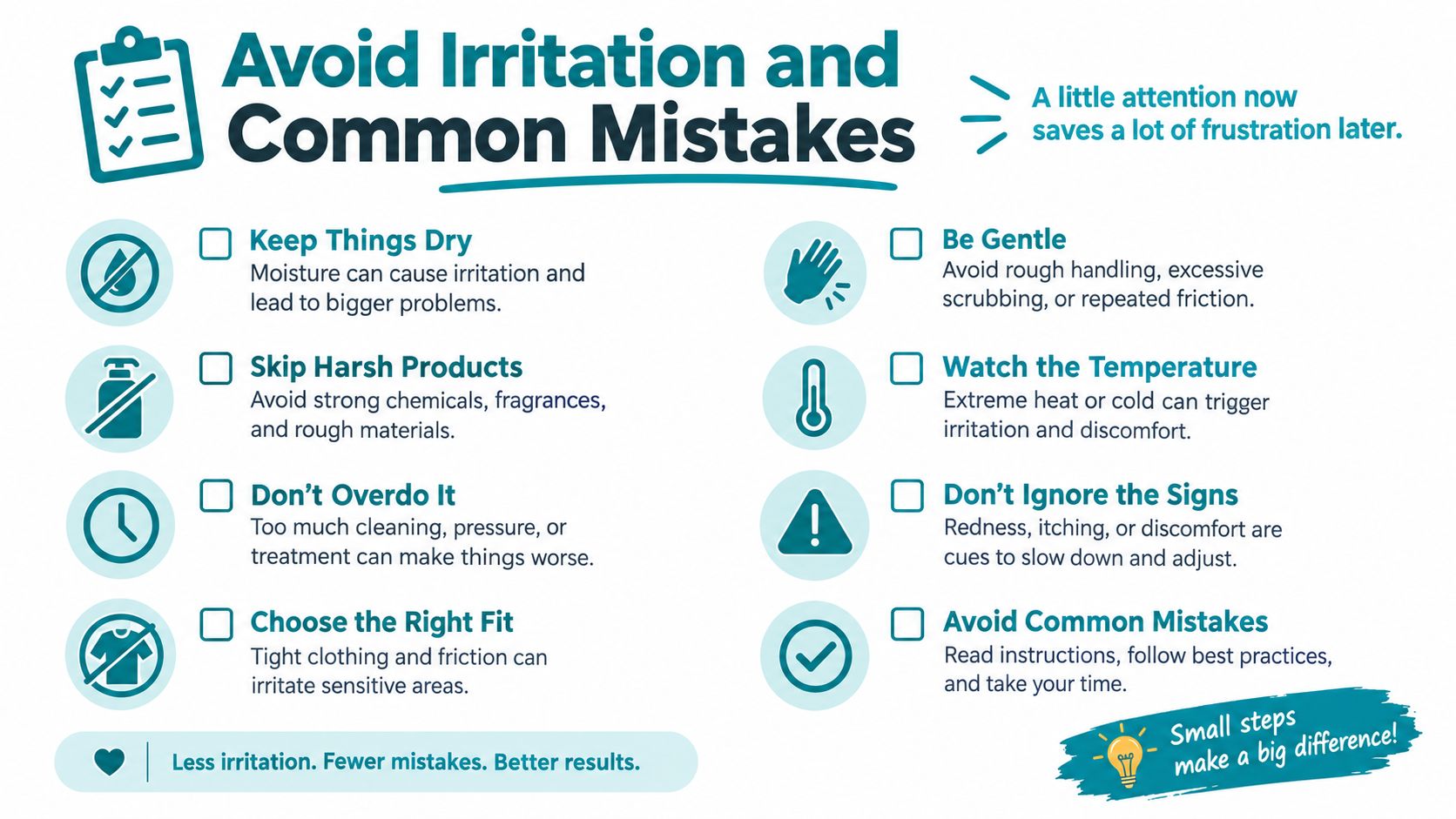
Use this checklist to keep troubleshooting focused.
Know When to Stop
Brief tingling isn't proof of effectiveness, and repeated stinging shouldn't become an accepted part of application. Stop the new product if you develop persistent burning, itching, swelling, rash, or worsening redness, and simplify to familiar basic care while seeking advice when needed.
Facial swelling, blistering, breathing difficulty, or a rapidly worsening rash warrants prompt medical attention. Don't dismiss these signs as an adjustment phase or assume they're evidence that the product is working.
Our sensitive-skin routine tips can help you organize a less crowded routine. The priority is identifying a tolerable process, not pushing through discomfort to finish a bottle.
Make a Basic DIY Serum Blend
DIY blending starts with formulation instructions, not facial application instructions. A booster is an ingredient for a finished product, so its use rate, compatible base, and preservation requirements must be settled before it touches your face.
The Matrixyl 3000 Serum Booster directions specify a water-based base, a 3–8% blending range, and no undiluted application. Its complete INCI is Glycerin, Water, Butylene Glycol, Carbomer, Polysorbate 20, Palmitoyl Tripeptide-1, and Palmitoyl Tetrapeptide-7.
Select and Calculate Before Mixing
This water-soluble, fragrance-free, paraben-free booster is intended for incorporation into a suitable water-based serum, gel, lotion, cream, or eye cream. Water solubility narrows the field of workable bases, but a base still has to hold the addition without thinning, separating, or drifting out of its target pH. Compatibility needs confirming before you commit a full batch.
Matrixyl 3000 blending guide
The manufacturer's directions give the following ounce-based drop examples.
| Concentration | 1 oz base | 2 oz base |
|---|---|---|
| 3% | 27 drops | 54 drops |
| 5% | 45 drops | 90 drops |
| 8% | 72 drops | 144 drops |
Drops are workable for small trial batches where tolerances stay loose. Once a blend behaves the way you want, convert the formula to a documented weight calculation, because drop size varies with viscosity and dropper design, and larger batches should be measured on a scale.
Establish whether your percentage calculation refers to the final batch weight or the supplier's stated addition convention. Don't interchange these methods without recalculating the formula.
Document the Finished Formula
- Choose the base deliberately. Confirm its allowable additions and relevant pH and processing requirements.
- Measure with appropriate tools. Use a suitable scale for weight-based formulation and record actual quantities.
- Mix thoroughly. Follow the ingredient and base suppliers' processing directions.
- Record the batch. Document ingredients, concentrations, process, packaging, storage instructions, and observations.
Formulation checkpoint: An ingredient's preservative system doesn't establish the preservation or shelf life of your finished blend.
Review preservative considerations for natural skincare before modifying a base. Don't assign shelf life from appearance or smell, and don't assume refrigeration replaces appropriate preservation. Introduce the finished blend the same way you would a new commercial serum, as one new variable at a time. If compatibility, stability, or storage requirements are unclear, seek professional formulation support rather than improvising a facial product.
Finalize Your Daily Serum Approach
A useful serum routine gives you something you can evaluate: a chosen cosmetic goal, a repeatable application method, and a clear record of what changed. You don't need to keep adding products to make the routine feel complete.
Morning Check
- Confirm the schedule. Is this serum intended for morning use, and is today an application day?
- Use the established sequence. Follow the daytime order above without adding experimental layers.
- Check the finished feel. Note whether the combination feels comfortable and works with your sunscreen and makeup.
Evening Check
- Follow the label. Don't compensate for a missed application by using extra.
- Record your experience. Note comfort, visible appearance, and any new reaction.
- Change deliberately. Adjust a single variable rather than replacing the whole routine.
For DIY users, keep the formulation record separate from the application record. A finished cosmetic and a raw booster require different decisions, and a pleasant first application doesn't establish compatibility, preservation, or shelf life.
Cosmetic results aren't guaranteed, and regulatory registration isn't a performance endorsement. The FDA's cosmetic labeling guidance states that cosmetics aren't preapproved, apart from certain color additives, and labels must remain truthful and not misleading.
The most useful takeaway is simple: choose deliberately, apply consistently, and let comfort guide adjustment. A serum should make your routine more purposeful, not more confusing.
Skin Perfection offers finished skincare products and lotion-making supplies for appearance-focused routines and controlled DIY formulation. Visit Skin Perfection to compare ready-to-use serums with formulation ingredients, and check each product's directions before deciding what belongs in your routine.