

 Buy with Prime



Organic clean beauty is a pretty straightforward idea. It’s about choosing skincare that uses plant-derived ingredients, the kind grown without synthetic pesticides or fertilizers. Think of it like swapping processed junk food for whole, organic foods, but for your skin. It’s all about transparency and simple, mindful formulas instead of complicated chemical cocktails.
This whole movement is really about being more intentional with the products we use every single day and wanting to know what's in them.
Understanding the Heart of Organic Clean Beauty
At its core, organic clean beauty is about a major shift in how we think about what we put on our bodies. It’s a direct response to people wanting to know exactly what’s in their products and moving away from conventional formulas that might contain ingredients they'd rather skip. This isn't about being perfect; it's about making better, more conscious choices for your skin's appearance.
The movement is all about formulas that are just as thoughtful about where their ingredients come from as they are about their environmental footprint. It's where personal wellness meets a bigger awareness of our planet, creating a more complete picture of what beauty can be.
The Rise of Conscious Consumerism
This isn't just some small trend—it's become a huge force in the beauty market. The global clean beauty market was valued at USD 8.25 billion in 2023 and is expected to reach USD 21.29 billion by 2030. That's a growth rate of 14.8% every year.
This massive growth shows just how many of us are actively looking for products that are free from things like parabens, sulfates, and synthetic fragrances. It’s this desire for cleaner, simpler formulas that pulls so many people into the world of organic clean beauty, with a focus on nourishing the skin with ingredients that feel both gentle and effective.
The real magic of organic clean beauty is that it's empowering. It gives you the confidence to understand what you're putting on your skin and to pick products that truly match up with your own wellness values.
A Foundation in Transparency
Ultimately, this whole philosophy is built on honesty. Brands in the organic and clean space are usually much more open about their ingredient lists, how they source their materials, and their guiding principles. This transparency cuts through the marketing noise and helps you focus on what really counts: what’s actually inside the bottle. You can explore our guide to certified organic ingredients and organic skin care to learn more about sourcing and standards.
While we're all about the benefits of organic clean beauty, it's also helpful to look at a different perspective on natural and organic acne treatments to get a full picture. When you understand the core ideas, you can confidently explore this approach and make choices that lead to a radiant, beautiful complexion.
How to Decode Beauty Labels
Ever walk down the beauty aisle and feel completely overwhelmed? With words like 'clean,' 'green,' 'natural,' and 'organic' splashed across every bottle, it's easy to get lost in the marketing noise. But here’s the thing: these aren’t just interchangeable buzzwords.
Each term has a distinct meaning, and knowing the difference is your first step to making choices that are genuinely right for your skin. Think of it like learning a new language—the language of skincare labels. Once you get the hang of it, you can see right past the clever packaging and focus on what’s actually inside the bottle.
Defining the Key Terms
Let's break down the most common terms you'll see. Each one signals a different priority, from where the ingredients come from to the brand's impact on the planet.
- Natural: This is probably the broadest, most loosely used term out there. It suggests ingredients are derived from nature (think plants and minerals) rather than being cooked up in a lab. But because it's largely unregulated, "natural" can mean anything from a 100% plant-based formula to a lotion with just a single drop of botanical extract.
- Green: This label shifts the focus to sustainability. A "green" product is all about its environmental footprint. It takes into account the entire lifecycle—from sourcing and manufacturing ingredients to how the packaging is handled.
- Clean: When you see "clean," think ingredient selection. These products are formulated without a specific list of ingredients many people prefer to avoid, such as parabens, sulfates, phthalates, and synthetic fragrances. The core idea is simpler formulas.
- Organic: This is the heavyweight champion of regulated terms. "Organic" means the ingredients were grown and processed without synthetic pesticides, chemical fertilizers, or genetically modified organisms (GMOs). It’s all about the purity of the agricultural source.
Clean vs Green vs Natural vs Organic: At a Glance
To make it even simpler, here’s a quick reference table to help you tell these terms apart at a glance. It's a handy cheat sheet for your next shopping trip.
| Term | Primary Focus | Common Example |
|---|---|---|
| Clean | Ingredient Selection | A serum formulated without parabens or sulfates. |
| Green | Environmental Impact | A moisturizer in recycled packaging from a carbon-neutral company. |
| Natural | Derived from Nature (Plants/Minerals) | A face oil made with rosehip and jojoba oils. |
| Organic | Purity of Agricultural Source (Farming Methods) | A lotion made with 95% USDA-certified organic ingredients. |
Understanding these distinctions helps you filter products based on what matters most to you, whether that's avoiding certain ingredients, supporting eco-minded brands, or ensuring the purity of your ingredients.
This infographic brings it all together, showing how organic clean beauty is really a blend of transparency, personal wellness, and eco-mindfulness.
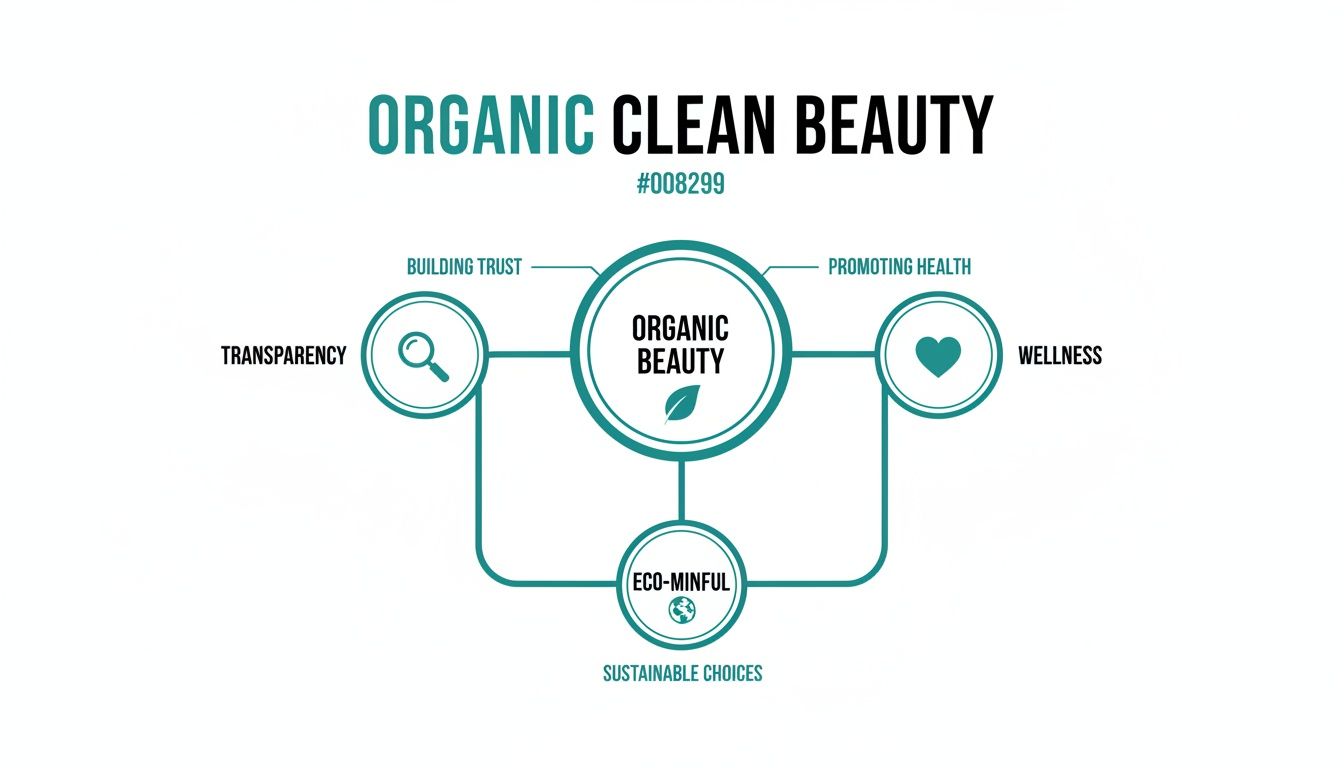
A truly holistic approach means caring about the integrity of the ingredients for both our bodies and the planet.
Beyond the Buzzwords
While these definitions are a great starting point, the real truth is always on the back of the bottle. Marketing claims are one thing, but the complete ingredient list tells the real story. Learning how to read it is your most powerful tool.
The ingredient list, often called the INCI (International Nomenclature of Cosmetic Ingredients) list, tells you everything. Ingredients are listed in descending order of concentration, so the first few items make up the bulk of the formula.
Getting familiar with INCI names helps you spot the good stuff—like powerhouse botanicals—and sidestep the ingredients you’d rather avoid. To really master this skill, check out our in-depth guide on how to read a skincare label. This knowledge turns you from a passive shopper into a confident advocate for your own skin.
Powerful Ingredients to Look For in Skincare
It's easy to get overwhelmed by long lists of ingredients to avoid, but the real fun in clean, organic skincare is discovering the amazing, plant-based actives that will make your skin glow. Think of these as the superstars of your routine, the ingredients that do the heavy lifting to keep your complexion looking radiant and beautiful.
Many of these powerhouse ingredients are beloved for their ability to deliver beautiful results without irritation. They’re the foundation of truly effective skincare, whether you find them in a professionally crafted serum or a simple DIY blend you whip up at home. Learning to spot them on a label is the first step toward reaching your skin goals.
Hydration and Radiance Heroes
Some ingredients are practically legends in the skincare world, and for good reason. They're reliable, backed by research, and consistently help skin look smoother and more vibrant.
- Hyaluronic Acid: Picture this ingredient as a super-magnet for moisture. It’s a substance naturally found in our skin that can hold up to 1,000 times its weight in water. This makes it an absolute champion for hydrating the skin, giving it that plump, dewy look we all crave.
- Vitamin C: A true antioxidant icon, Vitamin C is your go-to for a more even-toned complexion. It works on the appearance of dark spots and helps support the skin’s natural firmness, leaving you looking luminous.
These two are a dream team. Hyaluronic acid floods the skin with hydration, creating the perfect canvas for Vitamin C to do its work.
Nourishing Botanical Oils
Botanical oils are at the very heart of organic beauty, offering a rich cocktail of fatty acids, vitamins, and antioxidants to deeply nourish the skin. The skyrocketing demand for these pure, effective ingredients is a major reason the organic skincare market is projected to reach USD 13.56 billion globally in 2025. Face creams and moisturizers are set to claim 42.5% of that market, with natural oils right behind at 33.8%—a clear sign that people want potent, straightforward formulas.
Here are a few of the most cherished oils:
- Jojoba Oil: This one is incredibly clever. Its structure is so similar to our skin's own natural oils (sebum) that it helps balance moisture levels without ever feeling greasy. It’s a fantastic choice for just about every skin type.
- Rosehip Seed Oil: Jam-packed with vitamins and essential fatty acids, this oil is famous for improving the look of both skin tone and texture.
- Argan Oil: Often called "liquid gold," argan oil is loaded with Vitamin E and offers deep nourishment, leaving skin feeling incredibly soft and supple.
Powerful Plant Extracts
Going beyond oils, potent extracts from leaves, flowers, and roots deliver concentrated benefits that can take any skincare routine to the next level. These are often the key players that target specific skin appearances.
One of the best things about plant-based skincare is how you can tailor it to exactly what your skin needs. An ingredient like Green Tea Extract can provide antioxidant support, while Chamomile is known for its calming appearance. It's all about finding the right fit for you.
For example, Green Tea Extract is a favorite in formulas designed to keep skin looking clear and balanced. You can learn more about its specific role in our detailed article on the benefits of Green Tea Extract for skin.
When you start seeking out products rich in these ingredients, you're making an active choice to feed your skin with the very best that nature has to offer.
Building Your First Clean Beauty Routine
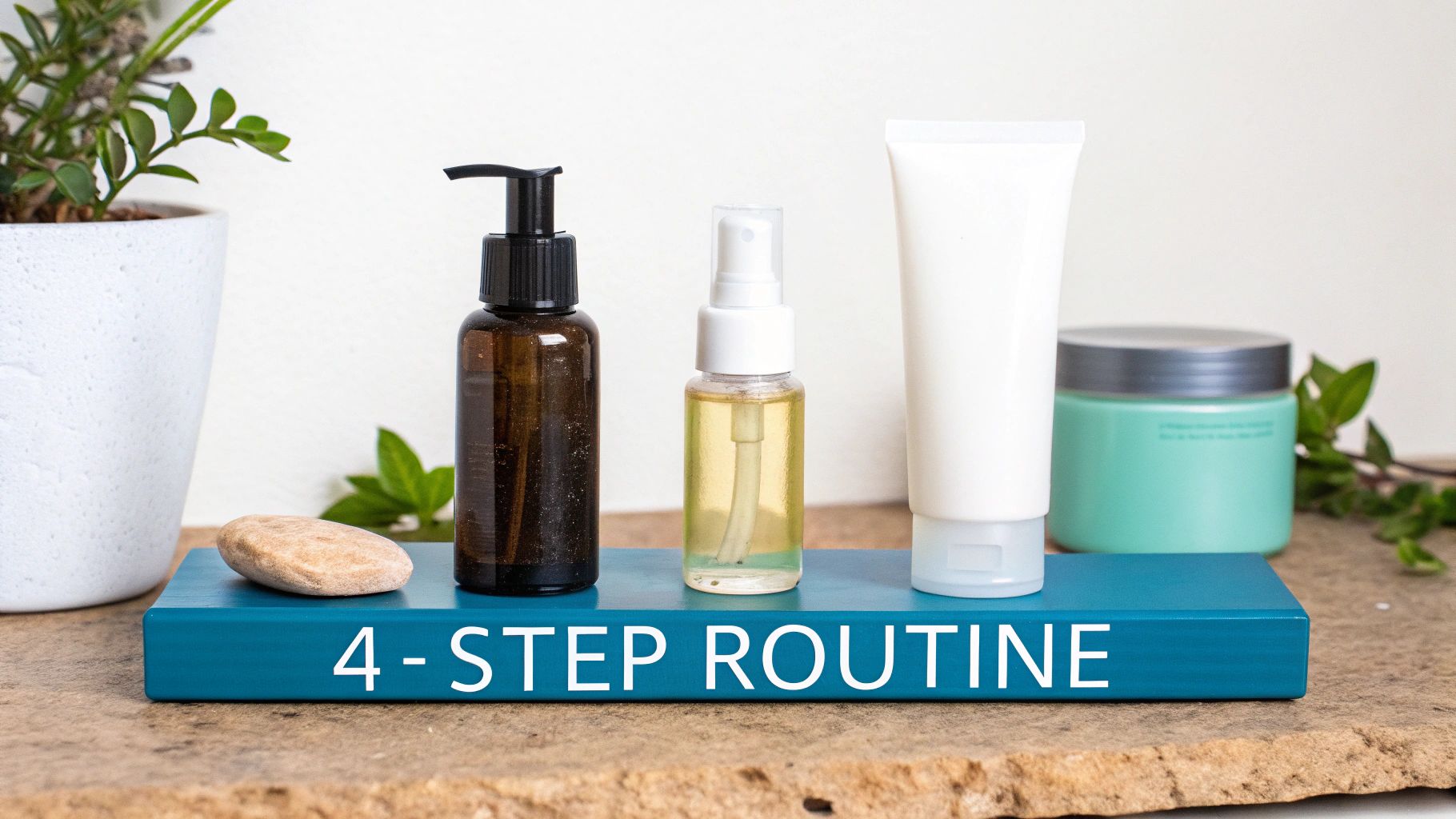
Switching to an organic, clean beauty lifestyle doesn't mean you need a ten-step, complicated overhaul. In fact, some of the most effective routines I've seen are the simplest ones. It's all about building a strong foundation for your skin. A consistent, thoughtful approach will always beat a confusing one filled with too many products.
The real goal here is to create a sustainable habit that truly nourishes your skin, not just to chase every new trend that pops up. A straightforward, four-step routine is the perfect way to start. It’s universal, you can adapt it to your skin's needs, and it makes the switch to clean beauty feel both manageable and incredibly rewarding.
Step 1 Cleanse
First things first: you have to wash away the day. Cleansing removes impurities, makeup, and excess oil, creating a perfectly clean canvas for the products that follow. The trick is to cleanse without stripping your skin of its natural, protective moisture. The right organic cleanser will leave you feeling refreshed and balanced, never tight or dry.
Choosing a cleanser comes down to what your skin is asking for.
- For Dry or Sensitive Skin: Look for a gentle cream or milky cleanser. Ingredients like chamomile or calendula are fantastic because they nourish the skin while cleansing, helping to keep your delicate moisture barrier intact.
- For Oily or Combination Skin: A lightweight gel or foaming cleanser can work wonders to help balance the skin's appearance. You want something that leaves your skin feeling fresh and clear, not stripped.
Step 2 Tone
Toning is that often-skipped step that can make a huge difference. Think of it like this: a dry sponge struggles to soak up water, but a damp one absorbs it instantly. A good, alcohol-free toner does the same thing for your skin, adding a layer of hydration that primes it for serums and moisturizers.
Forget the harsh, astringent liquids from back in the day. Modern clean beauty toners are gentle mists and essences packed with ingredients your skin will love.
A simple floral water, like a rose or lavender hydrosol, can be a beautiful, single-ingredient toner. It gives a light touch of moisture and helps balance the skin's pH after cleansing, making it the perfect second step in your new organic routine.
Step 3 Moisturize
This step is all about keeping your skin looking supple, hydrated, and beautiful. Moisturizing locks in all the goodness from your previous steps and supports the skin's natural barrier. Just like with cleansers, the best moisturizer for you really depends on your skin type and what kind of texture you prefer.
Your choice can be anything from a lightweight fluid to a rich, decadent cream.
- For Oily Skin: A water-based gel or a lightweight serum with hyaluronic acid can give you all the hydration you need without feeling heavy. These formulas sink in quickly and leave a clean finish.
- For Normal or Combination Skin: A classic lotion usually strikes the perfect balance, offering hydration where you need it without overwhelming the oilier spots.
- For Dry Skin: Don't be afraid of a richer cream! Formulas with nourishing botanical oils like shea butter, jojoba oil, or argan oil can deliver that deep, lasting moisture your skin is craving.
Step 4 Protect
Here it is: the final, non-negotiable step of any morning routine is sun protection. Using sunscreen every single day is the most effective thing you can do to keep your skin looking youthful and protect it from environmental damage.
In the organic clean beauty world, mineral-based sunscreens are the go-to. These formulas use physical blockers, such as zinc oxide and titanium dioxide, to create a shield on the skin's surface. They're often less irritating than their chemical cousins and provide excellent broad-spectrum protection.
Building your routine around these four core steps—Cleanse, Tone, Moisturize, and Protect—creates a powerful yet simple framework. It’s proof that you don't need a shelf overflowing with products to get a radiant, beautiful complexion. It’s about choosing a few high-quality, effective products and, most importantly, using them consistently.
Your Starter Guide to DIY Clean Beauty

Ready to take control of what goes on your skin? Making your own simple skincare products is one of the most empowering things you can do on your organic clean beauty journey. You get to be the creator, not just the consumer, and you'll know exactly what every single ingredient is.
This isn't about becoming a master formulator overnight. It's about starting small with easy, foundational recipes that deliver gorgeous results. When you use high-quality supplies from trusted sources like Skin Perfection, you can be sure your creations will be both effective and a true pleasure to use.
Below are two beginner-friendly recipes to get you started on the right foot.
DIY Nourishing Facial Serum
A facial serum is one of the easiest and most rewarding products to make right at home. This simple oil-based recipe delivers your skin a concentrated dose of nourishment for a radiant, beautiful complexion.
Ingredients You Will Need:
- 1 oz Jojoba Oil: This will be our base, or "carrier" oil. We love Jojoba because its structure is incredibly similar to our skin's natural sebum, making it wonderfully balancing for almost any skin type.
- 1/2 oz Rosehip Seed Oil: Think of this as the superstar ingredient. It's packed with vitamins and essential fatty acids that are fantastic for promoting a more even skin tone and smoother texture.
- 5-7 drops of Vitamin E Oil: This is a natural antioxidant that does double duty, protecting both your skin and the other oils in your serum, keeping them fresh.
Simple Instructions:
- Carefully measure and pour the Jojoba Oil and Rosehip Seed Oil into a clean 2-oz dropper bottle.
- Add the drops of Vitamin E oil.
- Screw the dropper cap on tightly and gently roll the bottle between your palms for about 30 seconds to mix everything together.
- Apply 3-4 drops to clean, damp skin, pressing it in gently until it's absorbed.
Safety First: Always, always patch test before using any new product. Dab a small amount of your finished serum on your inner arm and wait 24 hours to make sure your skin is happy with the new blend.
This simple mix of three powerhouse ingredients creates a luxurious serum that leaves skin feeling incredibly soft and looking luminous.
DIY Hydrating Body Lotion
Making a lotion involves a process called emulsification, which is just a fancy word for blending oil and water. It sounds a bit more complex, but with the right ingredients and a few simple steps, it’s a completely achievable and super satisfying project for any beginner.
Ingredients You Will Need:
- 3/4 cup Distilled Water: This is the hydrating heart of our lotion.
- 1/4 cup Sweet Almond Oil: A lovely, lightweight oil that leaves skin feeling smooth and nourished.
- 2 tbsp Emulsifying Wax: This is the magic ingredient! It’s what allows the water and oil to mix together into a creamy, stable lotion.
- 1 tbsp Shea Butter: Known for its rich moisturizing properties, shea butter gives the lotion a more substantial, deeply nourishing feel.
- Optional: A broad-spectrum preservative. If you add one, be sure to follow the supplier's instructions for the correct usage rate.
Simple Instructions:
- In one heat-safe container, combine the Sweet Almond Oil, Emulsifying Wax, and Shea Butter.
- In a separate heat-safe container, gently warm the distilled water.
- Heat the oil mixture in a double boiler (or carefully in the microwave) until everything is fully melted and combined.
- Slowly pour the warm water into the melted oils while blending continuously with a stick blender. Keep blending for a minute or two until the mixture thickens into a beautiful, creamy lotion.
- If you're using a preservative, add it once the lotion has cooled down a bit and give it another quick blend.
- Pour your finished lotion into a clean jar or pump bottle and enjoy!
DIY Recipe Ingredient Sourcing Checklist
When you're just starting, knowing what to buy can feel overwhelming. This little checklist covers the essential bases and tools you'll need for many beginner projects, all of which are available from suppliers like Skin Perfection.
| Ingredient/Tool | Purpose in DIY Recipes | Key Benefit |
|---|---|---|
| Carrier Oils (Jojoba, Almond) | Forms the base of serums and lotions. | Delivers nutrients and moisturizes skin. |
| Butters (Shea, Cocoa) | Adds richness and creaminess to lotions. | Provides deep, lasting hydration. |
| Essential Oils | Adds natural fragrance and targeted benefits. | Customizable for scent and skin needs. |
| Vitamin E Oil | Acts as a natural antioxidant. | Extends shelf life and nourishes skin. |
| Emulsifying Wax | Binds oil and water to create lotions. | Essential for making stable creams. |
| Small Digital Scale | Ensures precise and repeatable measurements. | Key for recipe accuracy and safety. |
| Glass Beakers/Dropper Bottles | For mixing, measuring, and storing creations. | Easy to clean, sanitize, and reuse. |
Getting your hands on these core items will set you up for success on your DIY skincare journey.
Making your own products is a fantastic way to truly connect with the core principles of organic clean beauty. For even more inspiration and recipes, you can find a wonderful collection of ideas on how to make your own skin care products. Have fun creating skincare that is perfectly, uniquely you.
Shopping Smart for Clean Beauty Products
Navigating the world of organic clean beauty can feel like an adventure. With the right map, it’s an exciting journey instead of a confusing one. Now that you're armed with what clean, green, natural, and organic truly mean, you’re ready to shop with real confidence. The secret is to look past the marketing hype on the front of the bottle and become a pro at spotting the details that actually matter.
This means you’ll want to shift your focus to a few key indicators of quality and honesty. A truly clean and organic product will proudly show off its credentials, making it easy for you to see it’s the real deal. Think of it as a quick mental checklist to run through before you buy, ensuring every product you pick aligns with your goals for beautiful skin.
Your Clean Beauty Shopping Checklist
To cut through all the noise, keep an eye out for these positive signs. They’re the hallmarks of a brand that is genuinely committed to the principles of organic clean beauty.
- Look for Certification Logos: Trustworthy certifications like USDA Organic or COSMOS Organic are your best friends here. These logos aren't just for show; they show the product has met strict, third-party standards for how its ingredients are sourced and formulated.
- Read the Full Ingredient List: A shorter, more recognizable ingredient list is almost always a good sign. When you see botanical names like Simmondsia Chinensis (Jojoba) Seed Oil high up on the list, you know the formula is packed with the good stuff.
- Prioritize Brand Transparency: Does the brand’s website clearly explain its philosophy? Honest brands are an open book about their sourcing, manufacturing processes, and what they intentionally leave out of their products. This level of transparency is what builds real trust.
Red Flags to Watch Out For
Just as important as knowing what to look for is knowing what to avoid. Certain marketing tricks and formulation choices can be major red flags, signaling that a product might not be as "clean" as it claims.
Vague, undefined marketing claims like “botanically-infused” or “nature-inspired” without any specific details or certifications should make you pause. True organic clean beauty is built on specifics, not on flowery language.
Also, be wary of products with an overpowering, synthetic scent. A long list with just "fragrance" or "parfum" can hide dozens of undisclosed ingredients. Finally, while it's not always a dealbreaker, an excessively long, complicated ingredient list filled with synthetic-sounding names warrants a closer look to ensure it meets your clean criteria.
With these simple guidelines, you can confidently choose products that genuinely support a radiant, beautiful complexion. For a curated list of trusted brands that really get it right, you can explore our recommendations for the best clean beauty brands that consistently deliver on quality and transparency.
Your Questions, Answered
Stepping into the world of organic clean beauty can feel like learning a new language, and it's totally normal to have a few questions pop up. Let's tackle some of the most common ones so you can feel confident and excited about your new routine.
Is Organic Clean Beauty Always More Expensive?
This is a big one! While it's true some certified organic products come with a higher price tag—that's the cost of sourcing incredible, high-quality ingredients—it's definitely not a hard-and-fast rule. There are tons of amazing and affordable clean brands out there today.
A smart way to manage your budget is to focus on products that do double or triple duty, like pure carrier oils. Or better yet, try your hand at making your own simple formulas! Buying top-notch raw ingredients can be surprisingly cost-effective. The trick is to invest in a few powerhouse staples you love, not a cabinet full of products you barely use.
How Long Until I See a Difference in My Skin?
Patience is everything on this journey. Your skin's natural cell turnover cycle takes about 28 to 40 days, so it’s fair to give any new product or routine at least a whole month before you expect to see real changes in its texture and glow.
When you first switch to clean products, your skin might even go through a little "what is happening?" phase as it adjusts. That's normal! Just stick with it and give your skin the time it needs to soak up all the new, nourishing goodness you're feeding it.
An organic clean beauty routine isn't about an overnight fix. It’s a long-term commitment to your skin's appearance. Consistency is what truly creates that lasting, radiant look.
Can I Just Make All My Own Skincare Products?
Getting into DIY skincare is one of the most empowering parts of going clean! Whipping up your own serums, lotions, and balms gives you complete control over every single ingredient that touches your skin. It's rewarding, fun, and you can create some seriously effective formulas.
That said, some things are best left to the pros. Products that need complex preservative systems to stay safe and stable, or something like sunscreen that requires precise manufacturing to work correctly, are tricky. We suggest starting your DIY adventure with simple, fun recipes and buying those more complicated items from clean beauty brands you trust.
At Skin Perfection, we're here to support you whether you're buying a beautifully finished product or sourcing the highest quality ingredients for your own creations. We want you to have the radiant, beautiful skin you deserve. Start exploring your clean beauty path with us today at https://www.naturalorganicskincare.com.