

 Buy with Prime
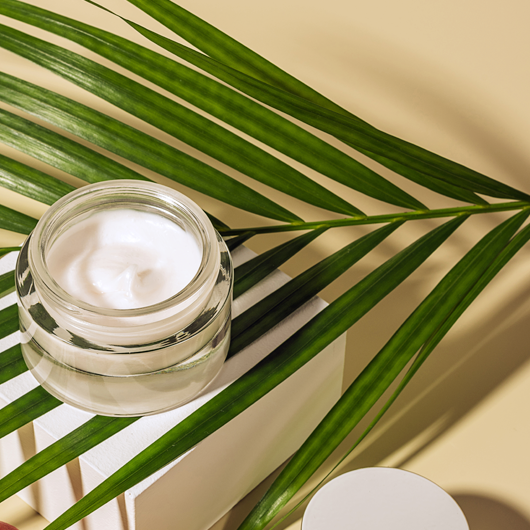


You've bought the pretty ingredients, lined up the oils, and perhaps even chosen a botanical hydrosol. Then the practical questions arrive: Which emulsifier belongs in the formula? Can vitamin E preserve a water-based lotion? Is a certified lotion base safer than building from individual ingredients? These decisions determine whether your batch stays smooth and usable or separates, oxidizes, or develops microbial growth.
The best organic lotion making supplies aren't the ingredients with the most appealing labels. They're the materials you can identify, measure, sanitize, preserve, test, and trace. Organic sourcing matters, but so do formulation chemistry, packaging, documentation, and honest product language. This guide focuses on the workbench decisions that ingredient lists usually skip.
Table of Contents
- Setting Up Your Lotion Making Workstation
- Core Organic Ingredients for the Oil and Water Phases
- Emulsifiers Thickeners and Texture Builders
- Choosing and Using Preservatives Correctly
- Equipment Sanitation and Packaging Choices
- Two Starter Recipes You Can Make This Weekend
- Storage Scaling and Compliance Reminders
Setting Up Your Lotion Making Workstation
Start by mapping the bench before measuring anything. Lotion is an emulsion, which means oil and water must meet under controlled heat and sufficient mixing. A disorganized station makes it easy to forget a cool-down ingredient, contaminate a beaker, or lose track of which phase contains what.
Set up four supply zones:
- Oil phase: Carrier oils, butters, emulsifier, and any heat-stable fatty alcohol.
- Water phase: Distilled water or hydrosol, humectant, and compatible water-soluble ingredients.
- Measurement and processing: Scale, heat-proof vessels, blender, thermometer, whisk, and spatulas.
- Finished product: Sanitized bottles, caps, labels, and a clean area for filling.

Build the kit before heating
Use a stainless steel pot or double boiler, two heat-proof glass beakers, an immersion or stick blender, an infrared thermometer, and a stainless whisk as backup. A digital scale accurate to 0.1 g gives you the control needed for small batches, especially when measuring emulsifier or preservative.
Keep paper towels, gloves, and 70% isopropyl alcohol within reach. Sanitize tools and bottles before they contact the formula, and keep lotion equipment separate from food preparation equipment. A silicone spatula can help you scrape each beaker cleanly, so you can review silicone spatula and scraper options when assembling your kit.
Choose a dry, dust-free counter away from open windows and strong drafts. Lay supplies out from left to right in the order you'll use them. That simple arrangement reduces the chance of skipping the preservative or adding a fragrance before the emulsion has cooled enough.
Practical rule: Arrange the batch in phases, not by ingredient type. The formula should tell you what gets measured, heated, blended, and added during cool-down.
Core Organic Ingredients for the Oil and Water Phases
The oil phase controls slip, richness, absorption, and the protective feel left after application. Choose oils by their sensory profile, fatty acid composition, oxidation behavior, and documentation, rather than relying on the word “organic” alone.
Fractionated coconut oil and sweet almond oil generally give a light, fluid feel and are practical choices when you want a less heavy lotion. Rosehip and pomegranate seed oils can add a more distinctive botanical profile, but their higher oxidation sensitivity makes them better suited to a supporting role. Keep these delicate oils under 10% in a formula when you're deliberately limiting oxidation risk. Shea and mango butters add body and cushion, though too much butter can make a lotion feel dense and can conceal a weak emulsion.
The water phase should use distilled water, not tap water. A true hydrosol, such as organic rose or chamomile hydrosol, can replace part of the water when its supplier provides suitable documentation. In a typical lotion, the water or hydrosol phase may occupy 60% to 70%, while vegetable glycerin or sodium lactate can function as a humectant at 3% to 5%.

For finished skincare context, the HydroGlow Anti-Aging Night Mask uses ingredients including three types of hyaluronic acid, polyglutamic acid, jojoba, squalane, glycerin, aloe, sea silt ferment, and black algae extract. That kind of ingredient architecture illustrates how a water-rich product can combine humectants, oils, and botanical materials, although a ready-made product shouldn't be treated as a direct DIY formula.
| Ingredient | Phase | Skin Feel | Oxidation Risk | Typical % |
|---|---|---|---|---|
| Fractionated coconut oil | Oil | Light, silky | Lower | 5% to 15% |
| Sweet almond oil | Oil | Smooth, light to medium | Moderate | 5% to 15% |
| Rosehip oil | Oil | Dry, botanical | Higher | Under 10% |
| Pomegranate seed oil | Oil | Rich, distinctive | Higher | Under 10% |
| Shea butter | Oil | Cushioned, rich | Moderate | 2% to 8% |
| Mango butter | Oil | Firm, smooth | Moderate | 2% to 8% |
| Distilled water | Water | Weightless | Not applicable | 60% to 70% |
| Rose or chamomile hydrosol | Water | Fresh, fluid | Variable | Part of water phase |
| Vegetable glycerin | Water | Humectant, slightly tacky | Low | 3% to 5% |
For more ingredient selection ideas, browse ingredients for lotion formulation. Ask suppliers for certificates, certificates of analysis, lot numbers, and handling information. USDA Organic, COSMOS, or Ecocert documentation can support sourcing decisions, while the EWG Skin Deep database can provide an additional ingredient-screening reference. For leave-on formulas, many cautious formulators aim for EWG Skin Deep scores of 1 to 2, but that screening choice doesn't replace a complete safety assessment.
Emulsifiers Thickeners and Texture Builders
A lotion can contain beautiful oils and still fail because the oil droplets aren't stabilized. The emulsifier creates the interfacial structure that keeps oil dispersed through water, while thickeners increase the viscosity of the continuous phase and give the formula body.
Oil-in-water options such as Polyglyceryl-3 Cocoate, Olivem 1000, and Montanov 68 are often selected for a more modern, less greasy sensory profile. Older or more conventional options such as Polawax can still be useful, but the choice should reflect the oil load, desired texture, processing method, and the supplier's documentation. Match the emulsifier to the oil phase rather than choosing it only because it carries a natural-sounding name. A light lotion often works within an HLB target of 8 to 12, but the emulsifier supplier's technical guidance takes priority.
Separate stability from thickness
Cetearyl alcohol and cetyl alcohol can build viscosity and improve slip. Xanthan gum and sclerotium gum can also modify texture, particularly in the water phase. None of these should be asked to replace the emulsifier.
Cosmetic emulsion stability depends on droplet-size control, continuous-phase viscosity, and interfacial stabilization, as outlined in emulsifier selection for lotion. Large droplets can coalesce, while a formula that's too thin gives those droplets more opportunity to move and collide. Excess butter may create a thick jar texture that looks stable until storage exposes separation or weeping.
Prepare new combinations in 50 g test batches. Record the oil phase, emulsifier amount, thickener amount, mixing time, temperatures, appearance, and pH. Freeze-thaw or centrifuge testing can reveal weakness earlier than admiring the texture immediately after blending.
A water-soluble active belongs in its compatible phase and must be evaluated for pH and processing tolerance. Sodium Hyaluronate Powder Pure Hyaluronic Acid is described as a cosmetic-grade, high-molecular-weight NASHA powder with a stated molecular weight of 800 to 1500 Daltons, and the product snapshot gives typical DIY serum use at 0.1% to 2%. It's an active ingredient, not an emulsifier or a preservative, so adding it doesn't solve either structural or microbial stability.
Choosing and Using Preservatives Correctly
Vitamin E doesn't preserve lotion. Rosemary extract and similar antioxidants can slow rancidity in oils, but they don't control bacteria, yeast, or mold. Once distilled water, aloe, or a hydrosol enters the formula, you need a real broad-spectrum preservative that matches the product's pH, usage rate, processing temperature, and intended claims.
The right preservative depends on the whole formula. Optiphen, Euxyl PE 9010, Leucidal SF Complete, and Naticide are all options formulators may investigate, but their compatibility and performance aren't interchangeable. Check the supplier's technical sheet and don't assume that “natural,” COSMOS, or Ecocert language means the preservative works in every lotion.
| Preservative | Usage Rate | Effective pH Range | Heat Stage | Organic Compatibility |
|---|---|---|---|---|
| Optiphen | Follow supplier specification | Confirm with supplier | Usually cool-down | Depends on certification and formula |
| Euxyl PE 9010 | Follow supplier specification | Confirm with supplier | Usually cool-down | Depends on certification and formula |
| Leucidal SF Complete | Follow supplier specification | Confirm with supplier | Confirm supplier limits | Marketed for natural formulations, verify documentation |
| Naticide | Follow supplier specification | Confirm with supplier | Confirm supplier limits | Verify COSMOS or Ecocert status for the exact material |
A practical decision tree is straightforward:
- Oil-only balm or lotion bar: No water means a preservative usually isn't required, though oxidation control and clean handling still matter.
- Water-based lotion: Select a broad-spectrum preservative, measure its specified rate by weight, and confirm pH compatibility.
- Hydrosol-rich or botanical formula: Treat it as a higher-documentation project. Review raw-material handling, preservative limits, and challenge-testing needs.
Use a calibrated pH meter, not a visual guess. The working pH should stay under 6 or within the selected preservative's effective range, according to the preservation guidance for natural skincare products. Review natural skincare preservatives before choosing a system, and challenge-test every formula intended for repeated use or sale.
Equipment Sanitation and Packaging Choices
Sanitation comes before filling. A well-designed formula can still become unsafe if a dirty blender head, unwashed glove, or reused jar introduces contamination on the first day.
Keep a 0.1 g digital scale, calibrated pH meter, immersion blender, dual thermometers, stainless steel vessels, heat-safe glass beakers, spatulas, gloves, and paper towels at the station. Sanitize equipment and bottles with 70% isopropyl alcohol, then allow the alcohol to evaporate fully before contact with the batch. Sanitizing reduces contamination on clean surfaces. It isn't the same as validating sterilization, so don't describe ordinary home sanitation as sterile processing.
Match the package to the product
Airless pump bottles are usually the most practical choice for water-based lotions because they reduce repeated contact with the product. Pump bottles also limit the amount of air and fingers entering the container during use.
Dark glass jars can help protect oxidation-sensitive oils from light, but an open-mouth jar exposes the formula to fingers and air each time it's used. PET tubes offer a useful middle ground for small amounts, while aluminum tins suit oil-only balms more naturally than fluid emulsions. Always confirm that the package is compatible with the formula, especially when using essential oils or botanical extracts.
Use opaque or dark packaging when your oil phase contains ingredients that degrade with light. Store filled products closed, clean, and away from heat. Packaging guidance and format comparisons are available among these containers for lotion.
Two Starter Recipes You Can Make This Weekend
These two formulas use the same process, so you can learn one workflow and compare a lighter lotion with a richer cream. Weigh every ingredient instead of measuring by volume, and treat the listed percentages as formula percentages for the complete batch.

Light summer lotion
- Water phase: 70% distilled water
- Humectant: 5% vegetable glycerin
- Oil phase: 15% lightweight oils, such as jojoba and squalane
- Emulsifier: 4% emulsifying wax
- Texture builder: 3% cetyl alcohol
- Butter: 2% shea butter
- Preservative: 0.5% Euxyl PE 9010
Richer body cream
- Water phase: 60% distilled water
- Hydrosol: 5% aloe hydrosol
- Oils and butters: 20%, including cocoa butter and sweet almond oil
- Emulsifier: 5% Olivem 1000
- Texture builder: 4% cetearyl alcohol
- Humectant: 5% glycerin
- Preservative: 0.6% Optiphen Plus
Heat each formula's oil and water phases separately to 70 °C, making sure the butter, emulsifier, and fatty alcohol have melted. Combine the phases, then use the immersion blender for two to three minutes, pausing briefly if the mixture becomes too warm or the motor needs a rest.
Cool the emulsion below 40 °C before adding the preservative and any compatible Skin Perfection actives. Check the preservative supplier's instructions before following these exact cooling steps, since systems differ. Measure pH and adjust toward 5.0 to 5.5 only with a suitable dilute acid or base and a documented method. Allow the lotion to settle before evaluating final viscosity, since many emulsions thicken as they cool.
These percentages total 99.5% for the summer lotion and 99.6% for the body cream. Complete the remaining percentage with distilled water only if your final formula and preservative calculations are deliberately adjusted, rather than adding water casually after preservation decisions have been made.
Storage Scaling and Compliance Reminders
Storage targets should come from testing, not optimism. As working targets, anhydrous balms may sit around 6 to 12 months, water-containing lotions around 3 to 6 months with a challenge test, and formulas with fresh hydrosols or sensitive actives around 4 to 8 weeks. These are formulation targets, not guarantees, and the Nerdy Farm Wife's preservation guidance emphasizes that water-based products need microbial control and proper testing.
Keep products sealed in a cool, dark environment around 15 °C to 22 °C when that range suits the formula and packaging. Oxygen ingress can accelerate oxidation, humidity can affect powders and labels, and temperature swings can expose weak emulsions. Record odor, color, viscosity, pH, and visible separation during storage.
Scaling requires records
Maintain a batch sheet with:
- Formula identity: Ingredient names, INCI names, percentages, supplier, lot number, and certificate or COA reference.
- Process details: Phase temperatures, mixing time, cool-down additions, pH, and filling date.
- Release observations: Appearance, odor, texture, container type, and any stability result.
Preserve the same oil-to-water ratio and preservative percentage when scaling. Don't assume a stick blender behaves like an overhead propeller mixer. Around 2 kg, an overhead propeller mixer may become more appropriate because the vessel depth and batch volume change the shear pattern.
Compliance also changes with the market. In the United States, review FDA cosmetic labeling claims and FDA cosmetic labeling requirements. FDA says cosmetic claims must be truthful and not misleading, cosmetics don't require prior FDA approval before entering the market, and there isn't an official FDA list of approved cosmetic claims. Claims about affecting the body's structure or function can move a product into drug territory.
For organic positioning, FDA says products with organic claims must satisfy both USDA organic rules and FDA cosmetic labeling and safety requirements. USDA categories commonly used in this space include at least 95% organic ingredients for the USDA Organic Seal, at least 70% for “made with organic” claims, and below 70% without a front-panel organic claim or seal, as described by FDA's organic cosmetics guidance. USDA guidance also explains that qualifying agricultural ingredients and handling can support NOP certification for cosmetics.
Etsy applies its own stricter marketplace rules. Its Etsy medical claims policy prohibits claims that an item can treat, mitigate, diagnose, or cure serious conditions such as cancer or heart disease, sexual dysfunction or impotence, or that it is as effective as an analgesic, antibiotic, antiseptic, antiviral, anti-inflammatory, steroid, vaccine, decongestant, prescription drug, or FDA-approved product.
Skin Perfection sells skincare products and lotion making supplies. Its product listings use FDA rules and regulations to avoid claims that products fix, repair, or heal skin, and the company follows Etsy's prohibited-claims requirements. Before your second batch, adopt three habits: log every formula, run a preservative challenge test on the first scaled batch, and label every jar with its batch date and period-after-opening.

Skin Perfection offers skincare products and lotion making supplies for DIY formulators and skincare professionals who want to work with documented ingredients, controlled processes, and compliant product language. Visit Skin Perfection to compare formulation supplies and finished skincare products for your next carefully recorded batch.