

 Buy with Prime
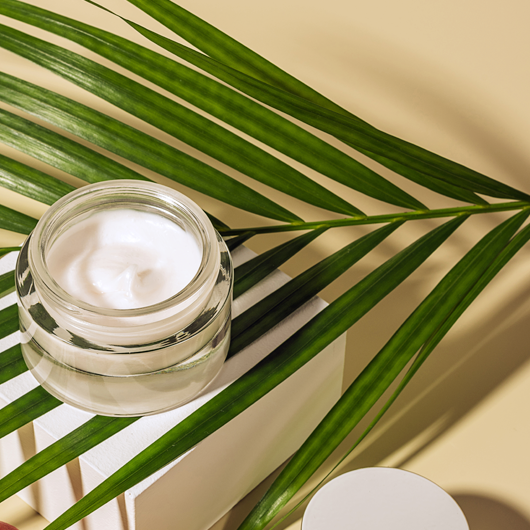


You're probably dealing with it right now. A serum base is clinging to the wall of a beaker, a cream phase is packed into the bottom curve of a mixing cup, or a jar sample still holds enough product for several more applications. In skincare formulation, that leftover film isn't just untidy. It's wasted raw material, uneven transfer, and one more chance to introduce contamination if you go back in with the wrong tool.
That's why a silicone spatula scraper earns a permanent place on a serious formulator's bench. It looks simple, but in practice it handles three jobs that matter every single batch: clean recovery, controlled mixing, and hygienic transfer. For estheticians, DIY makers, and small-batch formulators, that combination matters far more than the usual kitchen-style discussion about batter bowls and cookie dough.
Table of Contents
- Why a Silicone Spatula Is a Skincare MVP
- How to Select the Perfect Spatula for Your Formulations
- Master Your Mixing and Scraping Techniques
- Proper Cleaning and Sanitizing Procedures
- Pro Tips for Advanced Skincare Formulation
- Elevate Your Craft with the Right Tool
Why a Silicone Spatula Is a Skincare MVP
The moment most people start taking formulation seriously is when they realize how much product gets left behind. A rich cream sticks to the shoulder of a beaker. A gel serum settles into the bottom edge of a mixing vessel. A clay mask base coats the sides so evenly that it looks almost clean until you scrape it and recover far more than expected.

A silicone spatula scraper solves that with precision. It bends enough to follow the curve of glassware and jars, but it still gives you control when you need to move a thicker emulsion or transfer a concentrated active blend without smearing it across every surface on your bench.
It saves more than product
Good scraping habits save ingredients, but they also protect batch consistency. If one portion of your mixture stays in the vessel, your fill weights drift and your final texture can vary from container to container. That's especially noticeable with small test batches, where every gram of retained product changes the result.
Practical rule: If a formula is worth weighing carefully, it's worth scraping cleanly.
This tool has also moved far beyond a niche kitchen accessory. The global silicone spatulas market was valued at USD 1.18 billion in 2024 and is projected to reach USD 1.97 billion by 2033 according to DataHorizzon Research on the silicone spatulas market. In practical terms, that matters because it reflects durable demand for silicone tools in precision work, not just casual home use.
Why formulators keep reaching for it
In a skincare workspace, the right scraper becomes the tool you use constantly:
- For beakers and bowls you need flexible contact with curved walls.
- For jars and tins you need a narrow edge that reaches corners cleanly.
- For transfer work you need control so the batch goes into the container, not onto gloves, paper towels, and the counter.
That's why I treat the silicone spatula scraper less like an accessory and more like basic lab equipment. It keeps waste down, supports cleaner workflow, and makes the whole process feel more disciplined.
How to Select the Perfect Spatula for Your Formulations
Not all silicone spatulas belong near skincare ingredients. Some are too soft, some have hidden seams, and some feel fine with a loose gel but become frustrating the minute you work with a butter-rich cream or a tacky gum-thickened serum.

Start with construction
The first thing to check is whether the spatula is one-piece. That matters more than color, style, or brand. Crevices at the head-handle join are where residue stays trapped after washing, especially with waxes, gums, butters, and fragranced materials.
A recent roundup reviewed 45 spatulas in 2024, and the useful takeaway wasn't that one design wins every task. It was that details like a reinforced core and one-piece construction are major differentiators for cleanliness and control, as noted in DI ORO's discussion of silicone spatulas for scraping bowls.
A two-piece spatula can look clean and still hold old product where the head meets the handle.
Match flexibility to the formula
A spatula that's too floppy leaves product behind in thicker batches. One that's too rigid skips over curved vessel walls and forces you to scrape in short, choppy passes.
Use this quick guide when choosing:
| Formula type | What works | What usually fails |
|---|---|---|
| Thin serums | Slim, flexible blade | Thick head that pushes liquid around |
| Creams and lotions | Medium-flex blade with support | Ultra-soft spatula that buckles |
| Butters and balms | Firmer blade, reinforced core | Small, weak scraper with no backbone |
| Jar transfer | Narrow tip or tapered edge | Wide kitchen spatula that can't enter cleanly |
If you're working with fresh, small-batch hydration products made from ingredients such as Sodium Hyaluronate Powder Pure Hyaluronic Acid, which is described as a cosmetic-grade powder for creating water-based serums, creams, and lotions at typical concentrations of 0.1–2%, the spatula needs to handle both dispersion and clean vessel recovery. That usually means a blade with some flex at the tip and enough core support through the center.
Choose shape for the container, not the shelf photo
Most buying mistakes happen because people shop by appearance instead of workflow. A spatula that looks polished in a product photo may be miserable in a tall beaker or narrow-neck container.
Consider three fit points:
- Head profile: Rounded edges work well for bowls and beakers. A narrower tip is better for jars and sample pots.
- Handle length: Too short and your knuckles hover over the batch. Too long and you lose fine control in small vessels.
- Container pairing: The tool should match the packaging you fill. If you use pumps, jars, and airless components, review your lotion container options for skincare packaging before choosing spatula size.
Don't ignore heat tolerance
If you formulate with heated phases, your tool has to tolerate real process temperatures. Commercial silicone scraper spatulas are commonly specified at 428°F (220°C) or 500°F (260°C), and an older utensil patent describes a usable range of -100°F to 500°F, as summarized in AA Kitchen Loft's silicone scraper spatula listing. That's useful in practice because a heated oil phase, wax blend, or hot transfer step can deform a poor-quality tool long before you notice it.
The best setup for most formulators is simple: one-piece silicone body, reinforced internal core, medium-flex head, and a shape that fits your vessels.
Master Your Mixing and Scraping Techniques
A good tool helps, but technique is what keeps a formula uniform and your vessels empty. Most waste comes from small habits. Scraping with the flat face instead of the edge, stirring too aggressively, or using the wrong angle at the base of the beaker.

Use each edge on purpose
High-performance scraper spatulas often use a dual-edge design. One side is rounded for curved surfaces, and the other uses a 90° edge for flat planes and corners, as shown in MTC Kitchen's firm silicone scraper spatula.
That shape matters in skincare work because your vessels include both curves and sharp transitions.
- Rounded edge for bowl walls: Keep the blade flush to the vessel and pull downward in one continuous sweep.
- 90° edge for corners: Press into the bottom edge where the wall meets the base, then rotate the vessel as you draw the product inward.
- Flat bench cleanup: If you spill a cream or mask base on a sanitized slab or tray, the sharper edge lifts it more neatly than the rounded side.
The easiest way to leave product behind is to scrape only what you can see. The hidden loss sits in the bottom radius and shoulder of the container.
Fold instead of whipping
When you combine delicate emulsions or add a post-cool-down ingredient, don't default to circular stirring. A better method is controlled folding.
Try this sequence:
- Slide down the far side of the vessel with the blade angled slightly inward.
- Lift from the bottom so denser material moves upward.
- Turn the wrist and lay that material over the top.
- Rotate the vessel and repeat.
This motion reduces unnecessary aeration and gives you a better read on texture. If you're still refining your process for stable cream making, Skin Perfection's guide on how to emulsify oil and water in skincare formulations is worth keeping nearby during test batches.
Decant cleanly into final packaging
Transfer is where many otherwise careful formulators get sloppy. They scrape the bowl well, then smear the product across the lip of the jar or leave strings of cream between vessel and container.
Use the spatula as a controlled chute:
| Transfer task | Best motion |
|---|---|
| Filling a jar | Gather product onto blade, lower to one side, wipe against inner wall |
| Loading a sample pot | Use the tip, not the whole face |
| Moving gel into a bottle | Work in small charges and let gravity pull the product down |
| Recovering from a wide jar | Scrape perimeter first, then center |
If you've ever scooped a finished product like HydroGlow Anti-Aging Night Mask, which is packaged in a jar and described as a leave-on mask with hyaluronic acid, polyglutamic acid, jojoba, squalane, aloe, and algae-derived ingredients, you've seen the difference a proper spatula makes. A clean, narrow scraper removes product neatly from the shoulder and bottom without finger dipping or repeated exposure of the contents.
Retrieve the last portion from awkward containers
For narrow jars and bottle shoulders, use short strokes and rotate the container rather than forcing the tool. If the head is too wide, switch to a smaller spatula instead of bending the vessel or overworking the blade. A silicone spatula scraper works best when the edge can fully contact the surface. Partial contact just pushes residue around.
Proper Cleaning and Sanitizing Procedures
In skincare making, washing a tool and sanitizing a tool are not the same thing. A spatula can look spotless and still be unfit for a fresh batch if it picked up residue, fragrance carryover, or contaminants from the sink area, drying towel, or storage drawer.

Clean first, then sanitize
Residue has to come off before sanitizing does any useful work. If oils, waxes, pigments, or fragrance materials remain on the surface, you're not starting from a clean enough baseline.
My preferred order is straightforward:
- Rinse immediately: Don't let clay, gum, or butter-heavy residue dry on the blade.
- Wash with detergent: Use warm water and enough friction to remove the film, especially around the neck and edges.
- Inspect under good light: Turn the spatula and check for gloss, streaks, or trapped color.
- Sanitize only after cleaning: Apply your chosen sanitizing step to a visibly clean tool.
- Dry on a protected surface: Don't return a sanitized spatula to a cluttered counter.
Why silicone works so well for hygiene
The historical shift toward silicone spatulas wasn't only about flexibility. It also reflected the value of a more hygienic, non-porous material. One industry history notes that silicone spatulas can be rated up to 600°F, with degradation becoming predictable above 450°F, and that this heat tolerance supports sanitization methods like boiling for sensitive uses, according to Wasserstrom's spatula history overview.
That matters in formulation because a one-piece silicone spatula scraper is easy to wash thoroughly and practical to sanitize without worrying about trapped water inside a detachable head.
Bench standard: If the design gives residue a place to hide, it doesn't belong in repeated skincare production.
Handle stains, scent, and storage the right way
Some ingredients leave marks. Mineral pigments can stain. Essential oils and aromatic materials can linger. That doesn't always mean the spatula is unusable, but it does mean you need standards.
A good rule is to separate tools by function if they repeatedly hold strong scent or persistent color. Keep one group for fragranced projects and another for unscented or delicate facial products. After sanitizing, store them in a covered clean bin or drawer instead of dropping them loose beside funnels and pipettes. If you're filling treatment liquids or serums, it also helps to keep sanitized tools close to your glass dropper bottle packaging setup so you don't recontaminate them during transfer.
Pro Tips for Advanced Skincare Formulation
Once basic scraping becomes automatic, the silicone spatula scraper turns into a process-control tool. At this stage, experienced formulators get more deliberate. They stop using one general utensil for everything and start matching shape, stiffness, and size to each stage of the batch.
Build a small spatula system
One useful habit is keeping separate spatulas for separate roles. A firmer scraper for heated oil phases feels very different from a slim flexible one used to disperse gums or transfer a cool-down active into a serum base.
The category is also moving toward more specialized designs, including multi-angle and multi-blade variants for specific tasks, as discussed in this overview of evolving scraper designs for DIY makers. That's especially relevant in cosmetic work because containers, viscosities, and batch sizes vary so much.
Where specialization pays off
A few advanced habits make a noticeable difference:
- Dedicate by phase: Keep one spatula for water phase work and another for oils, waxes, or butters.
- Use minis for test work: Small spatulas are easier to control in sample jars, small beakers, and pigment dishes.
- Match edge to vessel: Long narrow tools help with bottles. Broader rounded blades suit bowls and cream beakers.
- Use for hygienic application: A freshly sanitized spatula is often a cleaner way to remove and apply masks or creams than finger dipping.
For formulators building a more disciplined process, it also helps to browse broader cosmetic formulation resources and workflow guides so your tools, packaging, and method all support each other.
Elevate Your Craft with the Right Tool
A silicone spatula scraper doesn't look impressive on a supply list, but it changes the quality of your work in ways you notice quickly. Batches transfer more cleanly. Containers fill with less mess. Cleanup gets easier. Hygiene becomes easier to maintain because the tool itself doesn't fight you.
That's the standard for formulation equipment. It should support accuracy, reduce waste, and make repeatable work easier. A well-chosen spatula does all three.
The final detail is consistency. If you use the same scraper style, the same scraping pattern, and the same sanitizing routine every time, your process becomes calmer and more predictable. Even small tasks, like moving a cool-down ingredient or clearing the wall of a beaker, feel more controlled. If you're refining a compact kit for small-batch work, simple tools like 1 ml pipettes for precise measuring and transfer pair well with a dedicated scraper and help keep your setup efficient.
If you're building a cleaner, more precise skincare workspace, Skin Perfection offers DIY lotion-making supplies, packaging resources, and skincare formulation products that fit practical small-batch and professional workflows.