

 Buy with Prime



At its core, a good lotion is surprisingly simple. Every formula, from the simplest homemade blend to the most sophisticated cosmetic cream, is built on just four fundamental pillars. You need a water phase for hydration, an oil phase for that smooth, silky feel, an emulsifier to bring them together, and a preservative to keep it safe. That's it. This essential quartet is where all the magic begins.
Understanding the Core Ingredients for Lotion
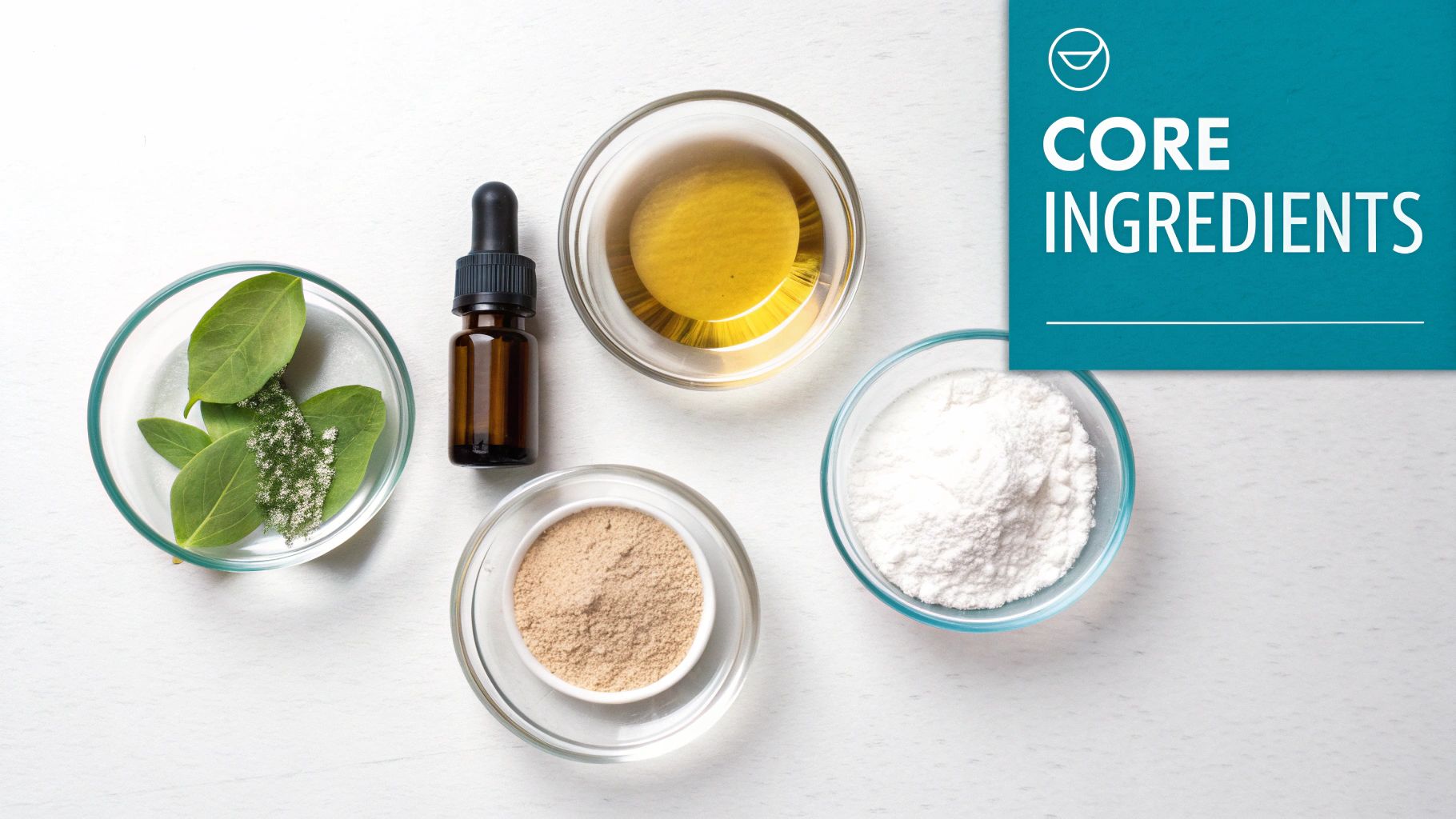
Before you start dreaming about fancy peptides and exotic extracts, it's crucial to get a solid grasp of the basics. Think of it like baking a cake. You absolutely need your flour, liquid, eggs, and a leavening agent before you even think about adding chocolate chips or vanilla bean. A lotion is no different; it needs a solid structure to achieve that creamy, hydrating texture we all love.
At its heart, lotion is simply an emulsion—a stable blend of oil and water. Of course, we all know from elementary school science that oil and water don't mix. That’s where the other core ingredients come in, playing their indispensable roles to create and maintain this delicate balance. Getting this foundation right is the key to a product that's both beautiful and safe to use.
The Four Pillars of Lotion Formulation
To really get a feel for how to craft beautiful skincare, you have to understand the job of each component. They all work together in concert to create the final texture and performance you're aiming for.
Here’s a quick look at the essentials:
- The Water Phase: This is the backbone of your lotion, usually making up the largest portion of the formula. It's what provides the primary hydration. While pure, distilled water is the go-to, you can get creative by using floral waters (hydrosols) to add some extra botanical goodness.
- The Oil Phase: This is where the richness and skin-smoothing properties come from. This phase dictates how the lotion feels on your skin. It can include lush butters like shea or cocoa, along with liquid carrier oils like jojoba or sweet almond.
- The Emulsifier: Here’s the real magic-maker. This ingredient is what forces the oil and water to play nicely together, preventing them from separating back out. For both beginners and seasoned formulators, a reliable choice like emulsifying wax NF is a fantastic starting point.
- The Preservative: This one is non-negotiable. Any product that contains water is a potential playground for bacteria, mold, and yeast. A broad-spectrum preservative is an absolute must to ensure your lotion stays pure, safe, and effective for more than a few days.
Let's break these categories down into a simple table to make it even clearer.
Quick Guide to Core Lotion Ingredient Categories
Here's a handy reference for the foundational ingredient types that every basic lotion needs, along with their primary function and a few common examples to get you started.
| Ingredient Category | Primary Role in Lotion | Common Examples |
|---|---|---|
| Water Phase | Provides primary hydration and acts as a solvent for water-soluble ingredients. | Distilled water, floral hydrosols (rosewater, lavender water), aloe vera juice. |
| Oil Phase | Conditions, moisturizes, and softens the skin; determines the lotion's richness. | Jojoba oil, sweet almond oil, shea butter, cocoa butter, mango butter. |
| Emulsifier | Binds the water and oil phases together to create a stable, uniform cream. | Emulsifying Wax NF, Olivem 1000, BTMS-50. |
| Preservative | Prevents the growth of bacteria, mold, and yeast, ensuring product safety and shelf life. | Optiphen Plus, Germall Plus, Leucidal Liquid SF. |
With these four pillars in place, you have a complete, stable, and safe base lotion. From here, you can start customizing with other active ingredients to target specific cosmetic goals.
The demand for high-quality, effective ingredients is absolutely booming. The global skincare ingredients market is expected to jump from USD 13.4 billion to a massive USD 21.5 billion by 2034, which just goes to show how much people are prioritizing natural and effective skincare.
If you’re curious about where some of these amazing natural ingredients come from, understanding how powerhouse plants like aloe vera are grown can be really eye-opening. You can learn more with this handy A Guide to Aloe Vera Plants Care. And for a deeper dive into formulation, feel free to explore our guides to cosmetic raw ingredients.
Mastering the Art of Moisturization
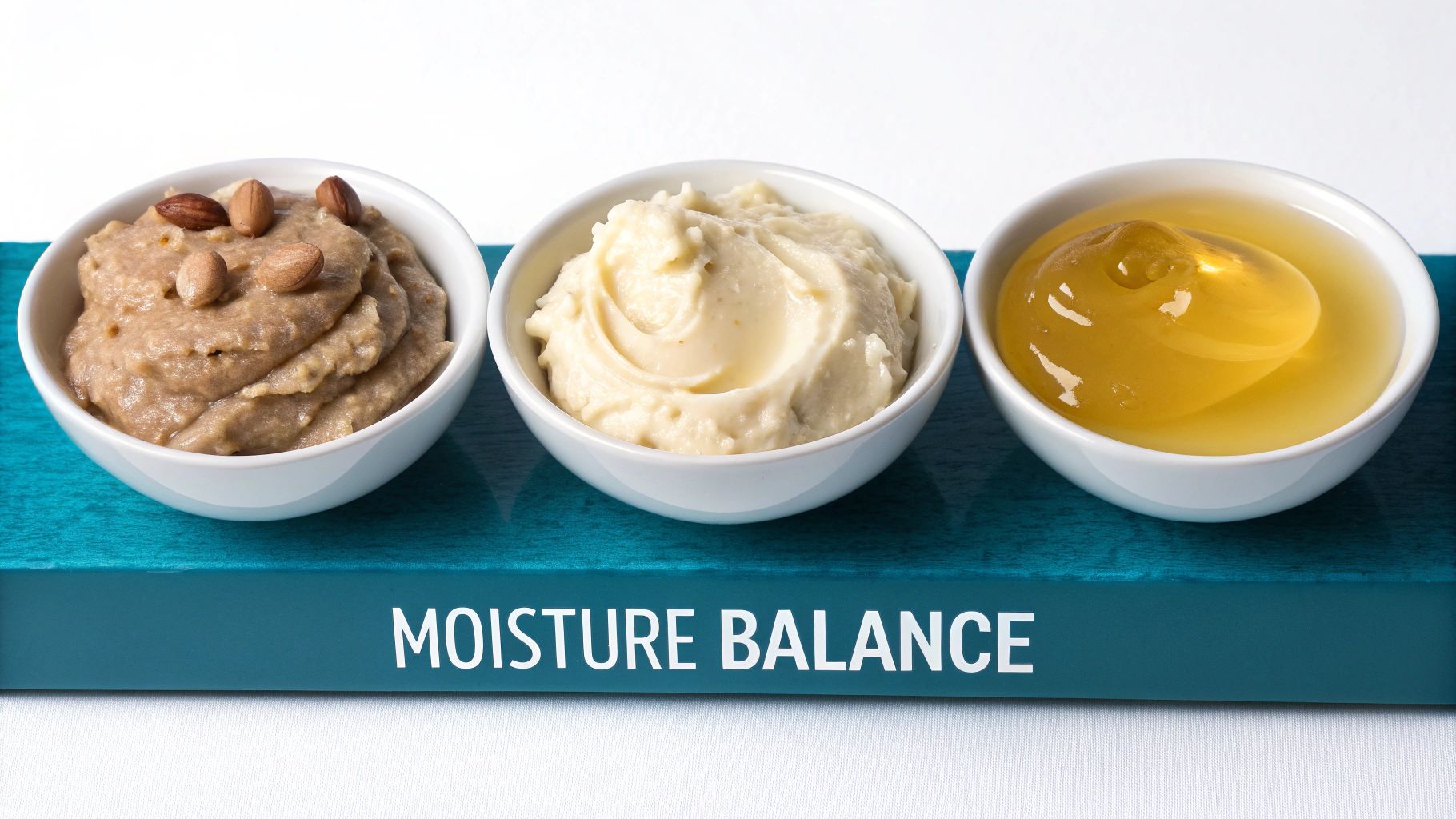
Creating a lotion that feels incredible on the skin is an art, and it all boils down to mastering the delicate balance of moisturization. While water kicks things off with initial hydration, a trio of specialized ingredients for lotion is responsible for how that moisture gets delivered, absorbed, and, most importantly, retained.
Think of it like tending a garden. You can't just spritz your plants with water and expect them to flourish; the soil needs the right conditions to hold onto that moisture. Your skin works the same way. It thrives with a thoughtful, multi-layered approach to hydration, and this is where three key players come in: humectants, emollients, and occlusives.
Each one has a very distinct job, and the way they're combined is what truly defines a lotion's texture, feel, and performance. Getting this balance right is what separates a basic, run-of-the-mill moisturizer from a truly luxurious one.
Humectants: The Moisture Magnets
Humectants are the first responders in your formula, the initial hydrators. Imagine them as tiny little sponges that attract water molecules from the air around you and draw them directly to your skin's surface. This action gives your skin a serious moisture boost, leaving it looking plump and feeling hydrated.
They're a fundamental part of pretty much every moisturizing product for one simple reason: they bring water right where it's needed. But they can't fly solo. Without other ingredients to lock in all that moisture they've gathered, it can evaporate right off your skin, leaving it feeling just as dry as before.
Some popular humectants you’ll see everywhere include:
- Glycerin: A classic, cost-effective, and incredibly efficient humectant. It's a true staple in skincare for a reason.
- Hyaluronic Acid: Famous for its incredible ability to hold up to 1,000 times its weight in water, making it an absolute powerhouse for hydration.
- Panthenol (Pro-Vitamin B5): A great dual-function ingredient that acts as both a humectant and an emollient, helping to attract moisture and then hold it in place.
For formulators leaning into clean and natural products, there's a fantastic array of options out there. You can learn more about these powerful hydrators in our guide to natural humectants for skin.
Emollients: The Surface Smoothers
Once the humectants have drawn in the moisture, the emollients step up to the plate. Their job is to improve the feel and appearance of the skin's surface. Going back to our garden analogy, think of them as the rich compost that smooths over the dry, cracked patches in the soil.
Emollients are typically oils and butters that work by filling in the tiny gaps between your skin cells. This simple action is what creates a softer, smoother, and more supple texture. They are almost entirely responsible for the rich, silky, or lightweight feel of a lotion, making them critical to the sensory experience of the product. The type and amount of emollients you choose will be the deciding factor between a light day cream and a decadent night butter.
Emollients are the key to a lotion's aesthetic appeal. They don't just add moisture; they improve the way skin looks and feels, providing that instant sensation of softness and comfort that consumers look for.
A few excellent emollients to consider are:
- Shea Butter: A rich, deeply nourishing butter that provides a luxurious feel and is a great choice for drier skin types.
- Jojoba Oil: A unique lightweight liquid wax that closely mimics our skin's natural sebum, allowing it to absorb beautifully without a greasy feeling.
- Squalane: A very light, fast-absorbing oil that leaves behind a silky, smooth finish without any heavy residue.
The growing consumer interest in these kinds of functional ingredients is a major driver in the skincare market. In fact, the body creams and lotions market is expected to grow at a 4.82% CAGR, fueled by the demand for ingredients that deliver tangible benefits like improved skin texture and lasting hydration.
Occlusives: The Protective Seals
Finally, once the skin is hydrated by humectants and smoothed by emollients, occlusives come in to create a protective barrier that locks it all in. In our garden, occlusives are like a layer of mulch spread over the soil. They prevent all that good water from simply evaporating into the air, ensuring the moisture stays put right where you want it.
This barrier function is absolutely critical for achieving long-lasting hydration. It's worth noting that many ingredients, especially richer butters and some oils, can pull double duty, acting as both an emollient and an occlusive. The real art is finding a balance so the lotion feels protective without being heavy or greasy.
Common occlusive ingredients you might use are:
- Dimethicone: A type of silicone that forms a breathable, non-greasy barrier and gives products that smooth, "slip" feeling.
- Petrolatum: A highly effective and powerful occlusive, though you'll see it less often in natural skincare formulations these days.
- Beeswax: A fantastic natural wax that creates a protective layer on the skin while still allowing it to breathe.
Creating a Stable and Safe Emulsion
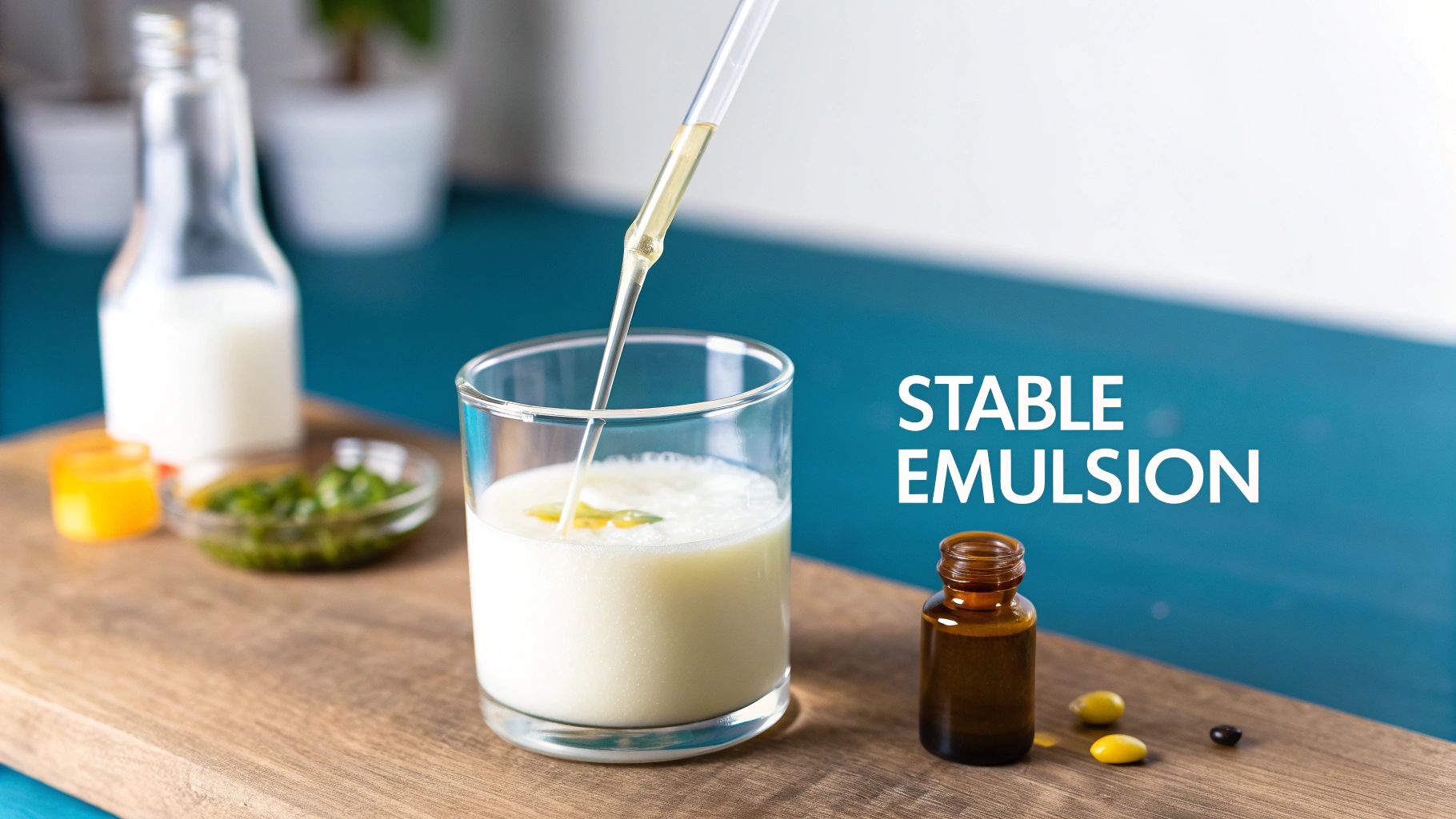
The creamy, luxurious feel of a good lotion is no accident. It's the result of a carefully balanced partnership between oil and water, two ingredients that, left to their own devices, want absolutely nothing to do with each other. To get them to happily coexist in a single, stable product, you need to bring in two critical players: emulsifiers and preservatives.
Think about making a simple vinaigrette. You can shake it all you want, but the moment you stop, the oil and vinegar start drifting apart. In lotion making, an emulsifier is your secret weapon—it’s the ingredient that locks the oil and water together, ensuring your product stays smooth and perfectly blended. At the same time, a preservative stands guard, keeping your beautiful creation safe from unwanted microbial guests.
The Magic of Emulsifiers
So, how does an emulsifier work its magic? It's all down to its unique molecular structure. One end of an emulsifier molecule loves water (it’s hydrophilic), while the other end loves oil (it’s lipophilic). This dual personality allows it to act as a bridge, grabbing onto both the oil and water molecules to create a stable mixture called an emulsion.
Without an effective emulsifier, your lotion would quickly separate into a useless, oily, watery mess. Picking the right one is absolutely key to getting the texture you're after, whether it's a light, fast-absorbing daily lotion or a thick, decadent body cream.
Here are a few dependable emulsifiers you might consider for your formulas:
- Emulsifying Wax NF: A true workhorse and a go-to for many formulators. It’s robust, easy to work with, and creates beautifully creamy, stable lotions. If you're just starting, this is an excellent choice.
- Olivem 1000: Derived from olive oil, this emulsifier is known for creating elegant, silky emulsions with a light, moisturizing feel. It's a popular pick for more high-end, sophisticated formulations.
- BTMS-50: Famous for its conditioning properties, this emulsifier gives lotions a soft, powdery finish, making them feel exceptionally smooth and luxurious on the skin.
For a deeper dive into how these binders work and to find the perfect match for your next project, you can explore our resources on various emulsifiers for lotion.
The Non-Negotiable Role of Preservatives
While emulsifiers are busy creating that perfect texture, preservatives are handling an even more important job: keeping your lotion safe. This is one area where you absolutely cannot compromise. Any product that contains water—and that’s virtually all lotions and creams—is a perfect breeding ground for bacteria, mold, and yeast.
Skipping a preservative isn’t a more “natural” choice; it’s an unsafe one. Within just a few days, an unpreserved lotion can become a playground for harmful microbes that you can’t even see. Using a contaminated product like that could introduce all sorts of unwanted bacteria to your skin.
A broad-spectrum preservative is an essential safety ingredient, not an optional additive. It protects both your product and your skin by preventing the growth of a wide range of microorganisms, ensuring your lotion remains safe from the first pump to the last.
When you're choosing a preservative, make sure it’s broad-spectrum, meaning it’s effective against the whole trifecta: bacteria, yeast, and mold. Always, always follow the manufacturer's guidelines for the correct usage rate and the proper pH range to ensure it can do its job effectively. This is the only way to guarantee your creations stay pristine and safe for their entire shelf life.
Elevating Your Lotion with High-Performance Actives
Once you've nailed down a stable, beautifully moisturizing base, you’ve essentially created the perfect canvas. Now for the really fun part, where the art of formulation meets the science of cosmetic results—adding high-performance active ingredients. These are the power players, the ingredients you pick to target specific aesthetic goals and visibly enhance your skin's appearance for the better.
If your base lotion is the foundation of a house, actives are the high-end finishes that make it truly exceptional. They are concentrated ingredients that work to refine, brighten, and support the skin. This is where you can customize a product to address particular aims, like softening the look of fine lines or helping achieve a more even skin tone.
Understanding Peptides and Plant Stem Cells
Among the most popular actives out there are peptides and plant stem cells. They might sound incredibly scientific, but their roles are pretty straightforward. Just think of them as specialized support staff for your skin, each with a unique job to do to help you maintain a vibrant, youthful look.
Peptides: The Tiny Messengers
Peptides are short chains of amino acids, which are the basic building blocks of essential skin proteins like collagen and elastin. You can imagine them as tiny messengers carrying specific instructions. When you apply them in a lotion, they support the skin’s natural processes, which can help improve the appearance of firmness and smooth out texture.
Different peptides carry different "messages." Some are designed to improve the look of skin elasticity, while others zero in on reducing the appearance of wrinkles. This makes them incredibly versatile for any formula aiming for a more youthful appearance. For a deeper dive, you can check out our guide on peptide serums to see just how these powerful ingredients get to work.
Plant Stem Cells: The Botanical Reservoirs
Plant stem cells are another fascinating category of actives. Think of them as reservoirs of potent botanical compounds. These cells are harvested from plants and then cultured in a lab, creating a concentrated cocktail of beneficial substances that can help boost the skin's radiance and youthful glow.
These ingredients are prized for their multi-faceted benefits. They often provide antioxidant support that helps the skin appear more resilient against daily stressors. Adding plant stem cells to your lotion is a fantastic way to boost its overall luminosity and promote a revitalized appearance.
High-performance actives are added during the "cool-down" phase of lotion making—after the emulsion has formed and cooled to below 45°C (113°F). This simple step protects their delicate structures from heat damage, making sure they stay effective in your final product.
The Rise of Biotech in Skincare
The world of active ingredients is constantly moving forward, with biotechnology leading the charge. This field is creating a new generation of powerful and precise ingredients for lotion that we could only have dreamed of a decade ago. These lab-grown actives offer incredible consistency and potency, making them perfect for professional formulators and DIY enthusiasts alike.
And the industry is taking notice. The market for biotech-derived ingredients is growing at an impressive ~11% CAGR and is projected to soar past USD 12 billion by 2030. This trend highlights a major shift toward targeted, effective actives like lab-grown peptides, growth factors, and specialized ferments that are changing the game in lotion formulation.
Choosing and Using Active Ingredients
Picking the right active really comes down to defining your goal. Are you creating a lotion that brightens? Firms? Or simply gives an all-around boost to the skin’s appearance? Once you know your objective, you can choose the actives to match.
To get you started, we've put together a quick reference table of some popular high-performance actives. It covers their main focus area and the typical usage rates you'll see in formulations.
High-Performance Actives For Your Lotion
| Active Ingredient | Focus Area | Recommended Usage Rate (%) |
|---|---|---|
| Matrixyl 3000 | Supports skin firmness and smooths the look of wrinkles. | 3 - 8% |
| Argireline | Targets the appearance of expression lines. | 3 - 10% |
| Apple Stem Cells | Enhances skin radiance and promotes a youthful look. | 1 - 5% |
| Vitamin C | Brightens the appearance of the skin and provides antioxidant support. | 1 - 20% (form dependent) |
| Niacinamide (B3) | Improves the look of skin texture and tone. | 2 - 5% |
| Hyaluronic Acid | Provides intense hydration for a plump appearance. | 0.5 - 2% |
Just remember to always check your supplier's specific recommendations, as concentrations and forms can vary.
When it comes time to add these actives, precision is everything. Use a digital scale to measure them accurately as a percentage of your total formula weight. Introduce them one by one during the cool-down phase, stirring gently but thoroughly after each addition. This careful process ensures every single drop of your creation is packed with the benefits you intended.
Your Guide to Formulation and Troubleshooting
Alright, now for the fun part. Moving from just learning about lotion ingredients to actually making your own is where the magic happens. This is the moment you get to turn a collection of individual oils, butters, and waters into a silky, beautiful cream.
Making lotion is a bit like baking, but for your skin. It's a methodical process with distinct phases, and following the steps is key to getting everything to combine perfectly for a stable, lovely final product. Each ingredient has its own cue to enter the stage. If you follow the recipe, you'll end up with a smooth, harmonious blend instead of a separated, oily mess.
We'll walk through the main phases, share a simple recipe to get you started, and then cover how to fix the most common issues that pop up.
This flowchart gives you a simple visual of how a basic lotion gets supercharged by adding powerful active ingredients.
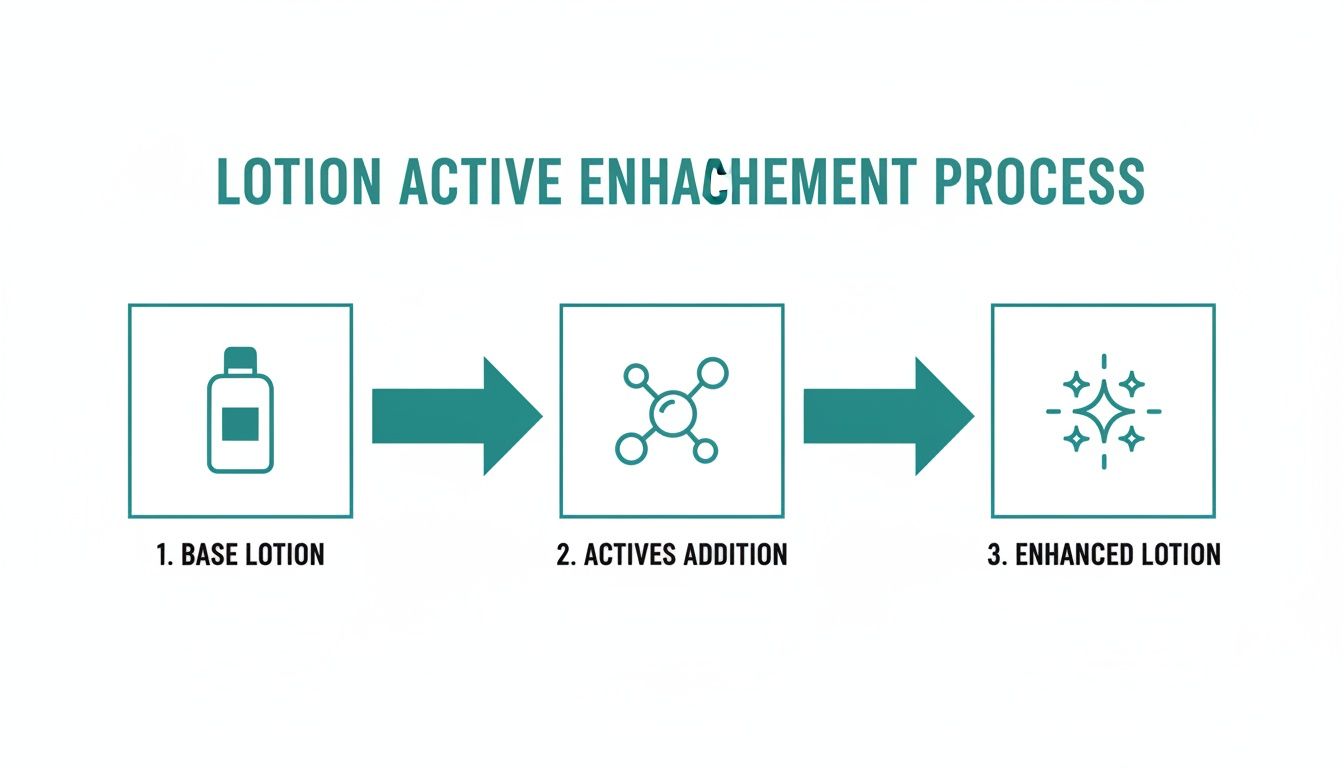
As you can see, you start with a good base, introduce your targeted actives, and end up with something much more powerful.
The Three Phases of Formulation
Lotion making is usually broken down into three key stages. The trick is heating your oil and water phases separately before combining them—this is absolutely crucial for getting a stable emulsion. The cool-down phase is just as important, as it protects all those delicate, heat-sensitive goodies you’re adding.
1. The Heated Water Phase: This is where all your water-loving ingredients go. In a heat-safe beaker or container, you’ll combine your distilled water, glycerin (your humectant), and anything else that dissolves in water.
2. The Heated Oil Phase: In a second heat-safe container, you'll mix up your oil-soluble ingredients. This includes your carrier oils (like almond or jojoba), butters, and the all-important emulsifying wax that will hold everything together.
3. The Cool-Down Phase This is the grand finale. After your oil and water have been blended into an emulsion and have had a chance to cool down a bit, you’ll add your temperature-sensitive ingredients. This is where your preservative comes in, along with high-performance actives like peptides or botanical extracts that can't handle the heat.
Pro Tip: Always heat both your water and oil phases to roughly the same temperature, usually around 70-75°C (160-167°F). Getting the temperatures to match is critical for a stable emulsion that won't separate later. A big temperature difference is one of the top reasons lotions fail.
A Simple Foundational Lotion Recipe
This basic recipe makes a wonderfully light lotion and is the perfect starting point if you're new to this. A quick heads-up: all measurements are by weight, so a digital scale is your best friend for accuracy.
Heated Water Phase:
- 70% Distilled Water
- 3% Vegetable Glycerin
Heated Oil Phase:
- 15% Sweet Almond Oil (or another light carrier oil)
- 4% Shea Butter
- 5% Emulsifying Wax NF
Cool-Down Phase (below 45°C / 113°F):
- 1% Optiphen Plus (or another broad-spectrum preservative)
- 2% Your chosen active ingredients (this part is optional but fun!)
Once your heated phases are at the right temperature, pour the water phase into the oil phase and mix like crazy with a high-shear tool (an immersion blender works great!) until it emulsifies. Let it cool, then stir in your cool-down ingredients.
Common Troubleshooting Questions
Even with the best recipe, things can go a little sideways. It happens to everyone! Here are the fixes for the most common formulation headaches.
Why Is My Lotion Too Thin or Watery? A runny lotion almost always points to an issue with your emulsifier or thickener ratio. The easiest fix is to bump up your emulsifying wax by 1-2% in your next batch. You could also toss in a dedicated thickener like cetyl alcohol at 1-3% into your oil phase for a richer, creamier texture.
My Lotion Separated Overnight. What Happened? Ah, separation—the classic sign of a broken emulsion. This can happen for a few reasons: you didn't use enough emulsifier, there was a big temperature gap between your oil and water phases when you combined them, or you didn't mix it well enough. Make sure you're using a high-shear mixer for at least 1-2 minutes to really force those oil and water droplets into a tight, stable bond.
Why Does My Lotion Feel Greasy? That heavy, greasy feeling usually comes down to your choice of oils and butters. For a lighter feel, try swapping some of your heavier ingredients (like shea butter) for something that absorbs faster, like jojoba oil or squalane. You can also simply reduce the total percentage of your oil phase to create a more elegant, lightweight finish. Getting your preservative system right is also crucial, and you can learn more about natural skin care preservatives in our detailed guide.
Your Top Lotion-Making Questions, Answered
Diving into the world of lotion making is exciting, but it can definitely bring up a lot of questions, especially when you're starting from scratch. From figuring out the absolute must-have ingredients for lotion to tweaking your formula for that perfect youthful look, a little guidance can make all the difference. Let's tackle some of the most common questions to get you formulating like a pro.
What Are the Absolute Bare-Bones Ingredients for a Basic Lotion?
To get a simple, stable lotion, you really only need four key players working together. Think of this as your foundational recipe—the non-negotiable starting lineup for any cream that's both beautiful and safe to use.
First up is the water phase, which is almost always distilled water. This forms the hydrating heart of your lotion. Then you've got the oil phase, which includes rich emollients like jojoba oil or shea butter to give your lotion that beautiful, skin-conditioning slip.
Of course, water and oil don't mix on their own. That's where your emulsifier, like an emulsifying wax NF, comes in. It's the critical matchmaker that binds the two phases together. Finally, and this one is non-negotiable, you need a broad-spectrum preservative. This protects your hard work from unwanted bacteria, mold, and yeast. Everything else—from potent actives to delicate fragrances—is just building on this core four.
How Do I Pick Ingredients to Make My Skin Look More Youthful?
When you want to create a lotion that gives a more youthful, radiant glow, the magic really happens with the high-performance actives you add during the cool-down phase. Peptides are a fantastic place to start; they're well-known for supporting the skin's structure and improving the look of firmness and texture.
Antioxidants are another powerhouse addition. Ingredients like Vitamin C and Vitamin E are celebrated for their ability to brighten the skin and promote a natural radiance.
Don't overlook amazing plant-derived ingredients for lotion, either. Things like stem cell extracts can really contribute to a revitalized, luminous complexion. Just be sure to stick to the supplier's recommended usage rate for any active you choose—that’s how you’ll get the best, most reliable results from your formula.
Remember, the goal here is to enhance and beautify the skin's appearance. By carefully selecting actives that support firmness, improve texture, and boost radiance, you can craft a truly sophisticated product that delivers on its promises.
Ugh, Why Did My Homemade Lotion Separate After a Few Days?
Seeing your beautiful lotion separate is a common headache for new formulators, but don't worry—it almost always comes down to an issue with the emulsion itself. The good news is the culprit is usually one of three simple things.
Most often, the problem is an incorrect ratio of emulsifier to your oil and water phases. You might also have a temperature mismatch; both phases need to be heated to a similar temperature, usually around 70-75°C (160-167°F), right before you combine them.
Finally, improper mixing can be the weak link. You need good, high-shear mixing to create the tiny, tightly-bound droplets that make for a stable, long-lasting emulsion. An immersion blender is your best friend here.
Can I Just Make My Lotion Without a Preservative?
I get this question a lot, and the answer is a firm, simple no. Any product that contains water—which is every traditional lotion and cream out there—absolutely must have a preservative to be safe for use.
Without a preservative system, your lotion becomes a breeding ground for harmful bacteria, mold, and yeast in just a few days. It quickly turns into something you definitely don't want to put on your skin. The only time you can skip it is with anhydrous (water-free) products like body butters or balms made purely from oils, butters, and waxes.
For any standard lotion, a broad-spectrum preservative isn't an optional add-in; it's an essential safety ingredient. It's a non-negotiable part of creating a product that's both responsible and effective.
At Skin Perfection, we're passionate about providing the high-quality, performance-driven ingredients you need to create skincare that truly beautifies and elevates. Whether you're crafting a simple daily moisturizer or a complex formula for a youthful appearance, explore our curated selection of peptides, plant stem cells, and formulation supplies to bring your vision to life.