

 Buy with Prime



So, what exactly is skin flooding? You’ve probably seen the term floating around, and for good reason. It’s less about a specific product and more about a method—a way of layering lightweight, water-based products onto damp skin to get that dewy, plump, and deeply quenched look.
The Core Concept Behind Skin Flooding
The whole idea, which has roots in Korean beauty philosophies, is beautifully simple: drench your complexion in moisture. You do this by applying multiple thin layers of hydrating goodies and then sealing it all in with a final, more substantial product to lock everything in place.
There’s one absolutely critical step that makes this whole technique work: you must apply your products to damp skin. This is the secret sauce. Applying serums and essences to a damp surface helps trap that initial layer of moisture, creating the perfect canvas for everything else to absorb more effectively. It’s all about building up hydration to support your skin’s natural balance and radiance.
Why This Method Is So Popular
Skin flooding has caught on because it’s accessible and the results are often immediately visible. You don’t need to go out and buy a whole new skincare wardrobe. Instead, it’s about being more intentional with the hydrating toners, essences, and serums you likely already own.
So many people find this technique is the perfect antidote to dull-looking skin, giving it a supple, healthy glow. The main benefits people are chasing with skin flooding include:
- Next-Level Hydration: All that layering really saturates the skin with moisture-loving ingredients.
- A Radiant Glow: When skin is properly hydrated, it reflects light better, which translates to a natural-looking glow.
- A Plumper Look: A big drink of water for your skin can help it look fuller and smoother.
At its heart, skin flooding is a ritual of layering. It transforms the simple act of moisturizing into a deliberate process that supports your skin's natural beauty and glow.
For a quick breakdown, here are the core principles of skin flooding and why they're so effective for achieving a healthy-looking complexion.
Skin Flooding At A Glance Key Concepts
| Concept | What It Means | Why It Matters For Appearance |
|---|---|---|
| Damp Skin Application | Starting your routine on skin that's still damp from cleansing or a mist. | Traps an initial layer of water, boosting the absorption and effectiveness of subsequent products for a dewier look. |
| Layering Hydrators | Applying multiple thin layers of water-based products like toners, essences, and serums. | Builds a deep reservoir of moisture within the skin, which helps to plump up the look of fine lines. |
| Sealing It In | Finishing with a moisturizer or cream to lock in all the hydrating layers underneath. | Prevents water loss throughout the day or night, keeping skin looking supple and fresh for longer. |
By embracing these simple steps, you're not just applying products; you're creating an environment where your skin can look its absolute best.
This approach is a game-changer for anyone dealing with the appearance of dehydrated skin, which can often look tired and lackluster. If that sounds familiar, you can learn more in our guide on what to do when water is not enough. The beauty of this layering technique is that it provides sustained moisture, helping your skin maintain that fresh, juicy look all day long. Once you get the hang of it, you can easily tweak the method to fit your unique needs.
The Science Behind Supercharged Hydration
So, how exactly does skin flooding pull off this magic trick for your complexion? It’s all about understanding and supporting your skin’s natural moisture barrier, a seriously important outer shield called the stratum corneum. Think of it like a perfectly built brick wall.
In this wall, the bricks are your skin cells (corneocytes), and the “mortar” holding everything together is a rich mix of lipids. This whole setup is designed to do two crucial jobs: keep the good stuff (moisture) in and the bad stuff (irritants, pollution) out.
When that barrier is compromised, it’s like having cracks in the mortar. It can’t do its job properly. This leads to a big jump in what we call Trans-Epidermal Water Loss (TEWL), where all that precious hydration just evaporates into the air. The result? Skin that looks dull, feels tight, and just isn't happy.
The Two-Part Hydration Strategy
Skin flooding addresses this with a beautifully simple two-step plan that works with your skin, not against it. First, you drench the skin with ingredients that attract water. Then, you lock it all in.
You can’t lock in moisture that isn’t there to begin with. Skin flooding is all about first delivering a "flood" of hydration, then creating a seal to keep it from disappearing.
This is where the technique really delivers. It gives your thirsty skin the water-loving ingredients it's looking for and then reinforces the barrier to make sure all that goodness stays put.
Humectants And Occlusion
The process kicks off by applying humectants to damp skin. Humectants are like tiny moisture magnets; they pull water from the air and from deeper layers of your skin up to the surface. Ingredients like Hyaluronic Acid and Glycerin are the superstars here and are essential for a good skin flood. If you want to dive deeper, you can explore more options in our guide to natural humectants for skin.
After you've drenched your skin with these humectants, the second crucial step is to apply an emollient or occlusive layer. This creates a light, breathable shield over your skin's surface, dramatically slowing down that pesky TEWL and giving the humectants plenty of time to plump and hydrate from within.
The result is skin that looks visibly fuller, smoother, and has a healthy glow. And this isn't just a fleeting trend; there's real data behind why it works so well. Research shows that by age 75, our skin holds only about 25% of the hyaluronic acid it had at age 19, which is a massive drop in natural moisture. This science helps explain why a targeted technique like skin flooding has taken off. In fact, one survey showed that 78% of users saw a noticeable improvement in the appearance of fine lines after just 30 days. You can read more about these innovative skincare findings to get the full picture of the trend's impact.
Your Step-By-Step Skin Flooding Routine
So, you're ready to give skin flooding a try? Let's walk through it. This is a practical, no-fuss guide that breaks the process down into simple steps to get you that dewy, hydrated glow.
The core idea is simple: layer your products from thinnest to thickest. This method helps your skin absorb every last drop of goodness, maximizing the benefits of each product.
Step 1: Start With A Gentle Cleanse
Before you can flood your skin with hydration, you need a clean canvas. Start by washing your face with a gentle, non-stripping cleanser. This gets rid of makeup, dirt, and oil without messing with your skin's natural moisture barrier. Your skin will be perfectly prepped for the layers to come.
A quick tip: use lukewarm water. Hot water can be way too harsh and leave your skin feeling tight and stripped. Pat your face mostly dry with a clean towel, but don’t go all the way—the next step is the most important one.
Step 2: Keep Your Skin Damp
This is the golden rule of skin flooding. It's non-negotiable. Your skin has to be slightly damp before you put on your first hydrating layer.
Think of your skin like a sponge. A dry sponge just lets water roll off, but a damp one soaks it right up. Your skin is the same way. A little moisture on the surface helps your products spread easily and absorb deeply, trapping that initial layer of water right where you want it. You can even spritz a hydrating facial mist between steps to keep things damp.
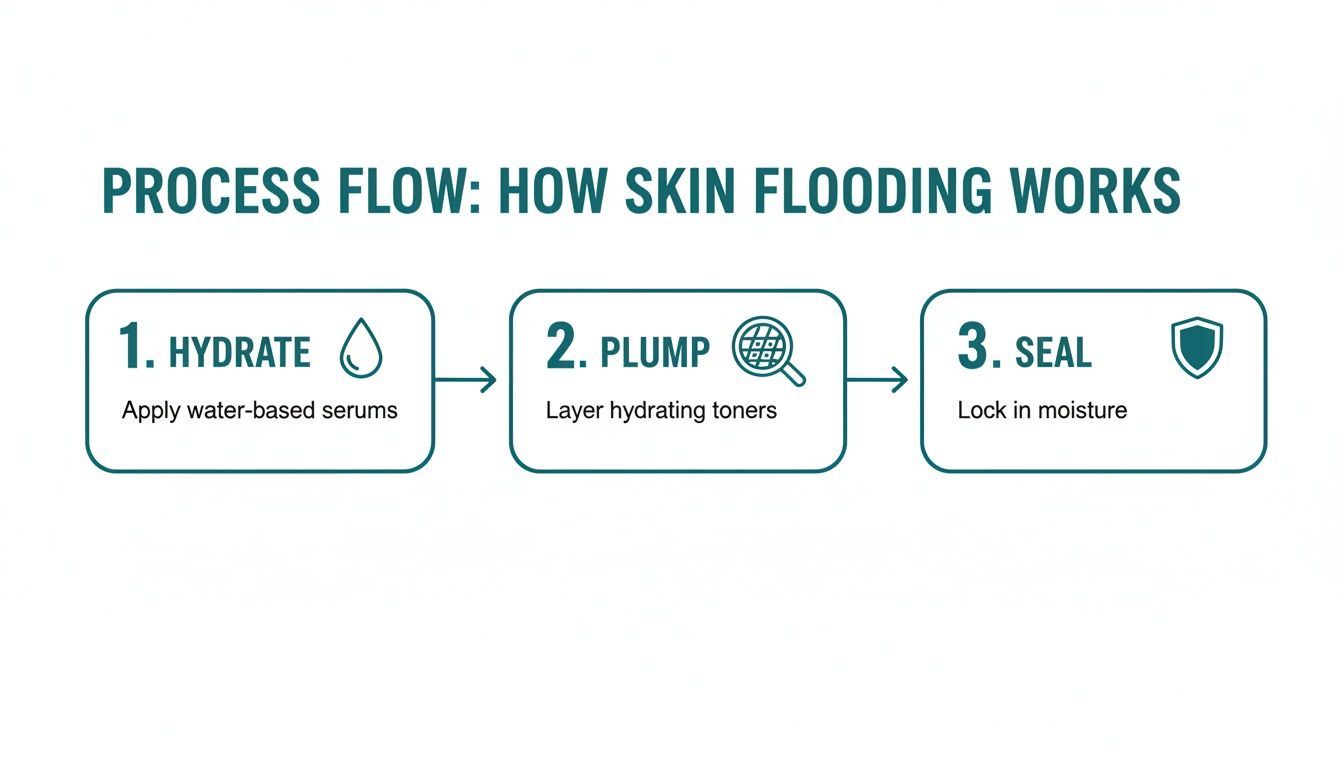
This visual really captures the simple but powerful process of skin flooding, from hydrating all the way to sealing in that precious moisture. You can see how each step builds on the last to lock everything in.
Step 3: Apply A Hydrating Toner Or Essence
Okay, your skin is clean and damp—now it's time for the first wave of the "flood." Grab a hydrating toner or essence. Pour a little into your palms and gently pat it onto your face and neck. Try to avoid rubbing; patting is much gentler and helps with absorption.
This first layer gives your skin a quick surge of moisture and gets it ready for the serum that’s coming next. Look for formulas with ingredients like glycerin, aloe, or rosewater.
Step 4: Add A Humectant-Rich Serum
Next up, while your skin is still dewy from the toner, it's serum time. You want one that's loaded with humectants. These are the ingredients that act like tiny moisture magnets, pulling water deep into the skin.
Hyaluronic Acid is the superstar humectant for this step. It's incredibly effective at holding onto water. To really get into the nitty-gritty of this powerhouse ingredient, check out our guide on low-molecular-weight hyaluronic acid.
This whole technique blew up as a viral trend inspired by K-beauty routines around 2023. Its success is all about layering hydrating products on damp skin and then locking it all in, which is known to reduce trans-epidermal water loss (TEWL). Studies on this multi-layering approach have shown it can boost skin hydration by as much as 50% within 24 hours compared to just using a single product. The result? Plumper, more radiant-looking skin.
Step 5: Seal Everything In With A Moisturizer
This is the final, and most critical, step. You have to lock in all that hydration you just layered on. Smooth a nourishing moisturizer over the top of your serum. This creates an emollient and occlusive barrier that stops all that lovely moisture from just evaporating away, keeping your skin dewy and supple for hours.
Pro Tip: Gently press the moisturizer into your skin instead of rubbing it in. This helps seal the layers underneath without disturbing them, giving you a beautifully quenched complexion.
Choosing The Best Ingredients For Your Routine
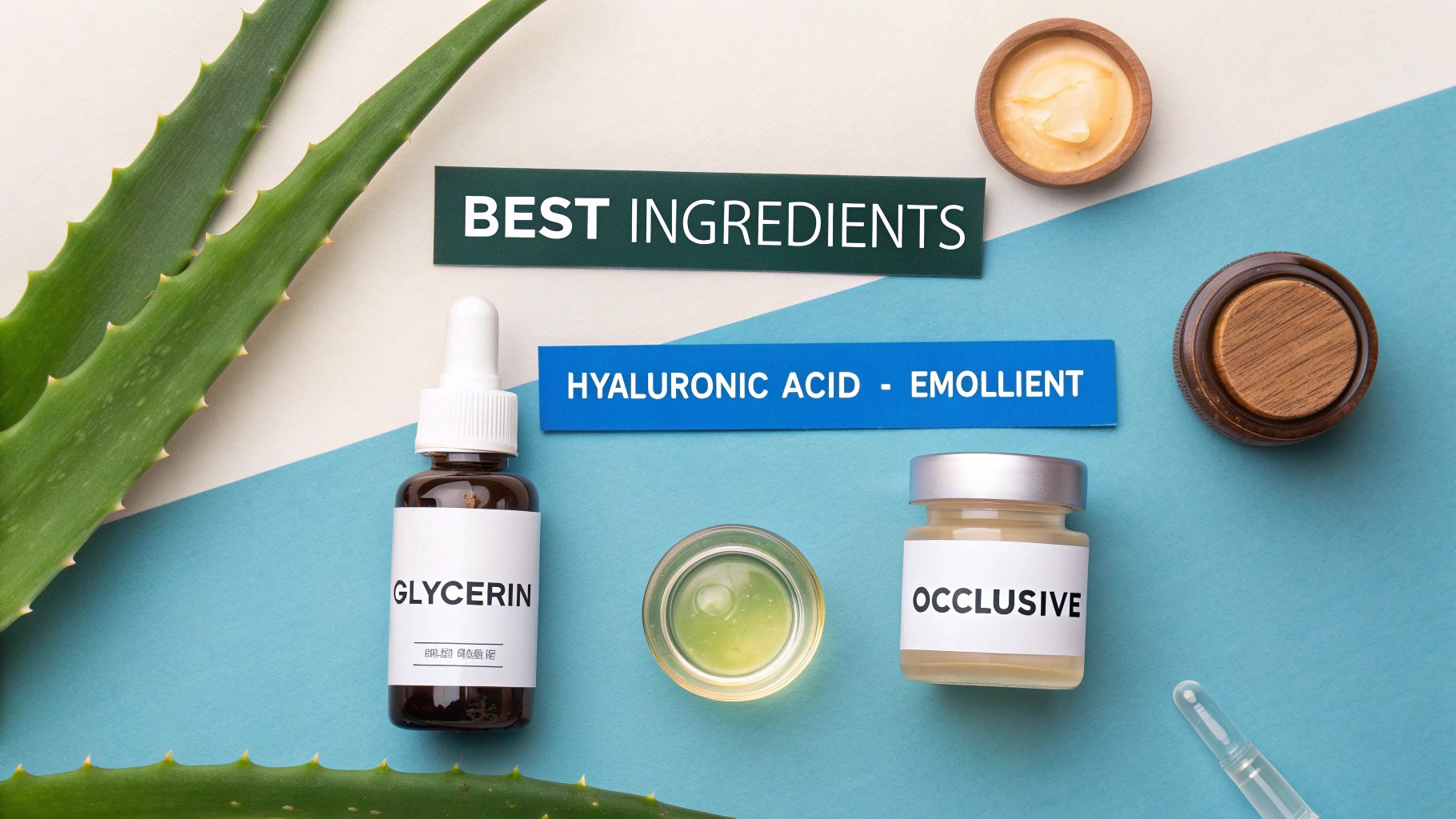
The real magic behind skin flooding comes down to one thing: picking the right ingredients. Your routine’s success hinges on choosing products that vibe with your skin’s unique personality.
Think of it like a three-step symphony for hydration. First, you need ingredients that pull water into the skin. Next, you need ones to soften everything up. Finally, you have to lock it all in place.
Humectants: The Moisture Magnets
Humectants are the star players in any skin flooding routine. These ingredients are like tiny sponges, grabbing moisture from the air and from deeper layers of your skin, pulling it right to the surface. They’re responsible for that instant "flood" of hydration that creates a plump, dewy glow.
The absolute icon of this group is Hyaluronic Acid, famous for its ability to bind massive amounts of water to the skin. But it's not the only hero out there.
- Glycerin: A true classic and a super reliable hydrator that helps your skin hold onto its moisture.
- Aloe Vera: Not just for after-sun care! Aloe delivers a refreshing wave of moisture and is incredibly soothing.
- Panthenol (Pro-Vitamin B5): This multitasker hydrates while also supporting the appearance of a resilient skin barrier.
If you want to get into the nitty-gritty of how these ingredients work in different products, our guide on the difference between hydrators and serums is a great next read. It’ll help you pick the perfect serum for your flooding lineup.
Emollients: For a Smooth Finish
Once you've flooded your skin with all that lovely moisture from humectants, it's time to smooth things over with emollients. These are the oils and lipids that improve your skin's texture and flexibility, making it feel soft and supple.
Emollients work by filling in the tiny gaps between your skin cells, which gives your complexion a much smoother, more even appearance.
Some of our favorites include:
- Squalane: A beautifully lightweight oil that feels just like your skin’s natural sebum. It’s a dream for all skin types because it sinks in without a hint of grease.
- Jojoba Oil: Another ingredient that’s remarkably similar to our skin's own oils, helping to balance moisture without feeling heavy.
- Fatty Acids: Look for ingredients like linoleic and oleic acid. They’re essential for keeping your skin feeling pliable and velvety.
Think of emollients as the "conditioner" in your skincare routine. They don't just add moisture; they improve the actual feel of your skin, leaving it incredibly soft to the touch.
Occlusives: To Seal The Deal
This is the final, crucial step. Occlusives create a protective film over your skin's surface. Why is this so important? This barrier drastically slows down Trans-Epidermal Water Loss (TEWL), stopping all that wonderful hydration you just applied from simply vanishing into thin air.
This final seal is what keeps your skin feeling quenched and comfortable for hours on end. A few excellent occlusives to look for are:
- Shea Butter: A rich, nourishing butter that forms a serious barrier while also softening the skin.
- Ceramides: These lipids are already part of your natural skin barrier, so adding more is a fantastic way to reinforce its appearance and lock moisture in.
- Dimethicone: A type of silicone that creates a breathable, silky barrier on the skin. It does the job without feeling heavy or greasy at all.
Ingredient Guide for Your Skin Flooding Routine
To make things even easier, here’s a quick-glance table to help you match ingredients to your specific skin needs.
| Ingredient Category | Key Ingredients | Best For | How It Helps Appearance |
|---|---|---|---|
| Humectants | Hyaluronic Acid, Glycerin, Aloe Vera, Panthenol | All skin types, especially dehydrated | Instantly plumps skin, gives a dewy, bouncy look |
| Emollients | Squalane, Jojoba Oil, Ceramides, Fatty Acids | Normal, dry, and combination skin | Smooths texture, reduces the look of flakiness, adds softness |
| Occlusives | Shea Butter, Lanolin, Dimethicone, Petrolatum | Dry, mature, or compromised skin barriers | Locks in hydration, protects from moisture loss |
By mixing and matching ingredients from these three core groups, you can create a skin flooding routine that’s perfectly tailored to what your complexion is craving. It’s all about listening to your skin and giving it the support it needs to look its absolute best.
How To Adapt Skin Flooding For Your Lifestyle
Skin flooding isn’t a rigid, one-size-fits-all rule book; think of it more as a flexible technique you can weave right into your existing skincare philosophy. The real beauty of this method is just how adaptable it is, letting you tweak it to fit your specific needs, routines, and even the changing seasons. It’s all about making hydration work for you.
You can easily sync skin flooding with other popular trends you might already be doing. It's best to see it as a foundational step that actually enhances other routines rather than trying to replace them.
Skin Flooding With Other Trends
A lot of people ask how skin flooding stacks up against methods like slugging or skin cycling. The key is to see how they can all work together to support a gorgeous, healthy-looking complexion.
-
Skin Flooding vs. Slugging: While 'slugging' is all about applying a heavy occlusive as the very last step, skin flooding is the full hydration process that comes before it. Think of it this way: skin flooding is like watering your garden, and slugging is the mulch you put down to keep all that precious moisture locked in.
-
Skin Flooding and Skin Cycling: If you practice 'skin cycling,' skin flooding is the absolute perfect routine for your 'recovery nights.' After you've used potent actives on the previous nights, a gentle flood of moisture helps replenish and soothe the appearance of your skin, getting it ready for the next cycle.
Adjusting Frequency For Your Skin And Environment
How often you should do a skin flood depends completely on your skin type and your environment. There’s really no single right answer, so listening to what your skin is telling you is crucial.
Someone with very dry skin, for instance, might find that daily skin flooding is a total game-changer, especially during those harsh winter months when indoor heating sucks all the moisture from the air. You can find more great tips in our guide to seasonal skin protection to maintain moisture.
On the other hand, a person with an oilier complexion might discover that a bi-weekly ritual is perfect during humid summer months to keep everything balanced without feeling heavy. It's all about finding your personal rhythm.
The goal is to make skin flooding a sustainable and effective part of your life, not another chore. Play around with the frequency and products until you find that sweet spot that leaves your skin looking and feeling its best.
This layering method can have a pretty profound impact on your skin's appearance. One of its standout benefits is its ability to reduce Trans-Epidermal Water Loss (TEWL) by an average of 28% after just one week of consistent use.
In a separate study involving 150 participants, a whopping 82% reported softer, smoother skin texture after only 14 days of starting their routines on damp skin. You can dig into more of the details on these dermatologist-led findings. This kind of nuanced advice is what helps you make skin flooding a lasting, beneficial part of your routine.
Common Mistakes To Avoid When Skin Flooding
While skin flooding is a fantastic way to drench your skin in hydration, a few common slip-ups can stop you from getting that gorgeous, dewy glow. To make sure you get it right, let's walk through the most frequent mistakes and how you can easily sidestep them.
The single biggest error? Applying products to completely dry skin. This really misses the whole point of the technique. The goal is to lock in the moisture that's already there, and damp skin is far more receptive to absorbing everything you apply. Always, always start with a damp canvas.
Another classic mistake is getting your product order mixed up. If you slather on a thick, heavy cream before a lightweight, watery serum, that serum is never going to reach your skin. Just remember the golden rule of layering: go from the thinnest texture to the thickest.
Overdoing It With Products And Ingredients
It’s so tempting to pile on every hydrating product you own, but in this case, more is definitely not better. Over-layering can leave your skin feeling heavy, sticky, and can even overwhelm your pores. Instead of grabbing ten different bottles, stick to a few high-quality products that each have a clear job to do. A great humectant serum followed by a solid moisturizer is often all you need.
Likewise, picking the wrong ingredients for your specific skin type can backfire. Here’s what to watch out for:
- For Acne-Prone Skin: Heavy butters or certain oils might feel way too rich. Look for non-comedogenic and gel-based formulas to keep things light and avoid clogging pores.
- For Sensitive Skin: Bombarding your skin with a bunch of new products all at once can be a recipe for irritation. Introduce one new product at a time to see how your skin reacts.
Listening to your skin is the most important part of any routine. If a product feels too heavy or your skin looks congested, it’s a sign to scale back and simplify your layers.
Ultimately, successful skin flooding is all about finding the right balance. By avoiding these common slip-ups—like starting on dry skin, layering incorrectly, or using too many of the wrong products—you can troubleshoot your routine. This puts you in control, helping you create a personalized approach that leaves your complexion looking beautifully hydrated and radiant.
Your Skin Flooding Questions, Answered
Got a few more questions about skin flooding and how to make it work for you? Let's clear things up. Here are the straightforward answers to the questions we hear most often, so you can perfect your routine and get that gorgeous glow.
Can I Try Skin Flooding if I Have Oily or Acne-Prone Skin?
You absolutely can. The whole game here is just picking your products with a little extra care. Steer clear of rich creams and heavy oils or butters that can feel greasy or clog your pores.
Instead, look for lightweight, non-comedogenic formulas. Think gel-based serums and moisturizers—they’ll give you all the hydration without the weight. Skin flooding can actually be a huge help for the appearance of oily skin; sometimes, when skin is dehydrated, it goes into overdrive producing oil to compensate. Proper hydration can help bring everything back into balance.
How Often Should I Be Skin Flooding?
Honestly, this is completely up to your skin and even the weather. There’s no magic number, so the most important thing is to listen to what your complexion is telling you.
If you have very dry skin or live in a desert-like climate, daily skin flooding could be a game-changer. For those with combination or oily skin, maybe two or three times a week is plenty, or you could save it for when your skin needs an extra dose of moisture.
The golden rule? Pay attention to your skin. If it feels comfortable, hydrated, and looks radiant, you’ve hit the sweet spot. Don't be afraid to adjust as the seasons change or your skin’s needs shift.
What’s the Difference Between Skin Flooding and Slugging?
It's easy to get these two mixed up since they're both about locking in moisture, but they are very different techniques. Skin flooding is the whole process of layering multiple watery, hydrating products—like your mists, essences, and serums—onto damp skin before you even get to your moisturizer.
Slugging, on the other hand, is only the final step of a routine. It involves slathering a thick, petrolatum-based occlusive all over your face to create a barrier that seals everything in. You can definitely use slugging as the very last step in a skin flooding routine for maximum effect, but they aren't the same thing.
At Skin Perfection, our passion is giving you the knowledge and pure, high-performance ingredients you need for your best skin ever. Whether you're searching for expertly formulated serums or the raw materials to create your own perfect blend, we're here to help you start your skin flooding journey. Explore our collection at https://www.naturalorganicskincare.com.