

 Buy with Prime



When you see citric acid on a product label, it might sound a bit intense or overly chemical. The reality is much friendlier. This ingredient is a naturally occurring Alpha Hydroxy Acid (AHA) found in abundance in citrus fruits like lemons, oranges, and grapefruit. In skincare, it's a true multi-tasker, valued for what it does for your skin's appearance and for the product formula itself.
What Is Citric Acid in Skincare
Think of citric acid as a gentle polisher for your complexion. Just like buffing a gemstone helps it shine, citric acid helps lift away the dull, dead cells that accumulate on the skin's surface. This simple action supports your skin's natural renewal cycle, which is key to revealing a brighter, more even-toned appearance.
But its visible benefits are only half the story.
A Formulator's Secret Weapon
Beyond smoothing your skin's surface, citric acid plays a critical behind-the-scenes role. For skincare formulators—whether they're creating DIY lotions at home or professional-grade serums in a lab—citric acid is a go-to pH adjuster.
So, why is pH such a big deal? A product's pH level is crucial. It determines how stable the formula is, how well the active ingredients work, and how compatible it will be with your skin's natural chemistry. By adding just the right amount of citric acid, a formulator can dial in the perfect pH, creating an ideal environment for other ingredients to perform at their best.
This versatility makes it a must-have for anyone serious about high-quality cosmetic raw ingredients.
At its core, citric acid is a dual-purpose powerhouse. It helps you achieve a more radiant complexion through gentle exfoliation while also ensuring the entire formulation is balanced and optimized for performance.
Citric Acid and Clean Beauty
Citric acid's appeal is a perfect fit for the clean beauty movement. Both conscious consumers and brands appreciate its plant-based origins and its ability to do more than one job. It allows formulators to create highly effective products without having to turn to harsher or synthetic alternatives.
Here’s a quick breakdown of its main functions:
- Gentle Exfoliation: It helps loosen the bonds holding dull, dead cells to the skin’s surface, promoting a smoother texture and brighter look.
- pH Balancing: It's used to lower a formula's pH, making it more skin-friendly and helping to stabilize other active ingredients.
- Antioxidant Support: Like other ingredients derived from citrus, it offers antioxidant properties that help protect the skin's appearance from environmental stressors.
This blend of surface-level benefits and formulation science is why you'll find citric acid in everything from daily cleansers to potent serums. Its usefulness isn't limited to skincare, either; you'll find its properties celebrated in other areas, which you can see by exploring citric acid's role in cleaning applications. For us skincare lovers, it remains a trusted ingredient for achieving that refreshed, vibrant glow. We'll get into more of its specific benefits in the sections ahead.
When you see citric acid on a skincare label, you might just think "exfoliant," but that's only scratching the surface. This humble ingredient is one of the hardest-working, most versatile players in a formulator's arsenal. It quietly works behind the scenes to make your favorite products more stable, feel better on your skin, and deliver on their promises.
A Master of Balance: The pH Adjuster
One of citric acid’s most important jobs is acting as a pH adjuster. Your skin is happiest when it's slightly acidic, with a pH that typically hovers around 4.7. This natural acidity, known as the acid mantle, is your first line of defense, keeping your skin barrier looking and feeling healthy and resilient.
When a product is too alkaline (has a high pH), it can throw this delicate balance out of whack, leaving your skin feeling tight, stripped, and vulnerable. Citric acid is the go-to for gently lowering a formula's pH, bringing it back into a range that works in harmony with your skin. Think of it as setting the stage perfectly so the star performers—like powerful antioxidants and peptides—can truly shine.
The Unsung Hero: The Chelating Agent
Beyond balancing pH, citric acid has another crucial, often-overlooked role: it’s a brilliant chelating agent. Now, that sounds technical, but the idea is actually pretty straightforward. Imagine it as a tiny magnet that’s specifically designed to grab and hold onto disruptive metal ions.
It's a little-known fact that tap water and even some raw cosmetic ingredients can contain trace amounts of metals like iron and copper. Left to their own devices, these ions can cause a product to break down, change color, or lose its punch over time. Citric acid steps in and "chelates," or binds to, these rogue ions, effectively taking them out of commission.
This is a game-changer for protecting sensitive ingredients like antioxidants, which are notoriously unstable. By neutralizing these troublemaker ions, citric acid helps preserve the integrity and extend the shelf life of your serums and creams, ensuring they stay potent from the first drop to the last.
By acting as a chelator, citric acid essentially safeguards the entire formulation. It protects the potency of other active ingredients, ensuring the product you use on day 60 is just as effective as it was on day one.
A Gentle Exfoliator for a Brighter Look
Of course, citric acid also delivers on the aesthetic front. As a member of the Alpha Hydroxy Acid (AHA) family, it gently helps dissolve the "glue" that holds dead, dull skin cells to the surface. This simple action encourages your skin's natural renewal process, helping to reveal a smoother, more radiant complexion underneath.
Because it has a larger molecular size compared to some other AHAs like glycolic acid, it works more on the skin's surface. This makes it a much gentler option for many skin types, providing a mild exfoliating boost that can improve the appearance of skin texture and tone without the intensity of more aggressive acids.
This incredible versatility—improving product chemistry while enhancing skin's appearance—has made citric acid an absolute staple. Its importance is reflected in the market's explosive growth; the global citric acid market is projected to surge by USD 2.78 billion from 2023 to 2028. A huge driver of this demand is its widespread use in personal care and cosmetics. You can learn more about the citric acid market trends from Technavio.
For both DIY formulators and skincare shoppers, understanding these three primary functions is key. Whether you're buying a finished product or sourcing your own bulk skin care ingredients, seeing citric acid on the label is a sign of a thoughtful formula designed for both stability and high performance.
Comparing Citric Acid With Other Common AHAs
Navigating the world of Alpha Hydroxy Acids (AHAs) can feel like a chemistry lesson, but understanding the key players is simpler than it seems. When you're looking at skincare with citric acid, it’s helpful to see how it stacks up against its more famous cousins, glycolic and lactic acid. The main distinction isn't just about which one is "stronger," but how their structures are built—and what that means for your skin.
The most important difference boils down to molecular size. Think of AHAs as little keys designed to unlock a smoother, brighter complexion. Glycolic acid is the smallest key, letting it sink deeper into the skin's surface layers to work more quickly. Lactic acid is a bit larger, striking a nice balance between getting the job done and being gentle.
Citric acid, however, is the largest of the three. This bigger molecular structure means it works mostly on the very top layer of the skin. It doesn't travel as deeply as smaller AHAs, which makes it an exceptionally gentle option for exfoliation. This is exactly why it's a go-to choice for people with more delicate or sensitive skin who find other acids too intense.
Choosing The Right AHA For Your Needs
So, when should you reach for a product with citric acid versus another AHA? The answer really depends on your skin's unique needs and what you're trying to achieve. If you're looking for a gentle way to brighten your complexion or smooth out skin texture without the risk of irritation, citric acid is an excellent place to start.
Because it's so mild, you’ll often find it in daily-use products like cleansers and toners. In these formulas, its main job might be to balance the product's pH while giving a subtle exfoliating boost. This is a sharp contrast to glycolic acid, which is typically reserved for more targeted, high-impact treatments. If you're curious about a popular alternative, you can read about the benefits of a glycolic moisturizer in this alpha hydroxy acid review.
Citric acid is a true multitasker, and its versatility is one of its greatest strengths in any skincare formula.
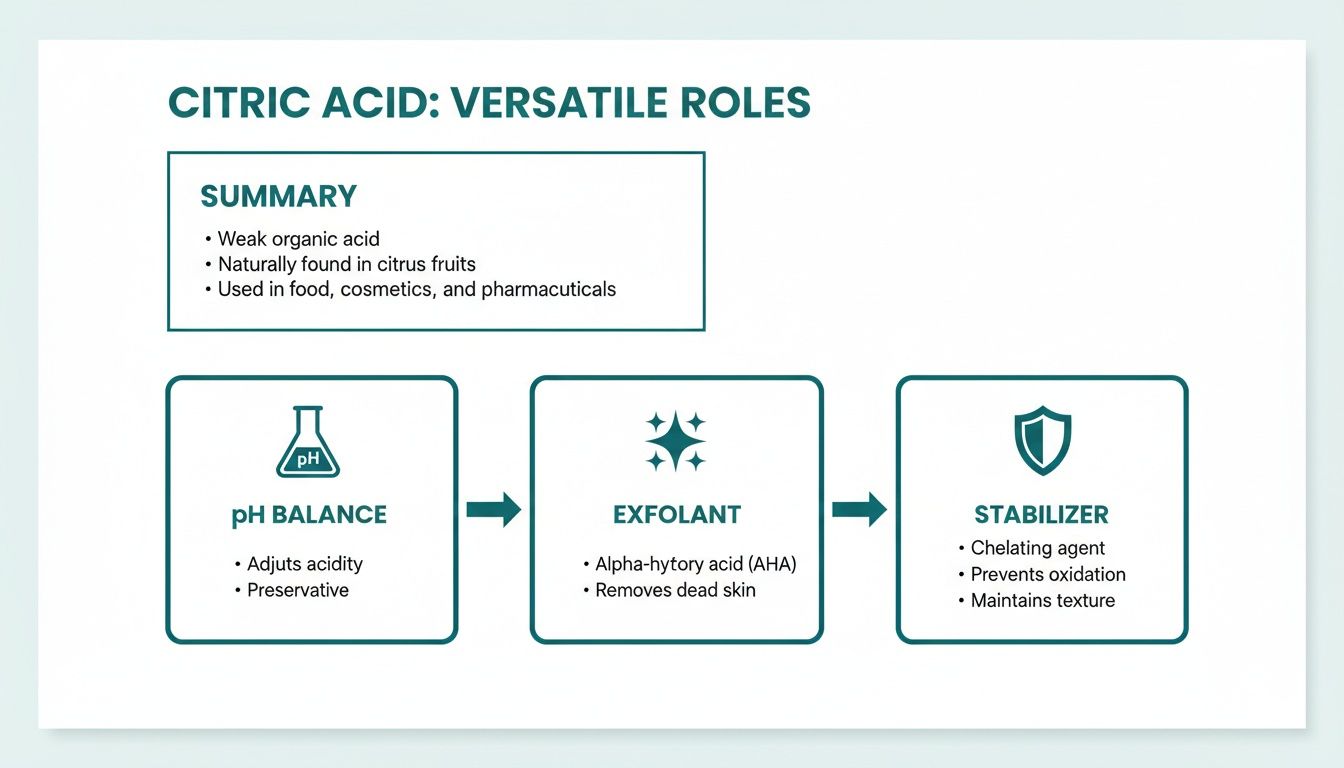
As you can see, its value goes far beyond just exfoliation. It’s also a crucial pH balancer and formula stabilizer, making it a prized ingredient for both professional formulators and DIY skincare lovers.
An At-a-Glance Comparison
To make the choice a little clearer, let’s break down the key differences in a simple table. This really shows how molecular size directly impacts what each AHA does best and which skin types they’re suited for.
AHA Comparison Glycolic vs Lactic vs Citric Acid
| Characteristic | Glycolic Acid | Lactic Acid | Citric Acid |
|---|---|---|---|
| Molecular Size | Smallest | Medium | Largest |
| Primary Action | Deep exfoliation for texture and tone | Exfoliation and hydration | Gentle surface exfoliation, pH balancing |
| Best For | Experienced AHA users, visible texture improvement | Most skin types, those seeking hydration | Sensitive skin, beginners, pH adjustment in formulas |
| Common Use | Targeted serums, peels, potent treatments | Moisturizers, serums, gentle exfoliants | Cleansers, toners, and as a stabilizer |
Ultimately, there is no single "best" AHA—only the one that is best for you. Citric acid's gentle nature and multi-functional properties make it an invaluable tool for anyone looking to achieve a brighter, more radiant appearance without the potential for irritation. Its dual role as both a surface refiner and a formulation workhorse solidifies its place as a staple in modern skincare.
How to Use Citric Acid in Your Skincare Routine Safely
Bringing any new active ingredient into your routine calls for a little bit of know-how, and citric acid is no exception. The real secret to unlocking its benefits is understanding what it's doing in a particular product and always putting your skin's safety first.
You'll find citric acid in different amounts depending on its job in the formula. In many cleansers and moisturizers, it’s there in tiny concentrations—often less than 1%—acting purely as a pH adjuster to keep the product stable and effective. At these levels, any exfoliating effect is minimal, so it’s perfectly fine for daily use.
When it's the star of the show for exfoliation, the concentrations are a bit higher but still gentle, usually staying under 4%. This lets it refine the skin's surface without being too aggressive. This demand for gentle, natural ingredients is huge, which is why the global citric acid market is expected to hit USD 5.92 billion by 2030.
The Non-Negotiable Patch Test
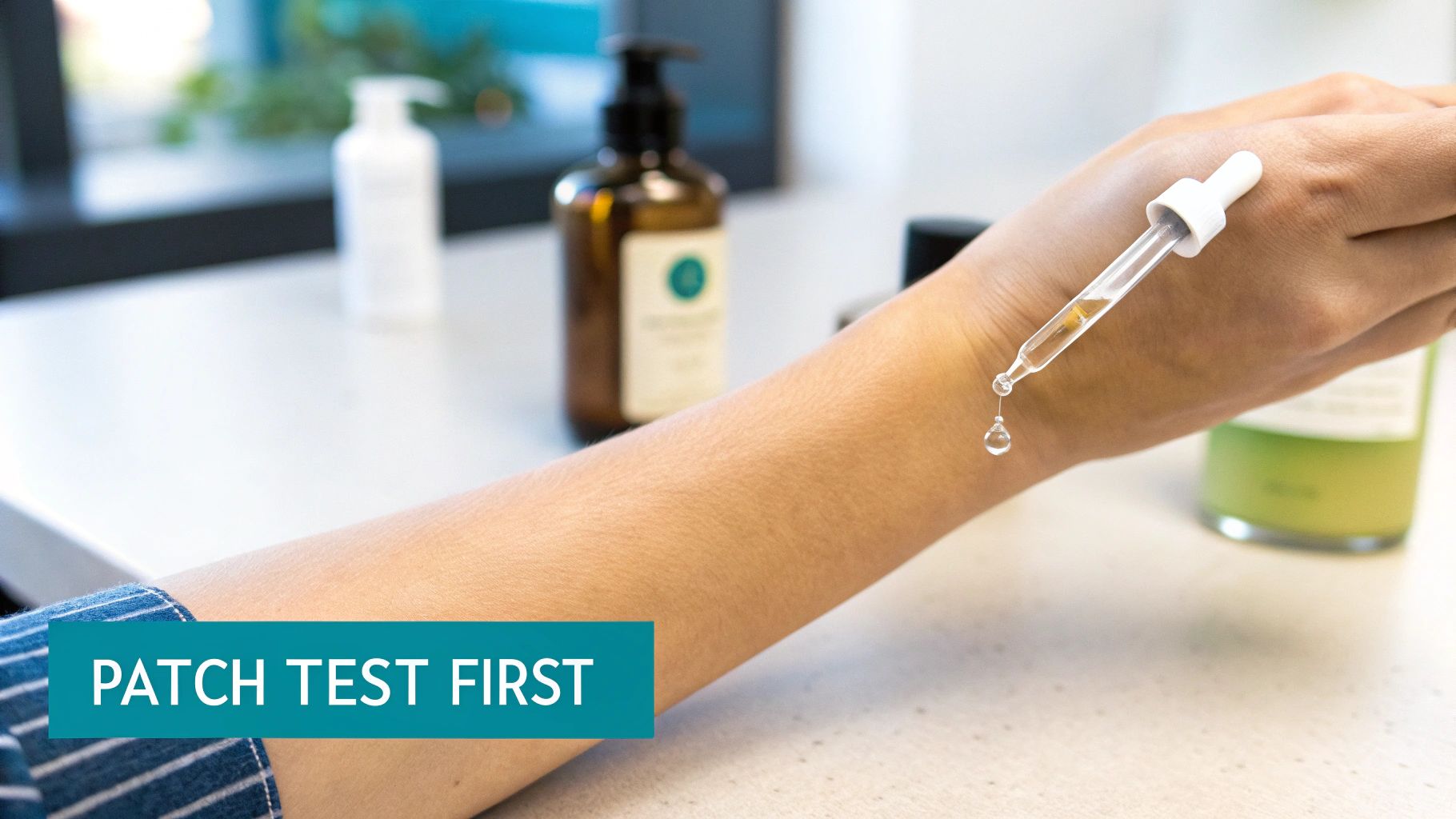
Before you slather any new AHA product all over your face, a patch test is an absolute must. Think of it as a sneak peek into how your unique skin chemistry will get along with the new formula.
Here’s how to do it right:
- Select a Discreet Area: Pick a small, hidden spot like the inside of your wrist, behind your ear, or on your inner arm.
- Apply a Small Amount: Dab just a tiny bit of the product onto the clean, dry skin.
- Wait and Observe: Let it sit for at least 24 hours. Don't wash that little spot. Keep an eye out for any redness, itching, burning, or other irritation.
- Assess the Results: If your skin looks and feels completely normal after a day, you're likely good to go. If you see any kind of reaction, it’s best to steer clear of that product.
This simple step can save you from a whole lot of irritation and gives you the confidence to use your citric acid skin care without worry.
Sun Protection is Your Best Friend
Here’s the deal with all Alpha Hydroxy Acids, including our gentle friend citric acid: they can make your skin more sensitive to the sun. By sloughing off that top layer of dead cells, they reveal fresh, new skin that’s more vulnerable to UV damage. To protect that beautiful new skin, daily sun protection becomes non-negotiable.
Using an AHA without committing to sunscreen is like taking one step forward and two steps back for your skin's appearance. It's a non-negotiable part of any routine that includes exfoliants.
Make a broad-spectrum sunscreen with an SPF of 30 or higher the final step in your morning routine. Every single day. No exceptions. This habit doesn't just protect the results from your exfoliants; it's the bedrock of maintaining a healthy-looking complexion and a strong skin barrier. For a deeper dive, check out our guide on how to strengthen your skin barrier.
While we're focused on skin here, it's helpful to understand the bigger picture of how ingredients like this are used. For more on the safe usage of citric acid in personal care formulations, including its role in hair care, you can explore other expert resources.
A Guide to Formulating with Citric Acid for DIY Enthusiasts
For the home skincare creator, graduating from enthusiast to artist means really getting a handle on the technical side of your craft. Think of citric acid as one of the most vital tools in your formulating kit—it’s so much more than just a simple exfoliant. Knowing how to use it correctly is what separates a basic recipe from a truly sophisticated, stable, and beautiful final product.
First things first: you have to dissolve it properly. Citric acid usually comes as a fine, crystalline powder. For it to work its magic, you must completely dissolve it in the water phase of your formula, whether that's distilled water, a floral water, or a hydrosol.
Just add the powdered citric acid to your measured liquid and stir until you have a totally clear solution. If you leave any undissolved crystals behind, you’ll end up with a gritty texture and, worse, an unpredictable pH and performance in your finished product.
The Importance of Buffering for pH Stability
One of citric acid's most powerful jobs is adjusting a formula's pH. But just dropping the pH isn't the whole story. To create something with professional quality, you need to build a pH buffer system—a special solution designed to resist changes in pH.
Picture your product as a ship sailing on the ocean, with its pH as its intended course. Without a buffer, even the smallest wave—like adding another ingredient or just exposure to air over time—can knock it completely off course. A buffer system is like a skilled navigator, constantly making tiny corrections to keep that ship sailing true.
To create a buffer, you’ll pair citric acid with its salt, sodium citrate. By combining a specific ratio of citric acid to sodium citrate, you can lock in a target pH range. This ensures your product stays stable and effective from the first pump to the very last drop, which is absolutely critical for any formula with pH-sensitive actives.
A buffer system is the secret sauce for long-term stability in your DIY creations. It prevents "pH drift," a common headache where a product's acidity changes over time, messing with its feel, look, and the effectiveness of its star ingredients.
Navigating Ingredient Compatibility
Great formulating is a lot like being a great chef; you have to know which ingredients bring out the best in each other and which ones just don't get along. Citric acid is a pretty friendly ingredient, but knowing a few key pairings can take your citric acid skin care from good to amazing.
Great Pairings:
- Hyaluronic Acid: Citric acid helps establish that perfect low-pH zone where hyaluronic acid can do its best work, optimally hydrating and plumping the skin's appearance.
- Niacinamide: Forget the old myths about not mixing niacinamide and acids. Modern, well-buffered formulas show they play together beautifully.
- Glycerin and Other Humectants: These are your hydration workhorses, and they are perfectly happy and stable right alongside citric acid.
Ingredients Requiring Careful Consideration:
- L-Ascorbic Acid (Vitamin C): This is an incredible antioxidant, but it's famously unstable. To keep it effective, you need a very precise and low pH (usually below 3.5), which a citric acid/sodium citrate buffer is perfect for maintaining.
- Certain Peptides: Some peptides are divas—they only perform within a very specific pH range. Always, always check your supplier’s technical data sheet to make sure your final pH matches what the peptide needs to thrive.
Mastering these formulation details will help you move beyond following simple recipes to crafting truly advanced, personalized skincare. If you're ready to dive even deeper, check out more resources on professional cosmetic formulation. With a little practice, you'll be using citric acid to create formulas that are as stable and elegant as they are effective.
Unlocking a Brighter Appearance
While the science behind citric acid skin care is fascinating, the real story is what you see in the mirror. This gentle Alpha Hydroxy Acid is a key player in achieving that vibrant, refreshed complexion, helping you put your best face forward every single day.
Its main claim to fame is how it gently encourages surface cell turnover. Think of it as delicately lifting away dull, tired-looking skin to reveal the brighter, more luminous skin hiding underneath. This simple action helps even out skin tone, leaving your complexion looking smoother and more uniform.
On top of that, citric acid’s antioxidant properties are a fantastic ally in maintaining a youthful appearance. They can help your skin’s appearance stand up to daily environmental stressors, contributing to an overall look of vitality.
More Than Just Facial Care
The beauty of citric acid is that its benefits don't stop at your face, making it an incredibly versatile ingredient for your entire routine. Its clarifying properties are especially prized in hair and scalp care.
When you find it in shampoos or scalp scrubs, citric acid can help:
- Remove Product Buildup: It's a pro at breaking down residue from styling products, leaving your scalp feeling genuinely clean and refreshed.
- Enhance Shine: A clean surface means light can reflect better, helping hair appear shinier and more vibrant.
- Support a Clarified Scalp: A clarified scalp is the ideal foundation for healthy-looking hair.
This same clarifying action is also a bonus for the appearance of eyelashes and brows. By keeping the skin at the lash line and brow area clean and refreshed, it supports the look of fuller, denser, and more defined features.
It's no surprise the clean beauty movement has embraced citric acid for its eco-friendly profile and effectiveness. This preference is fueling some serious market growth, with the personal care segment expected to push the market to USD 4.81 billion by 2031. For conscious brands like Skin Perfection, its role as a pH adjuster is essential for creating formulas that support hydration and a youthful look. You can explore more about these trends and their impact on the citric acid market.
Citric acid is a truly holistic beauty ingredient. It doesn’t just work on one area; it enhances the appearance of skin, scalp, lashes, and brows for a cohesive and radiant look.
Ultimately, bringing citric acid into your routine is all about enhancing your natural beauty. Whether you’re aiming for a brighter skin tone or a cleaner scalp, its gentle yet effective action helps unlock a more polished and confident appearance from head to toe.
Common Questions About Citric Acid in Skincare
When you're diving into new skincare ingredients, a few questions are bound to pop up. To help you feel completely confident adding citric acid skin care to your lineup, we’ve put together answers to the queries we hear most often.
Can I Use Citric Acid Skin Care Products Every Day?
This really comes down to what the product is designed to do. If citric acid is just playing a supporting role as a pH adjuster in your favorite cleanser or moisturizer—which often means it's in tiny amounts—then daily use is perfectly fine.
But for products where citric acid is the star of the show for exfoliation, it’s smarter to start slow. Try it 2-3 times a week and pay close attention to how your skin feels. The golden rule is to always follow the directions on the label for the best, safest results.
Is Citric Acid a Good Choice for Sensitive Skin?
Yes, it's actually one of the gentler options out there for sensitive complexions. Because citric acid has a larger molecular size compared to other AHAs, it doesn't penetrate as deeply or as quickly, making it a great starting point for skin that gets easily irritated by more intense acids.
That said, everyone's skin has its own personality. A patch test is your best friend before introducing any new AHA to your full routine. It’s the simplest way to ensure your skin loves it.
One thing to remember: gentle doesn't mean you can skip the essentials. Even with a milder AHA like citric acid, daily sun protection is non-negotiable for keeping your skin looking and feeling its best.
What Ingredients Should Not Be Mixed with Citric Acid?
If you're buying a professionally formulated product, you can relax. Cosmetic chemists have already done the hard work to make sure everything in the bottle is stable and plays well together.
However, if you're getting creative with DIY skincare, be careful about mixing citric acid with ingredients that break down at a low pH unless you know how to create a proper buffer system. It’s also wise to avoid piling on multiple strong exfoliants in one routine. For example, using a potent retinol product right after a citric acid peel could be a recipe for irritation.
Ready to create your own beautiful skincare formulations? Skin Perfection offers a wide range of high-quality, nature-derived ingredients to bring your vision to life. Explore our collection of cosmetic raw materials and lotion-making supplies.