

 Buy with Prime


If you could bottle a little bit of nature's magic for a more vibrant, nourished-looking complexion, it might look a lot like raspberry seed oil. This ingredient is quickly becoming a favorite for both skincare lovers and DIY formulators, and for good reason. Let's dive into what makes this beautiful oil a must-have for beautiful-looking skin.
The Natural Secret to Radiant Looking Skin
Raspberry seed oil is a gorgeous, golden-hued oil that’s cold-pressed from the tiny seeds of red raspberries. It’s far more than just a byproduct of the jam industry; this oil is brimming with a unique blend of components that make it a powerhouse in any skincare routine. It's not about altering the skin, but rather about deeply moisturizing, nourishing, and supporting your skin's natural appearance.
Think of your skin like a delicate piece of silk. Daily life and environmental stressors can leave that fabric looking a bit dull and feeling less than smooth. Raspberry seed oil acts like a luxurious, lightweight conditioner for that silk, helping to smooth its texture and bring back a look of vibrancy. The best part? It sinks in beautifully without that heavy, greasy feeling, making it a perfect fit for almost anyone.
What Makes It a Skincare Favorite?
The real appeal of raspberry seed oil is hidden in its composition. It's a natural treasure trove of beneficial compounds that work together to bring out the best in your skin's appearance.
Here’s a quick look at what makes it so special:
- Rich in Essential Fatty Acids: It has seriously high levels of Omega-3 and Omega-6 fatty acids. These are the building blocks for a healthy moisture barrier, which is key to locking in hydration for that plump, dewy glow.
- A Source of Antioxidants: The oil is a fantastic natural source of antioxidants like Vitamin E. These hardworking compounds help your skin look more resilient against the daily grind of environmental aggressors that can make your complexion look tired and worn out.
- Lightweight and Absorbent: Unlike some heavier oils that just sit on top of your skin, raspberry seed oil is known for its fast absorption. It gets to work quickly, delivering nourishment without the fear of clogged pores.
It's this unique combination of properties that makes raspberry seed oil a go-to for anyone wanting a more luminous, even-toned complexion. It’s an ingredient that simply supports your skin's inherent beauty, helping it look its absolute best.
If you're building a routine focused on radiance, you can find more great advice in our guide on how to achieve glowing skin. Adding this botanical oil is a simple but incredibly effective step toward a visibly healthier complexion, empowering both skincare junkies and at-home formulators to create personalized solutions that let their natural beauty shine through.
From Berry to Bottle: The Making of Raspberry Seed Oil
The story of that luxurious, golden raspberry seed oil in your favorite serum doesn't start in a sterile lab. It actually begins as a clever, sustainable practice within the global fruit industry. It's a perfect example of upcycling—turning what was once considered waste into a highly prized cosmetic ingredient.
The whole process kicks off after raspberries are picked for jams, juices, and other delicious foods. Instead of being tossed out, the tiny seeds left behind are carefully collected. This approach is wonderfully resourceful, transforming a simple byproduct into something truly special for your skin.
The Gentle Art of Cold-Pressing
To keep all the delicate, skin-loving compounds inside these seeds safe, producers use a method called cold-pressing. This is a purely mechanical process that avoids high heat and harsh chemical solvents, making sure the final oil is as pure and close to its natural state as possible.
Think of it like squeezing juice from an orange. You could use a high-speed, heat-generating machine, or you could press it by hand. The hand-squeezed juice is always fresher and holds onto more of its natural goodness. Cold-pressing works on a similar principle; it uses immense pressure to gently coax the oil from the seeds, keeping its incredible nutritional profile perfectly intact.
This infographic breaks down the journey from a natural source to its final stop in your skincare routine.
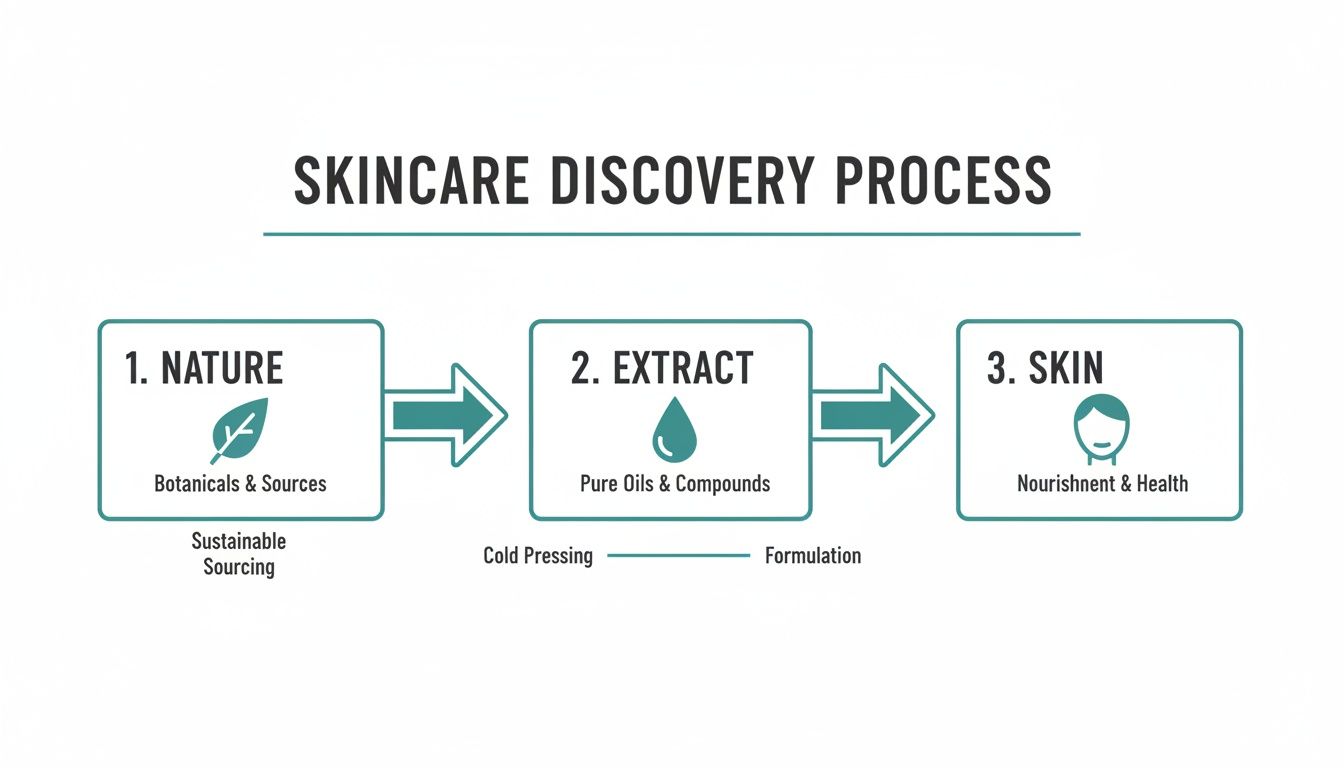
As you can see, it's a clean, simple progression that highlights how a natural element is carefully extracted to become a vital component for beautiful-looking skin.
Once pressed, the raw oil is filtered to remove any lingering seed particles. What's left is a clear, beautiful oil ready to be blended into your favorite formulas. This entire gentle process is the key to maintaining the quality that makes raspberry seed oil so sought after. To learn more about where cosmetic ingredients come from, check out our guide to cosmetic raw ingredients.
A Deep Dive Into Its Composition
So, what makes this oil so exceptional for the skin? It all comes down to its impressive molecular makeup. It’s naturally loaded with components that support the skin’s moisture barrier and help you maintain a beautiful, balanced-looking complexion.
The true value of raspberry seed oil is found in its composition. The synergy of fatty acids and antioxidants works together to nourish the skin, helping it maintain a look of vitality and radiance.
The scale of this process is pretty amazing. Just to give you an idea, in 2019, global raspberry production hit an incredible 822.49 thousand metric tons. A significant portion of that weight comes from the seeds, which can yield between 10-23% oil when cold-pressed.
Let's break down the key players that make this oil a powerhouse:
-
Essential Fatty Acids: Raspberry seed oil is packed with linoleic acid (Omega-6) and alpha-linolenic acid (Omega-3). They're called "essential" because our bodies can't make them on their own. For your skin, they are absolutely vital for maintaining a healthy-looking barrier, which is crucial for locking in moisture and keeping skin looking supple and hydrated.
-
Vitamin E (Tocopherols): This famous antioxidant is found in abundance in the oil. It helps defend the skin against the visible effects of environmental stressors, like pollution, that can leave your complexion looking dull or tired.
-
Carotenoids: These are the compounds that give the oil its gorgeous golden-to-reddish color. As precursors to Vitamin A, they contribute to the oil's nourishing properties, supporting a bright and even-looking skin tone.
This rich and balanced profile is exactly why formulators and skincare enthusiasts can't get enough of raspberry seed oil. It’s a multi-talented ingredient that delivers deep moisturization and antioxidant support, helping you achieve a complexion that looks and feels its absolute best.
Helping Your Skin Look Its Natural, Glowing Best
When we talk about botanical oils, the conversation isn't just about what an ingredient does, but how it makes your skin feel and look. With raspberry seed oil, the goal is to support and elevate your skin's own natural beauty. It's not about changing your skin, but about helping your skin appear nourished, vibrant, and incredibly beautiful.
This gorgeous oil is loved for how it enhances what you already have. Its unique profile is perfect for promoting a radiant, glowing complexion by delivering moisture and nourishment right where your skin needs it. Think of it like giving your skin a refreshing, nutrient-rich green smoothie—it just helps it look its absolute best.
A Deep Dive into Moisturization
One of the first things you'll notice about raspberry seed oil is its incredible ability to moisturize the skin. It’s absolutely packed with essential fatty acids—especially Omega-3 and Omega-6—which are the fundamental building blocks for a healthy-looking skin barrier.
Imagine your skin barrier is a strong brick wall. Your skin cells are the bricks, and the lipids (the good fats) are the mortar holding everything together. When that mortar is strong and intact, it does an amazing job of keeping moisture locked in and keeping environmental irritants out. The fatty acids in raspberry seed oil help replenish that mortar, promoting a soft, supple texture and a more elastic appearance.
This kind of deep hydration helps diminish the look of dryness, leaving your skin feeling comfortable and smooth. By supporting the skin's natural barrier, it helps lock in moisture for a visibly plump and radiant finish that really lasts.
To give you a better idea of what's inside this powerful oil, let's break down its key players.
Raspberry Seed Oil Key Components and Their Cosmetic Roles
This table breaks down the primary components of raspberry seed oil and explains their function in skincare, helping readers understand how each element contributes to the oil's overall effect.
| Component | Cosmetic Function | Contribution to Skin's Appearance |
|---|---|---|
| Linoleic Acid (Omega-6) | Supports the skin's barrier function and helps retain moisture. | Reduces the look of dryness and flakiness, promoting a smooth, supple texture. |
| Alpha-Linolenic Acid (Omega-3) | Known for its soothing properties, helping to calm the appearance of redness and sensitivity. | Visibly calms the look of stressed skin, leading to a more even and balanced-looking complexion. |
| Vitamin E (Tocopherols) | A powerful antioxidant that helps defend the skin against environmental stressors. | Helps maintain a youthful, vibrant look by protecting against factors that cause dullness. |
| Carotenoids (Pro-Vitamin A) | Antioxidants that contribute to the oil's color and help protect the skin's surface. | Supports a bright, healthy-looking glow and contributes to the skin's appearance of resilience. |
As you can see, it's the synergy between these components that makes raspberry seed oil such a fantastic addition to any skincare routine.
Antioxidant Support for a Brighter Look
Every single day, our skin is up against environmental stressors like pollution and dry air, which can leave your complexion looking dull and tired over time. This is where the antioxidant properties of raspberry seed oil really get to shine.
It's a natural source of compounds like Vitamin E (tocopherols) and carotenoids. These potent antioxidants work on the skin's surface to defend against the visible effects of these daily aggressors.
By providing this layer of support, raspberry seed oil helps maintain the skin’s youthful look and vitality. It’s a simple yet effective way to keep your complexion looking bright, refreshed, and resilient.
This antioxidant boost is a huge reason the oil has become so popular. The global market for Rubus Idaeus (Raspberry) Seed Oil was valued at USD 712.1 million in 2022 and is projected to skyrocket to USD 1,327.2 million by 2035. This incredible growth reflects a massive demand for natural skincare ingredients that help people maintain a beautiful appearance. You can discover more insights about the growing demand for raspberry seed oil and see just how big its role is in the cosmetic industry.
The Lightweight Feel Your Skin Will Love
Despite its rich, nourishing profile, one of the most celebrated features of raspberry seed oil is its wonderfully lightweight and non-greasy texture. It sinks into the skin with surprising speed, delivering all its benefits without ever leaving a heavy or sticky film behind.
This fast-absorbing quality makes it an incredibly versatile choice that works for so many different skin types and routines. Here’s why that’s such a big deal:
- For Oily or Combination Skin: It's non-comedogenic, meaning it’s unlikely to clog your pores. It offers beautiful hydration without adding any unwanted shine.
- For Dry Skin: It provides deep, lasting moisture to soothe and comfort tight, flaky-looking areas.
- For DIY Formulators: Its elegant texture makes it a perfect addition to serums, lotions, and creams, dramatically improving the feel of the final product.
At the end of the day, this oil helps balance the skin's appearance, providing just the right amount of moisture to encourage a radiant, beautiful glow. If you're interested in learning more about how different oils can work for you, check out our article discussing the benefits of beauty oils for your skin. It’s a fantastic guide to understanding how different oils can contribute to your complexion's overall appearance.
How to Use Raspberry Seed Oil in Your Skincare Ritual
Alright, you've seen what makes raspberry seed oil so incredible, and now for the fun part—actually using it. This is where the magic happens, and whether you're a total beginner or a seasoned DIY formulator, this oil is a dream to work with. It’s wonderfully versatile.
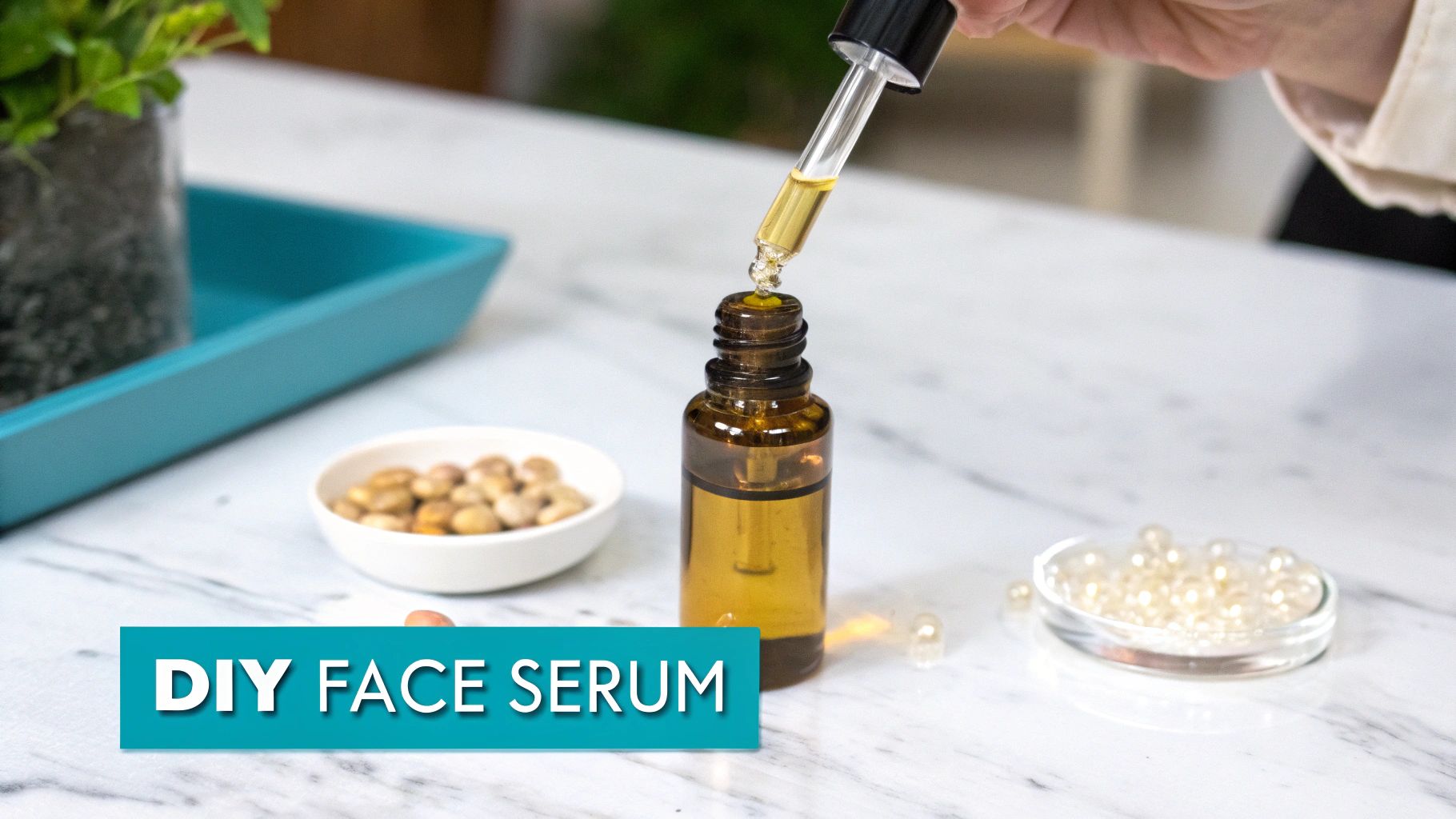
Its lightweight feel and nourishing punch make it a joy to add to any routine. You can use it as a standalone powerhouse or as a key player in a more complex blend. Let's get into some of the most effective ways to start.
Simple Methods for Everyday Radiance
You really don't need a ten-step routine to see results. For those of us who appreciate simplicity, raspberry seed oil is beautifully effective all on its own or as a simple upgrade to the products you already know and love.
Here are two of the easiest ways to start:
-
Use it as a Standalone Facial Oil: This is as straightforward as it gets. After cleansing and applying your water-based serums, warm 2-4 drops of raspberry seed oil between your palms. Then, gently press it into your damp skin. This creates a seal to lock in all that hydration and leaves your skin with an instant, dewy glow.
-
Boost Your Favorite Moisturizer: Give your daily cream a little extra oomph. Just add 1-2 drops of the oil to a dollop of your moisturizer in your palm, mix them together, and apply as you normally would. It’s a seamless way to enhance hydration without changing the feel of your favorite product.
The real beauty of using raspberry seed oil this way is its purity. You’re giving your skin a direct, concentrated dose of those rich fatty acids and antioxidants. It's the perfect way to support your skin's natural barrier and keep it feeling soft and supple.
These methods are perfect for anyone new to facial oils or for those days when you just want a quick, effective boost. It’s an effortless step toward more luminous skin.
Crafting Your Own DIY Formulations
For all the creative souls and DIY skincare aficionados out there, raspberry seed oil is an absolute gem in custom formulations. Its elegant texture and skin-loving profile make it a star ingredient in homemade serums, body butters, and lotions. The key to creating great products is understanding the right concentrations.
Here are a few guidelines for your next DIY project:
- Facial Serums: You can use raspberry seed oil at a concentration anywhere from 5% all the way up to 100%. For a beautiful, simple blend, try combining it with other complementary carrier oils like jojoba or squalane.
- Lotions and Creams: In an emulsion, a usage rate of 1-5% is perfect. You’ll want to add it to the oil phase of your formula to lend its gorgeous moisturizing properties to the final cream.
- Body Oils: For a truly luxurious body treatment, aim for 10-20% blended with other oils. Grapeseed or sweet almond oil are great choices for a silky, fast-absorbing feel.
- Lip Balms: Just a small amount, around 1-5%, can add a ton of extra nourishment and softness to your go-to lip balm recipe.
When you're formulating, it’s good to remember that oil-based and water-based serums serve different purposes. If you're weighing the options for your next creation, check out our guide on oil-based vs. water-based serums to help you choose the perfect foundation.
A Simple DIY Radiance Serum Recipe
Ready to get hands-on? This beginner-friendly serum is all about delivering deep hydration and promoting a vibrant, beautiful glow. It combines the supportive power of raspberry seed oil with a couple of other skin-loving ingredients.
Ingredients You Will Need:
- 15 ml Jojoba Oil (a stable base that mimics your skin's natural sebum)
- 10 ml Rosehip Seed Oil (fantastic for promoting an even-toned appearance)
- 5 ml Raspberry Seed Oil (for that antioxidant support and moisture lock)
- 2-3 drops Vitamin E Oil (acts as an antioxidant for the oil and your skin)
Step-by-Step Instructions:
- Sanitize Your Tools: First things first. Make sure your 30 ml dropper bottle, funnel, and any measuring tools are sparkling clean and sanitized to keep things fresh.
- Measure the Ingredients: Carefully measure out each oil. Using a small scale or graduated cylinders will give you the most accurate blend.
- Combine the Oils: Pop a small funnel into your dropper bottle and pour in the jojoba, rosehip seed, and raspberry seed oils.
- Add Vitamin E: Add the drops of Vitamin E oil. This is a great trick to help extend the shelf life of your beautiful new serum.
- Mix Gently: Screw the cap on securely and roll the bottle between your palms for about 30 seconds to mix everything together. Try not to shake it, as that can introduce pesky air bubbles.
That's it! You've just made a stunning, custom facial serum. Apply 3-4 drops to clean, damp skin in the morning or at night to nourish your complexion and bring out your natural radiance.
Choosing and Storing Your Raspberry Seed Oil
Not all oils are created equal, and with raspberry seed oil, picking a high-quality product is absolutely key to unlocking its full potential. The words you see on a label—like "cold-pressed" or "unrefined"—aren't just marketing fluff. They're direct clues to the oil's purity, potency, and how much of its natural goodness is actually left in the bottle.
Knowing what to look for ensures the oil you bring home is packed with all the beneficial compounds your skin is craving. This is how you protect your investment, whether you’re using it as a simple facial oil or as the star ingredient in your next DIY creation.
Decoding the Label: What to Look For
When you're shopping for raspberry seed oil, a few key terms on the label will tell you almost everything you need to know. Think of them as your cheat sheet for spotting the good stuff.
Here’s what you want to see:
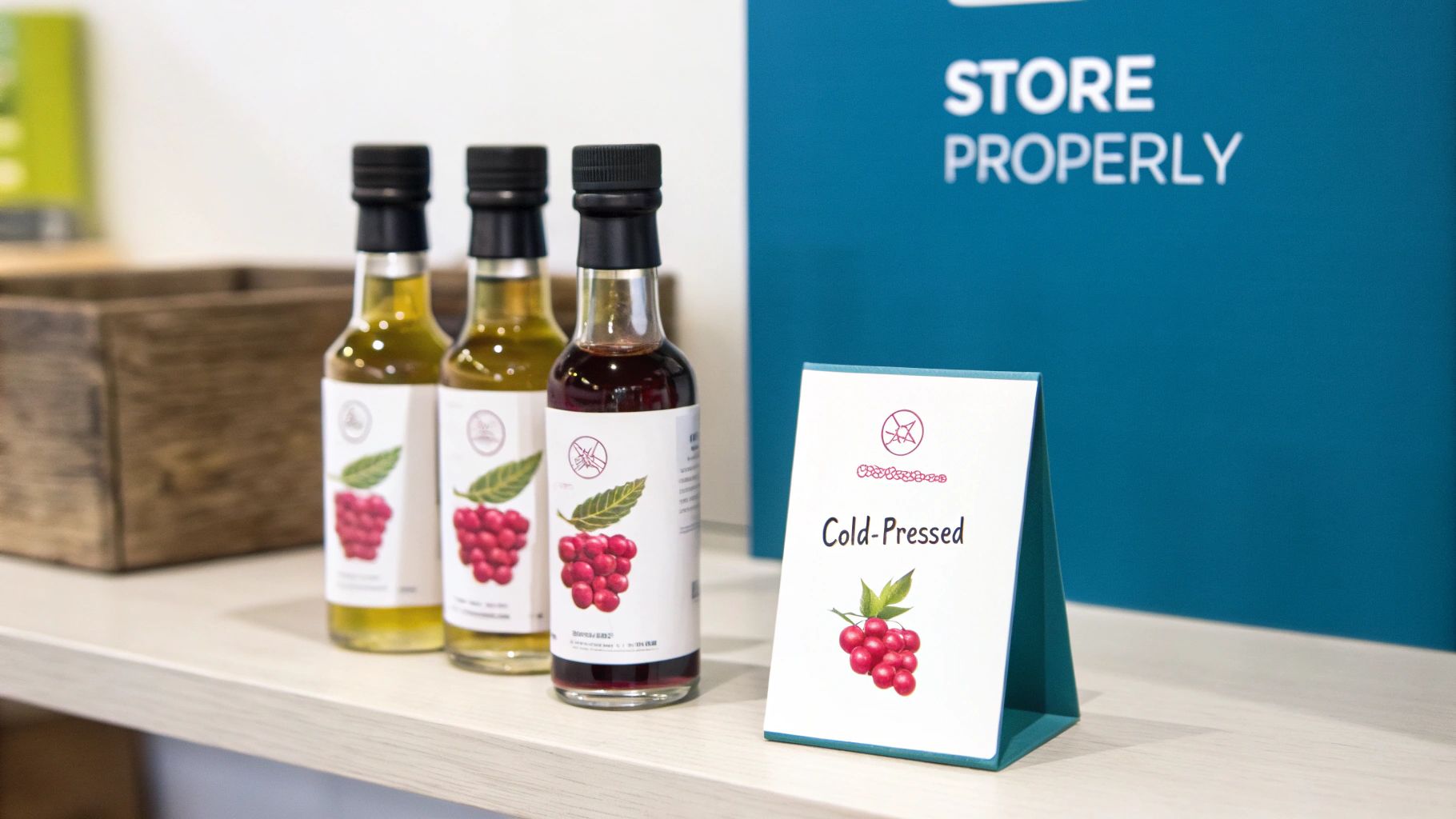
- Cold-Pressed: This is the big one. It means the oil was squeezed from the seeds using a mechanical press without high heat, which is crucial for preserving its delicate fatty acids and powerful antioxidants.
- Unrefined: An unrefined oil hasn't gone through chemical processing like bleaching or deodorizing. This is a good thing! It means the oil still has its natural nutrient profile, vibrant color, and subtle aroma.
- Organic: Choosing an organic oil guarantees the raspberries were grown without synthetic pesticides or fertilizers. That translates to a cleaner, purer final product for your skin.
By selecting an oil that is cold-pressed and unrefined, you are choosing a product that is as close to its natural state as possible. This is crucial for ensuring you receive the maximum cosmetic benefits for your skin.
Recognizing Quality Through Sight and Scent
Beyond the label, your own senses are fantastic tools for judging quality. A top-notch, unrefined raspberry seed oil has distinct characteristics that give away its purity and freshness.
First, check out its color. The oil should have a rich golden to reddish-orange hue. This gorgeous color comes from the carotenoids naturally present in the seeds. If an oil looks very pale or almost clear, it's likely been refined, stripping away some of its most valuable components.
Next, give it a sniff. The aroma should be subtle, earthy, and just slightly fruity—think of the seeds themselves, not the sweet berry. A strong, rancid, or chemical smell is a red flag that the oil has gone bad or was poorly processed. A great oil has a gentle, natural fragrance that’s pleasant, not overpowering.
Proper Storage to Maximize Shelf Life
Once you've got your beautiful oil, storing it correctly is essential to protect its freshness and extend its shelf life, which is typically 1-2 years. Like many natural oils rich in delicate fatty acids, raspberry seed oil is sensitive to heat, light, and air.
To keep your oil in peak condition, follow these simple storage tips:
- Keep it in a cool, dark place, like a cabinet or pantry.
- Avoid storing it in direct sunlight or near a heat source (like the stove).
- Make sure the cap is screwed on tightly after each use to minimize air exposure.
- For an extra longevity boost, especially if you live somewhere warm, you can even store it in the refrigerator.
Proper storage prevents oxidation, preserving the oil’s nourishing properties so it remains effective every single time you use it.
Important Safety and Usage Best Practices
Whenever you introduce a new ingredient to your skincare lineup, it's smart to do it thoughtfully. Raspberry seed oil is no exception. Even though it's known for being incredibly gentle and nourishing, taking a few simple precautions will make sure your skin loves it from the start.
The absolute first step? Always, always do a patch test. This is non-negotiable. Think of it as a quiet introduction between the oil and your skin, letting them get acquainted in a small, controlled way before you go all-in.
How to Perform a Patch Test
Before you start slathering this beautiful oil on your face, it’s essential to learn how to patch test skincare the right way. It's the only way to be sure it suits your unique complexion.
Here’s a simple way to do it:
- Dab a small amount of raspberry seed oil onto a discreet patch of skin. The inside of your wrist or just behind your ear are perfect spots.
- Leave it be and keep an eye on the area for the next 24 hours.
- If you see any redness, feel any itching, or notice any irritation, wash the area well and stop using the oil. If your skin is calm and happy, you can move forward with confidence.
This little bit of patience is priceless. It helps you build a routine based on trust, where you truly understand how your skin will react.
A Critical Note on Sun Protection
Let's clear the air on one of the biggest myths floating around about raspberry seed oil: its relationship with the sun. You may have seen articles or studies mentioning its UV-absorbing properties, but it is absolutely critical to understand what this does—and doesn't—mean.
Raspberry seed oil is NOT a sunscreen. It should never, ever be used as a substitute for a proper, broad-spectrum sun protectant. Relying on it for sun protection will leave your skin completely vulnerable to damage.
Think of it this way: a light cardigan might offer a tiny bit of warmth on a breezy day, but you wouldn't wear it in a blizzard. The same logic applies here. Any UV-filtering ability the oil might have is no match for a dedicated sunscreen product that has been specifically formulated and tested for reliable protection.
Always, without fail, apply a dedicated SPF product as the final step in your morning skincare routine. It’s the single best thing you can do for your skin.
And while you're at it, knowing how to decipher an ingredients list is a superpower for any skincare enthusiast. Check out our guide on how to read a skincare label to become a more empowered shopper. By following these simple practices, you can safely enjoy all the amazing cosmetic benefits raspberry seed oil has to offer.
Your Burning Questions About Raspberry Seed Oil
Alright, we've covered a lot of ground on this incredible oil. But I know a few practical questions are probably bubbling up. Let's tackle the most common ones so you can feel totally confident using raspberry seed oil in your routine or your next DIY project.
Is Raspberry Seed Oil A Good Choice For My Skin Type?
Yes, and that’s one of the best things about it! The versatility of raspberry seed oil is a huge part of its appeal. It’s incredibly lightweight and non-comedogenic, meaning it won't clog your pores, which makes it a fantastic option for almost every complexion out there.
- Dry Skin? Its high fatty acid content is just what your skin is craving. It sinks in beautifully to deliver deep moisture, leaving your skin looking plump and happy.
- Oily or Combination Skin? Don't be afraid of this oil! It absorbs in a flash without that heavy, greasy feeling, helping to bring a sense of balance to your skin.
- Sensitive Skin? Most people find it very gentle and soothing. That said, it’s always smart to do a little patch test on your arm before putting any new product on your face, just to be safe.
How Long Does Raspberry Seed Oil Last On The Shelf?
If you store it correctly, a high-quality, cold-pressed raspberry seed oil should last you a good 1-2 years. The key is to protect it from its enemies: heat, light, and air.
Tuck it away in a cool, dark cabinet—never on a sunny windowsill. And always, always make sure you screw the cap on tight after you use it. Oxygen is what makes oils go rancid faster, so a tight seal is non-negotiable.
Think of your raspberry seed oil like a fine cooking oil or a delicate natural ingredient. A little bit of care goes a long way in preserving its potency and freshness, ensuring you get all its amazing benefits from the first drop to the very last.
With these practical tips in your back pocket, you’re ready to make raspberry seed oil a star player in your beauty arsenal.
Ready to see what premium, high-performance ingredients can do for your creations? Check out our curated selection of top-tier oils and lotion-making supplies at Skin Perfection. Find everything you need to let your natural radiance shine at https://www.naturalorganicskincare.com.