

 Buy with Prime


You've probably seen the term "skin flooding" popping up all over your social media feeds. It’s a viral skincare technique that’s all about layering lightweight, hydrating products onto damp skin to get that dewy, plump, 'glass skin' look we all crave.
This multi-step process is designed to maximize surface hydration, leaving your complexion looking incredibly fresh and glowy.
Unpacking the Skin Flooding Trend
Think about trying to water a really dry, neglected potted plant. If you just dump a ton of water on it at once, most of it will run straight through the pot without ever reaching the roots. The soil is too hard and compact to absorb it.
But what if you mist the soil first to dampen it, then add water a little at a time? The plant can actually soak up the moisture much more effectively. Skin flooding works on that exact same principle.
Instead of slapping on one heavy cream and calling it a day, this technique is about strategically layering water-based products. This approach gives your skin a much better chance to drink in the hydration at each step, which results in a complexion that looks and feels more radiant and moisturized. The whole idea is to drench your skin in moisture and then seal it all in.
The Rise of a Hydration Ritual
While it feels new, the technique itself has deep roots in Korean beauty philosophies, where layering products has been a cornerstone for years. It blew up in the early 2020s, mostly because of how amazing the results look on social media.
The trend absolutely exploded on TikTok, gathering over 84 million views under the #skinflooding hashtag as people everywhere shared their glowing transformations. If you want to dig into the trend's origins, this dermatologist's guide to the hydration hack offers some great insights into its K-beauty roots.
At its heart, skin flooding is less about using more products and more about using the right products in the right order to drench your skin in beneficial moisture. It’s a purposeful ritual designed to enhance your natural glow.
To give you a quick overview, here are the core ideas behind the technique.
The Core Principles of Skin Flooding
| Principle | What It Means for Your Routine | Why It Enhances Your Glow |
|---|---|---|
| Damp Skin Application | Always apply products to skin that's slightly damp from cleansing or misting. | Damp skin is more permeable, allowing products to absorb more efficiently. |
| Lightest to Heaviest | Start with watery toners and essences, followed by serums, and finish with moisturizers. | This ensures each layer can penetrate effectively without being blocked by heavier products. |
| Humectant Focus | Prioritize ingredients that attract water, like hyaluronic acid, glycerin, and aloe vera. | Humectants pull moisture into the skin's surface, creating that plump, hydrated look. |
| Seal It In | The final step is always an occlusive or emollient moisturizer to lock everything in. | This creates a barrier that prevents all that wonderful hydration from simply evaporating away. |
Ultimately, this methodical approach ensures your skin gets the maximum benefit from each product you apply.
Why Layering Works So Well
The real magic of skin flooding is in its use of humectants—special ingredients that act like tiny magnets for water, attracting and binding it to your skin.
When you apply these products to damp skin, you're creating the perfect environment for them to do their job. Each layer builds on the last, delivering a powerful surge of hydration that leaves your skin looking bouncy and feeling supple.
Want to learn more about these powerhouse ingredients? Check out our complete guide on natural humectants for skin. By layering them correctly, you ensure that all that amazing moisture doesn't just disappear into the air but gets locked in for a dewy finish that lasts all day.
Your Step-by-Step Skin Flooding Routine
So, how do you actually do skin flooding to get that gorgeous, dewy glow? It's really just a simple, methodical process. The whole idea is to apply your products in a specific order—from the thinnest, most water-like consistency to the thickest, creamiest texture. This layering technique ensures every drop of hydration gets properly absorbed, leaving you with beautifully plump skin.
This simple process is all about hydrating, layering, and plumping your skin for a look that truly glows from within.
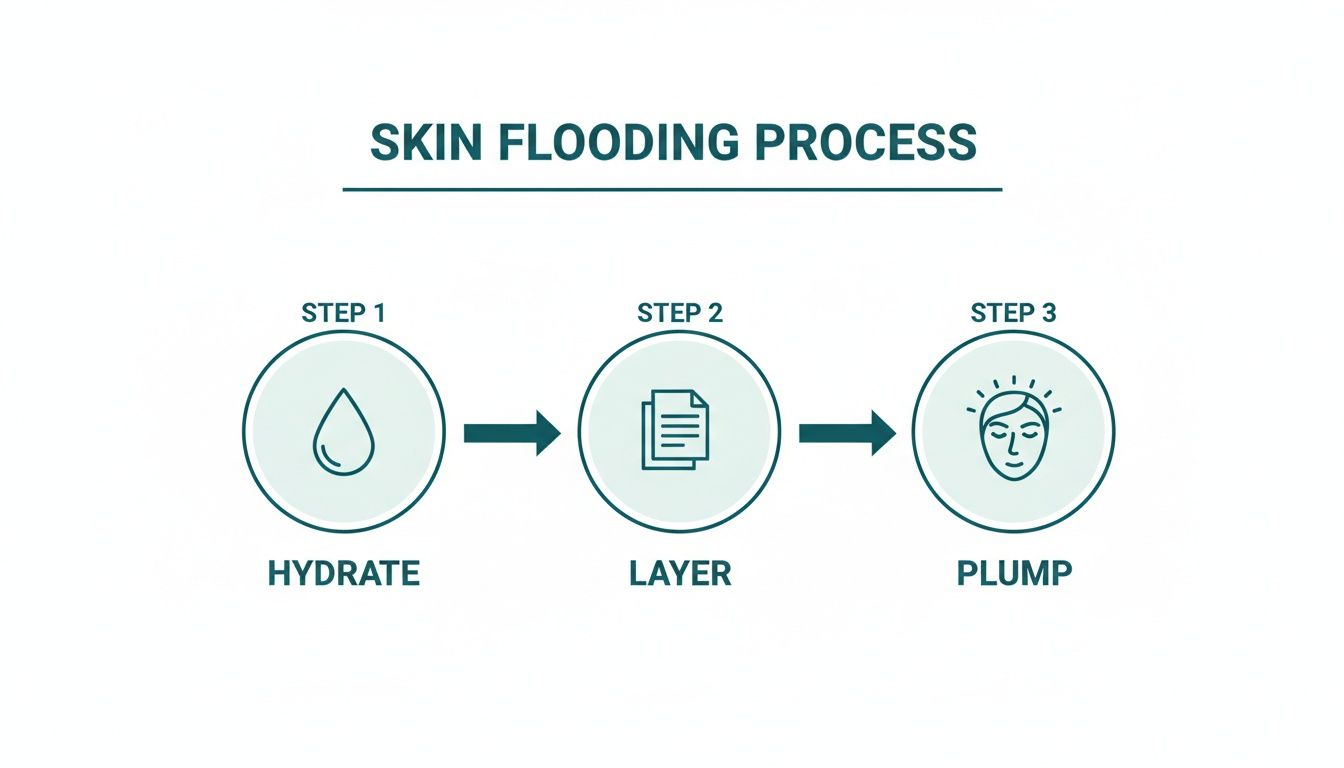
As you can see, the routine flows from adding that initial watery hydration to locking it all in for a plump finish. Let's break down exactly how to put this into practice.
Step 1: Prepare Your Damp Canvas
If you take away only one thing, let it be this: never apply products to a completely dry face. This is the golden rule of skin flooding. After washing your face with a gentle cleanser, lightly pat your skin with a towel but leave it slightly damp. That lingering moisture is your secret weapon—it acts as a pathway, helping your next products absorb much more effectively.
For an extra boost of hydration right from the start, you can spritz your face with a hydrating facial mist. Think of this step as priming a canvas; you’re creating the ideal starting point for the rest of your routine.
Step 2: Layer Your Hydrating Serums
Now it's time for the stars of the show: humectants. These are ingredients that grab onto water and hold it in your skin, and they are the absolute heart of any skin flooding routine. Pick one or two lightweight, water-based serums packed with ingredients like hyaluronic acid, glycerin, or peptides.
Put a few drops into your palm and gently pat the serum onto your still-damp skin. If you're using more than one, always apply the thinnest serum first to give it the best chance to sink in. For those who want to get into the nitty-gritty, you can learn more about the difference between hydrators and serums in our detailed guide.
Step 3: Apply a Smoothing Moisturizer
Once your serums have settled in for a moment, it’s time to add a moisturizer. This step brings in emollients, which are fantastic for smoothing the skin’s surface and giving it that soft, supple feel we all crave. Look for a lotion or cream that feels nourishing but not overly heavy or greasy.
Apply an even layer over your face and neck, gently massaging it in. This layer starts the process of sealing in all that watery goodness you just applied, making sure your skin gets the full benefit of the previous steps.
Step 4: Lock It All In
The final, crucial step is to create a protective seal that prevents all that wonderful moisture from just evaporating away. This is where an occlusive comes in. An occlusive is simply an ingredient that forms a gentle barrier on the skin's surface, keeping everything locked in.
For this step, a good facial oil or a slightly richer night cream works perfectly. Gently pat a small amount over your moisturizer to lock in your entire routine. This simple finish ensures your skin stays looking dewy and hydrated for hours. And while your daily routine is key, professional treatments like a Hydrafacial treatment can also support deeper hydration for even better results.
Choosing the Right Ingredients for Your Skin
The real magic of skin flooding isn't just in the layering; it's about picking ingredients that truly click with your skin. When you get personal with your product choices, you give your complexion exactly the kind of moisture it’s craving. The result? A radiant, dewy glow without any of that unwanted heaviness.
This technique didn't just pop up overnight. It's an evolution of the meticulous 10-step routines that came out of South Korea's now $21 billion skincare industry back in the 2000s. More recently, TikTok gave it a massive boost, with #skinflooding views jumping 500% year-over-year as people with all different skin types started seeing the benefits. You can explore more on how skin flooding became a major trend.
Customizing for Oily or Blemish-Prone Skin
If your skin is on the oily or blemish-prone side, the thought of adding more moisture probably sounds like the last thing you should do. But it all comes down to choosing the right kind of moisture. The goal here is weightless hydration that doesn't add any extra oils or feel heavy on the skin.
Think of lightweight, non-comedogenic humectants as your new best friends. These are the ingredients that pull water into the skin's surface without making you feel greasy. You'll want to focus on products that feel more like water than a thick cream.
Here are a few key players to look for:
- Glycerin: A true classic that draws moisture into the skin, leaving it feeling soft and supple.
- Polyglutamic Acid: This one is a powerhouse for holding onto moisture, and it leaves behind a silky, hydrated finish.
- Hyaluronic Acid: Famous for its plumping effect, it helps your skin look bouncy and full.
For a deeper look, check out our guide on low molecular weight hyaluronic acid and how it works its magic.
Supporting Dry or Mature-Looking Skin
For anyone with dry or mature-looking skin, a skin flooding routine can be a game-changer for bringing back a youthful, plump appearance. This skin type needs richer, more substantial layers to really support the skin's surface and lock in all that goodness.
Beyond the basic humectants, you'll want to look for serums and creams packed with peptides and nourishing plant-derived actives. These are fantastic for promoting a firm, smooth, and radiant look.
When you're choosing products for mature-looking skin, the goal is to find ingredients that don't just hydrate, but also support a vibrant, resilient complexion. You're creating a multi-layered shield of moisture that leaves your skin looking dewy and refreshed.
Look for richer formulas that feature ingredients like:
- Peptides: Think of these as the building blocks for a firm, youthful look. They're a must-have in any routine focused on mature-looking skin.
- Ceramides: These lipids are crucial for creating a strong barrier that keeps moisture in, which translates to a smoother-looking skin surface.
- Plant-Derived Actives: Ingredients from botanical sources can offer that extra support for a complexion that looks healthy and radiant.
To make it even easier to find your perfect match, here's a quick guide to help you choose the best ingredients based on your skin type.
Ingredient Guide for Different Skin Types
| Skin Type | Top Humectant Choices | Best Emollient and Occlusive Options |
|---|---|---|
| Oily / Blemish-Prone | Hyaluronic Acid, Glycerin, Sodium PCA | Squalane (lightweight), Jojoba Oil (mimics natural sebum) |
| Dry / Dehydrated | Polyglutamic Acid, Beta-Glucan | Ceramides, Shea Butter, Plant Oils (like Rosehip or Marula) |
| Mature-Looking | Peptides, Sodium Hyaluronate | Cholesterol, Fatty Acids, Avocado Oil |
| Sensitive / Reactive | Aloe Vera, Panthenol (Vitamin B5) | Colloidal Oatmeal, Allantoin, Squalane |
| Combination | Glycerin, Hyaluronic Acid (on dry areas) | Lightweight lotions, Gel-creams (on oily T-zone) |
Ultimately, the best routine is one that feels good on your skin and delivers the results you're looking for. Don't be afraid to mix and match until you find that perfect combination for a happy, hydrated complexion.
Common Skin Flooding Mistakes to Avoid
While skin flooding sounds wonderfully simple, a few common slip-ups can turn that dewy dream into a sticky, less-than-ideal reality. Getting the hang of this technique is as much about knowing what not to do. Dodging these little pitfalls is the key to making sure your routine leaves your skin plump and radiant, not just overwhelmed.
The good news? These are all easy fixes. Small tweaks, like shuffling your product order or simplifying your layers, can make all the difference in the world. Let's walk through how to troubleshoot your way to a flawless, hydrated glow.
Applying Products in the Wrong Order
One of the most frequent mistakes is getting the product sequence wrong. If you slather on a thick, creamy moisturizer before a lightweight, watery serum, that poor serum just can't get through. It's going to sit on top, unable to properly absorb, which means you're missing out on all its benefits.
The golden rule of layering is always thinnest to thickest. Think of it like dressing for a cold day—you wouldn't put your big puffy coat on before your t-shirt. Start with your mists and watery essences, then move on to serums, and finish with your lotions or creams. This logical progression lets each product sink in and do its job before you seal everything in.
Using Too Many Products
It's so easy to get carried away and think that more layers must mean more hydration, but this can seriously backfire. Piling on product after product can leave your skin feeling heavy, sticky, or even greasy instead of dewy and fresh. An overzealous routine can just overwhelm your skin, preventing any of the products from performing at their best.
A well-chosen routine of 3-4 quality layers is almost always more effective than a 10-step marathon. The whole point of skin flooding is intentional hydration, not just product saturation. Choose your steps wisely for a balanced, beautiful result.
Remember, the magic is in the synergy between products, not the sheer volume. And while we're on the topic, it's worth being aware of other common skincare mistakes that might be holding you back from your skin goals.
Forgetting to Start with a Damp Base
This is the one step you absolutely can't skip for successful skin flooding. Applying hydrating products, especially those with humectants like hyaluronic acid, to bone-dry skin can actually do the opposite of what you want. These ingredients are like little sponges—they need moisture to grab onto. Without it, they might start pulling water from the deeper layers of your skin, leaving it feeling even tighter than before.
Always, always begin on a damp canvas. After cleansing, gently pat your skin with a towel, but leave it slightly moist. You can also spritz a facial mist between your layers to keep that perfect level of surface hydration going. This one simple move dramatically improves how well your products absorb and is the real secret to achieving that plump, bouncy look. If you're looking for more ways to support your skin's moisture, you can learn how to strengthen skin barrier with our dedicated guide.
Create Your Own DIY Hydrating Serums
If you're the hands-on type, diving into DIY skincare gives you the ultimate say over your skin flooding routine. By crafting your own mists and serums, you can hand-pick every single ingredient to get that perfectly hydrated, dewy feel. It’s all about creating simple, potent formulas that deliver pure moisture without any extra fluff.
There’s something incredibly rewarding about making your own products. Plus, you’ll know exactly what’s going onto your skin with every single layer.
Foundational Ingredients for DIY Formulations
Before you start playing cosmetic chemist, it’s good to know the key players in any great hydrating formula. These are the ingredients that will form the backbone of your custom skin flooding products, each one working to give you that plump, juicy glow.
- Hyaluronic Acid: This is a true hydration superstar. As a humectant, it's famous for holding a massive amount of water, which helps give skin that bouncy, full appearance we're all after.
- Glycerin: A classic for a reason! Glycerin is a reliable and affordable humectant that draws moisture into the skin's surface, leaving it feeling incredibly soft and supple. It's a fantastic base for any hydrating serum.
- Peptides: Think of these as your skin's support system, helping it look firm and youthful. Tossing peptides into your DIY serum adds another dimension to your routine, especially if you're focused on mature-looking skin.
If you want to dive deeper into making your own skincare, we have a ton of great information on cosmetic formulation.
Simple DIY Hydrating Mist Recipe
A facial mist is the perfect way to kick off a skin flooding routine. It creates that essential damp canvas your skin needs. This recipe couldn't be simpler and focuses on pure hydration to get your skin prepped for the serums that follow.
Ingredients:
- 95% Distilled Water (or Rosewater for a soothing, aromatic touch)
- 4% Vegetable Glycerin
- 1% Preservative (like Leucidal Liquid SF)
Instructions:
- Using a digital scale, carefully measure all your ingredients. Precision is key!
- Combine everything in a sanitized beaker and give it a good stir until it's all mixed together.
- Pour the liquid into a clean spray bottle.
- Mist it over your face right after cleansing and between your serum layers to keep your skin perfectly damp.
Formulator's Tip: Never, ever skip the preservative in a water-based formula. This is what keeps your creation safe and free from nasty microbial growth. Safety is always the most important ingredient in any DIY project.
Basic Humectant Serum Recipe
This easy-to-whip-up serum delivers a powerful dose of hydration that’s perfect for layering right after your mist. It uses a dynamic duo of humectants to leave your skin feeling plumped up and seriously refreshed.
Ingredients:
- 94% Distilled Water
- 3% Vegetable Glycerin
- 2% Hyaluronic Acid Powder (Low Molecular Weight is great for this)
- 1% Preservative
Instructions:
- In a sanitized container, mix your distilled water and preservative.
- Now, slowly sprinkle the hyaluronic acid powder over the surface of the water while stirring gently. Don't dump it in all at once, or you'll get clumps!
- Add the glycerin and keep stirring until the mixture is smooth and has thickened into a lovely gel-like serum.
- Transfer it to a dropper bottle, and you're ready to go
Your Skin Flooding Questions, Answered
Jumping into a new skincare method like skin flooding can bring up a few questions. To help you feel completely confident, we’ve put together some straightforward answers to the most common queries we hear.
How Often Should I Be Skin Flooding?
For most people, weaving skin flooding into your nightly routine is perfect. This gives all those lovely, hydrating layers a chance to sink in and work their magic while you sleep.
However, if your skin leans oily, you might find that every other night or even just a few times a week is the sweet spot. The real key is to listen to your skin. If it starts to feel heavy or overly saturated, that's your cue to pull back a bit. The goal is plump and dewy, not overwhelmed.
Will This Make My Skin Greasy?
Not at all, as long as you're using the right products for your skin type! When done correctly, skin flooding should leave you with a healthy, radiant glow—not an oil slick.
If you are noticing some greasiness, it's likely that the products are a bit too heavy for you, or you're just applying too many layers. For anyone with oily-prone skin, sticking to lightweight, non-comedogenic serums and moisturizers is absolutely essential to get that hydrated look without weighing your skin down.
Is Skin Flooding a Good Idea for Mature-Looking Skin?
It's more than a good idea—it's fantastic for mature-looking skin! As we age, our skin can naturally become drier, and that's where skin flooding really shines.
Layering hydrating heroes like hyaluronic acid and peptides helps to visibly plump the skin's surface, which can temporarily soften the appearance of fine lines. It’s a wonderful way to bring back that dewy, youthful-looking finish.
So what makes this different from just using a good moisturizer? A single moisturizer is great for locking in the moisture your skin already has. Skin flooding is the whole process—actively adding layers of watery hydration first, and then sealing it all in. It’s a targeted technique designed to maximize that surface hydration for a "glass skin" effect.
At Skin Perfection, our passion is giving you the knowledge and the high-quality ingredients to achieve beautiful skin. Whether you're a DIY enthusiast looking for premium ingredients or you prefer ready-to-use formulas designed for radiance, we have what you need. Dive into our collections and begin your journey to a glowing complexion today at https://www.naturalorganicskincare.com.