

 Buy with Prime



So, what's all the buzz about beef tallow? This traditional fat is making a huge comeback, and for good reason. It's incredibly versatile, showing up in everything from DIY skincare and soap making to high-heat cooking and even old-school household tasks like making candles.
Once a staple in every kitchen, its rich history is being rediscovered by a new generation of creators, especially those passionate about homemade beauty products.
Exploring the Versatile World of Beef Tallow
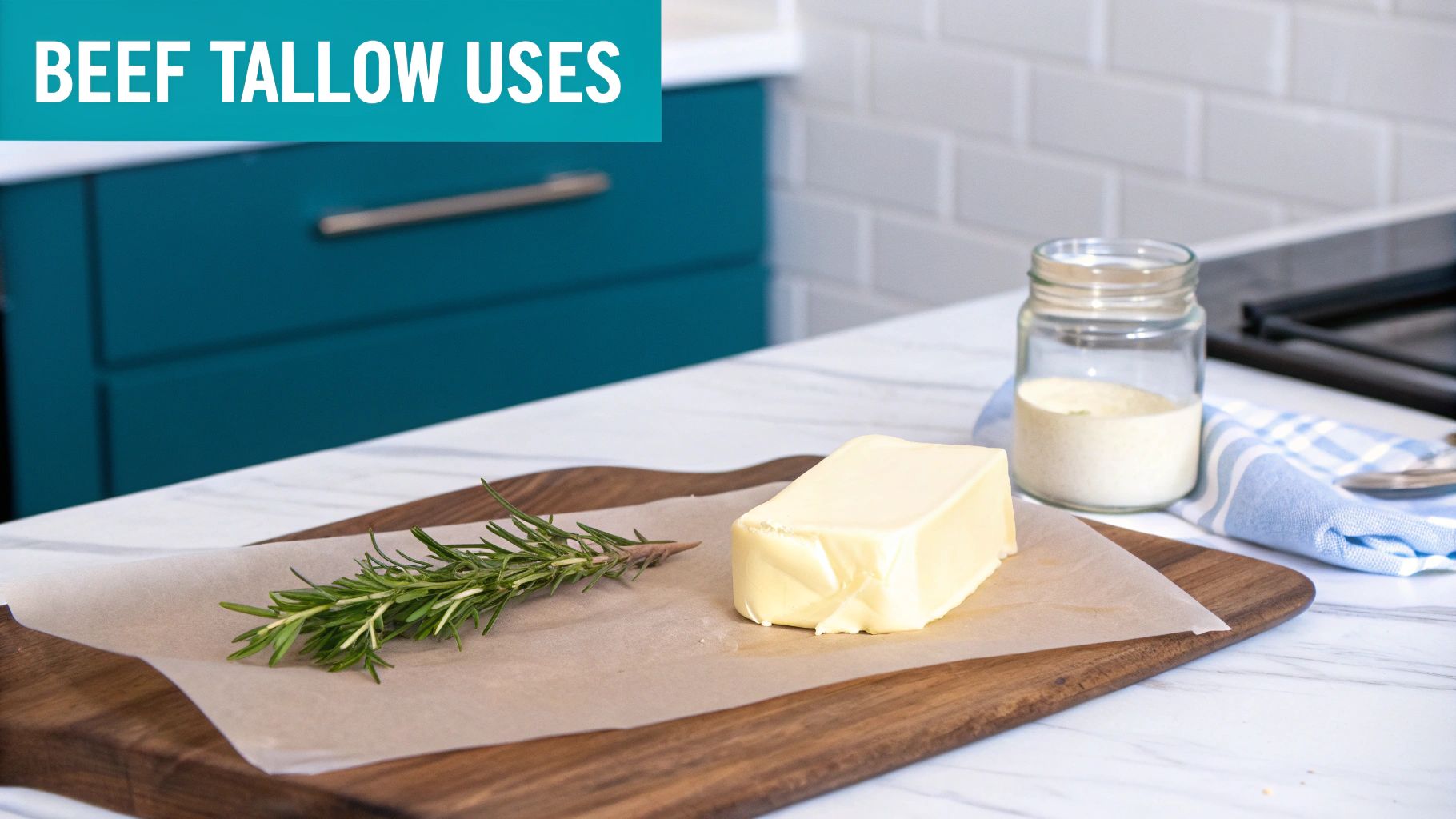
At its core, beef tallow is simply rendered beef fat. The process involves gently melting down raw beef fat (called suet) to purify it, removing any leftover meat bits and water. What you're left with is a stable, solid fat with a texture much like firm butter or coconut oil.
Think of it like making clarified butter. You're taking a raw ingredient and refining it into a pure, clean, and long-lasting product.
Long before modern vegetable oils and synthetic ingredients lined our shelves, tallow was a household cornerstone. It was the go-to fat for frying up crispy potatoes, the secret to a hard, long-lasting bar of soap, and even lit up homes as fuel for lamps and candles. It was an invaluable, multi-purpose resource.
A Modern Revival in DIY Creations
Lately, tallow has been getting a lot of love, especially within the DIY skincare community. People are rediscovering its unique properties and falling in love with it as a base for personal care items made from scratch. Its natural composition makes it a fantastic starting point for a wide range of formulations, from silky lotions to rich balms.
Tallow’s true value is hidden in its fatty acid profile. This specific makeup gives it the unique texture and functional properties that formulators and chefs have prized for generations.
Much of tallow's modern appeal comes from a growing desire to return to simple, traditional ingredients. For DIY skincare enthusiasts, working with tallow is a way to connect with age-old practices while crafting products perfect for today's needs. As we dive deeper, we'll focus heavily on how you can bring this incredible ingredient into your own lotion-making and skincare projects.
To give you a clearer picture, here's a quick look at where beef tallow shines.
Beef Tallow Uses at a Glance
This table breaks down the main ways people use beef tallow today, from the kitchen to the workshop.
| Category | Primary Use | Key Characteristics |
|---|---|---|
| Skincare & Soap Making | Creating firm soap bars and as a rich, emollient base for lotions, balms, and creams. | Nourishing, moisturizing, and structurally similar to human skin lipids. |
| Culinary Applications | High-heat frying, roasting, and baking; adding rich, savory flavor to dishes. | High smoke point (around 400°F / 205°C), stable, and flavorful. |
| Household & Other Uses | Making candles, conditioning leather goods, and lubricating moving parts. | Long-burning (candles), protective (leather), and naturally effective. |
As you can see, tallow is far more than just a cooking fat. Its unique properties make it a star player in handmade skincare, a reliable friend in the kitchen, and a valuable tool around the house.
The key uses of beef tallow can be broken down into three main categories:
- Skincare and Soap Making: It's prized for creating hard, long-lasting soap bars and serves as an emollient base for balms and lotions.
- Culinary Applications: With a high smoke point, it's ideal for frying, roasting, and adding a rich flavor to dishes.
- Household and Other Uses: Historically, it has been used to make candles, condition leather, and lubricate machinery.
Why Beef Tallow Is So Good for Your Skin
To really get why beef tallow is such a big deal in personal care, you have to look at what it's made of. It isn't just a simple fat; it's a rich mix of fatty acids that happens to be incredibly similar to the oils our own skin produces. This natural compatibility is the secret sauce behind its centuries-long run in handmade lotions, balms, and soaps.
Think of your skin's protective outer layer like a brick wall. Your skin cells are the bricks, and the lipids—the fats—are the mortar holding everything together. If that mortar is strong and well-maintained, the wall stays solid and does its job beautifully.
Beef tallow is packed with the exact kinds of fatty acids found in that "mortar." This is why it feels so right on the skin. It doesn't just sit on top; it seems to seamlessly blend in, helping to support a smooth, healthy-looking barrier.
The Fatty Acid Building Blocks
The main players in beef tallow are palmitic, stearic, and oleic acids. Now, these aren't exclusive to tallow—you'll find them in popular plant-based butters like shea and cocoa, too. But the specific ratio and combination in tallow give it a texture and feel all its own.
- Palmitic Acid: This saturated fatty acid helps create a protective barrier on the skin's surface.
- Stearic Acid: Famous for its cleansing power in soap, stearic acid also lends a thick, luxurious feel to lotions and creams.
- Oleic Acid: A monounsaturated fatty acid known for its moisturizing abilities, contributing to tallow's soft, pliable texture.
This trio of fatty acids makes for a wonderfully emollient ingredient. When you add it to a skincare formula, it helps deeply moisturize the skin, leaving it feeling soft and supple.
It really comes down to the fatty acid profile. This rich composition is what gives tallow its moisturizing magic and makes it such a cornerstone ingredient for DIY skincare creators.
This unique fatty acid lineup in beef tallow is especially good for supporting the skin's natural barrier. A healthy, functioning barrier is the foundation for hydrated, happy skin, a topic you can dive into deeper in guides on skin barrier repair.
A Tradition Backed by Science
The long history of using tallow in personal care wasn't just a fluke. Our ancestors were onto something, and modern science can now tell us why. Generations of soap makers and apothecaries saw that it created products that felt deeply nourishing without being heavy or greasy.
Because its makeup is so close to our skin's own natural lipids, it absorbs beautifully and provides a feeling of true, lasting moisture. For anyone crafting their own lotions or balms at home, this makes tallow a reliable, effective, and time-tested foundation. It’s where age-old wisdom meets modern skincare science.
How to Use Beef Tallow in DIY Soap Making
If you're starting to explore the world of DIY, soap making is one of the most rewarding rabbit holes to fall down. It's a classic craft for a reason. And one of the oldest questions soap makers ask is what makes the best bar. For centuries, beef tallow has been a trusted answer.
Its unique properties are precisely why it’s a cornerstone ingredient for anyone looking to create a firm, long-lasting bar of soap that boasts a wonderfully stable and creamy lather.
It all starts with a simple chemical reaction called saponification. This is the magic that happens when you mix fats (like our hero, tallow) with a strong alkali (like lye). The fatty acids inside the tallow are completely transformed into soap, creating the solid bar that cleanses your skin.
Tallow’s specific blend of fatty acids, especially stearic acid and palmitic acid, is what makes it such a powerhouse in this process. These saturated fats are the key to the final bar's hardness. That means your beautiful, handcrafted soap won't turn into a sad, soft mush in the shower after just a few uses.
The Science Behind a Great Bar of Soap
This visual breaks down how the components of tallow translate into such desirable qualities in skincare.
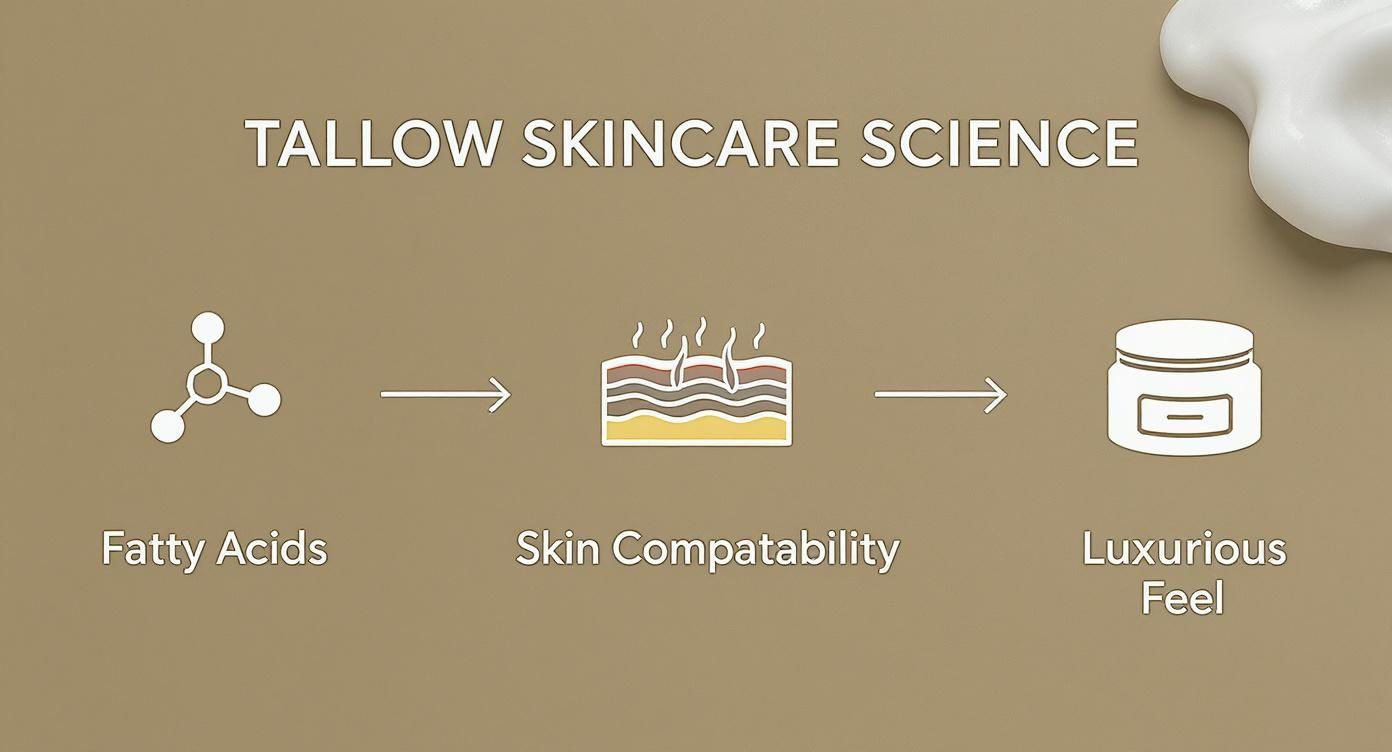
As you can see, tallow's value starts at the molecular level with its fatty acids and ends with a product that feels fantastic on the skin. While a firm bar is important, the quality of the lather is where the true luxury lies. And this is where tallow shines again.
The balance of fatty acids in tallow produces a lather that is:
- Creamy and low: It doesn't create those huge, airy bubbles that vanish in an instant.
- Stable: The lather is dense and lasting, giving you that luxurious, cushioned feel as you wash.
- Moisturizing: As a natural emollient, it helps create a soap that cleanses without stripping your skin of its precious moisture.
This perfect combination of hardness and creamy lather is what most soap makers are chasing, and tallow delivers it effortlessly. It provides a structural foundation that other, softer oils can't achieve on their own.
Getting Started with Tallow Soap for Beginners
For aspiring soap makers, working with tallow is surprisingly straightforward. Your first step is getting your hands on a quality product. Look for rendered tallow, which has already been melted down and purified. For the purest soap, you’ll want tallow that is clean, white, and has a neutral smell.
A key tip for beginners is to start simple. A soap recipe with just a few ingredients allows you to truly understand how each one—especially the tallow—behaves and contributes to the final product.
Properly rendering tallow is also essential for purity. If you decide to render it yourself from suet (raw beef fat), the process involves gently melting the fat and straining it to remove any bits and impurities. A clean rendering process is crucial to a final soap bar free of any meaty scent.
Historically, beef tallow was the go-to for soap making because of its high solid fat content and its knack for producing that hard, long-lasting bar. By the late 19th and early 20th centuries, tallow-based soaps were a massive part of the personal care market, proving their effectiveness long before vegetable oils became common. You can learn more about tallow's market history on datainsightsmarket.com.
Once you understand its foundational role in saponification and what it brings to the table in terms of hardness and lather, you can confidently make tallow a star ingredient in your next soap-making project.
Creating Your Own Tallow Lotions and Balms
Tallow isn't just a rockstar in the soap-making world; it's also a fantastic base for all sorts of other skincare goodies you can whip up right in your own kitchen. Making your own whipped tallow balms and simple lotions is an incredibly rewarding process. You get to control exactly what goes on your skin, customizing the textures and scents to be just right for you.
Don't be intimidated! Making your own tallow-based products is much simpler than you might think. It really boils down to gently melting the tallow, infusing it with some botanicals for an extra touch, blending in other oils, and whipping it all up into a perfect, airy cloud of moisture. Think of it as a creative kitchen project that leaves you with amazing skincare.
The Basic Steps to Crafting Tallow Balms
The real magic of DIY tallow skincare lies in its simplicity. You can break down the whole process into a few easy stages and end up with a beautiful, high-quality product with minimal fuss. It's almost like making whipped frosting, but for your skin instead of a cake.
Here’s a simple framework to get you rolling:
- Gently Melt Your Tallow: Grab a double boiler or a heat-safe bowl that fits snugly over a saucepan of simmering water. Pop your rendered tallow in and let it melt slowly. The trick here is low, indirect heat—you want to melt the fat, not scorch it.
- Blend with Carrier Oils: Once the tallow is fully liquid, remove it from the heat. Now's the time to stir in your favorite liquid carrier oils. Things like jojoba, sweet almond, or even olive oil work wonders to create a softer, more spreadable final product. A good starting ratio is about 70-80% tallow to 20-30% liquid oil.
- Cool and Whip: Let the mixture cool down. You'll know it's ready when it starts to look opaque and gets a little solid around the edges. Then, bring out a hand mixer or stand mixer and whip it until it’s light, fluffy, and white, just like buttercream frosting.
- Package and Store: Spoon your gorgeous whipped balm into clean, dry jars. Keep them in a cool, dark place to help them maintain that beautiful texture and stay fresh.
This basic recipe is just the beginning. From here, you can let your creativity run wild!
Customizing Your Creations with Botanicals
One of the best parts of making your own lotions is the freedom to personalize them. After melting your tallow, you can infuse it with dried botanicals to give your balm unique properties and a subtle, natural fragrance. This simple step elevates a basic balm into something truly special and bespoke.
For instance, you could toss some dried calendula flowers or chamomile into the warm, melted tallow. Let them steep over very low heat for about an hour, then strain them out with a bit of cheesecloth. This process gently transfers the plant's beautiful essence right into your fatty base.
Remember, when you're working with natural ingredients, the final scent and texture can vary from batch to batch. That's part of the charm of handmade skincare! It means every jar you make is a one-of-a-kind creation.
If you're looking for more tips and inspiration to get started, our blog is packed with resources. You can dive into all kinds of projects and learn the ins and outs of formulating your own skincare blends in our guides on how to make your own skin care products. These articles will help you build your confidence and expand your skills as a DIY skincare artist.
Beyond Beauty: Culinary and Household Uses for Tallow
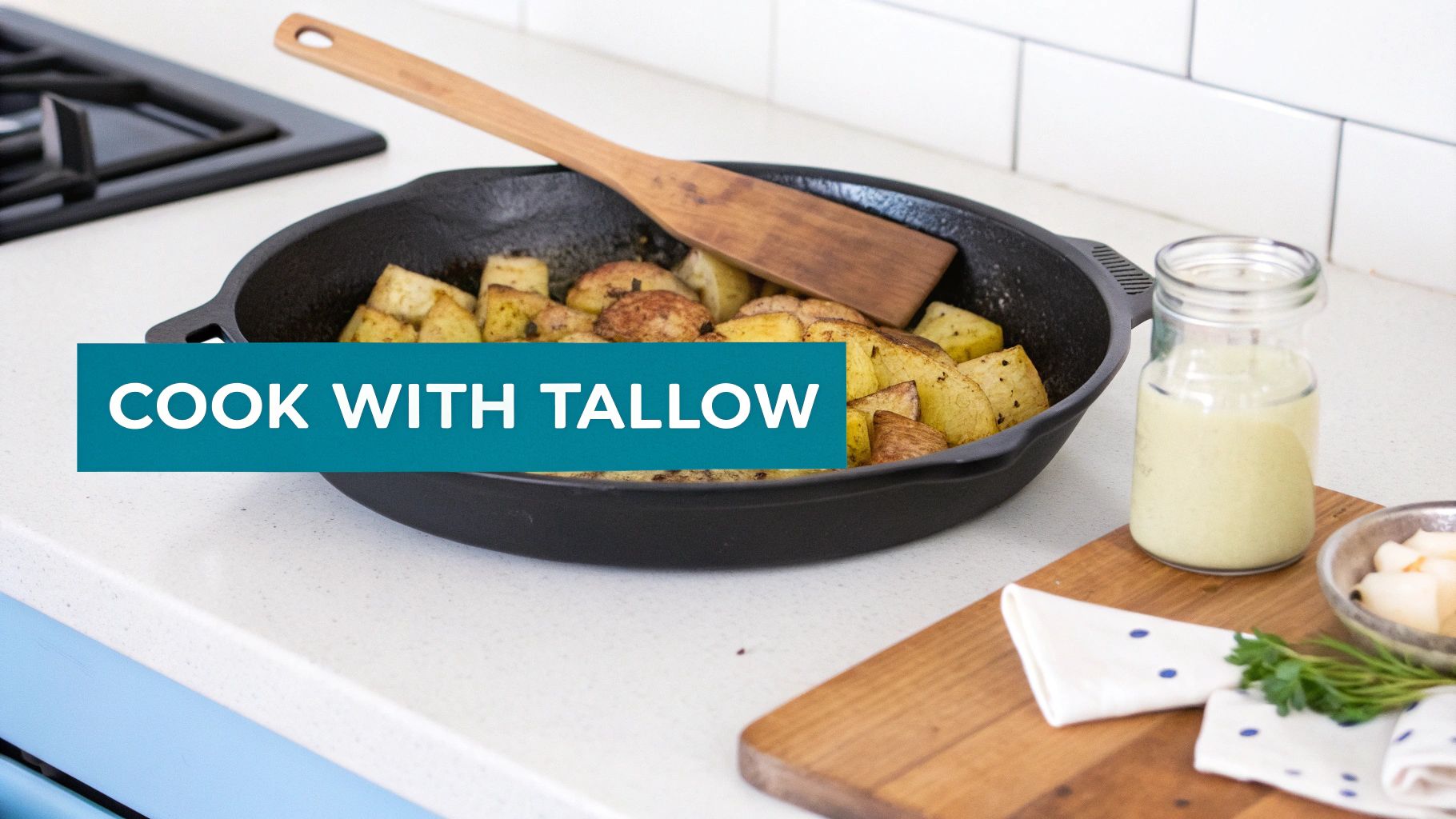
While tallow is a true powerhouse in DIY skincare, its talents reach far beyond the bathroom vanity. For centuries, it was the undisputed king of the kitchen, loved for its stability, rich flavor, and incredible performance at high temperatures. Now, this traditional fat is making a major comeback with chefs and home cooks who appreciate its unique qualities.
One of tallow's most significant kitchen advantages is its high smoke point, which clocks in around 400°F (205°C). This makes it absolutely perfect for frying, searing, and roasting without the risk of it breaking down and creating funky, off-flavors. From the crispiest french fries to a perfectly seared steak, tallow adds a savory depth that most vegetable oils just can't touch.
A Staple in Kitchens and Workshops
Even today, its role in the food world is significant. In fact, about 45% of beef tallow consumption is still for culinary uses, where its flavor and heat tolerance are in high demand.
Beyond cooking, beef tallow is a secret weapon for maintaining cast iron and carbon steel cookware. Its ability to polymerize and create a tough, non-stick "seasoning" layer is second to none. If you're curious about this process, you can find great advice on choosing the best oil for seasoning woks and other pans from cookware experts.
Historically, tallow’s utility knew few bounds. Before electricity, it was a primary material for making long-burning candles, and its protective qualities made it an effective conditioner for leather boots, saddles, and tools.
This incredible resourcefulness is a huge part of its timeless appeal.
Other Practical Household Uses
Tallow’s usefulness doesn't stop at the stove or the workshop, either. It has a long and storied history of practical applications that really show off how resourceful it is:
- Lubricant: A dab of tallow can silence a squeaky hinge or get stiff machinery parts moving smoothly again.
- Waterproofing: It was historically applied to canvas and leather to make them resistant to water.
- Protective Coating: Tallow can serve as a simple, natural alternative to petroleum jelly for all sorts of tasks. For more ideas on this, check out our guide on how to make toxin-free homemade non-petroleum jelly.
From crafting nourishing balms to frying up the perfect meal, tallow’s versatility is truly something to behold.
How To Source and Select Quality Beef Tallow
The success of your homemade skincare creations really comes down to the quality of your ingredients. When you're working with tallow, picking the right kind is the single most important step you can take. It’s what ensures your final lotions and balms have that perfect, creamy texture and a clean, neutral base to build upon.
Let's be clear: not all tallow is the same. Knowing what to look for is what separates a good result from a great one.
When you start shopping around, you'll mainly see two types: rendered tallow and unrendered suet. For any kind of skincare, you absolutely want rendered tallow. Rendering is just the simple process of gently melting and purifying raw beef fat. This crucial step removes all the little impurities and creates a pure, stable ingredient that’s ready to work its magic in your recipes.
What to Look for in Quality Tallow
Think of it like choosing produce at a farmer's market; you're going to use your senses to find the best stuff. A high-quality tallow will give you a far superior finished product, and there are a few clues that tell you it’s been processed with care.
Here’s what you should keep an eye (and nose) out for:
- Color: You want to see a beautiful, creamy white or pale yellow. A consistent, uniform color is a great sign that it has been thoroughly purified.
- Scent: Good tallow should smell very mild and neutral, maybe with a faint fatty note. If it has a strong, beefy odor, it wasn't rendered carefully enough, and that smell will come through in your final product.
- Texture: At room temperature, it should be firm and smooth, a lot like cold butter. If it feels grainy or is too soft, it might mess with the texture of your balms and creams.
Many skincare creators swear by tallow from grass-fed cattle because it tends to have a more beneficial fatty acid profile for skin. The demand for top-notch tallow has exploded recently. To give you an idea, US imports of beef tallow from Brazil shot up from about 22,000 metric tons in 2021 to over 280,000 metric tons by 2024, showing just how popular it's become across different industries. You can learn more about the growing tallow market over at knowledge-sourcing.com.
If you're just starting out, it can be really helpful to begin with a professionally rendered product. For example, seeing the consistency of the tallow used in our whipped tallow balm can give you a perfect benchmark for what you should be looking for.
Got Questions About Beef Tallow?
As you start digging into all the ways to use beef tallow, a few questions pop up. Getting these details straight will help you feel much more confident, especially when you're whipping up your own skincare for the first time.
Tallow Versus Suet
So, what's the real difference between beef tallow and suet? The easiest way to think about it is that suet is the raw material, and tallow is the beautifully finished product.
Suet is the hard, raw fat from around a cow's kidneys. Tallow, on the other hand, is what you get after that suet has been rendered—a process of slowly melting it down and straining out the impurities. For any skincare, you’ll always want to use pure, rendered tallow.
What About the Scent in Skincare?
I get this one a lot: "Does beef tallow make my creams smell...beefy?" Not at all, as long as you're using a high-quality, properly rendered product. Good tallow has a surprisingly neutral, mild aroma.
Once you blend it with other beautiful ingredients like carrier oils or botanicals, any faint scent it might have had completely disappears. It just leaves you with a clean, nourishing base for whatever you're creating.
Storing your homemade tallow goodies properly is the secret to keeping them perfect. Just find a cool, dark spot away from direct sunlight, and you’ll protect their texture and freshness for months.
A good rule of thumb, especially for products made without preservatives, is to make smaller batches more often. This way, you're always using your balms and creams when they're at their absolute best.
Ready to dive into your own DIY skincare journey? Check out the premium lotion-making supplies at Skin Perfection. You'll find everything you need to craft your own amazing balms and creams at naturalorganicskincare.com.