

 Buy with Prime
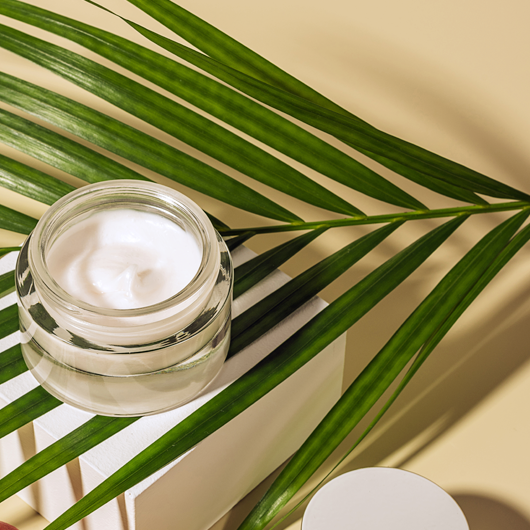


You measure the water phase, blend in your humectant, add your preservative, and follow the recipe carefully. The serum still pours like tinted water. Or worse, your lotion looks smooth on day one, then separates into a sad oil layer by the weekend.
That moment frustrates almost every DIY formulator.
Usually, the problem isn’t the fancy active. It isn’t your mixer. It’s structure. A formula needs something that gives it body, keeps ingredients evenly distributed, and helps the product feel polished when it touches the skin. In many formulas, xanthan gum in skin care is the quiet ingredient doing that work.
The Secret to Silky Serums and Creams
A beginner often meets xanthan gum after a failed batch.
You make a hydrating gel and expect a silky glide. Instead, it feels thin and splashes between your fingers. You make a cream and it looks perfect in the beaker, but the next day it seems looser, uneven, or slightly separated. The formula may contain lovely oils, floral waters, peptides, or botanical extracts, yet the texture still feels homemade in the wrong way.
That’s where xanthan gum earns its reputation.

Why texture changes everything
When a product has the right texture, people trust it more.
A serum that spreads evenly feels intentional. A cream that holds together in the jar feels finished. A mask that stays where you apply it feels professional. The formula may contain the same ingredients as before, but the user experience changes dramatically when the structure is right.
Xanthan gum helps create that structure.
It can thicken water-based products, support emulsions, and improve the way a formula sits in the hand and glides over the skin. That’s why so many formulators keep it close by, even when they use more glamorous ingredients elsewhere in the recipe.
Why formulators keep reaching for it
The beauty industry’s growing interest in xanthan gum isn’t random. In the U.S., the cosmetics and personal care segment is projected to grow at a 7.6% CAGR from 2026 to 2033, outpacing the broader U.S. xanthan gum market’s 6.3% CAGR, and the overall U.S. xanthan gum market was valued at $221.4 million in 2025 according to Grand View Research’s U.S. xanthan gum market report.
That tells you something useful as a DIY maker. Brands aren’t using it only because it’s familiar. They’re using it because it helps natural and clean-label formulas behave better.
Practical rule: If your formula feels watery, separates easily, or lets powders sink to the bottom, you probably don’t need more actives. You need better rheology.
That word sounds technical, but the idea is simple. Rheology is just how a product moves and flows. Xanthan gum gives you more control over that flow.
Once you understand how it works, you stop guessing. You start designing texture on purpose.
What Exactly Is Xanthan Gum?
At first glance, xanthan gum seems mysterious because the name sounds industrial. In practice, it’s easier to understand than many skincare ingredients.
Xanthan gum is a polysaccharide, which means it’s made of long sugar-based chains. In formulation terms, the easiest way to picture it is as a microscopic web. Once hydrated in water, that web helps hold the formula together.

Think of it as a soft net
If you stir plain water, it moves fast and offers no resistance.
If you add a small amount of xanthan gum and hydrate it properly, the water behaves differently. It doesn’t become solid, but it does become more organized. The gum forms a flexible network through the water phase, and that network helps slow movement, suspend particles, and improve consistency.
That’s why a formula with xanthan gum often feels smoother and more cohesive than the same formula without it.
Where it comes from
Xanthan gum is produced through fermentation. That origin matters to formulators who prefer naturally derived ingredients and want a thickener that fits comfortably into plant-forward or clean-label projects.
You’ll see it in a wide range of formula types:
- Water gels that need light body
- Lotions and creams that need emulsion support
- Masks and cleansers that need even texture
- Serums that need better glide and less drip
If you enjoy reading more about ingredient function and raw materials, the archive on cosmetic raw ingredients is a useful next stop.
Why it’s so widely used
One reason xanthan gum appears so often in formulas is simple. It works across many categories.
The Cosmetic Ingredient Review safety assessment reports 3,470 uses in cosmetic formulations, which establishes xanthan gum as one of the most widely used microbial polysaccharide gums in beauty according to the Cosmetic Ingredient Review report on microbial polysaccharide gums.
That doesn’t mean every formula needs it. It means many formulators trust it because it is versatile, familiar, and effective in small amounts.
A good gum doesn’t just make a product thicker. It gives the whole formula better behavior.
That’s the key idea to hold onto. Xanthan gum isn’t there only to make something look less runny. It changes how the entire formula holds itself together.
The Triple-Action Power of Xanthan Gum
A lot of ingredients do one job well. Xanthan gum often does three jobs at once.
That’s why formulators keep returning to it, especially in recipes where they want to simplify the ingredient list without giving up performance. When used well, it helps a product feel fuller, stay mixed, and keep particles evenly distributed.
Thickener
The first role is the easiest to spot. Xanthan gum adds viscosity.
A watery toner can become a soft gel. A plain gel can become more cushiony. A lotion can gain body without feeling wax-heavy. Thickness changes how a product dispenses, spreads, and rests on the skin.
If you’ve ever compared a runny serum with one that feels silky and controlled, you’ve already noticed this effect.
A thickener also helps with dosing. Instead of having half the product slide through your fingers, you can place it where you want it and spread it more evenly.
Emulsion stabilizer
The second role is less visible but even more important in creams and lotions. Xanthan gum helps support emulsions.
Oil and water naturally want to part ways. Your emulsifier does the main job of bringing them together, but xanthan gum helps the water phase become more structured. That structure slows movement inside the formula, so droplets stay more evenly distributed.
If you’re still learning the basics of combining phases, this guide on how to emulsify oil and water can help make the process click.
Here’s a simple analogy. Think of an emulsion without enough support as fruit floating in a thin drink. Everything can drift apart. Add xanthan gum, and the drink becomes more like a smoothie. The movement slows down, and everything stays more evenly suspended.
Suspending agent
The third role is the one many beginners overlook. Xanthan gum helps keep things from sinking.
That matters in formulas containing clays, botanical powders, shimmer, fine exfoliating particles, or any material that might settle at the bottom of the container. The gum’s network gives those particles support, so the formula stays more uniform from first use to last use.
Why this matters in real products
These three actions often show up together:
- In a serum: xanthan gum can reduce drip and improve glide.
- In a lotion: it can help the emulsion feel more stable and cohesive.
- In a mask: it can keep powders distributed instead of packed at the bottom.
- In a cleanser: it can create a fuller, more elegant texture.
The best formula textures usually come from ingredients doing more than one job.
That’s one reason xanthan gum appears in so many projects. You may add it because you want thickness, then discover it also improves stability and presentation.
A formulator’s way to think about it
Instead of asking, “How do I make this thicker?” ask, “How do I want this formula to behave?”
That small shift changes your results.
A good formula should pour properly, spread properly, and stay properly mixed. Xanthan gum helps with all three. When a beginner starts using it this way, texture stops feeling like luck and starts feeling like a controlled design choice.
How Xanthan Gum Improves Skin's Appearance and Feel
Consumers rarely fall in love with a formula because they admire the ingredient list. They fall in love with how it feels.
A serum that glides smoothly feels refined. A cream that spreads evenly feels comforting. A mask that stays put without dragging feels thoughtfully made. Xanthan gum contributes to that sensory side of formulation in a quiet but noticeable way.
Better slip and more even application
When xanthan gum is balanced well, it can give a product a pleasant slip. That means the formula doesn’t grab, skip, or run too quickly across the skin.
Even application changes the user experience. You want a serum to spread across the face in a thin, smooth layer. You want a moisturizer to move easily without feeling loose. Xanthan gum helps create that middle ground.
For formulators working on hydration-focused recipes, reading about natural humectants for skin pairs nicely with understanding texture builders like gums.
A light film that helps hold moisture
Xanthan gum also has a film-forming quality. It creates a very light layer on the skin surface, and that contributes to a more moisturized, cushioned feel after application.
According to this article on xanthan gum’s skincare benefits, xanthan gum forms a lightweight film that reduces transepidermal water loss and locks in moisture, with skin-conditioning effects that can support improved elasticity and the visual reduction of fine lines in anti-aging applications.
That wording matters. We’re talking about appearance and feel, not medical change.
Why luxury often feels simple
A polished texture usually comes from restraint.
Too little xanthan gum and a product may feel thin or unstable. Too much and it may feel draggy or overly gelled. In the sweet spot, the product feels easy, smooth, and well put together.
Many high-end textures share a few traits:
- Controlled spread so the product doesn’t race across the skin
- Soft cushion so application feels substantial
- Uniform finish so the formula looks neat and consistent
- Less mess because the product stays where you place it
That’s one reason xanthan gum in skin care matters beyond thickening alone. It shapes the ritual of use. It helps the formula feel deliberate from the first touch.
A Practical Guide to Formulating with Xanthan Gum
Using xanthan gum well is mostly about handling. The ingredient itself isn’t difficult, but it does punish rushed technique.
When beginners say, “xanthan gum ruined my batch,” they usually mean one of three things happened. It clumped, it felt slimy, or it made the product cloudy and heavier than expected. All three are preventable.

Start with the right use level
In skincare formulations, xanthan gum serves as a multifunctional rheology modifier with optimal usage levels of 0.1% to 0.5% for thickening aqueous phases and stabilizing emulsions by forming a flexible, gel-like polysaccharide network, as described in Herbal Dynamics Beauty’s discussion of xanthan gum in skincare.
That range is small, and that’s good news. A little goes a long way.
Consider this practical approach:
- Lower end of the range works well when you want light thickening and a fluid result.
- Middle of the range often suits serums, emulsions, and gel-creams.
- Upper end of the range creates more body and stronger suspension.
The same source also notes that DIY formulators can create a silky serum texture by hydrating xanthan gum in the water phase at 0.2% to 0.3% before emulsifying.
How to avoid clumps
Xanthan gum loves to hydrate fast on the outside of each particle. That sounds helpful, but it creates the classic “fish eye” problem. The outer layer gets wet and swells, while the inside stays dry.
It’s similar to making gravy or cocoa powder in milk. Dump the powder straight into liquid, and you get lumps with dry centers.
Use this method instead:
- Prepare your water phase in a beaker with enough room for mixing.
- Create movement with a mini mixer, propeller stirrer, or steady hand stirring.
- Sprinkle the xanthan gum slowly over the surface rather than dumping it in one spot.
- Keep mixing while it disperses so each particle meets water separately.
- Allow time for full hydration before you judge final thickness.
Workshop note: Don’t panic if the texture looks uneven in the first minute. Xanthan gum often needs time to fully hydrate and reveal its true viscosity.
Where to add it
For many DIY formulas, the safest approach is to hydrate xanthan gum in the water phase before combining phases.
That gives you better control and lets you evaluate the texture early. If you’re making lotions or creams, this pre-hydrated water phase often behaves more predictably once you emulsify.
For deeper process discussions, the articles on cosmetic formulation are helpful for building a consistent mixing routine.
Standard versus premium xanthan gum
Many guides on the topic stay too general.
Not all xanthan gum behaves the same way in finished skin care. Standard grades can work well in many creams, masks, and cleansers, but some formulators notice a grainier or less refined feel in delicate emulsions or clear-style gels. Premium grades are often chosen when clarity, smoother texture, and a more elegant sensory profile matter.
That difference becomes more obvious in products such as:
- Silky serums where visual clarity matters
- Light lotions where drag or graininess stands out quickly
- Peptide or botanical formulas where a polished finish supports the overall experience
If your project is a simple clay mask, a standard grade may be perfectly fine. If you want a more professional-looking serum or lotion, a premium grade is often worth the upgrade.
Match the gum to the product style
Think about the final product before you choose your grade and use level.
For fluid serums
Keep the texture light. You want a serum that glides, not one that forms a stiff gel. Premium xanthan gum often shines here because the finish can feel cleaner and more refined.
For creams and lotions
Xanthan gum supports the emulsion and adds body to the water phase. In a richer formula, slight cloudiness may not matter much, but smoothness still does.
For masks and suspensions
Xanthan gum can be very forgiving in this context. If your formula contains powders or exfoliating particles, the gum helps keep them distributed and the product easier to apply.
Common mistakes that change the feel
A batch can be technically stable and still feel disappointing.
Watch for these issues:
- Too much gum: The formula may feel draggy, gummy, or heavy.
- Poor dispersion: You’ll see lumps or a bumpy texture.
- Wrong grade for the goal: A clear serum may look hazy or feel less elegant than you wanted.
- Judging too early: Incompletely hydrated gum can trick you into over-adjusting.
A simple decision guide
| Project type | What you usually want | Better choice |
|---|---|---|
| Light serum | Smooth glide and a refined finish | Premium xanthan gum |
| Cream or lotion | Stability and body | Standard or premium, depending on desired feel |
| Mask or powder suspension | Strong hold and even distribution | Standard xanthan gum often works well |
The more you formulate, the more you’ll notice this truth. Texture is not accidental. It comes from ingredient choice, grade selection, and mixing method working together.
Choosing the Right Gum Xanthan Gum Versus Alternatives
Xanthan gum is useful, but it isn’t the only thickener on the shelf. A better question than “Is xanthan gum good?” is “What kind of texture am I trying to create?”
That question leads to better formulas.
The most important comparison is often not xanthan gum versus no gum. It’s xanthan gum versus another texture strategy, including premium versus standard xanthan gum.
The first decision is within xanthan itself
According to this guide to using xanthan gum in skincare, premium grades offer superior clarity and sensory profiles, making them better suited to high-performance serums and lotions with plant-derived actives and peptides, while standard grades may cause grainy textures in some emulsions.
That matters because many DIY formulators assume all xanthan gum is interchangeable. It isn’t.
If the formula is a clear-style serum or a lightweight lotion where elegance matters, premium grade often makes the better first impression. If the formula is a wash-off mask or a basic cream, standard xanthan may be all you need.
Natural thickener comparison
| Thickener | Texture Profile | Clarity | Primary Use Case |
|---|---|---|---|
| Xanthan gum standard | Fuller, supportive, sometimes slightly less refined | Usually less clear | Creams, masks, suspensions |
| Xanthan gum premium | Smoother, more elegant, better sensory feel | Better clarity | Serums, lotions, polished gel textures |
| Guar gum | Often softer and sometimes stringier | Variable | Products where slip is a priority |
| Sclerotium gum | Elegant, cushioned, elastic feel | Often appealing in gels | Higher-end sensory textures |
| Hyaluronic acid | Hydrating gel feel rather than classic thickener behavior | Can be clear depending on formula | Hydration-focused serums |
How to choose without overthinking it
A short filter helps:
- Choose xanthan gum when you need dependable thickening, support in emulsions, and easier suspension of particles.
- Choose premium xanthan gum when look and skin feel matter as much as stability.
- Look at alternatives when you want a distinctly different finish, such as more bounce, more slip, or a clearer gel system.
If you’re comparing structure-building ingredients in lotions, the collection on emulsifiers for lotion helps place gums in the wider context of cream design.
A formulator rarely chooses the “best” thickener in absolute terms. The formulator chooses the best thickener for the texture goal.
That’s the mindset that leads to stronger formulas. Xanthan gum isn’t the answer to every texture problem, but it is often the most reliable starting point.
Conclusion Mastering Texture for Beautiful Formulations
Most DIY skincare problems that look complicated are texture problems in disguise.
When a serum feels watery, when a lotion separates, or when powders sink to the bottom, the fix often begins with structure. Xanthan gum gives you that structure. It helps you build body, improve stability, and create the kind of smooth application people associate with polished skin care.
A notable upgrade comes when you stop thinking of xanthan gum as “just a thickener.”
It’s a design tool. It helps you choose how a product flows, how it spreads, and how finished it feels in the hand and on the skin. And once you start choosing between standard and premium grades with intention, your formulas become more precise.
That’s how homemade products begin to feel professional.
Keep testing. Change one variable at a time. Pay attention to how the formula looks in the beaker, how it behaves in the jar, and how it glides during application. Those observations teach more than any trend ever will.
Frequently Asked Questions About Xanthan Gum
Is xanthan gum safe for facial products
It’s widely used in cosmetics and generally well tolerated in topical formulas. Many formulators consider it a dependable choice for products intended for a broad range of skin types because it has a long track record of cosmetic use.
Can xanthan gum make a serum feel sticky
It can if you use too much or choose a texture that’s too dense for the formula style. Usually, the issue isn’t xanthan gum itself. It’s the use level, incomplete hydration, or a mismatch between the gum grade and the kind of serum you wanted to make.
Is xanthan gum only for creams and lotions
No. It’s useful in gels, masks, cleansers, and some hair and scalp formulas too. Any product that needs better body, more even suspension, or a smoother flow can potentially benefit from it.
Why does my xanthan gum form lumps
The powder hydrates rapidly on contact with water. If too much lands in one spot, the outside swells first and traps dry powder inside. Slow sprinkling and steady mixing usually solve that problem.
Should I choose standard or premium xanthan gum
Choose based on the finished look and feel you want.
- Use standard xanthan gum for straightforward creams, masks, and formulas where ultra-clear appearance isn’t important.
- Use premium xanthan gum for more refined serums, lighter lotions, and projects where smoother sensory feel matters.
- Test both if possible because your exact oils, extracts, and actives can shift the final texture.
Can xanthan gum help keep powders suspended
Yes. That’s one of its most practical strengths in DIY work. It can help keep fine particles more evenly distributed so the product stays more uniform from top to bottom.
If you’re ready to create smoother serums, steadier lotions, and more polished DIY formulas, explore ingredients, supplies, and skin care essentials at Skin Perfection.