

 Buy with Prime


The absolute best moisturizer for aging skin is one that delivers some serious hydration while also supporting your skin's natural moisture barrier. To really see a difference, you'll want to look for powerhouse ingredients like hyaluronic acid, ceramides, and peptides, which are essential for keeping skin looking plump and smooth.
Your Guide to Moisturizers for Mature Skin

Walking down the skincare aisle can feel like a pop quiz you didn't study for. But finding the right moisturizer is hands-down one of the most effective things you can do to support your skin as it matures. This guide is here to cut through the noise and help you figure out what your skin is asking for and which products will actually listen.
As our skin changes over the years, its biggest need becomes consistent, deep hydration to keep its natural barrier strong. We'll get into the key ingredients that make this happen, how to pick a formula that's right for your skin type, and even some application tricks to get the most out of every drop.
Consider this your roadmap to a moisturizer that leaves your skin feeling comfortable and looking amazing. If you're building your routine from the ground up, our comprehensive beginner guide to anti-aging skincare is a fantastic place to start.
Why Moisturizing Is a Priority
A great moisturizer does so much more than just tackle dry patches. Think of it as a protective shield for your skin. It reinforces your natural moisture barrier, locking in all the good stuff (like water) and keeping the bad stuff (like environmental stressors) out. For mature skin, this job is especially critical.
When your skin is well-hydrated, the surface looks smoother and has a natural luminosity. It’s no wonder the demand for these products has skyrocketed. The global anti-aging market was valued at around USD 54 billion in 2025 and is expected to more than double by 2035. This boom is fueled by incredible research into ingredients that truly address the appearance of common skin concerns.
Here's a quick look at the powerhouse ingredients we'll be covering in this guide. Think of this as your cheat sheet for understanding what to look for on an ingredient label.
Key Ingredients for Mature Skin At a Glance
| Ingredient | Primary Role in Moisturizers |
|---|---|
| Hyaluronic Acid | A hydration magnet that draws moisture into the skin, making it look plump and dewy. |
| Ceramides | These are the "glue" that holds skin cells together, reinforcing the skin's natural barrier to prevent moisture loss. |
| Peptides | Amino acid chains that act as building blocks for proteins, helping skin look firmer and smoother. |
| Retinoids | A derivative of Vitamin A, known for encouraging skin cell turnover and supporting the look of the skin. |
| Antioxidants | Includes vitamins like C and E, which protect the skin from environmental damage and help brighten its appearance. |
Each of these ingredients plays a unique role, but they all work toward the same goal: helping your skin look and feel its absolute best.
A Holistic Approach to Radiant Skin
While the right moisturizer is a cornerstone of any great routine, beautiful skin is truly an inside job. The daily choices we make have a huge impact on how our skin looks and feels.
The goal of a great skincare routine is not to turn back the clock, but to support your skin so it can look its absolute best at every stage of life. It’s about nourishment, protection, and consistency.
Beyond what you put on your face, embracing holistic tips for radiant skin can make a world of difference. Things like proper nutrition, staying hydrated, and managing stress work from within to give you that vibrant, healthy-looking glow. Your moisturizer's job is to be a beautiful partner in that process.
Understanding How Your Skin Matures
Before you can pick the best moisturizer for aging skin, it’s really helpful to get a handle on the beautiful, completely natural journey your skin takes over the years. I like to think of young, healthy skin as a solid brick wall. The "bricks" are your skin cells, and they're held together by a strong "mortar" made of natural lipids and fats. This is your skin’s moisture barrier, and its main job is to lock hydration in and keep all the environmental junk out.
As we get older, our bodies naturally slow down the production of those lipids. The mortar starts to get a little weaker, which means the barrier isn't quite as good at holding onto moisture. This is one of the biggest reasons you might notice your skin feeling drier or looking less glowy than it used to. It's a totally normal part of your skin's lifecycle.
Changes Beneath the Surface
It's not just the surface that's changing its tune. Deeper down, the building blocks of your skin are also shifting gears. The production of collagen and elastin—the proteins that give your skin that plump, firm bounce—naturally starts to decline as we age. This gradual slowdown is what affects the skin's texture and elasticity, and it’s something to keep in mind when choosing a moisturizer.
On top of that, the rate of skin cell turnover, which is just the process of shedding old cells to reveal fresh new ones, also slows down. This can sometimes lead to a duller-looking complexion because those older cells hang around on the surface a bit longer. Getting to know these underlying factors is the first real step toward making smart, effective choices for your skin.
By understanding these natural shifts, you can select products that work in harmony with your skin’s current needs, focusing on hydration and support to help it look its absolute best.
The whole point isn't to fight a natural process. It's about giving your skin the support it needs with the right kind of care. This means zeroing in on ingredients that replenish moisture and help keep that protective barrier strong and intact. Suddenly, choosing a moisturizer becomes less about searching for some miracle in a jar and more about giving your skin exactly what it’s asking for to thrive.
Empowering Your Skincare Choices
When you know why your skin is behaving differently, you can walk down the skincare aisle with total confidence. You’ll understand that reaching for a richer cream or looking for ingredients like ceramides isn't just falling for a marketing pitch; it's a direct, intelligent response to your skin's evolving biology. That knowledge is incredibly empowering.
These changes are all part of a much bigger story. If you're curious to learn more about the biology behind it all, you can dive deeper into the science of why we age and see how it affects our entire body. Ultimately, this understanding turns your daily routine from a chore into a thoughtful, supportive act of self-care. Your moisturizer becomes a trusted tool to help your skin feel comfortable, hydrated, and radiant every single day.
Decoding the Most Effective Ingredients
Trying to decipher an ingredient label can feel like reading a foreign language. To find the best moisturizer for aging skin, though, you just need to know which key players to look for. Think of it like assembling an all-star team where each member has a specific, valuable skill.
We can group these powerhouse ingredients into a few key categories based on what they do best. This makes it much easier to spot a formula that gives your skin exactly what it needs for hydration, barrier support, and an overall better appearance.
This infographic breaks down the core concepts for supporting mature skin: maintaining the skin's barrier, boosting hydration, and promoting a feeling of firmness.
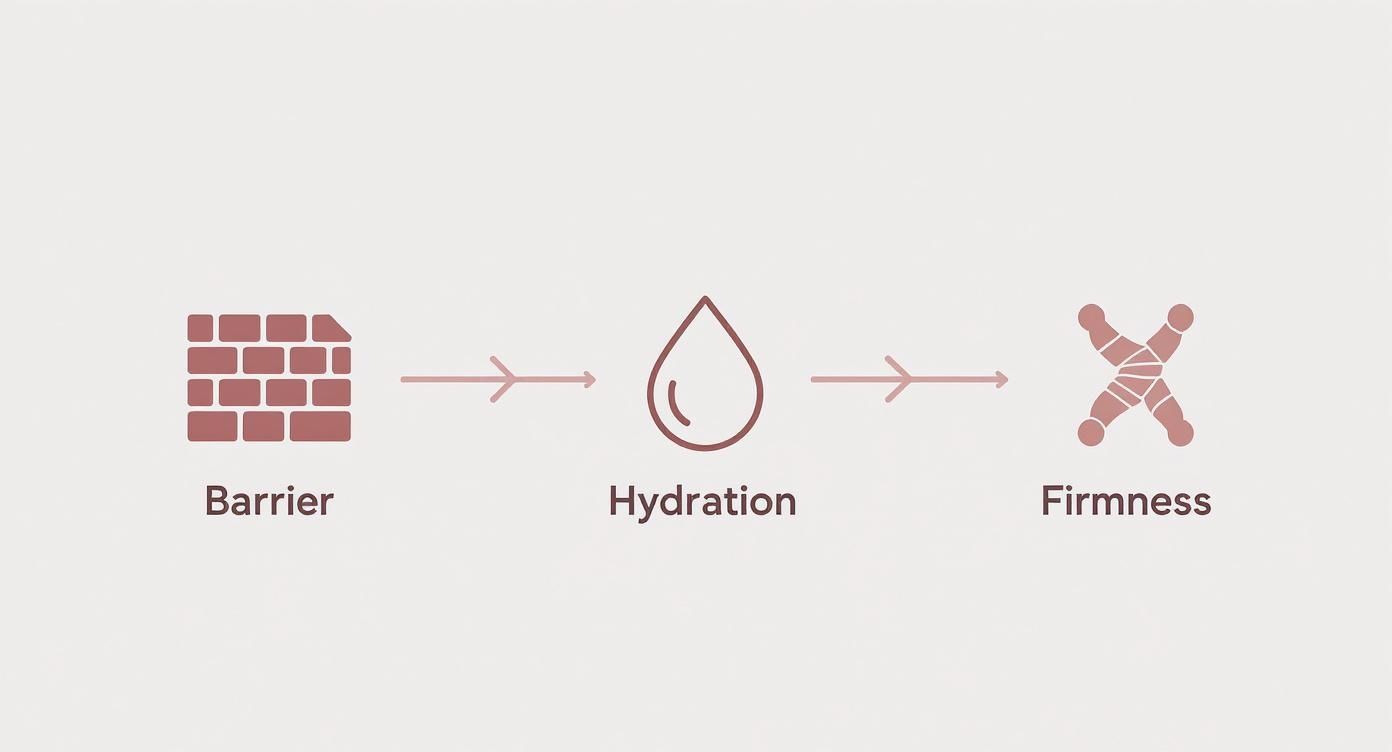
As you can see, these three elements are deeply connected. A strong barrier is really the foundation for healthy-looking, hydrated skin.
Hydrators: The Moisture Magnets
First up are the hydrators. Their main job is to pull water into the skin, helping it look plump and dewy. They act like tiny sponges that soak up moisture from the air and from deeper layers of your skin, bringing it right to the surface where you can see the effects.
- Hyaluronic Acid: This is a true superstar in the hydration world. It can hold up to 1,000 times its weight in water, making it incredibly effective at flooding the skin with moisture for a smoother, more supple look.
- Glycerin: A reliable and gentle humectant, glycerin works a lot like hyaluronic acid by attracting water. It’s a tried-and-true ingredient for keeping skin feeling soft and hydrated all day long.
Barrier Supporters: The Gatekeepers
Next, we have the barrier supporters. If your skin is a brick wall, these ingredients are the mortar holding everything together, keeping precious moisture locked in and environmental stressors out. For mature skin, keeping this barrier strong is non-negotiable.
Your skin's moisture barrier is its first line of defense. Supporting it with the right ingredients is fundamental to achieving a radiant, comfortable complexion at any age.
A healthy barrier helps the skin hold onto all that wonderful hydration delivered by ingredients like hyaluronic acid. These players work together as a team to ensure your skin feels balanced and looks its best.
- Ceramides: These are lipids (fats) that are naturally found in high concentrations in the top layers of your skin. In fact, they make up over 50% of the skin's composition. Adding them back topically helps support the "mortar" in your skin's barrier and lock in moisture.
- Peptides: These are short chains of amino acids, which are the building blocks of essential proteins. When you see peptides in your moisturizer, it’s a sign that the formula is designed to improve the look of skin firmness and texture.
The demand for moisturizers with proven ingredients like peptides is a huge driver in the skincare market. The global anti-aging industry is set for major growth, fueled by innovative product development. The Asia Pacific region, for example, represents over 43.5% of the market share, with a high demand for premium moisturizers.
Texture Enhancers: The Refiners
Finally, we have the ingredients that help refine the look of the skin's surface. They can address the appearance of uneven tone, enlarged pores, and rough texture, all contributing to a brighter, smoother complexion.
Niacinamide (Vitamin B3): This is a true multi-tasker. It helps support the skin's barrier, visibly improves the appearance of enlarged pores, and evens out the look of your skin tone. You can learn more about how these key players work by checking out our guide on the five best anti-aging ingredients for great skin care products.
Matching Your Moisturizer to Your Skin Type
When it comes to picking the right moisturizer for aging skin, there’s no single "miracle" product that works for everyone. The secret is finding the perfect match for your unique skin. As we get older, our underlying skin type—whether it's oily, dry, or sensitive—still calls the shots on what it really needs. A one-size-fits-all approach usually backfires, leaving you with a product that's either too heavy or not nearly hydrating enough.
Think of it like feeding your plants. You wouldn't give a cactus the same amount of water as a tropical fern, right? Your skin is just as specific. Listening to its signals is the key to helping it look and feel its best.
For Mature Skin That Is Also Dry
If your skin often feels tight, looks a bit flaky, or has lost its natural glow, you’re probably in the dry skin club. It’s a common issue as we age because oil production naturally slows down. The game plan here is simple: replenish moisture and lock it in for dear life.
Your best friend will likely be a rich, nourishing cream. Hunt for formulas loaded with emollients and ingredients that support your skin’s barrier, giving you that comfortable, deeply hydrated feeling.
- Key Ingredients: Ceramides, Shea Butter, and luxurious plant oils are fantastic for reinforcing that all-important moisture barrier.
- Texture: Go for thicker creams and balms. These textures create a protective seal on the skin to stop moisture from escaping during the day.
For Oily and Combination Skin Types
It's a huge myth that oily skin doesn't need a moisturizer. The truth is, even oily and combination skin can get dehydrated, which can trick it into producing even more oil to compensate. For mature skin that still deals with a shiny T-zone, the goal is balanced hydration without any of the heaviness.
Finding the right moisturizer for oily skin is all about providing lightweight hydration. The goal is to keep the skin's moisture levels balanced, which helps it appear less shiny and more refined.
Look for formulas that hydrate without clogging your pores. Lightweight lotions and gel-creams are usually the perfect fit, sinking in quickly to deliver a burst of moisture.
- Key Ingredients: Hyaluronic Acid and Niacinamide are superstars here. They offer oil-free hydration and help make pores look more refined.
- Texture: Seek out weightless gels, gel-creams, or fluid lotions. These textures give your skin the moisture it craves without feeling greasy or heavy.
For Sensitive and Reactive Skin
Sometimes, as our skin matures, it can become more sensitive or reactive. If your skin gets irritated easily or is prone to redness, you'll want a moisturizer that’s both gentle and effective. The focus should be on soothing ingredients that support the skin barrier without causing any drama.
The skincare world has definitely noticed this need. Market research is showing a big shift toward moisturizers with natural, organic ingredients like leaf and root extracts, which many people find to be gentler. Big brands are rolling out entire lines with these ingredients to meet the demand from health-conscious shoppers, as you can see if you explore the latest skincare market trends.
If you're still trying to figure out where your skin fits in, our guide that breaks down what defines the five main skin types can help you get a clearer picture.
Mastering Your Moisturizer Application

Finding the perfect moisturizer for your aging skin is a huge win, but that's really only half the battle. How you put it on can make a world of difference in your results. A few simple tweaks to your technique can truly elevate your routine, making sure you get every last drop of hydrating goodness from that beautiful jar.
One of the best tips I can give you is to apply your moisturizer to slightly damp skin. Think of your skin like a sponge—a damp one soaks up water way more effectively than a bone-dry one, right? After cleansing, gently pat your face with a towel, but leave it just a little dewy. This little bit of moisture on the surface helps your cream lock in hydration far more effectively.
The Right Technique for Maximum Benefit
It's not just when you apply it, but how you do it. A common mistake is slathering on way too much product, which just feels heavy, wastes your money, and can even clog pores. You really only need about a dime-sized amount for your entire face.
Your application method is just as important as the product itself. Gentle, consistent motions help your skin absorb the moisturizer effectively without unnecessary pulling or tugging.
Follow these simple steps to get the most out of every application:
- Warm it up: Dab a small amount onto your fingertips and gently rub them together. This warms the product just enough, helping it glide on smoothly and evenly.
- Apply with upward strokes: Start from your neck and work your way up. Massaging the moisturizer in with gentle, upward motions is much kinder to your skin than rubbing downwards or in harsh circles.
- Don't forget the neck and chest: The skin on your neck and décolletage is just as delicate as the skin on your face, and it's one of the first places to show signs of aging. Always extend your moisturizer down to cover these areas.
Where Moisturizer Fits in Your Routine
Properly layering your skincare ensures every single product can do its job without being blocked by another. Your moisturizer should always be one of the last steps, since its primary role is to create a barrier that seals in all the wonderful ingredients from the products you applied before it.
The general rule of thumb is to apply products from the thinnest consistency to the thickest. This means your moisturizer should go on after any watery toners or lightweight serums. In the morning, the absolute final step—no exceptions!—should be a broad-spectrum sunscreen.
For a complete breakdown of what goes where, check out our guide on the correct order to apply skin care products.
Whipping Up Your Own Simple Moisturizer at Home
For anyone who loves a more hands-on approach to skincare, making a basic moisturizer right in your own kitchen can be an incredibly rewarding experience. It gives you a special connection to the products you use and a much deeper appreciation for how simple, high-quality ingredients work together. This isn't about trying to replicate complex lab formulas, but about enjoying the craft behind effective skincare.
Think of it like a simple recipe. Crafting your own lotion just means bringing a few key components together in the right way to create something stable, creamy, and wonderful for your skin.
The Building Blocks of a DIY Lotion
At its heart, making a lotion is all about the art of blending oil and water—two things that famously don't like to mix. To pull it off successfully (and safely!), you'll need a few non-negotiables in your lotion-making toolkit.
- The Water Phase: This is the foundation of your lotion and what provides the primary hydration. You absolutely have to use distilled water to keep things pure and uncontaminated.
- The Oil Phase: Here's where you get to play with nourishing oils. Something like Jojoba or Rosehip Seed Oil is a fantastic choice because it feels so beautiful on the skin.
- An Emulsifier: This is the magic ingredient. It’s what bridges the gap between the oil and water, allowing them to blend into a seamless, creamy lotion. Without it, you'd just have a separated mess.
- A Preservative: This is the most critical part. Any product made with water is a playground for bacteria and mold. A broad-spectrum preservative is completely non-negotiable to keep your creation safe to use.
A Simple, Reliable Method to Get Started
Before you even think about mixing, sanitation is key. Make sure every single tool, container, and even your countertop is sparkling clean and sanitized. This is the only way to ensure your final product is as pure as it can be.
The real beauty of DIY skincare is in the process itself. It’s about understanding what each ingredient does and appreciating the simple science behind creating something that feels amazing on your skin.
A basic lotion recipe involves gently heating your water and oil phases in separate containers. Then, you'll combine them with your emulsifier and blend everything together. After the mixture has had a chance to cool down, you'll stir in your preservative. This process, while straightforward, gives you the confidence and knowledge to create something truly your own, connecting you right to the heart of how skincare is made.
Common Questions on Moisturizers for Mature Skin
As we wrap things up, let's dive into some of the questions that pop up most often when picking out a moisturizer for aging skin. Nailing these basics is the key to building a routine that actually works, giving you the confidence to choose products that truly support your skin.
Think of this as a quick-reference guide to reinforce everything we've talked about, so you feel totally ready to get the best possible results.
How Often Should I Moisturize My Skin?
For most of us with mature skin, twice a day is the sweet spot. When you moisturize in the morning, you're hydrating your skin for the day ahead and creating a perfect, smooth canvas for sunscreen or makeup. A second application at night helps support the skin while you sleep.
The single most important factor here is consistency. A quality moisturizer, applied to slightly damp skin every morning and every evening, is a fantastic habit for keeping your skin’s moisture levels topped up and its natural barrier strong.
Can I Use the Same Moisturizer for Day and Night?
You absolutely can! If you've found a formula your skin just loves, there's no reason to complicate things. Using one go-to product simplifies your routine and guarantees you're giving your skin something it responds well to, day in and day out.
That said, some people prefer to switch it up. They might opt for a lighter, fast-absorbing formula for the daytime and a richer, more intensely nourishing cream for their evening routine. Just remember, the non-negotiable rule is to always follow your daytime moisturizer with a good broad-spectrum sunscreen.
Think of it this way: your daytime moisturizer preps and protects, while your nighttime one focuses on deep nourishment. But a great all-arounder can certainly do both jobs beautifully.
At What Age Should I Start Using a Moisturizer for Aging Skin?
Honestly, there’s no magic number here. Everyone's skin journey is completely unique, so it's less about a specific birthday and much more about listening to what your skin is telling you.
If you start to notice changes like persistent dryness, a duller tone, or the first appearance of fine lines, that’s a good signal it might be time to switch to a moisturizer designed for mature skin. At the end of the day, the goal is always to provide fantastic hydration and support—and that’s a good thing at any age.
At Skin Perfection, we believe in empowering you with both the knowledge and the high-quality ingredients to achieve beautiful, healthy-looking skin. Whether you choose our expertly formulated skincare or our premium lotion-making supplies, you are taking a step toward a routine you can feel great about. Explore our collection and find the perfect solution for your skin today at https://www.naturalorganicskincare.com.