

 Buy with Prime



Peek inside any lotion bottle, and you’ll find three core components working together: an oil phase for that silky-smooth feel, a water phase for a rush of hydration, and a special ingredient called an emulsifier that holds it all together.
From the simplest kitchen creation to the most sophisticated lab formula, every lotion is built on this fundamental trio. Understanding this basic structure is the key to unlocking any ingredient label you come across.
Deconstructing the Blueprint of a Lotion
At its heart, every lotion starts with a simple challenge: how to mix oil and water. As we all know from a basic vinaigrette, these two just don't like to stay together. The real magic in lotion-making is creating a stable, creamy blend where tiny droplets of oil are suspended perfectly in water. This beautiful blend is called an emulsion.
Making this happen requires three distinct, equally important players.
The Essential Trio
Before we get into fancy cosmetic actives or exotic botanical extracts, let's nail down the foundation. Think of it as the core architecture of your lotion—everything else is just built on top of it.
Here are the three pillars of any lotion formula:
- The Water Phase: This is the heavyweight of the formula, usually made up of distilled water, floral hydrosols, or aloe vera juice. Its job is simple but crucial: to deliver hydration directly to your skin.
- The Oil Phase: This is where you find your carrier oils, rich butters, and waxes. These ingredients give the lotion its texture and nourishing power, making it glide smoothly and soften the skin.
- The Emulsifier: This is the unsung hero, the peacemaker between oil and water. Emulsifiers have a special structure that lets them grab onto both oil and water molecules, forcing them to play nice and creating that uniform, creamy texture we all know and love.
This simple science is the backbone of the entire skincare industry. In fact, the global market for skincare ingredients, valued at a massive USD 13.4 billion, revolves around perfecting these combinations. Emollients, which are a huge part of the oil phase, make up the biggest slice of that pie with a 33.6% market share.
An emulsion is the cornerstone of lotion chemistry. Without it, you just have a separated puddle of oil and water—not a product you’d want to put on your skin. The emulsifier is what turns that mess into a stable, luxurious cream.
To really get a feel for how to make a great lotion, it helps to understand the different roles of all the moisturizing ingredients. Diving into how humectants, emollients, and occlusives work in harmony will give you a much deeper appreciation for creating a balanced formula.
And if you're curious about the specifics of that all-important binding agent, you might want to learn more about what an emulsifying wax is and how it works its magic.
Once you truly grasp these three building blocks, you’ll be able to look at any lotion label and instantly see what it’s designed to do.
How Moisturizers Actually Work
So, we know a lotion is basically a mix of water and oil. But that's just the start. The real secret to that silky, hydrated feel is how specific ingredients team up to work with your skin. A well-made lotion isn't just one thing; it's a team of specialists, each with a very specific job. The three main players on this team are humectants, emollients, and occlusives.
Each one has a unique role, and when they work together, they deliver a complete moisturizing punch. To really get it, let's think of your skin like a garden that needs water, nourishment, and protection to really flourish.
The simple chart below shows how the water and oil phases come together to create the emulsion base. This is the vehicle that delivers all those key moisturizing ingredients right where your skin needs them.
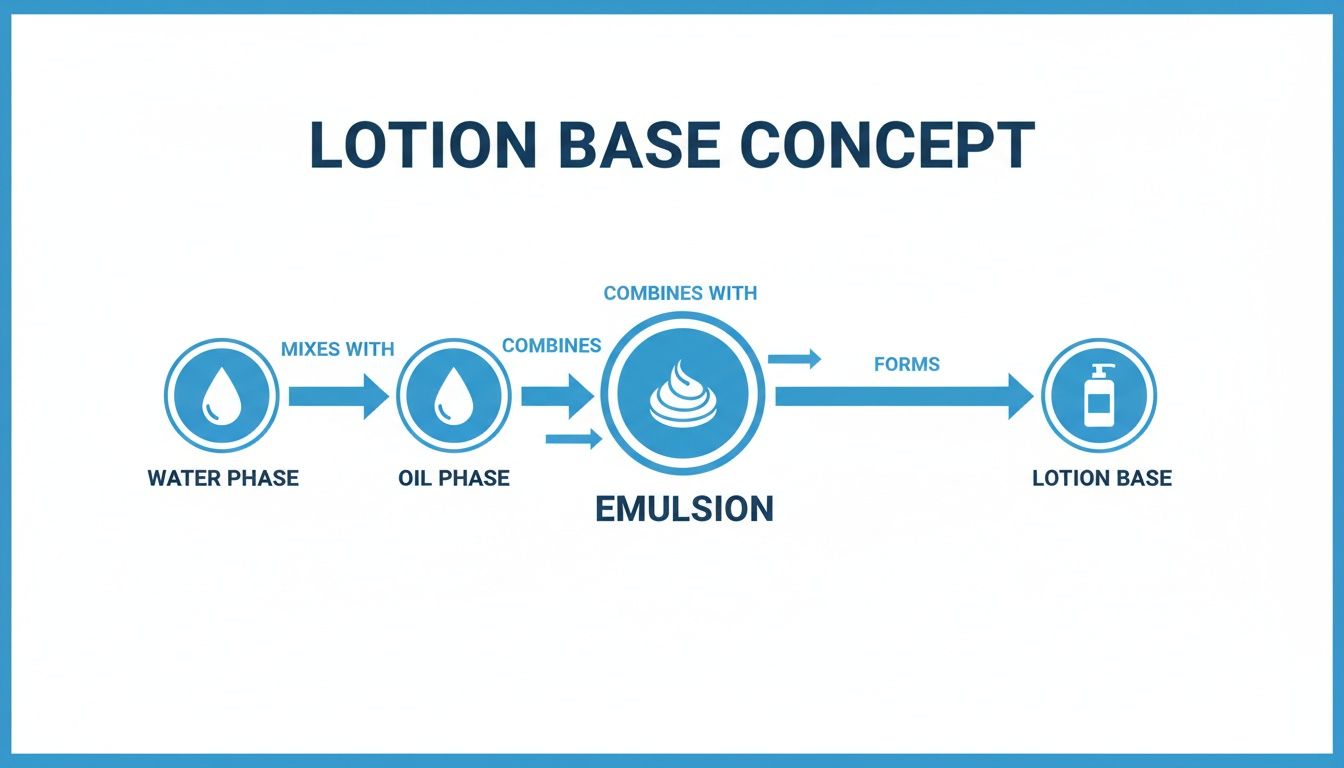
This fundamental equation—water plus oil equals emulsion—is the foundation every great lotion is built on. It’s what lets all these different moisturizing agents do their jobs in perfect harmony.
Humectants: The Water Magnets
First up, we have humectants. In our garden analogy, think of humectants as the morning dew that gathers moisture from the air to keep the plant's leaves hydrated. These ingredients are hygroscopic, a fancy way of saying they attract water molecules like little magnets.
When you put them on your skin, they pull moisture from the deeper layers (the dermis) up to the surface (the epidermis). If it’s humid, they can even grab moisture right out of the air! This whole process boosts the water content in your skin's outermost layer, making it look plump and feel hydrated.
Some common humectants you’ll see are:
- Glycerin: A true classic and the gold standard in skincare for a reason. It just works.
- Hyaluronic Acid: The superstar hydrator, famous for its mind-blowing ability to hold up to 1,000 times its weight in water.
- Honey: A natural option that not only moisturizes but also comes with other skin-beautifying properties.
- Aloe Vera: Known for its light, soothing hydration that feels amazing on the skin.
If you're curious about exploring more plant-based options, there's a whole world of natural humectants for skin that deliver fantastic moisture.
Emollients: The Skin Smoothers
Next on the team are the emollients. If humectants are watering the plant, emollients are like a conditioner for the leaves, making them soft and supple. Emollients are essentially oils and lipids that work by filling in the tiny gaps between your skin cells.
This simple action smooths out your skin's surface, improving its texture and making it more flexible. The end result? Skin that feels incredibly soft and looks much more even. Many emollients also have a bit of an occlusive side to them, which we’ll get to next.
A great way to picture this is to think of your skin's surface as a brick wall. The skin cells are the bricks, and natural lipids are the mortar holding them together. When that mortar gets worn down, emollients swoop in to fill the cracks, supporting your skin's barrier and giving it a smooth finish.
Popular emollients you’ll find in lotions include:
- Shea Butter: A rich, creamy butter that gives lotions that luxurious, cushiony feel.
- Jojoba Oil: This oil's structure is incredibly similar to your skin's own sebum, so it's readily accepted and non-greasy.
- Squalane: A lightweight champion that softens and smooths without any heavy feeling.
- Cocoa Butter: Famous for its rich texture and incredible ability to deeply condition the skin.
Occlusives: The Moisture Sealers
Last but not least, we have the occlusives. Back in our garden, occlusives are the layer of mulch you spread over the soil. They don't add water themselves, but they are masters at preventing the water that’s already there from escaping.
Occlusive ingredients form a physical barrier right on top of your skin. This barrier drastically reduces something called transepidermal water loss (TEWL), which is just the natural process of water evaporating from your skin. By locking in all that moisture from the humectants and the water already in your skin, occlusives are crucial for long-lasting hydration, especially if you live in a dry climate or have chronically dry skin.
Here are a few powerhouse occlusives:
- Petrolatum: One of the most effective occlusives out there, it can reduce water loss by over 98%.
- Beeswax: A natural wax that forms a protective yet breathable barrier on the skin.
- Dimethicone: A type of silicone that creates a silky, non-greasy seal.
- Lanolin: A deeply moisturizing substance that’s amazing for very dry or compromised-feeling skin.
A truly top-tier moisturizer never relies on just one of these specialists. It cleverly combines all three—humectants to draw in moisture, emollients to smooth the surface, and occlusives to lock it all in. That’s the balanced formula that leads to beautifully hydrated, healthy-looking skin.
Targeting Your Skincare Goals With Active Ingredients
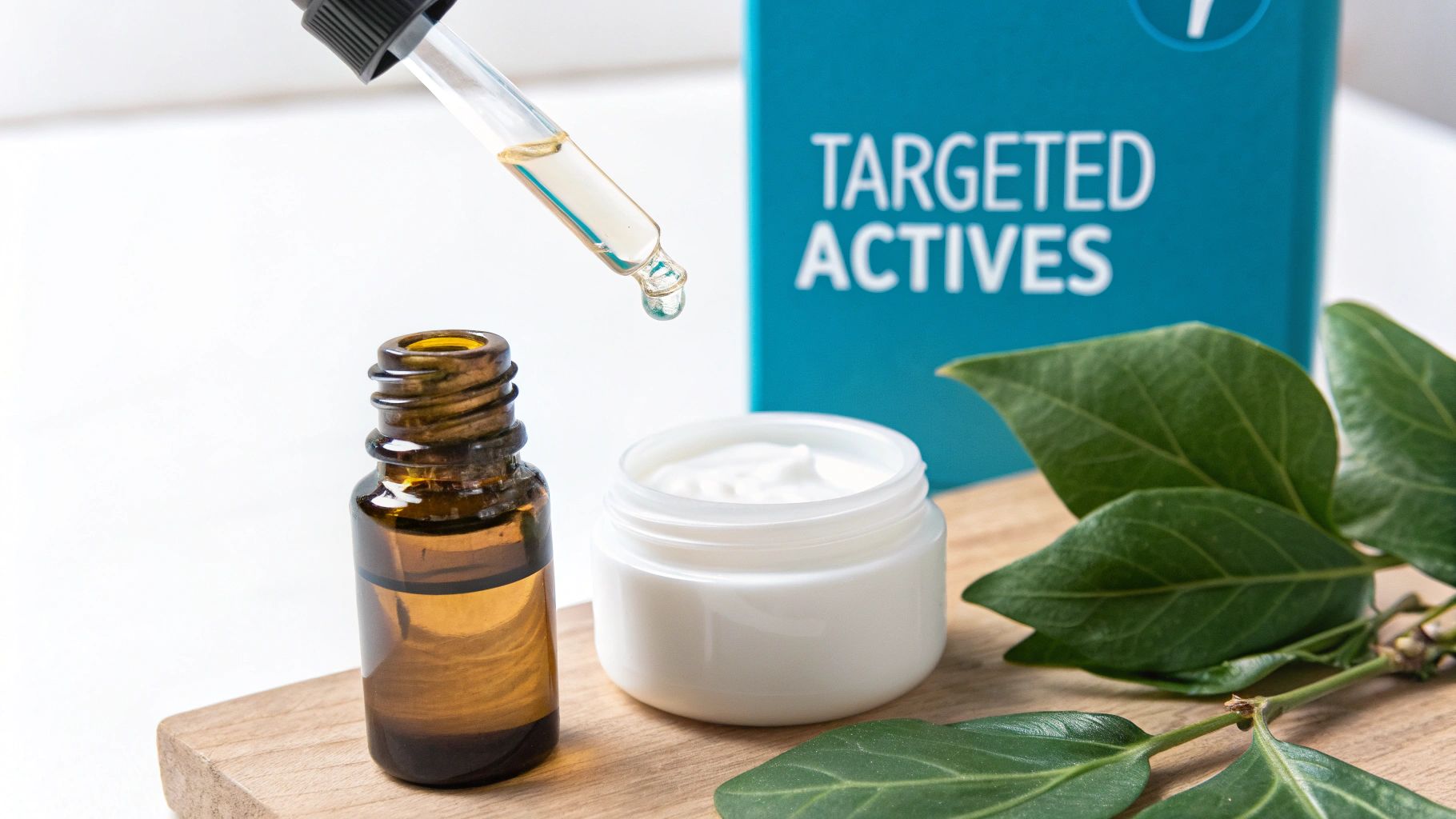
Once you’ve got your base of water, oils, and emulsifiers sorted, we get to the really exciting part: the active ingredients. These are the workhorses of any good lotion, the specific components added to tackle your unique skin concerns. If the base ingredients are the canvas, the actives are the vibrant paints that bring the masterpiece to life, giving each lotion its own personality and purpose.
This is where a formula goes from being a simple moisturizer to a targeted cosmetic. Whether you're hoping to soften the look of fine lines, encourage a firmer feel, or achieve a brighter, more even-toned complexion, the right actives are your best friends. They’re the reason one lotion is just a basic hydrator, while another becomes a can't-live-without part of your daily ritual.
Peptides: The Supportive Messengers
Think of peptides as tiny communicators for your skin. These amazing ingredients are short chains of amino acids—the very building blocks of essential proteins like collagen and elastin. When you apply them in a well-made lotion, they get to work sending signals that support your skin’s natural functions.
This gentle encouragement helps promote a firmer, smoother, and more youthful appearance. Instead of just sitting on top of the skin, peptides work behind the scenes to improve how your skin looks and feels. This makes them a go-to ingredient for anyone wanting to maintain their skin's natural resilience and bounce. If you're curious about combining them, our guide on powerhouse duos like Matrixyl 3000 and Argireline shows how they can team up for even better results.
Plant Stem Cells for a Revitalized Appearance
Plant stem cells are another fascinating group of active ingredients. Formulators harvest these from incredibly resilient plants and fruits that are known for their ability to thrive in harsh conditions. In skincare, extracts from these powerful stem cells are prized for their cosmetic benefits.
When they’re mixed into lotions, they help give your skin a revitalized and refreshed look. They're especially popular for helping reduce the visible signs of aging, like dullness and fine lines, leaving you with a complexion that looks brighter and more vibrant.
Botanical Extracts: Nature's Concentrates
Botanical extracts are potent ingredients derived straight from plants, flowers, and fruits. Each one brings its own unique set of properties to the table, offering a huge spectrum of benefits to beautify the skin. From the soothing touch of chamomile to the clarifying effects of green tea, these natural powerhouses can seriously elevate a lotion formula.
The move toward effective, nature-inspired ingredients isn't just a fleeting trend; it’s a full-blown global movement.
The active cosmetics market is absolutely booming, with projections showing a compound annual growth rate of 13.10% from 2024 to 2030. A massive chunk of this demand, over 36% of the global market share, comes from the Asia-Pacific region, where consumers have a strong preference for natural ingredients that support a radiant look.
This data clearly shows that people want targeted, high-performance actives that deliver real, visible results. As you explore natural ingredients, getting into the details of how they work, like with Jojoba Oil's pure benefits, can help you pick the perfect components for your own formulas.
Choosing Actives for Your Beauty Goals
Picking the right active ingredients is all about matching what they do with the results you want to see in the mirror. Once you understand their benefits, you can choose or create a lotion that’s perfectly aligned with your personal skincare philosophy.
Here’s a quick-glance table to help you connect common goals with the right actives:
| Your Beauty Goal | Potential Active Ingredients to Look For |
|---|---|
| Visibly diminish the appearance of fine lines | Peptides, Plant Stem Cell Extracts, Hyaluronic Acid |
| Improve the look of skin firmness and bounce | Peptides like Matrixyl 3000, DMAE |
| Achieve a brighter, more even-toned look | Niacinamide (Vitamin B3), Vitamin C Esters, Licorice Root Extract |
| Soothe and calm the appearance of skin | Aloe Vera, Chamomile Extract, Allantoin |
| Refine skin texture for a smoother feel | Alpha Hydroxy Acids (AHAs) like Glycolic Acid (use with care), Niacinamide |
By carefully choosing these high-performance ingredients, you can turn a simple moisturizer into a targeted solution that helps you put your best face forward. Whether you're buying a product off the shelf or making your own, understanding these actives empowers you to take control of your skincare and get the beautiful results you’re looking for.
The Unsung Heroes That Make Your Lotion Work
While the high-performance actives tend to get all the glory, a truly great lotion is a team effort. It relies on a whole cast of hardworking background players—the unsung heroes that make sure your product is safe, stable, and feels absolutely wonderful to use. Without them, even the most expensive active ingredients wouldn't stand a chance.
Think of it like the stage crew for a big Broadway show. You might only be focused on the star actors, but without the lighting, sound, and set changes happening flawlessly in the background, the entire production would fall apart. These functional ingredients are just as vital for making your lotion effective and a joy to use.
Preservatives: The Essential Safety Guards
Let's clear up a common misconception right away: preservatives are not scary chemicals you need to avoid. They are your essential safety agents. Any product that contains water—which is the main ingredient in most lotions—is a potential playground for bacteria, mold, and yeast.
Preservatives are non-negotiable for safety. Their one and only job is to stop microbial growth, keeping your lotion fresh, safe, and effective from the first pump to the very last. Using a water-based lotion without a proper preservative system is like leaving a carton of milk on the counter for a week—it’s just not a good idea. To really get into the weeds on this, you can explore our detailed information on natural skin care preservatives.
pH Adjusters: For Perfect Balance
Have you ever used a lotion that just felt a little... off? Maybe even a bit harsh? The culprit could have easily been its pH level. Your skin has a naturally acidic surface, usually sitting somewhere between a pH of 4.5 and 5.5. A well-formulated lotion works hard to match this level as closely as possible.
Getting the pH right is critical for two big reasons:
- Skin Comfort: A product with a pH that’s too high (alkaline) or too low (acidic) can disrupt your skin's natural barrier, leading to that tight, dry, or sensitive feeling.
- Formula Stability: Many ingredients, including some actives and preservatives, only work their magic within a very specific pH range. If the pH is off, a perfectly good formula can separate or lose its power.
Formulators use ingredients like citric acid (to lower pH) or sodium hydroxide (to raise it) in tiny, precise amounts to strike this perfect balance, ensuring the product feels great and actually does what it promises.
Thickeners and Texture Enhancers
The final group of unsung heroes is the ingredients that perfect your lotion’s texture and feel. These are the components that control the viscosity (how thick or thin it is) and the slip (how it glides across your skin). They are the artists responsible for that luxurious, creamy feel we all love.
Think of a thickener like cornstarch in a gravy. Just a small amount can transform a watery liquid into a rich, velvety sauce. In lotions, ingredients like Xanthan Gum or Cetyl Alcohol do the exact same thing, turning a basic emulsion into a product that feels elegant and substantial.
These functional ingredients are becoming more important than ever as people demand more from their body care. The global body lotion market, currently valued at USD 15.42 billion, is expected to skyrocket to USD 21.96 billion. This massive growth is fueled by a trend called 'skinification,' where body products are held to the same high standards as facial skincare. This is perfectly captured by a 68% year-over-year jump in searches for collagen body lotion, showing just how much people care about the ingredients in their products. You can discover more insights about body care market trends.
Together, these functional ingredients—preservatives, pH adjusters, and thickeners—work in beautiful harmony. They ensure the final product is not only effective but also safe, stable, and a true pleasure to use, allowing those star active ingredients to really shine.
How to Read a Lotion Label Like a Pro
Ever turn over a lotion bottle and feel like you’re trying to read a foreign language? With all those long, scientific-looking names and super tiny print, it's easy to just give up and hope for the best. But learning how to read that label is probably the most powerful skill you can have in your skincare arsenal. It transforms you from a confused shopper into a confident, savvy consumer.
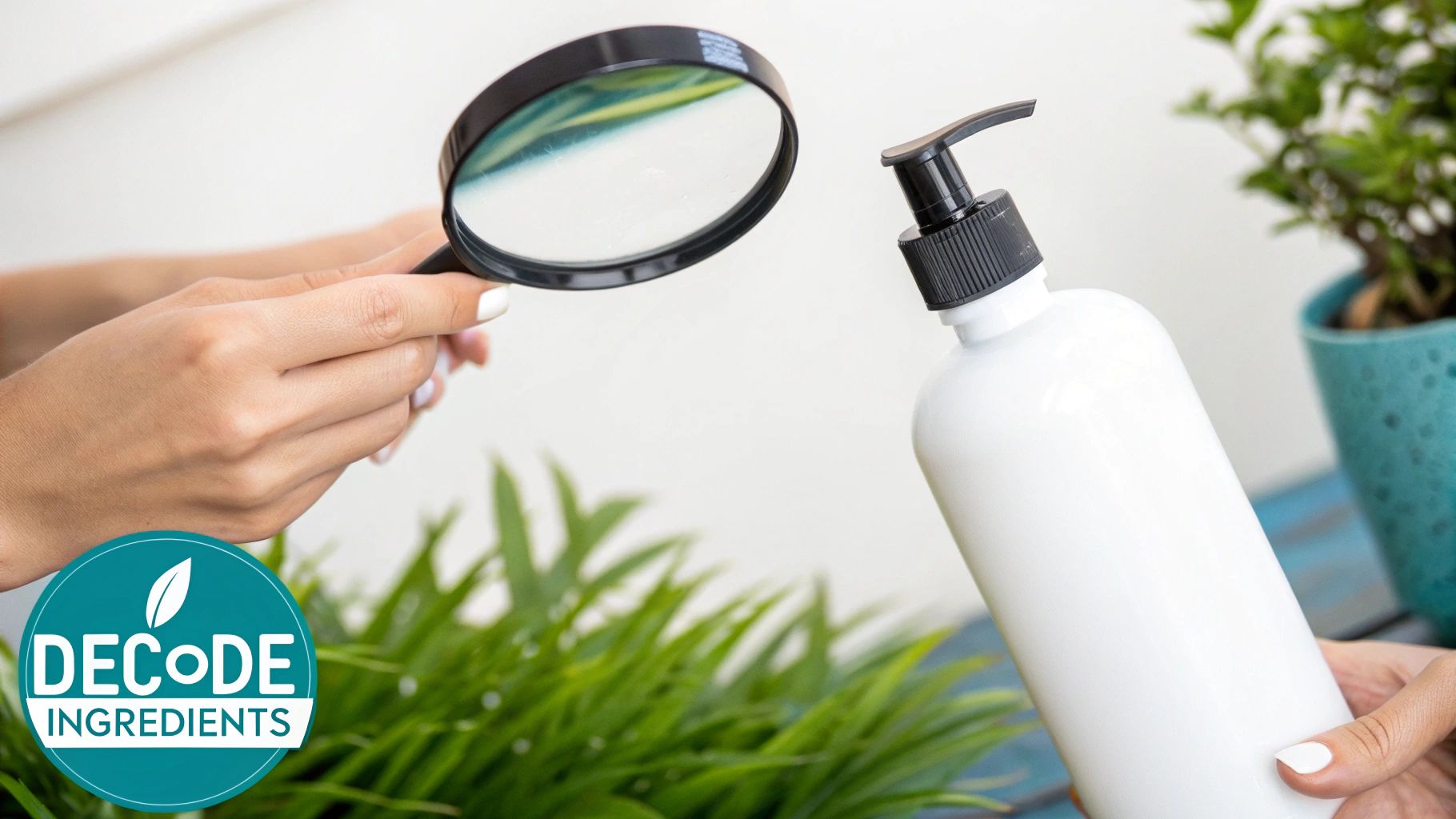
The great news? There's one simple, universal rule that makes it all click into place. Ingredients are always listed in descending order of concentration, from the highest amount down to the lowest. This one rule is your secret key to understanding what’s really inside that bottle.
The Power of the First Five Ingredients
Because of that descending order rule, the first five ingredients on the list usually make up the bulk of the entire formula—we're talking 80% or more. This is the product's foundation, its core personality. Paying close attention to what’s at the top of the list tells you what the lotion is truly all about.
Is Aqua (water) the first ingredient? That tells you it’s a water-based, hydrating product. Do you see Shea Butter (Butyrospermum Parkii) or Jojoba Oil (Simmondsia Chinensis) right near the top? That’s a clear signal you’re holding a rich, emollient formula designed to soften and smooth your skin.
By focusing on just the first five ingredients, you can quickly get a feel for a lotion's main purpose and texture. If that "hero" ingredient you're so excited about is buried at the very bottom of the list, it means there's only a tiny amount of it in the formula.
Understanding ingredient order helps you manage your expectations and see if a product’s claims actually match its formulation. For a deeper dive, check out our guide on how to read a skincare label.
A Trusted Resource for Ingredient Transparency
Even when you know the rules, some ingredient names can still be a head-scratcher. That’s where independent resources become your best friend. The Environmental Working Group (EWG) is a fantastic non-profit organization focused on consumer education and transparency in the personal care industry.
The EWG's Skin Deep® database is an amazing online tool where you can look up thousands of individual ingredients and products. Each one is given a hazard score based on available scientific research, helping you make informed decisions about what you’re putting on your skin.
For an even easier approach, keep an eye out for the EWG VERIFIED™ mark on packaging. This seal means the product meets the EWG's strictest standards for ingredient safety and transparency. It’s a quick, at-a-glance way to know a product is formulated to avoid ingredients of concern, empowering you to choose products that align with your personal standards for clean, effective skincare.
Choosing the Right Ingredients for Your Skin Type
Figuring out the different ingredients in a lotion is your secret weapon for finding or making a formula that feels like it was custom-blended just for you. Every skin type has its own quirks and needs, and picking the right stuff can make all the difference. Whether you're staring down a store aisle or getting ready to mix up your own creation, this knowledge is power.
It lets you move past the one-size-fits-all products and find a moisturizer that truly gets your skin. Think of it like being your own skincare chef—you get to pick the perfect recipe for a glowing, happy complexion.
Formulating for Drier Skin
For skin that often feels tight, looks flaky, or just craves moisture, the game plan is to go rich and nourishing. You want ingredients that deliver lasting softness and a smooth, comfortable feel. The goal is to wrap your skin in a comforting blanket of moisture that leaves it looking supple and deeply conditioned.
Look for formulas that are heavy on these types of ingredients:
- Emollients: Things like Shea Butter and Cocoa Butter are fantastic choices. They have a thicker, richer consistency that helps smooth the skin’s surface, giving it that soft, velvety texture we all love.
- Occlusives: Natural waxes like Beeswax are great for sealing in all that good moisture. They create a light, protective layer that keeps your skin feeling comfortable all day long.
- Nourishing Oils: Oils such as Avocado Oil and Jojoba Oil are prized for their conditioning properties, and they really boost a lotion's ability to beautify and pamper dry skin.
Selecting Ingredients for Oily or Combination Skin
If your skin tends to get shiny or is prone to blemishes, the key is to find lightweight ingredients that hydrate without feeling heavy or greasy. The perfect lotion for this skin type should sink in fast and leave behind a clean, fresh finish.
A common mistake people with oily skin make is skipping moisturizer altogether. But here's the thing: well-hydrated skin often looks more balanced and less oily. The trick is using the right kind of moisture—something light, non-greasy, and quick to absorb.
Here’s what you should be looking for:
- Lightweight Humectants: Hyaluronic Acid and Glycerin are absolute superstars here. They pull moisture into the skin without adding a drop of oiliness, resulting in a plump, hydrated look.
- Non-Greasy Oils: Go for oils known for their light-as-air texture, like Grapeseed Oil or Squalane. These absorb in a flash and won't leave you with a slick residue.
- Balancing Extracts: Ingredients like Green Tea Extract can be a wonderful addition to help give the skin a refreshed, balanced appearance.
Ingredients for Mature Skin Appearance
For skin that’s starting to show visible signs of aging, like a loss of firmness or the appearance of fine lines, you'll want to bring in the heavy hitters. Performance-driven active ingredients are crucial for promoting a more youthful and revitalized look.
- Peptides: Think of something like Matrixyl 3000 as a helpful messenger that encourages a firmer, smoother-looking complexion.
- Antioxidants: Ingredients like Vitamin C Esters are brilliant for brightening the look of skin and promoting a more even, radiant tone.
- Plant Stem Cells: These specialized extracts are highly valued for their ability to give skin a refreshed, vibrant, and more youthful appearance.
At Skin Perfection, we've got a huge array of DIY lotion-making supplies to help you get started on your formulation journey. From rich butters for dry skin to powerful peptides for mature skin, you can find everything you need to create your perfect match.
Got Questions About Lotion Ingredients? Let's Talk.
Diving into the world of lotion ingredients can feel a little overwhelming at first. As you get more comfortable reading labels and figuring out what's what, you'll notice a few questions pop up time and time again. Let's get them answered.
Are Preservatives Really Necessary?
Yes, they are absolutely essential in any product that contains water. Think of water as a playground for bacteria, mold, and yeast. Preservatives are the security guards that keep those unwanted microbes out, making sure your lotion stays safe and effective from the first pump to the last drop. Without them, you’d have a science experiment, not skincare.
Fragrance Versus Essential Oils: What's the Difference?
This is a big one, and it really comes down to transparency and where the scent comes from.
- Fragrance/Parfum: This is a catch-all term for a proprietary blend of scent chemicals. Companies aren't required to list the individual components, so you never really know what's inside.
- Essential Oils: These are powerful, aromatic compounds that come directly from plants. You'll see them listed by their specific botanical name, like Lavandula Angustifolia (Lavender) Oil.
Just because essential oils are natural doesn't mean they're always gentle. They are highly concentrated and can be irritating for some. If you have sensitive skin, your safest bet is often a product that is completely fragrance-free.
Why Does the Order of Ingredients Matter So Much?
The order of ingredients on a label is your most powerful tool for understanding a formula. It's a non-negotiable industry standard: ingredients are listed from the highest concentration to the lowest.
This is huge. The first five or six ingredients on the list usually make up the bulk of the product. This gives you a clear picture of what the lotion is really made of and helps you set your expectations.
If you see a powerhouse active ingredient listed way down at the bottom, you know it's only present in a tiny amount. This helps you judge the product's true value and decide if it’s likely to deliver on its promises.
Ready to create a lotion perfectly suited to your skin's needs? At Skin Perfection, we offer a wide range of high-quality, performance-driven ingredients and DIY supplies to help you on your formulation journey. Explore our collection and start crafting your ideal skincare solution today at https://www.naturalorganicskincare.com.