

 Buy with Prime
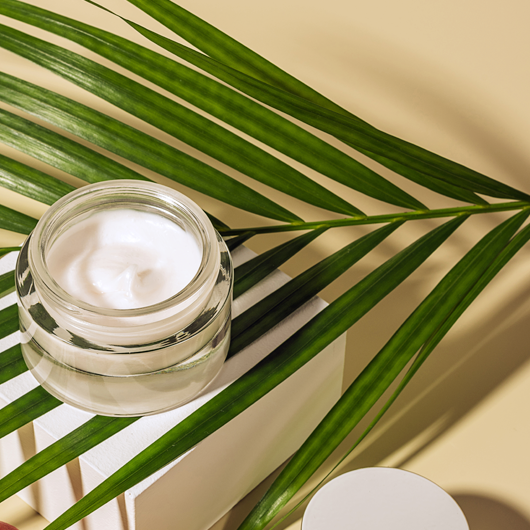


You're standing in front of two jars. One is filled with grape extract, shea-derived ingredients, soybean derivatives, and a long botanical story. The other highlights a synthetic retinoid and a shorter ingredient list. Both sit at a similar price, both promise smoother-looking skin, and neither label tells you immediately which formula will suit your face.
Choosing a natural anti aging cream isn't a contest to find the most exotic plant or the strongest-sounding active. The useful questions are more practical: What does the ingredient do, how much of it is present, can the vehicle keep it stable, and will your skin tolerate the routine? A well-designed cream can be a sensible choice, but the word “natural” alone can't answer those questions.
Table of Contents
- Starting Your Search for a Natural Anti Aging Cream
- What Natural Actually Means in Anti Aging Skincare
- Key Plant-Derived Actives Worth Knowing
- Peptides and Stem Cell Tech in Natural Formulas
- Matching a Natural Cream to Your Skin Type
- Reading Labels With FDA and EWG in Mind
- Application Habits That Make the Cream Work
- Bringing It All Together at the Shelf
Starting Your Search for a Natural Anti Aging Cream
Start with three filters: ingredient philosophy, formulation strength, and daily routine fit. Ingredient philosophy asks whether you prefer botanical extracts, naturally derived materials, fermentation-based ingredients, or a formula that also includes synthetic peptides and preservatives. Formulation strength asks whether the product discloses meaningful active levels and uses packaging that protects sensitive ingredients. Routine fit covers texture, fragrance, layering, frequency, and whether you'll use it consistently.
The front of the jar is a quick introduction, not a formulation analysis. “Botanical,” “clean,” and “plant-powered” may describe a thoughtful formula, but they don't reveal whether an extract appears in a useful amount. A retinoid formula may be more evidence-backed for certain visible concerns, while a botanical cream may better match someone who prioritizes a particular ingredient philosophy or wants a gentler-feeling moisturizer. Neither choice is automatically right for every person.

The three questions that narrow the shelf
Ask these questions before comparing claims:
- What is my priority? Dryness, uneven-looking tone, dullness, visible lines, or comfort may require different formula features.
- What can my skin tolerate? Fragrance, essential oils, exfoliating acids, rich oils, and concentrated actives can all change the experience.
- What will I use? A beautifully engineered cream doesn't help if its texture makes you skip applications.
Botanicals have become a durable part of the category, not a passing decoration. A peer-reviewed review found botanical preparations in 63.8% of anti-aging cosmetic products in 2011 and 73.8% in 2018, with 106 species used in 2011 and 96 in 2018. The authors described the change as a 16% increase over seven years. (Peer-reviewed review of botanical ingredients in anti-aging cosmetics)
For more targeted shopping guidance, compare your needs with this resource on the best natural face cream for mature skin. Then read the ingredient list as a formulator would, rather than treating a botanical count as proof of performance.
What Natural Actually Means in Anti Aging Skincare
“Natural” has several meanings in everyday skincare conversation. It might refer to an ingredient extracted from a plant, a material made from a natural starting substance and heavily processed, or a formula that avoids certain synthetic ingredients. The FDA doesn't define or certify “natural” for cosmetic labeling, so the term isn't a universal quality seal. (FDA guidance on cosmetic labeling claims)
A useful mental model has three layers. Source tells you where the material began. Processing tells you how it was purified, modified, or stabilized. Function tells you what it contributes to the cream. This prevents a common mistake, assuming a plant source automatically makes an ingredient safer, stronger, or more sustainable.

| Category | Source | Typical Examples |
|---|---|---|
| Naturally derived | Plant, mineral, or fermentation starting material, often purified or processed | Shea-derived emollients, soybean derivatives, fermented hyaluronic acid |
| Nature-identical | Laboratory-made version of a molecule found in nature | A synthesized molecule matching a plant-derived compound |
| Synthetic functional ingredient | Produced through controlled manufacturing for a defined cosmetic role | Preservatives, stabilizers, many peptides |
| Botanical extract | Plant material prepared as an extract, infusion, or standardized concentrate | Grape, ginseng, edelweiss, centella asiatica |
| Cell-derived technology | Plant-derived culture material or extract, not living cells in the cream | Apple, grape, or edelweiss stem-cell extracts |
Read “natural” as a description, not a verdict
A botanical extract can add antioxidant compounds, color, scent, or marketing appeal. Its value depends on the plant, extraction method, standardization, stability, and dose. A peptide can be synthetically produced yet have a clearly defined cosmetic purpose. A preservative can be essential for keeping a water-based cream microbiologically safe, even if it isn't botanical.
The same logic applies to hydration ingredients. Sodium Hyaluronate Powder Pure Hyaluronic Acid is described as a cosmetic-grade powder with a stated molecular weight of 800–1500 Daltons, suitable for typical DIY serum concentrations of 0.1–2%. Those details tell you more about how the material can be formulated than the word “natural” would.
For a broader explanation of ingredient language, see what clean beauty means. The practical takeaway is simple: judge the complete formula, not the origin story of one ingredient.
Key Plant-Derived Actives Worth Knowing
Plant-derived actives work best as a toolkit. One may support antioxidant protection, another may improve the feel of hydration, and a third may help the formula address the appearance of uneven tone. The label should show a coherent combination rather than a collection of trace extracts placed together for storytelling.
Bakuchiol is commonly positioned as a retinol alternative. It's useful to treat it as a distinct active, not as botanical retinol, because its chemistry and evidence base aren't identical to retinoids. Look for a disclosed concentration and a stable cream or serum vehicle. The broader evidence base for bakuchiol remains thinner than for established staples such as retinoids, vitamin C, niacinamide, and mineral sunscreen. (Recent expert guidance on supported anti-aging ingredients)
Vitamin C derivatives can be easier to formulate than pure ascorbic acid. Sodium ascorbyl phosphate appeared in a clinical cosmetic formula alongside botanical extracts, tocopherol, peptides, and retinyl palmitate. That study supports a multi-active strategy, but it doesn't establish that every cream containing the same ingredient will perform identically. (Clinical study of a cosmetic product combining natural extracts and peptides)
Niacinamide is best understood as a versatile barrier and tone-support ingredient rather than a botanical extract. Resveratrol, associated with grape and knotweed sources, is a polyphenol used for antioxidant positioning. Fermentation-derived hyaluronic acid and sodium hyaluronate primarily support water retention and surface feel. Their usefulness depends on molecular form, concentration, and whether the rest of the cream prevents water from evaporating.
| Active | Primary Action | Effective Range |
|---|---|---|
| Bakuchiol | Retinol-alternative positioning and smoother-looking texture | Choose a product with a disclosed level and tolerance guidance |
| Sodium ascorbyl phosphate | Antioxidant support and brightening-oriented formulation | Judge by disclosed concentration, pH, and stability |
| Tetrahexyldecyl ascorbate | Oil-soluble vitamin C derivative for antioxidant-focused formulas | Judge by disclosed concentration and oil-phase stability |
| Niacinamide | Barrier support and more even-looking tone | Look for a clearly disclosed percentage and compatible formula |
| Resveratrol | Polyphenol antioxidant support | Look for protected packaging and a stable vehicle |
| Hyaluronic acid or sodium hyaluronate | Humectant hydration and a plumper surface feel | Common DIY guidance for sodium hyaluronate is 0.1–2% when stated by the supplier |
Concentration ranges shouldn't be treated as guarantees. A useful level in a stable emulsion can be more meaningful than a higher level that degrades, separates, or irritates. For additional context on the biology behind visible firmness, explore how to improve skin elasticity, then compare the ingredient's role with the finished product's full vehicle.
A botanical ingredient guide can also help you assess the best natural ingredients for skin. Focus on identity, amount, stability, and compatibility, in that order.
Peptides and Stem Cell Tech in Natural Formulas
A cream may feature plant extracts on the front label and peptides in the ingredient list. Those materials can share one formula, but they contribute in different ways. Signaling peptides are short chains formulated to support the appearance of firmness or soften the look of lines. Matrixyl-type peptides, copper peptides, and argireline are familiar examples, with different mechanisms and formulation requirements. Even when a brand calls the formula natural, peptides are generally manufactured ingredients.
Plant stem-cell extracts belong to another category. Edelweiss, apple, and grape stem-cell ingredients are extracts or culture-derived materials, not living human stem cells growing in a jar. Formulators usually include them for antioxidant, conditioning, or longevity-oriented positioning. Human growth-factor products should be assessed separately rather than grouped with plant botanicals.
| Ingredient Family | Mechanism | Typical Concentration | Best Vehicle | Realistic Result |
|---|---|---|---|---|
| Signaling peptides | Cosmetic signaling support for the appearance of firmness and lines | Follow the supplier's tested range | Serum or light emulsion | Smoother-looking texture with consistent use |
| Carrier peptides | Help transport or associate with other materials | Follow supplier documentation | Serum or emulsion | Depends heavily on the paired ingredient |
| Enzyme-inhibiting peptides | Designed to influence specific cosmetic pathways | Follow supplier documentation | Stable cream or serum | Targeted appearance benefits, not a universal effect |
| Plant stem-cell extracts | Antioxidant and conditioning support | Extract-dependent | Cream or serum | Comfort, radiance, and resilience-oriented benefits |
| Botanical antioxidants | Help support the formula against oxidative stress | Extract-dependent | Protected emulsion or serum | More even-looking, refreshed appearance |
Delivery decides whether the story survives
Ingredient identity is only one part of performance. A peptide can be costly yet contribute little if unsuitable pH, repeated air exposure, or weak preservation reduces its stability. A plant extract may suit the oil phase, while a water-based botanical needs another stabilization approach. Serums give targeted ingredients a lighter vehicle; creams add emollients and occlusives that improve comfort and reduce water loss.
A peer-reviewed clinical study tested a cosmetic anti-ageing formula containing botanical extracts, antioxidants, peptides, and retinyl palmitate, and reported measurable improvement in photoaged skin. That finding supports combining complementary actives in a finished formula. It does not show that every peptide and botanical blend will perform similarly. For a closer look at specific options, read our guide to the best peptides for anti-aging. For a separate explanation of how peptide claims are commonly discussed, see real peptide therapy results explained.
Look for the vehicle around the active. Antioxidants may pair well with barrier-supportive emollients, while several strong actives can raise irritation risk when layered together. A peptide and botanical extract do not automatically create a compounded benefit. Incompatible pH, solvents, or preservation choices can weaken either ingredient, so the label should be read as a formulation, not a collection of impressive names.
Matching a Natural Cream to Your Skin Type
Your skin profile should determine the vehicle, not just the ingredient list. A dry-skin cream and an oily-skin cream may contain the same antioxidant, but their water phase, oil phase, humectants, and occlusives can make them feel and perform very differently.

Use texture as a formulation clue
Dry skin usually benefits from a richer emulsion containing humectants, squalane, ceramide-supporting lipids, and occlusive materials such as shea butter. Hyaluronic acid can attract water, but it needs a surrounding formula that slows evaporation. A light gel on dry skin may feel refreshing at first and then leave the surface tight.
Oily or acne-prone skin often suits a gel-cream or light emulsion. Jojoba is commonly chosen as a lighter-feeling plant oil, while niacinamide or bakuchiol may fit a routine better than a heavy balm. “Non-comedogenic” can be useful context, but it shouldn't replace observing how your own skin responds.
Sensitive or rosacea-prone skin calls for a shorter, fragrance-free formula with minimal essential oils. Centella asiatica, oat-derived ingredients, and panthenol may be more comfortable choices than a crowded blend of fragrant botanicals. Keep exfoliating acids conservative and introduce one new active at a time.
Mature skin often needs both water and oil management. A cream with peptides, antioxidants, a retinol alternative, and richer emollients may provide a comfortable base, but the best combination is the one you can use without persistent stinging or peeling.
Adjust the choice to the environment
Use this checklist before committing:
- Patch test first: Apply a small amount to a limited area and watch for discomfort before using it broadly.
- Check the finish: A balm may be pleasant in dry air and excessive in humid weather.
- Consider layering: A water-light serum under a cream can work better than forcing one heavy product to perform every role.
- Review the pH context: Acidic vitamin C products and exfoliating formulas need more careful pairing than a basic moisturizer.
- Change gradually: Introduce one new product so you can identify the source of a reaction.
The same natural anti aging cream can feel nourishing in an arid climate and greasy in humidity. Skin type is a starting point, not a permanent label.
Reading Labels With FDA and EWG in Mind
Natural doesn't automatically mean safer, more stable, or more effective. The FDA says cosmetic labels don't require premarket FDA approval, but claims must be truthful and not misleading. If a product claims to treat or prevent disease or affect the structure or function of the body, including skin, it may be regulated as a drug and must meet drug requirements. (FDA explanation of cosmetic and drug claims)
For retail cosmetics, FDA labeling rules require an ingredient declaration, a product name and identity statement on the principal display panel, and an accurate net quantity. Cosmetics also must not be labeled or advertised as FDA approved, and the FDA says it has no list of approved or accepted cosmetic claims. (FDA summary of cosmetic labeling requirements) (FDA regulations on cosmetic claims)

Scan the ingredient deck in a fixed order
Start with the first five ingredients. They often reveal whether the product is primarily water-and-humectant based, oil-rich, silicone-supported, or built around a gel structure. Then locate the featured active and ask whether its position, disclosed percentage, and stability requirements make sense.
Look for:
- Recognizable INCI names: A transparent list lets you investigate individual materials.
- Fragrance disclosure: Fragrance and essential oils may matter if your skin reacts easily.
- Active concentration information: A proprietary blend that hides amounts makes comparison difficult.
- Packaging suitability: Light- or oxygen-sensitive ingredients need protection.
- Claim precision: “Supports hydration” is more specific than “reverses aging.”
EWG Skin Deep and EWG Verified can offer additional ingredient and transparency context, but a database score isn't a substitute for understanding the finished formula. Use EWG Verified skincare brands as a starting point, then inspect the complete INCI list yourself.
Claims such as “chemical-free” are scientifically misleading because every ingredient is a chemical substance. “Toxin-free” also needs context. Etsy separately prohibits explicit or implied claims that a product treats, mitigates, diagnoses, or cures serious medical conditions, acts like certain drug categories, matches a prescription drug, or is FDA approved, regardless of accuracy or legality. (Etsy medical claims policy)
Application Habits That Make the Cream Work
A well-made cream still needs the right application conditions. Begin with clean, slightly damp skin if the formula relies on humectants. Dampness gives water-binding ingredients something to work with, while the cream's emollients and occlusives help reduce the feeling of dryness afterward.

Use a pea-sized amount for the face unless the product directions say otherwise. Warm it between your fingertips, then press and smooth it over the skin instead of dragging aggressively. Pressing won't force an ingredient through the skin, but it can help you distribute the product evenly with less tugging.
Practical rule: Give each layer a moment to settle before adding the next one. If the cream pills, reduce the amount or simplify the layers before blaming the active.
Separate daytime protection from nighttime actives
A morning routine generally benefits from antioxidant support followed by sunscreen. At night, you may choose a richer cream or a retinol alternative, depending on the formula and your tolerance. Apply once daily when introducing a new active, then follow the product's directions rather than assuming more frequent use will bring faster visible change.
Avoid stacking several exfoliating acids in the same routine. Also be cautious when combining vitamin C derivatives, peptides, exfoliants, and retinol alternatives without checking the manufacturer's compatibility guidance. The problem isn't that these ingredients are universally incompatible. It's that pH, solvent, stability, and irritation load can change when multiple products meet on the skin.
Consistent habits matter more than an elaborate shelf. Use a gentle cleanser, apply products in a sensible order, and wear daily SPF in the morning. Sleep position and overall routine consistency can also influence how your skin looks over time, while a cream alone can't offset ongoing environmental exposure.
Bringing It All Together at the Shelf
Use this quick formulation check before buying:
- Match the active to one priority. Choose hydration, antioxidant support, tone, texture, or comfort instead of chasing every claim.
- Look for transparency. A disclosed concentration is more useful than a long botanical paragraph with no amounts.
- Inspect the vehicle. Dry skin may prefer a richer emulsion, while oily skin may suit a lighter gel-cream.
- Check stability clues. Packaging, pH, preservation, and the ingredient's sensitivity all affect what reaches the skin.
- Read the whole INCI list. The first ingredients establish the formula's character, while the featured active's position provides useful context.
- Reject miracle language. A precise cosmetic claim is easier to evaluate than a promise to transform every sign of aging.
The same botanical extract can behave differently in a water-light gel, a conventional emulsion, or an oil-rich balm. Peptides and plant stem-cell extracts also earn their place through appropriate concentration, compatible processing, and stable delivery, not through the prestige of their names. A natural anti aging cream is worth considering when you can identify its specific job, understand its limitations, and fit it comfortably into your routine.
The most useful jar is the one whose ingredient deck you can read without guesswork. Choose the formula that matches your skin, values, and application habits, then give it consistent use instead of switching products whenever a new claim appears.
Skin Perfection offers natural and organic skincare products, facial care, moisturizers, serums, and lotion-making supplies for buyers and formulators who want to evaluate plant-derived ingredients, peptides, and hydration materials more closely. Visit Skin Perfection to explore ready-made skincare and DIY formulation supplies with clearer ingredient-focused choices.