

 Buy with Prime


When you're navigating the world of organic skincare for sensitive skin, the best place to start is almost always with a simple, gentle routine. The goal is to find products that really support your skin's natural harmony with calming, plant-based ingredients, while totally avoiding common triggers like synthetic fragrances and harsh chemicals.
Embracing a Gentle Approach for Your Sensitive Skin

If you have sensitive skin, you know that feeling of standing in a skincare aisle, completely overwhelmed by the endless options and confusing ingredient lists. It's so easy to fall into the trap of thinking your skin is a "problem" that needs to be managed.
But what if you shifted your perspective? Think of your skin not as difficult, but as highly communicative. It’s just really, really good at telling you what it doesn’t like.
This ongoing dialogue is your best guide. How your skin reacts to fragrances, aggressive chemicals, or even a change in the weather is all valuable feedback. Listening to it is the first real step toward a routine that helps your skin not only look its best but feel its best, too.
The Less Is More Philosophy
A complicated, 10-step routine isn't automatically better, especially for reactive skin. In fact, layering on too many products with powerful actives can sometimes just overwhelm your skin, leaving it feeling even more sensitive than when you started.
That’s where the "less is more" philosophy comes in. It’s all about stripping back your routine to focus on a few essential, high-quality products that offer gentle, consistent support.
This minimalist mindset lines up perfectly with the principles of organic skincare. By choosing ingredients grown without synthetic pesticides or fertilizers, you're taking a simpler, more direct path to nurturing your skin. It’s a lot like picking a wholesome, home-cooked meal over something highly processed; you know exactly what you're getting, and the focus is on pure, nourishing components.
"I often remind my patients that more isn’t always better. The optimal simplified skin-care routine is one that supports your skin’s natural barrier while addressing your core needs and nothing more."
This expert insight really gets to the heart of it for sensitive complexions: an effective routine doesn't need to be complicated. Just a few carefully chosen products can deliver incredible results.
What Does Sensitive Skin Really Mean?
The term "sensitive skin" isn't a formal medical diagnosis. It's more of a description for skin that's prone to reacting to different things. These reactions can show up in a few different ways, and figuring out your personal triggers is the key to finding a routine that finally works for you.
Common signs of sensitive skin include:
- A tendency toward redness: This might pop up after using certain products or from a simple change in temperature.
- Feelings of discomfort: Your skin might feel tight, itchy, or have a stinging sensation when you apply certain ingredients.
- Visible reactions: You might notice dryness, flakiness, or tiny bumps in response to a new product or an environmental shift.
Instead of fighting these responses, a gentle skincare journey is about working with your skin. The aim is to build a supportive routine that keeps it comfortable and brings out its natural radiance. By choosing organic skincare for sensitive skin, you’re starting on a path of conscious care, one that helps you feel confident and in control of how your skin looks and feels.
Why Choose Organic Ingredients for Your Skincare
When your skin is on the sensitive side, every single thing you put on it matters. Choosing organic ingredients isn't just about jumping on a trend; it's a shift toward a gentler, more thoughtful way of caring for your complexion. Think of it as pure nourishment.
It’s the same logic you’d use when picking out produce at the grocery store. You go for organic fruits and veggies because they’re grown with minimal intervention, and you want that same purity for your skin. Organic ingredients come from plants grown without synthetic pesticides, herbicides, or GMOs, keeping their natural goodness intact for a simple, straightforward skincare routine.
This dedication to purity means you're dodging a lot of the synthetic additives that can spell trouble for reactive skin. Instead of a long list of confusing chemicals, you get recognizable, plant-based ingredients that feel safe and comforting.
The Power of Purity and Transparency
Opting for organic skincare is a conscious choice to know exactly what's going on your body. The entire process, from farm to bottle, involves as little chemical meddling as possible, which helps preserve the integrity and power of the botanicals.
And this isn't some niche movement anymore. The global organic skincare market is expected to hit a massive USD 21.8 billion by 2026. That kind of growth shows a huge collective pivot toward natural, sustainable beauty that truly supports the skin.
When you grab a product packed with organic ingredients, you're choosing a formula that puts earth-grown goodness first. That alone can bring a real sense of confidence and peace to your daily ritual.
Choosing products with ingredients you can pronounce and recognize is an empowering first step. It transforms your skincare routine from a guessing game into an intuitive act of self-care.
This kind of transparency lets you build a routine that feels truly you—aligned with your values and your skin's very specific needs.
Understanding Organic Certifications
To really get the hang of organic skincare, it helps to know what those certification seals actually mean. Labels like "USDA Organic" aren't just clever marketing; they represent a serious commitment to strict farming and production standards.
Here’s a quick rundown of what these certifications are all about:
- Sourcing Standards: Ingredients are grown on farms that steer clear of prohibited substances, focusing instead on ecological balance and letting nature do its thing.
- Processing Integrity: The way ingredients are extracted and handled is carefully regulated to make sure their organic quality isn't compromised along the way.
- Ingredient Verification: A certifying body double-checks everything, ensuring the product meets high standards from the moment it's planted to the time it lands in your hands.
Seeing a recognized organic seal on a product tells you its story. It means the ingredients were grown and handled with an exceptional level of care, which is incredibly reassuring when you’re trying to find the perfect, gentle products for your sensitive skin. To learn more, you can explore the many benefits of using natural and organic products in our detailed guide. This knowledge gives you the power to make smart choices for a simple routine that helps your skin look and feel its absolute best.
How to Decode Skincare Labels and Find Gentle Products

Stepping into the skincare aisle can feel like trying to crack a secret code. Between the long, scientific names on the ingredient list and the flashy buzzwords on the front, it’s easy to feel overwhelmed. But learning how to read a label is one of the most powerful things you can do for your sensitive skin.
Think of it like becoming fluent in a new language. At first, it's all new, but once you learn a few key phrases, you can understand the conversation and make choices that feel right for you. A little knowledge here goes a long way, helping you pick out products that are truly gentle and effective.
This skill lets you look right past the pretty packaging and get to what really matters: what’s inside the bottle. You’ll start making choices based on substance instead of marketing, building a routine you can truly trust.
Spotting Common Skin Irritants
For those of us with reactive complexions, what's left out of a product is just as important as what's put in. Certain ingredients are notorious troublemakers, and spotting them on an INCI (International Nomenclature of Cosmetic Ingredients) list is a total game-changer.
Here are a few of the usual suspects to watch out for:
- Synthetic Fragrances: Often listed simply as "fragrance" or "parfum," this one little word can hide dozens of unlisted chemicals. These are one of the biggest culprits behind skin reactions.
- Harsh Sulfates: Ingredients like Sodium Lauryl Sulfate (SLS) and Sodium Laureth Sulfate (SLES) are what make cleansers super foamy, but they can be far too stripping for delicate skin, throwing its natural balance out of whack.
- Certain Alcohols: Not all alcohols are bad (fatty alcohols can be great!), but simple ones like SD alcohol, denatured alcohol, or isopropyl alcohol can feel harsh and drying over time.
Learning to recognize these is your first line of defense. It's all about building your confidence so you can curate a routine that feels supportive, not stressful.
An ingredient list is all about pattern recognition. The higher an ingredient appears on the list, the more of it is in the formula. Zero in on the first five to seven ingredients—they make up the majority of the product.
This simple rule of thumb helps you quickly size up a product and decide if its main components are what your skin needs.
Decoding Marketing Terms
Words like "natural," "clean," and "organic" are plastered everywhere, but they don't always mean what you might think. Getting clear on these terms helps you see beyond the hype.
To cut through the noise, here's a quick reference guide to some of the most common terms you'll see on labels.
Common Terms on Skincare Labels Explained
| Term | What It Generally Means for Your Skincare | What to Look For |
|---|---|---|
| Natural | The ingredients come from nature (plants, minerals) instead of being made in a lab. But since this term isn't regulated, its meaning can be pretty loose. | Look for brands that are upfront about where their ingredients come from and how they're processed. Transparency is key. |
| Organic | Ingredients are grown without synthetic pesticides, herbicides, or GMOs. This term is regulated, with seals like USDA Organic ensuring high standards are met. | Seek out official certification seals on the packaging. It’s a guarantee of authenticity. |
| Clean | This popular marketing term means a product is made without a specific list of controversial ingredients. The list of what's "off-limits" changes from brand to brand. | Check the brand’s specific "free-from" list to see if it matches up with what you want to avoid. |
This table can help you quickly assess whether a product's claims align with your personal skincare philosophy.
This push for transparency isn’t just for adults. The children's organic skincare market is the fastest-growing segment in the US, expanding at a 5.25% CAGR through 2030, all because parents are paying closer attention to ingredient safety.
The same principles apply to any products made for sensitive individuals. You can learn more by exploring how to identify chemical-free baby products. Becoming a savvy label reader is your superpower—it empowers you to choose products that truly nurture your skin.
Building Your Simple Organic Skincare Routine
Putting together a routine that supports sensitive skin doesn't mean you need a shelf overflowing with products. Actually, the best approach is often the simplest one. When you focus on a few key steps and high-quality, gentle organic ingredients, you can create a daily ritual that makes your skin look beautiful without feeling overwhelmed.
Think of it as having a quiet conversation with your skin. A gentle, consistent routine lets you listen to how it responds and give it the straightforward care it needs to truly shine. It’s all about creating a calm, self-care moment you can look forward to every day.
The secret sauce is consistency. A simple, four-step framework—cleanse, tone, moisturize, and protect—is really all it takes to build a foundation for radiant-looking skin.
The Four Core Steps to a Gentle Routine
Crafting an effective organic skincare for sensitive skin routine is all about sticking to the essentials. Each step serves a specific purpose, and they all work together to keep your skin feeling comfortable and looking balanced. A great routine doesn't need to be complicated; it just needs to be consistent.
Here’s a simple framework to get you started:
- Cleanse Gently: This is all about washing away impurities without stripping your skin of its natural, protective oils. Look for creamy, low-lather cleansers packed with soothing organic ingredients like oat extracts or chamomile.
- Tone to Balance (Optional): A good toner can help bring your skin's pH back into harmony and prep it for moisturizer. Always choose alcohol-free formulas with calming botanicals like rosewater or aloe vera.
- Moisturize to Nourish: This step is absolutely crucial for maintaining a healthy-looking skin barrier. Seek out moisturizers that are rich in comforting ingredients like shea butter, jojoba oil, or calendula extract.
- Protect Every Day: Sunscreen is the non-negotiable final step. Mineral-based sunscreens with zinc oxide or titanium dioxide are often a wonderfully gentle choice for sensitive complexions.
For a deeper dive into how to layer these products, our guide on the correct order to apply skin care products can help you get the most out of your routine.
The Golden Rule: Patch Testing New Products
Before you get excited and slather a new product all over your face, it’s vital to do a patch test. This one simple action is your best defense against a potential full-face reaction.
It’s easy to do. Just apply a small amount of the product to a discreet patch of skin, like the inside of your wrist or behind your ear. Then, you wait. Give it 24 to 48 hours to see how your skin feels. If you notice any redness, itching, or discomfort, that’s a clear sign this product isn't the right match for you.
Introducing new products one at a time is the secret to understanding your skin's unique preferences. This slow, observant approach allows you to pinpoint exactly what makes your skin feel its best and what might be a trigger.
This methodical process takes all the guesswork out of building your routine. It empowers you to curate a collection of products that your skin genuinely loves, making sure your daily ritual is a source of comfort, not concern.
Simplicity in a Growing Market
The shift toward gentle, plant-based skincare isn't just a fleeting trend. The global market for sensitive skin care products is on track to hit USD 57.91 billion by 2035, and about 50% of that market is leaning toward natural and organic ingredients.
This incredible growth reflects a real, collective desire for safer, more transparent skincare that truly supports sensitive skin. You can find more insights on this market shift on businessresearchinsights.com. What does this mean for you? This industry-wide focus makes it easier than ever to find beautifully formulated organic products that cater to your skin's every need.
Top Organic Ingredients for Gentle Skincare
When your skin is sensitive, figuring out which ingredients are friends and which are foes can feel like a full-time job. But it gets so much easier once you know who the good guys are. Certain botanicals are consistently celebrated for their gentle, supportive nature, becoming the heroes for anyone with a delicate complexion.
Instead of getting bogged down in complicated science, let's get to know these ingredients by how they feel and what they do. Think of it like learning the personalities of different plants. Some have a light, cooling touch, while others offer a rich, comforting hug. Understanding their character helps you intuitively pick products that will make your daily routine a truly beautiful experience.
This little bit of knowledge transforms reading an ingredient list from a chore into a process of discovery. You'll start spotting familiar friends and feel way more confident choosing what's right for your skin.
Beloved Botanicals for Calm-Feeling Skin
Some organic ingredients have rightfully earned a five-star reputation for being exceptionally kind to sensitive skin. When you see them in a formula, it's usually a good sign that the product was created with gentleness in mind. They're the go-to choices for skincare that feels as good as it works.
Here are a few standouts you’ll see again and again:
- Aloe Vera: This succulent is famous for its light, cooling, and super-hydrating feel. It’s packed with water, giving you that instant "ahhh" sensation of refreshment. It's a staple in after-sun care, lightweight moisturizers, and soothing toners for a reason.
- Chamomile: We all know chamomile for its calming tea, and it brings that same sense of peace to skincare. Products with this gentle flower, like cleansers and serums, are perfect for creating a serene start or end to your day.
- Calendula: This cheerful yellow flower is renowned for its gentle touch. It's a popular ingredient in balms, creams, and oils, especially in formulas designed for the most delicate skin, leaving it feeling soft and cared for.
Rich Textures for Deep Nourishment
Beyond the light and soothing botanicals, some organic ingredients are treasured for their rich, emollient textures. These are the powerhouses you turn to when your skin is craving something more substantial and comforting, especially in moisturizers and body butters.
Shea Butter is a perfect example. It comes from the nut of the African shea tree and has a thick, creamy consistency that just melts into your skin. It creates a luxurious, comforting barrier that leaves skin feeling profoundly soft and smooth.
Another fan favorite is Jojoba Oil. What makes it so special is that its structure is incredibly similar to the natural oils our own skin produces. This means it absorbs beautifully, providing moisture without feeling heavy, making it a versatile choice for everything from facial oils to lotions.
Understanding an ingredient's texture is just as important as knowing its benefits. The sensory experience—whether it’s the cooling touch of aloe or the rich comfort of shea butter—is what elevates a simple routine into a cherished ritual.
A Quick Guide to Ingredient Roles
To help you see where these gentle giants fit into your daily routine, I’ve put together a simple breakdown. This can help you pick the right products or even get you started on your own creations. If you're feeling adventurous and want to try making your own products, check out our list of the top natural beauty ingredients for homemade DIY skincare recipes.
It's helpful to see how different ingredients play different roles. Some are great for the first step of cleansing, while others are better suited for the final moisturizing step.
Gentle Organic Ingredients and Their Roles in Skincare
| Organic Ingredient | Feels Like On Skin | Commonly Found In | Best For This Routine Step |
|---|---|---|---|
| Aloe Vera | Lightweight, cooling, and hydrating | Gels, toners, and light lotions | Cleansing, Toning |
| Chamomile | Soft, gentle, and soothing | Cleansers, mists, and serums | Cleansing, Treating |
| Calendula | Nourishing and protective | Balms, thick creams, and oils | Moisturizing, Protecting |
| Shea Butter | Rich, creamy, and comforting | Body butters, heavy creams | Moisturizing, Protecting |
| Jojoba Oil | Silky, smooth, and fast-absorbing | Facial oils, lotions, and serums | Treating, Moisturizing |
This table is just a starting point, of course. Many other botanicals can enhance your skincare experience. You might even want to explore a guide to scented essential oils for wellness to learn how different plant-based aromas can elevate your daily rituals.
By getting to know these key players, you can start building a routine that feels like it was custom-made just for your sensitive skin.
Your First DIY Organic Body Lotion Recipe
Ready to roll up your sleeves and try your hand at organic skincare? I always say that making your own products is one of the most empowering things you can do. It puts you in the driver's seat, giving you total control over every single ingredient that touches your skin.
This simple recipe for a beautiful organic body lotion is the perfect place to start your journey. It’s wonderfully beginner-friendly and uses nourishing ingredients that will leave your skin feeling incredibly soft and happy. Plus, there's just something special about knowing you made it yourself.
Gathering Your Supplies
First things first, let's get your ingredients together. Think of these as the building blocks for your lotion. I can't stress this enough: sourcing high-quality, organic ingredients will make a world of difference in your final product.
Here’s what you'll need:
- Organic Shea Butter: This is for that rich, creamy texture we all love. It feels so comforting on the skin.
- Organic Sweet Almond Oil: A lovely, light oil that sinks in beautifully without feeling greasy.
- Distilled Water: It's really important to use distilled water. Tap water contains minerals and other things that you don't want in your lotion.
- An Emulsifier: This is the magic ingredient that allows oil and water to mix into a stable lotion. Emulsifying wax NF is a fantastic, reliable choice for beginners.
- A Preservative: Any recipe that contains water needs a broad-spectrum preservative. This is a non-negotiable for keeping your creation fresh and safe from bacteria and mold.
The infographic below shows off a few of the star players often found in gentle, organic skincare.
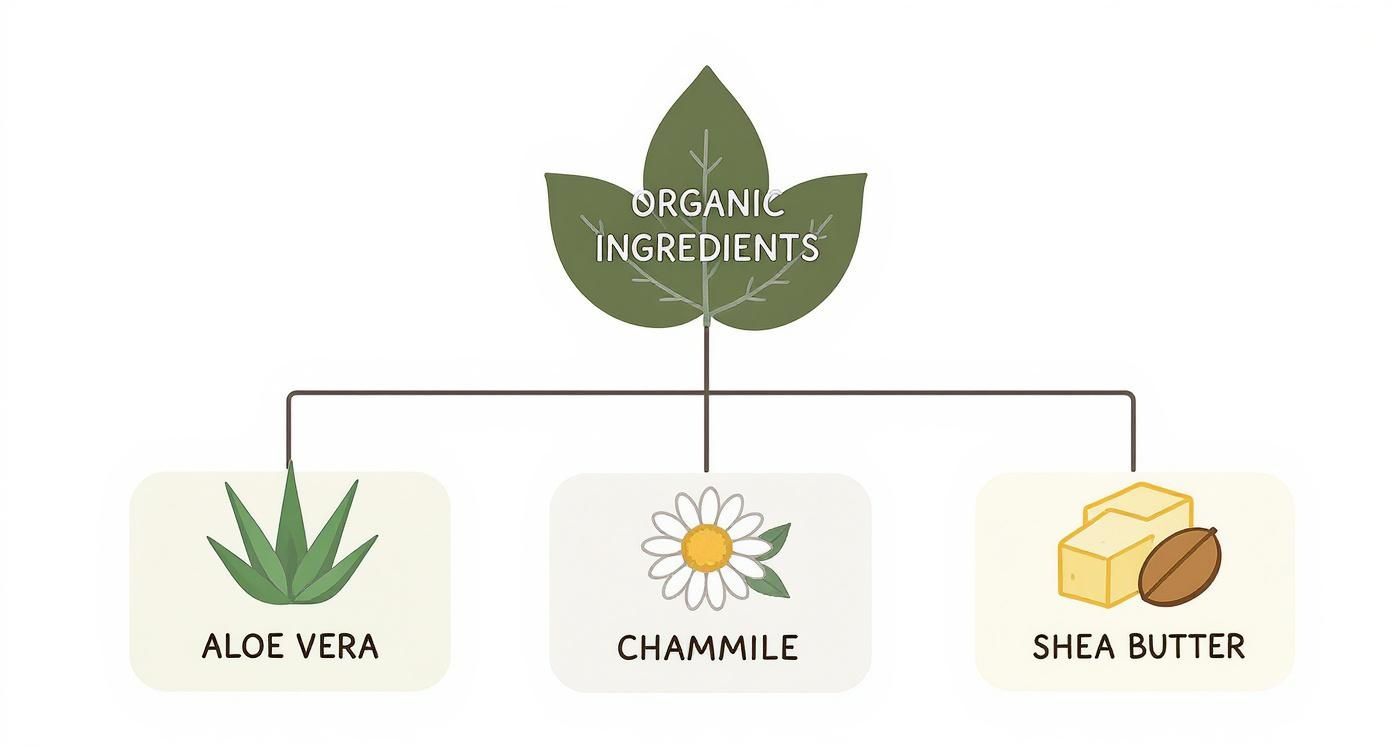
You can see how foundational botanicals like Aloe Vera, Chamomile, and Shea Butter are for creating products that truly nurture sensitive complexions.
Step-by-Step Instructions
Alright, let's dive in! Follow these steps carefully, and you'll end up with a gorgeous, silky lotion.
- Sanitize Everything: Before you even think about measuring, clean and sanitize all your tools, beakers, and your workspace. This is a crucial safety step.
- Measure Your Ingredients: Accuracy is key here. Carefully measure your shea butter, sweet almond oil, emulsifying wax, and distilled water into separate, heat-safe containers.
- Heat the Phases: In one container, gently heat your oil-based ingredients (shea butter, almond oil, emulsifier). In another, heat your water. You want them to reach the same temperature, around 160°F or 71°C.
- Combine and Emulsify: Now for the fun part! Pour the water phase into the oil phase and immediately start mixing with a stick blender. Keep blending for a few minutes until the mixture comes together, thickens, and turns a lovely milky white.
- Cool Down and Add Preservative: Let the lotion cool down a bit. Once it’s below the temperature recommended by your preservative supplier (always check their instructions!), add it in and give it one last thorough mix.
- Bottle Your Creation: Carefully pour your finished lotion into a clean, sanitized bottle or jar. You did it!
A quick but important note: Safety is paramount when you're making your own skincare. Always use a preservative in recipes that contain water and always, always do a patch test on a small area of skin before slathering your new creation everywhere.
Creating your own products is such a rewarding journey. This is your chance to craft something truly special that your skin will thank you for.
Got Questions About Organic Skincare? We’ve Got Answers.
Jumping into organic skincare, especially when your skin is sensitive, can feel like a whole new world. It's totally normal to have questions! Getting the right information is the best way to feel great about the products you choose. Let's clear up some of the most common queries.
Think of this as our little chat to tie up any loose ends. You've learned about ingredients and building a routine, so let's tackle those last few nagging questions. That way, you can move forward with total confidence.
Our goal is to make your switch to a gentler, more natural skincare philosophy as smooth as possible.
Is Organic Skincare Always Better for Sensitive Skin?
While "organic" is a great sign—it means ingredients were grown without synthetic pesticides or fertilizers—it's not a magic wand that makes a product perfect for every single person. Sensitivity is incredibly personal. You could react to a natural botanical just as easily as a synthetic ingredient.
However, the big win with organic products is what they usually leave out. They often skip common triggers found in mainstream skincare, like synthetic fragrances, harsh sulfates, and certain preservatives. By choosing certified organic, you’re dodging a whole list of potential irritants right from the start, which is a fantastic move for any sensitive complexion.
The bottom line: think of organic skincare for sensitive skin as a guiding star, not a hard-and-fast rule. It points you toward purer, simpler formulas, but patch testing is always your most trusted friend.
How Long Until I See a Real Difference?
Patience, patience, patience! This is a big one in skincare. Your skin has a natural rhythm, and it takes about 28 to 40 days to go through a full renewal cycle. When you introduce a new, gentle routine, you need to give your skin at least one of those cycles to truly adapt and show you what it thinks.
You might feel a difference—like calmer, more hydrated skin—within the first week or two. But for those bigger changes in tone and texture, sticking with it for a month or more is where the real effects can be seen. Trying to rush it will only stress your skin out.
Can I Mix Organic Products with My Current Stuff?
Absolutely, but the key is to be strategic. For sensitive skin, a "less is more" mindset is your best bet. If you have a conventional product you absolutely love and know your skin tolerates well, there's no need to ditch it right away.
A great way to do this is to swap out just one product at a time. For instance, start by switching to an organic cleanser or moisturizer and just see how your skin reacts for a couple of weeks. This slow-and-steady approach lets you pinpoint what works without freaking out your skin barrier. It’s the secret to a peaceful transition to a more organic routine.
At Skin Perfection, we're all about the power of pure, plant-derived ingredients to help your skin look its best. Whether you're searching for ready-made organic skincare or the highest quality supplies to craft your own gentle formulas, we have everything you need for your sensitive skin journey. Explore our collections and get started today.