

 Buy with Prime
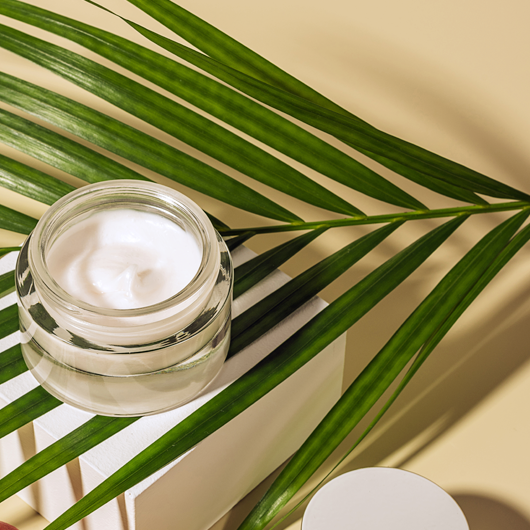


The most popular advice about peptide eye cream is also the most misleading: apply it and expect dark circles, puffiness, and fine lines to disappear quickly. Peptides can support a more hydrated, smoother-looking eye area, but they aren't instant erasers. The strongest case for them is gradual cosmetic improvement, especially when a well-preserved formula is used consistently.
That distinction matters because the eye-specific evidence remains limited. A 2024 review noted a lack of clinical trials focused specifically on eye cream formulations and periorbital skin, so many comparisons between a dedicated eye product and an ordinary peptide moisturizer rely on marketing rather than direct head-to-head testing. Recent trials do report improvements in fine lines, darkness, puffiness, and satisfaction, but the studies are often small, product-specific, and combine peptides with ingredients such as caffeine, botanicals, retinoids, or vitamin C. The review of peptide eye cream evidence explains why those results can't automatically be assigned to peptides alone.

A sensible expectation is maintenance rather than transformation. A peptide formula may help the eye area look more supple and comfortable over time, while caffeine may be more appropriate when your main concern is temporary morning puffiness. For broader reading on beauty and skin care, Vitamin Planet health topics offers useful context.
The language used to describe these products matters too. Cosmetics are intended to beautify, moisturize, and improve the appearance of skin. Under FDA cosmetic claims guidance, claims that a product treats disease or changes the structure or function of the skin can move it into drug territory. That is why a responsible listing should describe appearance and cosmetic use, not promise that a product will fix, repair, heal, or treat a condition. For a basic introduction to the ingredient category, see what peptide cream means in skincare.
Table of Contents
- What Peptides Are and Why the Eye Area Is Different
- Peptide Types Used in Eye Creams and How They Differ
- Clinical Evidence and Realistic Timelines for Results
- How to Choose a Peptide Eye Cream That Matches Your Goals
- Application and Layering Tips for the Delicate Eye Area
- Safety Considerations and DIY Formulation Guidance for Natural Eye Care
What Peptides Are and Why the Eye Area Is Different
Peptides are short chains of amino acids. Amino acids are the small units used to make larger proteins, including proteins associated with the skin's structure. In a topical formula, peptides aren't replacement bricks that become new collagen on contact. It's more accurate to think of some of them as messengers that interact with the skin's surface and may encourage particular cosmetic processes.
That messenger analogy has limits. A peptide's behavior depends on its sequence, concentration, delivery system, stability, and the rest of the formula. Two products can both say “peptide complex” on the label while containing different peptide types and offering very different evidence.
The eye area changes the formulation problem. Periorbital skin is described as roughly 0.5 millimeters thick, compared with about 2 millimeters elsewhere on the face, and it has fewer sebaceous glands and constant movement from blinking and facial expression. These figures and anatomical distinctions are summarized in the background literature on bioactive peptides.

Thin skin changes what comfort means
A fragile fence shows weathering sooner than a solid wall. The thin eye area similarly reveals dehydration, friction, and expression-related creasing quickly. With fewer oil-producing glands, it may also feel dry even when the rest of the face is comfortable.
That doesn't mean every eye product needs a special ingredient unavailable in facial moisturizer. It means the formula should be low-irritation, well-preserved, and easy to spread without tugging. A lightweight lotion may suit someone prone to milia, while a richer emulsion may feel better for visibly dry skin. The correct choice depends on texture, tolerance, and the concern you're trying to improve.
Hydration ingredients can support the sensory and visual side of an eye formula without being peptides. For DIY formulators, Sodium Hyaluronate Powder Pure Hyaluronic Acid is a cosmetic-grade, high-molecular-weight NASHA ingredient with a stated molecular weight of 800–1500 Daltons, intended for water-based serums, creams, and lotions. The product snapshot describes typical DIY serum use at 0.1–2%, allowing a formulator to control the concentration rather than relying on a premixed product.
The practical lesson is simple: peptides provide a signaling concept, while humectants, emollients, and film-formers shape how the product feels and how comfortably the eye area stays hydrated.
Peptide Types Used in Eye Creams and How They Differ
Reading peptide names alphabetically won't tell you much. A more useful approach is to group them by the job they're intended to perform, then check whether a product provides a transparent ingredient list and evidence relevant to that category.
Signal peptides
Signal peptides are associated with messages that may support the appearance of firmer, smoother skin. Palmitoyl pentapeptide-4 is one example. Palmitoyl-KTTKS is a procollagen I fragment used in topical cosmetics. In a 12-week double-blind, placebo-controlled split-face study, a moisturizer containing 3 parts per million of palmitoyl-KTTKS significantly reduced fine lines and wrinkles, supporting a plausible connection between collagen-related signaling and visible smoothing. The peer-reviewed report on palmitoyl-KTTKS provides the study details.
Earlier cosmetic dermatology literature had already identified topical peptides as an anti-aging ingredient class by 2009. That literature discussed acetyl hexapeptide-3 for “anti-wrinkle especially periorbital” uses and described a 28-day study involving 43 women aged 40–58 using a 0.01% liposomal tripeptide-10 citrulline cream on the temple. The study reported a significant increase in skin suppleness. The 2009 cosmetic dermatology review shows that the evidence base is established, but it doesn't prove that every modern eye cream will perform identically.
Carrier peptides
Carrier peptides are commonly discussed in relation to transporting trace elements involved in skin processes. Their inclusion can make sense in a multi-peptide formula, but the ingredient name alone doesn't establish a visible result around the eyes. Look for product-specific testing rather than assuming that a carrier peptide automatically outperforms a signal peptide.
Neurotransmitter-inhibiting peptides
Argireline, SNAP-8, and SYN-AKE are often grouped by a published mechanism involving the SNARE complex. In plain language, these peptides are discussed in relation to expression-associated movement and the appearance of lines. That mechanism shouldn't be translated into a promise of paralysis or a prescription-like effect. A cosmetic listing should remain focused on the appearance of fine lines.
Some products also mention acetyl tetrapeptide-5 in connection with the look of puffiness and dark circles. The ingredient is discussed in this guide to acetyl tetrapeptide-5, but consumers should still distinguish ingredient theory from independent testing of a finished formula.
Modern products increasingly blend categories rather than making a single-peptide claim. That combination can be sensible because skin appearance involves hydration, texture, firmness, and tone at the same time. It also makes attribution harder. A peptide-rich night product such as HydroGlow Anti-Aging Night Mask is described as containing three types of hyaluronic acid, polyglutamic acid, sea silt ferment, algae extract, jojoba, squalane, aloe, glycerin, and triglycerides. Any visible change from such a formula can't automatically be assigned to one ingredient.
Clinical Evidence and Realistic Timelines for Results
Clinical evidence supports patience rather than overnight expectations. A 2022 study involving 26 participants evaluated a regimen that included a peptide-rich eye cream over 12 weeks. In one treatment arm, researchers reported a 33% reduction in the appearance of lines and wrinkles, 37% improvement in texture, 41% improvement in under-eye darkness, 55% improvement in puffiness, and 94% improvement in dryness. No product-related adverse events were reported. The full PubMed study provides the study design and treatment details.
The combined morning-evening regimen also produced reported improvements, including 33% in texture, 68% in erythema, 32% in under-eye darkness, 64% in puffiness, and 90% in dryness. These figures describe that specific regimen and treatment arm. They do not set a universal benchmark for every product marketed as a peptide eye cream.

What shorter trials show
A 28-day double-blind trial of 0.005% palmitoyl pentapeptide-4, applied twice daily to the eye area, reported an 18% decrease in fold depth, a 37% reduction in fold thickness, and a 21% improvement in skin firmness. The available review places these changes below those associated with prescription anti-aging actives, so they are better understood as gradual, limited gains rather than drastic change. The clinical evidence review explains how to interpret those outcomes.
Study design matters as much as the headline result. Many eye-product trials last roughly 8–12 weeks and combine peptides with caffeine, botanicals, vitamin C, retinoids, or other ingredients. A participant may notice better dryness or surface texture, yet the trial may not show which ingredient produced the change. Consistent use therefore matters, while broad promises about dramatic results remain weakly supported.
For a wider discussion of evidence-based anti-aging care, see what actually works for anti-aging skin.
Evidence rule: A measured result from one finished formula is not a guarantee for every peptide blend.
Treat the first few weeks as an observation period, not a deadline. If the formula suits your skin, gradual improvements in comfort, hydration, and the appearance of fine lines are more plausible than an overnight change in anatomy or deep shadows.
How to Choose a Peptide Eye Cream That Matches Your Goals
Start with the concern, not the word “peptide.” Peptides may suit someone focused on gradual smoothing and skin feel, while caffeine-containing combinations may make more sense for temporary morning puffiness. Dark circles can also have different visual causes, so one ingredient category shouldn't be expected to solve every type.
Read the label like a formulator
Look for named peptides in the ingredient list rather than relying only on front-label language such as “peptide complex.” A transparent brand may identify signal, carrier, or neurotransmitter-related peptides, but a percentage printed on the package still needs context. A high-looking percentage may refer to a supplier blend diluted with water or solvents, not to the pure peptide itself.
Check the supporting formula too. Humectants can improve the look of dehydration, emollients can reduce roughness, and caffeine is often paired with peptides when a product is positioned for a fresher-looking eye area. If your priority is dryness, a moisturizer with a modest peptide component may be more comfortable than a thin serum used alone.
Clean beauty shoppers may also review fragrance, essential oils, preservatives, and third-party screening. EWG Verified status can be one input, but it shouldn't replace checking the full INCI list and deciding whether the texture suits your skin. For comparison, an anti-ageing day cream with CBD illustrates why shoppers should assess the complete formula and its claims, not just one highlighted active.
| Selection Criterion | What to Look For | Red Flag |
|---|---|---|
| Peptide type | Named peptides with a clear cosmetic purpose | “Miracle peptide” language without an ingredient list |
| Concentration transparency | A stated amount with enough context to interpret it | A large complex percentage presented as pure peptide strength |
| Complementary actives | Hydrators, emollients, or caffeine selected for your concern | A crowded formula that makes the source of results impossible to assess |
| Third-party safety verification | Clear testing, responsible labeling, and relevant certification | Claims that imply treatment, FDA approval, or structural transformation |
FDA guidance is especially relevant here. Cosmetics don't require premarket FDA approval, and the agency doesn't maintain a list of approved cosmetic claims. However, wording that says a product treats, prevents, removes wrinkles, or changes skin structure or function may be treated as a drug claim under U.S. law. FDA's wrinkle-treatment guidance explains why careful cosmetic wording matters.
Application and Layering Tips for the Delicate Eye Area
Application can determine whether a gentle formula feels comfortable. The eye area doesn't need vigorous massage, and using more product won't make peptides work faster. A small amount spread over the orbital area is usually more practical than placing a heavy layer directly against the lashes.

A careful routine
- Cleanse first. Use a mild cleanser and leave the skin comfortable, not tight. Pat dry rather than rubbing the towel across the eye area.
- Use a small amount. A rice-grain-sized amount for both eyes is a practical starting point for a cream. Dot it along the orbital bone instead of placing a thick layer on the mobile eyelid or waterline.
- Pat outward. Use a light tapping motion, moving from the inner corner toward the outer corner. The ring finger can help you apply less pressure, but technique matters more than the choice of finger.
- Layer by texture. Apply a watery serum before a peptide cream, then finish with a richer moisturizer or balm if your skin needs it. Give each layer time to settle so the products don't pill.
Strong retinoids, exfoliating acids, and fragranced products can increase the chance of irritation near the eyes. Introduce one new product at a time, patch test when appropriate, and stop if burning, swelling, persistent redness, or watering develops. Milia-prone skin may prefer a lighter emulsion and less frequent application.
Practical rule: Comfort is a better guide than intensity. A product that stings isn't proving that it works.
Safety Considerations and DIY Formulation Guidance for Natural Eye Care
A peptide eye cream may be well tolerated by many users, but the eye area is not interchangeable with the cheek. Sensitivity can come from the peptide, preservative system, fragrance, botanicals, pH, or simple mechanical rubbing. Persistent irritation, swelling, or visual symptoms call for professional advice rather than ingredient experimentation.
DIY formulators need to control more than the active percentage. Start with the supplier's recommended use level for the specific peptide, because different materials have different specifications. Don't guess a universal “safe peptide concentration” from the name alone. Confirm the peptide's recommended pH range, solvent compatibility, processing temperature, and storage requirements from its technical documentation.
Build the formula around stability
A water-based eye product needs a validated preservative system. Preservatives must be compatible with the formula's pH, packaging, surfactants, botanicals, and peptide raw materials. A broad-spectrum system is not automatically effective in every finished product, so preservation testing and good manufacturing practice matter.
Choose botanicals conservatively. Fragrance-free, low-irritation extracts may be easier to manage than strongly aromatic essential oils, but “natural” doesn't guarantee eye-area tolerance. Keep the formula simple enough that you can identify a problem if the finished product causes discomfort.
For hydration, Skin Perfection's Sodium Hyaluronate Powder is described as a cosmetic-grade NASHA powder with a stated molecular weight of 800–1500 Daltons, suitable for water-based serums, creams, and lotions. A formulator can combine a measured amount with a compatible peptide system in a small batch, but the finished formula still needs appropriate preservation, packaging, pH control, and stability evaluation.
Stay inside cosmetic boundaries
The product should be presented as a cosmetic that moisturizes, softens, and beautifies the appearance of skin. FDA materials identify claims such as wrinkle removal, acne treatment, cellulite reduction, stretch mark reduction, dandruff treatment, hair restoration, and eyelash growth as examples of wording that can trigger drug scrutiny. FDA's warning-letter examples are a useful reference when writing labels and listings.
Etsy also prohibits explicit or implied claims that an item treats, mitigates, diagnoses, or cures serious disease or medical conditions. Its policy materials prohibit positioning a cosmetic as an analgesic, antibiotic, antiseptic, antiviral, anti-inflammatory, steroid, vaccine, decongestant, prescription drug, or FDA-approved product. The Etsy cosmetics policy summary makes clear that moisturizing and beautifying language is acceptable when it isn't connected to disease claims.
For preservation-focused formulation guidance, consult natural skincare preservative information. Skin Perfection follows FDA rules and Etsy requirements in its product listings, describes its products as beautifying cosmetics, and provides skincare products and lotion-making supplies for informed DIYers and professionals.
Skin Perfection offers cosmetic skincare products and lotion-making supplies for people who want peptide, hydration, and clean beauty options without unsupported treatment language. Visit Skin Perfection to explore ready-made products and formulation ingredients for building a careful, appearance-focused eye-care routine.