

 Buy with Prime


You apply a new anti aging serum before bed, expecting a smoother, fresher complexion. Instead, your cheeks begin to sting, your skin turns red, and the area around your nose feels tight. By morning, you're wondering whether the product is too strong, your barrier is already stressed, or “sensitive skin” means you should avoid anti-aging ingredients altogether.
You don't have to choose between visible aging concerns and everyday comfort. The better approach is to identify what kind of sensitivity you're experiencing, select ingredients that match your tolerance, and introduce them slowly. A well-designed routine can support the look of hydration, texture, firmness, and fine lines without treating your skin like it needs to be pushed harder.
Table of Contents
- Understanding Sensitive Skin Needs
- Selecting Safe and Effective Ingredients
- Formulation Strategies for Gentle Serums
- Avoiding Common Irritants in Serums
- How to Patch Test Your Serum
- Building Your Gentle Anti-Aging Routine
- Conclusion and Next Steps
Understanding Sensitive Skin Needs
Sensitive skin isn't one uniform condition. A temporary irritation may cause immediate burning after a new product, while allergic contact dermatitis can bring persistent itching, rash, or swelling. Rosacea-prone skin may show recurring central facial redness and flushing, whereas a weakened barrier often feels tight, dry, or reactive even after applying familiar products.
That distinction changes how you choose an anti aging serum for sensitive skin. Immediate stinging suggests that the formula may be irritating, especially if it contains several active ingredients. Persistent itch or a recurring rash deserves medical evaluation for possible allergy. Recurrent redness across the cheeks and nose may call for dermatology advice rather than a stronger serum.
Cosmetic reactions are commonly associated with fragrances and preservatives. Irritant contact dermatitis accounts for about 80% of contact-dermatitis cases, while fragrance allergy affects an estimated 1–3% of the general population and roughly 16% of patients patch-tested for suspected allergic contact dermatitis, as described by DermNet's guidance on cosmetic contact reactions.
Practical rule: “Natural,” “clean,” and “unscented” don't automatically mean low-risk. Botanical fragrance components and preservatives can still bother reactive skin.
Use a simple decision framework:
- Burning that appears quickly: Simplify the formula and avoid combining several potentially irritating actives.
- Persistent itch or rash: Stop the product and seek professional assessment. A clinician can investigate allergic contact dermatitis with appropriate testing.
- Recurring central redness: Consider whether rosacea-prone skin may be involved, and ask a dermatologist for guidance.
- Tightness and widespread reactivity: Focus first on a basic, fragrance-free routine that supports comfortable hydration. You can also review this guide to strengthening the skin barrier.
Environmental friction matters, too. Heat, sweat, and rubbing can make an already reactive face feel worse, so choosing soft, breathable materials and learning about organic cotton tips for hot weather can complement a gentler skincare routine.
Selecting Safe and Effective Ingredients
The most useful ingredient isn't automatically the strongest one. For reactive skin, a serum should provide a clear benefit while keeping the formula simple enough that you can identify what your complexion tolerates.
Peptides as quiet support
Peptides are short chains of amino acids used in cosmetic formulas to support a smoother-looking, firmer-looking complexion. Think of them as messages delivered to a construction crew. They don't sand the surface or force rapid exfoliation. Instead, they're commonly chosen for routines focused on the appearance of fine lines and reduced bounce.
Matrixyl is one example used in peptide-focused formulas. A Matrixyl 3000 Serum Booster from Skin Perfection can be considered alongside other peptide products when you want an anti-aging option without fragrance or aggressive exfoliation. Ingredient suitability still depends on the complete formula and your individual tolerance.
Plant-derived ingredients with a measured role
Oat extract and other plant-derived ingredients can fit comfortably into a barrier-conscious routine, but “plant-based” isn't a guarantee of gentleness. Botanical extracts may be useful for a calming, comfortable skin feel, yet some plants contain aromatic components that can trigger reactions.
Bakuchiol deserves careful interpretation. A 2025 randomized, double-blind study involving 34 Chinese participants with sensitive skin evaluated a serum containing supramolecular bakuchiol and Terminalia chebula extract. After 28 days, the multi-ingredient serum improved transepidermal water loss, redness, lactic-acid sting scores, and several wrinkle measures, with no reported adverse events, according to the PubMed study record. The small sample, single population, short follow-up, and multi-ingredient design mean the findings don't prove that bakuchiol alone matches retinoids across skin types.
Humectants that make skin look smoother
Humectants attract and hold water at the skin's surface. Glycerin and sodium PCA can make dehydrated lines look less pronounced, while panthenol and niacinamide may complement a comfort-focused formula.
A randomized, double-blind, placebo-controlled split-face study evaluated a routine containing glycerin, niacinamide, oat extract, panthenol, and sodium PCA. After 28 days, wrinkle surface improved by 34.8% ± 4.7%, wrinkle length by 19.0% ± 3.2%, and wrinkle depth by 24.3% ± 3.5%. Hydration increased by 42.2% ± 8.5%, without a significant change in transepidermal water loss, as reported in the peer-reviewed clinical study. Because the research assessed a complete routine rather than one isolated serum, keep claims proportional.
For a deeper ingredient comparison, explore anti-aging ingredients for skincare. If you're comparing professional formulas, a cellular serum price can be one shopping detail, but ingredient transparency and tolerability testing matter more than price alone.
Formulation Strategies for Gentle Serums
Formulation determines how an ingredient behaves on your face. Two products can contain a similar active yet feel completely different because their pH, solvent system, concentration, texture, and supporting ingredients aren't the same.
Start with the formula, not the headline active
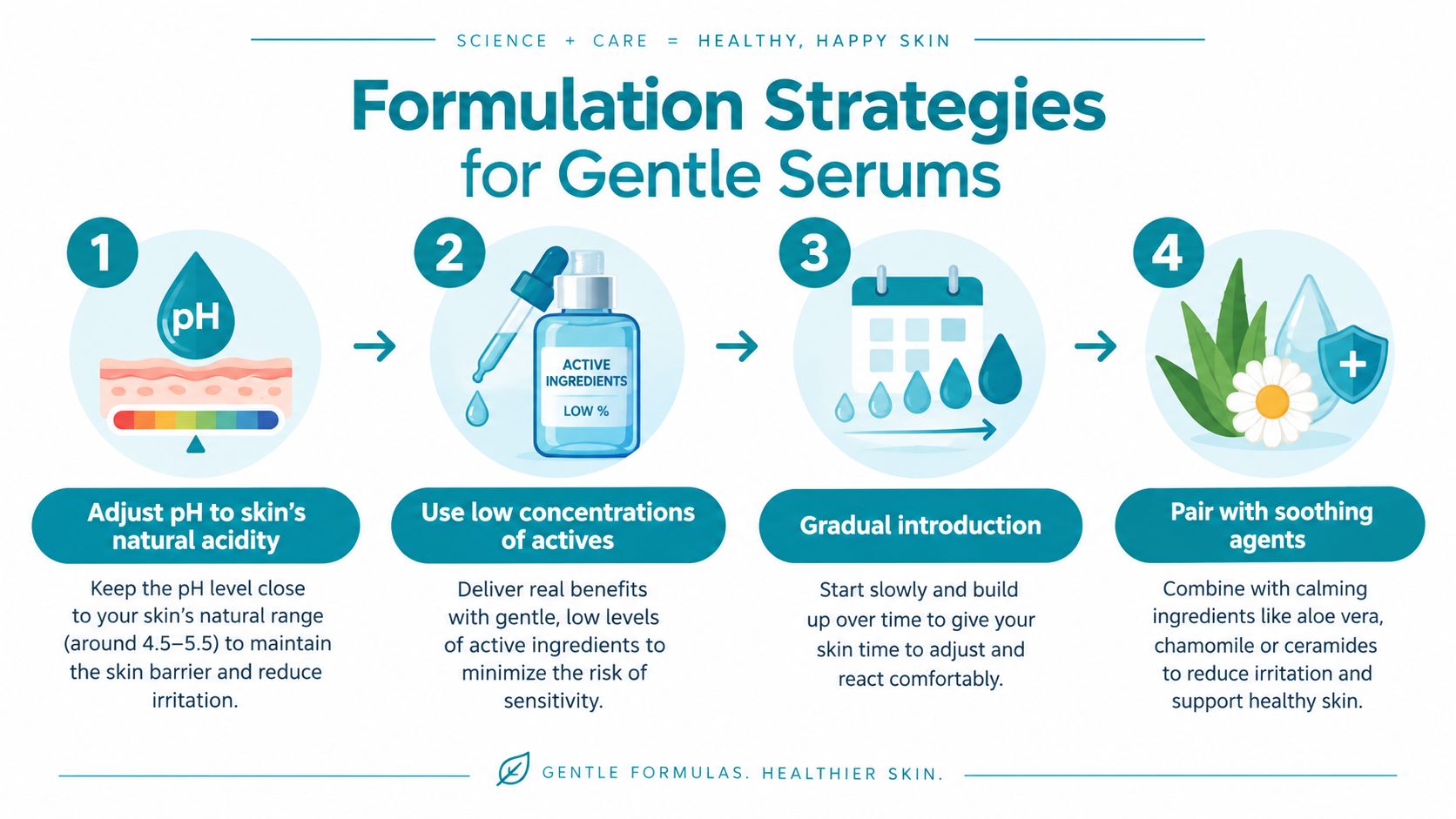
A serum designed for sensitive skin should use a skin-compatible pH and avoid turning every application into a challenge. Low concentrations of potentially irritating actives can be a sensible starting point, particularly when the product is paired with humectants, emollients, and a moisturizer.
Retinoids illustrate why strength isn't the only measure of quality. A peer-reviewed review described a 2-year placebo-controlled trial of 0.05% tretinoin emollient cream involving 204 participants with moderate-to-severe facial photodamage. It also summarized a 36-week multicenter, double-blind, vehicle-controlled trial involving 800 patients, in which 0.1% isotretinoin cream improved the overall appearance of photodamaged skin compared with the vehicle. A separate 6-month randomized, double-blind, vehicle-controlled study enrolled 346 subjects with photodamaged skin. The review noted that lower retinoid concentrations generally produced less pronounced but still statistically significant clinical and histologic improvements, with fewer adverse effects than higher concentrations. It also identified 0.05% retinaldehyde as effective and well tolerated, while cautioning that evidence for many cosmetic retinoid claims remains limited by a lack of properly designed clinical trials. These findings appear in the clinical review of topical retinoids.
Use a gradual delivery plan
Apply a low-strength active intermittently instead of starting every night. Pair it with a fragrance-free barrier-supportive moisturizer, and avoid introducing exfoliating acids, strong brighteners, or several new products at the same time.
For DIY makers and professionals, cosmetic formulation guidance can help you think through pH, preservation, texture, and ingredient compatibility. “Gentle” isn't created by removing every preservative. A water-based product still needs a suitable preservation strategy to remain safe and stable.
Avoiding Common Irritants in Serums
You smooth on a serum meant to help with fine lines, and within minutes your skin feels warm, tight, or prickly. That reaction does not always mean the active ingredient is “too strong.” Often, the problem is the support cast around it, the scent, the solvent, or a crowded formula that makes it hard to tell what your skin is objecting to.
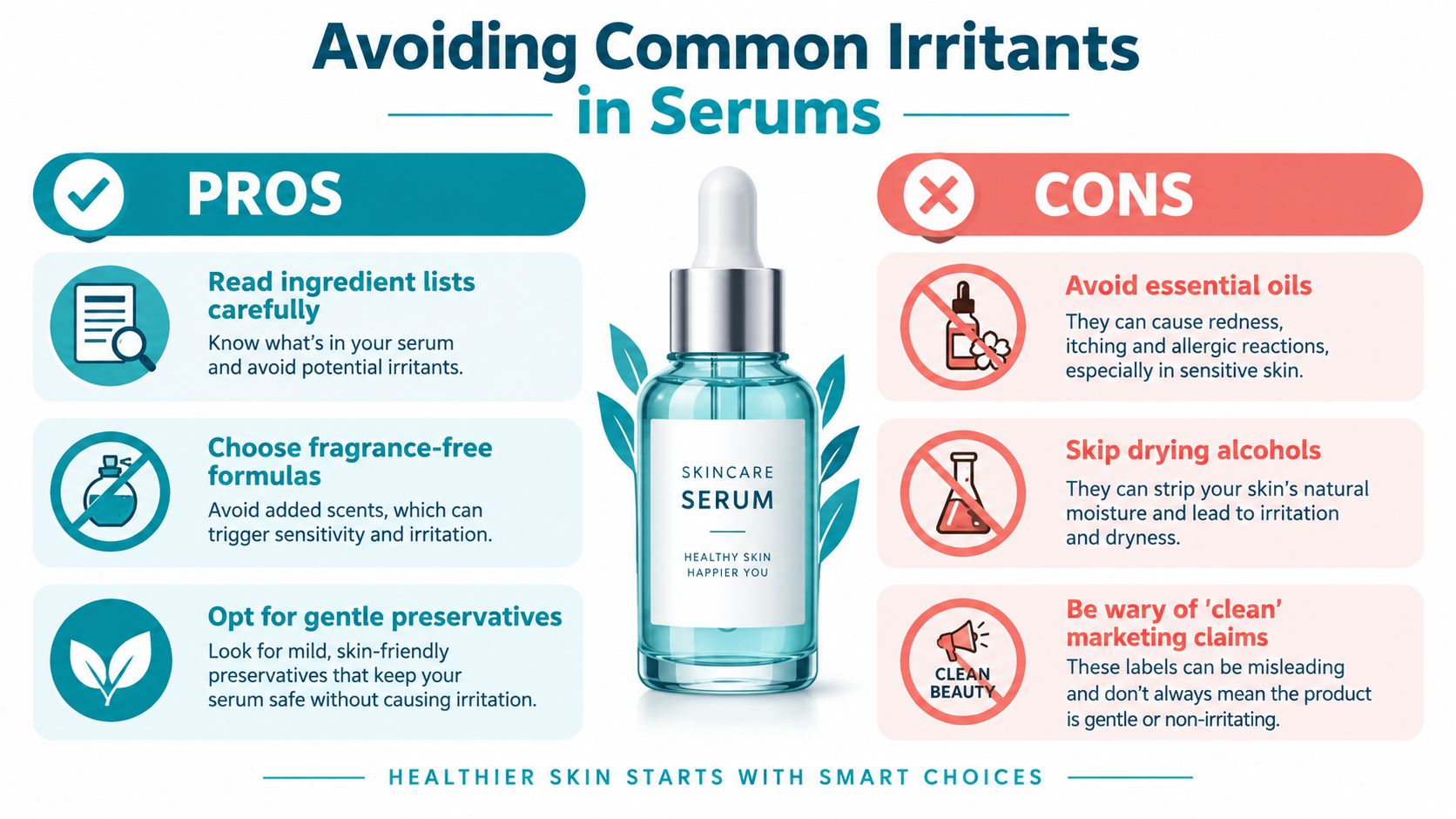
For sensitive skin, label reading works like checking a recipe before cooking. The front of the bottle may say “clean” or “hypoallergenic,” but the ingredient list tells you far more. The FDA states that it knows of no scientific studies demonstrating that products labeled “hypoallergenic” cause fewer adverse reactions than conventional competing products, as explained in its cosmetic allergen guidance. So a better decision framework is to ask what kind of sensitivity you have. Stinging skin often struggles with solvents or low-pH formulas. Easily inflamed skin may react to fragrance components or essential oils. Breakout-prone but sensitive skin can also dislike rich combinations of strong actives.
A few label signals are especially useful:
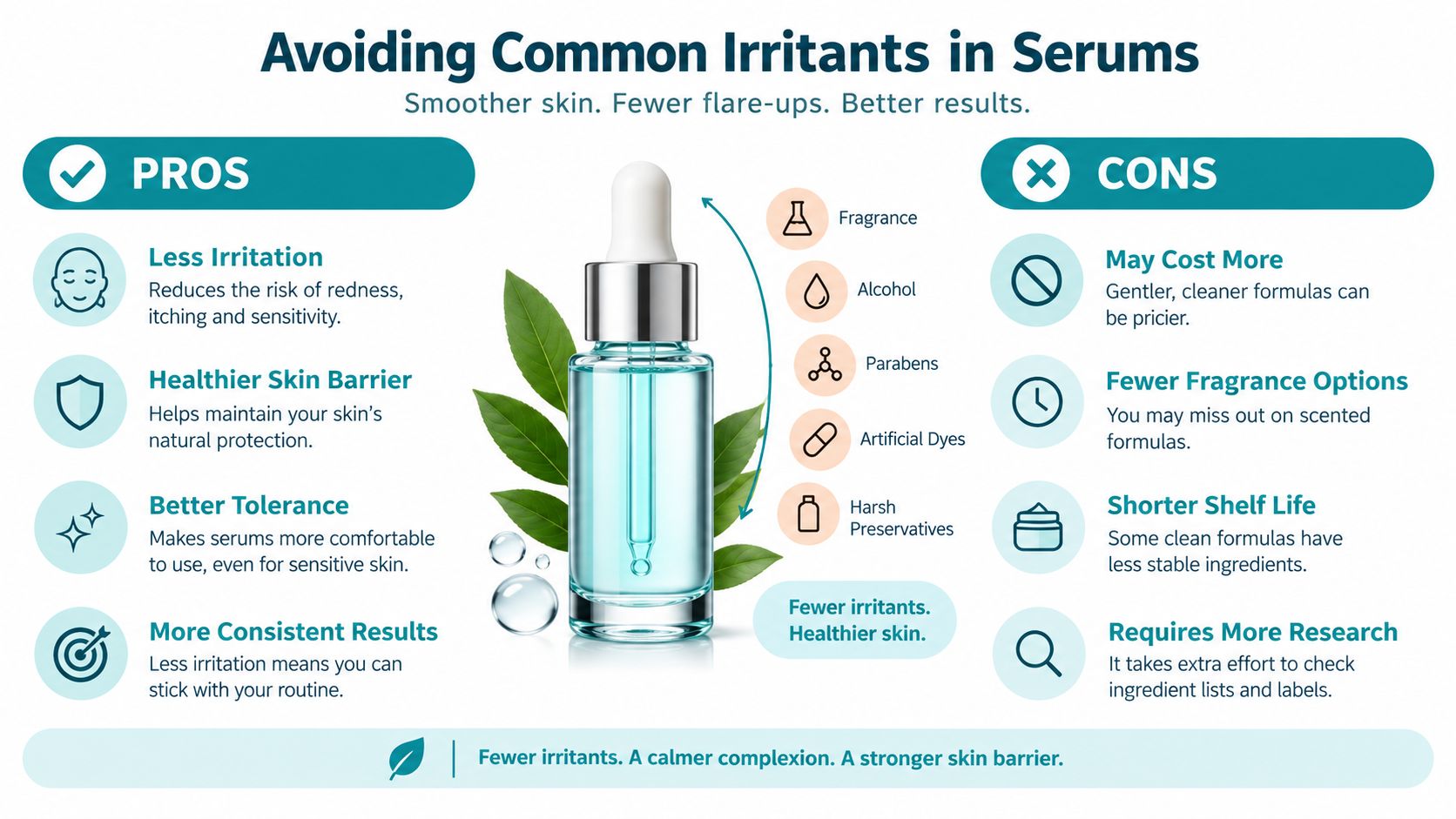
- Fragrance: “Parfum” or “fragrance” can represent a blend of aromatic materials. Fragrance-free is often the simpler starting point for reactive skin.
- Essential oils: Citrus, lavender, peppermint, and similar oils add scent, but their aromatic compounds can irritate or sensitize some users.
- Drying alcohols: Alcohol denat., ethanol, or SD alcohol can create a light feel, yet a high placement on the ingredient list may be a poor match for a reactive routine.
- Preservatives: Water-based serums usually need them. Individual sensitivity can happen, but “preservative-free” does not automatically mean lower risk.
- Multiple actives: A formula packed with acids, retinoids, and brighteners gives you less clarity if redness starts.
Read the label like a recipe. “Natural” describes origin, not personal tolerance.
If fragrance language feels fuzzy, understanding natural vs synthetic scents can help clarify what those terms do and do not mean. For another screening tool, this guide to common toxins to avoid in skincare is useful, as long as you remember that broad marketing labels are less helpful than the full formula.
How to Patch Test Your Serum
You buy a new serum, use it all over your face that night, and wake up wondering whether the tightness is a normal adjustment or the start of a reaction. A patch test helps you answer that question in a smaller, safer way. It gives you a preview. It does not diagnose an allergy.
That distinction matters for sensitive skin, because “sensitive” can mean different things. One person gets quick stinging from a strong formula. Another develops an itchy rash a day or two later. If you have repeated rashes, swelling, persistent itching, or signs of allergic contact dermatitis, a clinician should evaluate it.
A cautious home method
- Choose a discreet area. Use a small spot near the jawline or behind the ear. Skip any area that is broken, inflamed, or already irritated.
- Apply a small amount. Use the serum the way you plan to use it on your face, with the same leave-on conditions. Test only one new product at a time, so the result stays clear.
- Watch for timing, not just intensity. Some reactions show up fast as burning or stinging. Others are slower and look more like redness, bumps, itching, or a dry rash. Check the area over the next couple of days.
- Stop at warning signs. Wash it off if you notice burning, swelling, itching, rash, or redness that does not settle. Skin is giving feedback, not “failing.”
A home patch test works like a sample spoon at an ice cream shop. You are checking tolerance before committing to a full scoop. That makes it useful, but limited. It cannot tell you with certainty whether a formula is safe for daily use across your whole face, and it cannot separate simple irritation from a true allergy with the precision of formal testing.
If your skin is already flaring, press pause on experiments. Stick to a short routine and focus on barrier comfort first. This guide to caring for irritated skin can help while you decide whether you need professional advice.
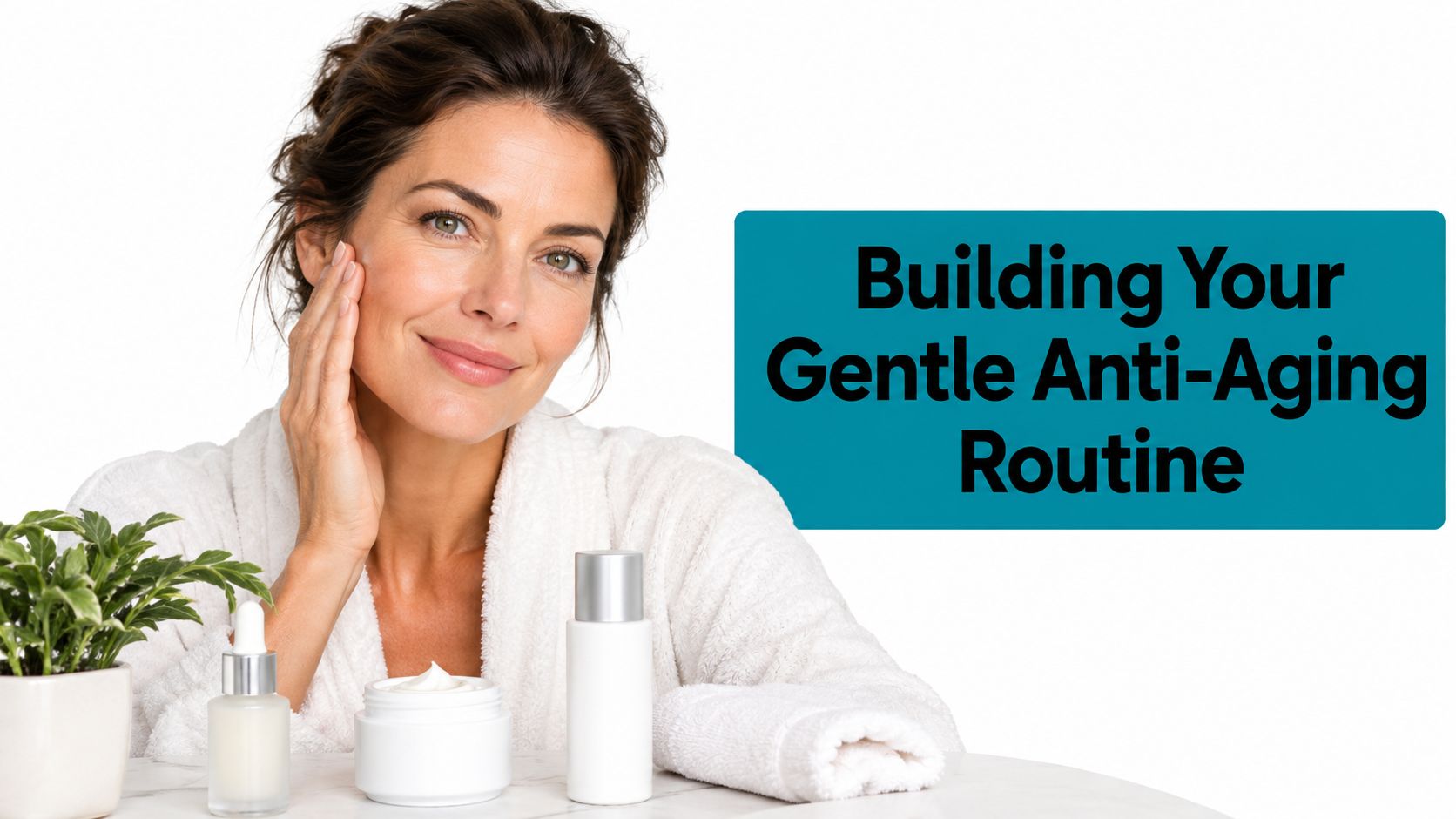
Building Your Gentle Anti-Aging Routine
A good routine has one job at a time. Cleanse without leaving the skin tight, apply a targeted serum, add comfortable moisture, and protect the complexion during the day. The serum shouldn't have to compensate for an overly harsh cleanser or a moisturizer that doesn't suit your skin.
A simple introduction schedule
Begin with a low-strength serum on two nonconsecutive evenings each week. Apply it to clean, dry skin, then follow with a fragrance-free moisturizer. Keeping the application nights separate gives you a clearer view of how your skin responds.
On the other evenings, use only your gentle cleanser and moisturizer, or a basic hydrating serum if you already know you tolerate it. Don't add a new exfoliant, essential-oil product, or strong brightening active during the introduction period.
Morning and evening layering
A morning routine can be straightforward:
- Gentle cleanser, or lukewarm water if cleansing leaves you tight.
- Hydrating serum or a tolerated peptide formula.
- Moisturizer.
- Broad-spectrum sunscreen.
In the evening, cleanse gently, apply the anti aging serum for sensitive skin, and seal it with moisturizer. If your skin remains comfortable, increase frequency gradually rather than jumping directly to nightly use.
A review of 34 clinical studies found that topical retinoids commonly cause early peeling, erythema, dryness, or stinging, but these effects often diminish after the first few weeks. The review also found that lower concentrations and moisturizer-supported use generally improve tolerability, as detailed in this review of topical retinoid irritation. The key lesson is that irritation risk may predict intolerance more reliably than the retinoid name, concentration, or vehicle alone.
Match the routine to your main concern
If dehydration lines are your priority, choose humectants and a comfortable moisturizer before adding a stronger active. If visible firmness is the focus, a peptide serum may be a reasonable anchor. If you're considering bakuchiol, choose a formula with clear ingredient disclosure and remember that evidence for a multi-ingredient product doesn't establish the same result for bakuchiol alone.
Use antioxidants and sunscreen in the morning if your skin tolerates them, but introduce each product separately. If redness, itching, swelling, scaling, or persistent burning develops, stop the newest product and seek professional guidance when symptoms don't settle.
Conclusion and Next Steps
Choosing an anti aging serum for sensitive skin starts with diagnosis of the pattern, not a search for the most powerful label. Immediate burning points toward irritation, persistent itching or rash may require allergy evaluation, recurring central facial redness deserves careful consideration, and widespread tightness suggests that a simpler routine may be more appropriate.
Choose ingredients according to your priority. Humectants such as glycerin and sodium PCA can support a hydrated-looking complexion. Peptides offer a gentler route for routines focused on visible firmness and fine lines. Bakuchiol may be worth considering when you want a non-retinoid option, but small, short, multi-ingredient studies shouldn't be presented as proof that it matches retinoids.
Check the full ingredient list, avoid relying on “hypoallergenic” or “natural” language, introduce one active at a time, and patch test before applying a new product widely. For product listings, describe appearance-related benefits such as smoother-looking texture or a more youthful-looking appearance. FDA says cosmetic products aren't preapproved for cosmetic claims, and claims that imply treatment, prevention, or effects on the body's structure or functions can change a product's regulatory classification, as explained in its cosmetic and drug classification guidance and cosmetic claims guidance.
Etsy applies its medical-claims policy to titles, descriptions, and images, and says listings can be removed when sellers make or imply prohibited claims. Review the Etsy medical claims policy and prohibited items policy before publishing product copy. Skin Perfection offers skincare products and lotion-making supplies for formulas intended to beautify the skin, so transparent, appearance-focused language keeps the customer promise clear.
Skin Perfection offers anti-aging skincare products, ingredients, and lotion-making supplies for creating appearance-focused routines with plant-derived ingredients, peptides, and hydration-supportive components. Visit Skin Perfection to explore ready-made options and formulation supplies, then choose one product to patch test before building your gentle routine.