

 Buy with Prime



What makes an ingredient “clean”: where it comes from, what a brand leaves out, or the evidence showing that the finished formula is safe? Most shopping guides answer with a blacklist. That approach feels simple, but it teaches you to memorize opinions instead of reading labels.
Clean beauty ingredients are easier to understand when you treat clean beauty as a form of product literacy. You'll learn how to question claims, read an INCI list, assess concentration and exposure, recognize fragrance and preservation issues, and decide whether a formula fits your preferences and skin history. You don't need to trust every “natural” claim, and you don't need to fear every unfamiliar chemical name.
Table of Contents
- What Clean Beauty Ingredients Really Mean
- How U.S. and EU Rules Shape What Counts as Clean
- Frequently Questioned Ingredients and the Case for Nuance
- Plant Actives, Stem Cells, and Peptides in Anti-Aging Routines
- Reading an Ingredient List Like a Formulator
- Verifying EWG and Third-Party Claims With Real Evidence
- Sourcing and Safety Basics for DIY Lotion Making
- Your Personal Clean Beauty Decision Framework
What Clean Beauty Ingredients Really Mean
Clean beauty has no single legal definition in the United States. A brand can use the term to describe natural sourcing, a short ingredient list, avoidance of selected materials, sustainability goals, or a private standard created for its own products. Another brand may use the same phrase with a completely different list of inclusions and exclusions.
That's why a product labeled clean can contain ingredients that another clean brand avoids. Neither label automatically tells you whether the finished formula is gentle, effective, environmentally responsible, or suitable for your skin. The word describes positioning, not a universal scientific category.
The confusion is measurable. According to CivicScience data cited in a 2025 dermatology review, 36% of U.S. adults familiar with clean beauty are unsure how to define it, only 38% trust clean claims, and 24% actively distrust them (2025 dermatology review).
Replace the blacklist with better questions
Start by separating four ideas that marketing often blends together:
- Origin: Is an ingredient plant-derived, mineral-based, fermentation-derived, or synthetic?
- Function: What does it do in the formula, such as cleansing, emulsifying, preserving, softening, or adding fragrance?
- Exposure: Is it used on the skin, around the eyes, on the lips, or rinsed away quickly?
- Evidence: What testing, supplier records, safety review, and finished-product data support its use?
A plant-derived ingredient can still contain allergens or contaminants. A synthetic ingredient can perform a useful technical job at a controlled concentration. A familiar ingredient can be unsuitable for one person while working well for another.
For a plain-language introduction to the term itself, see this guide to what clean beauty means. The useful definition isn't a list of forbidden words. It's a process for asking whether a product's claims match its ingredients, documentation, intended use, and your own tolerance.
How U.S. and EU Rules Shape What Counts as Clean
Regulation explains why clean beauty feels inconsistent across markets. In the United States, cosmetics generally don't require premarket approval, apart from color additives. Manufacturers remain responsible for making sure products are safe and properly labeled.
The Modernization of Cosmetics Regulation Act, or MoCRA, enacted in 2022, strengthened federal oversight through requirements related to facility registration, product listing, safety substantiation, and serious adverse-event reporting. Those requirements matter, but they don't turn “clean” into a government-defined ingredient category.
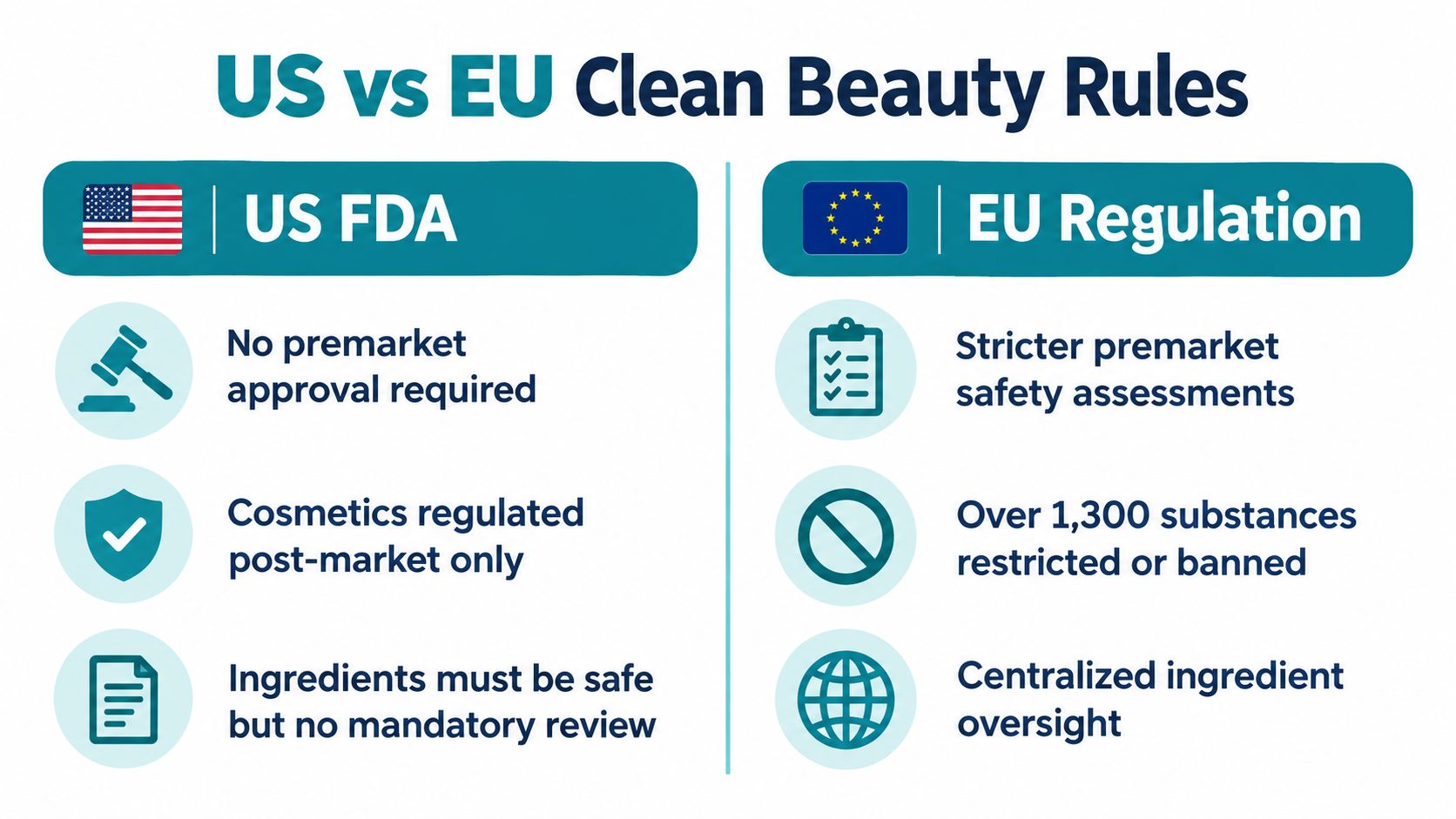
Two regulatory lenses
The European Union takes a more precautionary approach to cosmetics. The EU has restricted or prohibited more than 1,400 substances through its cosmetics legislation, while broader chemical controls are sometimes cited in comparisons reaching approximately 2,000 or more entries (regulatory overview).
That difference doesn't mean an EU-approved product is automatically perfect, or that a U.S. product is automatically unsafe. It means brands operating across markets may need to meet different documentation, labeling, ingredient restriction, and safety assessment requirements. EU compliance has therefore become an influential benchmark for international brands and suppliers.
What to ask about a claim
When a product says “clean,” ask:
- Who defines the standard? Is it the brand, a retailer, a certification program, or a regulator?
- What does the standard inspect? Ingredients, manufacturing, packaging, sourcing, allergen disclosure, or all of these?
- What evidence exists? Look for safety substantiation, supplier specifications, stability information, and appropriate testing.
- Which market applies? Requirements can differ between the United States and the European Union.
A clean claim can communicate a brand's priorities, but it doesn't replace toxicological review, compliant labeling, or controlled manufacturing. The practical value lies in transparency, not in the word itself. More detail on this subject is available in the guide to cosmetic regulations.
Frequently Questioned Ingredients and the Case for Nuance
Parabens, phthalates, formaldehyde-releasing preservatives, PEG compounds, and sulfates often appear on clean beauty avoid lists. Each family deserves a more useful question than “good or bad.”
Parabens are preservatives. Phthalates may occur in fragrance systems or related materials. Formaldehyde donors can help control microbial growth by releasing small amounts of formaldehyde under particular conditions. PEG compounds can support texture, solubility, and delivery. Sulfates can cleanse and create foam.
The relevant evaluation includes hazard, concentration, route of exposure, formula design, product use, and individual sensitivity. A rinse-off cleanser and a leave-on serum don't create the same exposure pattern. A fragrance-free product may be preferable for someone who reacts to scent, while another person may tolerate a fragranced formula without difficulty.
Natural ingredients need the same scrutiny
Essential oils and botanical extracts deserve particular care. Their plant origin doesn't remove the possibility of allergens, contaminants, pesticides, heavy metals, or biologically active compounds. “Natural” describes origin. It doesn't establish concentration, purity, stability, or suitability for every skin type.
A 2025 peer-reviewed analysis examined 2,561 cosmetic-product reports recorded from 2005 through 2023 in Europe's Safety Gate database. It identified 289 reports involving 324 substances associated with products described as having a natural origin. Of those reports, 64% concerned unauthorized substances, while another 14% involved inappropriate substances or concentrations exceeding permitted limits (peer-reviewed Safety Gate analysis).
| Ingredient Family | Typical Function | Common Concern | Regulatory Signal |
|---|---|---|---|
| Parabens | Preservation | Consumer concern about systemic and hormonal effects | Evaluate the specific ingredient, concentration, market rules, and safety substantiation |
| Phthalates | Fragrance support and formulation functions | Exposure and disclosure concerns | Check the fragrance documentation and applicable restrictions |
| Formaldehyde donors | Preservation | Sensitization and labeling concerns | Review the exact donor, concentration, and finished-product safety data |
| PEG compounds | Solubilizing, texture, and formulation support | Concern about impurities and processing | Supplier quality controls and specifications matter |
| Sulfates | Cleansing and foaming | Dryness or irritation for some users | Judge the complete cleanser, contact time, and personal tolerance |
| Essential oils | Fragrance and sensory character | Sensitization and concentration issues | Review allergen declarations and total fragrance contribution |
| Botanical extracts | Antioxidant, sensory, or appearance-focused support | Allergens, contaminants, and batch variation | Verify identity, testing, stability, and use level |
Environmental exposure raises another layer of complexity. Readers who want broader context on how chemical exposure is discussed outside skincare can consult this resource on environmental illness care. It shouldn't replace a cosmetic ingredient assessment, but it can help distinguish general environmental concerns from the specific exposure created by one finished product.
Plant Actives, Stem Cells, and Peptides in Anti-Aging Routines
Clean beauty isn't limited to exclusions. Many formulas use plant-derived ingredients, biotechnology, and peptides to improve the appearance of hydration, smoothness, radiance, and texture.
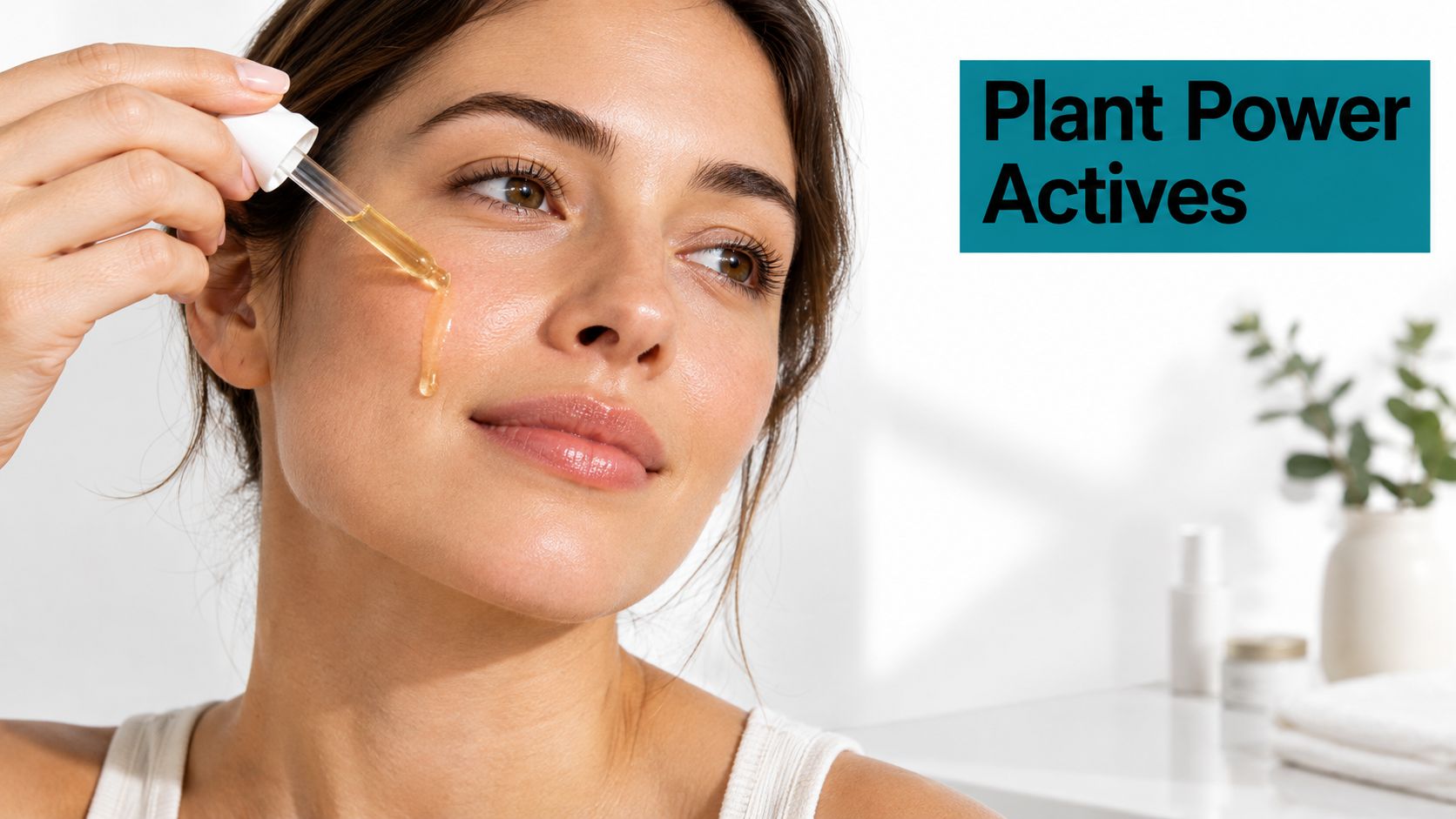
Understand what each active contributes
Bakuchiol is a plant-derived cosmetic active commonly used in formulas designed to support a smoother, more even-looking complexion. Its appeal comes from its role as a botanical option in appearance-focused routines, not from the assumption that every plant ingredient is automatically mild.
Squalane is valued for its lightweight, silky feel and its ability to help reduce the feeling of dryness. It can make a serum or moisturizer feel more comfortable without adding fragrance or essential oils.
Berry extracts and other botanical materials may contribute antioxidant positioning, color, sensory character, or a brighter-looking complexion. Their performance depends on the extract type, processing, concentration, stability, and the rest of the formula.
Plant stem-cell products usually contain plant callus or cell-culture extracts, not human stem cells. Brands use them in products marketed to support the look of firmness, smoothness, or vitality. The correct reading is cosmetic and appearance-focused. An extract's name doesn't prove that it changes human tissue or produces a therapeutic effect.
Peptides need claim discipline
Peptides such as Argireline, SNAP-8, and SYN-AKE are popular in serums intended to improve the appearance of expression lines and surface texture. Their place in a routine depends on the product's concentration, delivery system, stability, and compatibility with other ingredients.
A formula can be advanced without making medical claims. The FDA explains that products intended to affect how the body works or treat or prevent disease are drugs, while cosmetics are intended for purposes such as cleansing, beautifying, or promoting attractiveness (FDA guidance on cosmetic claims). That distinction matters for anti-aging language.
Claim check: “Helps skin look smoother” describes appearance. “Treats a medical condition” describes a drug-style purpose and can change the product's regulatory status.
Skin Perfection offers facial care, moisturizers, serums, and lotion-making supplies that use plant-derived ingredients, stem-cell-related botanical extracts, and peptides within appearance-focused skincare. Whether you choose those products or another brand, judge the complete formula rather than the most impressive active on the front label.
Reading an Ingredient List Like a Formulator
An INCI list is a map, not a verdict. It tells you what the formula contains, but you still need context to understand why each ingredient appears there and how much information the label leaves out.
Ingredients generally appear in descending order of concentration until the lower-concentration portion of the formula. Ingredients used at low levels may then appear in an order that doesn't let you calculate their exact percentage. That means the first few ingredients can reveal the formula's foundation, but the list can't tell you everything about performance or tolerance.
Use a repeatable label scan
Read the list in four passes:
- Base: Look for water, oils, humectants, fatty alcohols, or other materials that establish texture.
- Function: Identify surfactants in cleansers, emulsifiers in lotions, and conditioning agents in creams.
- Actives: Find extracts, peptides, vitamins, or other ingredients connected to the product's appearance claims.
- Protection: Look for preservatives, chelators, antioxidants, fragrance, and potential allergens.
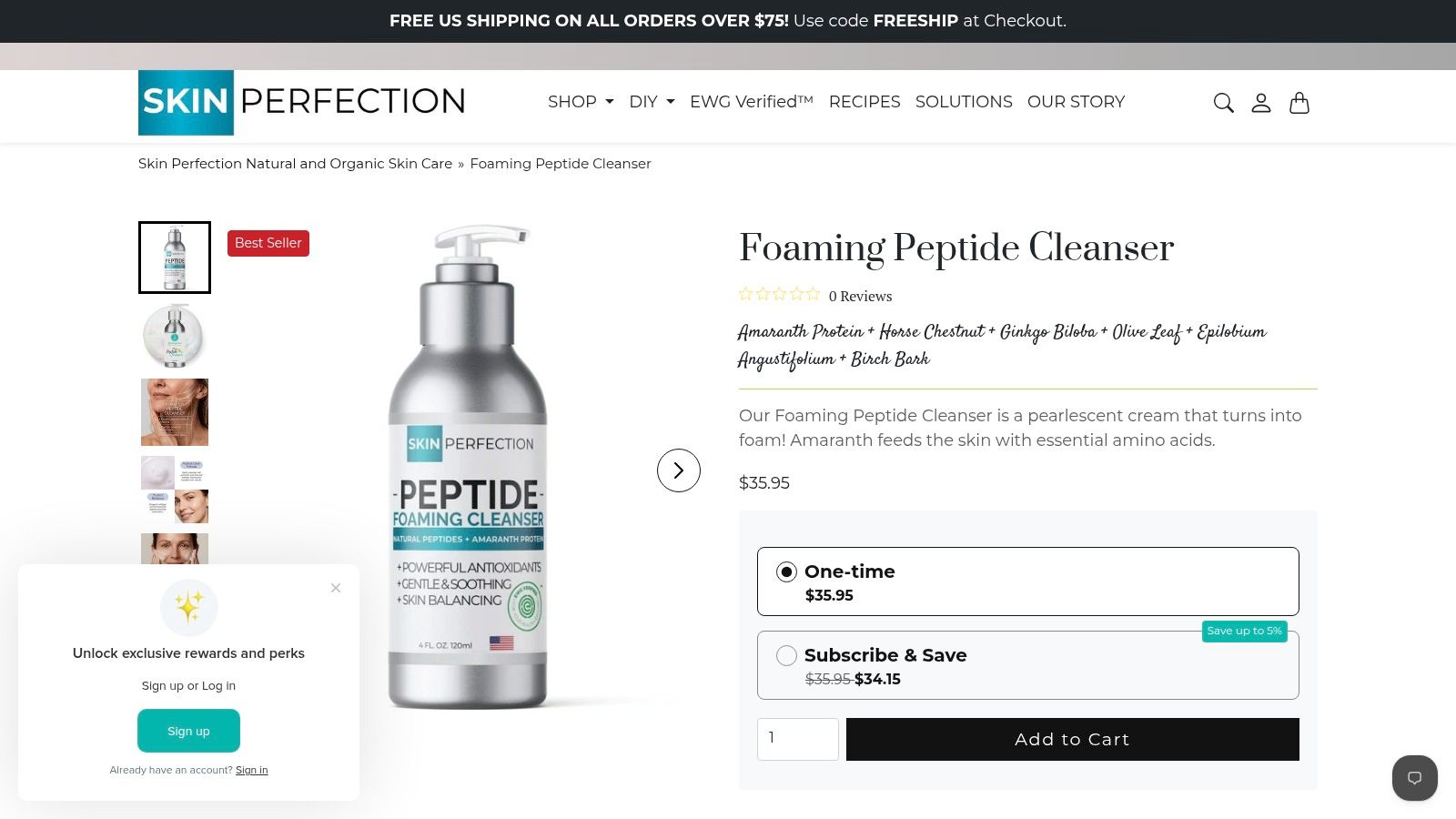
The Foaming Peptide Cleanser product page is a useful example of how marketing language and ingredient reading work together. Its positioning highlights a creamy cleanser, peptides, amaranth, and botanical ingredients, while its stated exclusions include parabens, sulfates, fragrance, gluten, and phthalates. The INCI list remains the place to verify what is present.
Fragrance deserves extra attention
“Fragrance” or “parfum” can represent a mixture rather than one easily recognizable substance. Essential oils and complex botanical extracts can also contribute fragrance allergens. If you're sensitive to scent, ask whether the brand can provide a fuller fragrance and allergen declaration.
Under EU fragrance-allergen rules, listed allergens must be declared individually above 0.001% in leave-on products and 0.01% in rinse-off products. Regulation (EU) 2023/1545 expands the disclosure framework by adding 56 allergens to the previous 24/26-allergen regime (European Commission fragrance-allergen guidance). These thresholds support informed avoidance, but they aren't a guarantee that lower concentrations will never irritate anyone.
For a separate example of how an ingredient source and product format can affect interpretation, consult this HempWell USA guide to hemp topicals. Then use this guide to reading a skincare label to practice the same process on products you already own.
Verifying EWG and Third-Party Claims With Real Evidence
A certification mark can be useful, but it isn't a substitute for understanding what the mark evaluates. EWG Verified is associated with ingredient disclosure, restricted-substance screening, manufacturing expectations, and safety review. It doesn't guarantee that a finished product will suit every person, feel pleasant, or deliver the same visible result for every user.
That distinction prevents a common mistake: treating certification as a personal compatibility guarantee. A product can meet a third-party standard and still contain an ingredient that doesn't suit your skin, preferences, or fragrance tolerance.
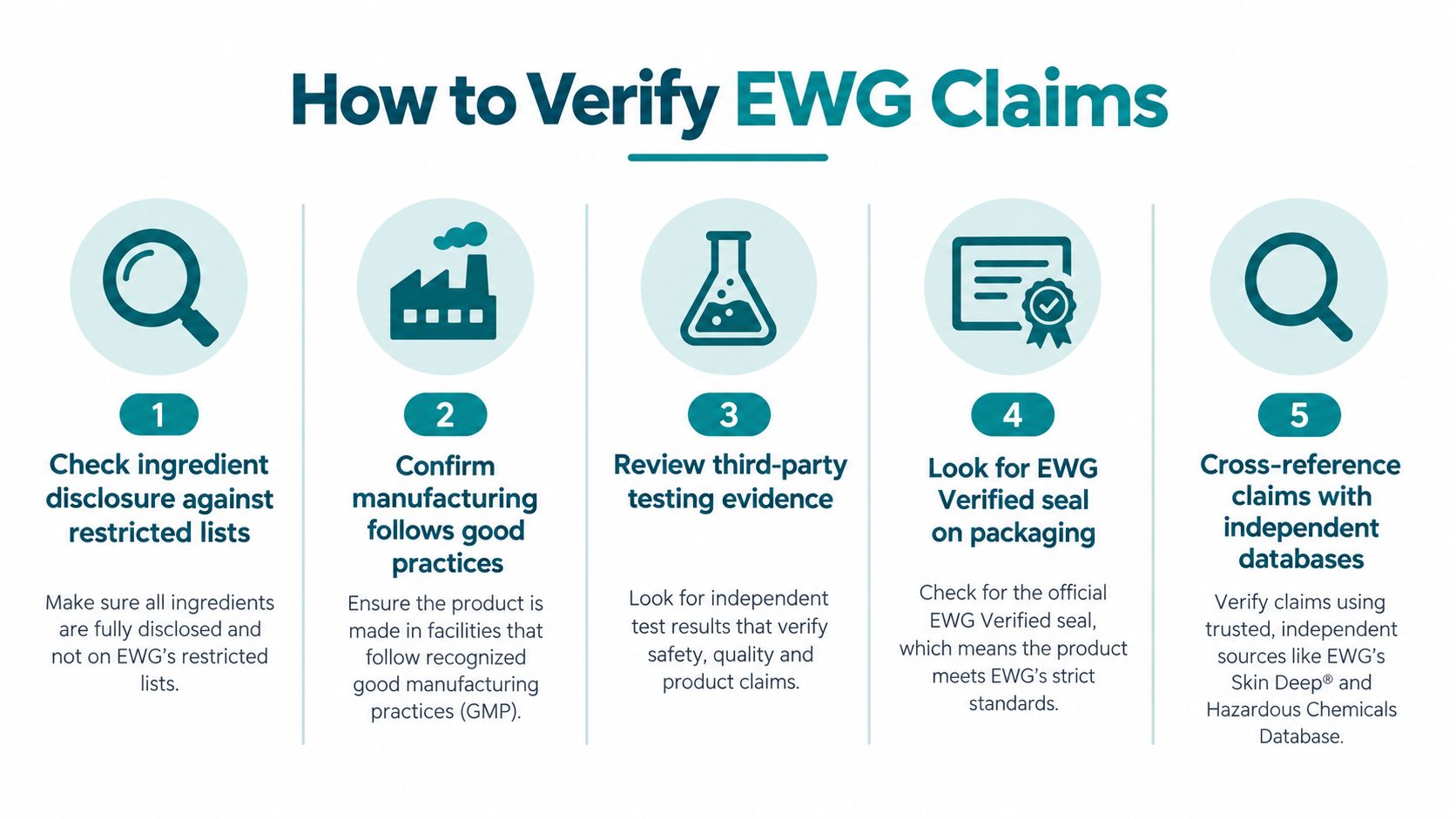
Build an evidence trail
Use several checks rather than relying on one badge:
- Read the complete ingredient list. Confirm that the product discloses the formula rather than relying on front-label promises.
- Identify the standard. Find out whether "clean" refers to a retailer policy, brand policy, certification, or regulatory requirement.
- Request supplier records. For raw materials, ask for certificates of analysis, allergen declarations, specifications, and lot information.
- Check safety alerts. Safety Gate records can reveal products withdrawn or flagged in the EU, although an alert isn't a complete safety assessment of every product in a category.
- Consider uncertainty whenever data is incomplete. Missing data doesn't prove danger, but it also doesn't prove safety.
A 2025 Beauty and Personal Care Ingredient Intelligence analysis examined 1.25 million ingredients across 48,000 U.S. beauty products. It classified 71.3% as safe or low concern, 3.7% as high hazard, and 24% as uncharacterized because available data weren't sufficient to determine their status (ingredient transparency analysis).
That 24% uncharacterized group is a valuable reminder that “unknown” is its own category. The right response is to seek more information about exposure, use level, route, and formulation context. The guide to EWG Verified skincare brands can help you understand the certification conversation, but you should still read the actual label.
Sourcing and Safety Basics for DIY Lotion Making
DIY formulation starts with documentation, not decoration. Before buying an extract, oil, emulsifier, peptide, or preservative, identify the supplier, product name, lot number, recommended storage conditions, and expiry or retest information.
Ask for a certificate of analysis, current specification sheet, allergen declaration where relevant, and any available contaminant or identity testing. A supplier's botanical name and extraction method can matter as much as the common marketing name. “Rose extract” doesn't tell you whether the material is an oil, hydrosol, glycerin extract, powder, or a diluted blend.
Water changes the safety equation
A water-containing formula requires a validated preservation strategy. That includes lotions, creams, emulsions, hydrosols, aloe products, and many botanical preparations. Refrigeration can slow some changes, but it isn't proof that a product is protected from bacteria, yeast, or mold.
The FDA identifies pathogenic bacteria and fungi as hazards in contaminated cosmetics and links contamination risk to ineffective preservation, ingredients that support microbial growth, water or saliva introduced during use, and warm or damp storage (FDA microbiological safety guidance).
A practical small-batch checklist
- Control the process: Clean and sanitize equipment, document batch dates, and limit open-jar exposure.
- Measure the formula: Record preservative concentration and check that the system suits the formula's pH and water phase.
- Protect the package: Choose packaging that limits finger contact and repeated exposure to air and moisture.
- Test the finished product: Stability checks and microbiological challenge testing provide information that an ingredient's name cannot provide.
- Set a use-by period: Don't guess shelf life from appearance, smell, or refrigeration alone.
The organic lotion-making supplies available from a supplier are only one part of responsible formulation. Safe making also depends on accurate weighing, controlled sanitation, suitable preservation, and records that let you trace what happened in each batch.
Your Personal Clean Beauty Decision Framework
You can evaluate almost any clean beauty ingredient with four questions.
First, assess exposure. Is the product leave-on or rinse-off? Is it used near the eyes, on the lips, over a large area, or only occasionally? Concentration and route matter more than a simple natural-versus-synthetic label.
Second, assess evidence. Look for a complete INCI list, supplier documentation, safety substantiation, appropriate testing, and clear claim language. Treat missing information as uncertainty rather than proof of either safety or danger.
Third, use your own history. Note past reactions to fragrance, essential oils, preservatives, botanicals, or particular product formats. A formula can be responsibly made and still be a poor personal fit.
Fourth, inspect transparency. Ask who made the claim, what standard they used, which market rules apply, and whether the supplier can support the raw materials. A thoughtful clean beauty decision may favor a simple fragrance-free formula, a technically complex preserved lotion, or a botanical serum, depending on the person and the product.
Clean beauty is best understood as a positioning term paired with a method. Read the label, separate cosmetic appearance language from drug-style treatment claims, check the evidence, and make a decision that fits your skin and values.
Skin Perfection offers skincare products, facial care, moisturizers, serums, and lotion-making supplies for appearance-focused routines and DIY formulation projects. Visit Skin Perfection to explore ready-made products and formulation materials, then use the label-reading skills from this guide to choose with confidence.