

 Buy with Prime


A proper double cleansing routine is surprisingly simple: it just means washing your face with two different types of cleansers, one right after the other. You start with an oil-based cleanser to melt away makeup, sunscreen, and excess oil, then follow up with a water-based cleanser to whisk away any leftover grime. This two-step approach gives you a much deeper clean without stripping your skin of its natural moisture.
Why Double Cleansing Is A Skincare Game Changer
If you've ever washed your face, dried it off, and still found foundation streaks on your white towel, you already know the limits of a single cleanse. This is exactly where double cleansing changes everything.
The idea is powerful yet straightforward: different kinds of impurities need different kinds of cleansers.
It all starts with an oil-based cleanser, like a cleansing oil or balm. As basic chemistry tells us, oil dissolves oil. This makes it incredibly effective at breaking down stubborn, oil-based products like foundation, waterproof mascara, and that sunscreen you applied this morning. It also lifts away excess sebum (your skin's natural oil) and daily pollutants that cling to your skin.
Once all that oily gunk is gone, it's time for the second step. A water-based cleanser—think gel, foam, or cream—steps in to tackle water-based impurities like sweat and dirt. This final wash ensures any residue from the first cleanse is gone, leaving your skin perfectly clean and ready for the rest of your routine.
The Foundation for Effective Skincare
When your skin is truly clean, it becomes a receptive canvas for all the products you apply next. Serums, moisturizers, and treatments can penetrate much more effectively when they aren't fighting through a layer of leftover buildup. In short, double cleansing makes your entire skincare routine work harder for you.
Instead of harsh scrubbing, this method offers a deep yet gentle clean. The goal is never to have your skin feel "squeaky clean," as that's often a sign that you've affected its natural moisture barrier. A healthy-looking barrier is crucial for balanced, happy skin. To learn more about keeping your complexion resilient, check out our guide on how to strengthen your skin barrier.
This thorough cleansing method does more than just remove surface-level impurities. It creates the optimal environment for your skin to absorb the valuable ingredients in your serums and moisturizers, amplifying their beautifying effects.
To help you see the difference, here’s a quick comparison of the two methods.
Double Cleansing vs. Single Cleansing At A Glance
| Feature | Single Cleanse | Double Cleanse |
|---|---|---|
| Cleansing Power | Removes surface-level dirt and some makeup. | Thoroughly removes makeup, sunscreen, sebum, and pollutants. |
| Product Penetration | Leftover residue can block product absorption. | Creates a clean canvas for better serum and moisturizer absorption. |
| Skin Barrier | May require harsh scrubbing, risking moisture loss. | Gently cleanses without stripping natural oils, protecting the barrier. |
| Best For | Minimal makeup wearers or a quick morning rinse. | Daily makeup/sunscreen users, oily or combination skin types. |
| Time Commitment | Quick, typically under a minute. | Adds an extra minute or two for a significantly better result. |
Clearly, taking that extra minute for a double cleanse offers benefits that a single wash just can't match.
A Ritual with Roots and Results
The double cleansing method, which gained massive popularity thanks to K-beauty trends from South Korea, has seen explosive market growth for a reason. Consumer reports show it can improve the appearance of skin hydration by up to 20-30% after washing compared to single-step methods. This ritual has been adopted by over 70% of K-beauty followers globally since 2015, proving its effectiveness and widespread appeal.
Of course, a great routine is just one piece of the puzzle. Complementary wellness practices can also do wonders for your skin. For instance, understanding the infrared sauna skin benefits can introduce new ways to support a radiant complexion from the inside out. This holistic view—combining an effective routine with overall wellness—is the real secret to achieving your best skin ever.
Mastering Your Double Cleansing Technique
Putting the theory of double cleansing into practice is way simpler than it sounds. Once you get the hang of it, this two-step ritual will become an intuitive and, honestly, pretty satisfying part of your evening. The whole idea is to work with your skin, not against it, using the right products in the right order to get a truly beautiful clean.
The entire process is designed to be gentle. You're not scrubbing or stripping your skin of its natural oils; you’re just methodically melting away the day. Think of it as a mini-reset that prepares your complexion for all the serums and creams to follow.
This simple infographic breaks down the two core phases of the routine.
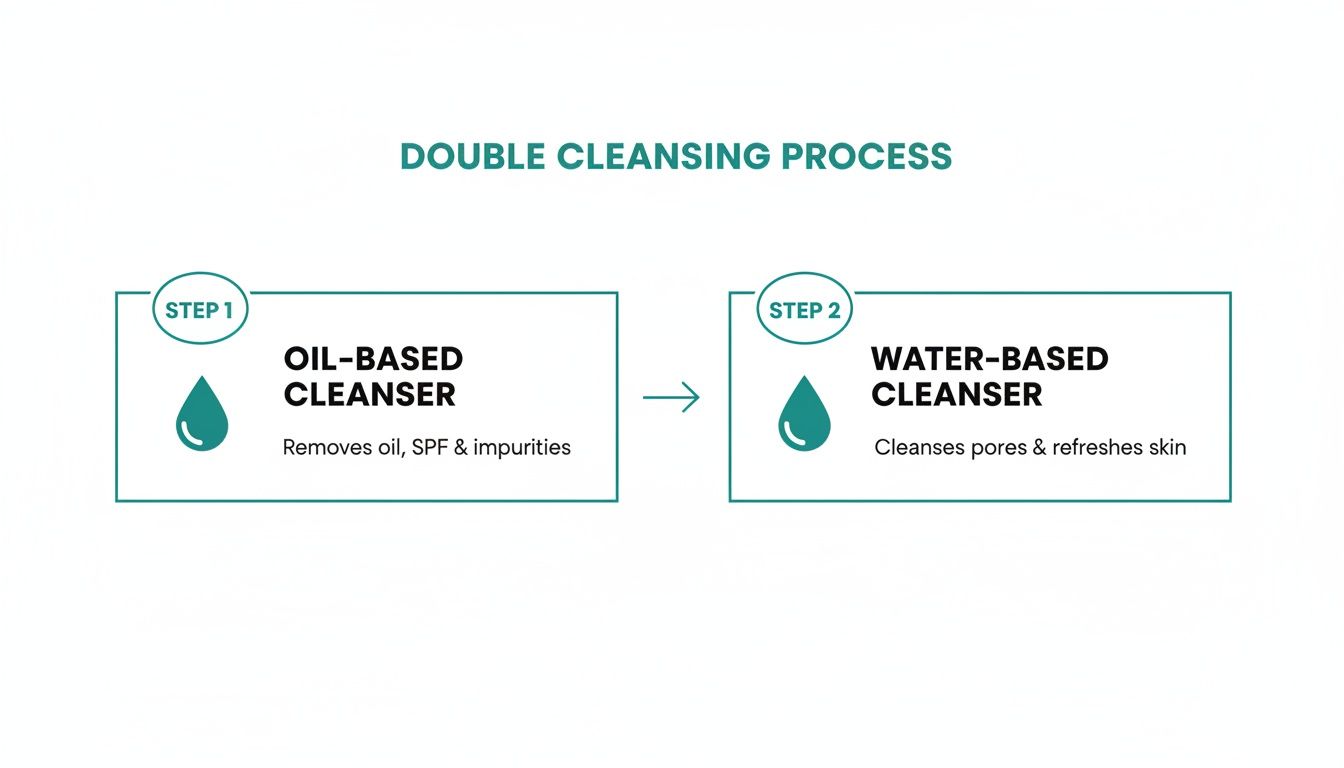
As you can see, it all starts with an oil-based formula to dissolve makeup and sunscreen, followed by a water-based one to wash everything away. The result is a complete and balanced cleanse.
Your Evening Double Cleansing Routine
Your evening cleanse is where the magic really happens. This is your chance to remove every last trace of makeup, sunscreen, and the environmental gunk that’s collected on your skin all day. Nailing this step sets the stage for your nighttime skincare products to work their absolute best.
First up is your chosen oil-based cleanser, whether it's a liquid oil or a solid balm.
-
Apply to Dry Skin: This is the most important rule of thumb. Dispense the cleanser into your dry hands and apply it directly to your dry face. If you apply it to wet skin, it will emulsify too early and won't be able to properly grab onto all those oil-based impurities.
-
Massage for a Full Minute: Gently massage the cleanser all over your face using circular motions. Give a little extra love to areas with heavy makeup or congestion, like around your nose or along your hairline. Aim for about 60 seconds—this gives the oil enough time to fully dissolve everything.
After a minute, wet your hands with a little lukewarm water and continue massaging your face. You'll see the oil turn into a milky emulsion. That’s your cue that it's ready to be rinsed off. Rinse thoroughly until no oily residue is left.
The Second Cleanse for a Fresh Finish
Now that the top layer of grime is gone, it’s time for your water-based cleanser. This step is all about removing any lingering sweat, dirt, and residue from the first cleanse, ensuring your skin is completely purified.
Squeeze a small amount of your favorite gel, cream, or gentle foaming cleanser into your wet hands and work it into a lather. Apply it to your already damp face, massaging for another 30 to 45 seconds. You don't need a full minute here, as you're just washing away what's left on the surface.
Rinse completely with lukewarm water and gently pat your face dry with a clean, soft towel. Your skin should feel clean, soft, and comfortable—never tight or squeaky. Now you have the perfect canvas for your serums and moisturizers. To make sure you're layering your products correctly for maximum benefit, check out our guide on the correct order to apply skin care products.
A Quick Tip: Always use lukewarm water for rinsing. Water that's too hot can be harsh and strip your skin, while very cold water isn't as effective at rinsing away the cleansers.
What About a Morning Cleanse?
A common question we get is whether you need to repeat the full double cleansing routine in the morning. For most people, the answer is a simple no.
Overnight, your skin hasn't been exposed to makeup or pollutants. A single cleanse with your gentle, water-based formula is usually plenty to remove sweat and any residual skincare from the night before. This refreshes your skin without over-cleansing.
However, if you have very oily skin or just wake up feeling particularly greasy, you might find a double cleanse beneficial. The best approach, as always, is to just listen to what your skin is telling you on any given day.
Choosing Your Perfect Cleansing Duo
Building your perfect double cleansing routine isn't about finding a single "holy grail" product. It's more like creating a personalized team where each cleanser plays a specific, powerful role for your skin. The goal is to find a duo that leaves your complexion feeling balanced, comfortable, and truly clean—not stripped or tight.
Think of it this way: your first cleanse is the heavy lifter, dissolving stubborn makeup, SPF, and daily grime. Your second cleanse comes in to polish everything off, purifying the skin and prepping it for the rest of your routine. Getting this combination just right is what makes the double cleanse method so effective.
Your First Cleanse: The Oil-Based Step
Everything starts with your oil-based cleanser. The type of oil you choose here can make a world of difference in how your skin feels and behaves.
-
For Oily or Combination Skin: I know it sounds backward, but the right oils can actually help balance your skin's own sebum production. You'll want to look for lightweight, non-comedogenic oils like grapeseed oil or jojoba oil. They get the job done without feeling heavy or clogging pores.
-
For Dry or Mature Skin: This is where you can embrace richer, more nourishing oils that give your skin some extra TLC. Think avocado oil, sweet almond oil, or marula oil—all fantastic options that support your skin's moisture barrier while they cleanse.
-
For Sensitive Skin: Keep it simple. Gentle, single-ingredient oils or formulas with very few additives are your best bet. Sunflower seed oil and squalane are known for their gentle properties and are far less likely to cause a reaction.
The power of this two-step process is well-documented. The initial oil cleanse is a master at dissolving sebum and impurities; some clinical tests even show it removes up to 95% of SPF and makeup. Following up with a gel or cream cleanser can then boost the look of skin hydration by as much as 35%.
The beauty of a double cleanse is its adaptability. By choosing oils that complement your skin, you turn a simple wash into a targeted step that supports your complexion's specific needs, setting a beautiful foundation for your entire routine.
Your Second Cleanse: The Water-Based Step
Now that the makeup and sunscreen are gone, your second cleanser gets to focus on deeply purifying your skin. Just like with the first step, matching the formula to your skin type is key to keeping everything in balance.
You might even consider a second cleanser with active ingredients to target specific concerns. For example, learning about the benefits of cleansers with exfoliating AHAs and BHAs can help you customize your routine to address things like dullness or the appearance of clogged pores.
-
For Oily or Combination Skin: A gentle gel cleanser is often the perfect fit. These formulas give you that satisfyingly clean feeling and help manage excess oil without ever stripping your skin. Look for ingredients like green tea extract or salicylic acid from willow bark.
-
For Dry or Mature Skin: A non-foaming cream or milk cleanser is ideal here. They cleanse beautifully while depositing hydrating ingredients like hyaluronic acid or glycerin, leaving skin feeling soft and supple, never tight.
-
For Sensitive Skin: Go for the gentlest options you can find. That means fragrance-free, soap-free formulas with calming ingredients like calendula, chamomile, or colloidal oatmeal. A low-foaming or cream-based texture will feel much more comfortable and won't disrupt your skin's barrier.
Finding the right oils can be a bit of a journey, but it's worth the effort. If you want to dive deeper into selecting the best options for your complexion, you might find our guide to hydrating with facial oils helpful. By carefully picking both your oil and water-based cleansers, you create a customized ritual that leaves your skin feeling its absolute best.
Creating Your Own Double Cleanse Formulas
For the skincare enthusiast who loves a hands-on approach, crafting your own double cleansing duo can be an incredibly rewarding experience. It gives you complete control over the ingredients, allowing you to create formulas that feel truly personalized.
The process connects you to your routine on a deeper level, turning a daily task into a creative ritual. And trust me, it's much more approachable than you might think. With high-quality ingredients and a clear understanding of what each one does, you can formulate a gentle and effective double cleansing routine right in your own kitchen.
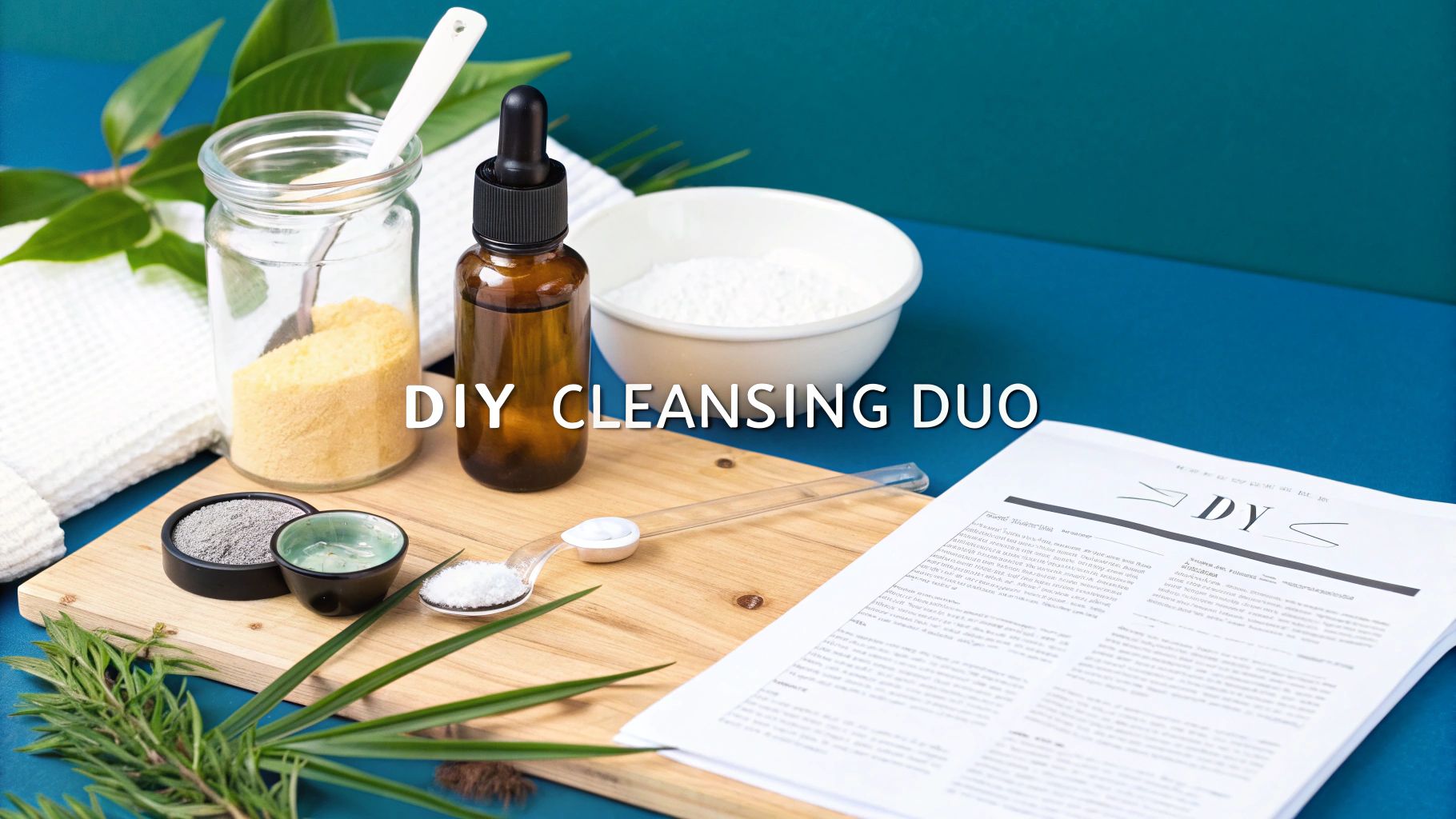
Crafting a Simple DIY Cleansing Oil
First up in your homemade duo is the oil cleanser. Its whole job is to dissolve makeup, sunscreen, and the day's grime. The key is blending nourishing carrier oils that your skin loves with a cosmetic emulsifier—that's the secret ingredient that allows the oil to rinse away cleanly with water.
A great base recipe is simple and effective. You're looking for a blend that balances cleansing power with skin-supporting properties.
Here’s a basic formula to get you started:
- 85% Carrier Oil(s): This is the heart of your cleanser. You can use a single oil or create a custom blend. For instance, jojoba oil is fantastic for all skin types, while grapeseed is lighter for oily skin and avocado is richer for dry complexions.
- 10% Emulsifier: An ingredient like Polysorbate 80 or Cromollient SCE is non-negotiable. This is what allows your oil cleanser to turn milky and rinse off easily, preventing that greasy film that could clog pores.
- 5% Beneficial Additives: This is where you can get creative. A few drops of Vitamin E oil (Tocopherol) can add antioxidant benefits and help keep the oils from going rancid. You could also include a skin-friendly essential oil like lavender or chamomile for a calming scent, but always patch-test first!
To make it, just measure your ingredients by weight using a small digital scale for accuracy. Combine them in a sanitized bottle, cap it, and shake gently to mix. Your homemade oil cleanser is ready to go.
Creating your own formulas is not just about mixing ingredients; it's about understanding them. Learning the function of each component empowers you to adjust recipes and truly personalize your skincare to match your skin's evolving needs.
Formulating a Gentle Water-Based Cleanser
For your second cleanse, you need something that removes any leftover impurities without stripping your skin. A homemade water-based cleanser uses gentle surfactants and humectants to leave your skin feeling soft, clean, and balanced.
This recipe requires a bit more care because it involves water, which means a preservative is absolutely necessary to keep it safe from microbial growth.
Here’s a sample formula to consider:
- Distilled Water: This will be the bulk of your cleanser.
- Glycerin: A powerful humectant that pulls moisture into the skin, preventing that tight, dry feeling after washing.
- Plant-Based Surfactant: Ingredients like Coco-Glucoside or Decyl Glucoside are gentle, plant-derived cleansers. They create a soft lather to wash everything away without irritation.
- Preservative: A broad-spectrum preservative like Leucidal Liquid SF Max or Optiphen is non-negotiable in any water-based formula to ensure its safety and shelf life.
- Thickener (Optional): Just a small amount of xanthan gum can give your cleanser a more traditional gel-like texture.
Crafting water-based products requires careful measurement and following formulation guidelines. If you're new to this exciting world, diving into the principles of cosmetic formulation is a great next step to build your skills and confidence. It opens up a world of possibilities for creating products you’ll love.
Common Double Cleansing Mistakes to Avoid
Even the most dedicated skincare lover can make a few missteps that mess with their results. Getting into a double cleansing routine is a fantastic move, but it's the little details in your technique that really unlock its full potential. Let's walk through a few common mistakes to make sure every cleanse leaves your skin feeling comfortable, balanced, and perfectly clean.
Applying Oil Cleanser to a Wet Face
One of the most common slip-ups is putting your oil-based cleanser on a wet face. It might feel like the right thing to do, but this simple mistake stops the oil from working its magic. Oil needs to be massaged onto dry skin to properly grab onto and dissolve oil-based gunk like makeup, sunscreen, and your skin's own sebum.
When you introduce water too early, the emulsifiers in the cleanser activate right away, turning the oil milky before it's had a chance to break everything down. This seriously cuts down on its cleansing power, often leaving behind a residue that can lead to the appearance of clogged pores.
Skipping the Thorough Rinse
Another easy trap to fall into is not rinsing well enough between your two cleanses. A quick splash of water just won't cut it when you're trying to remove all that emulsified oil and the dissolved grime it's holding onto.
If any of that oily film gets left behind, your second water-based cleanser can't properly get to your skin to do its job. This can leave you with that lingering feeling of residue or, even worse, block your pores.
Pro Tip: Spend at least 30 seconds rinsing after your first cleanse using lukewarm water. Really focus on your hairline, along your jaw, and the sides of your nose to make sure every last trace is washed away before you move on to your second step.
This careful approach guarantees your second cleanser has a clean canvas to work on, purifying your skin for a truly deep clean.
Using Formulas That Are Too Harsh
It’s so tempting to grab a strong, super-foamy cleanser for that "squeaky clean" feeling, but that's usually a red flag that you're stripping your skin. A great double cleansing routine should be powerful, but it also has to be gentle. If your skin feels tight, dry, or looks irritated after you wash it, your cleansers are probably too aggressive for your skin type.
Keep the main goal in mind:
- Respect Your Skin Barrier: Your cleansers should remove impurities without affecting your skin's natural moisture shield.
- Work Together: Your two cleansers should be a complementary pair, not two harsh products fighting for dominance.
- Listen to Your Skin: Redness and tightness are your skin’s way of asking for a gentler formula.
There's a reason facial cleansing balms and oils—the core of this method—have exploded in popularity worldwide. This two-step process can remove up to 99% of pollutants and makeup, compared to just 70% for foams used alone, all while keeping the skin’s barrier intact. This is absolutely critical for allowing the serums and moisturizers you apply afterward to work effectively.
Ultimately, dodging these common mistakes will elevate your double cleanse from just another chore to a precise, effective ritual. By making sure you apply oil to dry skin, rinse like you mean it, and choose gentle formulas, you’re setting the stage for your best skin yet. And never forget, a truly clean canvas is the first step to a radiant complexion—which is exactly why you should never, ever skip washing your face before bed. For more on that, check out our article on the 6 reasons why sleeping in makeup is a major beauty sin.
Your Double Cleansing Questions, Answered
Jumping into any new skincare practice can feel like you're navigating a maze. It’s totally normal to have questions! Even something as straightforward as the double cleansing routine has little details that can seriously impact your results. Let's clear up some of the most common questions so you can get started with total confidence.
Think of this as your cheat sheet for refining your technique and making this ritual work perfectly for you.
Do I Really Need to Double Cleanse Every Single Day?
This is a fantastic question, and the answer really comes down to what your day looked like.
If you've been wearing makeup or sunscreen, a nightly double cleanse is non-negotiable. You absolutely want to get every last trace off your skin. This deep clean preps your skin to soak up all the goodness from your nighttime serums and creams while you sleep.
But in the morning? Your skin's needs are totally different. Usually, a quick, gentle wash with your water-based cleanser is plenty to rinse off sweat and leftover product from the night before.
The golden rule is always to listen to your skin. For most people, a dedicated double cleanse in the evening is the perfect rhythm for keeping their complexion clear and happy.
Can I Just Use My Regular Face Oil as a Cleanser?
It's a tempting thought, especially if you have a beautiful face oil you already love. But honestly, it's best to stick with a dedicated cleansing oil.
Here’s the deal: cleansing oils and balms are specially made with ingredients called emulsifiers. This is the secret sauce. Emulsifiers allow the oil to mix with water, turning it into a milky liquid that rinses away completely, taking all the gunk with it and leaving zero residue behind.
A standard face oil—the kind you use to moisturize—doesn't have those emulsifiers. If you try to wash your face with it, it'll break down makeup, sure, but it won't rinse off. You'll be left with a greasy film that could clog pores and block your second cleanser from actually cleaning your skin.
Key Takeaway: The emulsifier is what makes an oil cleanser work. Without it, you're not really cleansing, so always grab a product made for the job.
Is Double Cleansing Good for Oily Skin?
Absolutely! In fact, it can be a total game-changer if you have oily skin or skin prone to blemishes. It all comes down to a simple chemistry rule: "like dissolves like." An oil-based cleanser is a magnet for the excess oil (sebum) your skin produces, breaking it down and lifting it away more effectively than anything else.
The trick is to use the right kind of oils. You'll want to look for non-comedogenic options, which are just oils that are less likely to clog your pores. Lightweight oils like grapeseed or jojoba are amazing choices for oily complexions.
When you follow that up with a gentle, water-based cleanser, you remove any last bit of residue. Your skin is left feeling perfectly balanced and clean—never stripped or uncomfortably tight. This helps keep your skin barrier looking healthy, which is crucial for managing the appearance of breakouts.
How Long Should I Massage Each Cleanser On For?
Timing really is everything, and giving each step a few extra seconds can make a huge difference. The "60-second rule" is a great guideline, especially for your first cleanse.
-
Your Oil Cleanser: Gently massage it onto dry skin for a full minute. This gives the oil plenty of time to melt away makeup, sunscreen, and sebum. Plus, it's a lovely mini facial massage that helps boost circulation for a healthy glow.
-
Your Water-Based Cleanser: This step is a bit quicker. About 30-45 seconds is all you need to wash away any remaining impurities and cleanser residue. The goal is always to be thorough but gentle—never pull or scrub your skin.
Following these simple timeframes ensures your double cleansing routine is not only effective but also a relaxing moment for yourself, setting the stage for radiant, healthy skin day after day.
At Skin Perfection, we believe that an effective skincare routine always starts with the perfect cleanse. Explore our range of high-quality, plant-derived ingredients and ready-made formulas to build a routine that beautifies your skin. Shop now and create your ideal cleansing duo.