

 Buy with Prime


That first moment you notice more hair in your brush or circling the shower drain can be a bit jarring. But the key here is observation, not panic. When you can spot the earliest, most subtle signs of hair thinning, you can take action to support your hair health long before the changes become obvious.
First Signs Your Hair Is Thinning

First off, let's get one thing straight: it's totally normal to shed between 50 and 100 hairs a day. This is just part of a healthy hair growth cycle. The kind of thinning we're talking about is different—it's more gradual and easy to miss if you aren't really paying attention. It’s less about a sudden handful of hair and more about subtle shifts in your hair's overall look and feel over time.
Learning to recognize these early clues is what moves you from a place of worry to one of empowerment. It means you can start making small, gentle adjustments to your routine to support your hair.
Subtle Changes to Watch For
The first signs of thinning are rarely dramatic. They’re the kind of small changes you might only notice over weeks or even months. Being attuned to them can make all the difference.
Here are some common early indicators to look out for:
- A Widening Part: Take a look at your usual part. Does it seem a little wider than it used to? Seeing more scalp along that line, especially under bright lights, is often one of the very first things people notice.
- A Less Dense Ponytail: If you’re a ponytail person, this one’s for you. You might find that your ponytail just doesn't feel as thick, or you might need to wrap the hair tie an extra time to make it feel secure.
- Increased Scalp Visibility: You might catch a glimpse of your scalp through your hair more easily, especially at the crown or when your hair is wet and clumped together.
- Changes in Hair Texture: Sometimes the change is more tactile. Your hair might just feel finer or less substantial when you run your fingers through it.
To really get a handle on hair thinning, it's helpful to understand what might be causing it. There are many essential causes of thinning hair in women that can contribute to these changes.
Here’s a practical tip: try taking photos of your hair every few months in the same spot with the same lighting. This creates a simple visual diary, helping you track any changes objectively instead of just relying on memory. It’s a small practice that can bring a lot of clarity and peace of mind.
Nourishing Your Hair from the Inside Out
The journey to fuller, healthier-looking hair often starts right in your kitchen, not your bathroom cabinet. Think about it: everything you eat provides the essential building blocks for your entire body, and that absolutely includes the strands on your head. This isn't about some drastic, restrictive diet, but rather making small, mindful choices that create a happy, supportive internal environment for your hair.
Imagine your hair follicles as tiny factories. They need a steady stream of quality raw materials to run at peak performance. When your diet is packed with the right nutrients, you're essentially giving those factories exactly what they need to support a healthy hair growth cycle.
Fueling Your Follicles With Key Nutrients
So, how do we support hair's appearance from the inside? It all comes down to a few powerhouse nutrients that are important for hair's strength and appearance. The goal is to build a plate that's as vibrant and varied as you want your hair to be.
Here are a few essential food groups to start weaving into your meals:
- Lean Proteins: Your hair is made almost entirely of a protein called keratin. Loading up on sources like chicken, fish, eggs, and legumes gives your body the fundamental components for strong strands.
- Iron-Rich Greens: Leafy greens like spinach and kale are bursting with iron, a mineral that's absolutely crucial for hair follicle health. In fact, low iron levels are often associated with changes in hair fullness.
- Healthy Fats: Don't fear the fat! Foods like avocados, nuts, and seeds are rich in essential fatty acids, which are vital for maintaining a healthy scalp. A healthy scalp is the foundation of healthy hair.
Did you know hair thinning is a massive concern? It affects approximately 85% of men and 33% of women at some point. The most common type is responsible for about 95% of all cases, often starting with gradual thinning. You can find more information in public hair loss statistics.
Vitamins And Minerals For Vibrant Hair
Beyond the big three, certain vitamins and minerals play a starring role in the appearance of healthy hair. While supplements have their place, getting these nutrients directly from your food is always a great route.
Try to add more of these to your daily plate:
- Biotin (Vitamin B7): Famous for its role in hair wellness, biotin is a key player in producing keratin. You can find it in foods like eggs, almonds, and sweet potatoes.
- Vitamin C: This isn't just for immune support! Berries, oranges, and bell peppers are fantastic sources. Vitamin C is a powerful antioxidant that also helps your body produce collagen, another protein that contributes to hair's strength.
- Zinc: Found in pumpkin seeds and lentils, this mineral is a workhorse for hair tissue. It also helps keep the oil glands around your follicles working just right.
A balanced diet is always the goal, but it's really helpful to know what each nutrient is doing for you. If you're curious about the B-vitamin family in particular, you can explore the benefits of various B vitamins for overall wellness.
The Lifestyle Connection: Stress And Sleep
Your approach to supporting your hair doesn't stop with your diet. Your lifestyle plays a huge part, too. Chronic stress and poor sleep can seriously disrupt your body's natural rhythms, including your hair growth cycle. High stress levels can push more of your hair into the shedding phase before it's ready.
Prioritizing simple stress management techniques can have a surprisingly positive impact. Try mindfulness, yoga, or even just a short daily walk. It all helps.
Likewise, aiming for 7-9 hours of quality sleep each night gives your body the downtime it needs for its natural processes. This is essential for every system in your body, and your hair follicles are no exception. It’s these small, sustainable shifts in your lifestyle that truly create lasting change.
Building a Gentle Hair Care Routine
Your daily hair habits can either be your hair's best friend or its worst enemy. When you're trying to support fuller-looking hair, the small, consistent things you do every day—from washing to styling—can make a huge difference. Think of it less as a chore and more as a ritual that protects every single strand.
It's all about reducing physical stress on your hair. This helps it appear fuller, feel stronger, and stay more resilient against breakage. Adopting a gentle approach is the foundation.
Rethinking Your Wash Routine
Believe it or not, how you wash your hair is a pretty big deal. A few simple tweaks can dramatically reduces the strain you put on delicate strands, and it all starts with the water temperature.
Hot water feels nice, but it strips your scalp of its natural protective oils, leaving your hair and scalp feeling dry and vulnerable. Instead, turn the temperature down to lukewarm. It cleans just as effectively without being harsh.
When you shampoo, concentrate the product on your scalp—that’s where the oil and buildup really live. Then, use your fingertips (never your nails!) to gently massage it in. This does more than just clean; it also helps stimulate blood flow to your follicles.
The Art of Gentle Detangling and Drying
Wet hair is incredibly fragile. This is the moment it's most susceptible to snapping and breaking, which is the last thing you want when you're trying to keep your hair looking full. Rough towel-drying and aggressive brushing are among the biggest culprits of unnecessary hair breakage.
Here's something to remember: Hair is more elastic when it's wet, which means it's much more likely to break under tension. The goal isn't to stop brushing wet hair entirely, but to do it with extreme care.
Instead of rubbing your hair with a regular towel, gently squeeze the excess water out with a soft microfiber towel or even an old cotton t-shirt. To get the knots out, always reach for a wide-tooth comb. Start at the ends and patiently work your way up to the roots. This simple technique prevents you from ripping right through tangles and damaging the hair shaft.
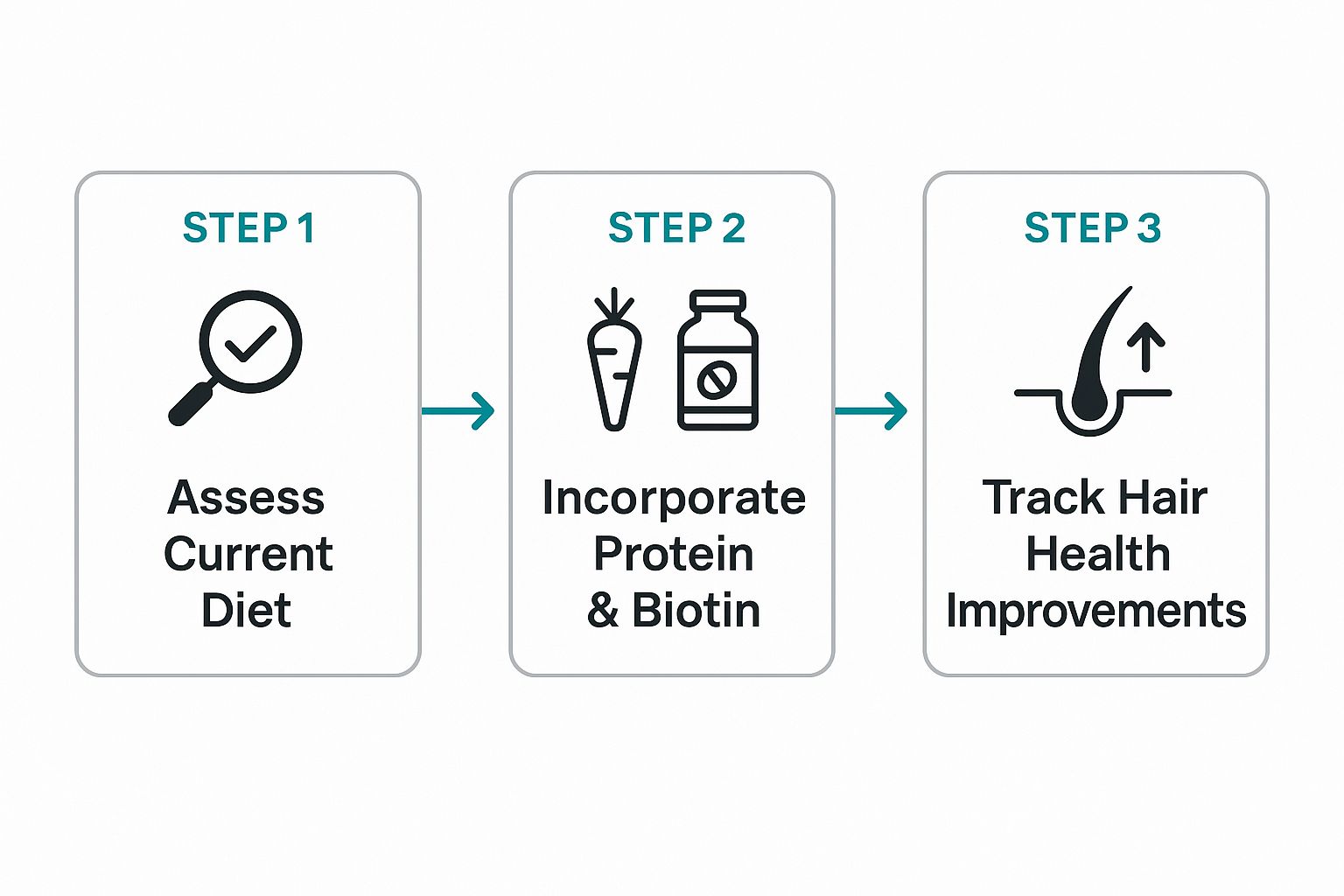
As this process shows, it’s a simple cycle: assess your current habits, make targeted improvements, and then watch the results to fine-tune your routine over time.
Smart Styling to Minimize Stress
High-heat tools and tight hairstyles are two major players in physical hair damage. That constant pulling from a tight ponytail, bun, or braids can strain the follicles over time, leading to a condition called traction alopecia. At the same time, cranking up the heat on your flat iron or curling wand can affect your hair's protein structure, leaving it looking weak and brittle.
This doesn't mean you have to give up on styling. It just means you need to be smarter about it.
Making a few simple swaps in your daily hair care can significantly reduce stress on your hair and support a fuller, healthier look over time.
Gentle Hair Care Swaps for a Fuller Look
| Common Practice | Gentle Alternative | Why It Helps |
|---|---|---|
| Rough towel-drying | Gently blotting with a microfiber towel or t-shirt | Reduces friction and prevents the cuticle from getting roughed up, minimizing breakage and frizz. |
| High-heat styling tools | Using the lowest effective heat setting with a protectant | Less heat exposure means the hair's protein structure stays stronger and more intact. |
| Tight ponytails or buns | Looser styles with silk or satin scrunchies | Eases the constant tension on your hair follicles, which can help prevent traction alopecia. |
| Brushing wet hair aggressively | Using a wide-tooth comb from ends to roots | Prevents the stretching and snapping of fragile, wet hair strands. |
| Washing with hot water | Cleansing with lukewarm or cool water | Keeps your scalp's natural oils balanced and prevents hair from becoming overly dry and brittle. |
Even one or two of these changes can make a noticeable difference in how resilient your hair feels. It's all about creating an environment where your hair can thrive.
By building a gentler routine, you're actively protecting your hair from the daily wear and tear that can contribute to thinning. For more tips, check out our guide on how to keep your hair healthy and vibrant. Remember, small, consistent efforts are what truly lead to hair that looks and feels its absolute best.
Whip Up Some Topical Treatments and DIY Rinses

If you're like me and love a good hands-on approach to beauty, diving into topical ingredients and DIY rinses can be a great addition to your routine. It's empowering to know exactly what you're putting on your scalp, especially when you can use simple botanicals and oils to whip up something effective right in your own kitchen. This is DIY at its best—crafting your own solutions with total confidence.
It's no secret that hair thinning is a major concern for many. The global market for hair-thinning solutions reached about USD 1.51 billion in 2024 and is expected to grow to USD 2.75 billion by 2030. Interestingly, it's women who are leading the charge, making up 58.17% of the consumers in this space.
The Power of Botanicals
For centuries, certain plants have been staples in hair care for their incredible clarifying and invigorating properties. Two of my absolute favorites are rosemary and peppermint. Both are famous for that refreshing, tingling sensation they bring to the scalp—a feeling often linked to a boost in circulation, which is exactly what a healthy scalp needs.
Getting these botanicals into your routine is easy:
- Infused Oils: Try gently warming a carrier oil like jojoba or almond with a few sprigs of dried rosemary. You'll create a fragrant, soothing oil that's perfect for a pre-shampoo scalp massage.
- Hair Rinses: A simple tea made by steeping peppermint or rosemary leaves can be used as a final rinse after you shampoo. It leaves your scalp feeling incredibly clean and refreshed.
- Essential Oil Boost: Just add a few drops of high-quality peppermint or rosemary essential oil to your regular shampoo to instantly upgrade your cleansing routine.
A quick word of caution: always dilute essential oils in a carrier oil or shampoo. Putting them directly on your scalp can be too potent and can lead to skin irritation.
Mix Up Your Own Scalp Serums
Making your own scalp serum sounds complicated, but I promise it's not. It also means you can customize it completely to your hair's needs. The key is to start with a lightweight carrier oil that won’t leave your hair greasy or clog your pores. Jojoba oil is a fantastic option because its structure is surprisingly similar to the natural sebum our skin produces.
Coconut oil is another brilliant base, loved for its deep moisturizing abilities. If you want to dig deeper into its benefits, you can learn more about using organic virgin coconut oil for healthy skin and hair.
Easy DIY Invigorating Scalp Oil Recipe
- Grab a Base: Pour two ounces (that's about four tablespoons) of jojoba or fractionated coconut oil into a small, clean glass bottle.
- Add Your Botanicals: Time for the good stuff. Add 2-3 drops of rosemary essential oil and 1-2 drops of peppermint essential oil.
- Boost with Vitamin E: Puncture one vitamin E capsule and squeeze the oil into your mix. It’s a fantastic natural antioxidant.
- Mix It Up: Pop the cap on and gently roll the bottle between your hands to get all those lovely ingredients combined.
To use it, simply apply a few drops directly onto your scalp, then gently massage it in with your fingertips for a few minutes before shampooing.
The Importance of Patch Testing
Okay, let's talk safety. Whenever you introduce any new ingredient or DIY blend to your routine, you have to patch test first. It’s a simple but non-negotiable step to make sure your skin doesn’t have a bad reaction.
Here’s how to do it right:
- Dab a tiny amount of the product onto a discreet patch of skin, such as the inside of your elbow or behind your ear.
- Leave it alone for 24-48 hours. Don't wash the area.
- After the time is up, check for any redness, itching, or irritation.
If you see no reaction, you can feel much more confident about using it on your scalp. This little bit of prep work lets you enjoy your homemade creations without any worries. And for those looking to round out their routine, it's worth checking out some of the best hair growth products to see how they might fit with your DIY efforts.
Knowing When to See a Professional
While lifestyle tweaks, a gentle routine, and DIY rinses are all fantastic ways to support your hair, there are times when an expert perspective is the most powerful next step you can take. Knowing how to approach hair thinning sometimes means knowing when to ask for help.
Think of it less like a last resort and more like a proactive strategy. Seeing a professional gives you the full picture of your hair’s wellness, something you just can’t get from looking in the mirror.
Sometimes, what you can see at home isn't the whole story. A dermatologist, who is an expert in all things skin and hair, or a trichologist—a dedicated hair and scalp specialist—can provide a much more detailed assessment. They have the right tools and years of experience to get a close-up look at your scalp and follicles, helping to pinpoint underlying issues you might never spot on your own.
Red Flags That Warrant a Consultation
Deciding to book an appointment can feel like a big deal, but some signs are clear indicators that it's the right move. If you're experiencing any of the following, getting professional guidance is a smart way to get more information.
You should consider scheduling a visit if you notice:
- Sudden or Rapid Shedding: If you’ve gone from losing a normal amount of hair to seeing noticeable clumps in your brush or shower drain in a short amount of time, it’s worth getting checked out.
- Patchy Hair Loss: The appearance of distinct bald spots or patches on your scalp—or even your eyebrows or beard—definitely warrants a professional look.
- Persistent Scalp Issues: Is your thinning hair paired with an itchy, burning, red, or flaky scalp that just won't quit? This could point to a scalp condition that may need a specific approach.
- Thinning with Other Symptoms: If your hair changes happen at the same time as other new symptoms, like major fatigue or unexplained weight changes, a doctor can help connect the dots.
A professional consultation takes the guesswork out of the equation. It moves you from a place of uncertainty to one of clarity and confidence. It’s an investment in understanding your unique hair and scalp, giving you personalized insights.
What to Expect From Your Visit
The main goal is to get a personalized game plan. Your specialist will likely ask a lot of questions about your health history, diet, lifestyle, and the specific hair changes you’ve seen. It’s a comprehensive approach that helps them build a complete profile of what’s going on.
And trust me, you are not alone in this. Hair loss is incredibly common. In the United States alone, it affects roughly 56 million people—that’s 35 million men and 21 million women. The numbers are even higher globally, which just goes to show how many people are seeking support. You can dive deeper into these hair loss statistics to see how trends vary worldwide.
Ultimately, seeing a professional is all about gathering information. It empowers you with real knowledge about your specific situation and lays out all the paths you can take, ensuring you feel fully supported on your journey.
Common Questions About Hair Thinning
Navigating the world of hair care can feel overwhelming, especially when you're focused on preventing hair thinning and getting a fuller look. Getting clear, straightforward answers is the first step to building a routine that actually works and makes you feel confident.
Let's cut through the noise and tackle some of the most common questions we hear.
How Often Should I Be Washing My Hair?
This is a big one. It's a common myth that washing your hair too often causes more shedding, but the truth is usually the opposite.
Those hairs you see in the shower drain were already in the shedding phase of their natural growth cycle. Washing simply helps them along. In reality, keeping your scalp clean by washing it every 2-3 days is a good thing! It prevents the buildup of oils, sweat, and products that can clog follicles, weigh hair down, and make it look limp and less dense.
A clean scalp is a happy scalp, and that’s the perfect environment for healthy hair to grow.
Can Certain Hairstyles Make My Hair Look Thinner?
Absolutely. Any style that puts constant tension on your hair follicles can cause real trouble over time. Think about super-tight ponytails, high buns, or intricate braids. They pull and pull, which can lead to breakage and even a type of hair loss called traction alopecia.
This kind of breakage can make your hair appear much less full, particularly around the hairline, where strands are often finer.
To minimize this physical stress, try these simple swaps:
- Opt for looser, more relaxed styles that don’t pull on the scalp.
- Use soft hair ties, like silk or satin scrunchies. They're much gentler on your strands.
- Give your hair regular breaks from updos to relieve all that tension.
The goal here is to reduce unnecessary strain. A relaxed hairstyle is not only more comfortable but it’s one of the simplest ways to protect your hair from daily wear and tear that contributes to a thinner appearance.
Will Cutting My Hair Make It Appear Thicker?
While a haircut won't magically increase the number of strands on your head, the proper cut can create a powerful illusion of volume and fullness. It can dramatically change how dense your hair looks and feels.
For instance, a blunt cut that gets rid of wispy, damaged ends can instantly make the bottom edge of your hair look much thicker and healthier. A great stylist might also suggest adding a few strategic, subtle layers to create movement and body, which really enhances your hair’s overall volume.
Ultimately, a good haircut works with your hair's natural texture to maximize its visual density. It's one of the quickest and most effective ways to boost your hair's look while you continue to support its long-term health.
At Skin Perfection, we believe in empowering you with the knowledge and high-quality ingredients to create a personalized hair and skin care routine that makes you feel confident. Explore our collection of premium lotion-making supplies and botanicals to craft your own supportive solutions. Discover the possibilities at https://www.naturalorganicskincare.com.