

 Buy with Prime


A glycolic acid lotion is a skincare powerhouse that uses an alpha-hydroxy acid (AHA) from sugarcane to gently exfoliate your skin. Its main job is to help slough off that top layer of dead skin cells, revealing a smoother, brighter complexion underneath. It's a go-to for anyone looking to seriously improve their skin's texture and tone.
Unlocking Radiance: What Glycolic Acid Is and How It Works
Hearing the word "acid" in your skincare routine might sound a little intense, but ingredients like glycolic acid are celebrated for a reason. This superstar AHA, derived from sugarcane, has a secret weapon: its incredibly tiny molecular size.
Think of your skin's surface like a brick wall. The bricks are your skin cells, and they’re held together by a kind of mortar. Over time, those outermost cells get dull and don't reflect light very well, which is what makes skin look lackluster. Glycolic acid works by gently dissolving that "mortar," letting the old, tired cells shed away much more easily.
This renewal process uncovers the fresher, newer-looking skin that's been hiding just beneath the surface. It’s not about harsh scrubbing at all. Instead, it’s a quiet but effective chemical exfoliation that helps beautify the skin. You can learn more about this in our guide explaining why you should exfoliate your skin.
The Science of a Smoother Appearance
The magic of a glycolic acid lotion goes way beyond just clearing away surface dullness. By encouraging this gentle turnover, it helps create a more refined and polished skin texture. It's like polishing a gemstone to let its natural brilliance shine through.
This renewal process has a few fantastic benefits for your skin's appearance:
- Improved Texture: With regular use, your skin will feel noticeably softer and smoother.
- Enhanced Radiance: By getting rid of that layer of dull surface cells, it helps bring back a natural-looking glow.
- More Even Tone: It can help diminish the appearance of dark spots and uneven pigmentation for a more uniform complexion.
- Preps the Skin: A freshly exfoliated surface is the perfect canvas, allowing other products like serums and moisturizers to apply more smoothly.
From Sugarcane to a Skincare Staple
The love for glycolic acid isn't just hype; it's a powerhouse ingredient with huge global demand. Its growth shows how much people appreciate effective, science-backed skincare that delivers real, visible results. The global market for glycolic acid is proof of just how essential it has become in cosmetic formulas.
The global glycolic acid market started at a strong USD 468.2 million and is projected to hit USD 820.3 million by 2027, growing at a steady clip of 7.3%. That’s a clear sign of just how much consumers value this potent AHA.
This ingredient's journey from a simple plant sugar to a key player in sophisticated lotions is a perfect example of how nature and science team up for beautiful skin. The market's impressive growth, especially in the Asia Pacific region, which holds a 39.02% share, is powered by its role in lotions that beautify the skin by boosting hydration and improving the look of fine lines. This sustained interest makes glycolic acid lotion a cornerstone product for anyone chasing a more vibrant, youthful look, and for DIY formulators who want to create truly high-performance products.
Here's the rewritten section, designed to match the expert, natural, and human-written style of the provided examples.
What Glycolic Acid Lotions Actually Do For Your Skin
Think of a glycolic acid lotion as hitting the refresh button on your complexion. It isn't going to fundamentally change your skin's DNA, but it is fantastic at revealing the best version of your skin that’s hiding underneath. Its main claim to fame is its ability to gently unglue and slough away the outermost layer of dead, dull skin cells.
This simple act of clearing the way kicks off a whole cascade of visible improvements. Once those tired, lackluster cells are gone, your skin can reflect light much more evenly, which translates to a vibrant, more luminous look. Let’s get into the specific ways this process can beautify your skin.
Achieving A Smoother Skin Texture
One of the very first things people notice when they start using glycolic acid is a huge improvement in how their skin feels. When dead cells pile up on the surface, they can leave your complexion feeling rough, uneven, and even a little bumpy to the touch.
A glycolic acid lotion gets to work by dissolving the "glue" that holds those old cells together, allowing them to shed away easily and naturally. The result? A surface that feels incredibly soft and refined. This newfound smoothness also creates a perfect canvas, helping your makeup and other skincare products glide on flawlessly.
By encouraging the removal of those superficial skin cells, glycolic acid supports the skin's own natural renewal process. This is what leads to that visibly smoother, more polished texture that completely enhances how your skin looks and feels.
This clearing action also helps minimize the look of enlarged pores. When pores get clogged up with dead skin cells and oil, they can appear stretched out and much more noticeable. By keeping the surface looking clean, glycolic acid helps pores look smaller and less prominent, giving you a more even, refined skin texture.
Unveiling A Brighter, More Radiant Look
Dull skin is often just a symptom of one thing: a surface covered in old, lackluster cells that simply don't reflect light very well. A glycolic acid lotion addresses this head-on by lifting away that veil of dullness.
By encouraging this gentle turnover, it reveals the fresher, more vibrant-looking skin that's been waiting just underneath. This exfoliating action is the key to unlocking a natural-looking glow that truly seems to come from within. With consistent use, you’ll notice your complexion looks brighter and more awake day after day.
- Promotes Luminosity: It clears the path for brighter, newer-looking skin to come forward.
- Reduces Visible Dullness: By whisking away the top layer of dead cells, it helps restore a radiant appearance.
- Evens Skin Tone: It can help diminish the appearance of uneven skin tone, leading to a more uniform complexion.
Supporting A Youthful Appearance
The exfoliating power of glycolic acid also plays a huge role in maintaining a youthful look. As we get older, our natural cell turnover process slows way down, which can contribute to the appearance of fine lines and wrinkles.
By helping to speed up the shedding of those surface cells, a glycolic acid lotion can soften the look of these lines. The smoother surface it creates makes fine lines appear less pronounced, giving the skin a plumper and more youthful bounce.
This ingredient also supports the appearance of skin firmness. By promoting a renewed complexion, it helps skin look and feel more supple and resilient. This all adds up to an overall appearance that is more rested and refreshed, beautifully supporting your appearance goals. It’s an incredibly effective way to maintain a vibrant complexion, no matter your age.
How to Choose the Right Strength for Your Skin
Picking the perfect glycolic acid lotion feels a bit like baking. The right amount of an ingredient at the right temperature makes all the difference. In skincare, this translates to concentration and pH. Nailing this balance is how you get those beautiful results you’re looking for without causing unnecessary irritation.
When you're looking at products or gathering ingredients for a DIY formula, you'll always see glycolic acid listed as a percentage. This number simply tells you how much of the active ingredient is inside. If you're just starting your journey with AHAs, going with a lower concentration is always the smartest way to begin.
This handy decision tree shows a simple path from dull-looking skin to a glowing appearance by incorporating a glycolic acid lotion into your routine.
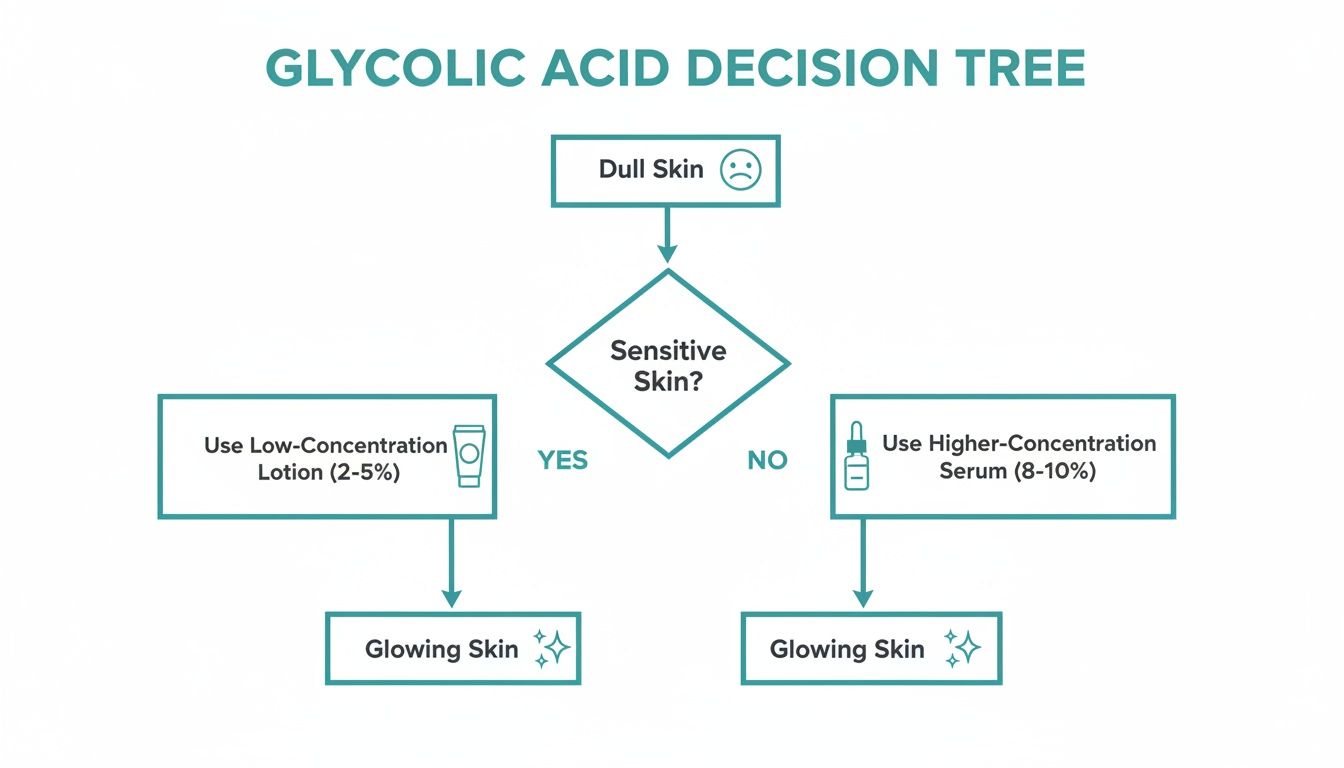
The main takeaway here? Using the right product consistently is the bridge between a lackluster complexion and achieving that radiance you're after.
Finding Your Ideal Concentration
The concentration you pick should match your experience level and your skin's unique personality. Think of it like heading to the gym—you wouldn't jump into an advanced HIIT class on your very first day, right? The same idea applies here.
Lower strengths are fantastic for daily or frequent use. They offer a gentle, consistent exfoliation that brightens and smooths your skin over time. Higher strengths deliver more dramatic effects but need to be used with more caution and less often, especially if you have a sensitive complexion. Not sure where you fall? You can discover more about what are the 5 skin types in our detailed guide.
For at-home use, concentrations between 5% and 10% are widely considered the sweet spot. This range is effective enough to produce visible improvements in skin texture and tone without being overly aggressive for regular application.
Starting with a formula in the 4-8% range is a great choice for most people. It's strong enough to help renew skin texture and address an uneven-looking tone. If your skin has never even seen an acid before, you might want to start with something under 4% just to let it get acquainted.
The Critical Role of pH
But concentration is only half the story. The lotion's pH level is the other crucial piece of the puzzle that determines just how effective that glycolic acid will be. The pH scale measures acidity, and for glycolic acid to do its exfoliating magic, the formula has to be acidic enough.
If the pH is too high (meaning less acidic), the glycolic acid gets "buffered" or neutralized. You simply won't get the benefits. On the other hand, if it's too low (too acidic), the product can become harsh and seriously irritating.
For a glycolic acid lotion to be both effective and gentle enough for regular use, the ideal pH is between 3.5 and 4.0. This range ensures the acid stays active and can get to work on the skin's surface, all while keeping the potential for irritation to a minimum. When you're making your own formulas or choosing a product, checking the pH is a non-negotiable step for both safety and performance.
Glycolic Acid Concentration Guide for Skincare Routines
To make your decision even easier, we've put together a simple breakdown of different concentration levels and who they're best suited for. This guide will help you select a product or formulate a glycolic acid lotion tailored to your specific cosmetic goals.
| Concentration | Best For | Frequency of Use | User Level |
|---|---|---|---|
| Below 5% | Increasing hydration, softness, and luminosity with minimal risk. | 3-5 times per week | Beginner |
| 5% - 8% | Renewing skin texture and targeting the look of uneven tone. | 2-3 times per week | Intermediate |
| 8% - 10% | Addressing the appearance of aging and minimizing the look of pores. | 1-2 times per week | Experienced |
| Above 10% | Often found in professional peels or specialized spot applications. | As directed by a pro | Professional Use |
By carefully considering both the concentration and the pH, you can confidently choose a glycolic acid lotion that aligns perfectly with your skin's needs. This little bit of homework paves the way for a smoother, more radiant-looking complexion.
How to Safely Add Glycolic Acid Lotion to Your Routine
Ready to get glowing? When you bring a powerful new ingredient like glycolic acid into your life, the key is to take it slow. Think of it like introducing a new friend into your group—you want to give everyone time to get comfortable. This gradual approach is the secret to unlocking all those amazing benefits without overwhelming your skin.
The best philosophy here is to start low and go slow. You wouldn't run a full marathon on your first day of training, right? You build up your endurance over time. It's the same with your skin. Begin by applying a low-strength glycolic acid lotion just once or twice a week and see how your complexion feels.
Where Does Glycolic Acid Fit In?
Product order is everything in skincare. To get the most out of your glycolic acid, you want to apply it to a clean slate so it can get to work without anything blocking its path.
The sweet spot for your glycolic acid lotion is right after you cleanse and tone. Your skin is fresh, prepped, and ready to soak it all in. Just apply a thin, even layer, let it absorb for a minute or two, and then you can move on to the rest of your routine.
Here’s the simple layering order to follow:
- Cleanser: Wash away makeup, dirt, and oil with a gentle cleanser.
- Toner (Optional): If you use one, now’s the time to swipe it on to balance your skin.
- Glycolic Acid Lotion: This is your big exfoliating moment.
- Serums: Follow up with any hydrating or targeted serums once the lotion has absorbed.
- Moisturizer or Face Oil: Seal everything in with a good moisturizer or face oil to lock in hydration.
Following this order ensures every product can do its job effectively while keeping your skin happy and nourished. For a deeper dive, check out our complete guide on the correct order to apply skin care products.
The Golden Rule: Sun Protection is a Must
If you only adopt one new habit when you start using glycolic acid, make it this: daily sunscreen is non-negotiable. Glycolic acid is brilliant because it reveals fresh, new skin. But that new skin is more delicate and super sensitive to the sun.
Using a broad-spectrum sunscreen with an SPF of 30 or higher every single morning is your best defense. It's what protects your results and keeps your complexion looking incredible. Skipping this crucial step can completely undo all the good you’re doing with your glycolic acid lotion.
Think of sunscreen as your skin's daytime bodyguard. Glycolic acid does its renewal work, and sunscreen stands guard during the day to protect that beautiful progress. They are the ultimate power couple for a radiant complexion.
How to Listen to Your Skin
The first time you apply a glycolic acid lotion, don't be surprised if you feel a slight tingle or a bit of warmth. This is totally normal! It usually only lasts a minute or two and is just a little sign that the active ingredient is getting to work.
What's important is learning to tell the difference between that normal "hello!" from the product and actual irritation. Pay attention to how your skin looks and feels. If you experience a persistent sting, a lot of redness, or any discomfort that doesn’t fade quickly, that's your skin telling you to pull back. You might need to use it less often or switch to a lower concentration. By tuning into these signals, you can confidently guide your skin toward that smooth, luminous look you're after.
Formulating Your Own Custom Glycolic Acid Lotion
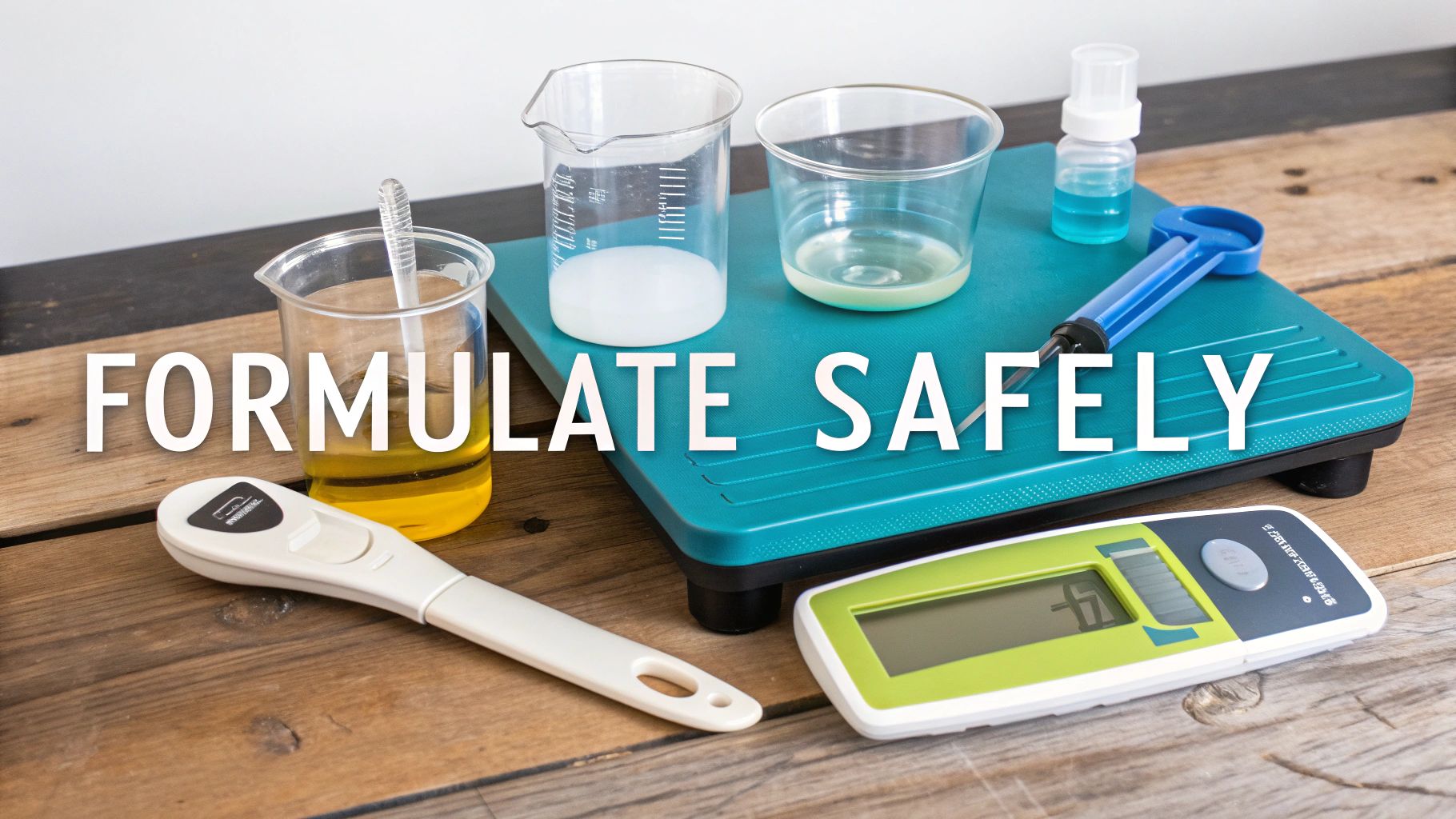
For the true skincare enthusiast, nothing beats creating your own glycolic acid lotion. Making your own formula means you control everything—from the ingredients you choose to the exact concentration. It's the ultimate way to craft a bespoke product that hits your specific cosmetic goals.
This isn’t just a niche hobby anymore. It’s part of a bigger shift towards personalized beauty. And the numbers back it up: the glycolic acid market jumped from USD 0.58 billion to USD 0.60 billion in just one year. Projections show it hitting USD 2.1 billion by 2030, with a steady 8.2% CAGR. A huge chunk of that—around 40%—is driven by skincare demand, where its tiny molecules make it a superstar exfoliant. You can dig deeper into the data by checking out the full report on glycolic acid market growth.
Setting Up Your Workspace
Before you even think about mixing, getting your workspace right is non-negotiable for safety and success. Cosmetic formulation is all about precision, and the right gear ensures your final lotion is stable, effective, and a joy to use.
Here’s your essential toolkit:
- Digital Scale: Accuracy is everything. You'll want a scale that measures to at least 0.01 grams for weighing out your actives, preservatives, and emulsifiers.
- pH Meter or Strips: This is probably your most important tool. You absolutely must test and adjust your final product's pH to land in that safe and effective sweet spot of 3.5 to 4.0.
- Heat-Resistant Beakers: You'll need at least two—one for your water phase and one for your oil phase.
- Immersion Blender or Homogenizer: This is the secret to a stable emulsion. It ensures your lotion stays creamy and doesn't separate.
- Sanitized Containers: Always use clean, sanitized bottles for your finished lotion to keep it free from contamination.
Building Your Formula: The Core Ingredients
At its heart, a basic lotion is an emulsion—a delicate balance of water and oil. To get these two to play nicely, you need an emulsifier. These incredible ingredients grab onto both water and oil molecules, creating that creamy, luxurious texture we all love. If you're new to this, we have a great guide to help you learn more about emulsifiers for lotion making.
To create a stable and effective glycolic acid lotion, you'll need to carefully balance your water phase, oil phase, active ingredients, and a preservative system. Each component plays a vital role in the final product's performance and shelf life.
Your foundational ingredient list will look something like this:
- Distilled Water: This will be the base of your lotion's water phase.
- Oils and Butters: These make up the oil phase, giving your lotion its moisturizing properties.
- Emulsifier: The key to binding your water and oil phases together.
- Glycolic Acid: Your star active ingredient for exfoliation.
- Preservative: A broad-spectrum preservative is absolutely essential. It prevents nasty bacteria, mold, and yeast from growing in your creation.
Enhancing Your Custom Lotion
Once you've nailed the basic formula, the real fun begins. You can elevate your glycolic acid lotion by adding other high-performance ingredients that complement its effects and give your skin even more love.
Think about incorporating actives that boost hydration, soothe the skin, or offer additional support for a youthful appearance. These ingredients are usually heat-sensitive, so you'll add them during the "cool-down phase" after your lotion has cooled to around 113°F (45°C).
Some fantastic additions include:
- Peptides: To help support a firm, youthful appearance.
- Botanical Extracts: Think green tea or chamomile for their wonderful soothing properties.
- Hyaluronic Acid: For a serious dose of deep hydration.
- Niacinamide: To help improve the look of skin texture and tone.
By thoughtfully choosing these extras, you can turn a simple exfoliating lotion into a multi-functional powerhouse, perfectly tailored just for you.
Got Questions About Glycolic Acid Lotion?
As you get ready to welcome a glycolic acid lotion into your routine, it’s totally normal for a few questions to pop up. Getting the little details right is what helps you use this amazing ingredient with total confidence. Let's walk through some of the most common things we get asked.
Diving into the world of skincare actives can feel like a lot, but it doesn't have to be complicated. With the right info, you can make smart choices that lead to a complexion that looks smooth, bright, and beautifully refreshed.
Can I Use Glycolic Acid Lotion with Vitamin C or Retinol?
This is a big one! When you're mixing powerful active ingredients, you need a smart approach to keep your skin happy and avoid irritation. The best rule of thumb is to give these powerhouses their own space to work their magic.
For example, a fantastic way to use both glycolic acid and Vitamin C is to apply them at different times of the day. A lot of people love using their Vitamin C serum in the morning—it’s a great antioxidant to help your skin during the day—and then follow up with their glycolic acid lotion at night.
Using glycolic acid and retinol in the very same application can be a recipe for irritation. Instead, a popular and super effective method is to alternate them. Use glycolic acid one night, then your retinol product the next. This strategy lets you get the cosmetic benefits of both ingredients without overwhelming your skin.
How Long Does It Take to See Visible Results?
Patience and consistency are your two best friends on any skincare journey. While some people do report seeing a brighter, more luminous look within just a few uses, the more significant changes take a little more time.
Typically, you can expect to see noticeable changes in your skin's texture and overall tone after 4 to 6 weeks of consistent use. This gives the glycolic acid enough time to really get to work on the skin's surface.
Just remember, everyone's skin is unique, so your timeline might be a little different. Sticking with your routine is the real key to getting and keeping that smooth, radiant look you're after.
Is Glycolic Acid Lotion Suitable for Sensitive Skin?
Yes, people with sensitive skin can often use glycolic acid successfully, but the "start low and go slow" rule is non-negotiable here. The key is to introduce it carefully and listen to what your skin is telling you.
Start with a lotion that has a very low concentration, ideally 5% or less. And always, always do a patch test on a small, hidden area of skin first. For the first couple of weeks, try applying the lotion just once a week. This gives your skin plenty of time to get used to it. If it responds well, you can slowly work your way up to more frequent use. Always follow up with a soothing, nourishing moisturizer to keep your skin calm and hydrated.
This ingredient is seeing a massive surge in popularity, driven by a global demand for beauty solutions that really work. The glycolic acid market is projected to hit USD 660.5 million by 2033, with lotions being a major part of that growth thanks to how well they support the appearance of cell turnover for a more youthful look. The U.S. market alone is forecasted at USD 140.96 million by 2027, which just shows how much people value this ingredient. You can dive deeper into this trend in the glycolic acid market report.
How Should I Store My Glycolic Acid Lotion?
Proper storage is so important for keeping your lotion stable and effective, especially if you've made it yourself. Active ingredients like glycolic acid can break down when they're exposed to light and air.
Always store your glycolic acid lotion in a cool, dark place away from direct sunlight—a cabinet or drawer is perfect. Make sure the container is sealed up tight after every use. For any DIY lotions, using a reliable preservative is an absolute must to ensure its shelf life and safety. If you're formulating your own products, check out our resources to find the right natural skin care preservative for your creation.
At Skin Perfection, we are dedicated to providing you with the highest quality ingredients and products to help you achieve the beautiful, radiant-looking skin you deserve. Explore our collection and start your journey to a more luminous complexion today. Find everything you need at https://www.naturalorganicskincare.com.