

 Buy with Prime
Facial Clays
What Are Facial Clays in Skincare?
Facial clays are fine, natural mineral powders, mostly layered aluminum silicates, used in masks, cleansers and scrubs to absorb excess surface oil, lift away grime and leave skin feeling smooth and matte. The two families you will see most are kaolin (white, pink and other gentle clays) and bentonite, a swelling clay made from weathered volcanic ash. Color comes from the minerals each clay contains, such as iron oxides.
 EWG Skin Deep rating for Clay
Quick Facts
| Property | Detail |
|---|---|
| INCI names | Kaolin; Bentonite; Montmorillonite; Illite (often sold as French green clay); Sea Silt |
| Common names | White clay, China clay, pink or rose clay, French green clay, bentonite, sea mud |
| Source | Mined mineral deposits and marine sediments |
| Form | Fine powder |
| Solubility | Insoluble. Clays disperse in water to form a paste or suspension. |
| Typical usage rate | Kaolin: 0.1 to 100% (a supplier supplier listing). Low amounts thicken and mattify creams; masks are mostly clay. |
| pH | Varies by clay; bentonite is typically alkaline, kaolin closer to neutral |
| Skin types | Kaolin: all, including dry and sensitive. Bentonite and green clays: oily and combination. |
How Clays Work on the Skin
A 2017 review by Moraes and colleagues in the International Journal of Pharmaceutics describes clay minerals as layered materials that act as adsorbents and absorbents and are also used to stabilize emulsions and adjust texture. On skin, that translates into three things you can feel:
- Oil absorption. Clay soaks up surface oil, which is why skin looks matte and pores look less noticeable after a mask.
- Gentle cleansing. Clay particles bind to dirt and dead surface cells and rinse away with them.
- Texture. Small amounts of clay give lotions a soft, powdery finish.
The main clays compared
| Clay | Feel and strength | Best for |
|---|---|---|
| White kaolin | Mildest, smooth, low swelling | Dry, sensitive and mature skin; frequent masks |
| Pink (rose) kaolin | Mild; kaolin tinted by iron oxides | Normal and sensitive skin |
| French green clay | Moderate, more absorbent | Combination and oily skin |
| Bentonite | Strongest; swells as it absorbs water | Very oily skin, short contact times |
Bentonite's pull is easy to see. Dermatologist Naissan Wesley notes in a Dermatology News column that bentonite carries a strong negative charge and can absorb 40 to 50 times its weight in water, which is why it swells into a thick gel. The same column warns about unsubstantiated marketing claims for clay products, and the skin study it describes was done in rats, not people, so be skeptical of marketing that promises clay will pull toxins out of the body. Clay is a surface cleanser and oil absorber, and that is plenty.
How to Use Clays
- Mix masks fresh. A clay and water paste has no preservative. Mix only what you will use that day.
- Use non-metal tools. A glass or ceramic bowl and a silicone spatula are the traditional choice for clay.
- Do not let it crack. Rinse when the mask turns matte but before it is bone dry, usually 8 to 10 minutes. Over-drying leaves skin feeling tight.
- Follow with hydration. A hyaluronic acid serum or moisturizer afterward replaces the water the clay pulled from the surface.
- In formulas, disperse clay in the water phase before heating, and always include a broad-spectrum preservative, because natural clays carry microbes from the earth.
- Storage. Keep dry clay sealed and away from moisture. It does not spoil when dry.
Simple kaolin mask (one use)
Weigh 10 g (about 1 tablespoon) of white kaolin into a small glass bowl. Add 10 to 12 g of Aloe Vera Gel Serum Base or a rose hydrosol a little at a time and stir to a smooth, spreadable paste. Apply an even layer, avoiding the eye area, leave on 8 to 10 minutes and rinse with lukewarm water. Use 1 to 2 times a week. For oily skin, swap half the kaolin for French green clay.
Who Clays Suit
Kaolin works for nearly everyone. Bentonite and green clays are best for oily and combination skin. Dry and mature skin should stick to kaolin, keep masks short, and moisturize afterward. Sensitive skin: patch test on the inner arm for 24 hours, start with a 5-minute contact time and the mildest clay, and use it no more than once a week at first.
Frequently Asked Questions
How often should I use a clay mask?
Most people do best with 1 to 2 times a week. Very oily skin may tolerate up to 3 times with kaolin. Daily masks can leave skin feeling dry and tight.
Which clay is best for oily skin?
Bentonite or French green clay absorb the most oil. Kaolin is gentler and better for frequent use or for combination skin.
Should a clay mask dry completely?
No. Once fully dry, clay keeps pulling water from the skin surface. Rinse while it is still slightly damp, usually after 8 to 10 minutes.
Do clay masks shrink pores?
Pore size is set by genetics and age. Clay clears oil and debris from the surface, so pores look smaller and less noticeable for a while afterward.
Can I use a clay mask on dry skin?
Yes, if you choose white kaolin, keep contact time short and moisturize right after. Mixing the clay with aloe instead of water makes the mask feel more comfortable.
What is the difference between kaolin and bentonite?
Kaolin is a mild, low-swelling clay suited to most skin types. Bentonite swells as it absorbs water, up to 40 to 50 times its weight, and gives a much stronger oil-absorbing pull.
Shop and Learn More
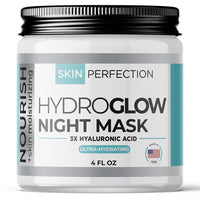
For an overnight option built on marine minerals, try our HydroGlow Anti-Aging Night Mask with sea silt ferment and algae, shown below. For a full routine, see How Often to Use Facial Masks, make our blue clay mask recipe, and read more on large pores and algae.
Sources
- Moraes JDD, Bertolino SRA, Cuffini SL, Ducart DF, Bretzke PE, Leonardi GR. Clay minerals: properties and applications to dermocosmetic products and perspectives of natural raw materials for therapeutic purposes. A review. International Journal of Pharmaceutics. 2017. doi:10.1016/j.ijpharm.2017.10.031
- Wesley NO. Clay minerals and the skin. Dermatology News, Aesthetic Dermatology Update column. mdedge
These statements have not been evaluated by the Food and Drug Administration. These products are not intended to diagnose, treat, cure, or prevent any disease.
About the Author
Written by Kari Thomas, cosmetic formulator and founder of Skin Perfection.